US and Israeli Hopes for a Popular Uprising After Khamenei’s Killing: Will Iran Fall?
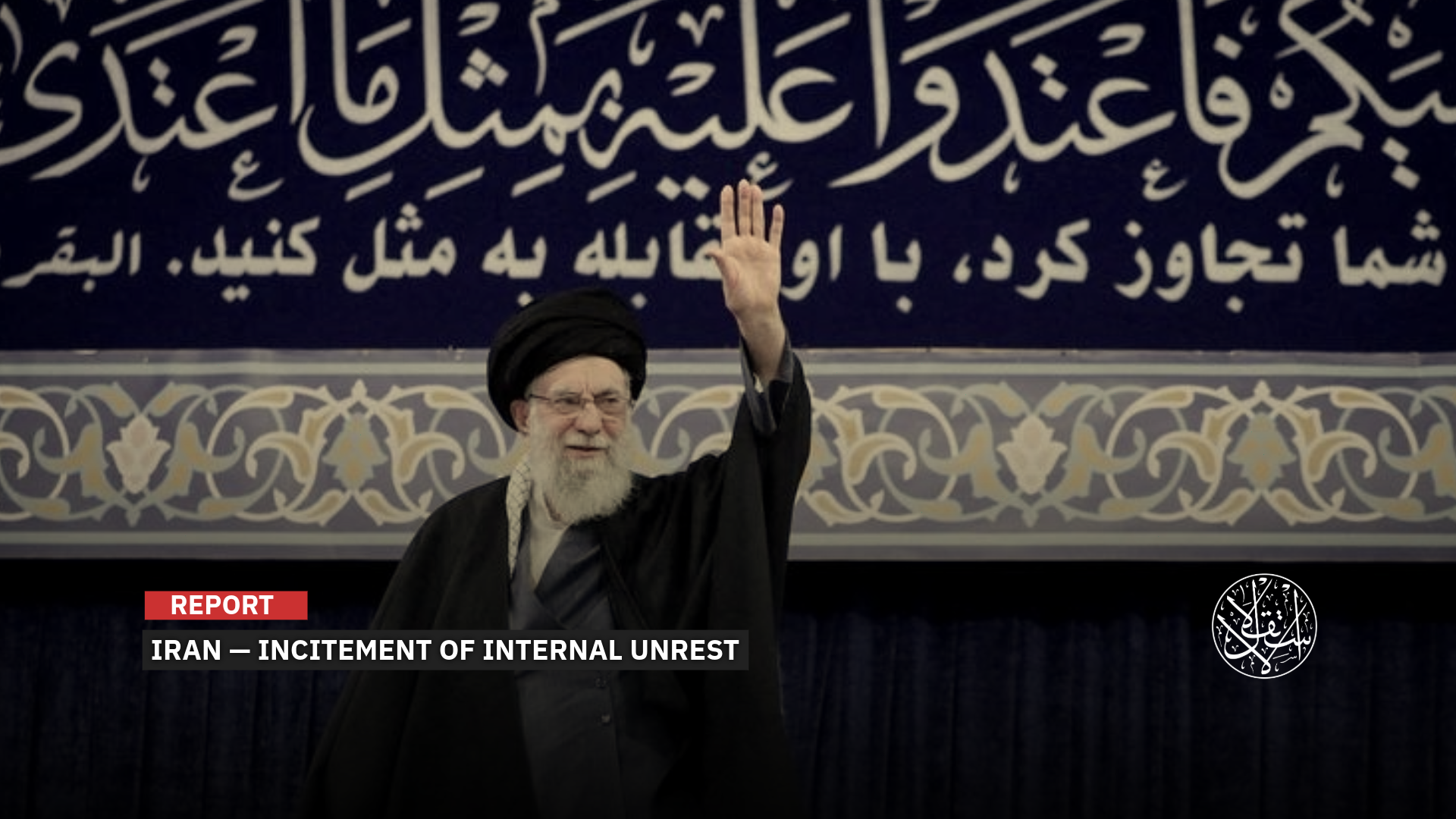
Trump urged the Iranian people to seize the opportunity and take control of the country.
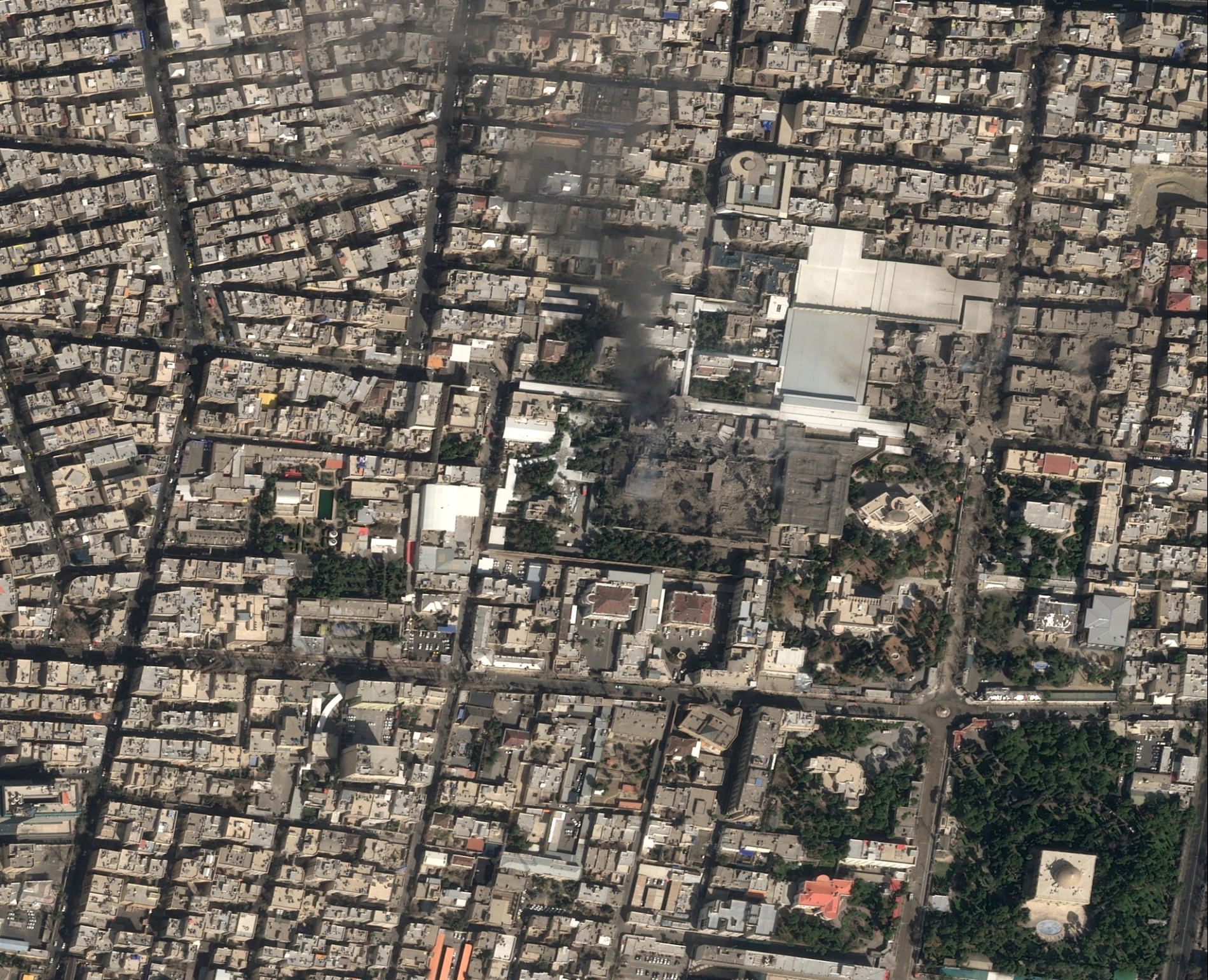
In a step described as a highly dangerous escalation along a path aimed at altering the balance of power in Iran, the United States and “Israel” carried out a strike that Tehran characterized as strategic.
The operation ended with the killing of Supreme Leader Ayatollah Ali Khamenei and several senior first-rank figures in Iran’s military and political establishment, raising broad questions about the ultimate objective of the operation and its ability to achieve the ambitions Washington and “Tel Aviv” have declared regarding regime change in Iran.
Iran announced on March 1, 2026, the death of Khamenei, along with Ali Shamkhani, secretary of the Supreme National Defense Council, Major General Mohammad Bagheri, chief of staff of the armed forces, Major General Abdolrahim Mousavi, commander-in-chief of the army, and Defense Minister Brigadier General Aziz Nasirzadeh, following U.S.-Israeli airstrikes that targeted sites in Tehran in the preceding hours.
‘The Help You Longed for Has Arrived’
During a speech on February 28, President Donald Trump stated that the objective of the war being waged by the United States and “Israel” against Iran is “the overthrow of the regime,” and he called on the Iranian people to “now is the time to seize control of your destiny.”
In an eight-minute recorded statement, he said, “To the members of the Islamic Revolutionary Guard, the armed forces and all of the police, I say tonight that you must lay down your weapons and have complete immunity. Or in the alternative, face certain death.”
He added, “So, lay down your arms. You will be treated fairly with total immunity, or you will face certain death.”
“Finally, to the great proud people of Iran, I say tonight that the hour of your freedom is at hand. Stay sheltered. Don't leave your home. It's very dangerous outside. Bombs will be dropping everywhere.”
“When we are finished, take over your government. It will be yours to take. This will probably be your only chance for generations,” he said, adding, “For many years, you have asked for America's help. But you never got it. No president was willing to do what I am willing to do tonight. Now you have a president who is giving you what you want. So let's see how you respond. America is backing you with overwhelming strength and devastating force.”
He added, “Now is the time to seize control of your destiny, and to unleash the prosperous and glorious future that is close within your reach. This is the moment for action. Do not let it pass,” pledging to “destroy Iran’s missiles, eliminate its missile program, wipe out its naval fleet and ensure that it does not possess a nuclear weapon.”
On the same front, Israeli Prime Minister Benjamin Netanyahu said in a recorded message addressed to the Iranian people that “The help you longed for has arrived. Help has arrived, and now the time has come to unite for a historic mission. The moment when you must take to the streets, come out in the millions to finish the job, to overthrow the regime of terror that has made your lives bitter.”
Netanyahu said in his March 1 message that “In the coming days, we will strike thousands of targets belonging to the terrorist regime. We will create the conditions for the brave people of Iran to free themselves from the chains of tyranny.”
Addressing Iranian citizens, the Israeli Prime Minister added, “Citizens of Iran, do not miss this opportunity. This is a chance that comes only once in every generation. Do not stand idle, because your moment will soon arrive.”
Netanyahu concluded his speech by saying, “Your suffering and sacrifice will not be in vain. The help you longed for has arrived. Help has arrived, and now the time has come to unite for a historic mission. Citizens of Iran, Persians, Kurds, Azeris, Ahwazis, and Baloch, now is the time to unite your forces to overthrow the regime and secure your future.”
This marks the second time in recent months that the United States and “Israel” have carried out direct military strikes against Iran, following the 12-day war that began on June 13, 2025.
Crossroads
Regarding the possibility of achieving the goal of toppling the Iranian Leadership, writer and Middle East affairs expert Imad Eddin al-Jubouri said that the success of “Israel” and the United States on the first day of the attack in killing first-rank leaders within the Iranian system, most notably the supreme leader and senior military commanders, indicates the depth of intelligence penetration inside Iran’s security apparatus.
Al-Jubouri told Al-Estiklal that the military strike not only represents a painful blow to Iran, but has also placed Iran at a strategic crossroads, particularly as missiles continue to be launched toward neighboring countries and civilian areas are being targeted, which could deepen international isolation and weaken the Iran's chances of survival in the long term.
He added that if the declared objective of the operation is to overthrow the Iranian Leadership, it could open the door to a broad political transformation in the Middle East under the banner of achieving regional stability and ending the influence accumulated over the past four decades.
Al-Jubouri said there are indications of a U.S.-Israeli orientation to prepare the region for a post-regime phase, not only within Iran but also in its regional surroundings.
He noted that military responses from some of Tehran’s allies in the region have remained limited, with Lebanon’s Hezbollah issuing political statements without opening new battlefronts.
The expert ruled out the possibility that the Iranian leadership could continue without a fundamental change in its political behavior, arguing that Tehran faces one of two options: either responding to U.S. pressure or confronting the prospect of escalation that could significantly weaken it.
In the same context, political researcher Latif al-Mahdawi said the course of events suggests a direction toward ending the Iranian regime, but he stressed that this scenario will not be realized quickly without large-scale U.S. ground intervention, an option that does not currently appear within military plans, or the outbreak of major internal unrest within the country.
Al-Mahdawi predicted that the Iranian regime may continue despite the absence of its most influential top leadership, citing strong internal institutions, most notably the Islamic Revolutionary Guard Corps, which still controls key aspects of the security and military landscape.
He pointed out that the expansion of military operations and increased regional pressure have led to greater international isolation for Tehran, particularly after previously negotiated areas in the Sultanate of Oman and Qatar were targeted, along with a decline in global sympathy for Iranian military operations due to their economic and humanitarian impact.
He also explained that implementing the option of overthrowing the regime through ground force remains unlikely at present because of the high human and economic cost, in addition to the difficulty of dismantling a large state with a complex military and security structure.
He continued that the more realistic approach at this stage is the continuation of pressure and political and economic isolation, and possibly support for political or geographic entities with separatist tendencies inside Iran as a potential preliminary phase in long-term scenarios.
He concluded that Russian and Chinese support for the Iranian regime has so far remained limited to diplomatic statements, with no indications that either Russia or China is prepared to enter into direct military confrontation in defense of Tehran.
Complex System
By contrast, Ali Hashem, editor-in-chief of the Iranian website al-Jada and a Lebanese journalist, said Iran’s political system was designed as an institutional structure capable of absorbing shocks and preserving state cohesion, noting that the country’s history of political assassinations has not previously led to the collapse of the regime or the disintegration of its ruling structure.
In an article published in Foreign Policy magazine on March 1, 2026, Hashem said the military attack launched by “Israel” and the United States began with airstrikes targeting the residence and offices of the top leadership, including the supreme leader, in an attempt, according to his analysis, to reproduce scenarios of political system collapse similar to what occurred in Libya after the fall of Muammar Gaddafi or in Syria during the conflict in which the political system faced major challenges under Bashar al-Assad.
He noted that the military bet was based on the assumption that removing the top leadership could quickly weaken the state, but the Iranian experience, according to his article, is different, because the apparent concentration of authority in the position of the supreme leader does not necessarily mean institutional fragility.
He explained that the Iranian system relies on a network of overlapping institutions that function not only to serve the political leadership but also to contain and monitor it, allowing any potential leadership vacuum to be addressed through predesigned internal mechanisms.
This structure includes institutions such as the Guardian Council, which aims to ensure legislation aligns with Islamic principles and prevent political deviation, the Assembly of Experts, tasked with selecting and overseeing the supreme leader, and the Expediency Discernment Council, which works to resolve institutional deadlock and settle disputes between different levels of governance.
He also pointed to the security and military role played by the Islamic Revolutionary Guard Corps and intelligence agencies in protecting the system internally and externally, noting that this structure was designed to ensure the continuity of the state even under political or military pressure.
Hashem added that Iran’s historical experience, marked by recurring cycles of political vacuum over the centuries, continues to shape the political mindset of the ruling elite, with each crisis evaluated against the memory of previous collapses in Iranian history.
The writer predicted that the most sensitive phase will not be before the selection of a new leader, but after it, when the incoming leadership will have to demonstrate its ability to impose internal stability and send clear signals of the resilience of governance to the international community.