After Khamenei’s Assassination: How Iran Enters a Turbulent Transitional Phase
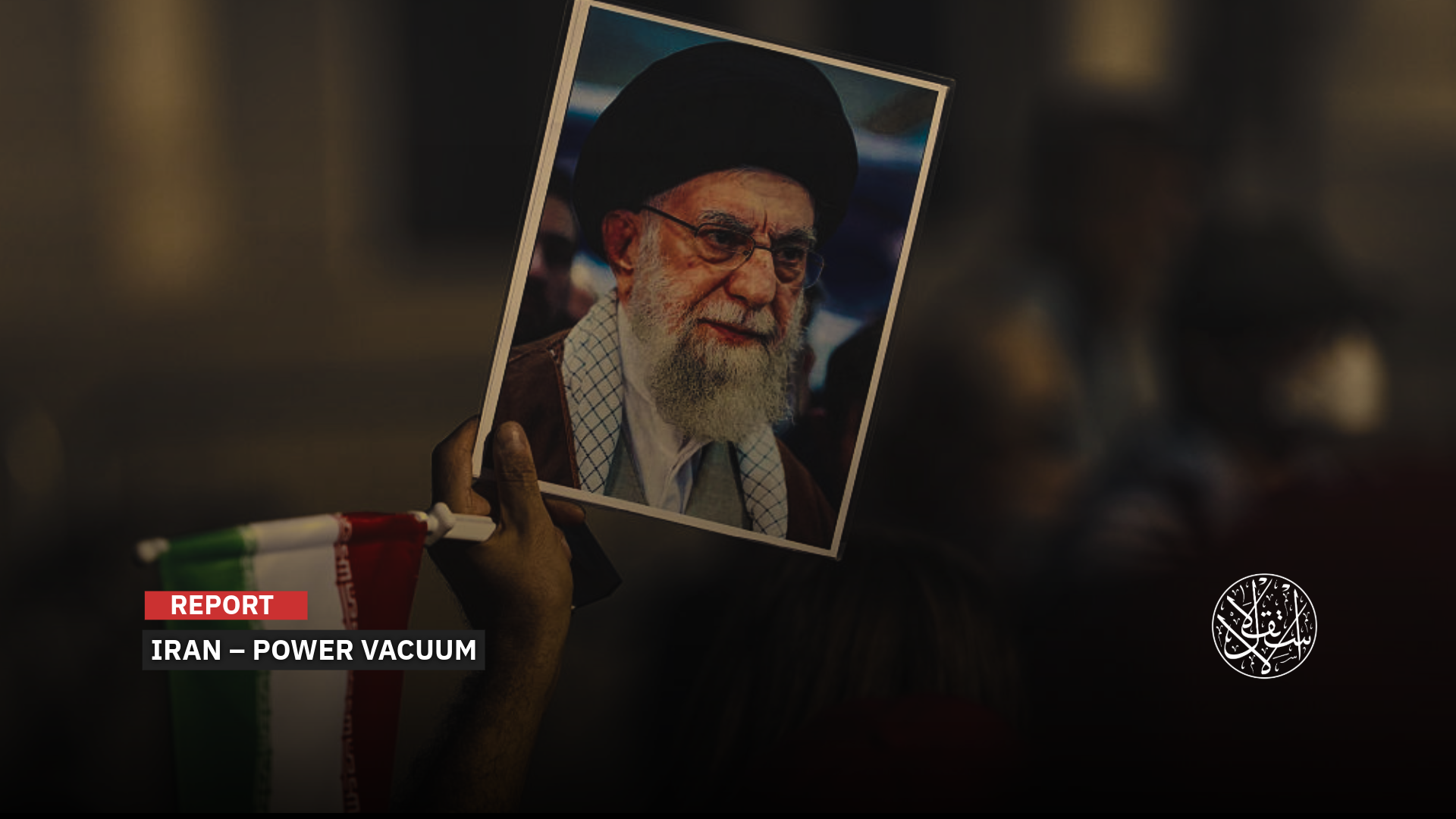
“Iran has since retaliated, firing missiles at Israel and U.S. military bases in multiple Gulf states.”
Iran stares at an uncertain future after Tehran confirmed the death of Iranian Supreme Leader Ayatollah Ali Khamenei in a US-Israel joint strike on Tehran.
While the US and Israel are calling for regime change in Tehran, Iran's Islamic Revolutionary Guard Corps has launched attacks in hopes of a power grab.
Meanwhile, opposition leader Maryam Rajavi and exiled crown prince Reza Pahlavi released dual messages urging Iranians to unite — while also making clear their different visions for the Islamic Republic's future.
The unprecedented recent developments in Iran raise major questions about the identity of Khamenei's successor, the shape of the transitional phase, and the future of the ruling regime amid internal divisions and escalating external pressures.
Violent Attack
Iranian television announced early Sunday the death of Supreme Leader Ali Khamenei, hours after US President Donald Trump confirmed his death.
It also confirmed the deaths of Major General Abdolrahim Mousavi, Chief of Staff of the Iranian Armed Forces; Brigadier General Aziz Nasirzadeh, Minister of Defense; and Major General Mohammad Pakpour, Commander-in-Chief of the Islamic Revolutionary Guard Corps (IRGC).
In turn, Ali Larijani, Secretary of Iran's Supreme National Security Council, vowed to burn the heart of America and “Israel”.
He asserted that the enemy is delusional if it believes that assassinating the leaders will destabilize Iran, emphasizing that Iranian forces are fully prepared and that future strikes will be even more painful.
For his part, Iranian President Masoud Pezeshkian stressed that the assassination of Khamenei would not go unanswered, adding that the country was united and would emerge from this crisis with its head held high.
Meanwhile, the Speaker of the Iranian Parliament announced that state institutions were prepared for all scenarios, accusing US President Donald Trump and Israeli Prime Minister Benjamin Netanyahu of crossing red lines.
Supreme Court Chief Justice Gholam-Hossein Mohseni-Ejei affirmed that the Iranian people would avenge their leader.
The IRGC issued a statement describing the assassination as a blatant violation of religious, moral, and legal principles, and announced the start of a fierce offensive against “Israel” and US bases in the region.
It confirmed the execution of the sixth wave of Operation True Promise 4, targeting 27 US bases, and vowed further harsh and varied attacks.
For his part, Trump warned Iran against launching a very powerful strike, vowing an unprecedented response if it proceeded with its attacks.
Netanyahu, in a televised address, called on the Iranian people to seize the opportunity and overthrow the regime, asserting that what was happening was a once-in-a-lifetime event.
Power Vacuum
According to the Iranian constitution, the Supreme Leader is appointed by a religious body known as the Assembly of Experts, a committee of clerics authorized to select and oversee the Supreme Leader.
The Assembly comprises 88 Shiite clerics and 5 Sunni Iranian clerics. Its members are directly elected by the people after being vetted by the Guardian Council.
In the event of a vacancy in the position of Supreme Leader, the constitution mandates that the Assembly act as quickly as possible to select a new leader, preventing any power vacuum.
To avoid any administrative or security disruptions, the constitution stipulates the formation of a temporary leadership council to assume the Supreme Leader's duties until a successor is elected.
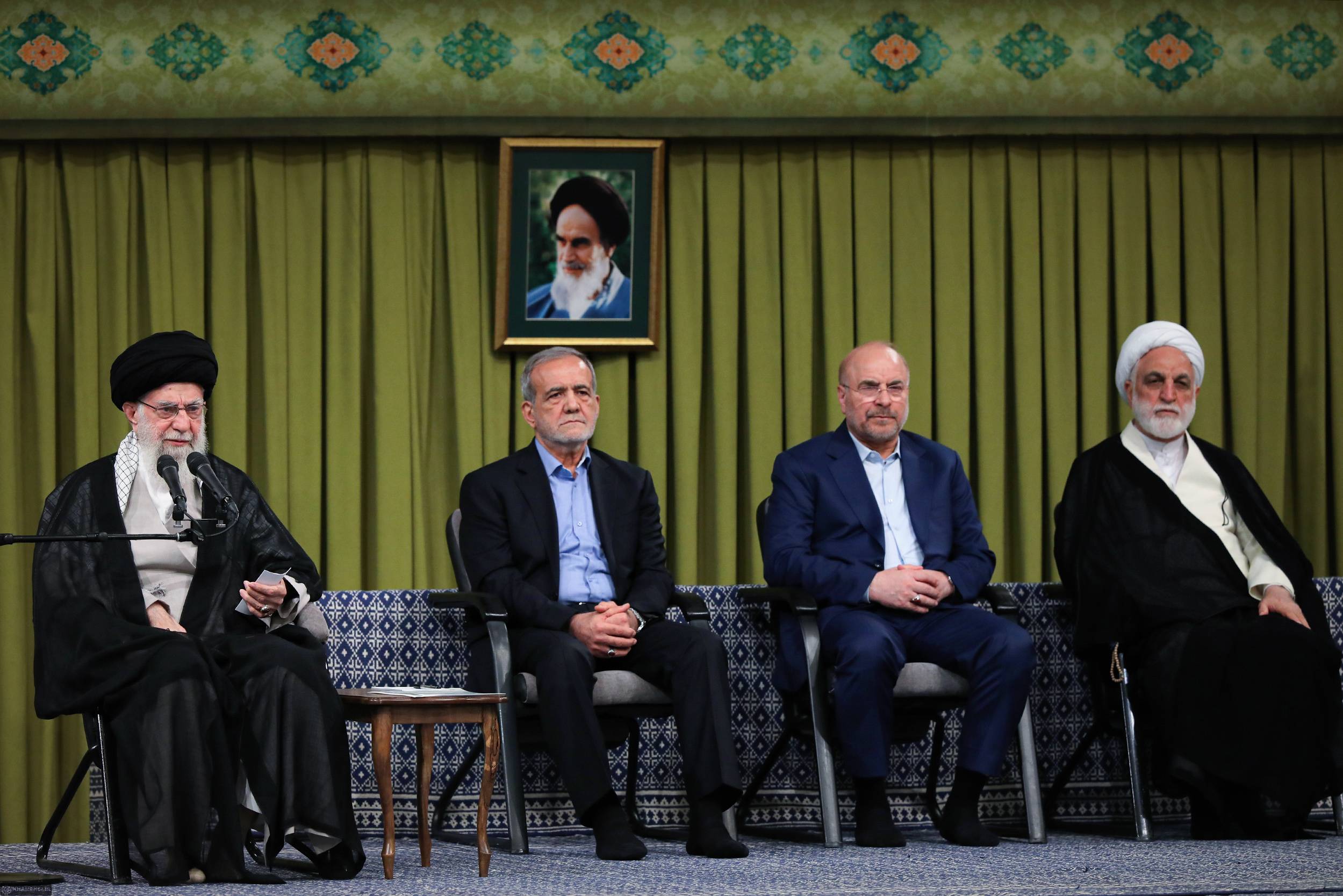
The official IRNA news agency reported that the President Masoud Pezeshkian, Supreme Court Chief Justice Gholam-Hossein Mohseni-Ejei, and cleric Ayatollah Alireza Arafi would be responsible for managing the transitional phase.
Khamenei had taken precautions in anticipation of such a scenario, temporarily delegating the administration of the country's affairs in January to National Security Chief Ali Larijani, including responding to external attacks and addressing internal repression.
Khamenei also established alternative decision-making bodies composed of military and political figures in case of a leadership vacuum during wartime.
These included Mohammad Bagher Ghalibaf, the speaker of parliament, and Yahya Rahim Safavi, a senior military advisor and former IRGC commander.
Khamenei’s second son, Mojtaba, is a significant figure with strong links to the IRGC, the elite wing of Iran’s military, as well as the Basij, a volunteer paramilitary force.
But given that the regime swept to power to replace the Iranian monarchy, the Shiite clerical establishment may want to avoid father-to-son succession.
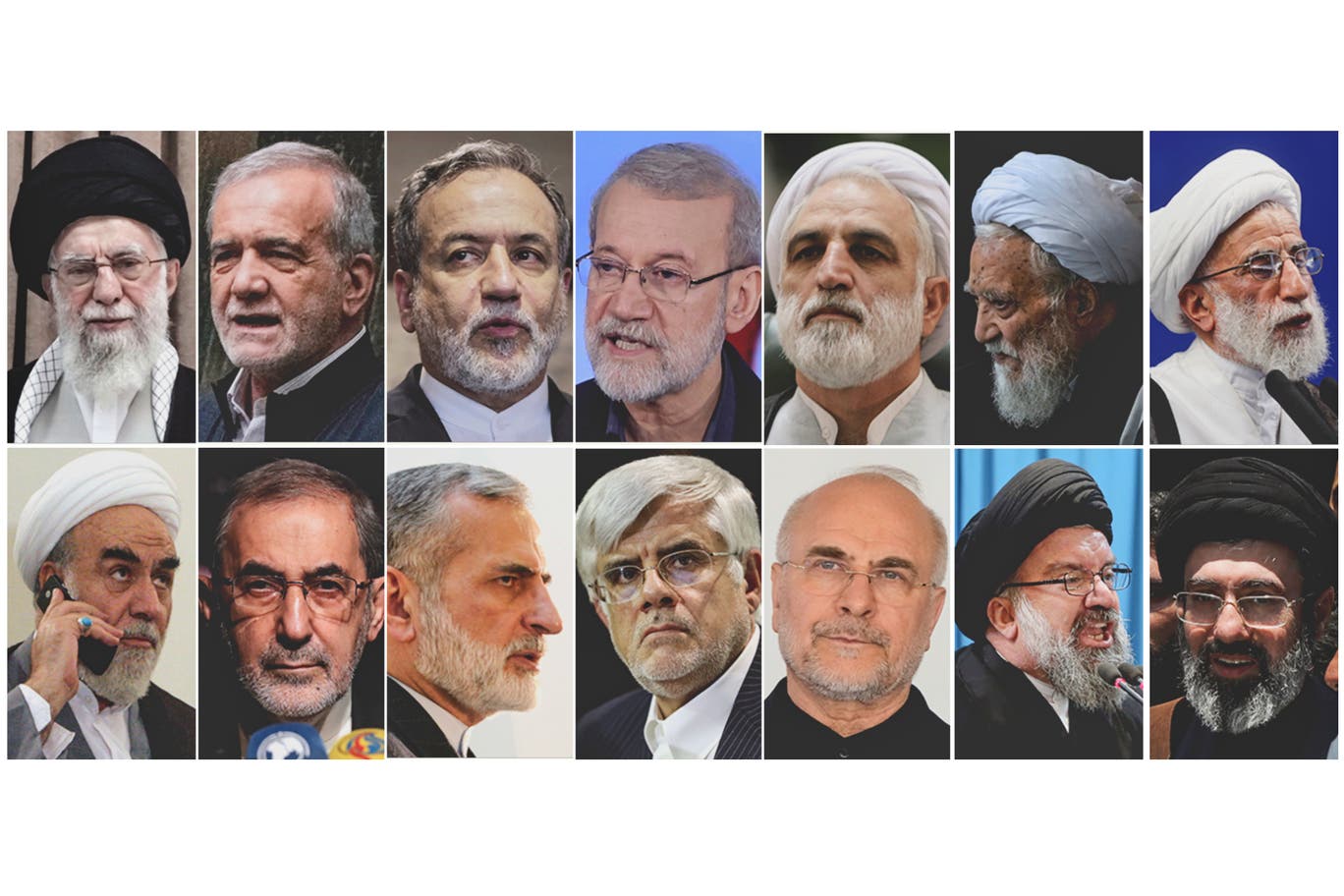
Alireza Arafi, a Shiite cleric who was named to the transition council on Sunday, was appointed to several senior positions by Khamenei and is seen as a strong contender.
He is deputy chairman of the Assembly of Experts and is a member of the Guardian Council, meaning he could vet his own name. He is also head of Iran’s seminary system.
Mohammad Mehdi Mirbagheri, who also represents the most conservative wing of the clerical establishment and sits in the Assembly of Experts, is another contender.
Hassan Khomeini, a grandson of Khomeini who is known to be less hard-line than his peers.
However, there is a chance for surprises. The regime may opt for a younger, less well-known figure — or perhaps for a council of leaders, rather than a single person.
Dangerous Scenarios
After Khamenei’s assassination, Iran enters a turbulent transitional phase, with the future open to dangerous scenarios ranging from a rare smooth transition to total collapse or a protracted conflict.
The Times predicts that Khamenei’s death will reignite the momentum of the Iranian uprising, creating existential pressure on the regime, coinciding with the US-Israeli military campaign.
Despite the regime’s resilience since the 1979 revolution, its continued existence in its current form is now highly questionable.
Khamenei commanded the entire armed forces and oversaw appointments in the judiciary, the military, and strategic councils, but he also managed a complex network of institutions, some of which were nominally elected.
However, The Times doubts that any successor will be able to consolidate power as Khamenei did, and the very survival of the Islamic Republic may be in doubt, especially as protesters and the political opposition attempt to capitalize on this pivotal moment.
The scenario of civil war does not seem far-fetched; in fact, many Iranians fear it, particularly given the expectation that the IRGC will respond with unprecedented violence in a final, existential battle to defend the regime.
Another dilemma facing Iranians is their lack of trust in any American or Israeli plan for stability.
Trump has previously spoken of competent and capable candidates to lead Iran, without revealing names, indicating his knowledge of who is currently running the country.
Meanwhile, Reza Pahlavi, the son of the former Shah, is promoting his return as a transitional figure, supported by the Iranian diaspora and some protesters inside Iran who chant his name.
However, his domestic support is uncertain, and there is no clear indication of any military backing for him.

Military Takeover
Analysts have long assumed that Khamenei's downfall could take one of three possible paths: regime continuation, regime change, or a military coup. These are not necessarily mutually exclusive.
They noted that, at least in the short term, it is more plausible that a military leader could take control to direct Iran's armed resistance to the U.S. and “Israel” and lead a crackdown on any public dissent that could further threaten the regime.
The world is now facing the likely scenario that no-one is left inside Iran to tell its military to stop — or put limits on what it will do.
America's intelligence sources had concluded before the attack that the top spot would likely be filled by hardline figures from the IRGC.
The elevation of a leader from the IRGC, and a military-like takeover of leadership in Iran, could result in an even more dangerous military battle unlike anything ever seen before in the Middle East.
These forces are designed to retaliate against the U.S. and “Israel”, and they may continue to do just that — even without the ayatollah.
It is likely lower-ranking officials will now be either delegated, or take it upon themselves, to make attack decisions across the region.
The world is now facing the likely scenario that no-one is left inside Iran to tell its military to stop — or put limits on what it will do.
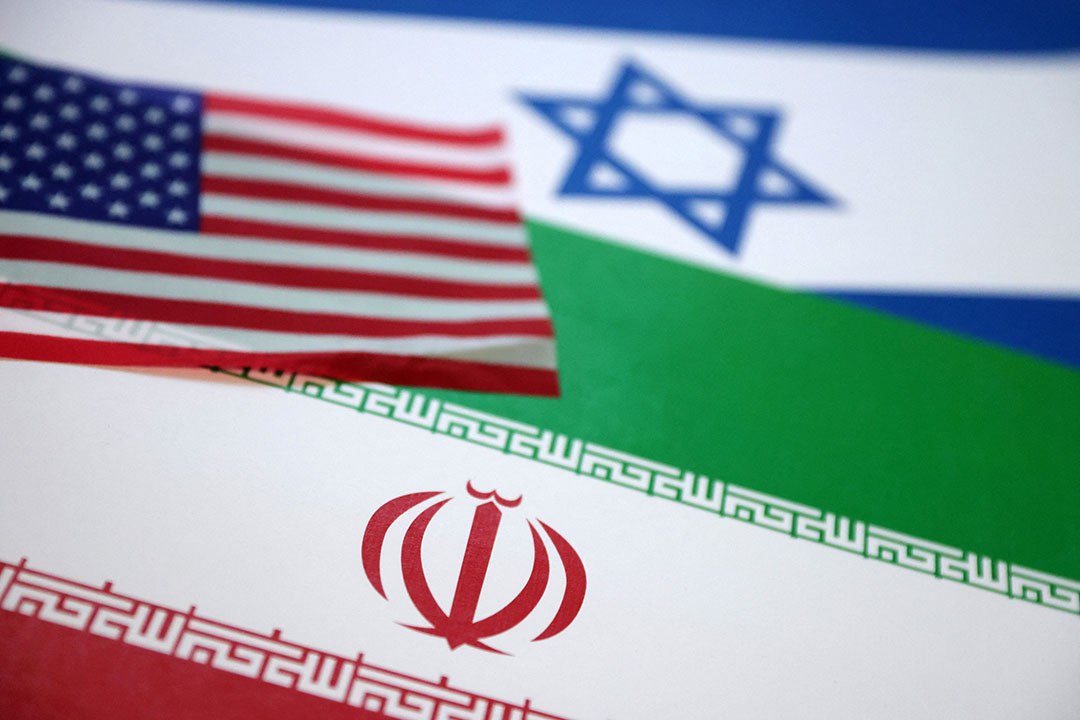
In turn, Middle East analyst Zaid Mastou explained in a statement to Al-Estiklal that “despite its statements, Iran currently appears determined to implement the strategy it announced before the outbreak of the current conflict: To inflame a comprehensive regional war.”
“So far, Iran has not only attacked US military bases in the region, such as those in Kuwait, Oman, Qatar, the UAE and Bahrain, but has also targeted oil infrastructure in Saudi Arabia,” he added.
“If Iran survives the conflict without internal power struggles, this could already be considered a strategic success. The U.S., on the other hand, could come under greater pressure if the war continues to escalate,” he said.
Mr. Mastou noted that “a narrow, managed succession is still the default in the Islamic Republic, but the chance of a sharper turn toward the military, or of elite infighting, is real.”
But he pointed out that “the IRGC can point to the assassination and the U.S.–Israeli attacks to argue for an overtly military system run under sweeping emergency powers.”