Jordan Turned into a US Aircraft Carrier to Strike Iran and Shield ‘Israel’, But at What Cost?
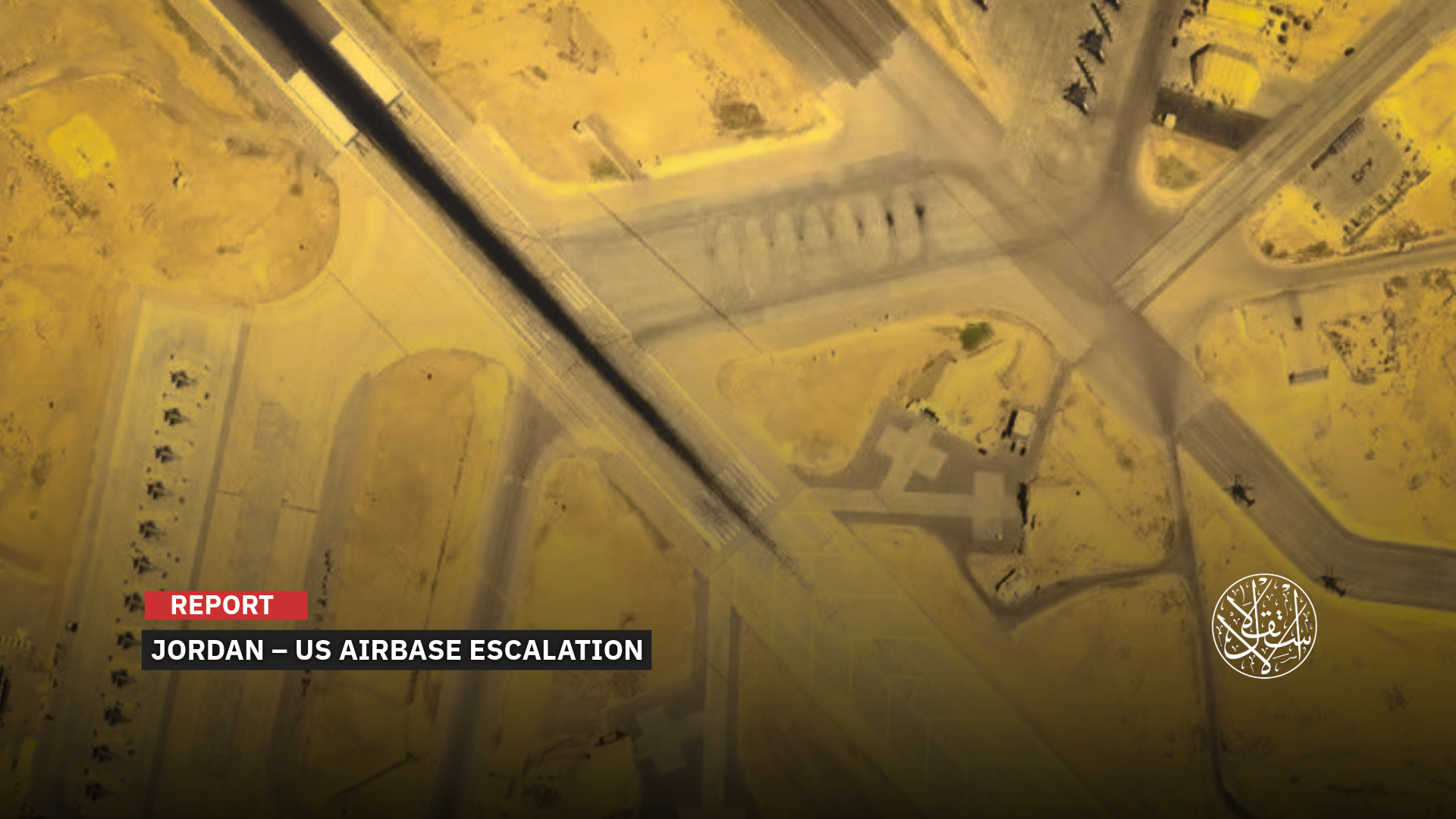
Jordan’s territory has become what observers describe as a western defensive depth.
During the Israeli and American assault on Iran in June 2025, and as the Ansar Allah group, the Houthis, bombarded “Tel Aviv,” Jordanian territory turned into what observers described as a western defensive depth.
Military platforms were used to launch American missile systems and European aircraft to intercept drones heading toward “Israel.”
As the United States and several European countries, particularly France, which reports suggest maintains a military facility inside Jordan, continued to use Jordanian territory to deploy air defense systems against drones and missiles, a shift emerged in the kingdom’s military role, from a defensive position to something resembling an advanced operational base.
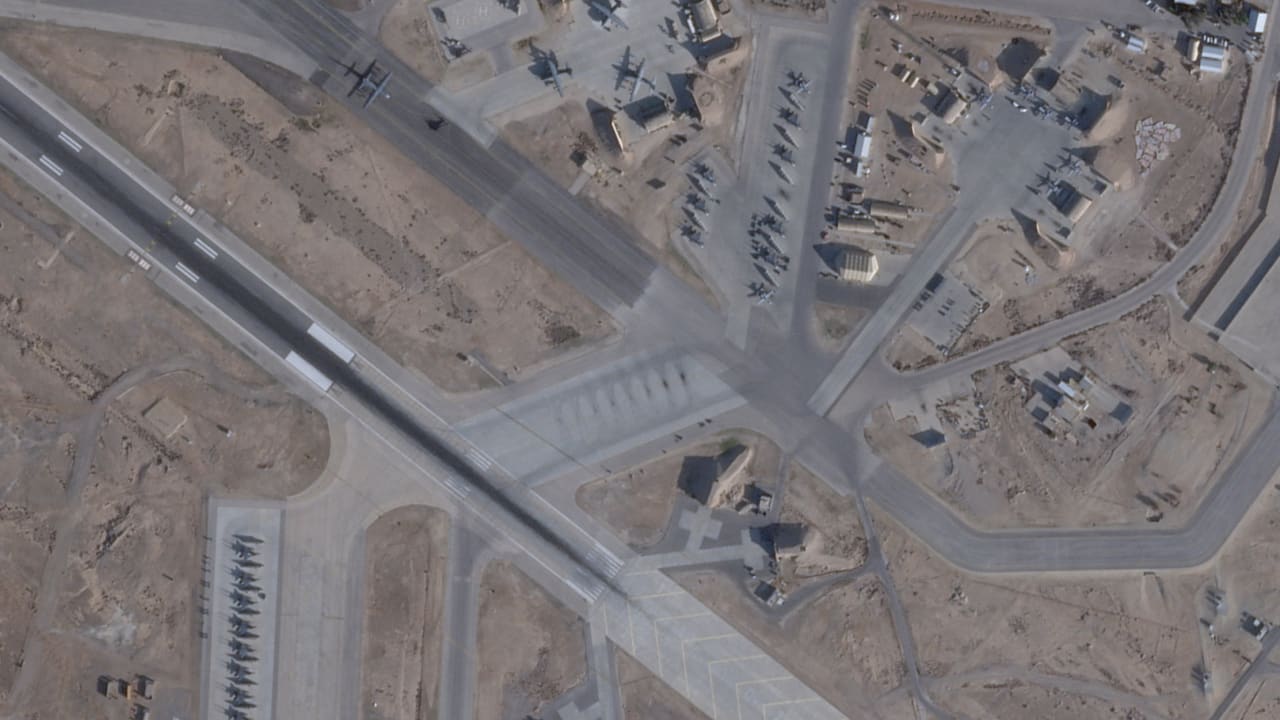
Western reports, including an analysis supported by satellite images published by The New York Times on February 20, 2026, pointed to a threefold increase over usual levels in the number of American warplanes stationed at Muwaffaq al-Salti Air Base in central Jordan, with dozens of strategic aircraft deployed, capable of carrying out offensive operations.
This transformation in the function of the military presence on Jordanian soil, from participating in interception systems countering threats directed at Jordan and “Israel” to providing a potential platform for offensive operations against Iran, has raised questions about the political and security costs Amman may bear in exchange for this military positioning.
What commitments or gains were offered to Jordan by the United States or “Israel” in return for this evolving military role, and could the shift toward an offensive operations camp expose the kingdom to direct strategic risks should the regional war expand?
Jordanian Aircraft Carrier
Western reports indicate that this military buildup has sketched the outlines of what some analysts have informally described as the concept of a “land-based aircraft carrier,” whereby air infrastructure inside Jordan is transformed into an advanced military platform that can be used in any potential operations within the region, a characterization that reflects the scale of the role Jordan’s air facilities now play in regional security arrangements.
In this context, Le Monde and the American magazine Newsweek revealed, on February 21, 2026, an analysis of satellite images and flight-tracking data obtained from Planet Labs, a company specializing in space-based data and earth observation.
The analysis showed between 30 and 59 American warplanes present at various stages inside Jordanian military bases, with later estimates suggesting the number could rise to nearly 70 fighter aircraft.
The report explained that the military deployment included advanced multirole aircraft, among them electronic warfare planes and air superiority fighters, in addition to fifth-generation jets, alongside continuous transfers of munitions and military equipment through at least 68 military cargo flights tracked landing at Muwaffaq al-Salti Air Base within a short period, reflecting the level of logistical readiness associated with the American military presence in the region.
Jordanian officials, in statements reported by The New York Times, said that the deployment of American aircraft and military equipment inside the kingdom falls within the framework of a defense cooperation agreement with the United States, explaining that the size of forces and equipment on Jordanian territory changes according to security conditions, whether for training purposes, operational support, or protection of regional airspace.
The defense agreement signed between Amman and Washington in 2021 grants American forces logistical facilities inside Jordanian territory, with the number of troops and military equipment continuing to fluctuate based on operational requirements tied to regional developments, particularly amid escalating military tensions in the Middle East.
Notably, the air base’s name carries historical and symbolic significance.
It was named after the Jordanian hero Muwaffaq al-Salti, who in 1966 confronted a squadron of aircraft belonging to “Israel” alongside a group of his comrades, before his plane was shot down and he was forced to parachute.
He was later killed after being targeted by hostile forces, giving the name a national and historical resonance within Jordan’s military memory.
Other reports also revealed the presence of a French military base described as secret inside Jordanian territory, housing advanced fighter jets of the Dassault Mirage 2000 and Dassault Rafale models.
This military presence was linked to French President Emmanuel Macron’s visit to the region in September 2023, within the framework of broader security understandings whose full details were not publicly disclosed.
In addition, circulating information points to the existence of naval facilities at the al-Humayma base used for training the Jordanian Armed Forces, located about 65 kilometers from the Aqaba military port, a facility utilized for training and maritime military cooperation.
In October 2024, a statement issued by the French presidency indirectly confirmed France’s participation in air defense efforts related to intercepting some missiles coming from the direction of Iran to protect “Israel,” a reference that observers viewed as connected to the French military presence inside Jordanian territory within broader regional arrangements.
Newsweek and Le Monde again revealed on February 21, 2026 that they had reviewed images and maps issued by Planet Labs, showing between 30 and 59 American military aircraft inside Muwaffaq al-Salti Air Base.
The number then nearly doubled within two days to reach about 59 aircraft, according to data from the Airbus space analysis platform.
The reports indicated that open-source analyses suggest the scale of the American deployment in Jordan could reach around 70 fighter aircraft, amid a growing American military presence also inside Saudi Arabia, especially after both Jordan and Saudi Arabia were designated as major non-NATO allies of the United States.
Jordan has held this designation since 1996, while Saudi Arabia obtained it in January 2026.
The National Interest magazine described the American military presence inside Jordan as an indicator of a deepening strategic partnership between Amman and Washington, explaining that both sides are quietly working to develop military and security cooperation, with Muwaffaq al-Salti Air Base gradually transforming into one of the most important American military hubs in the Middle East.

Is Iran Bombing It?
Statements and reports linked to the military deployment inside Jordan have raised growing concerns about the possibility that the kingdom could become one of the arenas of tension should a direct confrontation erupt between Iran and its regional adversaries or Western states.
Observers argue that these concerns are tied to the expanding military role associated with the American presence on Jordanian territory, particularly amid escalating regional tensions.
In this context, Iranian lawmaker Mojtaba Zarei, a member of the foreign policy committee in the Iranian parliament, called on February 2, 2026, via X, for Jordanian forces to attempt to take control of Muwaffaq al-Salti Air Base, describing it as an “American-occupied base,” in his words.
Zarei said the base had been used during the 12-day war in June in operations related to protecting “Israel,” and accused American and Israeli Occupation Forces of using it in military operations targeting Iranian military infrastructure, rhetoric that carries a politically escalatory tone rather than a technical description of military realities.
The Iranian newspaper Vatan-e Emrooz, associated with the conservative current, also reported that Jordan could be among the potential targets of any Iranian military response in the event of a large-scale war, due to the stationing of American aircraft on its territory, particularly at Muwaffaq al-Salti Air Base.
The newspaper linked the prospects of military escalation to economic and personal interests connected to U.S. President Donald Trump in the Gulf region, suggesting the possibility of targeting infrastructure in the area, a proposition that remains within the realm of political and media analysis and does not constitute an official declaration of military intent.
In the period preceding the previous Iranian strike toward “Israel,” Iranian media outlets, including the Fars News Agency on April 13, 2024, conveyed warnings directed at Jordan stating that Tehran was monitoring Jordanian military movements and that any direct intervention could make the kingdom a military target in the next escalation, a message Amman regarded as part of media and psychological warfare.
Iranian media also accused Jordan of supporting the military coalition that sought to intercept Iranian missile and drone attacks during earlier regional tensions, referring to the role played by air defense systems and military aircraft that operated over Jordanian airspace during that phase.
In contrast, the Jordanian government has officially affirmed that it will not allow its territory or airspace to be used to launch offensive operations against Iran or any other country.
Jordan’s Foreign Minister Ayman Safadi stated that the kingdom will not be a battlefield for any regional conflict and will not permit its land to become a platform for military attacks.
Government spokesperson Mohammad Momani previously stressed that the kingdom rejects any violation of its airspace, affirming that Jordan would use all available capabilities to protect its sovereignty in the event of any security breach.
Nevertheless, leaks and media reports, including one published by the Israeli newspaper Yedioth Ahronoth on February 21, 2026, suggest that Amman fears finding itself at the center of a potential regional conflict without a direct desire to engage in war.
The newspaper quoted a Jordanian source as saying that the kingdom seeks to maintain a policy of strategic neutrality and avoid becoming a direct party to any confrontation.
These concerns reflect a sensitive security posture inside Jordan, as internal assessments indicate that Jordanian public opinion tends to reject involvement in any regional war due to potential economic and security risks, even in the absence of direct military participation.
Some researchers view the Jordanian position as complex, balancing the preservation of strategic relations with the United States against the need to avoid direct entanglement in conflict with Iran.
Israeli researcher Ronen Yitzhak of the Moshe Dayan Center for Middle Eastern and African Studies at Tel Aviv University noted that during the 2003 Gulf War, Jordan was used within American logistical arrangements in the region, including the deployment of MIM-104 Patriot air defense systems on its territory.
It is noteworthy that the American military deployment in Jordan is concentrated primarily at Muwaffaq al-Salti Air Base, which today constitutes one of the most significant military nodes associated with the American presence in the Levant, amid continued domestic and regional debate over the limits of Jordan’s role in regional security balances.
Ultimately, Amman is attempting to adhere to the option of avoiding war as much as possible, while at the same time affirming that it will defend its sovereignty and airspace against any potential threat, a position that places the kingdom before a delicate security equation amid rising tensions among major powers in the region.
What’s the Payoff?
International estimates and reports indicate that Jordan may receive financial and security gains in exchange for its participation within Western alliance arrangements facing regional threats, particularly given its role in defending Israeli airspace or participating in regional deterrence systems, according to some analysts.
These analysts link this role to receiving economic and political support aimed at strengthening the stability of the state and its institutions.
On the direct financial level, Amman receives annual American aid exceeding approximately $1.4 billion, including economic and military assistance.
This package is among the highest levels of support provided by the United States to a non-NATO ally.
Jordan also benefits from support by international institutions dominated by Western powers, gaining access to concessional loans and developmental financing programs.
In this context, the World Bank announced on April 8, 2025, funding worth $1.1 billion to support economic development plans in Jordan and enhance the country’s ability to withstand external shocks, described in official reports as backing the “Economic Modernization Vision” in the kingdom.
At the military and security level, Western support for Jordan includes the modernization of air defense and military aviation systems, in addition to training programs and intelligence cooperation with the United States and France, which help enhance the Jordanian army’s capacity to monitor borders and respond to potential regional threats.
Washington, according to political analyses, provides a kind of deterrence umbrella for Jordan through its military presence on Jordanian soil, assisting Amman in protecting its northern and eastern borders should tensions escalate with regional actors such as Iran.
Ronen Yitzhak, a researcher at the Moshe Dayan Center for Middle Eastern and African Studies at Tel Aviv University, stated that Jordan will receive political and security returns from this strategic cooperation, explaining that relations with Washington could be strengthened in areas of security aid and integration within Western diplomatic frameworks.
This analysis is based on historical precedents, as Jordan received similar economic and security support packages following its participation in international coalition arrangements during the 2003 Iraq War, making military cooperation with major powers one of the country’s tools for financial and security stability.
Among the benefits also cited is the absence of direct political pressure from “Israel” on Jordan in water and energy issues, under existing cooperation agreements between the two sides, foremost among them the 1994 ‘Jordan-Israel’ Peace Treaty.
Under that agreement, “Israel” supplies Jordan with approximately 50 million cubic meters of water annually from sources near the Sea of Galilee, transported via the King Abdullah Canal at a relatively low fee of one cent per cubic meter.
At the end of 2021, it was agreed to increase Israeli water supplies to Jordan by an additional 50 million cubic meters per year, bringing the total to about 100 million cubic meters annually, to accommodate a population growth exceeding 11 million in Jordan.
These agreements are later linked to the so-called “Prosperity Initiative,” signed on November 8, 2022, on the sidelines of the Climate Conference in Egypt, with participation from Jordan, “Israel,” and the United Arab Emirates under American sponsorship. The initiative included joint projects in energy and water sectors.
Some provisions of the initiative, according to Israeli diplomatic sources at the time, stipulate that Jordan export electricity produced from a solar power plant within its territory to “Israel,” in exchange for purchasing desalinated water from the Israeli coast through Mediterranean desalination projects in northern “Israel.”
Jordanian economists argue that these arrangements create a structural interdependence in the energy and water sectors between Jordan and “Israel,” potentially reducing economic pressures associated with the scarcity of natural resources within the kingdom.
Jordan is among the most water-poor countries in the world, ranking as the second-poorest globally in per capita water availability, with some areas relying on weekly water deliveries via tankers to fill household reservoirs.
In this context, economic researchers, such as energy sector expert Amer Shobaki, have warned that some agreements linked to the so-called “energy-for-water” arrangements may have negative economic effects on Jordan, calling for the disclosure of the full details and financial terms of these agreements before implementation.
He explained on X that “Israel” would reap $370 million for electricity produced by Jordan in exchange for 200 million cubic meters of water supplied by “Israel.”
This means that Jordan would pay $1.85 per cubic meter of water, or about 1.3 Jordanian dinars, calling for the full terms and conditions of the agreement to be disclosed before Jordan is further implicated.
An analysis issued by the Israeli Institute for National Security Studies in 2025 noted that the water crisis in Jordan could be used politically to influence internal stability, linking water shortages to the potential for social unrest or internal migration waves.
Conversely, some analysts argue that water and technological cooperation with Western and Israeli partners could provide Jordan with an opportunity to secure alternative water sources, potentially reducing the likelihood of water being used as a political leverage tool in regional conflicts.
In conclusion, the issue of gains and costs associated with Jordan’s security and military role in the region remains a matter of domestic and international political debate, with some viewing it as a guarantee of state stability, while others see it as an entry point to strategic complexities that could impact Jordan’s national security in the future.
Sources
- Dozens of U.S. Planes Are at Jordan Base, Satellite Images and Flight Data Show
- US Military Buildup Around Iran: What Satellite Images Show
- 'Don't Want to Be Part of the Storm': Jordan Fears Becoming Battleground Amid US-Iran Tensions
- US Moves Dozens of F-35, F-15 Fighter Jets to Jordanian Airbase – Report
- What Are the Missions of the French Military Base in Jordan? [Arabic]
- Iran Targets Jordan: Kingdom Joins List of Enemies of the Iranian Theocratic Regime [Arabic]