Security Understandings Without Full Reconciliation: What Has Changed Between Algeria and France?
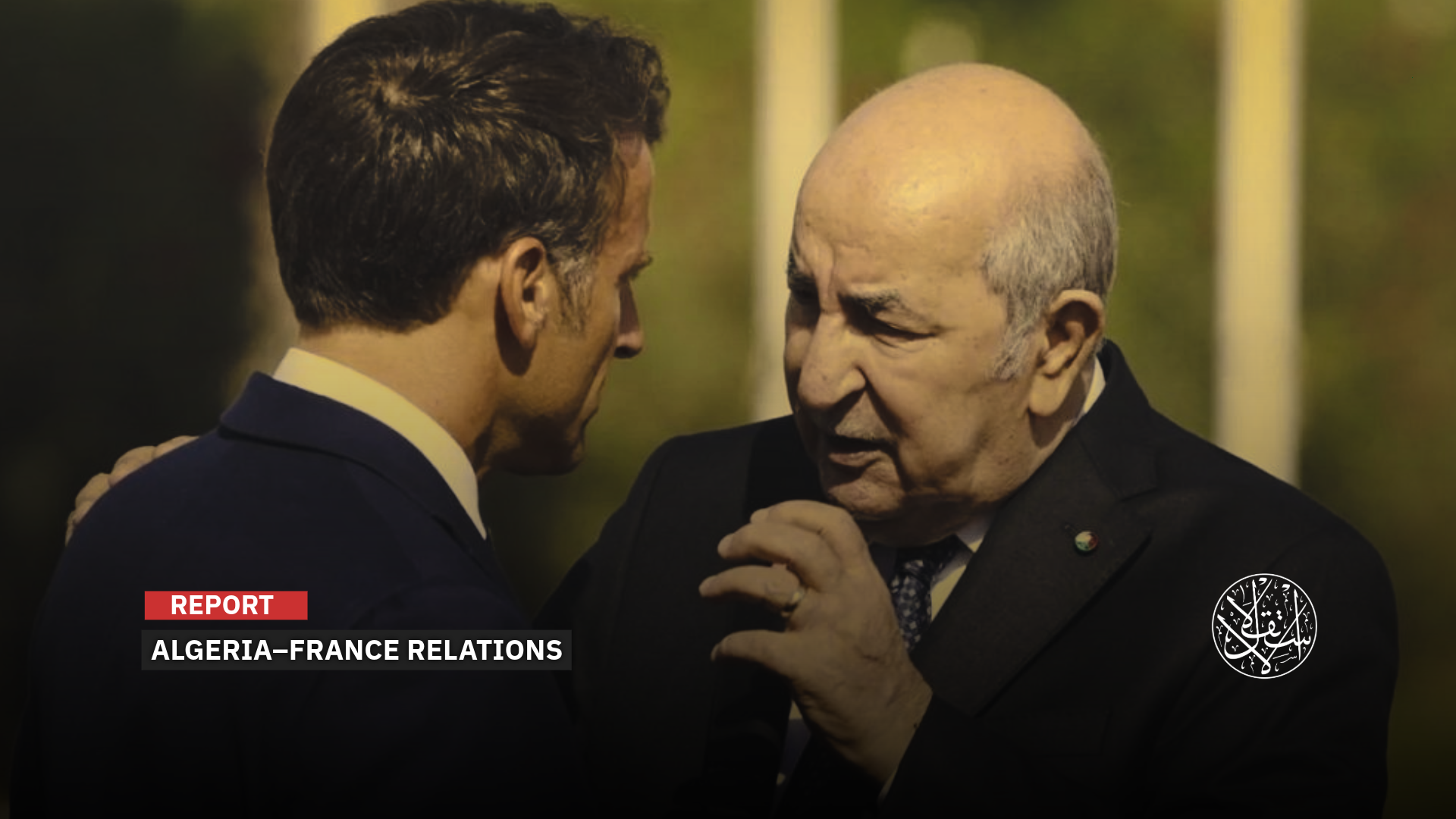
“The relationship with the Algerian regime will always be toxic.”
French Interior Minister Laurent Nunez’s visit to Algiers and the agreement it produced signal a tentative reset in Franco-Algerian ties, pointing to a transitional phase aimed at containing a crisis that has lingered since the summer of 2024.
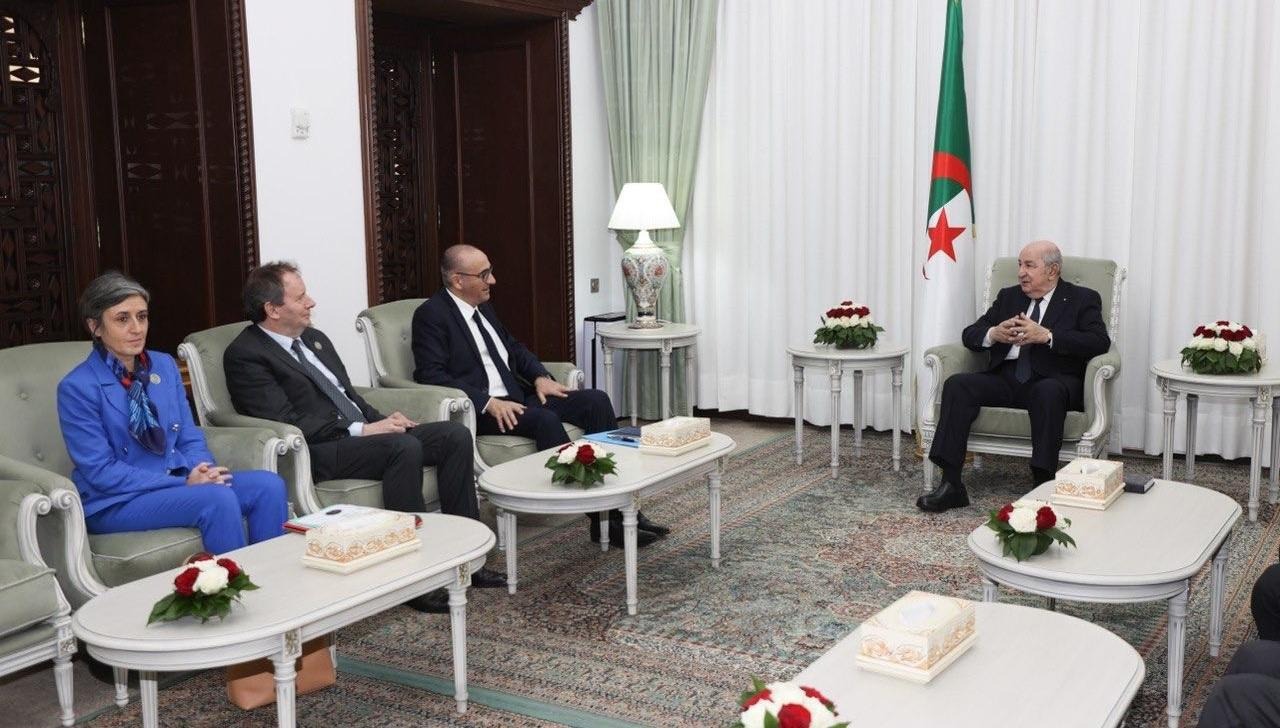
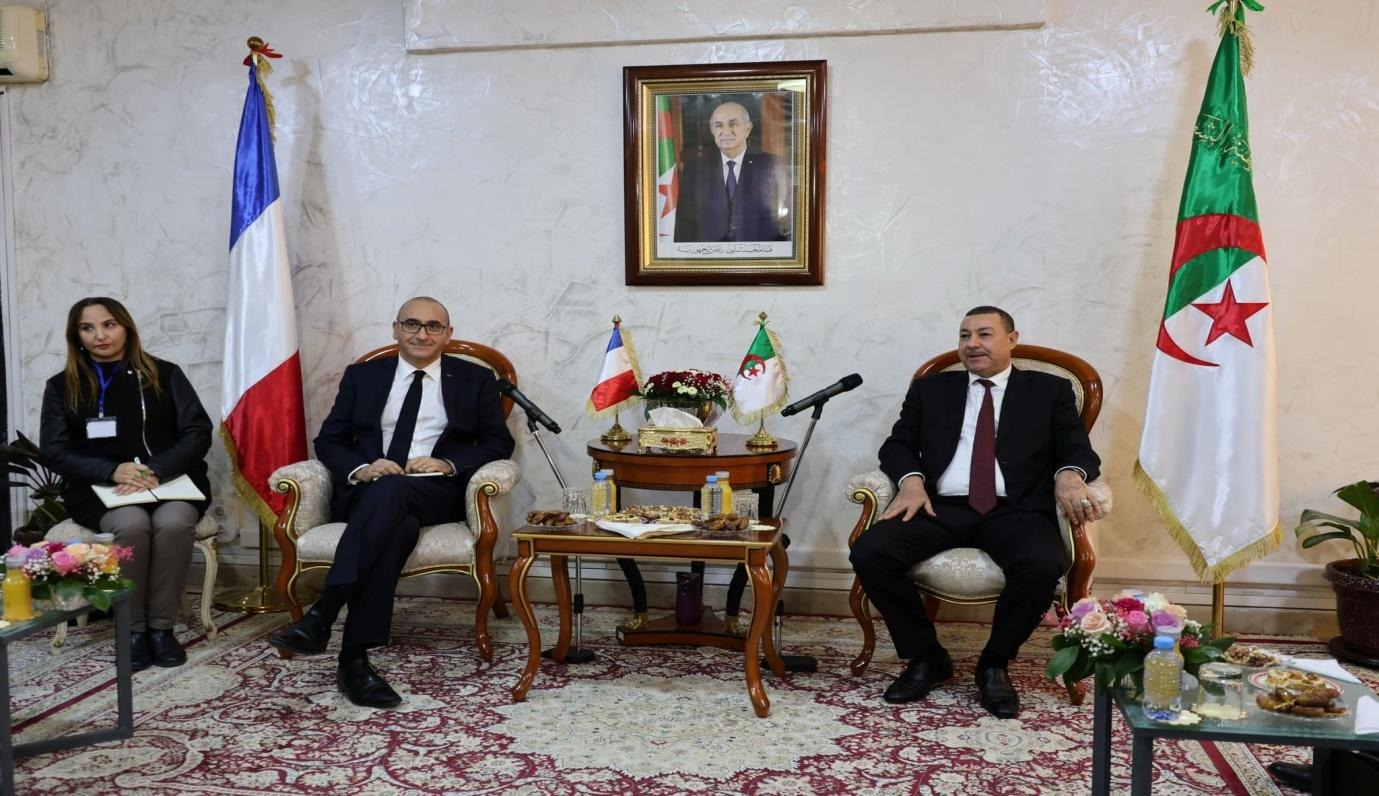
During a meeting with Algerian President Abdelmadjid Tebboune on February 17, 2026, the two sides agreed to reactivate security, intelligence, and judicial cooperation between Paris and Algiers.
Nunez arrived at Houari Boumediene International Airport, where he was received by Algeria’s Interior Minister Said Sayoud, in a visit that came in response to a formal invitation extended months earlier.
A Long-Awaited Breakthrough
Algeria’s Interior Ministry said the talks fall within an ongoing framework of bilateral consultations on issues linked to internal affairs, local governance, and transportation, particularly in security and technical areas that had stalled amid recent political tensions between the two countries.
Nunez said after his meeting with President Tebboune that he and his Algerian counterpart had agreed to revive a high-level security cooperation mechanism, paving the way for a return to what he described as “normal” security relations and their expansion across judicial, police, and intelligence cooperation.
The French minister voiced satisfaction with the move, saying implementation would begin “as soon as possible.”
On the scope of joint action, Nunez said Tebboune had instructed Algerian security services to work closely with their French counterparts to deliver tangible improvements in police and judicial cooperation.
He also pointed to sensitive files, particularly readmission procedures linked to Algerian nationals subject to deportation orders from France, stressing his expectation that security cooperation and migration issues would continue to be handled “at the highest level.”
Deportation remains one of the most contentious files between Paris and Algiers, with France pressing Algeria to issue consular authorizations for its nationals—undocumented migrants—who have been ordered to leave French territory. The issue carries particular weight given that the Algerian community is the largest Arab diaspora in France.
Former French socialist minister Segolene Royal, who recently visited Algeria as head of the France-Algeria Association, played an intermediary role during the visit, a move framed as part of an effort to “rebuild friendship” between the two countries.
In a report published on February 16, 2026, France 24 noted that the return of Algerian nationals living illegally in France remains the most sensitive issue in bilateral ties, pointing out that Algeria has so far refused to accept any of its citizens subject to French deportation orders.
The mood began to ease in November 2025, when Nicolas Lerner, head of France’s foreign intelligence service DGSE, said Algeria had sent what he called “positive signals,” suggesting a readiness to reopen diplomatic channels after more than a year of unprecedented tension.
Speaking to France Inter radio, Lerner referred to both public and private messages from the Algerian side, adding that France is ready for dialogue and has always been ready while standing by its long-standing demands.
He described relations since the summer of 2024 as among the most difficult since Algeria’s independence in 1962, marked by a sharp decline in security and counterterrorism cooperation. Even so, Lerner stressed that intelligence channels were never fully severed, saying that if Algerian services detected a threat to French territory, “I believe they would inform us, despite the level of tension.”
A Cascade of Crises
In late January 2026, Algeria declared the French ambassador, Stephane Romatet, persona non grata after his participation in a documentary aired by France 2—content Algiers said was offensive to state symbols and riddled with unfounded claims.
Nunez initially tied his Algeria visit to two conditions: the issuance of consular permits for deportations and progress on the case of French journalist Christophe Gleizes, sentenced in Algeria to seven years in prison on charges of “glorifying terrorism.” Days later, however, the French interior minister reversed course, agreeing to travel at the invitation of his Algerian counterpart without either condition being met.
In an interview with local media, President Tebboune responded to the French minister’s comments on the two conditions, saying, “Those statements are his alone, and if he wants to come, he is welcome.”
Since taking office in October 2025, replacing Bruno Retailleau, Nunez has favored dialogue with Algiers, arguing that years of pressure tactics and incremental escalation yielded little. Both governments have since elevated security coordination as a priority, hoping it might reopen a path toward more “normal” relations after ties soured badly in the summer of 2024, when France shifted its stance on Western Sahara in support of Morocco’s autonomy plan.
That pivot triggered a rapid diplomatic slide: Algeria recalled its ambassador from Paris, France pulled its envoy from Algiers in April 2025, and Algeria expelled 15 French consular staff following the arrest of one of its diplomats in France. Relations have repeatedly thawed only to relapse, weighed down by unresolved disputes tied to the legacy of French colonial rule from 1830 to 1962.
A Delicate Thaw
Journalist Boubekeur Belkacem said Nunez’s visit sent clear signals of a shared desire to reopen channels—starting with security and technical cooperation. Writing for Ultra Algeria on February 18, 2026, Belkacem argued that deportations sit at the top of the agenda, with tensions rising since autumn 2024 over Algeria’s refusal to readmit certain nationals, including those with consular papers or verified identities.
“According to a French diplomatic reading,” Belkacem added, “Paris is seeking to address what it sees as a bottleneck in deportations, recognizing that the ongoing situation is affecting bilateral relations and fueling domestic debate in France over immigration policy.”
Algiers, by contrast, appears keen to avoid letting a single file define the relationship. Broader security and economic interests—counterterrorism cooperation in the Sahel and efforts against transnational organized crime—necessitate a baseline of practical coordination.
Belkacem suggests Algeria is approaching this phase as a recalibration rather than a concession: reopening dialogue without offering direct political compromises on sovereignty-sensitive disputes. Reviving technical channels through interior ministries and security services, he argues, may ease political tension without resolving the deeper rifts that have shaped relations over the past two years.
High-Level Contact
Reacting to the visit, Jeune Afrique wrote on February 16, 2026, that Nunez’s trip to Algiers had effectively re-stitched the security thread between the two countries, marking the first high-level contact in nearly a year. The magazine noted that while the move carries clear symbolic weight, it remains confined to the security sphere, with the political track still frozen pending the restoration of direct contact between Presidents Abdelmadjid Tebboune and Emmanuel Macron.
Jeune Afrique said President Tebboune’s decision to welcome the French interior minister at the el-Mouradia Palace marked a clear change in Algeria’s stance after months of diplomatic freeze, noting that such a visit would likely not have happened had Bruno Retailleau remained in office, given the strains that defined his time in government.
The meetings, the magazine added, were “intense and frank,” focusing on highly sensitive files, foremost among them the enforcement of French deportation orders against Algerian nationals (OQTF)—cases Paris says have been stalled for more than six months due to the absence of consular authorizations from Algiers.
Despite the revival of security coordination, the political channel remains stalled. Tebboune and Macron have not spoken by phone since March 31, 2025—nearly a year—in a relationship shaped by deep, intricate historical ties.
Jeune Afrique argued that the lack of direct presidential contact has effectively “jammed the machinery” across multiple levels, even as some technical channels reopen. The result, it concluded, is a deliberate separation of tracks: security cooperation driven by mutual necessity and a political file awaiting a top-level understanding that has yet to materialize.
Journalist Sufyan Rajab offers a similar but more expansive reading. Writing on Le Point tn on February 18, 2026, he argued that while the visit and the agreements it produced appear technical and security-focused on the surface, they carry political implications that go well beyond procedure.
Algerian-French relations, he said, have never been fully stable, burdened by the weight of colonial history and the political and memory conflicts that followed.
Despite repeated attempts at de-escalation, Rajab noted, the relationship has remained hostage to a sensitive triad: memory, migration, and security. The reactivation of security and intelligence cooperation cannot be separated from the regional and international context, as the Maghreb and the Sahel face mounting threats—from smuggling networks and irregular migration to the persistent danger of armed groups across the Sahel.
For Paris, now rethinking its military role in Africa after pulling out of Mali and watching its influence wane across the Sahel, Algeria remains an indispensable security partner, prized for its strategic location and deep counterterrorism experience. For Algiers, maintaining its role as a central regional actor—and managing migration and border security on its own terms—remains a strategic priority.
In that sense, Rajab suggests, security pragmatism has temporarily eclipsed political and symbolic disputes. Nunez’s visit and the resulting security arrangements may amount to a working truce rather than a reset. If the two sides succeed in insulating technical cooperation from political friction, security coordination could gradually help rebuild trust—but the relationship, he concludes, remains governed more by mutual necessity than by genuine reconciliation. Today’s agreements may ease tensions, but they do not resolve the past or spare both sides from future tests.

A Tense Relation
Despite signs of tentative improvement in relations between the two countries, Bruno Retailleau, leader of France’s Republicans party and a presidential contender, argued that “the relationship with the Algerian regime will always be toxic.”
Retailleau, who previously served as France’s interior minister, has long championed a hard-line approach toward Algiers. Speaking to Europe 1 on February 19, 2026, he defended his record bluntly, “My approach worked. In dealing with a corrupt, authoritarian Algerian regime, should we have accepted dirty maneuvers?” he asked.
He went further, questioning whether France should have turned a blind eye to what he described as an attempted targeting of an Algerian opposition figure on French soil or remained silent while writer Boualem Sansal and journalist Christophe Gleizes remained behind bars. “The relationship with the Algerian regime will stay strained,” Retailleau said, arguing that Algiers routinely uses France as a scapegoat for its domestic failures. “There may be ups and downs, but no fundamental change.”
Retailleau also renewed calls to revisit the 1968 bilateral agreements that grant Algerians preferential status, suggesting visa quotas should be tied to professional training programs “in a way that commands respect for France.”
Other voices in Paris strike a more hopeful tone. The Public Senat suggested that the departure of the former interior minister signaled a genuine French desire to reopen dialogue with Algiers. In an analysis published on February 16, it noted that, from the Algerian perspective, Retailleau had been moving in the opposite direction from his successor.
Still, the outlet criticized the ambiguity of President Emmanuel Macron’s stance, pointing out that he has remained largely silent during a period when Franco-Algerian relations—traditionally a presidential domain—were under acute strain.
Diplomatically, Public Senat argued, the new interior minister appears less ideological than his predecessor, approaching the relationship through a technical and security-focused lens. With deep familiarity with regional security issues, particularly in the Sahel, he seems to recognize a basic reality shared on both sides of the Mediterranean: the absence of cooperation is simply not an option.
Sources
- French Interior Minister in Algeria to Try to Rebuild Ties [French]
- Algeria-France Relations After Months of Tension: Could the Security Agreement Mark a New Chapter? [Arabic]
- French Interior Minister in Algeria as Paris Hopes to Revive Security Cooperation [Arabic]
- Algeria Bets on Easing Tensions with France: Laurent Nunez’s Visit Reveals the Limits of Possible Rapprochement [Arabic]
- 'The Relationship with the Algerian Regime Will Always Be Toxic,' Warns Bruno Retailleau [French]
- Three Months After Boualem Sansal’s Release: Where Do Franco-Algerian Relations Stand? [French]