Fracture and Fading Trust, Munich Lays Bare the End of a World Order and the Dawn of a New Era
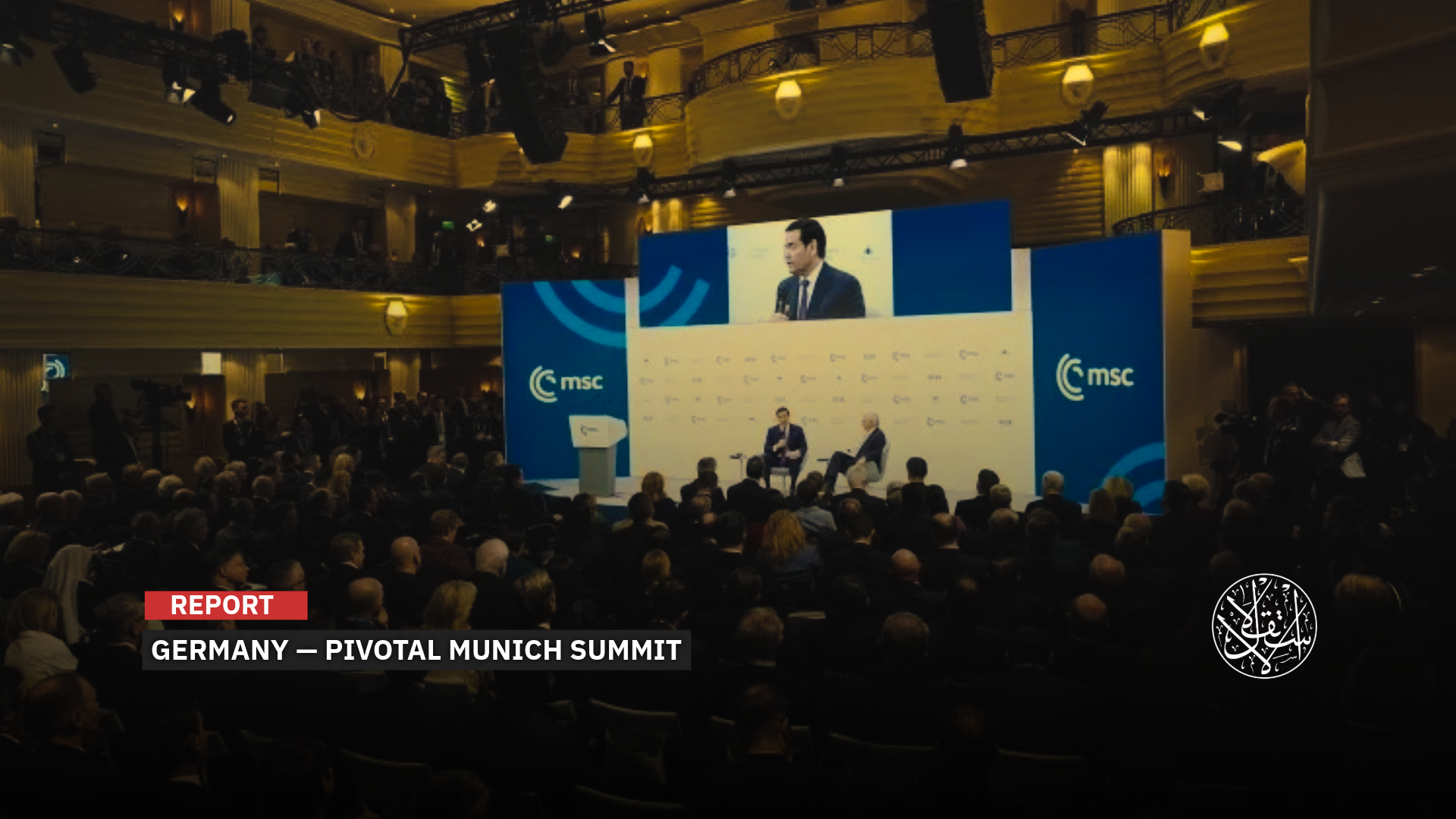
The world is entering an era where rules falter, alliances shift and global leadership is no longer assured.
The annual session of the Munich Security Conference convened from February 13 to February 15, 2026, in an atmosphere its organizers described as reflecting an unprecedented crisis of credibility and trust in transatlantic relations.
This assessment was voiced by conference chairman Wolfgang Ischinger, who acknowledged in his opening remarks that this year’s gathering was taking place amid deep tensions across the Atlantic and a marked decline in confidence in the durability of the existing international order.
The conference, founded more than six decades ago and defining itself as a transatlantic forum for security dialogue, is regarded as one of the world’s leading platforms for strategic debate.
More than 1,000 figures took part in the 2026 edition, including at least 200 government representatives from around 120 countries, according to organizational data released by its administration.
Coinciding with the event, the Munich Security Report 2026 was released under the title “Under Destruction,” concluding that the world is entering a phase in which political forces favor sweeping dismantlement of existing structures rather than gradual reform.
The report argued that the international order established after the end of World War II in 1945 is no longer merely under mounting pressure but is now exposed to a systematic process of dismantling.
It classified U.S. President Donald Trump among what it termed “demolition men,” referring to leaders whose policies, it said, contribute to undermining established international rules and institutions.
The report cited statements by Trump in which he said he “does not need international law,” describing this as an indication of a fundamental shift in Washington’s approach to the global order.
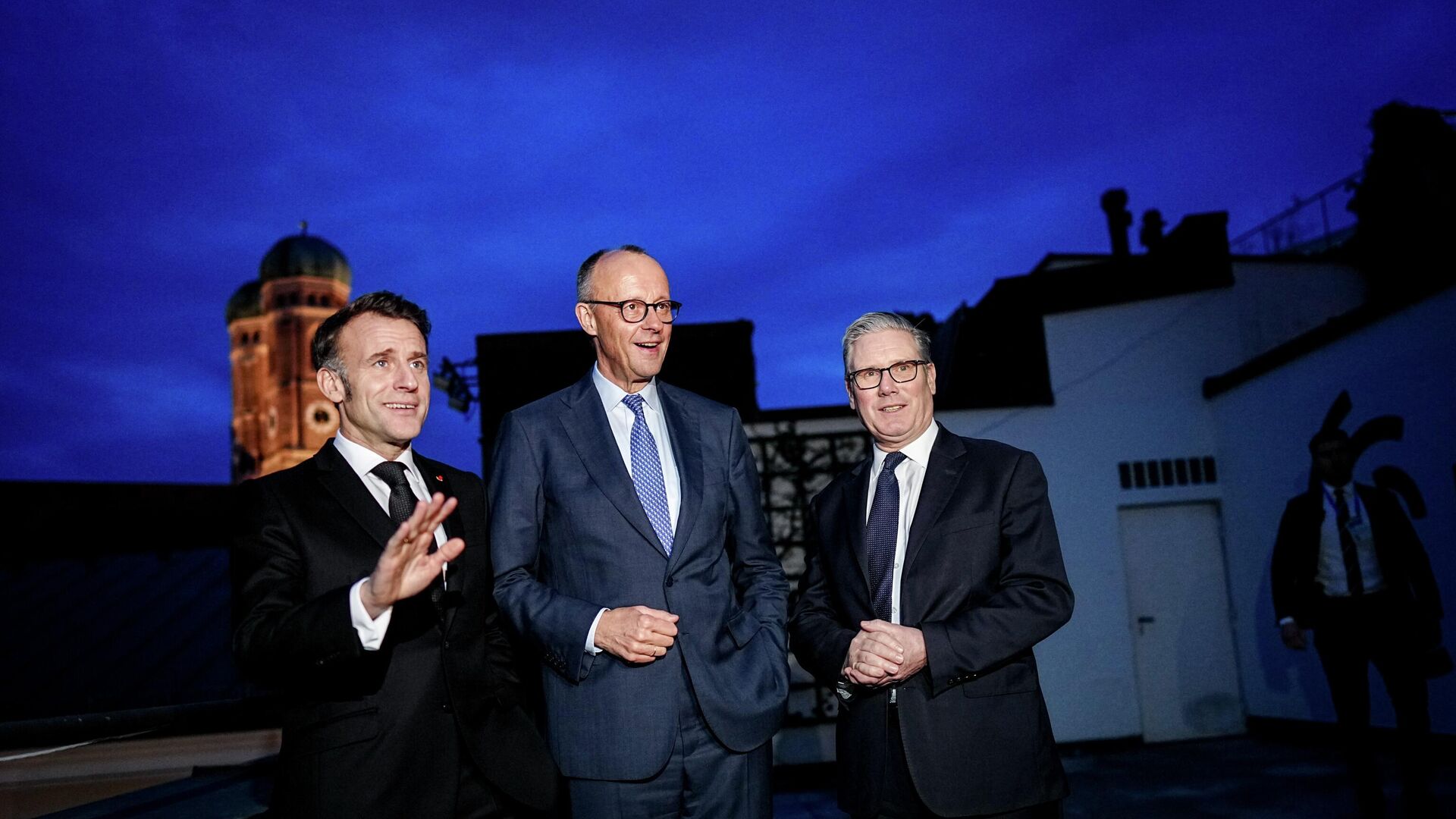
During conference sessions, French President Emmanuel Macron spoke bluntly, saying that “the old world order no longer exists,” and called for redefining Europe’s role on the international stage to reflect greater strategic autonomy.
German Chancellor Friedrich Merz stressed that the current phase requires Europe to assume greater responsibility for its own security, emphasizing the need to strengthen European defense capabilities and reduce excessive reliance on the American umbrella.
These remarks came amid wide-ranging discussions about the future of the European-American relationship, particularly one year after Trump began his second term, and the policies that accompanied it, which European circles have described as undermining traditional alliances and placing the foundations of the liberal international order under an unprecedented test.
Risk Perception
The Munich Security Index 2026, a regular survey attached to the annual report issued by the Munich Security Conference, revealed a notable shift in risk perceptions among participating countries, reflecting a change in the nature of the threats facing the international order.
While Russia had in past years been regarded as the greatest threat to European security, this year’s index results showed that the United States is now viewed in a number of European countries as a growing source of uncertainty, particularly regarding the stability of its foreign policy and the consistency of its international commitments.
Trade wars topped the list of the most serious risks according to the index, ahead of climate change, signaling rising concern over the fragmentation of the global economic system and the return of protectionist policies and economic rivalry among major powers.
The report noted that citizens of Group of Seven countries ranked cyberattacks, financial crises and disinformation campaigns as more pressing threats than environmental risks, reflecting a shift in the center of gravity of global anxieties from long-term challenges to immediate crises that directly affect political and economic stability.
The war in Ukraine occupied a broad space in the Munich deliberations, described as one of the foremost tests of the resilience of the international order.
During a special session, Ukrainian President Volodymyr Zelenskyy announced that Kyiv is working in coordination with the United States on a 20-point peace plan, describing the proposed agreement as “90% complete,” with sensitive issues, such as the Donbas region and the Zaporizhzhia nuclear power plant, still unresolved.
Zelenskyy stressed that any final agreement would be put to a public referendum inside Ukraine to ensure national legitimacy and involve public opinion in the decisive choice.
By contrast, Poland’s foreign minister warned that Russia could exploit the negotiation track to buy time and regroup, calling for continued Western military support for Kyiv and against any easing of pressure.
NATO Secretary-General Mark Rutte affirmed during the conference that Russia is not achieving decisive victories on the battlefield, but continues to advance despite sustaining heavy losses, underscoring that the alliance will continue to support Ukraine to ensure it enters any negotiations from a position of strength.
Rubio's Speech
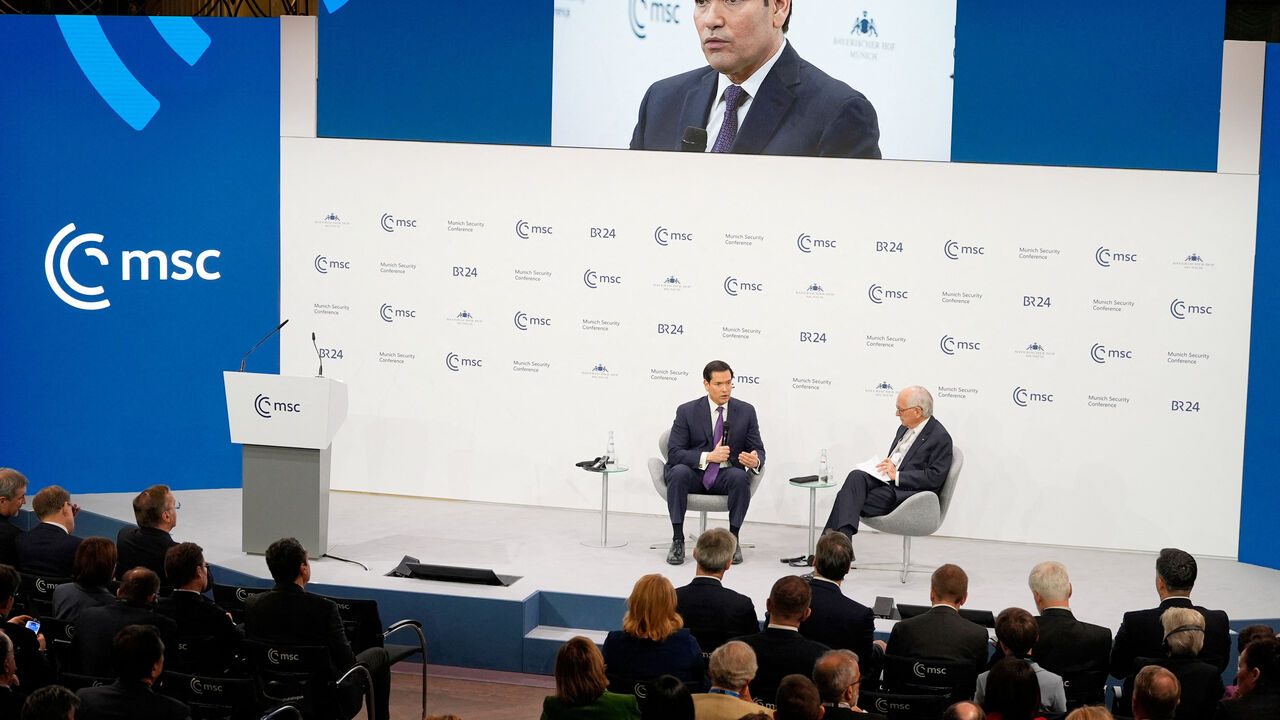
U.S. Secretary of State Marco Rubio told the Munich Security Conference that the United States and Europe “belong together,” stressing that the transatlantic alliance remains a cornerstone of international stability.
Rubio said the partnership should be grounded in confronting shared challenges, such as irregular migration and escalating technological threats, particularly those emanating from China.
At the same time, he emphasized that the partnership must align with U.S. policy priorities, in a clear nod to the “America First” approach, a stance that prompted caution among several European officials who argued that any transatlantic cooperation should be equal and not conditional.
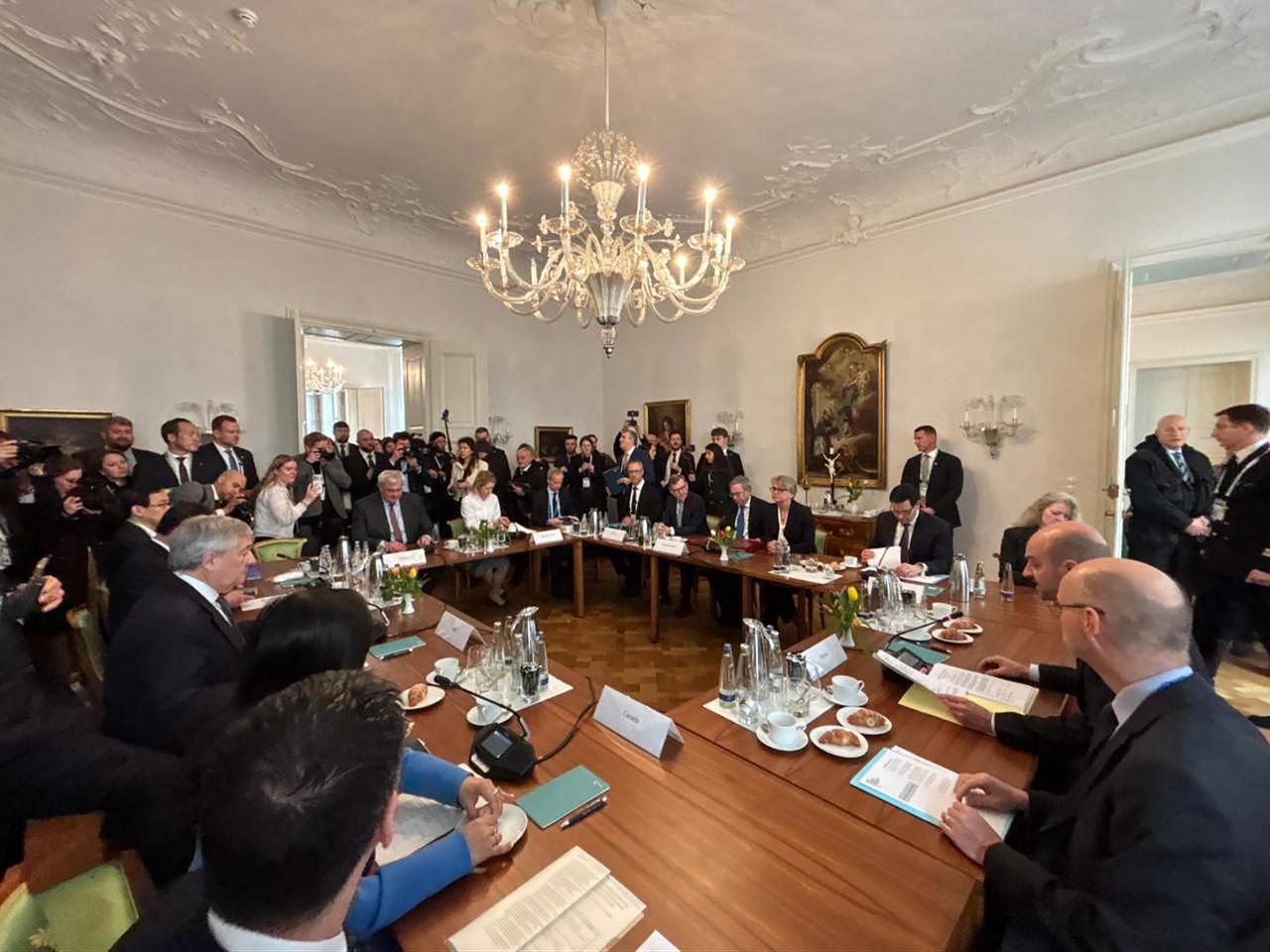
Among the issues raised on the sidelines of the conference was Greenland, following U.S. President Donald Trump’s renewed desire to acquire the strategically located Arctic island.
The issue, which revived a long-running debate, was seen by observers as a real test of the strength of U.S.-European relations, particularly given that those ties have formed one of the pillars of the international order since the end of World War II.
The Danish government described the U.S. proposals as “completely unacceptable,” while Greenland’s government reaffirmed its commitment to sovereignty. According to official statements, a working group was established to examine U.S. security concerns in the Arctic in an effort to contain tensions.
In the same context, countries such as Canada and France announced the strengthening of their diplomatic representation in Greenland’s capital, Nuuk, a move European circles interpreted as support for Danish sovereignty and a political message directed at Washington.
Amid these developments, European Commission President Ursula von der Leyen described the current phase as “shock therapy,” saying Europe must assume greater responsibility for its security and prosperity and avoid relying on past assumptions about the continuity of U.S. guarantees.
German Chancellor Friedrich Merz announced plans to enhance the capabilities of the German military to make it the strongest conventional force in Europe, alongside a notable increase in defense spending.
The question of European nuclear deterrence was also raised during closed sessions, amid growing concern over the potential weakening of the U.S. nuclear umbrella.
European reports warned of what they described as a “deterrence gap,” calling for consideration of independent European options to safeguard the continent’s strategic security.
Geoeconomics
The Munich Security Report 2026, issued by the Munich Security Conference, said international trade is the sphere most affected by what it described as the “systematic dismantling” of the international order.
The report said the United States and China have increasingly moved away from World Trade Organization rules, with a growing reliance on tariffs and reciprocal trade restrictions, reflecting a shift in competition between the two powers from a traditional economic framework to the logic of strategic rivalry.
It warned that this environment is disrupting global supply chains, raising the cost of essential goods and increasing the fragility of the international economy in the face of sudden crises.
The report also said the U.S. administration’s reduction of funding for international development programs is leaving a significant gap in the humanitarian aid system, exacerbating crises in fragile states.
Amid heightened uncertainty, investors are reluctant to commit new capital, risks in financial markets are rising, and the result is a slowdown in global growth alongside inflationary pressures that central banks struggle to contain through conventional tools.
In a related context, the International Politics Journal, affiliated with the Al-Ahram Center for Political and Strategic Studies, published a report on February 16 examining what it described as “securitization theory” and its implications for the debates at Munich 2026, noting a clear shift from the concept of “cooperative security” to “competitive resilience.”
According to the analysis, the securitization of economic and technological domains has enabled political actors to expand the scope of exceptional measures, so that industrial policy, once discussed as routine economic planning, has become directly intertwined with national defense considerations.
Export controls, foreign investment screening mechanisms and strategic subsidy policies have gained new legitimacy under the logic of “existential competition,” reflecting a shift in which the economy is no longer a sphere of integration but an arena of geopolitical confrontation.
This process embodies what securitization theory describes as “security expansion,” once an issue is framed as an existential threat, adjacent domains are absorbed into the security sphere, ultimately producing an inflated security agenda that reorders government priorities and redefines the relationship between economics and security in the international order.
China and Russia
As Western debate intensified over the future of the international order, the positions of other major powers came into sharper focus during sessions of the Munich Security Conference, with China and Russia each outlining their vision of a world system in transition.
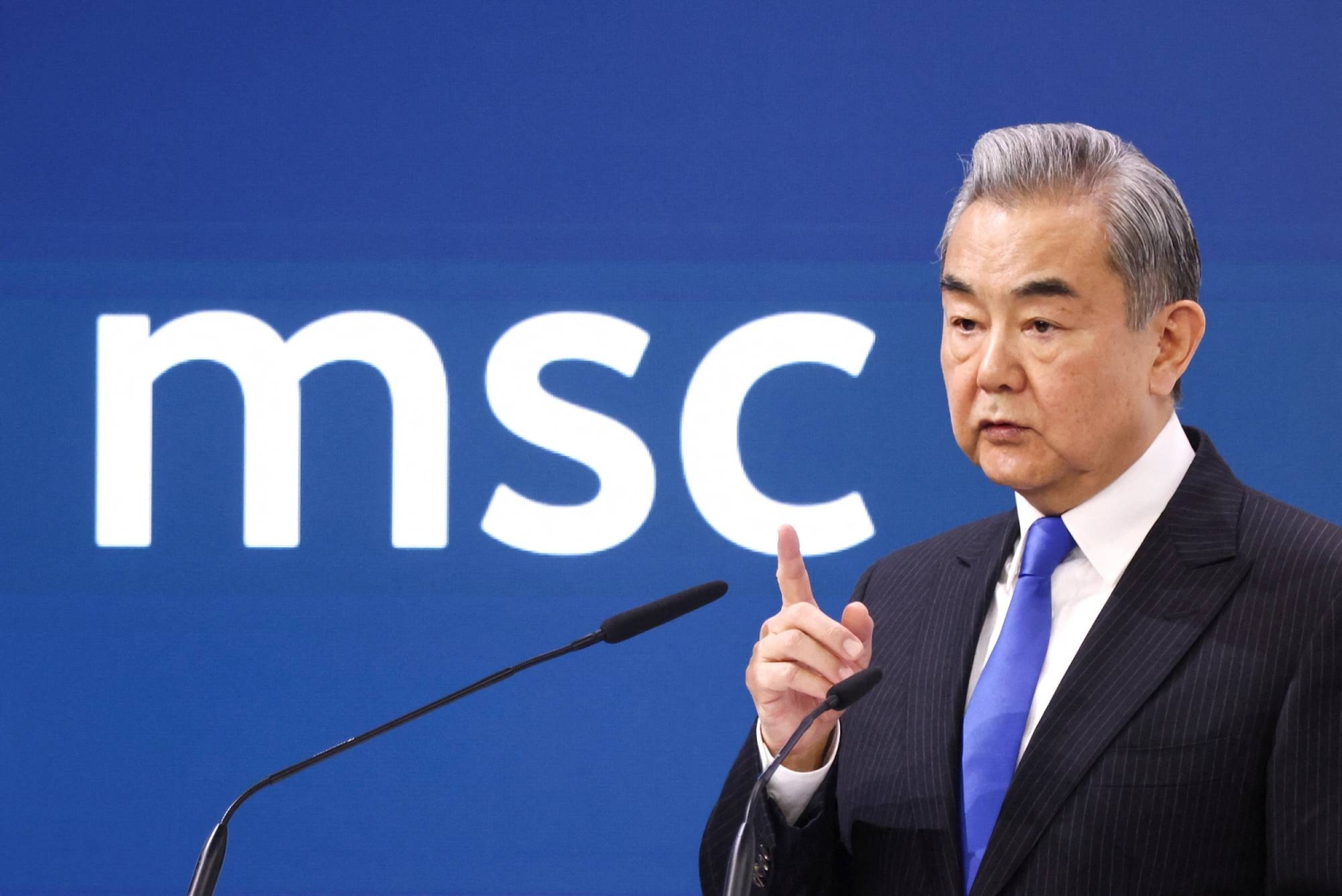
In his address to the conference, Chinese Foreign Minister Wang Yi called for “genuine multipolarity” based on respect for state sovereignty and noninterference in internal affairs, saying Beijing supports the United Nations system and free trade as pillars of international stability.
The proposal did not pass without objection. Representatives from Taiwan accused China of carrying out military provocations around the island, arguing that rhetoric about respecting sovereignty sits uneasily with mounting military pressure.
Russian Foreign Minister Sergey Lavrov said the “Western rules-based order” has effectively ended, calling for the construction of a new security architecture in Eurasia built on the principle of “indivisible security,” a reference to Moscow’s rejection of post-Cold War arrangements. He also accused European countries of attempting to derail peace initiatives related to the war in Ukraine.
Alongside the political debates, financial circles entered the discussion.
U.S. investor Ray Dalio, founder of Bridgewater Associates, posted on the platform X that Munich 2026 reflects signs of the end of the world order formed after World War II.
Dalio urged investors to reduce exposure to debt and turn to gold as a hedge, citing what he described as rising risks of global instability.
He linked that call to what he terms the “Big Cycle of Internal Order and Disorder,” a theory he advances about the recurring rise and decline of great powers, warning that competition among major powers, alongside trade and technological conflicts, could evolve into military confrontations if not managed with caution.
A World in the Making
In a statement to Al-Estiklal, Ahmed Ragab, a researcher at Aydin University in Turkiye, said the Munich Security Conference 2026 did not present a clear road map for the international order, but it laid bare the nature of the transitional phase the world is living through.
He added that discussions in the conference corridors reflected three main scenarios circulating within strategic circles.
He explained that the first scenario is one of tense multipolarity, in which economic and technological rivalry among major powers continues without sliding directly into all-out war.
It is a model built on sharp competition under the ceiling of mutual deterrence, with disputes managed within calculated limits.
The second scenario envisions a fragile, chaotic system governed by temporary alliances that form and dissolve quickly, alongside recurring financial crises and disruptions in supply chains, making international stability more precarious than ever and weakening the ability of international institutions to absorb shocks.
The third scenario, according to Ragab, points to a major indirect confrontation conducted through proxy wars and proliferating regional crises on the periphery of the international order, resembling what parts of the world are witnessing today, but on a broader and more dangerous scale.
The researcher said the overarching message emerging from Munich was clear, the world is entering a phase in which rules are no longer stable, alliances are no longer fixed and international leadership is no longer guaranteed.
He argued that the title of this year’s security report, “Under Destruction,” is no longer merely a theoretical description, but reflects a growing awareness among decision-makers that the order established after World War II is undergoing profound dismantling.
Ragab added that the question lingering in the background of discussions, even if not explicitly posed, is whether this dismantling will lead to a more balanced and multipolar system, or to a strategic vacuum contested by major powers without clear constraints.
On transatlantic relations, Ragab stressed that the conference revealed a noticeable widening of the gap between the United States and Europe.
He said the isolationist approach adopted by the current U.S. administration has served as a “wake-up call” for Europe, prompting it to rethink the concept of security dependence on Washington.
He added that this shift could in the future affect the scale of U.S. global influence and, in turn, reshape Europe’s position in confronting Russia, while opening the door to the formation of new regional alliances and blocs outside the traditional framework that has governed international relations for decades.
Ragab concluded by saying Munich 2026 was not an ordinary conference, but a pivotal moment that showed the world moving faster than its institutions can absorb, and that the phase of reshaping the international order has effectively begun, even if its final contours have yet to become clear.
Sources
- Munich Security Conference 2026: Global Economy Under Pressure from 'Demolition Policies' [Arabic]
- Munich Security Conference: Trump's 'Demolition' Policies and the European Response [Arabic]
- Munich Security Conference: Four Takeaways Shaping a New World [Arabic]
- Munich Security Conference 2026: Macron Says Europe 'Must Act Proudly, Not Be Vilified'
- Kelly Rails Against Trump as Munich Security Conference Ends