Benishangul-Gumuz Camp: How It Became a UAE-Ethiopian Support Hub for the RSF Militia
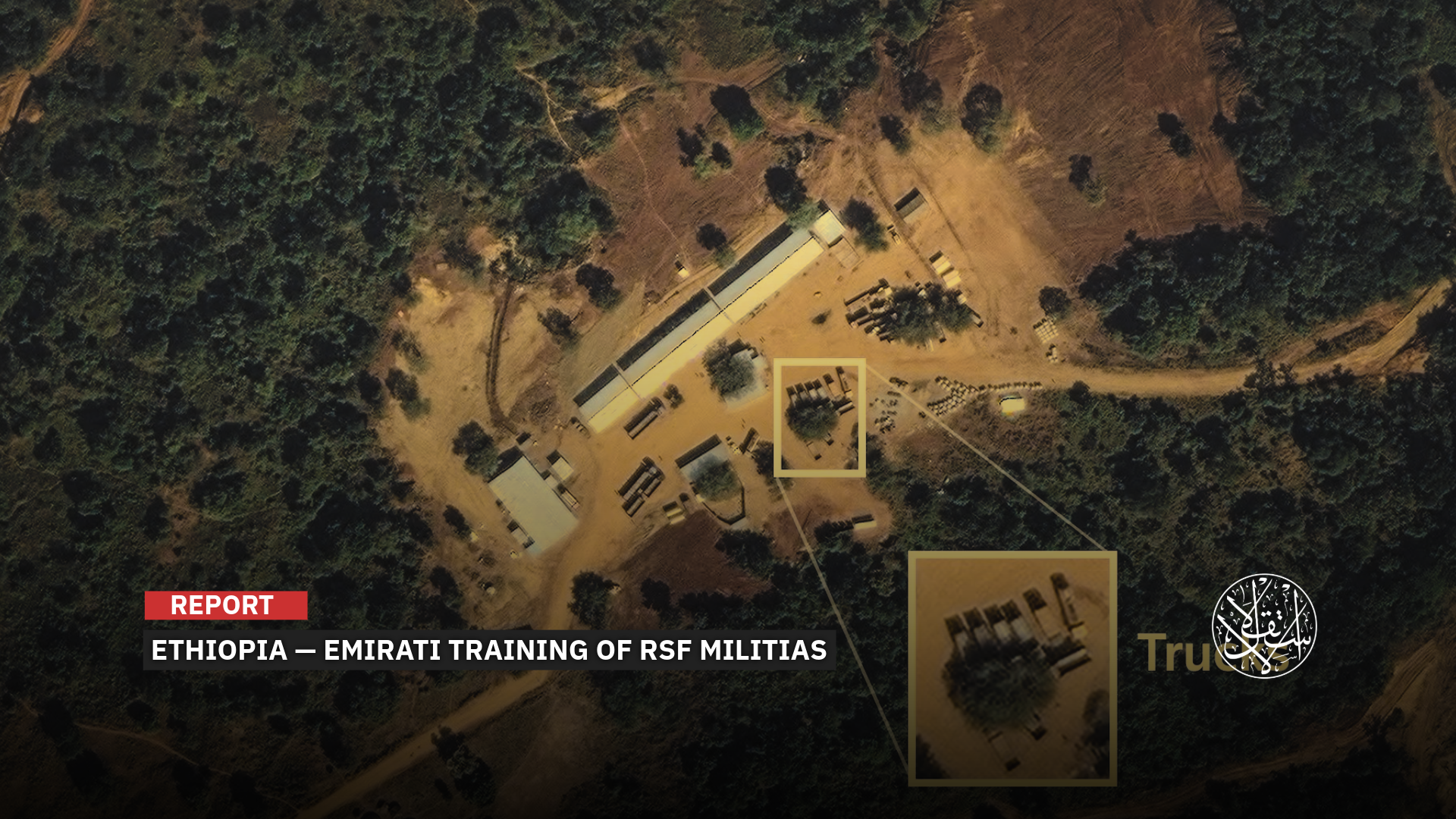
Trucks bearing the logo of the Emirati company GORICA Group were spotted passing through the town of Asosa.
The war in Sudan is no longer just a civil conflict sparked by a power struggle in Khartoum. It has steadily evolved into an open regional confrontation, where military supply lines blur into political alliances, and geography collides with hard strategic calculations.
What Reuters revealed on February 10, 2026, about a secret training camp in western Ethiopia preparing thousands of fighters for the Rapid Support Forces (RSF) militias, with Emirati financing and logistical and military backing, was not a minor security detail. It marked a turning point, signaling that the war has entered a new phase, one in which key operations are being planned and executed beyond Sudan’s borders.
At this point, Benishangul-Gumuz is no longer just a remote region on the edge of the Ethiopian highlands. It has become a potential military hinge in a dense regional equation that stretches from the Grand Ethiopian Renaissance Dam and the Blue Nile to Abu Dhabi and Addis Ababa.
The camp is located in the Menge area of Ethiopia’s Benishangul-Gumuz region, about 20 miles from the Sudanese border and roughly 63 miles from the Grand Ethiopian Renaissance Dam. The choice of location was far from accidental. The region sits at a geographic crossroads linking Sudan, South Sudan, and Ethiopia and lies close to Sudan’s Blue Nile state, which has recently emerged as an increasingly active front in the war.
This positioning allows any force stationed there to move quickly into Sudan’s battlefield while also placing the camp within a delicate security balance indirectly tied to the protection of the dam, one of the most contested and sensitive projects in East Africa.
Field data suggest construction began in April 2025, with forested areas cleared and metal structures erected. Activity accelerated noticeably in the second half of October, as the camp expanded and convoys of vehicles began arriving. Satellite images taken on November 24 showed more than 640 near-square tents, enough to accommodate at least 2,500 people in an initial phase.
A diplomatic cable from the same month, however, suggested the site could ultimately house up to 10,000 fighters, a scale that, in the view of analysts, goes well beyond a limited training facility and points instead toward preparations for a broader regional escalation.
Emirati Funding
Available evidence shows the camp has expanded sharply in recent months. An internal memo from Ethiopian security services indicates that around 4,300 fighters were undergoing training at the site as of early January 2026.
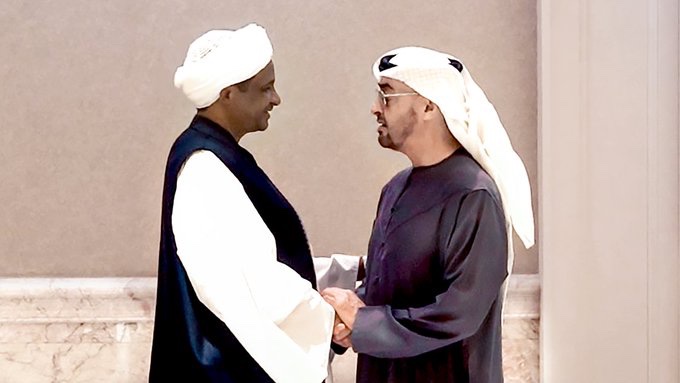
The same information suggests that the camp’s logistical and military supplies were provided through Emirati funding, with military trainers embedded in its operational structure. Taken together, this points to a high level of organization and sustained external backing.
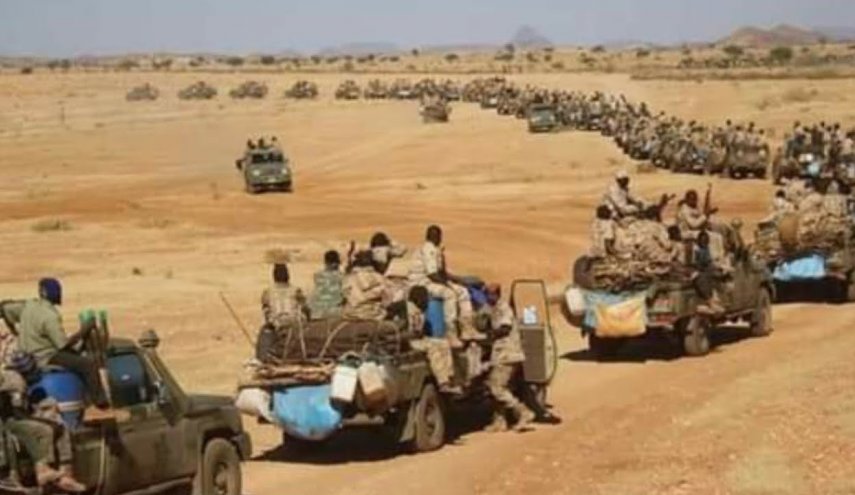
In mid-November, two large convoys were observed heading toward the camp along dirt roads in western Ethiopia. The first included 56 trucks, each carrying between 50 and 60 fighters. A second convoy arrived just two days later with roughly 70 trucks. The scale and coordination of these movements reflected an organized mobilization that is difficult to separate from high-level political and security decisions.
The composition of the trainees underscores the camp’s regional dimension. Recruitment was not limited to Sudanese fighters but also included Ethiopians and individuals from South Sudan, alongside Sudanese nationals believed to have links to the Sudan People’s Liberation Movement–North, which operates in Sudan’s Blue Nile state. A senior figure in the movement has denied the presence of any affiliated militia inside Ethiopian territory.
This diversity points to an effort to assemble a flexible force capable of being deployed across multiple fronts inside Sudan, strengthening the RSF’s ability to offset battlefield losses and reposition on the ground.
At the administrative level, information indicates that General Getachew Gudina, head of military intelligence within Ethiopia’s National Defense Forces, played a central role in establishing the camp. This has been confirmed by government officials and diplomats, placing the project firmly within an institutional military framework rather than a marginal local initiative.
The Emirati role appears at several levels. Beyond financing and training, trucks bearing the logo of the UAE-based company Gorica Group were spotted passing through the town of Asosa toward the site in October 2025, signaling the presence of a logistics network linked to Abu Dhabi in the camp’s vicinity.
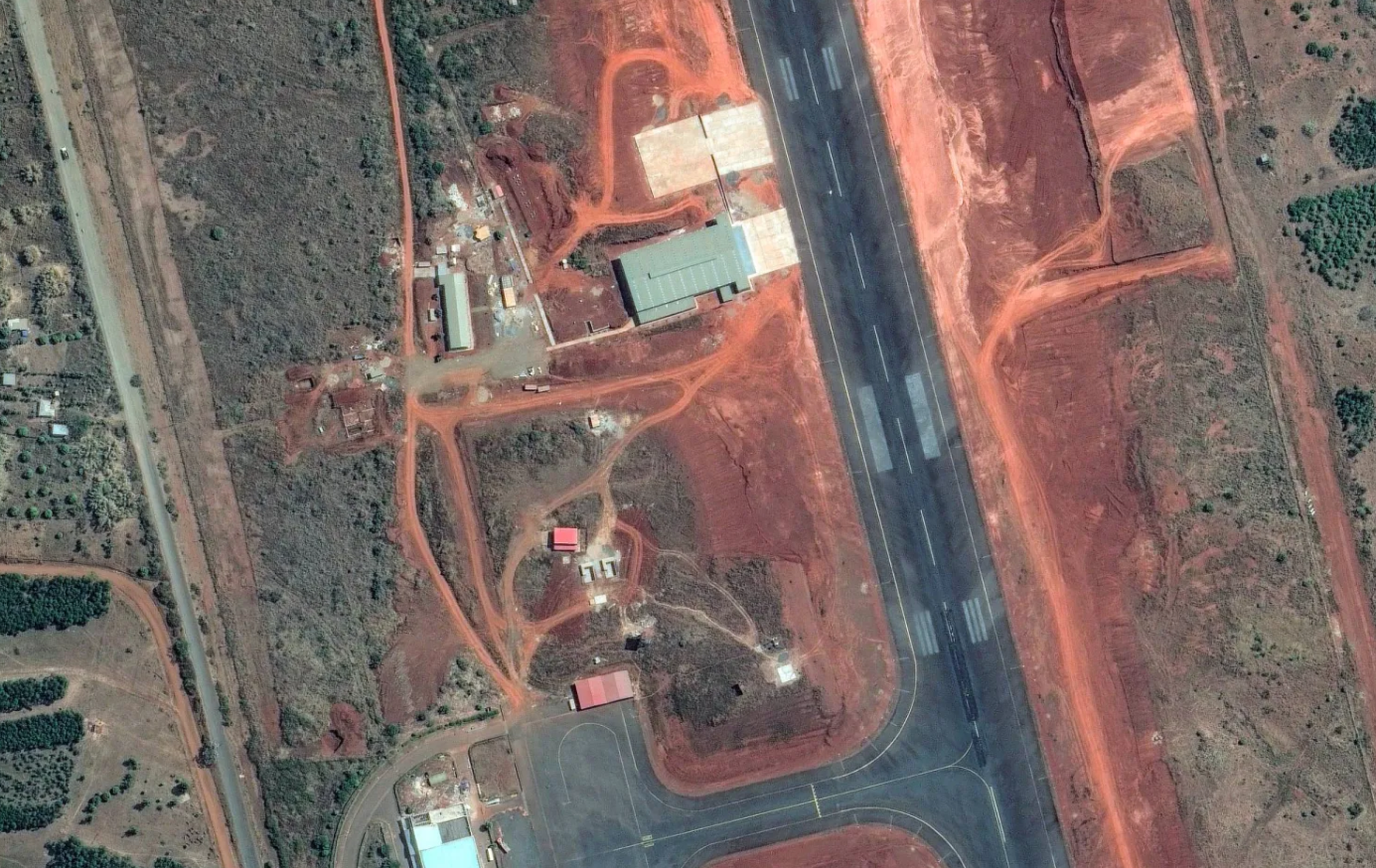
The picture becomes clearer when Asosa airport is taken into account. Located about 33 miles from the camp, the airport has undergone expansion since August 2025, including the construction of a new hangar, paved areas near the runway, and infrastructure for a drone ground control station and satellite antenna.
These additions mark a shift in the airport’s function, from a modest regional facility to a potential platform for aerial operations and surveillance. According to government and military sources cited by Reuters, there is a plan to turn the airport into a drone operations hub as part of a broader strategy to enhance air presence along the western front.
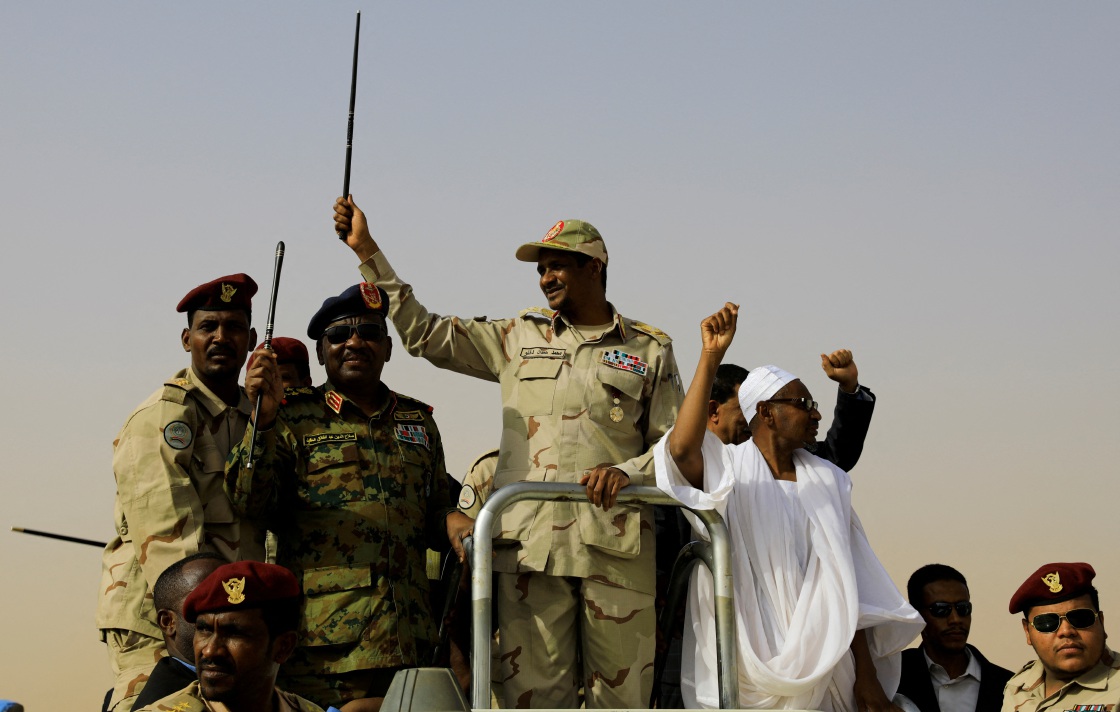
Security analysts say the airport’s expansion may also be linked to the growing presence of the Rapid Support Forces in the region, turning it into a cross-border logistical hub, especially as reports indicate the upgrades were funded with UAE support as part of a broader defense partnership.
An Old Partnership
The relationship between Ethiopia and the United Arab Emirates (UAE) is not a recent development. It stretches back years and has steadily deepened on both the economic and military fronts. In 2018, after Ethiopian Prime Minister Abiy Ahmed came to power, Abu Dhabi pledged $3 billion in aid and investments, including $1 billion to support Ethiopia’s central bank. The move signaled a clear effort to entrench Emirati economic and strategic influence in the country.
By 2025, cooperation had taken on a more overtly military character. The air forces of both countries signed a memorandum of understanding to develop aerial and defense capabilities, giving institutional form to their growing security ties. That history now raises a sharper question: whether this partnership has moved beyond economic and strategic support into the realm of managing field operations tied to an open regional conflict.
The question carries added weight given the UAE’s past role in Sudan. Abu Dhabi has previously been accused of backing Ethiopia during tensions over the disputed al-Fashaga border area between Sudan and Ethiopia, a crisis that left a lasting mark on Sudanese political consciousness.
In May 2021, an Emirati initiative sparked widespread controversy in Sudan. According to reports at the time, the proposal called for the Sudanese army to withdraw to positions held before November 2020 and for the al-Fashaga lands to be divided: 40 percent to Sudan, 40 percent to Emirati investment companies, and 20 percent to Ethiopian farmers, under a joint investment scheme in the border region.
The initiative was broadly rejected inside Sudan, both publicly and politically. Malik Agar, then a member of Sudan’s Transitional Sovereignty Council (TSC), criticized the proposal, arguing that a country across the seas had no right to determine the fate of Sudanese land. Speaking at a seminar in Khartoum, he dismissed the plan as absurd.
The National Umma Party (NUP) echoed that view in a statement, insisting that the Sudanese people were fully capable of developing their land with their own resources, without ceding any part of it.
For many Sudanese, today’s developments appear far more dangerous. The issue, in this view, is no longer about investment schemes or border arrangements but about allegations of direct military support to actors in an ongoing war. Sudan has become an open battlefield where regional and international interests collide, deepening an already fraught security and political landscape.
Congress Steps In
The fallout from the exposure of the secret camp in western Ethiopia did not stay confined to the region. It quickly reached Washington, where the issue entered the U.S. political arena. On February 14, 2026, the U.S. House Foreign Affairs Committee (HFAC) condemned the findings in the Reuters report detailing Emirati funding and support for a training camp used to prepare fighters linked to the RSF militia.
In a statement posted on its official account on X, the HFAC warned that foreign backing for such camps does nothing but fuel the war in Sudan at a moment when concerns are mounting that the conflict could spill far beyond its current borders.
The committee’s top Democrat, Gregory Meeks, said he would continue to place a hold on all major U.S. arms sales to the UAE, as well as to any country proven to be backing the RSF or any other actor involved in Sudan’s war.
Meeks said his position was driven by revelations that Ethiopia had hosted a training camp for RSF militia fighters financed by the UAE, warning that such developments carry serious risks and could push Sudan and the wider region toward deeper escalation.
He has previously described RSF abuses as “genocide” and “crimes against humanity” and has repeatedly called for tough sanctions on international actors he says are helping prolong the war, including Abu Dhabi.
Meeks has also criticized Washington’s plans to supply weapons to the UAE, arguing that such deals should not move forward without explicit congressional approval.
Rep. Sara Jacobs said Sudan’s humanitarian crisis has reached catastrophic levels, with millions of civilians facing the risk of death amid the collapse of security and the lack of shelter, food, water, and medical care.
Jacobs called for an immediate halt to U.S. arms sales and urged efforts to push all external actors out of the conflict, starting with the UAE.
Against this backdrop, the Benishangul-Gumuz camp is no longer seen as a remote military training site. It has become a symbol of a new phase in the internationalization of Sudan’s war, one in which a struggle that began as an internal power fight is now being shaped by cross-border support networks and regional alliances.
As fighting drags on and political initiatives stall, Benishangul-Gumuz is increasingly viewed as more than a peripheral border region. It is emerging as a potential strategic node in a broader regional equation that could reshape Sudan and the Horn of Africa for years to come.