Technology and Associations: How Germany Became a Target for Chinese Espionage
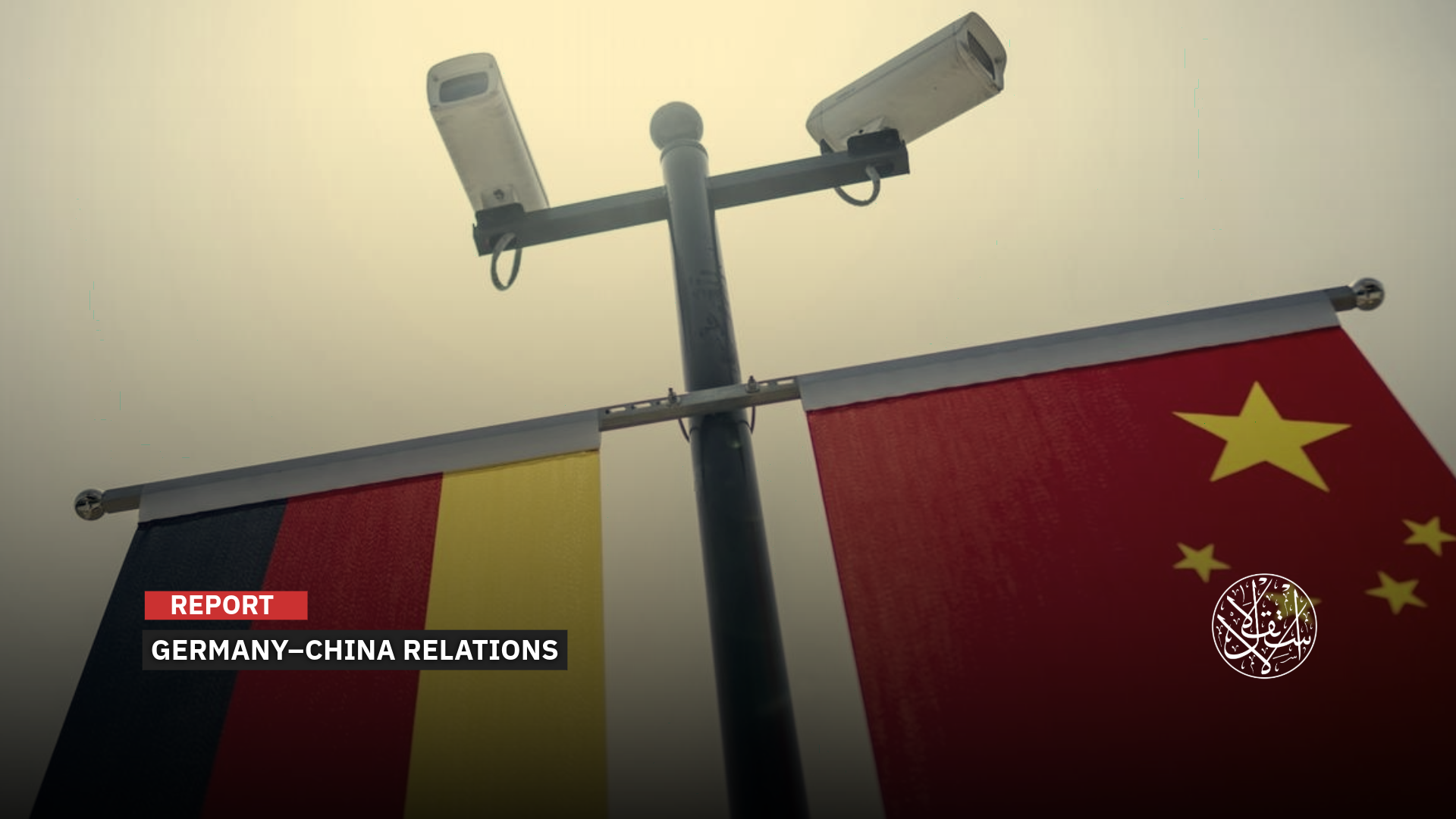
“The German government is monitoring a significant threat posed by Chinese espionage.”
Germany is experiencing a period of uncertainty amid growing warnings of increased Chinese espionage activity within the country, posing security threats and concerns, and potentially increasing Beijing's influence. This raises serious risks to numerous vital sectors in Germany.
With the use of foreign technology, particularly Chinese technology, facing increasing criticism in recent years, security reports indicate that the primary concern revolves around network security, despite Chinese companies being legally obligated to cooperate closely with relevant German authorities.
There is growing concern that companies like Huawei and ZTE, under orders from the leadership in Beijing, might install security vulnerabilities in Chinese vehicles, for example, to facilitate espionage through IT and telephone networks in the event of a crisis that could disrupt power grids, transportation systems, and hospitals.
Several years ago, German officials announced the discovery of so-called Chinese shadow security centers on German soil. These centers, according to several European countries, were established by Beijing to monitor Chinese citizens abroad who are critical of communism.
German Concerns
The Federal Ministry of the Interior has recently expressed concern about potential Chinese espionage through the risks posed by Chinese-made cars, which are gaining an increasing market share in Germany, and is taking this potential espionage threat very seriously.
The President of the State-Agency for the Protection of the Constitution in Thuringia, Stephan Kramer, warned of the risks to data posed by Chinese electric cars.
In an interview with the German business daily Handelsblatt, Kramer stated that “the risk of espionage from Chinese electric cars is real.”
He clarified that this does not refer to traditional espionage but rather to large-scale data collection, explaining that the severity of the risk depends largely on where the car is used and on the user.
He considered this risk to be particularly high in sensitive security sectors such as the German military, police, critical infrastructure, and government agencies.
He pointed out that simply transferring location data to external IT systems via cloud computing is a problem in itself.
For sensitive research and development companies, Kramer believes the risk level ranges from medium to high.
He argues that this classification applies particularly if the vehicles regularly travel to research sites, are used by executives, or function as mobile conference rooms.
According to him, electric cars in general, not just Chinese ones, inherently pose a risk of espionage. He stated, “Modern electric cars are mobile computers.”
He pointed out that they record and transmit a vast amount of information, including location and movement, data from inside the cabin via microphones or cameras, phone data and smartphone contacts, driving style information, and environmental data via driver assistance systems.
The German Interior Ministry intends to monitor the situation. A ministry spokesperson told the same newspaper, “Given the increasing market share of Chinese companies in Europe, the geopolitical situation, and China's ambitions, there is a need to closely monitor the potential risks posed by Chinese cars.”
He noted that Chinese cars are equipped with highly complex and interconnected systems that generate, store, and transmit vast amounts of data.
Under EU law, manufacturers are obligated to adequately protect vehicles from cyberattacks and prevent unauthorized access to their data.
However, the volume of data generated and how it is transferred is often unclear to customers.
A spokesperson for Germany's Federal Office for Information Security (BSI) noted the difficulty in verifying the actual use of data by manufacturers, particularly abroad.
On the other hand, the role of friendship associations in Chinese espionage is highlighted, according to Capital.
A report stated that totalitarian states, including China, use opaque business associations as a gateway for their propaganda and espionage networks, blurring the lines between legitimate information gathering and illegal intelligence activities.
To conceal financial flows, Chinese individuals operate a network of small limited liability companies. Regional hubs for these networks include cities such as Dusseldorf, Munich, and the Rhineland.
In 2022, the annual report of the Federal Office for the Protection of the Constitution revealed the existence of illegal parallel structures, stating that China operates what it calls police stations around the world, gathering information and disseminating ideological directives.
Investigations indicate that these associations remain active in Germany, operating within the Chinese restaurant sector or through the heads of heritage associations.
An investigative report by Bayerischer BR24 and SWR revealed a network called the China United Front, composed of businessmen and politicians at the European level.
This network has connections extending into the corridors of German politics and operates covertly through cultural associations, reporting directly to the Central Committee of the Communist Party of China. Its objective is to control the Chinese diaspora and maintain its allegiance to the ruling party.
Chinese President Xi Jinping describes these networks as a magic weapon for uniting the Chinese people worldwide.

Systematic Espionage
Last year, the German Ministry of Education urged universities to exercise caution when collaborating on joint projects with China, following an increase in Chinese espionage activities.
China consistently denies these accusations, describing them as politically motivated fabrications aimed at undermining trust between the two countries.
Last year, three German citizens were arrested in Dusseldorf and Hamburg on suspicion of obtaining sensitive military technology information with the intention of transferring it to China.
Despite the seriousness of these issues, China has been careful to emphasize that it does not seek to harm its relations with Berlin, describing Germany as an important long-term trading partner.
In fact, the Chinese Foreign Ministry summoned the German ambassador to China to register its objection to what it called irresponsible allegations emanating from Berlin.
Economically, Germany views China as a vital market for its exports, particularly in the automotive and engineering technology sectors, but it also recognizes it as a strong systemic competitor.
China has been Germany's top trading partner for years, with bilateral trade reaching approximately $266.68 billion in 2023.
The two countries have maintained a strategic partnership since 2014, encompassing cooperation in industry, energy, and scientific research.
However, behind this cooperation, German intelligence reports confirm a significant Chinese interest in German scientific and industrial developments, bordering on systematic espionage.
In the 2021 academic year, statistics showed that approximately 40,000 Chinese students were studying at German universities under bilateral agreements.
Although these figures reflect the openness of the German education system, concerns have grown that the liberal nature of research may allow some individuals access to projects related to the arms industry or military applications, especially if they continue working in Germany for years after graduation.
China is aware that its industrial dominance and Germany's dependence on the Chinese market could limit Berlin's ability to exert political pressure on sensitive issues such as the Uyghur minority, Hong Kong, and the situation in Tibet.
In this context, the annual losses to the German economy resulting from espionage activities are estimated at around €200 billion.
Experts suggest that this figure could be even higher, as many companies do not disclose data on losses for fear of damaging their reputation or investor confidence.
The importance of Chinese espionage lies in the principle of knowing the adversary before any confrontation, which has led China to focus on universities, company acquisitions, and direct investments.
China reinforced this approach with a fundamental law issued in 2017 that obligates any organization or citizen to cooperate with intelligence agencies upon request.
This law, in Berlin's view, poses an additional risk because it makes any Chinese student, researcher, or employee potentially involved in intelligence work.

Pragmatic Policy
The German government announced that it will proactively counter cyberattacks in the future, with intelligence agencies and the Federal Criminal Police Office jointly responsible for the planned countermeasures.
Furthermore, the decision has already been made to ban suppliers of equipment from the Chinese companies Huawei and ZTE.
Starting next year, mobile network operators will not be allowed to use components from these two companies in their 5G network data centers.
By 2029, they will also have to replace components of their telecommunications towers.
In Germany, Huawei and ZTE components have been an essential part of mobile networks for years.
Beijing said Germany's government should evaluate providers of 5G technology without political consideration.
Chinese Foreign Ministry spokesman Lin Jian said politicizing economic, commercial and technological issues would only disrupt cooperation.
Lin said Chinese officials hoped that Germany would respect facts, make the appropriate decisions and provide a transparent and nondiscriminatory market environment for businesses from all countries.
He said Chinese companies such as Huawei had been operating for several years in Europe and had contributed to building infrastructure, while creating jobs and paying taxes.
He stressed there was no evidence they were jeopardizing national security.
Meanwhile, the German central bank implemented a comprehensive set of preventative measures to ensure the highest levels of security and digital protection for its infrastructure.
These measures included securing IT systems, cybersecurity, and business continuity management.
In Lower Saxony, a new digital security project called ‘Aegis’, named after the shield of the Greek goddess Athena, was launched.

On February 14, Chinese Foreign Minister Wang Yi told his German and French counterparts that China was not responsible for the problems facing Europe, calling for greater cooperation.
According to AFP, the Chinese Foreign Ministry reported that Wang Yi met with his German counterpart, Johann Wadephul, and French counterpart, Jean-Noel Barrot, on Friday on the sidelines of the Munich Security Conference in southern Germany.
He said, “The two sides are partners, not adversaries. Interdependence is not a danger, converging interests are not a threat, and open cooperation will not harm security.”
He added that China's development represents an opportunity for Europe, and the difficulties facing Europe do not originate from China.
Wang sought to promote China as a reliable partner for the European Union, as Brussels tries to reduce its dependence on both China and the United States.
The EU is concerned about its widening trade deficit with China, the flooding of the European market with Chinese goods due to overproduction and trade restrictions with the United States, and China's strengthening ties with Russia, which is waging war in Ukraine.
Wang Yi said he hoped Europe would pursue a rational and pragmatic policy toward China.
Wang also met separately with Wadephul, where he praised economic and trade cooperation as the cornerstone of Chinese-German relations.
Sources
- Germany arrests Chinese agent + Car expert recommends VW plant closures
- Germany to phase out Chinese components in 5G networks
- German universities are in the crosshairs of Chinese intelligence [Arabic]
- How Chinese spies used a far-right politician for anti-EU influence operations
- Chinese FM urges joint efforts with EU to address global challenges