‘Judge of Executions’: How Funerals of Politicians and Judges Became a Barometer of Public Opinion in Egypt
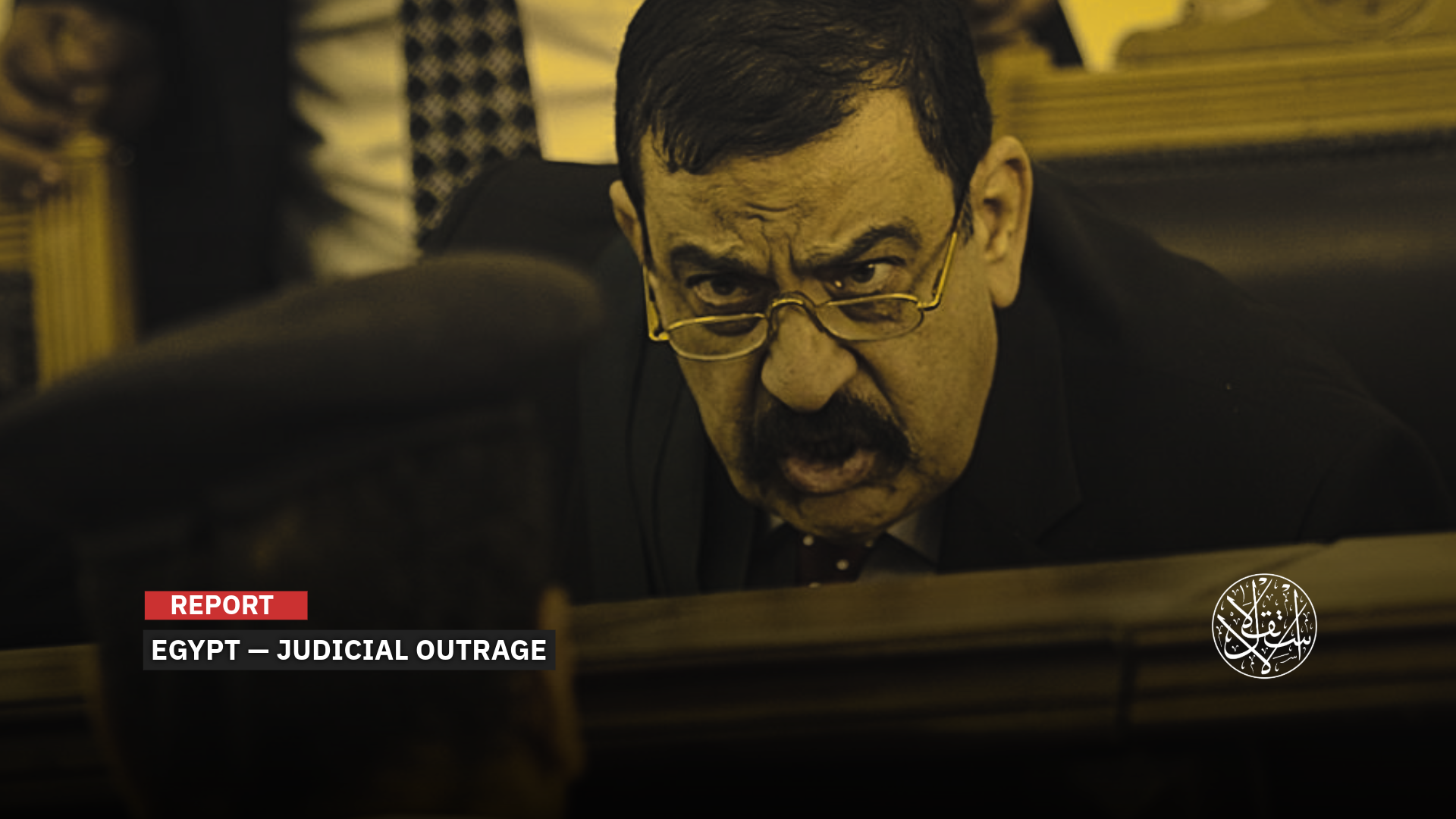
Why does the regime fear funerals and mourning rituals?
Because of the absence of freedom of expression, the funerals of politicians, judges, and public figures in Egypt have become a barometer of public opinion.
The condolence books of many, whose professional lives are filled with numerous injustices, are transformed into publicly aired rap sheets, recounting alleged crimes and excavating dark chapters from their pasts.
This pattern has recurred in Egyptian political life for decades, but it has evolved into a “phenomenon” in the face of judges and politicians accused of corruption, particularly since the wave of death sentences and life terms handed down against opponents of the 2013 coup, and the massacres of sit-ins and protests.
Sharp criticism followed the death of the man dubbed the “judge of executions,” Mohamed Nagy Shehata, who died on February 6, 2026, as many Egyptians responded to news of his passing in the comment sections of various news sites.
Egyptians also recalled that he had twice been disqualified in judicial recusal proceedings, and that death and life sentences he issued were overturned by the Court of Cassation and the Court of Appeal, reopening the condolence ledger, but this time as a record of alleged offenses rather than a tribute to judicial virtue.
Many drew comparisons between the calls for mercy and praise heard at the funerals of opposition politicians and judges regarded as fair, and the markedly different tone surrounding the funerals of others accused of injustice and repression.
In this way, funerals have become a kind of indicator, offering symbolic signals about the public mood and one of the few remaining spaces where opinion can be expressed.

The Nagy Shehata Phenomenon
As the deaths of judges known for issuing harsh sentences against opponents and young activists continue, rulings critics say were not grounded in genuine arguments or evidence but in political whims and perhaps directives from the authorities, such as Mohamed Shaaban al-Shami and Mohamed Nagy Shehata, Egyptians have reopened their files.
Condolence books in newspapers and across social media have been transformed into something resembling a public rap sheet, through which activists itemize what they describe as the scale of these judges’ injustices.
Because of the predominance of criticism, gloating, and even expressions of joy at the death of Judge Nagy Shehata, some newspapers that published news of his passing were compelled to restrict or disable comments, after responses overwhelmingly condemned him and recalled the mass death sentences he handed down against opponents of the 2013 coup.
Former prisoners and victims of his rulings, and of other judges, recounted their experiences with him, describing how their lives and the lives of their families were shattered, and writing about trials they say were unjust and destructive.
Under the headline, “Egypt’s judge of mass death sentences accused of issuing politicized rulings,” the Financial Times published a report on April 24, 2015, about Judge Nagy Shehata, asserting that his verdicts against leaders and supporters of the Muslim Brotherhood were political rather than judicial in nature.
He was described as “a front for a politicized Egyptian judiciary” and as having “completely spun out of control,” in the words of a Western diplomat, a characterization cited in the report, and several of his rulings were later overturned by the Court of Cassation and the Court of Appeal.
Egyptians shared harrowing accounts of their suffering at the hands of these judges, who have since died and whose names were followed by curses in comment sections of newspapers and social media platforms, among them Judge Mohamed Nagy Shehata and Judge Mohamed Sherine Fahmy.
Mohamed Kamal, previously sentenced in absentia to life imprisonment by Shehata, wrote about how his life and that of his family were devastated after the judge handed down life sentences against him and nine others without summoning them or hearing their defense, explaining why he and others felt relieved at his death.
He said he was arrested in September 2014, along with 10 members of the April 6 Movement, which took part in the January 2011 revolution, because they had gone to offer condolences for a member who had been killed by police.
Although they were later released pending investigation in what became known as the “condolence detainees case,” they were stunned on October 9, 2015, when Judge Nagy Shehata sentenced them to life imprisonment, without investigation, and in absentia, despite their presence in Egypt and without notifying them of the hearing.
He said the consequences of what he called the unjust ruling included partial paralysis, his departure from Egypt while nearly paralyzed, and spending 10 years alone, far from his three daughters and his parents.
“This is one of hundreds of thousands of stories of injustice in Egypt,” he wrote, adding, “Do not blame us for feeling joy at the death of those who wronged us.”
Lawyer Asaad Heikal said that when he appeared before Judge Nagy Shehata to defend a number of detained protesters facing charges, he asked the judge to step aside from the case.
A heated exchange followed between them, prompting Shehata to adjourn the session after the defense requested time to file a motion for his removal.
When the time came for closing arguments, Heikal said he leaned over and told the judge quietly, “Acquit the largest possible number of defendants in this case. I no longer know what to say on Al Jazeera about the sheer number of death sentences being issued.”
According to Heikal, Shehata subsequently issued a ruling acquitting more than 100 defendants in that case.
Lawyer Halem Henish wrote on Facebook that Judge Nagy Shehata was enamored of issuing death sentences before journalists and cameras.
In the “Rabaa operations room” case, he said, Shehata even threatened to jail reporters if they left the courtroom after proceedings dragged on, and ultimately handed down death sentences against 14 defendants.
Because of what critics described as such excesses, journalists repeatedly recirculated a report published by Al-Ahram on January 15, 2016, citing the Cairo Court of Appeal, which overturned his rulings and twice accepted defense motions to remove him from cases on the grounds that his views were political rather than judicial.
The headline read, “Professional condemnation of the ‘judge of executions’ from the Court of Appeal, Nagy Shehata’s political views stripped him of ‘impartiality and integrity.’”
In it, the Cairo Court of Appeal, which reviews motions to disqualify judges, accused Shehata of having “lost impartiality and integrity.”
The disciplinary action followed public statements in which he expressed his political positions and views on domestic political affairs, and gave newspaper interviews in which he justified torture in prisons and described Muslim Brotherhood defendants he was trying as terrorists who deserved the killing and abuse they had suffered.
Those statements and positions affected a number of defendants against whom Shehata had issued rulings, leading the Court of Appeal to remove him from two cases, citing his declared personal and political opinions.
Journalist Mohamed Bassal, managing editor of Al-Shorouk, wrote that researchers of Egypt’s judicial history would long pause at the fact that the late Judge Mohamed Nagy Shehata was twice removed from cases because he expressed his political and legal views openly and calmly in a well-known 2015 interview with Al-Watan newspaper.
That occurred, he said, in two cases pending before Shehata, once in the Oseem cell case and again in the “specialized cells” case, with the court’s reasoning casting doubt on the judge’s judicial creed.
The ruling stated that “Judge Shehata lost impartiality in a manner that raises doubts among defendants as to his neutrality, and that his judgment would not be issued on the basis of truth but would be tainted by bias. He gave an interview to Al-Watan newspaper in which he denied the existence of torture in prisons, which constitutes a disclosure of his orientation, especially since the defendant, the applicant for recusal, had in fact been subjected to torture inside prison.”
Article 73 of the Judicial Authority Law stipulates that “courts are prohibited from expressing political opinions, and judges are likewise prohibited from engaging in political activity. They may not run for elections to the People’s Assembly, regional bodies, or political organizations unless they first submit their resignation.”

Falsifying Court Rulings
Judge Waleed Sharaby recounted a story that he said showed Judge Mohamed Sherine Fahmy receiving orders directly from security officers.
The incident, he said, took place during the investigation that led to his removal from the judiciary after he and the “Judges for Egypt” movement announced Mohamed Morsi’s victory in the 2012 presidential election.
Sharaby said that one day, while he was being questioned inside Sherine Fahmy’s office, the judge’s phone rang.
Sherine Fahmy was speaking with a major general in State Security, consulting with him about issuing a court order requesting security inquiries in a case before him.
According to Sharaby, Sherine Fahmy dictated the contents of the police investigation report in a case he was overseeing, personally instructing the officer conducting the inquiries on what to write, including details that would incriminate the defendants and fabricate evidence and legal grounds against them.
Sharaby said the judge justified this by telling him, “Egypt is going through a difficult phase, and we must stand by our country. There is nothing wrong with judges cooperating with National Security officers for the sake of Egypt.”
In another interrogation session, Sharaby said that after Sherine Fahmy attributed charges to him unrelated to the substance of the case, the judge told him, “We will close the investigation against you. You will remain a judge in your court and an adviser to the finance minister, and we will close the investigations against the entire Judges for Egypt movement.”
When Sharaby asked what was required in return, he said he was told to appear on two television programs to insult and defame the year in which President Mohamed Morsi governed Egypt, to speak about the “catastrophic mistakes” he allegedly committed that would have led the country into ruin, and to praise the army for siding with the people on July 3, 2013.
“At that moment, I realized I was not dealing with a judge but with a subordinate, a delegate of a security agency who had received orders from a superior and conveyed them to me in order to carry out a specific deal,” Sharaby said. He requested a one-week reprieve and then left Egypt.
Sharaby accused Sherine Fahmy of being worse than the late Judge Nagy Shehata, saying, “Your hands are stained with the blood of the late President Mohamed Morsi, and you know the details of his death that took place before your eyes in the session you presided over,” adding that he would one day reveal those details.
Funerals and Public Opinion
Because there are no independent or neutral institutions in Egypt to measure public opinion, the funerals of politicians and judges have become a means of gauging and tracking Egyptians’ views, a kind of indicator of public sentiment expressed across social media and the internet.
The funerals of prominent figures such as Judge Shehata have played a role in revealing the direction of public reactions and the depth of anger over what many perceive as judges’ alignment with the authorities and security services, carrying out their wishes rather than dispensing justice.
Reactions to the death of the man many called the “judge of executions and life sentences,” a reference to the 204 death sentences and 274 life terms he issued, with cumulative prison terms amounting to 7,395 years against 534 defendants in five cases, appeared to function as a barometer of the public mood.
During those trials, Shehata, along with several judges seen as loyal to the authorities, traveled in a security convoy described as the largest ever assigned to a judge in Egypt’s judicial history, comparable to the protection detail of the public prosecutor, the justice minister, and even the prime minister.
It was notable that some newspapers published news of his death and deliberately invited readers to comment, despite knowing the responses would largely center on condemnation and expressions of satisfaction at his passing.
Some journalists viewed this as an attempt by those outlets to capitalize on a trending topic and drive traffic.
Journalists said that in light of the volume of jubilation and gloating over his death, and the widespread recounting of allegations related to his record of injustices, instructions were issued to pro-government newspapers to close the online comment sections, perhaps reflecting the scale of official unease over a phenomenon that touches anyone associated with the authorities.
In the case of Nagy Shehata, many users on social media openly expressed satisfaction at his death and spoke of his standing before divine judgment, saying that a just God would hold him accountable for what they described as harsh and unjust rulings in opposition cases.
When those close to him, including pro-government media figures, attempted to mourn him publicly, the comment sections on their accounts shifted from condolence ledgers into detailed recitations of his record.
Some commenters warned those media personalities of divine retribution for their role in what critics described as injustice and for promoting it.
When Judge Sherine Fahmy, known to critics as the “judge of life sentences,” appeared in tears at the funeral of Mohamed Nagy Shehata, the so-called “judge of executions,” the reaction online quickly shifted.
Comment sections once again became a de facto referendum on his own judicial record and on allegations surrounding his role in the death of former President Mohamed Morsi, including claims of medical negligence.
Amid the scale of anger expressed in Egyptians’ comments and the visible satisfaction at the death of what many described as an unjust judge, Addustour newspaper, owned by the intelligence-linked United Media Services company, published an unsigned commentary criticizing the celebratory tone and accusing the Muslim Brotherhood of being behind it.
The paper’s intervention, however, drew sharply critical responses from readers, particularly over its assertion that “the Brotherhood raises their children and women to await heavenly revenge against those who did not help them attain power.”
In contrast to the gloating that followed the deaths of judges or politicians notorious for injustice, a different pattern was observed in the passing of fair-minded judges or opposition figures, who were mourned widely and praised for their virtues. Commenters highlighted their merits, often recalling what the Prophet Mohamed said, “Judges are of three types, one of whom will go to Paradise and two to Hell.”
Among these was Judge Ahmed al-Shazly, Vice President of the State Council, known for his landmark ruling by the Supreme Administrative Court rejecting government appeals over the Tiran and Sanafir islands, as well as for his decision to uphold the citizenship of President Mohamed Morsi, who died in 2021. Egyptians commemorated him quietly online, praising his integrity.
Activists also recalled the career of Judge Yehia Dakroury, who issued the first ruling on the Tiran and Sanafir islands, invalidating the border demarcation agreement between Egypt and Saudi Arabia, and overturning the transfer of sovereignty of the two islands to the Kingdom.
Dakroury retired in June 2018 upon reaching the statutory retirement age of 70, and was bypassed for appointment as President of the State Council, despite being its most senior member.
This marked an unprecedented move in more than 70 years, widely seen as a consequence of his rulings that displeased the authorities.

Funerals Under Restriction
Before the January 2011 revolution, Egypt’s security services routinely imposed restrictions on the funerals of opposition figures, particularly leaders of the Muslim Brotherhood and other senior figures, because the gathering of thousands of mourners caused concern for the authorities.
The funerals themselves, however, were never outright banned.
After the 2013 coup, as funerals for those killed or imprisoned, sometimes due to medical negligence, continued, and some in rural Egypt became acts of defiance against a regime that labeled the deceased as “terrorists,” authorities began imposing strict restrictions on funerals, banning mourning tents entirely.
As funerals became a barometer of public sentiment, Egyptian authorities intensified restrictions on funerals for politicians and opposition figures, particularly leaders of the Muslim Brotherhood, preventing certain funerals or any mourning gatherings altogether.
The most notable example was the late President Mohamed Morsi, whose funeral was conducted in secret and public mourning was prohibited, a stark contrast with former President Hosni Mubarak, who, despite having final convictions against him, received a military funeral attended by Head of the Regime el-Sisi.
The same pattern occurred when Dr. Essam el-Erian, a member of the Shura Council of the Muslim Brotherhood and deputy head of the Freedom and Justice Party who won the highest votes in the 2012 parliamentary elections, died in prison in August 2020. He was buried at night in secrecy, and all mourning was banned.
Restrictions also extended to the funeral of the late Lawyers’ Syndicate head Ragai Attia on March 29, 2022, when security forces prevented the establishment of a mourning tent at Omar Makram Mosque in Cairo’s iconic Tahrir Square.
As a result, Egyptians turned to online platforms to hold virtual mourning gatherings, commemorating the deceased, while celebrating the deaths of officials or judges accused of injustice.
These practices raise pressing questions: what are the authorities afraid of in funerals and mourning gatherings, and why do they treat the funerals of their opponents with such harshness, burying them in secrecy and forbidding any public remembrance?
Sources
- Egypt: Death of Nagy Shehata, the ‘Judge of Executions’… He Described the January Revolution as ‘25 Losses’ [Arabic]
- Professional Condemnation of the ‘Judge of Executions’ by the Court of Appeal: Nagy Shehata’s Political Views Stripped Him of ‘Impartiality and Integrity’ [Arabic]
- Egypt’s ‘Hanging Judge’ Accused of Politicized Verdicts