Silent Shake-Up in Baghdad: What Did al-Maliki Do to Trump’s Envoy?
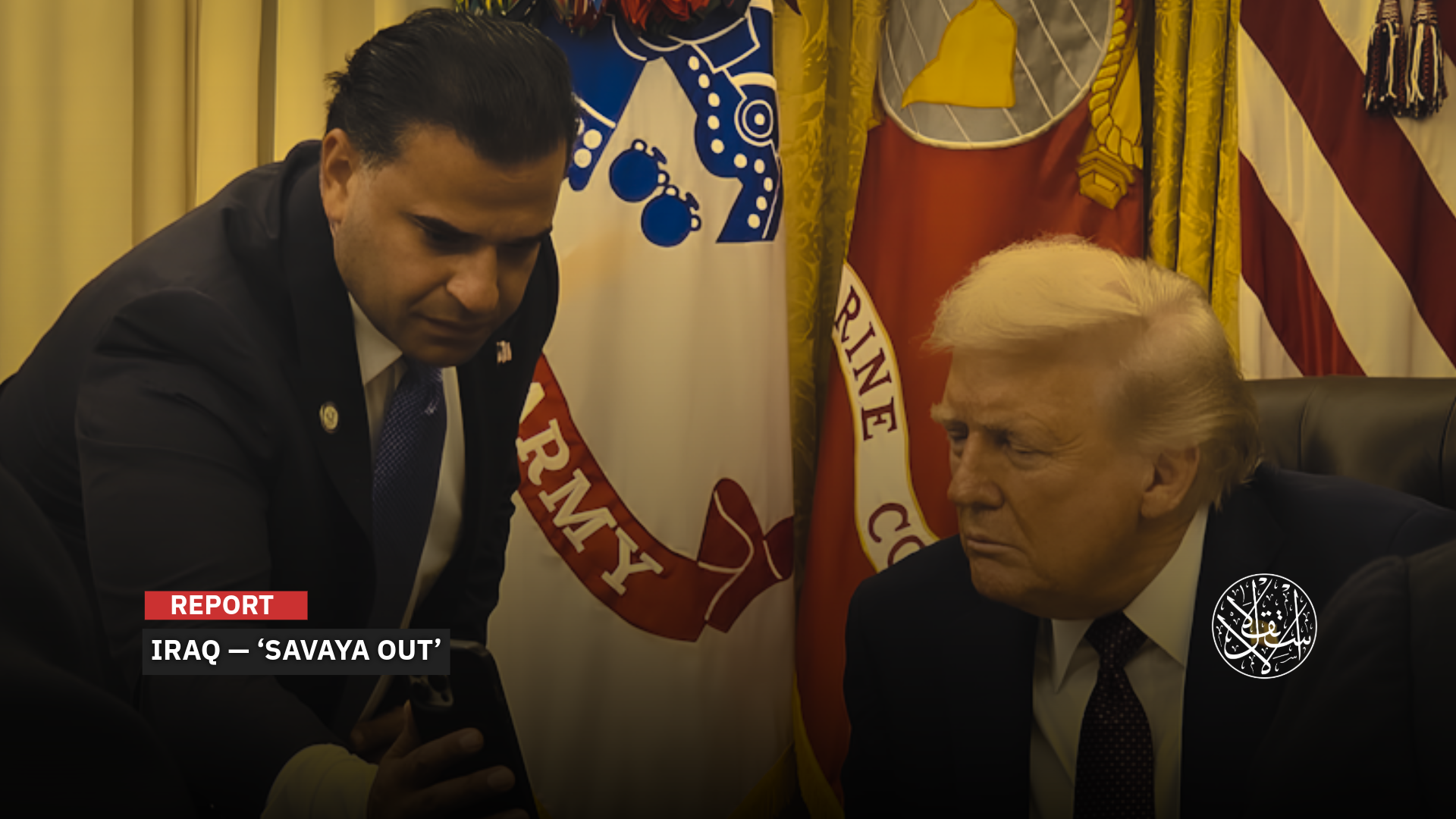
The Iraqi Foreign Minister confirmed Savaya’s removal and the transfer of his duties to Tom Barrack.
As President Donald Trump publicly rejected Nouri al-Maliki for Iraq’s next prime minister, his envoy to Baghdad, Mark Savaya, quietly deactivated his X account, only for Baghdad to later announce his removal and the transfer of his duties to Tom Barrack, the U.S. ambassador to Turkiye and special envoy to Syria.
Trump had originally named Savaya special envoy to Iraq on October 20, 2025, via Truth Social, praising him for his deep understanding of U.S.-Iraq relations.
Mysterious Fate
After Western reports suggested he might be ousted, Iraqi Foreign Minister and presidential candidate Fuad Hussein confirmed that Mark Savaya no longer serves as President Donald Trump’s envoy to Iraq, noting that Tom Barrack now oversees the Iraqi portfolio.
In a February 1, 2026, TV interview, Hussein said the U.S. stance on Nouri al-Maliki’s premiership created a new reality, adding that “it’s unclear whether Washington’s view of al-Maliki is temporary or permanent.”
On the same day, Reuters cited two unnamed sources saying Savaya, appointed special envoy to Iraq by Trump in October, no longer holds the position, with one source pointing to his “mishandling” of sensitive files, including his failure to block al-Maliki’s nomination—a move Trump had publicly warned Baghdad against.
According to the same source and a senior Iraqi official, U.S. Ambassador to Turkiye and special envoy to Syria Tom Barrack is expected to handle Iraq-related matters at the State Department, especially after his late-January visit to Erbil and meetings with the Syrian Democratic Forces (SDF).
Reuters also reported that Savaya’s X account, previously active, is now inaccessible, and he did not respond to follow-up messages on Friday and Saturday asking him to clarify whether he was still in his appointed role and explain why his X account was taken down.
Meanwhile, Amberin Zaman, senior correspondent for The Monitor, cited Savaya denying the rumors on X on January 31, claiming misleading information appears to be driven by “Iranian-backed militia networks,” seemingly an effort to portray the U.S. envoy as absent from Iraq.
Iraqi journalist Steven Nabil reported that Savaya said the account’s deactivation was due to “administrative procedures tied to official status and completing the requirements of the position,” stressing it was temporary in a January 30 post.
However, Nabil revealed in a February 1 TV interview that Savaya told him he is currently undergoing a U.S. government security review, adding that once it concludes, he may return to his role as envoy to Iraq or be assigned another position within the Trump administration.
Allegations of Bribery
The timing of Savaya’s disappearance from X, alongside reports of his replacement and Trump’s tweet rejecting Nouri al-Maliki as Iraq’s next prime minister, fueled controversial political and media speculation. Figures close to al-Maliki suggested that Savaya may have received a financial bribe tied to his role in shaping the U.S. position.
Iraqi political analyst Safaa al-Aasam said during a TV interview last week that Savaya is accused of receiving a bribe from political figures in Iraq totaling up to $300 million. Savaya claimed he had not officially been assigned the post yet, according to al-Aasam.
On the same day, SNA News Agency cited unnamed sources claiming that Trump had dismissed his special envoy, Savaya, over allegations of involvement in financial corruption. According to these sources, Savaya allegedly received $50 million from influential Iraqi political actors in exchange for promoting a tweet attributed to Trump as part of what they described as an organized pressure campaign. The agency added that these same Iraqi figures, considered the main beneficiaries of Trump’s tweet, had leveraged their ties to Savaya, who reportedly met with them several times in recent months.
Political analyst Emad Bajalan told SNA that these actors “directed a businessman to pay the $50 million for the tweet,” noting that the individual “controls a number of major projects in Iraq.” Bajalan explained that the funds were used “to influence public opinion, tarnish the image of certain political actors, stir controversy, and create political instability,” emphasizing the “highly sensitive timing” in Iraq, raising questions about the real beneficiaries and motives behind the escalation.
The report went further, alleging that Savaya is currently in Turkiye, where his “safety has been secured” by the party reportedly behind the bribe, as he is unable to return to the U.S. due to potential legal repercussions following the exposure of the alleged bribery and his misleading of Trump, especially after the official announcement of his dismissal.
SNA added that the case “remains open” and could see new developments amid rising pressure to reveal the full details and those involved.
Meanwhile, posts circulated on X on January 30 accusing Iraqi businessman Namir al-Aqabi of paying the $50 million for the tweet attributed to Trump, allegedly orchestrated by Prime Minister Mohammed Shia’ al-Sudani.
Accusations and Cover-Up
Regarding the alleged link between the replacement of the U.S. envoy and Trump’s tweet, and claims that Mark Savaya received a bribe, Iraqi political researcher Hamed al-Obaidi said Savaya’s explanation for deactivating his X account is far from convincing.
“Savaya’s justification for closing his account fails to clear the air and only fuels more suspicion,” al-Obaidi told Al-Estiklal.
“There may be no hard evidence yet, but it’s clear that something deeper is unfolding beneath the surface.”
“The claim making the rounds is that Trump’s tweet originated as an Arabic text and was later translated into English, something anyone fluent in the language can easily detect,” he added.
Al-Obaidi did not rule out the possibility that the bribery narrative is part of a counter-effort aimed at sustaining Nouri al-Maliki’s candidacy and pressuring the United States to reverse its position.
“This line is promoted by some of al-Maliki’s close allies, who note that Trump has previously backtracked on several positions and may do so again in this case,” he said.
Political researcher Majashaa al-Tamimi said Savaya’s dismissal as the U.S. special envoy to Iraq at this moment cannot be seen as a routine measure, adding that it carries clear political and strategic significance amid rising tensions between Washington and Baghdad.
Speaking to the Iraqi daily al-Aalam al-Jadeed on February 1, al-Tamimi said Savaya’s exit comes at a critical moment, as Washington moves to roll back Iranian influence and shut the door on al-Maliki’s return to power, framing the decision as part of a broader U.S. drive to redraw the rules of Iraqi politics.
He argued that the move marks a clear break from the experiment of appointing a nontraditional, personality-driven envoy, particularly a businessman with no diplomatic track record, and signals Washington’s return to a tighter, more institutional approach led by the State Department. In his view, this reflects a deeper rethink of U.S. strategy in Iraq, shifting from informal outreach to a sharper, more deliberate campaign aimed squarely at Iran’s footprint.
Al-Tamimi added that the message is unmistakable for Iran-aligned factions inside Iraq: the space for maneuver is shrinking, and the political balance is being pushed back toward terms set in Washington.
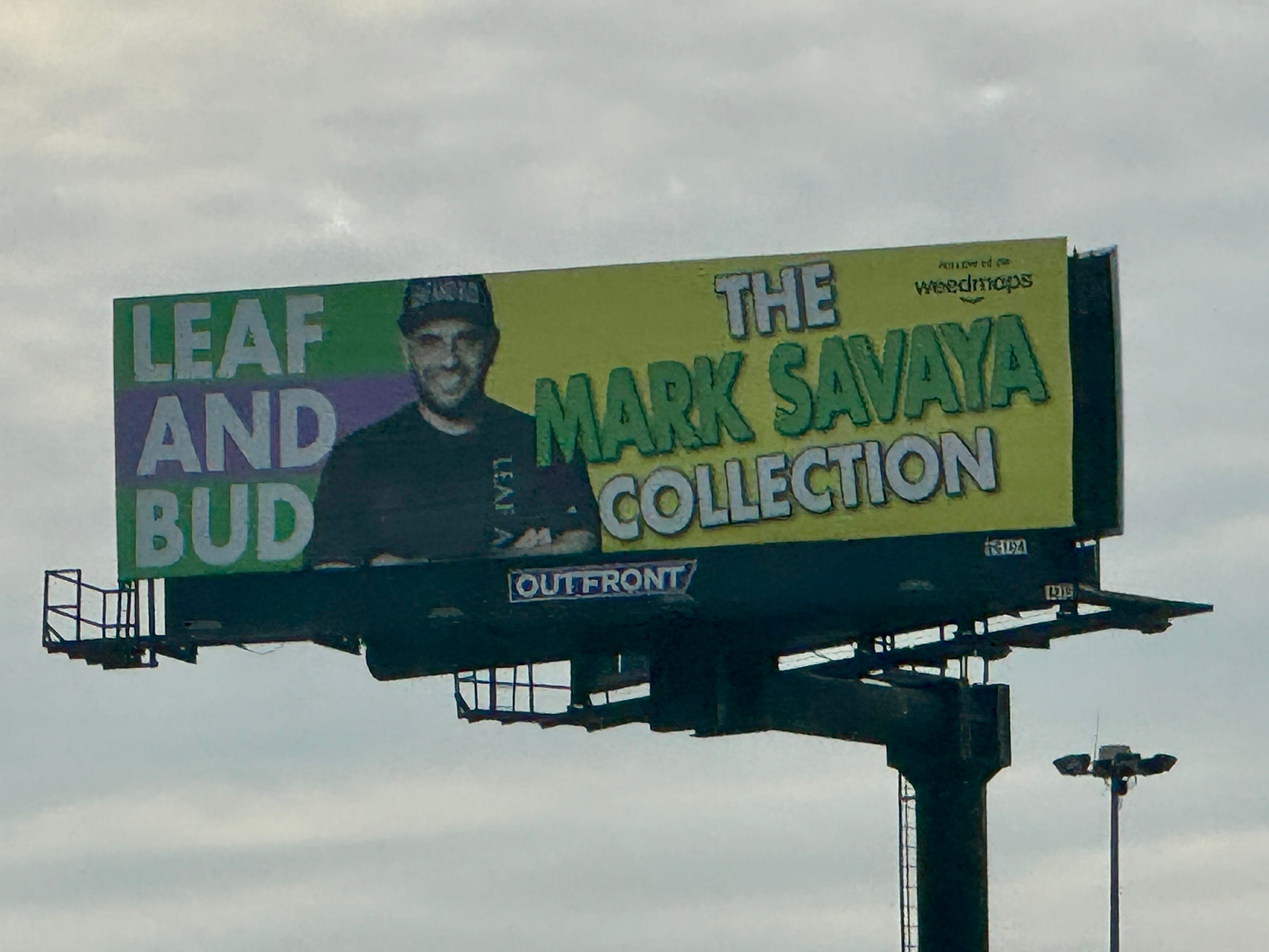
Mark Savaya, 43, is an American businessman of Iraqi Chaldean Christian descent whose family left Iraq in the 1990s. He resides in the Detroit metro area, Michigan.
Savaya is a leading figure in the U.S. legal cannabis industry, owning the Leaf & Bud retail chain and a product line under the Savaya Collection brand.
Savaya’s appointment did not come through the usual diplomatic channels but straight from the heart of America’s legal cannabis industry, a background that led U.S. media to dub him the “King of Cannabis.”
Sources
- Fouad Hussein Reveals: Tom Barrack Now Handles the Iraqi File Alongside Syria and Turkiye, as Savaya Steps Down [Arabic]
- Safaa al-Aasam: Savaya Accused of Taking Bribes from Iraqi Political Figures While Claiming He Was Never Officially Appointed [Arabic]
- New Developments in Savaya Bribery Case Reveal Involvement of Influential Iraqi Figures [Arabic]
- Mystery Surrounds Savaya’s Position: The “Real” Savaya Is Gone, the “Fake” Holds On [Arabic]
- Conflicting Accounts Emerge Over U.S. Envoy to Iraq’s Removal: What’s Tom Barrack’s Role? [Arabic]
- From Cannabis Trade to Politics: Mark Savaya Appointed as Trump’s Envoy to Iraq