Will the New Epstein Documents End Trump’s Era in the White House?

“Trump has long denied any wrongdoing related to Epstein or any allegation of sexual misconduct.”
In a move that captivated political and international circles, the US Department of Justice released a massive new batch of the Epstein files, comprising more than 3 million pages of classified documents.
This action, which comes in implementation of the Transparency Act signed by President Donald Trump, was not limited to paper documents alone, but also included 2,000 videos and 180,000 photographs collected during the investigations into the crimes of the late billionaire Jeffrey Epstein.
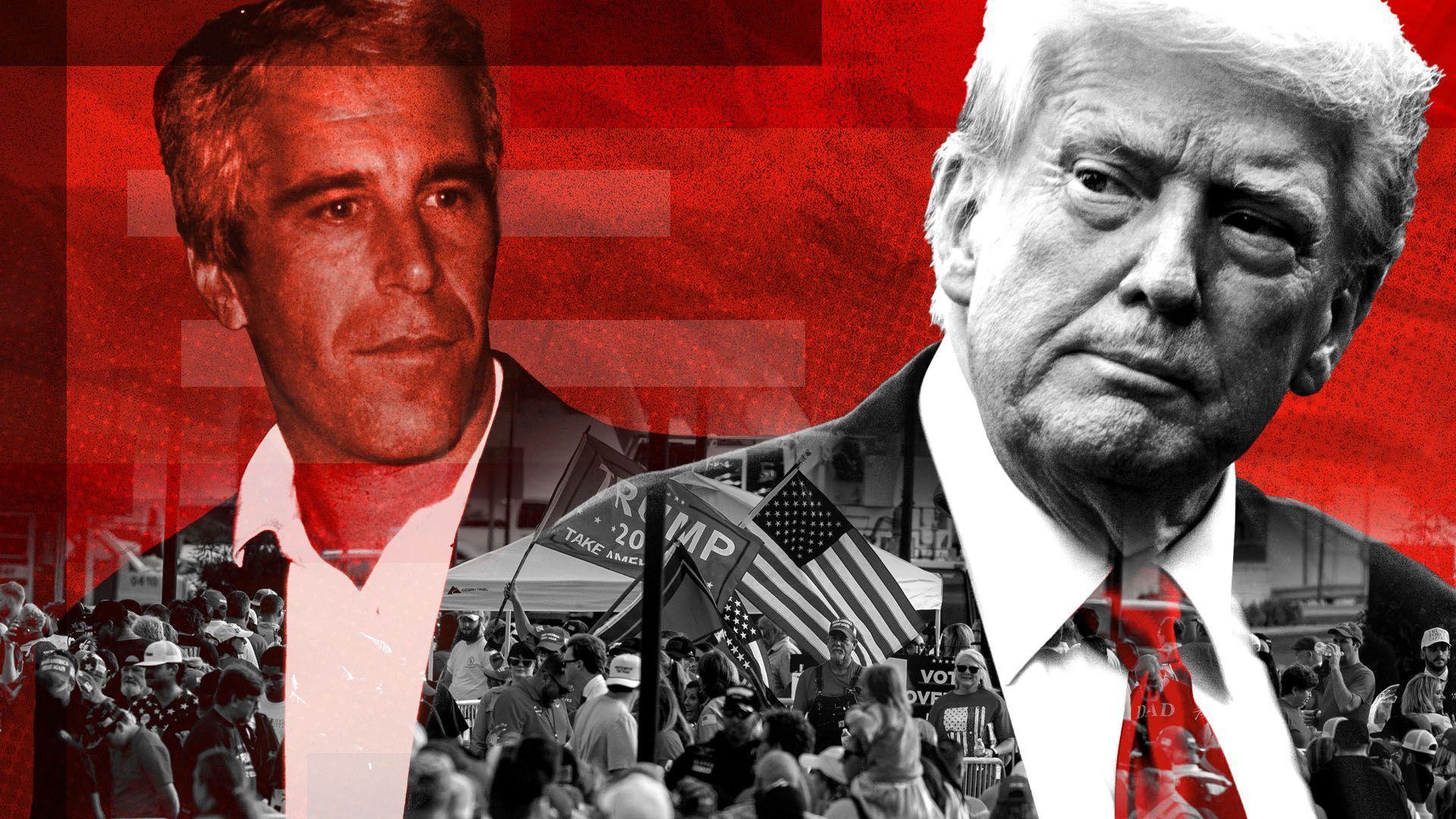
The new revelations constituted an unprecedented political and moral shock, as they included direct accusations against prominent political figures, such as President Trump, former Israeli Prime Minister Ehud Barak, billionaires Bill Gates and Elon Musk, former President Bill Clinton, and others, of involvement in ethical and criminal offenses.
While Trump’s allies asserted that what is happening is a politically motivated attack without due process, others believed that the case could represent a pivotal political turning point in the American landscape.
Observers believe that the Epstein file has transformed from a purely criminal case into a weapon in the major political conflicts between the power factions and the media in Washington.
Political Corruption
The new Epstein scandals have revealed testimonies and documents implicating influential figures—including Trump—in incidents of rape and other atrocities, including allegations of forced abortions, or what some activists have termed infanticide, in clandestine settings.
These recently revealed details have shifted the political battle from mere partisan disputes to a moral trial of the nation's highest political authority.
Faced with the enormity of these accusations, Democratic lawmakers and human rights advocates have called for these cases to remain at the forefront of public discourse and for Congress to be compelled to confront the facts without equivocation.
They argue that what has been revealed can no longer be ignored, asserting that the only way to salvage the reputation of the presidency is through immediate impeachment, not only due to political corruption but also because of the potential for criminal offenses.
In parallel with the moral scandal, the president faces equally harsh criticism for his hardline security policies. Immigration and Customs Enforcement (ICE) has been conducting what the report described as frenzied raids in residential neighborhoods, resulting in extrajudicial killings and the abuse of immigrants in the streets.
Activists and lawmakers are attempting to link the brutality in dealing with immigrants to the moral depravity revealed by the Epstein documents, painting a picture of an outlaw administration that must be overthrown.
Trump had previously predicted that the Democratic Party in Congress would try to impeach him if the Republicans suffered a defeat in the midterm elections scheduled for November 2026.
These elections are a pivotal moment in American politics, as they are not merely a race for congressional seats—with all House seats and one-third of Senate seats up for election—but also a referendum on the performance of the US president and his party during the first half of his term.
In contrast, Trump said the new documents contained no incriminating information but rather exonerated him, contrary to what the radical left had hoped.
He also accused American media consultant Michael Wolff (author of controversial books about Trump's first term) of acting in concert with Epstein for political purposes, rejecting any allegations of his involvement with Epstein's island or anywhere near it.
He stated sharply, “Epstein was conspiring with Wolff to harm me politically and personally... This wasn't just a friendship; it was a plot to smear my reputation.”
The US president didn't stop at verbal accusations; he went further, announcing his intention to take strict legal action.
Observers believe that bringing Wolff's name into the case adds a new media and political dimension to the Epstein affair, especially since Wolff is known for his sharp criticism of Trump in his previous writings.
Moral Scandals
The latest batch of documents related to the Jeffrey Epstein case has caused a political and social earthquake affecting high-profile American and international figures, from royalty to government officials.
The files included correspondence and references to prominent American figures such as billionaire Elon Musk and current Commerce Secretary Howard Lutnick, who had previous ties to Epstein without being formally charged with any wrongdoing.
They also revealed that the US Special Envoy to Syria, Tom Barrack, exchanged messages with Epstein in 2016, including a cryptic request to send photos with a child.
Former US Treasury Secretary Larry Summers regularly met with Epstein for dinner and attempted to connect him with prominent international figures.
The documents also revealed that, months before his death, Epstein exchanged hundreds of messages with Steve Bannon, Trump's former advisor, discussing politics and travel.
During that period, Epstein also corresponded with Kathy Rumler, a lawyer and former White House aide during Barack Obama's administration, regarding political matters such as payments to pornographic film actress Stormy Daniels.
Casey Wasserman, president of the Los Angeles 2028 Organizing Committee, recently issued a formal apology after his name appeared in the documents, in the form of emails between him and Ghislaine Maxwell dating back to 2003, containing inappropriate language.
The name of Kevin Warsh, Trump's nominee for chairman of the Federal Reserve, also appears in an email from a public relations official to Epstein, listing 43 people, including celebrities like Martha Stewart, who attended a Christmas gathering.
Aside from the United States, the list of information available in Epstein’s new documents includes princes, prime ministers and diplomats around the world, and also reveals Epstein’s involvement in international issues.
In this context, the name of former British Prince Andrew resurfaced following the release of new information, including emails and photos showing him crawling on his hands and knees, touching the waist of an unidentified woman.
Furthermore, the new files cast a negative light on Norwegian Crown Princess Mette-Marit (52), whose name appeared hundreds of times in the documents. It had been known for years that she had been in contact with Epstein between 2011 and 2014.
The documents also revealed that Katherine Keating, daughter of former Australian Prime Minister Paul Keating, was in contact with Epstein between 2010 and 2013, attended events at his New York home, and even offered in one exchange to take her sister to a dinner he hosted.
Additionally, Miroslav Lajcak, an advisor to the Slovak Prime Minister, resigned after his name appeared in documents revealing personal correspondence between him and Epstein, covering a wide range of topics, including women and geopolitical issues.
Former British Ambassador to Washington, Peter Mandelson, announced his departure from the Labour Party following allegations that he received payments from Epstein in 2003 and 2004. Despite denying the allegations and calling for an official investigation, he expressed regret for his past association with Epstein.
Indian Prime Minister Narendra Modi was not spared Epstein's wrath. His name appeared in a document dated July 2017, in which Epstein claimed that Modi danced and sang in Israel for the US president, adding that they had met a few weeks prior.
These revelations confirm that the case of the century continues to conceal many secrets that could ruin the futures of celebrities and politicians, even years after the network's mastermind passed away.

Warning Message
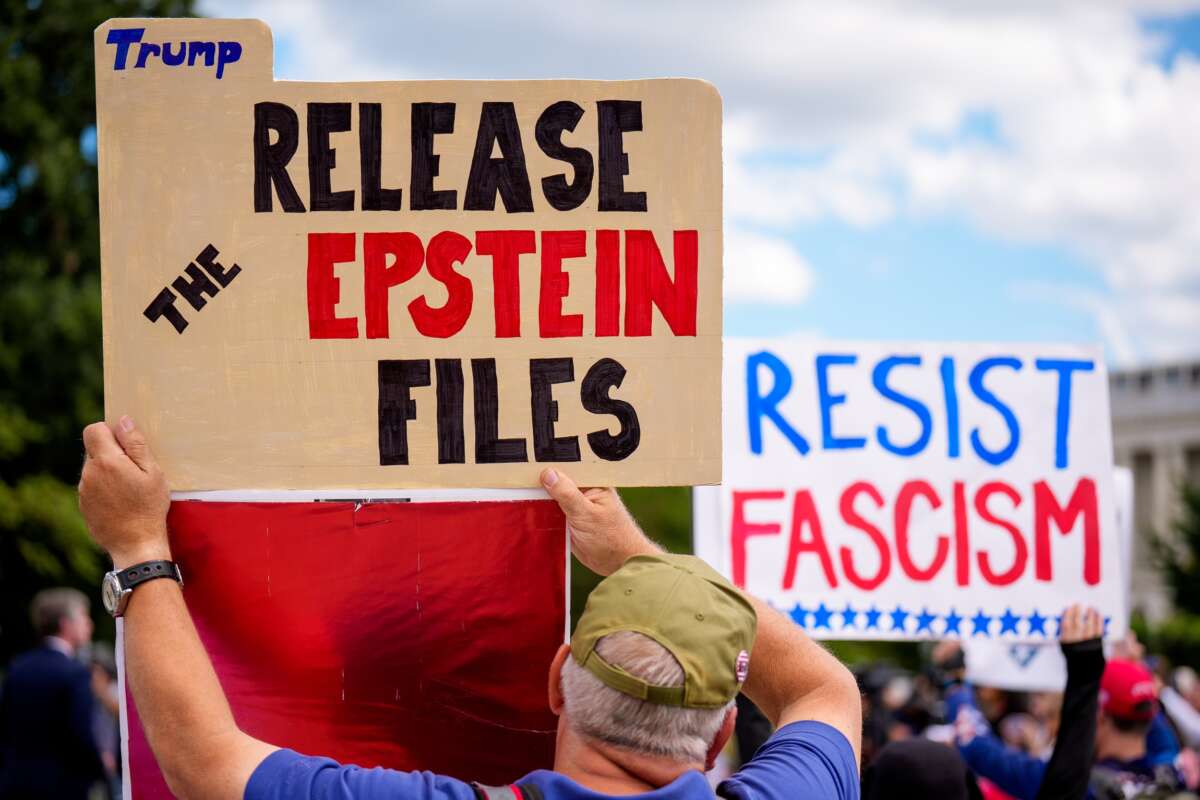
Despite the volume of documents released, the case remains subject to criticism, demands for greater transparency, and discontent among victims and survivors.
Many condemned the release of the documents because it exposed their identities again while the names of powerful figures involved remained hidden and protected.
Partisan positions on the release of the files varied. Democrats stressed that the released documents were incomplete and that all files should be released without redaction, arguing that full accountability is essential to restoring public trust.
On the other hand, some Republicans emphasized the need for transparency and protecting citizens, asserting that the allegations against Trump are merely attempts to politicize the case.
For his part, Elon Musk emphasized that the real importance lies not in the release of the files, but in prosecuting those who committed crimes in collusion with Epstein, stressing that any disclosure without actual accountability remains a mere formality.
Activists went further, assessing that the released documents do not represent a complete revelation of the truth, but rather a calculated part of a political blackmail operation, managed through strict selectivity in what is published and what is withheld.
They pointed out that the names revealed are mostly politically discredited, while more influential figures remain untouched, in what they described as a damage control operation to protect other figures.
The debate continues regarding the limits of transparency and the impact of reopening the Epstein case on the American political landscape, especially given the timing of the disclosure, which coincides with highly sensitive foreign policy issues, thus intensifying media scrutiny and political oversight of what is published
In this context, observers speculated that “Israel” may have activated its influence within the Zionist lobby in the United States to pressure the Department of Justice to release a new batch of Epstein documents.
This batch prominently features Trump's name, with the aim of blackmailing him and forcing him to confront Iran instead of “Israel” acting alone.
In a statement to Al-Estiklal, political analyst Mohammed Hussein explained that the new Epstein documents are both a message and a warning to Trump, and are being used as a tool for political pressure, noting that if Trump does not take military action against Iran, more documents may be leaked to the public.
He pointed out that “Trump's options are becoming increasingly costly and complex, leaving him with only one path: to submit to the dictates of the Zionist lobby. Otherwise, he will remain vulnerable to prosecution and systematic smear campaigns.”
“Therefore, it seems that Trump has no choice but to recalibrate the American compass toward an attack on Tehran or toward another arena of tension, in an attempt to buy time and mitigate the escalating targeting,” he said.