'Track AIPAC': The Story of the Platform That Rattled America’s Most Powerful ‘Pro-Israel’ Lobby
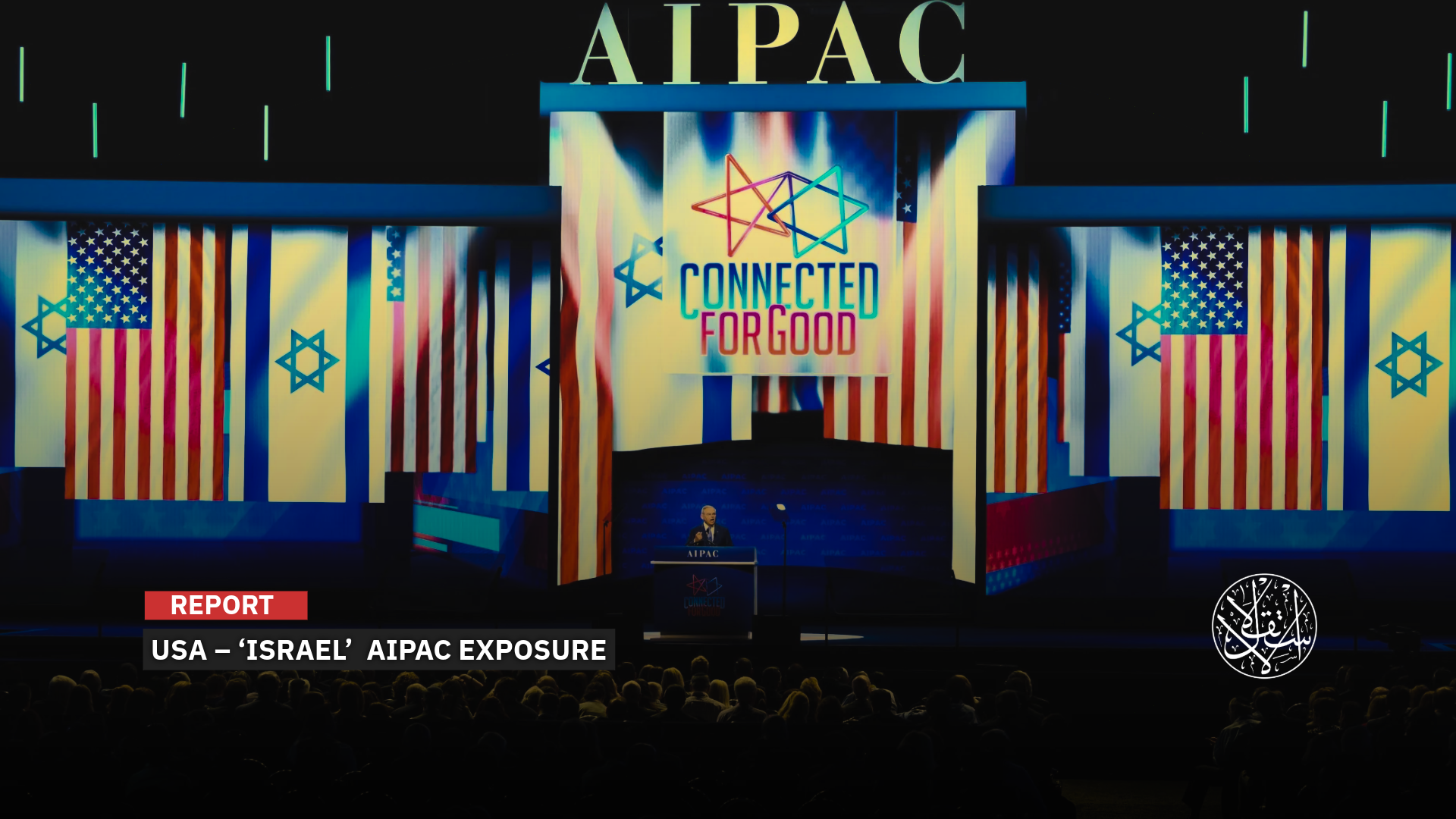
A counter-platform, Track AIPAC, or “Monitor AIPAC,” appeared in 2024.
Seventy-one years after the founding of the American Israel Public Affairs Committee (AIPAC) in the United States in 1954, an organization established to mobilize financial, military, and political support for “Israel”, a countervailing digital platform emerged in 2024 under the name Track AIPAC.
Since then, Track AIPAC has made a point of exposing U.S. politicians who receive money from the Zionist lobby (AIPAC). Its organizers have gone so far as to place billboards in several cities displaying the names of congressional candidates alongside the amounts of money they received from AIPAC, to show that these politicians’ loyalties are directed toward “Israel” rather than the United States.
As a result of its active role in uncovering and confronting AIPAC’s influence, through systematic and detailed documentation of the financial contributions it provides to U.S. politicians, a number of politicians have, in fact, retreated from accepting any support from Israeli lobbying groups.
As the platform’s impact widened and its reach expanded, those behind it decided to reveal their identities after a period of operating anonymously, citing fears of being targeted.
They then began supporting candidates who refuse what they describe as Zionist money, while publicly exposing those who accept Zionist donations to fund their electoral campaigns.

The project was initially founded in secret in 2023, coinciding with the launch of “Israel’s” war of annihilation on Gaza, with the aim of exposing U.S. politicians aligned with “Israel” and its wars, before its organizers were officially announced in 2024, following a widespread popular shift in the United States in support of Gaza and the rise of protests condemning the Israeli occupation.
The platform’s founders said their goal is to track and document the sources of political donations received by the American Israel Public Affairs Committee (AIPAC), particularly the funds used to finance candidates and officeholders in the U.S. Congress who take “pro-Israel” political positions.
Those behind the initiative said they seek to strengthen transparency within the U.S. political system by revealing the scale of influence wielded by the “pro-Israel” lobby and by assessing the extent to which money linked to it shapes lawmakers’ decisions and the formulation of U.S. foreign policy.
As Track AIPAC works to end what it describes as the domination of Israeli lobbying groups over American democracy and their grip on political decision-making, while also challenging the broader role of money in politics, the platform’s following on X has surpassed 400,000, buoyed by growing popular support within U.S. society.
The platform’s activity began with documenting electoral and political funding connected to the American Jewish Committee and its direct impact on decision-making in Washington, publishing the names of donors and the amounts of money provided to U.S. politicians during election campaigns.
The platform also called for foreign lobbying groups linked to “Israel” to be required to register with the U.S. Department of Justice under the Foreign Agents Registration Act, or FARA, in the same manner as other lobbying groups operating within the United States.
Track AIPAC urged the U.S. Congress to classify AIPAC as a foreign organization under FARA, arguing that it operates on behalf of a foreign government, “Israel,” which would obligate it to legally disclose its sources of funding and its activities.
These demands have received support from a number of members of Congress, including Republicans who have broken with former President Donald Trump, among them Rep. Marjorie Taylor Greene.
She described “Israel’s control and enormous influence over nearly all members of Congress.”
Green said, “AIPAC buys American loyalty to Israel with money,” accusing it of manipulating Congress on Israel’s behalf and funding trips for members to “Tel Aviv”.
She called for the group to be registered as a foreign lobby and noted that she is among the few lawmakers who have not received its support.
“While Congress is out on recess and supposed to be working in our districts, they just took a bunch of members of Congress to Israel to make sure they don’t step out of line,” Greene added.
She called for AIPAC to be registered as a foreign lobbying group and said she is among the few members of Congress who have not received its support.
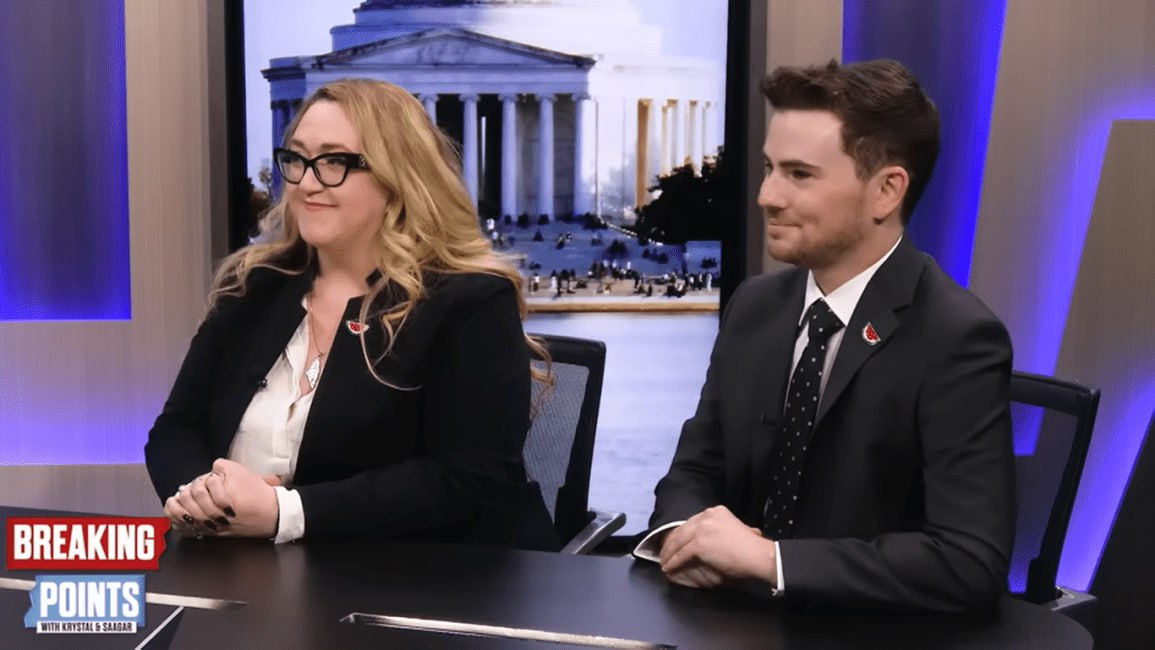
On November 16, 2025, after two years of operating in secrecy, the founders of the Track AIPAC website, Cory Archibald
and Casey Kennedy, revealed their identities for the first time after receiving death threats.
According to Zeteo, Archibald later said that “AIPAC is no longer feared like it once was, leading some congressional candidates to not only boast of not being on the lobby’s payroll, but a few are even returning money the lobby has already given them.”
“We really set out to make working with AIPAC a political liability, and we feel that we’ve been pretty successful in moving the needle on that,” she said despite having been fired from their jobs due to pressures exerted by groups linked to the lobby.
The Shame List
According to what is known as the “shame list” published by the Track AIPAC website, which names U.S. members of Congress who have received funding from the Zionist lobby, the list includes 81 lawmakers, about 15 percent of the current Congress, who have received the largest amounts of support from AIPAC.
The names are divided between eight members of the Senate and 73 members of the House of Representatives, including 37 Republicans and 44 Democrats.
The site exposes the ties between these lawmakers and U.S. politicians and “Israel” by publishing detailed profiles of members of both chambers of Congress, containing precise information about “Israel-linked” financial donations they have received.
The list includes politicians who received tens of thousands of dollars from AIPAC and other pro-occupation lobbying groups that strongly support U.S. military aid to “Israel,” ranging from Republican Sen.
Tommy Tuberville of Alabama to figures who received millions of dollars, such as former Democratic presidential candidate Kamala Harris.
To demonstrate that politicians who take money from the Zionist lobby work more in the interests of the government in “Tel Aviv” than in those of Washington, Track AIPAC revealed that 28 members of Congress, all Republicans and described in the report as “AIPAC-bought,” issued threats against the leaders of Australia, Canada, France and the United Kingdom, warning of sanctions if they recognized the state of Palestine.
Those threats were contained in a joint letter led by Rep. Elise Stefanik and Sen. Rick Scott, in which they claimed that recognition of Palestine by those countries “would endanger Israel’s security.”
In 2024, amid rising public anger over “Israel’s” war on Gaza, AIPAC launched an unprecedented public campaign, spending about $100 million to support “pro-Israel” candidates, and crediting itself with the victory of 361 “Israel-aligned” candidates in hundreds of electoral races.
In response, the Track AIPAC platform launched advertising and awareness campaigns ahead of the 2026 congressional elections, aiming to urge U.S. voters to learn which politicians receive money from AIPAC and to explain how that funding shapes policies inside the United States in ways that serve “Israel” more than American citizens.
The site disclosed that more than $230 million was spent to support former U.S. President Donald Trump through “pro-Israel” lobbies and individuals linked to them.
The largest spender was Preserve America PAC, affiliated with Israeli American billionaire Miriam Adelson, which injected more than $215 million to back Trump in the U.S. presidential election.
The Republican Jewish Coalition, an ally of AIPAC, has also spent more than $14 million to support Trump since 2020.
Former Vice President JD Vance received more than $167,000 in campaign funding from “pro-Israel” lobbying groups, while the “pro-Israel” billionaire and Vance ally Peter Thiel spent about $15 million to finance his U.S. Senate campaign in Ohio in 2022.
Thiel is a co-founder of Palantir, a data analytics company backed by the U.S. Central Intelligence Agency that assists “Israel” in compiling what are known as “assassination lists” of Palestinians in Gaza.
In January 2024, Palantir agreed to a strategic partnership with the Israeli military to provide technology used in what the text describes as the genocide in Gaza.
In this context, The American Prospect magazine explained in a report published on August 28, 2024, that AIPAC has represented for at least four decades “a stain” on democratic politics and U.S. foreign policy.
The magazine said AIPAC, as the propaganda and financial arm of the Zionist lobby, exerts intense pressure and directs campaign donations to ensure that no U.S. president dares to oppose the Israeli government, regardless of how egregious its conduct may be.
It also intimidates members of Congress and prevents them from voicing any criticism of “Israel,” for fear of political punishment or exclusion from their positions.

AIPAC’s Decline
Because of campaigns that exposed the entities and individuals through which “Israel” and U.S. Jewish donors financed U.S. elections, the American Israel Public Affairs Committee, AIPAC, has turned to new circumvention methods to support its preferred candidates in U.S. midterm elections, away from public scrutiny.
AIPAC has abandoned the overt support campaigns it relied on in previous elections to back pro-occupation congressional candidates, shifting instead to a more cautious strategy based on channeling support through intermediary organizations and alternative funding routes with opaque origins, according to The Intercept in a report published on December 30, 2025.
Recent opinion polls point to a tangible shift in U.S. public attitudes away from unconditional support for “Israel.”
A survey conducted by the Pew Research Center found that nearly six in 10 Americans now hold unfavorable views of the “Israeli government.”
This unconditional support has been met with widespread public resentment, helping to fuel a growing movement seeking to curb AIPAC’s influence within the U.S. political system and to back independent congressional candidates, provided they commit to rejecting money from “pro-Israel” lobbying groups, according to The Intercept.
The magazine said the approach of the 2026 midterm elections has pushed AIPAC and its favored candidates to retreat from the aggressive and confrontational electoral strategies they pursued in previous cycles.
The Intercept noted that this retreat does not mean AIPAC has relinquished its influence. Despite refraining from publicly endorsing new candidates in the upcoming midterms, the committee continues to operate quietly behind the scenes to support the campaigns of its preferred contenders.
For decades, AIPAC exerted intense pressure on U.S. presidents and congressional offices, financed trips to “Israel” for members of Congress, hosted officials at its annual policy conference, and steadily expanded its reach within the corridors of American power.
That approach, however, has begun to shift as a growing number of candidates have launched campaigns criticizing unconditional U.S. military support for “Israel,” a trend that has gained momentum since the late 2000s.
In this context, former Democratic Rep. Marie Newman of Illinois described the retreat by saying that “AIPAC fully understands that its brand is in the gutter.”
According to Newman, “The American Israel Public Affairs Committee is viewed negatively across the United States, and when it knocks on doors and shows up at campaigns and rallies, it encounters mainstream Americans who say clearly, we do not want more AIPAC and no more pro-Israel political action committees,” a shift that has coincided with declining U.S. public support for “Israel” in the wake of the genocide in Gaza.
Escalating Conflict
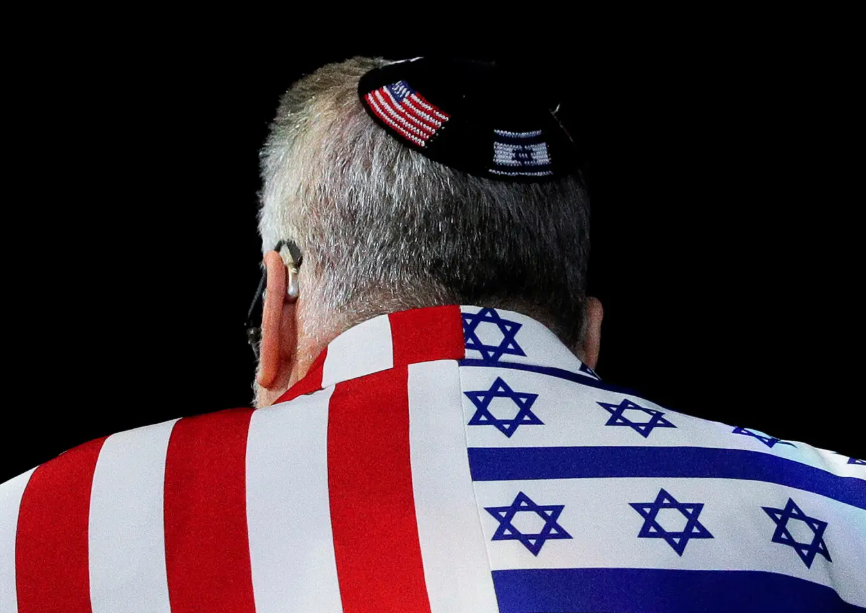
Mondoweiss reported on January 8, 2026, that the escalating conflict between the Track AIPAC platform and AIPAC itself has made issues related to Israeli lobbying groups, U.S. support for the occupation, apartheid, and genocide play a pivotal role in the midterm elections in an unprecedented way.
The magazine emphasized that Israeli lobbying groups, led by AIPAC, have already begun adapting to a new political reality in which most American voters view these groups as a major problem and a serious factor influencing U.S. policy.
In the same context, The New York Times reported on October 2, 2025, that the sharp decline in American support for “Israel’s” war on Gaza, along with the significant drop in Democratic voters’ approval of the Jewish state, has made AIPAC a “toxic brand” for some members of Congress.
The newspaper explained that AIPAC, by shifting from public support campaigns to covert backing, has returned to a strategy it had used in previous elections, directing funds to candidates through alternative funding channels in order to distance its name from electoral races.
In this framework, AIPAC donors supported their preferred candidates by contributing to political action committees of unknown origin, which were not publicly linked to Israeli policy, such as the PAC “314 Action,” in addition to several smaller political action committees.
On December 2, 2025, documents published by Responsible Statecraft revealed how another lobbying group, known as “Act For Israel,” coordinated closely with the Israeli government to influence U.S. public opinion without registering as a foreign agent.
The documents, based on leaked emails, showed secret lobbying operations aimed at influencing U.S. media and politics in “Israel’s” favor, raising serious legal questions about compliance with the Foreign Agents Registration Act, or FARA.
In this context, Ben Freeman, an expert on FARA at the Quincy Institute, said: “What these documents reveal appears to be conclusive evidence that these activities should have been registered under the Foreign Agents Registration Act.”
Although FARA has been in effect since 1938, its enforcement has historically been lax, particularly in cases connected to “Israel.”
Sources
- Meet AIPAC’s Nightmare
- Aipac hall of shame
- AIPAC Is Retreating From Endorsements and Election Spending. It Won’t Give Up Its Influence
- Democrats Pull Away From AIPAC, Reflecting a Broader Shift
- The Shift: Activists launching anti-AIPAC ads ahead of midterms
- Inside Israel's shadow campaign to win over American media