New Calls To Form a Unified Government in Libya: A Serious Move or a Waste of Time?
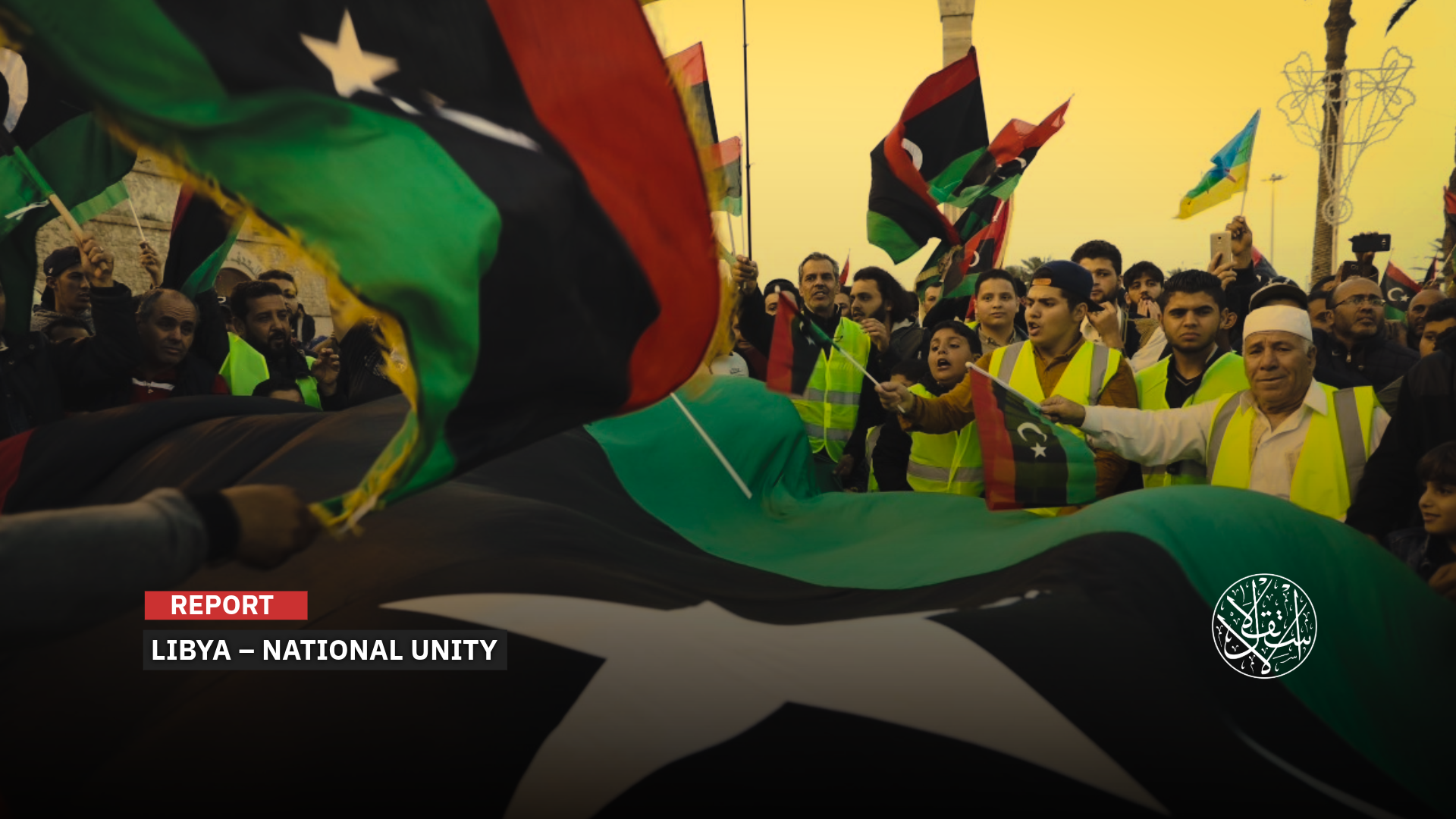
“The Libyan crisis is deeper than a mere power struggle; it is an ideological and societal crisis.”
Calls for the formation of a unity government in Libya have sparked widespread political and media debate. Some see this as a way out of the current crisis, while others doubt its feasibility given the deep political and institutional divisions plaguing the country.
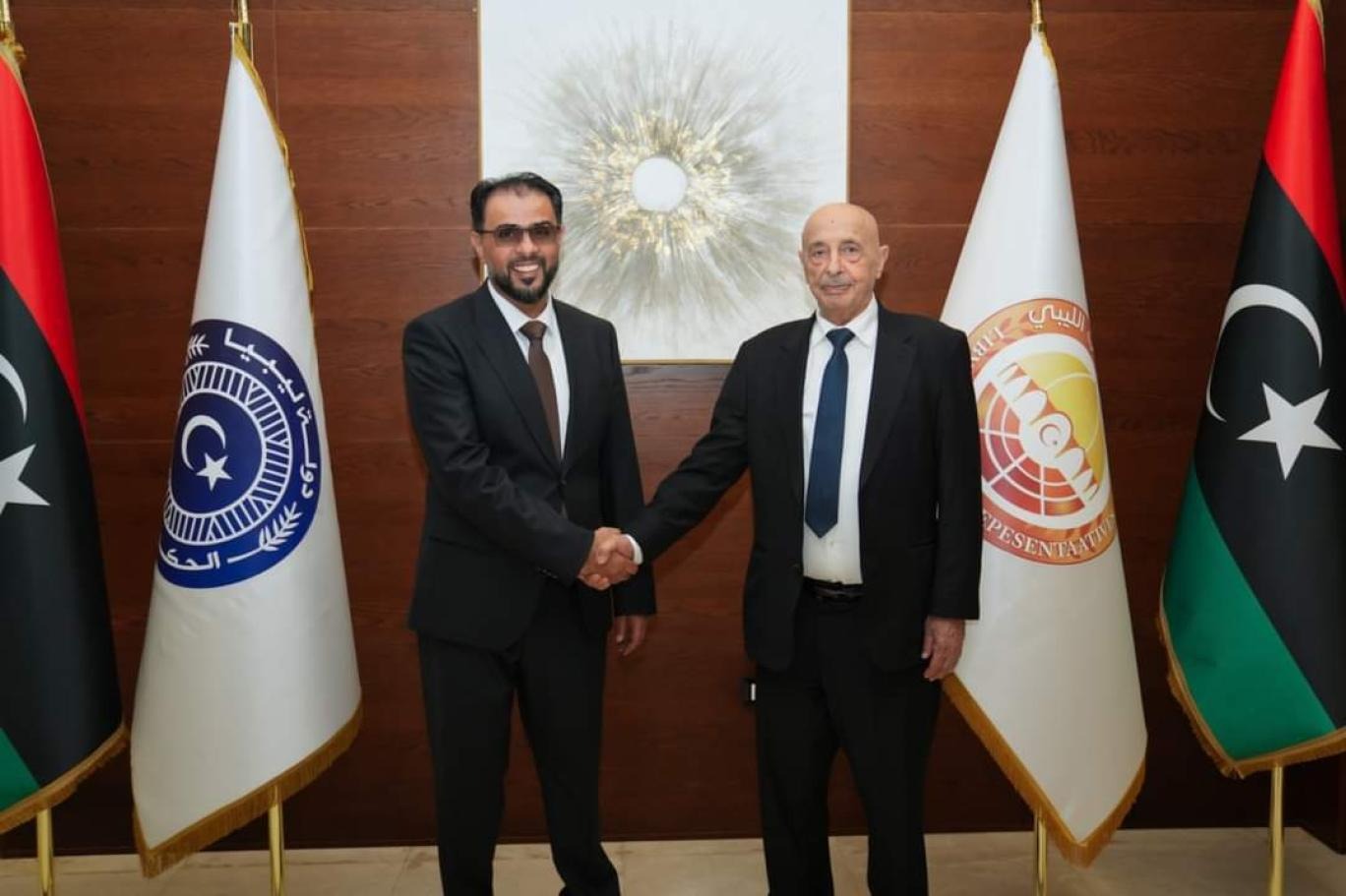
This call came from Osama Hammad, the head of the government appointed by the Libyan House of Representatives, which is not internationally recognized.
He stressed the necessity of launching a comprehensive and serious national dialogue as soon as possible, leading to the formation of a unified, consensus-based government with clear tasks and defined powers within a binding national framework.
In a statement published on his Facebook page on March 4, he explained that Libya is going through a highly sensitive phase, where economic challenges are intertwined with political complexities.
He indicated that the continued division and the stalled constitutional and executive processes can no longer be postponed, estimating that they pose a real threat to the country's unity.
The statement described the Tripoli-based government, headed by Abdul Hamid Dbeibah, as having an expired mandate, accusing it of squandering public funds and entrenching financial and administrative corruption, which has contributed to deepening the division within state institutions.
On February 18, Hammad called on the Tripoli-based government to engage in direct dialogue to address the current financial crisis, or to step aside and allow other figures to unify institutions and achieve stability in the country.
Libya is experiencing a sharp political division between the internationally recognized government in Tripoli, headed by Dbeibah, and another in the east of the country, headed by Hammad and operating under the influence of General Khalifa Haftar.
This situation has serious economic, security, and social repercussions for the state and its citizens.
Comprehensive Dialogue
At the parliamentary level, the Second Deputy Speaker of the House of Representatives, Misbah Douma, endorsed what he described as the urgent popular and national demand for the immediate initiation of a comprehensive national dialogue to end the current stalemate and lead to the formation of a unified government with the necessary powers and legitimacy.
According to local reports, Douma affirmed that unifying the executive authority is the only true path to establishing financial and economic stability and ensuring the delivery of services to every city and village in Libya without discrimination or exclusion.
He emphasized that the ultimate goal the parliament seeks and will not compromise on is to hold simultaneous presidential and parliamentary elections, thus fulfilling the hopes and aspirations of 2.8 million Libyan voters.
He indicated that supporting this initiative stems from a sense of national duty and the historical responsibility the parliament bears towards the people and the nation, calling for a national dialogue to restore the state's prestige and unify the government and sovereign institutions.
He stated that this call is not merely a fleeting political declaration, but rather a cry for justice against division, and a sincere and responsible call to restore the state's prestige and stability.
He warned that the continued fragmentation Libyans are experiencing is no longer something that can be ignored or postponed, asserting that this situation is now gnawing at the nation's core and directly threatening its unity and existence.
In support of this approach, candidates for the premiership of the new unified government issued a statement declaring their support for national unity and the completion of the political process, leading to an end to the division and the restoration of state stability.
Among these candidates are Salama al-Ghawil, Muhammad al-Muntasir, Abdul Hakim Ba'yu, Muhammad al-Mazoughi, Abdul Basit al-Gamati, and Ali Sassi.
They emphasized their support for serious initiatives aimed at unifying state institutions and strengthening comprehensive national dialogue, ultimately leading to the formation of a unified executive authority capable of managing the transitional phase and creating the necessary conditions for holding general elections.
They announced their commitment to the electoral laws issued by the 6+6 committee and pledged to work towards their implementation to ensure free and fair elections that reflect the true will of the Libyan people.
They stressed that the efforts of all political and national forces must be combined, and the language of dialogue and consensus must prevail, to achieve stability and the rule of law.
Unified Institutions
The Libyan file, with its deep institutional and political crisis, is of great interest to major international actors, most notably Washington and the United Nations, which have also called for institutional unity in the country.
In this regard, the US Presidential Advisor on African and Middle Eastern Affairs, Massad Boulos, affirmed that stability in Libya requires the unification of institutions and the restoration of economic vitality through a political process, emphasizing Washington’s support for these efforts.
This came in a tweet Boulos posted on March 4, commenting on the statement issued by the President of the UN Security Council on Libya.
“Libya’s path to lasting stability requires a credible, Libyan-led political process that unifies institutions and restores economic vitality,” Boulos said.
He emphasized that the United States will continue to engage with relevant Libyan parties in a practical and coordinated approach to creating the conditions necessary to ensure the stability of political institutions and achieve long-term economic prosperity.
He affirmed that the United States supports the Special Representative of the Secretary-General of the United Nations, Hanna Tetteh, and the United Nations Support Mission in Libya (UNSMIL) in their efforts to facilitate these endeavors.
In a statement, the members of the Security Council called for the implementation of a unified development program, stressing the importance of a unified budget to prevent further economic deterioration in Libya.
They noted the importance of making progress toward unifying all institutions, including military and security institutions, and emphasized the importance of preserving the unity and independence of the judicial system.
They also urged the parties to demonstrate the political will and consensus to advance a Libyan-led and Libyan-owned process, and to refrain from any unilateral actions that could entrench institutional divisions, undermine the prospects for national reconciliation, and worsen Libya’s financial and economic situation.
The members noted the importance of making progress toward unifying all institutions, including military and security institutions, and stressed the importance of preserving the unity and independence of the judicial system.
Reform Path
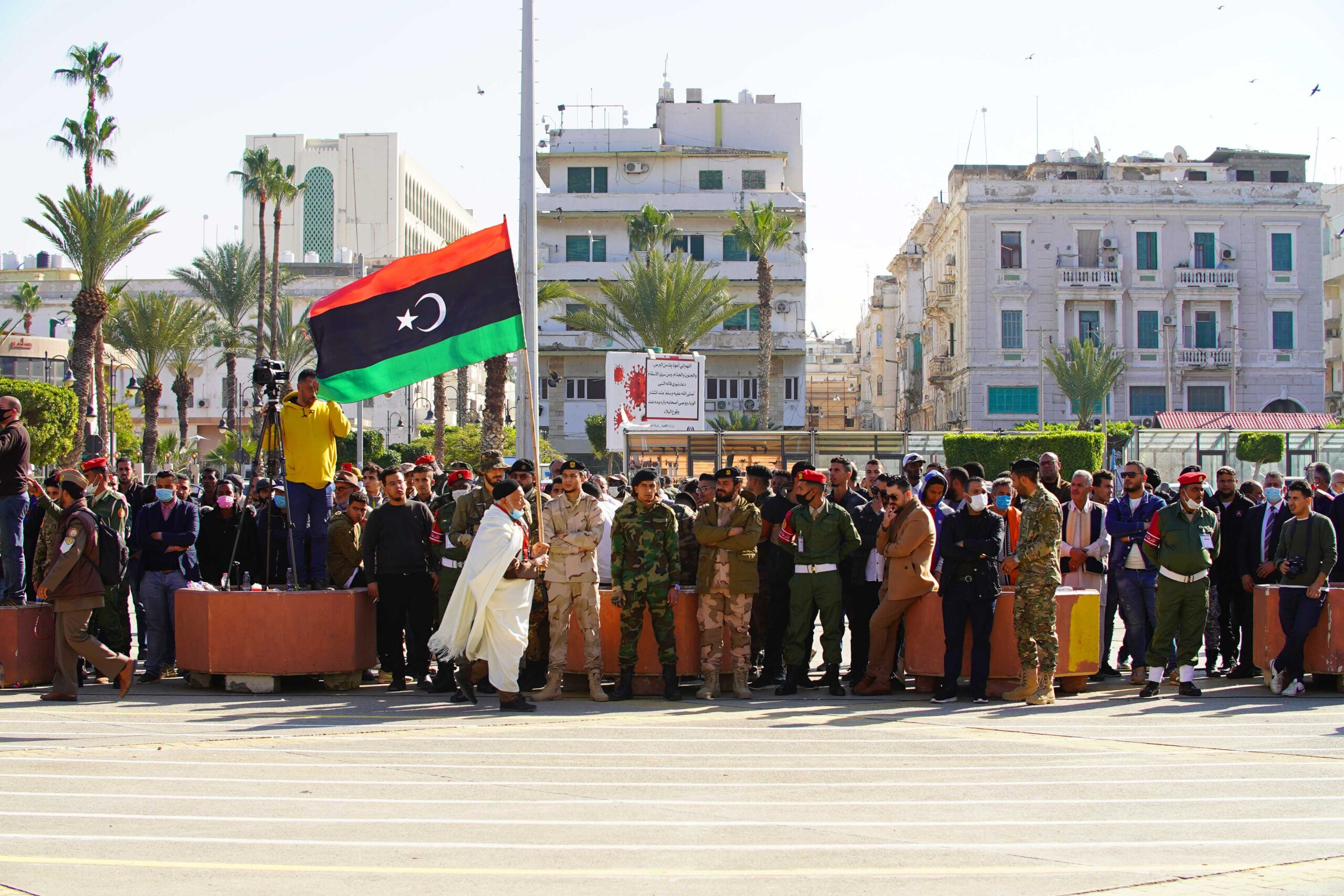
In his analysis of these calls, Libyan political analyst Ibrahim Asayfar told Al-Estiklal that the problem in Libya is not the lack of consensus, because there is complete agreement among the elites to keep the state weak and obstruct any genuine reform process.
“Therefore, we see that every national project is halted before it sees the light of day, and every democratic milestone is postponed,” he added.
He believes that the idea that democracy or institutional reform can be achieved under these circumstances is a grand illusion, because the charade continues, the set remains the same, and the roles are pre-scripted.
He emphasized that Libya's crisis is deeper than a mere power struggle; it is an ideological and societal crisis, where each side clings to its vision and views any concession as a defeat, and every attempt to recognize the other is rejected.
He pointed out that this situation makes any project to unify the country or build a civil state virtually impossible, warning that disagreement is not simply a problem that can be resolved through law, but a constant reality that must be managed wisely.
He stated that failure to recognize this transforms every democratic process into a new conflict, turning the constitution and the ballot box into tools for exacerbating division rather than addressing the crisis.
He believes that the solution to the Libyan situation lies in changing the political and cultural mindset of society, in rebuilding a collective consciousness that rejects polarization, accepts pluralism as a value and not a threat, makes dialogue the rule and not the exception, and transforms coexistence with others from a concession into a condition for the state's survival.
He believed that the continuation of the current situation will keep the country trapped in divisions and chaos, while external powers play a decisive role in determining its course.
He concluded that without a radical reform of the political mindset and culture, Libya will remain governed by recurring cycles of failure and division, with the citizen being the perpetual victim.
Risks and Indicators
This political situation in Libya was addressed by The Geopolitical Desk in a report on political risks in Libya, published on March 6, which highlighted the escalating economic pressures and political and security tensions plaguing the country.
It explained that the Libyan political landscape is witnessing a marked increase in indicators of instability, with growing economic pressures and the resurgence of popular protests in several cities in western Libya.
According to the report, a wave of social anger has begun to form against the backdrop of deteriorating living conditions. Limited demonstrations have taken place in the cities of Tripoli, Zawiya, and Zliten, demanding the dismissal of both governments and an end to the political division in the country.
The report indicated that the head of the Government of National Accord, Abdul Hamid Dbeibah, is seeking to carry out a cabinet reshuffle to strengthen his government's position.
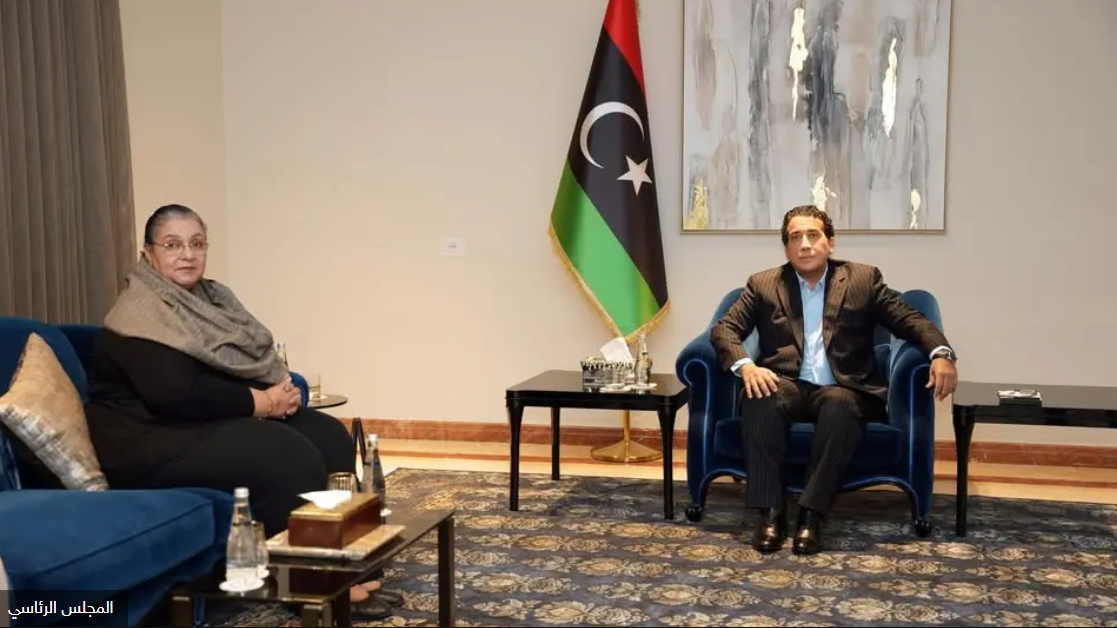
This move has drawn reservations from the head of the Libyan Presidential Council, Mohamed al-Menfi, who warned that any government changes must follow established legal procedures.
The report also noted the continued tension within the Libyan House of Representatives over the debate surrounding proposals to impose new taxes on imports, while the Libyan National Army continues its military operations against armed groups in the south of the country.
The report concluded that the convergence of the economic crisis, the political division, and the deteriorating security situation in the south creates a combination of risks that could push Libya into a new phase of instability if political tensions are not contained and an economic reform process is not launched to alleviate the growing social pressures.