U.S. Designates Sudan’s Muslim Brotherhood a Terrorist Group: What Are the Links to the UAE and the War on Iran?
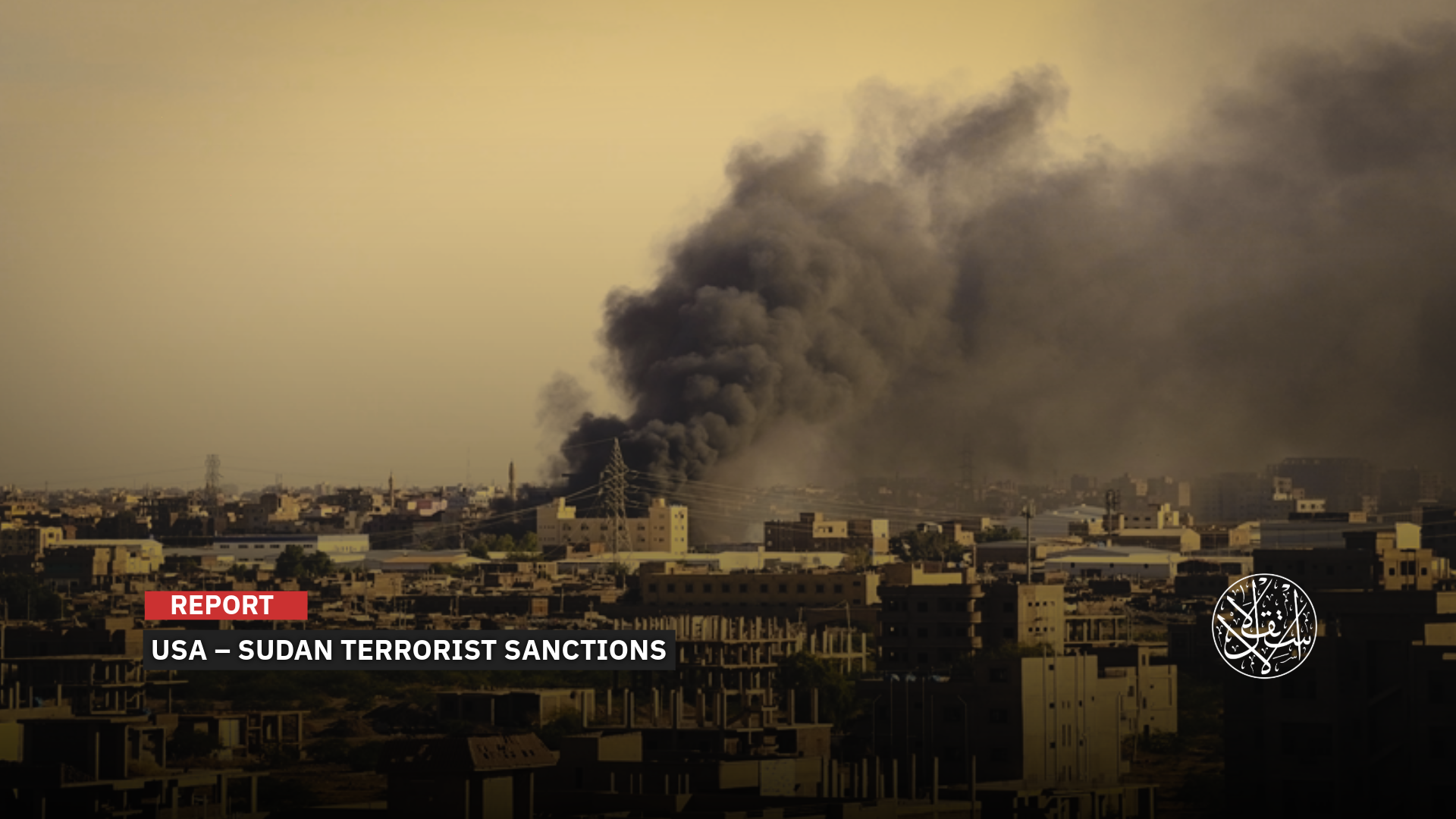
The U.S. Department of State announced the designation of the "Muslim Brotherhood" in Sudan as a "foreign terrorist organization."
Ten days after the outbreak of the war on Iran, and following repeated calls from the United Arab Emirates, the U.S. Department of State announced on March 9, 2026, that it had designated the Muslim Brotherhood in Sudan as a Foreign Terrorist Organization, with the decision set to take effect on March 16, 2026.
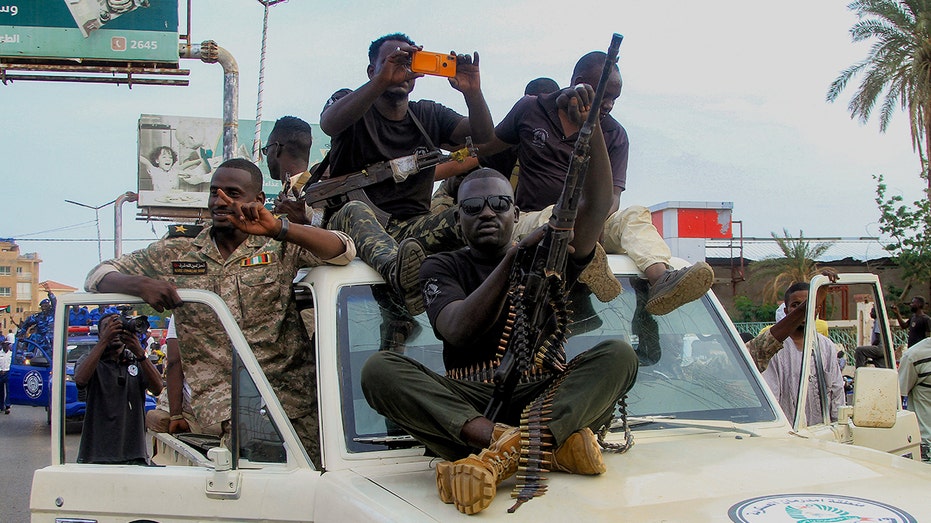
Washington specifically included the al-Baraa bin Malik Brigade, an Islamist-oriented group that is fighting alongside the Sudanese army in defending the country against the Rapid Support Forces militia, claiming that Iran funds the brigade and trains its members.
The announcement came as videos circulated of Sudanese leaders declaring solidarity with Tehran and expressing readiness to fight the United States, in addition to the Sudanese army’s rejection of all proposals presented by Massad Boulos, senior adviser to U.S. President Donald Trump on African affairs. This implicitly clarifies the underlying reasons behind the decision.
In this context, Sudanese assessments pointed to two main reasons behind the sudden designation. The first is the support expressed by some Sudanese for Iran in the war being waged against it by the United States and “Israel”.
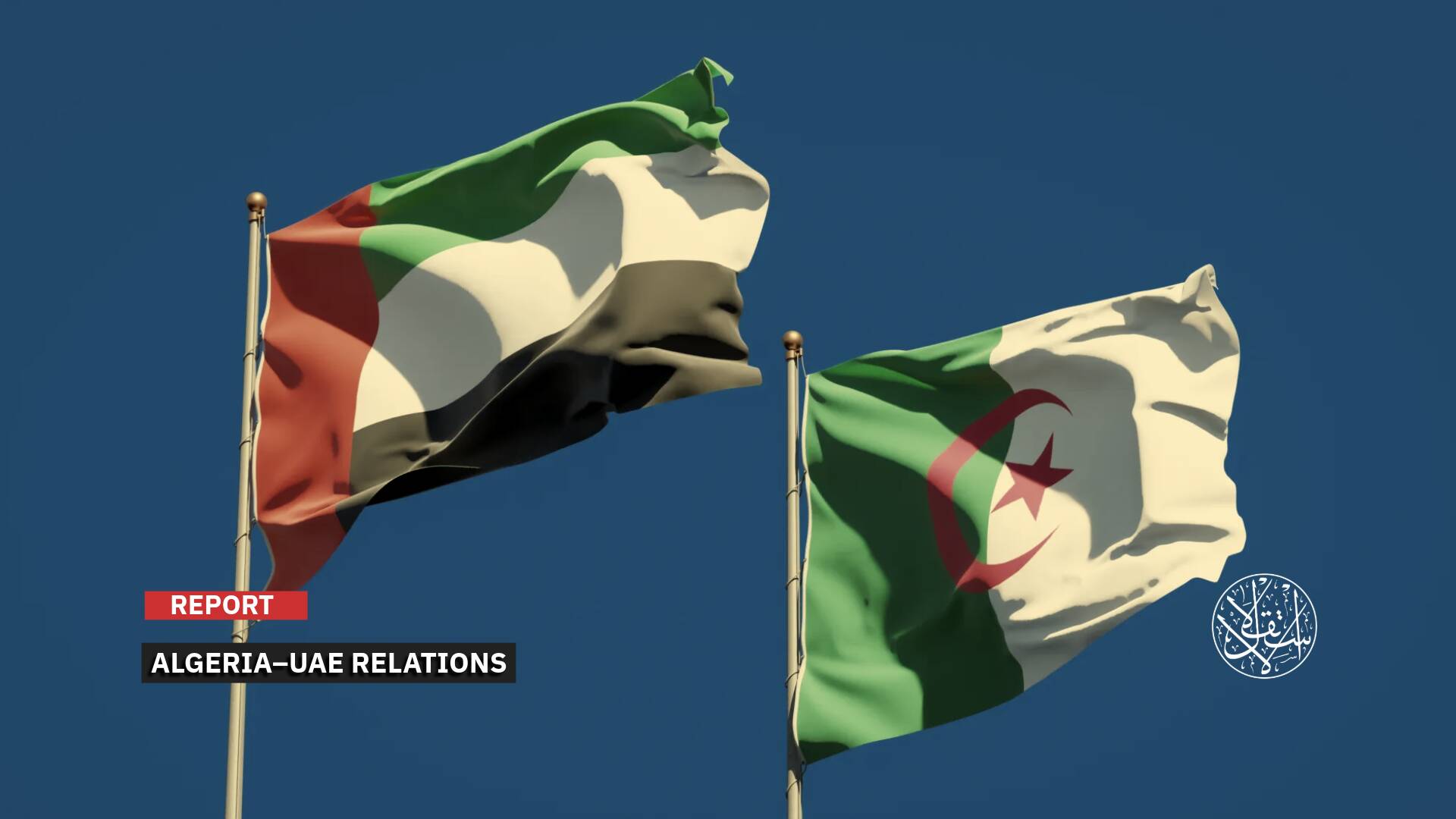
The second is President Trump’s attempt to present what resembles a “political gift” to the United Arab Emirates to satisfy it, amid narratives suggesting Washington may be retreating from protecting its allies, as well as an effort to reduce pressure on the UAE over accusations that it is behind violence in Sudan through its backing of the Rapid Support Forces militia.
Analysts argued that the UAE’s welcome of the U.S. designation of the Muslim Brotherhood, which Abu Dhabi accuses of cooperating with the Sudanese army, reflects that the decision amounts to a political gift from the Trump administration to the UAE, aimed at easing international pressure on it amid accusations of involvement in violence in Sudan through the Rapid Support Forces militia.
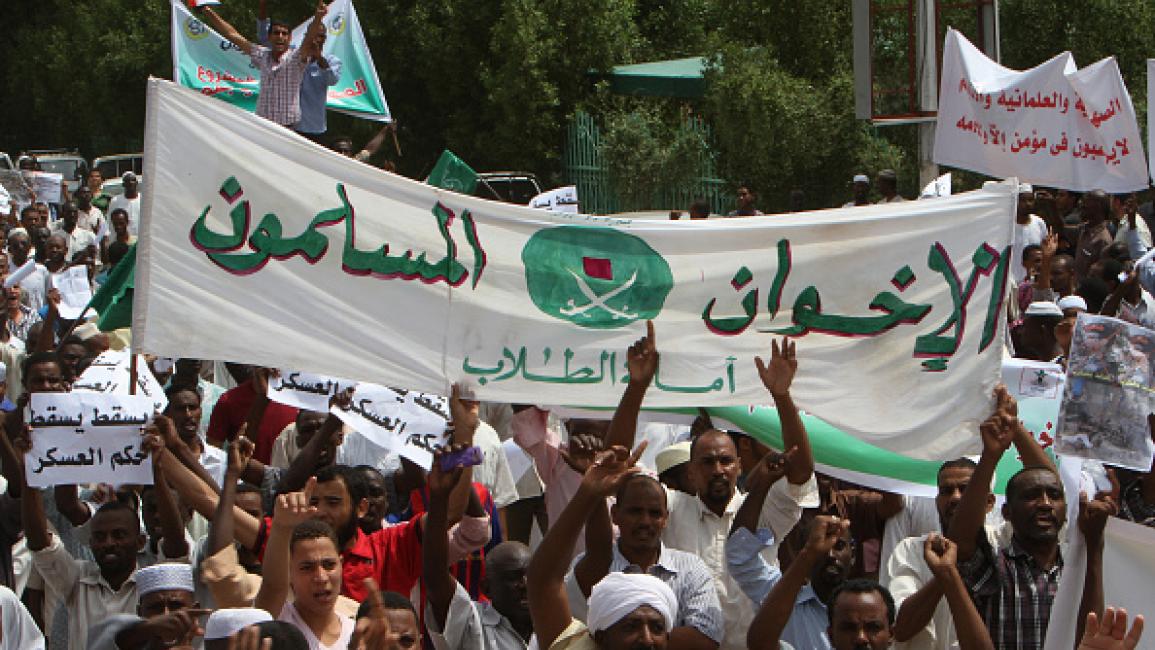
With this designation, Sudan becomes the fourth country covered by the decision.
In October 2025, the U.S. Department of State had already imposed sanctions on the Muslim Brotherhood in Egypt, Jordan, and Lebanon, announcing their designation as a Foreign Terrorist Organization in those countries.
The Background of the Designation
In September 2025, the U.S. Department of State designated the Islamist al-Baraa bin Malik Brigade, which fights alongside the Sudanese army against the UAE-backed Rapid Support Forces militia, under Executive Order 14098, citing its alleged “role in the brutal war unfolding in Sudan.”
Notably, the United States later redesignated the brigade, this time formally including it within the Muslim Brotherhood in Sudan on the list of Foreign Terrorist Organizations, and classifying it as a Specially Designated Global Terrorist (SDGT) entity.
The State Department stated that the organization “consists of the Sudanese Islamic Movement and its armed wing, the al-Baraa bin Malik Battalion, and uses unrestricted violence against civilians to undermine efforts to resolve the conflict in Sudan and to advance its violent Islamist ideology.”
The apparent objective this time is to highlight the support of Islamists in Sudan for Iran in its war against Washington and “Tel Aviv” through an official decision that entails freezing the group’s assets, imposing travel bans to the United States, and subjecting it to international financial isolation.
The U.S. State Department also linked the group’s fighters to Iran, claiming that they “received training and support from the Iranian Revolutionary Guard Corps,” and alleged that they carried out mass executions of civilians, even though this accusation has been directed by relief organizations at the Rapid Support Forces militia.
The State Department added, “As the world’s largest state sponsor of terrorism, the Iranian regime has financed and directed malign activities around the world through the Islamic Revolutionary Guard Corps,” in reference to linking the al-Baraa Brigade and the Muslim Brotherhood to Iranian support.
Washington justified the decision by citing “reports demonstrating the group’s involvement in field executions and the recruitment of more than 20,000 fighters,” emphasizing that it “will use all available tools to deny the Iranian regime and branches of the Muslim Brotherhood the resources that enable them to engage in or support terrorism.”
Under the decision, Sudan’s Muslim Brotherhood and the al-Baraa bin Malik Brigade were designated as Specially Designated Global Terrorist (SDGT) entities.
Sanctions were also imposed on any international party providing financial or military support to these entities, and all assets and properties belonging to the group in the United States and within the global banking system were frozen.
The SDGT, or Specially Designated Global Terrorist, designation means that U.S. authorities grant themselves the power to freeze all assets of the entity and prohibit any U.S. citizen, institution, or any party dealing with the U.S. financial system from conducting transactions with them.
In July 2025, U.S. Secretary of State Marco Rubio announced that Sudan would be the next focus of Washington’s policy following the signing of the peace agreement between Congo and Rwanda, indicating a notable shift in the White House’s attention toward the Sudanese file.
In September 2025, the Office of Foreign Assets Control (OFAC) of the U.S. Treasury Department imposed sanctions on Sudanese Islamists, namely Jibril Ibrahim Mohamed Fadil, the current finance minister, and the al-Baraa bin Malik Battalion (BBMB), which fights alongside the Sudanese army, citing their involvement in the brutal Sudanese civil war and alleged ties to Iran.
The United States stated that these sanctions aim to limit Islamist influence within Sudan and curb Iran’s regional activities, which it says have contributed to instability, conflict, and increased civilian suffering.
The U.S. Treasury’s Under Secretary for Terrorism and Financial Intelligence, John K. Hurley, said, “Sudanese Islamist groups have formed dangerous alliances with the Iranian regime. We will not stand by idly and allow them to threaten regional and global security. The Treasury Department is using our powerful sanctions tools to disrupt this activity and protect U.S. national security.”

Why Now?
The United States’ designation of the Muslim Brotherhood in Sudan as a Foreign Terrorist Organization has raised widespread questions about the motives behind the decision and its potential consequences, particularly given the group’s cooperation with the Sudanese army in the war against the Rapid Support Forces militia.
Analysts are asking whether the objective is to pressure the Sudanese army to end its cooperation with Islamist groups, or whether the move is aimed at targeting the army itself more directly.
Sudanese analysts have accused Massad Boulos, senior adviser to President Donald Trump on Arab and African affairs, of being behind the designation, especially after the Sudanese army rejected all of his proposals to end the war in a way that would favor the militia.
Boulos stated that the United States designated the Muslim Brotherhood in Sudan as a terrorist organization “in order to counter Iranian influence and hold accountable those responsible for crimes committed against civilians in Sudan.”
U.S. reports indicate the existence of an alliance between Sudan and Iran, supported by the Sudanese Islamic Movement, which is ideologically associated with the Muslim Brotherhood.
At the same time, there appears to be a separate designation related to the group that the U.S. State Department mentioned only in general terms.
Washington has also accused the Sudanese army of cooperating with Iran, receiving drones from it, and allowing the establishment of defense industry factories and the development of weapons transport networks, with the aim of turning Sudan into a platform for Iranian influence overlooking the Red Sea.
The United States has further accused specific Islamist elements, such as the Islamist al-Baraa military battalion, of receiving advanced training from the Islamic Revolutionary Guard Corps.
At the same time as the U.S. and Israeli attacks on Iran, video clips circulated on social media platforms showing Sudanese fighters affiliated with the Sudanese Islamic Movement declaring their readiness to travel to Iran and fight alongside it against the United States and “Israel”.
Although the Sudanese army quickly denied any official connection to those statements, emphasizing that such calls do not represent the military institution or the state, some reports, analyses, and Sudanese politicians viewed them as an indication of the influence of the Islamist current within Sudan.
Tehran has long sought to expand its influence in the region by strengthening its relations with Sudan, a move that could allow it to expand its military or logistical presence in the Red Sea and monitor international shipping lanes.
Western analysts have linked this Iranian ambition to the current war, in which maritime corridors are increasingly being used as strategic tools, potentially increasing Iran’s ability to exert strategic pressure on its regional rivals, particularly “Israel” and several Gulf states.
The U.S. decision also came amid the ongoing Sudanese war between the army and the Rapid Support Forces militia since April 15, 2023, and after the failure of pressure efforts led by the Quad Committee, consisting of Saudi Arabia, the United States, Egypt, and the United Arab Emirates, which had sought to persuade the army to accept a roadmap beginning with a truce and ending with a permanent ceasefire.
The Sudanese army viewed these pressures as an attempt to rescue the Rapid Support Forces militia from the successive defeats they had suffered, amid Egyptian, Saudi, and Turkish support for Khartoum against what Sudanese officials describe as a UAE-Israeli axis backing the Rapid Support Forces militia led by Mohamed Hamdan Dagalo (Hemedti).
The decision also followed a decline in the U.S. diplomatic efforts recently led by Massad Boulos, after the Sudanese government announced on February 23, 2026, that it rejected his proposals regarding the crisis in the country, while the Sudanese Islamic Movement was accused of influencing the government’s refusal to calls for ending the war.
According to an assessment by the Middle East Forum on March 11, 2026, the United States’ decision to place the Muslim Brotherhood and the Sudanese Islamic Movement on sanctions lists came about two months after sanctions were imposed on Muslim Brotherhood branches in Egypt, Jordan, and Lebanon, and followed the Sudanese army’s rejection of proposals put forward by Trump’s envoy.
The forum said that “this U.S. step highlights the Trump administration’s frustration over the lack of progress and Abdel Fattah al-Burhan’s refusal to accept the conditions of the four-party alliance, relying instead on Islamist factions within the Sovereignty Council and the army.”
The United States also linked Sudanese Islamist factions to Iran less than two weeks after the outbreak of the war between Washington and Tehran.
Sudanese leader Abdel Fattah al-Burhan had previously complained that “Boulos threatens us and speaks as if he wants to impose things on us, and we fear that he may be an obstacle to the peace that all Sudanese seek.”
In an analysis of the reasons behind the designation, Edmund Fitton-Brown, a researcher at the Foundation for Defense of Democracies (FDD), told Fox News Digital on March 10, 2026, that the Muslim Brotherhood has “deep influence within the Sudanese armed forces and plays a major role in the war against the Rapid Support Forces militia,” adding that the group has a “strong component” within Sudan’s regular army.
Fitton-Brown said that the U.S. State Department’s designation of the Muslim Brotherhood in Sudan is “likely to empower democratic forces there, although it will not be sufficient to change how Sudan is governed or to end the civil war without external intervention.”
By contrast, Nicholas Coghlan, a former Canadian diplomat in Khartoum, told The Globe and Mail in Toronto that hardline factions within the alliance backing Abdel Fattah al-Burhan’s government “will now push him to ignore the United States and other potential mediators, since they have little to lose if they walk away.”
The UAE’s Involvement
The United Arab Emirates’ Ministry of Foreign Affairs notably welcomed the U.S. designation of the Muslim Brotherhood in Sudan and the al-Baraa bin Malik Battalion, describing the decision as one that “aims to stop the excessive violence against civilians and the destabilization carried out by the Muslim Brotherhood to undermine efforts to resolve the conflict in Sudan.”
This came despite the fact that the militia forces of Hemedti are the primary party accused of violations, placing the UAE in a sensitive position.
U.S. reports have also referred to earlier Emirati requests urging Washington to designate Sudan’s Muslim Brotherhood and the al-Baraa bin Malik Brigade as terrorist organizations.
Sudanese figures close to the government in Khartoum interpreted this as an indication that the decision represents a “political gift” from the Trump administration to Abu Dhabi, intended to divert attention from the alleged violations attributed to it in Sudan and shift the blame onto Islamist groups.
Regarding the timing of the decision, observers noted that it coincided with growing U.S. frustration with the Sudanese army, both because it rejected the initiatives proposed by Trump’s envoy and because figures within the army and the Islamic Movement openly declared support for Iran against the United States.
A leader in the Sudanese Islamic Movement, al-Naji Abdullah, had announced in a speech to supporters, in a video published on March 3, 2026, that they stood with Iran in its war against the United States and “Israel”.
Drawing attention in his remarks, al-Naji, who is fighting alongside the army, stated that their battalions and fighters were ready to travel to Iran and fight alongside it if the United States or Israel launched a ground attack against the country.
The Sudanese army responded in a statement following these remarks, announcing legal measures against the group that appeared in media footage wearing military uniforms and chanting in favor of the war.
The army stressed that the group does not belong to the official armed forces and confirmed that legal action would be taken against its members.
Al-Naji was reportedly detained for several days before being released.
U.S. and Emirati reports, including a report published by the UAE-based outlet Sky News Arabia on March 6, 2026, claim that Iran is seeking to expand its influence in Sudan amid the internal war, relying on the Muslim Brotherhood and the al-Baraa bin Malik Brigade.
These reports warn that the growing Iranian influence in Sudan, alongside the continuation of the internal war, could lead to dangerous strategic shifts in a region that includes some of the world’s most important maritime routes.
As expected, militia forces fighting alongside the Rapid Support Forces militia welcomed the U.S. decision, considering it a victory against the Sudanese army and government.
The commander of the Rapid Support Forces militia and head of the presidential council of the “Ta’sis” government, which is parallel to the government in Khartoum, praised the designation, stating that the decision “represents a victory for the will of the Sudanese people.”
He added that the Muslim Brotherhood represents a threat to international peace and security and that the decision acknowledges the serious violations and crimes committed by the group and its various fronts, including the army.
The Sudan Founding Alliance, politically and militarily led by the Rapid Support Forces militia, also rushed to welcome the decision, describing it as “an important step toward removing the Muslim Brotherhood regime.”
Statements from Hemedti’s militia forces have often referred to the Sudanese army itself as “the Muslim Brotherhood.”
The Sudanese Islamic Movement largely ignored the decision, though its supporters on social media rejected it, arguing that the United States is not qualified to designate any entity as a terrorist organization because of what they describe as its role in spreading wars and conflicts and undermining the sovereignty of states.
They also argued that the Muslim Brotherhood, or the Islamic Movement, is not a clearly structured political entity and that it is difficult to prove its involvement in terrorist activities.
Because the brigade was designated alongside groups fighting with the army against militias, the Sudanese government called on Washington to designate the Rapid Support Forces militia as a “terrorist organization,” arguing that it is responsible for violations and crimes against humanity.
In a statement responding to the U.S. designation of the Muslim Brotherhood in Sudan, the Sudanese Ministry of Foreign Affairs said, “The Government of Sudan calls for responding to the strong appeals to designate the Rapid Support Forces militia as a terrorist organization.”
Meanwhile, Jim Risch, chairman of the U.S. Senate Foreign Relations Committee, stated, “Now, we must also seriously consider the same FTO designation for the genocidal Rapid Support Forces and their terror campaign in Sudan.”
Why Liwa al-Baraa Ibn Malik?
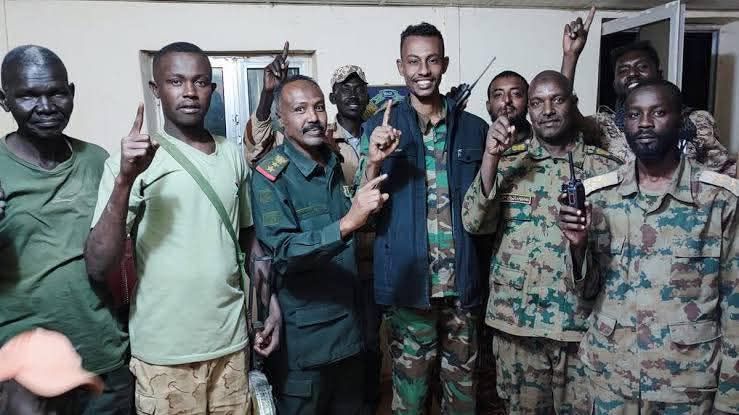
In its statement regarding the designation of the al-Baraa bin Malik Brigade, the U.S. Department of State indicated that “the group (the Muslim Brotherhood) contributed up to 20,000 fighters to the war in Sudan, many of whom received training and other forms of support from the Islamic Revolutionary Guard Corps of Iran.”
This represents a new indication clarifying the reasons behind classifying the brigade as a terrorist entity and imposing sanctions on it.
This time, it was linked to Iran, which is currently engaged in a war with Washington and “Israel,” whereas the previous designation in September 2025 had been tied only to the war inside Sudan.
Because of the brigade’s direct role in confronting the Rapid Support Forces militia, and its involvement in the liberation of Khartoum and the Sudanese army’s recent victories, internal and external forces opposed to the Islamist current have mobilized against Islamist popular forces, focusing particularly on the al-Baraa bin Malik Corps.
On August 17, 2025, Sudanese leader Abdel Fattah al-Burhan issued a decision placing all supporting forces under the provisions of the Armed Forces Act of 2007 and its amendments, in an attempt to regulate the role of these formations.
Concerns had already been rising over the brigade’s potential political role after Reuters reported on July 25, 2025, that the al-Baraa bin Malik Battalion was “planning to return to the political arena after the war by supporting the army,” heightening fears that its military influence could later translate into political power.
Sources
- The United States Designates The Muslim Brotherhood In Sudan As A Terrorist Organization [Arabic]
- Iran Regime Cited As Trump Administration Set To Designate Sudan’s Muslim Brotherhood A Terror Group
- What Do U.S. Sanctions On The Sudanese Muslim Brotherhood Mean?
- U.S. To Designate Sudanese Muslim Brotherhood A Foreign Terrorist Organization, State Department Says
- In Response To The Designation Of The “Muslim Brotherhood” As A Terrorist Group, Sudan’s Foreign Ministry Calls For Listing The Rapid Support Forces [Arabic]