Khamenei’s Son at the Helm of Iran: What Does It Mean for the War with the US and ‘Israel’?
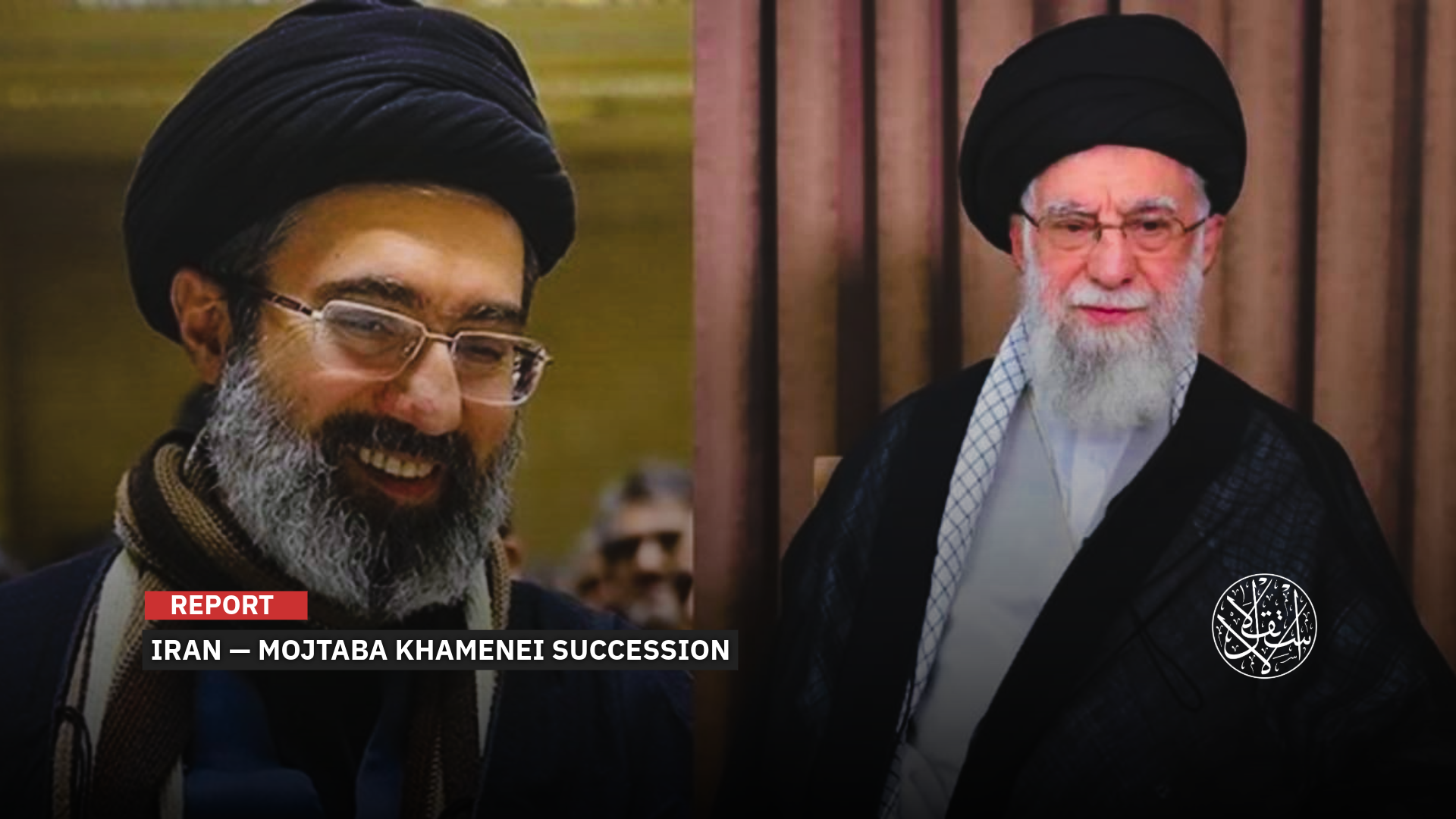
Khamenei’s son was rejected by the US President, who threatened to have him killed.
With the announcement that the Leadership Experts Council in Iran has elected Mojtaba Khamenei as the new Supreme Leader of the Islamic Republic, an important question arises about how his assumption of leadership of the Velayat-e Faqih system will affect the course of the war being waged by the United States and “Israel” against the country since February 28, 2026.
Khamenei, the son, burdened by feelings of vengeance after the killing of his parents, his wife, and his daughter during the current war, is viewed as a figure who strengthens the grip of the conservative faction within the Iranian system.
Some observers believe that he had been managing an important part of power from behind the scenes during his father's era, before officially assuming leadership today, at a time when the system is fighting what its officials describe as an "existential war."
Donald Trump, the President of the United States, commented on the selection of Mojtaba Khamenei as Iran’s new Supreme Leader, describing the decision as a "grave mistake," during an interview with NBC on March 9, 2026.
In the same context, The Wall Street Journal reported, citing current and former U.S. officials who were not named, that Trump told his aides that if Iran’s new Supreme Leader, Mojtaba Khamenei, refuses to respond to Washington’s demands, foremost among them ending Iran’s nuclear program, he would support the option of assassinating him.
Divine Reward
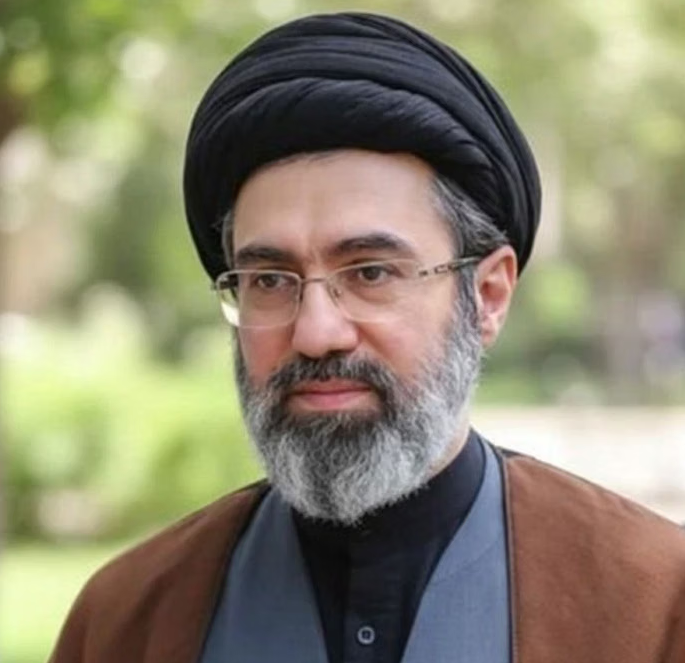
Iran’s Assembly of Experts announced, “by an overwhelming majority of votes,” the selection of Mojtaba Khamenei as the third leader of the Islamic Revolution and of the Islamic Republic of Iran, according to a statement published by the Tasnim News Agency on March 8, 2026.
The statement said that the Assembly of Experts did not stop for a single moment from following the process of selecting and appointing a new leader for the Islamic system, explaining that the necessary arrangements and coordination were made to convene a meeting of the council’s representatives spread across various parts of the country, in order to ensure that no leadership vacuum would occur at the top of the power structure.
The council confirmed that, “in recognition of the lofty status of the guardianship of the jurist during the era of the occultation of Imam Mahdi, and the importance of the issue of leadership in the system of the Islamic Republic,” it decided during its extraordinary meeting, and by a decisive majority of its members’ votes, to elect Ayatollah Mojtaba Khamenei as the third leader of the system.
In the same context, Mahmoud Nabavian, a member of the National Security Committee in the Iranian parliament, considered the election of Mojtaba Khamenei as the new leader of the revolution to be “a reward from God for the people of Iran,” stressing that the war will continue until a lasting peace is achieved.
The website Russia Today quoted Nabavian as saying, on March 9, 2026, that “the election of Ayatollah Sayyid Mojtaba Hosseini Khamenei is a reward from Almighty God for the people of Iran,” stressing that “there was certainly no one stronger or more knowledgeable than him in the country to lead the system, and the Assembly of Experts rightfully granted him the highest percentage of votes.”
The Iranian lawmaker explained that “the Leader of the Revolution is not supposed to hold an executive position, rather his task is to guide the system, set its general policies, and make major decisions in areas such as war and the economy.”
“The enemy thought it could strike the country as quickly as possible after the martyrdom of the Leader of the Revolution, but the country’s institutions and its defensive power are carrying out their duty, and the enemy is losing on all fronts,” he added.
Nabavian concluded his remarks by saying, “The nation of Iran is the nation of Imam Hussein, and this nation does not surrender and does not accept humiliation. The war will continue until peace for the Iranian people is achieved for decades, and security is realized.”
Confrontation Option
Regarding the extent to which the selection of Mojtaba Khamenei may affect the course of the war, Middle East researcher Iyad Thabet believes that his rise to the top of power in Iran confirms the conservative faction’s adherence to the option of confrontation and refusal to surrender, which may prolong the ongoing war, contrary to what the reformist current represented by Iranian President Masoud Pezeshkian seeks.
Thabet explained, in remarks to Al-Estiklal, that although Mojtaba Khamenei was not publicly present in the Iranian political scene during his father’s rule, many reports indicated that he was not far from decision-making circles, but was instead influential in managing the country’s affairs from behind the scenes.
He believes that his election today, despite Iran defining itself as a republic, reflects a form of political inheritance, resembling a return to a monarchical system but under a religious cover.
He pointed out that “from a strategic perspective, Iran has been subjected to gradual pressure and incremental erosion since the events of October 7, 2023, a process that appears to be continuing until now. Therefore, the removal of the Supreme Leader represents the highest ceiling of these pressures, and it is an indicator reflecting many years of preparation to reshape the landscape.”
He concluded that Donald Trump’s threat that Mojtaba Khamenei “will not last long” if he does not agree to the American conditions means that Washington seeks to force any new Iranian leadership to submit to its demands.
He added that if the system of the guardianship of the jurist does not collapse, the objective may be to contain or “tame” it in a way that aligns with Western interests, so that it does not pose a threat to “Israel”.
For her part, Iranian opposition writer Naeimeh Doustdar said that Mojtaba Khamenei represents within the Iranian power structure a model of what is known as “players without positions but with influence,” figures who do not appear in official posts but possess key levers of influence within the governing system.
Doustdar added, in an article published by the opposition website Iran International on March 9, 2026, that tracing Mojtaba Khamenei’s trajectory, from his role inside the “House of Leadership” and his relationship with the Islamic Revolutionary Guard Corps to the U.S. sanctions imposed on him and the controversy surrounding his father’s succession, reveals that understanding the informal networks operating in the shadows within personalist systems may sometimes be more important than knowing the official positions.
She pointed out that most credible studies about Mojtaba Khamenei converge on a key point, namely his close and deep relationship with the Islamic Revolutionary Guard Corps, especially its security branches.
She continued that over two decades, he established strong relations with IRGC leaders, from the Quds Force to the Basij forces and the Guard’s intelligence branch, which strengthened his influence within the state’s political and security structure.
According to the writer, the official announcement of Mojtaba Khamenei as the new Supreme Leader of the Iranian system reveals a fundamental reality, namely that in moments of crisis it is not the names alone that are decisive, but the networks to which those names are connected within the power structure.
Nevertheless, Doustdar believes that all these scenarios remain contingent on a basic condition, namely the ability of the new Supreme Leader and the system he leads to survive the American and Israeli attacks and emerge from this phase as the actual leader of the Iranian system.
Symbolic Dimension
Foreign Policy, in a report published on March 9, 2026, explained the reasons behind the selection of Mojtaba Khamenei as Iran’s new Supreme Leader, noting that “the idea of martyrdom carries deep symbolic weight in Iranian political culture.”
It explained that this concept draws its roots from the central narrative in Shiite Islam, namely the martyrdom of Imam Hussein in the Battle of Karbala in 680 CE.
From this perspective, the magazine believes that the appointment of Mojtaba Khamenei acquires a special symbolic significance, as he is viewed not only as the son of the previous leader, but also, in the system’s narrative, as a figure connected to the legacy of sacrifice emphasized by his father, who was killed by his opponents along with members of his family, in a narrative that the Iranian system invokes in a manner resembling what happened to Imam Hussein.
Regarding the impact of the son of Khamenei’s appointment on the course of the war, the magazine stressed that this symbolic dimension could serve as a powerful tool to consolidate authority and strengthen the idea of political continuity by framing it as part of an extended struggle.
It added that this appointment may serve two parallel purposes: domestically, it reinforces the discourse of resilience and resistance, while internationally, it provides a political cover that can be used either for confrontation or for negotiation.
The magazine points to a notable paradox, namely that a leader known for hardline positions may sometimes be the most capable of making necessary concessions, because he is less vulnerable to accusations of weakness.
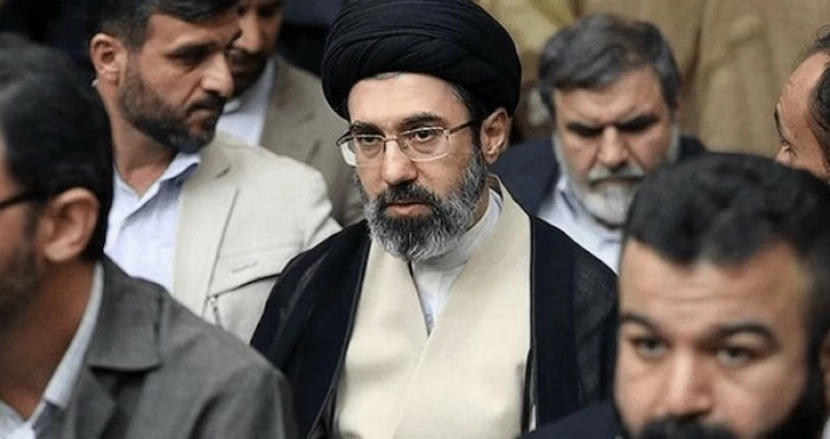
It also noted that, unlike most other candidates for Iran’s leadership, Mojtaba Khamenei gained his influence largely away from the spotlight.
He is a reserved figure who rarely appears in public and is often seen in photographs standing behind prominent figures. He has also never held any official government position, nor sought to do so, and rarely speaks to the media.
Over time, Mojtaba Khamenei succeeded in building influence in three main areas: the religious establishment, the security apparatus, and the political networks linked to the office of the Supreme Leader.
His ties with the Islamic Revolutionary Guard Corps are particularly significant, as they date back to the period of the Iran-Iraq War, when he served in the “Habib ibn Mazahir” battalion.
According to the magazine, compared with the symbolic controversy surrounding the issue of political inheritance, Mojtaba Khamenei’s religious qualifications may be less important, as the Iranian constitution does not require the Supreme Leader to be among the most senior clerics.
Since 1989, the requirement has been limited to the leader being capable of issuing independent juristic interpretations.
The magazine concluded by saying that Mojtaba Khamenei built his influence over decades away from the public spotlight, relying on building networks and alliances rather than seeking public popularity, and working quietly behind the scenes.
Today, however, with Iran reaching a pivotal moment in its history, he has found himself at the center of power.
Sources
- Ayatollah Sayyid Mojtaba Khamenei Named New Leader of the Islamic Republic [Arabic]
- Foreign Policy: Mojtaba Khamenei’s Election Sends Iranian Message of Defiance to Washington [Arabic]
- “The Wall Street Journal”: Trump Ready to Support the Killing of Mojtaba Khamenei [Arabic]
- Mojtaba Khamenei, From a Shadow Network of Influence to Leading the Iranian System [Arabic]
- Trump: Choosing Mojtaba Khamenei a “Grave Mistake” [Arabic]
- Tehran: Mojtaba Khamenei’s Election a “Divine Reward” for Our People, War Will Continue Until Lasting Peace [Arabic]
- Ayatollah Sayyid Mojtaba Khamenei Named Leader of the Islamic Revolution [Arabic]