Anuha Case: What’s Next for the Slavery Debate After Activists’ Arrests in Mauritania?
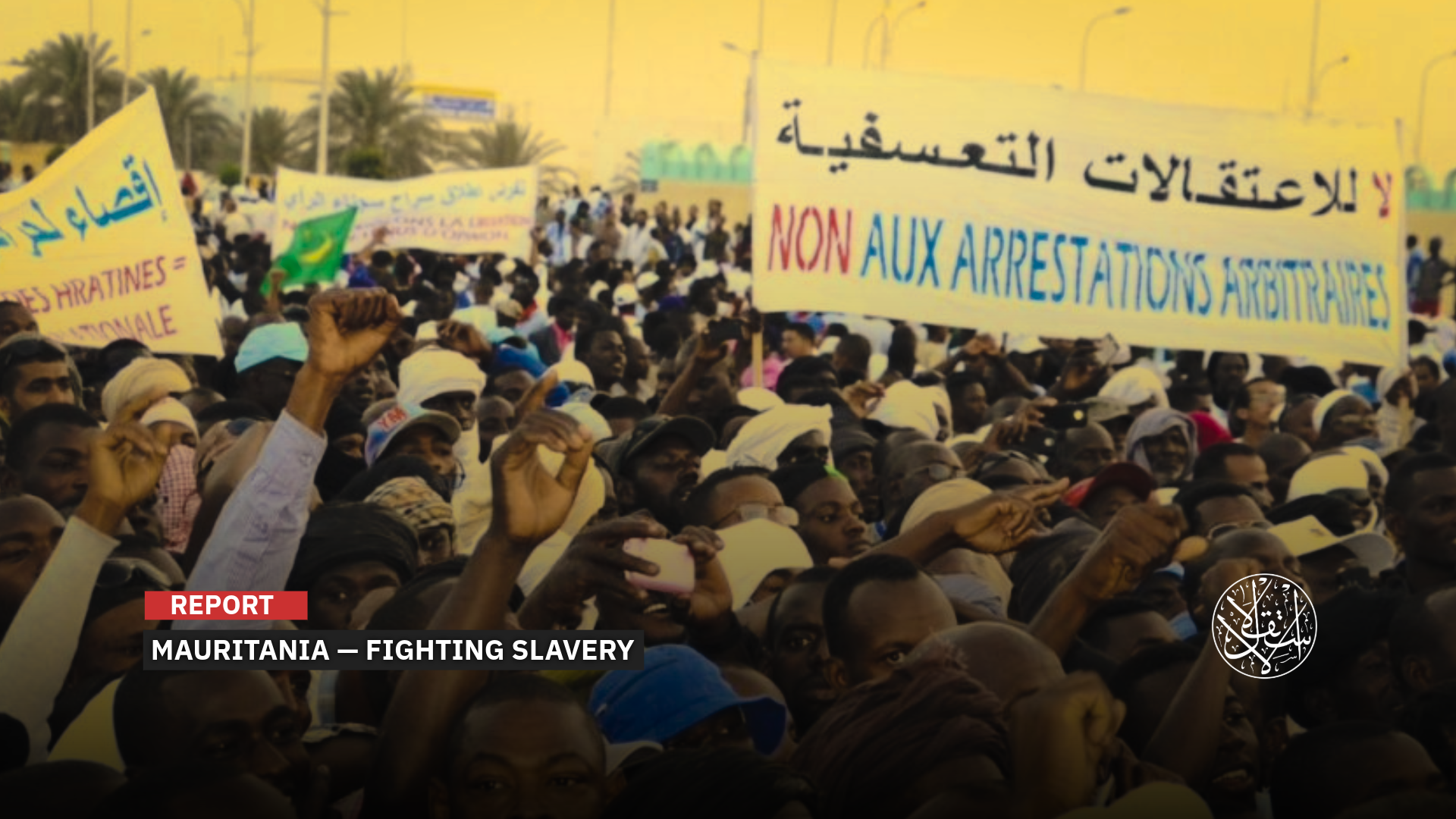
“Real change begins by acknowledging the problem and addressing it through a comprehensive human rights approach.”
Authorities in Mauritania are once again under growing criticism over slavery, with activists accusing the government of failing to tackle the problem while using the courts and security forces to target campaigners fighting for emancipation.
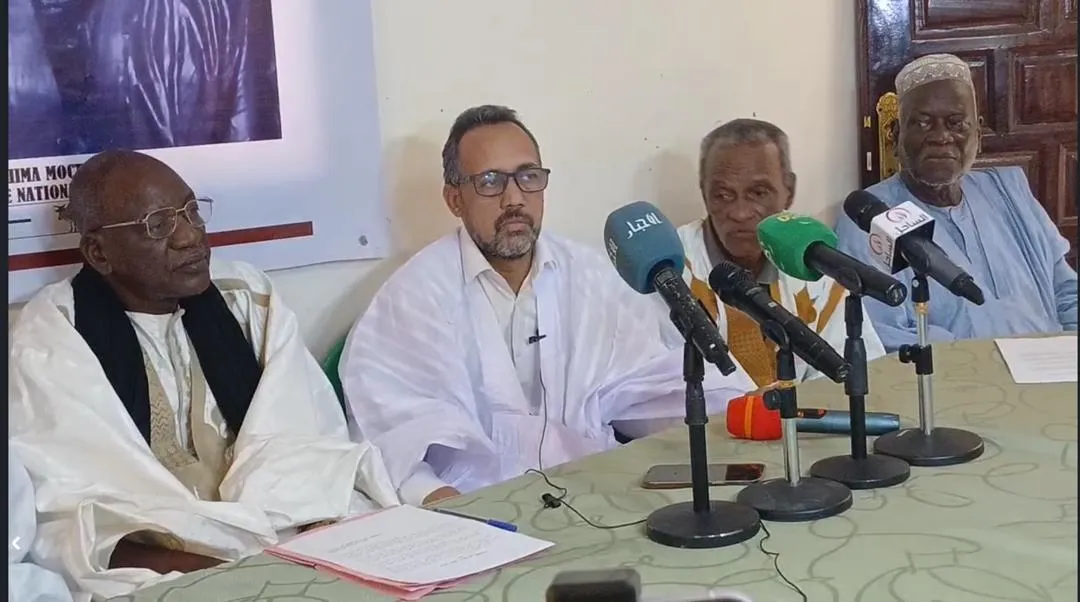
In a sharply worded statement, the opposition Democratic Alternation Pole (PAD) condemned the imprisonment of six anti-slavery activists along with two women who had reported what they described as a case of slavery. The PAD called the arrests an “unprecedented judicial drift” aimed at concealing the truth.
Speaking at a press conference on February 25, 2026, PAD representatives accused prosecutors of trying to impose a “forgery” narrative to dismiss what they said was the suffering of an enslaved child. They argued that the decision to charge the activists with forming a “criminal gang” revealed both the weakness of the case and the authorities’ determination to silence those exposing what they described as social backwardness and injustice.
The PAD also praised the presence of more than 30 lawyers who stepped forward to defend what they called “human dignity,” warning that referring the case to an ordinary criminal court constituted a blatant violation of legal procedures.
It urged intellectuals, political parties, and citizens to unite against what it described as a threat to national cohesion, calling for a “broad national mobilization.”
The controversy centers on a girl known as Anuha. Reports that she had been living in slavery-like conditions with a family in Mauritania ignited widespread public debate. Critics say that rather than investigating the alleged abuse, authorities chose to arrest those who brought the case to light.
Activists Detained
The arrests were confirmed by the media committee of the IRA, one of the country’s most prominent anti-slavery groups. The organization said several of its leaders and activists had been detained not for committing crimes but for reporting violations linked to slavery.
In a statement, the committee said the activists were transferred to prison in the capital, Nouakchott, on February 23, 2026, following a complaint the movement itself had filed before the court responsible for handling cases of slavery and human trafficking.
It said the detainees were initially charged with “using forged documents” and defamation before prosecutors revised the case to the more serious charge of “forming a criminal association.” Defense lawyers objected to the shift, saying the case had been repeatedly moved between different judicial authorities and fragmented along the way.
The statement also said other activists had been detained in several provinces, including local elected officials and members of the movement. According to the committee, the arrests undermine legal protections meant to shield whistleblowers who report crimes such as slavery and human trafficking.
The IRA called for the immediate and unconditional release of the detainees and urged authorities to guarantee protection for those who report cases of slavery or human trafficking.
The controversy erupted after the story of a young girl known as Anuha spread widely online, with activists claiming she was living in conditions of slavery with a family in Mauritania.
However, the public prosecutor’s office at the court responsible for slavery, human trafficking, and migrant smuggling said in a statement that its preliminary investigation into the case found no evidence to support the slavery allegations.
According to prosecutors, interviews with Anuha and her mother—along with testimony from people close to the family and a review of school records—suggested the girl had been living with a family connected to her relatives at her mother’s request because of financial hardship. Officials said she had been receiving care and attending school, with no evidence of exploitation or abuse.
The prosecutor’s office also said that information circulating on some online platforms could not be verified by investigators, and the case was ultimately closed for lack of evidence of a criminal offense.
Protest Over Arrests
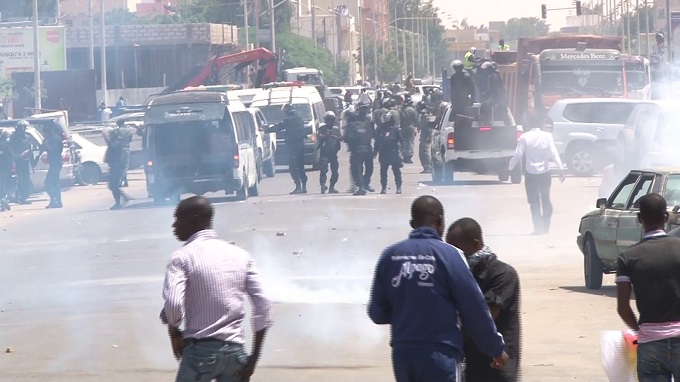
Despite the prosecutor’s statement, public anger has not subsided. In Nouakchott, women from the IRA staged a protest outside the office of the United Nations High Commissioner for Human Rights (UNHCHR), denouncing the imprisonment of several activists from the movement.
Protesters held signs reading “No to slavery,” “Stop punishing those who report slavery,” and “The system jails whistleblowers and victims while protecting those responsible.”
Speaking during the demonstration, Mauritanian lawmaker Ghame Achour said the protest was organized in front of the UNHCHR office because the institution has helped develop many international legal standards criminalizing slavery. She argued that Mauritania was now jailing those who report slavery while letting perpetrators go free.
Ashour told reporters the message to the UNHCHR office was clear: activists had been imprisoned simply for reporting cases of slavery. She also raised concerns about the fate of the girl at the center of the controversy, saying the child had previously been held by police and that her current whereabouts were unknown.
She added that imprisonment would not silence the movement’s activists or halt their fight against slavery.
Dib Nassereddine, a senior member of the IRA, said the movement rejects what she described as political score-settling. She added that lawyer Abderrahmane Ould Zerroug had suggested the case might reflect a personal dispute between Justice Minister Mohamed Ould Soueidatt and IRA leader Biram Dah Abeid.
Meanwhile, human rights activist Assia Saleh said her colleagues were jailed despite following the proper legal procedures when they reported the alleged slavery case. She said activists reject and condemn the arrests, warning that the crackdown will only strengthen their resolve to continue the struggle.
“Our fight will remain peaceful,” she said, adding that the movement would keep pressing ahead with its campaign against the system.
Parliamentary Criticism
Biram Dah Abeid, a member of parliament and leader of the IRA, also launched a sharp attack on the authorities over the case of the girl Anuha—whose situation the movement had reported as a case of slavery—and the arrests that followed.
According to the Mauritanian outlet Infocast, Abeid said on February 28, 2026, that the government of Mohamed Ould Ghazouani had effectively confirmed parts of the movement’s account through statements broadcast on state media.
He pointed out that the governor of the eastern province of Hodh Ech Chargui had said on Mauritanian state television that the government’s social solidarity agency, Taazour Delegation, had granted Anuha’s family a plot of land and two million ouguiyas as a gesture of support.
Abeid said he found it puzzling that the authorities would move so quickly to assist the girl and her mother if they were convinced she had never been subjected to slavery.
He added that many people whom the IRA movement had previously helped free from slavery had received no similar support from the government or the presidency, nor had impoverished communities in Nouakchott or other regions of the country.
Abeid also questioned why Anuha had returned to her biological family if, as officials claimed, she had been well treated by the family he described as having exploited her.
“If the child and her family deserve the government’s sympathy,” he said, “then those who reported her case should not be the ones sitting in prison.”
He argued that the Ghazouani administration was caught in a contradiction, saying the details of the Anuha case had shown that IRA activists were not the “criminal gang” authorities had accused them of being.
Abeid also questioned the decision to move the girl out of her school if, as the government claims, the movement’s allegations were unfounded. He asked whether the government had ever before provided financial aid and land to any struggling family—free or formerly enslaved—before this incident.
Most residents of the town of Nema, he said, belong to poor communities, and he suggested the government’s assistance to Anuha’s family could be interpreted as an attempt to influence the case.
Abeid also questioned why President Ghazouani was so eager to persuade the public that his administration was fighting corruption and slavery while, at the same time, jailing anti-slavery activists and detaining Mohamed Ould Ghadda, the head of the anti-corruption group Organization for Inclusive Transparency (OTI).
“If there is nothing to hide,” Abeid said, “why give the family this money and land in the first place?”
Earlier, administrative authorities in the region of Hodh el-Gharbi had granted Anuha’s family a plot of land in the city of Aioun, along with financial assistance from the Taazour Delegation, as part of government social support programs aimed at vulnerable families.
A Human Rights Violation
As debate intensifies in Mauritania over slavery and its lingering legacy, Ahmed Yacoub Lemrabet, head of the rights group Kafana Movement, said the practice represents a serious violation of human rights and a direct assault on human dignity.
“Slavery in any form is unacceptable,” Lemrabet told Al-Estiklal. “It undermines the most basic rights and dignity of the individual, and it cannot be tolerated under any circumstances.”
He said the Kafana Movement approaches the issue from the conviction that slavery—across all its forms and practices—is not only morally indefensible but also a crime under religious, ethical, and legal standards. It stands, he argued, in clear contradiction to the principles of justice and equality as well as international human rights norms.
Lemrabet stressed that confronting the issue in a society such as Mauritania’s requires acknowledging the problem rather than denying or downplaying it.
“Real change begins by acknowledging the problem and addressing it through a comprehensive human rights approach,” he said, calling for strict enforcement of anti-slavery laws, stronger judicial action against offenders, broader public awareness, and greater protection for victims, including access to justice and compensation.
He added that tackling the issue also requires addressing the social and economic legacy of slavery, which he described as one of the structural challenges preventing genuine equality and social justice among citizens.
Lemrabet also warned against the politicization of the slavery issue, saying governments should avoid using such a sensitive matter for political gain.
“Turning slavery into a political tool harms victims and undermines serious efforts to address the problem,” he said.
According to Lemrabet, the Kafana Movement has developed a detailed strategy aimed at eliminating both slavery and its long-term consequences. The proposal includes short-, medium-, and long-term measures built on a combination of human rights protections and social development policies.
He urged public authorities to adopt a similar approach if they are genuinely committed to finding sustainable solutions—rather than engaging in what he described as political or rhetorical point-scoring on human rights issues.
Lemrabet also called on the government, rights organizations, and civil society activists to step up their efforts to strengthen legal protections and eliminate practices that undermine human freedom and dignity. Building a culture of human rights and equal citizenship, he said, is essential if Mauritania hopes to secure a future grounded in justice, fairness, and the rule of law.
He also stressed the importance of protecting whistleblowers who report abuses and reinforcing the legal framework governing human rights organizations so they can operate independently and effectively.
Such protections, he said, are particularly important given concerns raised by activists about the limited independence of the judiciary and the growing influence of the executive branch.
“Human dignity is non-negotiable,” Lemrabet concluded. “A state built on the rule of law can only stand on the foundation of respect for human rights—applied equally to everyone, without exception.”
Sources
- Opposition Coalition Condemns Imprisonment of IRA Activists, Calls It an 'Unprecedented Slide' [Arabic]
- Protest in Nouakchott Condemns Imprisonment of IRA Activists [Arabic]
- Salvation Lies in Unity, Not in Factionalism [Arabic]
- Secretary-General of the Mauritanian Scholars’ Association Delivers Lecture at the Presidential Palace on Citizenship in Islam [Arabic]