Iran’s Kharg Island: How Could It Turn Into a Flashpoint for the Global Economy?
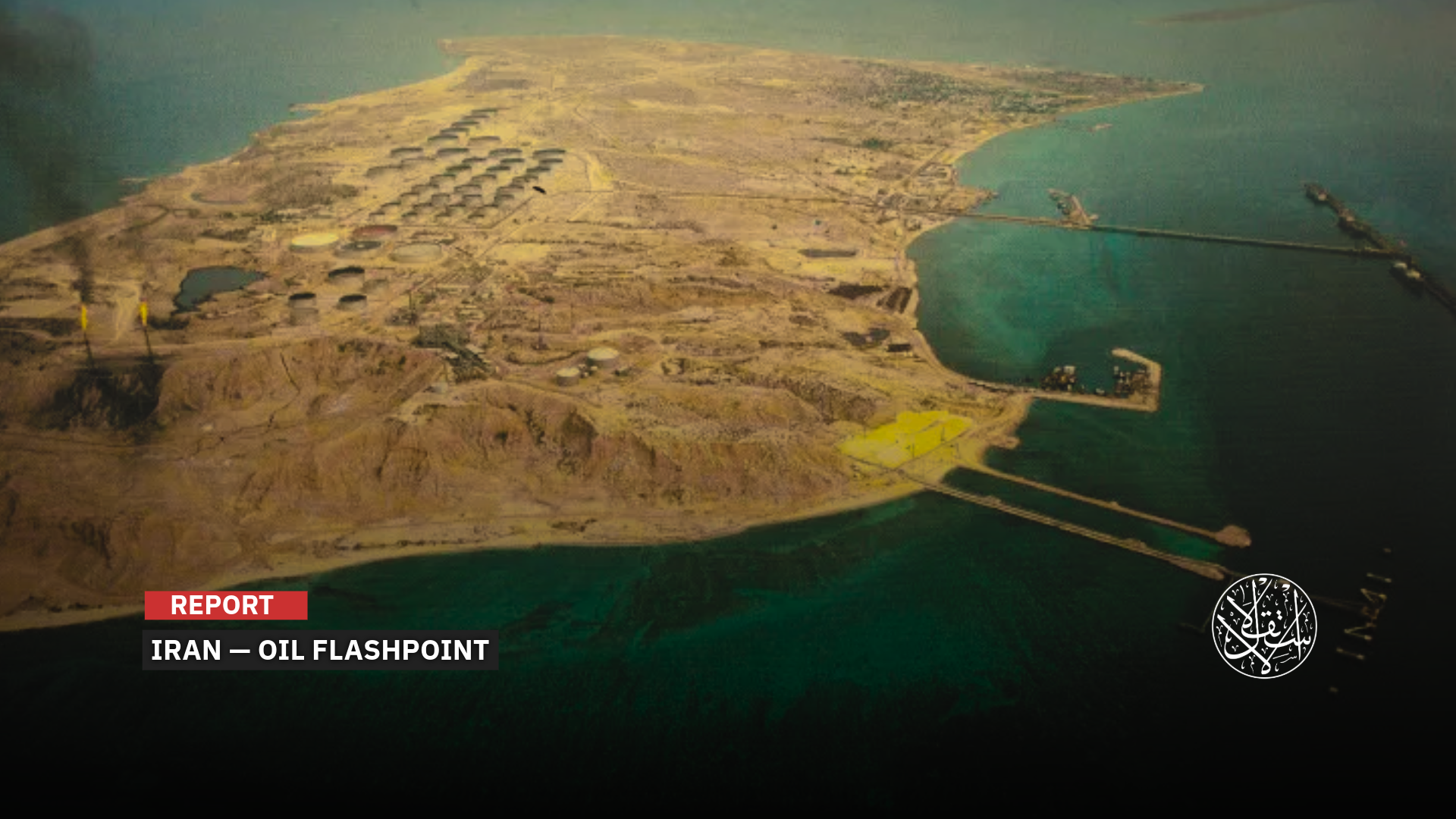
Any operation to seize Kharg Island could quickly turn into a prolonged war of attrition.
With the widening war between the United States and “Israel” on one side and Iran on the other, the name of Kharg Island has returned to the forefront of military discussions in Washington and “Tel Aviv”.
Reports in Western media have begun to discuss the possibility that the conflict could move into a phase targeting Iran’s oil infrastructure, most notably this island, which is considered the main artery of Iranian oil exports.
In this context, the American news site Axios reported in a story published on March 5, 2026, citing officials in the administration of President Donald Trump, that the White House studied, among the options under consideration, the possibility of seizing Kharg Island through a ground invasion rather than limiting the response to striking its oil facilities.
The report said the idea was discussed as part of broader scenarios aimed at crippling Iran’s economic capability if the military escalation continues.
However, the island’s name is not appearing for the first time in American political discourse. In 1988, during the Iran-Iraq War, Trump himself spoke about the island in an interview with the British newspaper The Guardian while promoting his famous book The Art of the Deal.
He said at the time about Iran, “They‘ve been beating us psychologically, making us look a bunch of fools.”
“One bullet shot at one of our men or ships, and I'd do a number on Kharg Island. I'd go in and take it,” he added.
Those remarks came at the height of what was known as the Tanker War in the Gulf, when oil facilities and commercial vessels were targets of reciprocal attacks between Iran and Iraq, while the U.S. Navy escorted oil tankers through the Strait of Hormuz.
Today, nearly four decades later, the same island is returning to the forefront of military thinking, in the context of a new war that could turn into an open battle over energy resources in the region.
Oil Artery
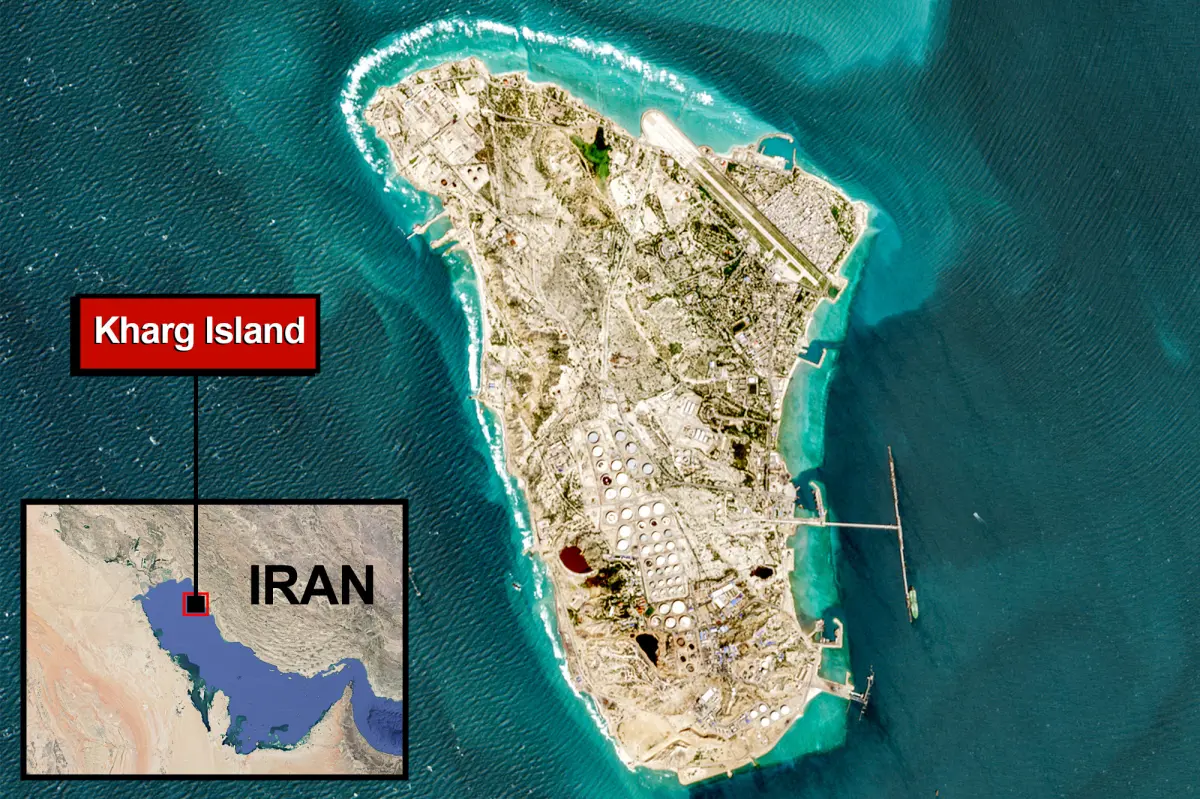
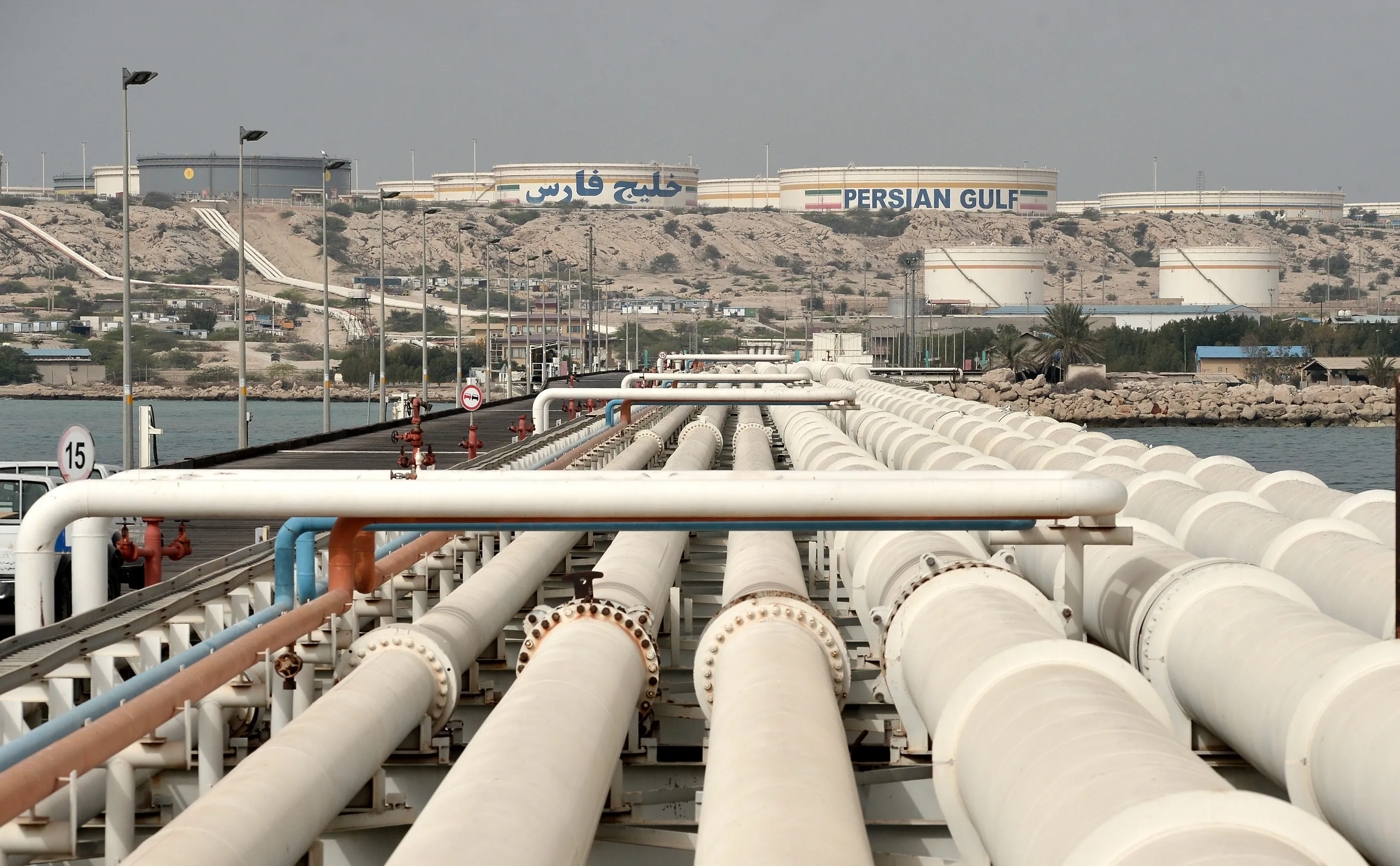
Kharg Island is located in the northern Persian Gulf, about 55 kilometers northwest of the Iranian port of Bushehr, and roughly 15 nautical miles, about 28 kilometers, from the Iranian coast.
Although the island’s area does not exceed 22 square kilometers and its population is no more than about 20,000 residents, it plays a role far greater than its geographic size.
Since the 1960s, with the expansion of Iranian oil production and the discovery of new offshore fields in the Gulf, Kharg has become the main hub for Iranian oil exports.
That is largely due to its deep-water location, which allows it to receive supertankers that cannot dock at many other ports in the region.
The island gradually developed into a major logistical hub that includes oil terminals and storage and processing facilities, in addition to an airport and a military base.
Today, Kharg Island is considered the beating heart of Iran’s oil sector. According to data from the Iranian Ministry of Oil and reports from international energy companies, about 90 percent of Iran’s oil exports pass through the island.
That amounts to roughly 950 million barrels of crude oil annually. The island receives oil from three major offshore fields, Abu Zar Oil Field, Forouzan Oil Field, and Doroud Oil Field.
Oil from these fields is transported through a network of subsea pipelines to processing and storage facilities on the island, where it is loaded onto tankers bound for global markets.
Despite international sanctions imposed on Iran’s energy sector for years, Iranian oil continues to find its way to buyers, led by China, which is the largest importer of Iranian crude.
In recent years, Iran has sought to develop the island’s infrastructure. In a report issued in May 2025, S&P Global Commodity Insights said Iran added 2 million barrels of storage capacity on the island after refurbishing two large oil tanks.
Because of this central role, many experts in the West view Kharg Island as the most prominent vulnerability in the Iranian economy.
According to an analysis published by the American investment bank JPMorgan on March 9, 2026, between 1.3 million and 1.6 million barrels of oil per day pass through the island’s facilities.
The report noted that Iran raised its oil exports to about 3 million barrels per day in mid-February 2026, increasing the island’s importance in Iran’s energy equation.
For that reason, some analysts believe that striking or seizing this oil hub could deal a severe economic blow to Iran.
Oil revenues represent one of the most important sources of funding for the Iranian state, including financing for the military and the Islamic Revolutionary Guard Corps.
In an article published in January 2026 on the website of the American Enterprise Institute, former U.S. Defense Department official Michael Rubin said seizing the island could financially paralyze the Iranian state.
“Should [US President Donald Trump] take Kharg, rather than destroy it, he can ensure the regime can never again pay the salaries of its bureaucrats and soldiers,” Rubin wrote.
He added that depriving Iran of the ability to sell its oil could lead to a rapid economic collapse.
Calls have also grown within “Israel” to target the island. On March 10, 2026, Israeli opposition leader Yair Lapid called for the destruction of energy facilities on Kharg Island, estimating that such a move could economically bring down the Iranian regime.
The Tanker War
An analytical report published by the Australian network ABC News on October 5, 2024, examined the history of Kharg Island as one of the most frequently targeted oil facilities in the history of the Middle East.
The report noted that the island was a primary target during the Iran-Iraq War, when Iraq attempted to destroy Iran’s oil facilities in the Gulf.
During that period, the island was subjected to a series of air and missile strikes as part of what became known as the Tanker War in the Gulf.
Despite the intense bombardment, Iran was able to restart the island’s facilities relatively quickly, prompting some experts to describe it as one of the most resilient oil infrastructures in the region’s history.
The report also noted that U.S. documents dating back to the administration of the late President Jimmy Carter, 1977 to 1981, considered the island the most sensitive target in Iran’s energy sector.
In military scenarios discussed by some experts, any operation to seize the island could begin with airstrikes targeting Iranian air defenses around the island and the nearby coast.
This could be followed by a rapid airborne or amphibious landing operation to secure the airport and oil facilities.
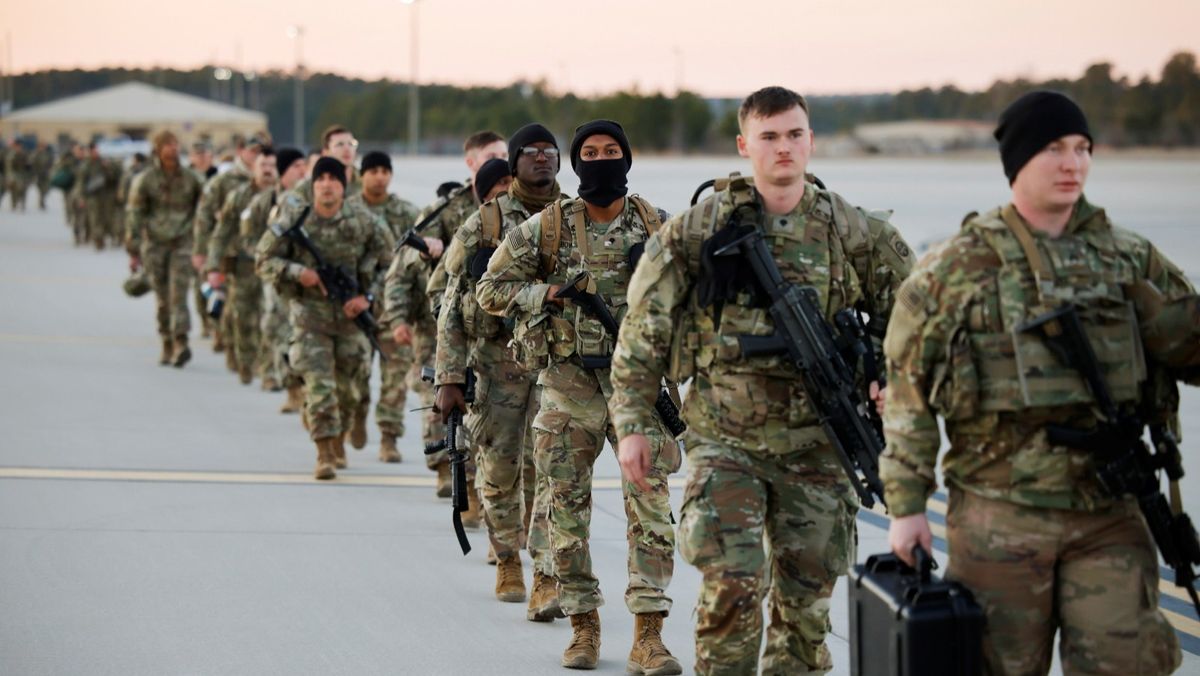
In this context, analysts often refer to the role of the 82nd Airborne Division of the United States Army.
The division is considered one of the most important rapid-deployment forces in the U.S. military, with the capability to deploy within about 18 hours to almost anywhere in the world.
The unit also specializes in seizing airports and critical infrastructure during the early stages of military operations.
The Forbidden Island
However, initially seizing Kharg Island would not necessarily mean the operation would succeed. Iran has spent decades fortifying the island militarily, placing it under the direct protection of the Islamic Revolutionary Guard Corps.
Iran understands the island’s strategic importance and has therefore sought to turn it into a heavily fortified military site.
The island is under tight guard by the Revolutionary Guard and is surrounded by strict security measures, to the extent that some observers refer to it as the “forbidden island.”
Air defense systems and coastal missiles capable of targeting ships and aircraft in the waters of the Persian Gulf are also deployed around it.
In the Gulf, Iran relies on an asymmetric warfare strategy that includes the use of missile-armed fast boats, drones, naval mines, and anti-ship missiles.
The aim of this approach is to raise the cost of any hostile military operation in the Gulf.
For that reason, military experts warn that seizing Kharg may be easier than holding it.
The island lies very close to the Iranian coast, placing it well within range of Iranian short-range missiles and drones.
U.S. supply lines in the Gulf could also become easy targets for attacks by fast boats or naval mines.
In such a scenario, the United States could find itself forced to deploy large forces and significant military resources to defend a small island surrounded by a hostile environment.
For that reason, some analysts believe that any attempt to seize the island could quickly turn into a prolonged war of attrition.
That view was echoed by the U.S.-based political analysis platform GZERO Media in a report published on March 4, 2026, which argued that logistics would be the weakest link if Washington tried to seize Kharg.
The platform said that an attacking force might reach the island quickly, but maintaining fuel supplies, ammunition, air defense systems, and medical evacuation capabilities would be far more difficult if the Strait of Hormuz and the waters of the Gulf remained under the threat of Iranian fire.
The report described the operation as potentially turning into a “logistical nightmare.”
It also warned that the global economic repercussions could be significant, as any battle around the island could disrupt navigation in the Gulf and threaten energy infrastructure in the region.
Kharg Island remains more than just a potential military target. It is the beating heart of Iran’s oil exports, and any military escalation around it could quickly translate into a shock in global energy markets.
According to observers, disrupting production or targeting the island’s oil terminals could lead to a sharp increase in crude prices and heighten the risk of supply shortages in Asia and Europe.
A prolonged confrontation could also disrupt shipping traffic in the Persian Gulf, increasing insurance costs for oil tankers and deepening the global energy crisis.
Given the heavy reliance of China, India, and East Asian economies on Iranian oil, any clash at Kharg would not remain local or regional.
It could leave its mark on financial markets and major economies around the world, turning a military conflict into a broad economic threat that would not be easy to contain.
Sources
- Why Kharg Island Matters: Iran’s Strategic Oil Island in Focus as Middle East Conflict Grows
- After Decapitation, What’s Next?
- Iranian Island Once at Center of Illegal CIA Arms Deal, US Presidential Plotting and Bungled Iraqi Bombings Now Looms as Israeli Target
- The Oil Island That Could Break Iran
- On the Brink of a Ground Invasion: US on High Alert as Kharg Island Takes Center Stage and Tehran Issues Threats [Arabic]