‘Samson Option’: Why Hasn’t Iran Struck ‘Israel’s’ Dimona Nuclear Reactor Yet?
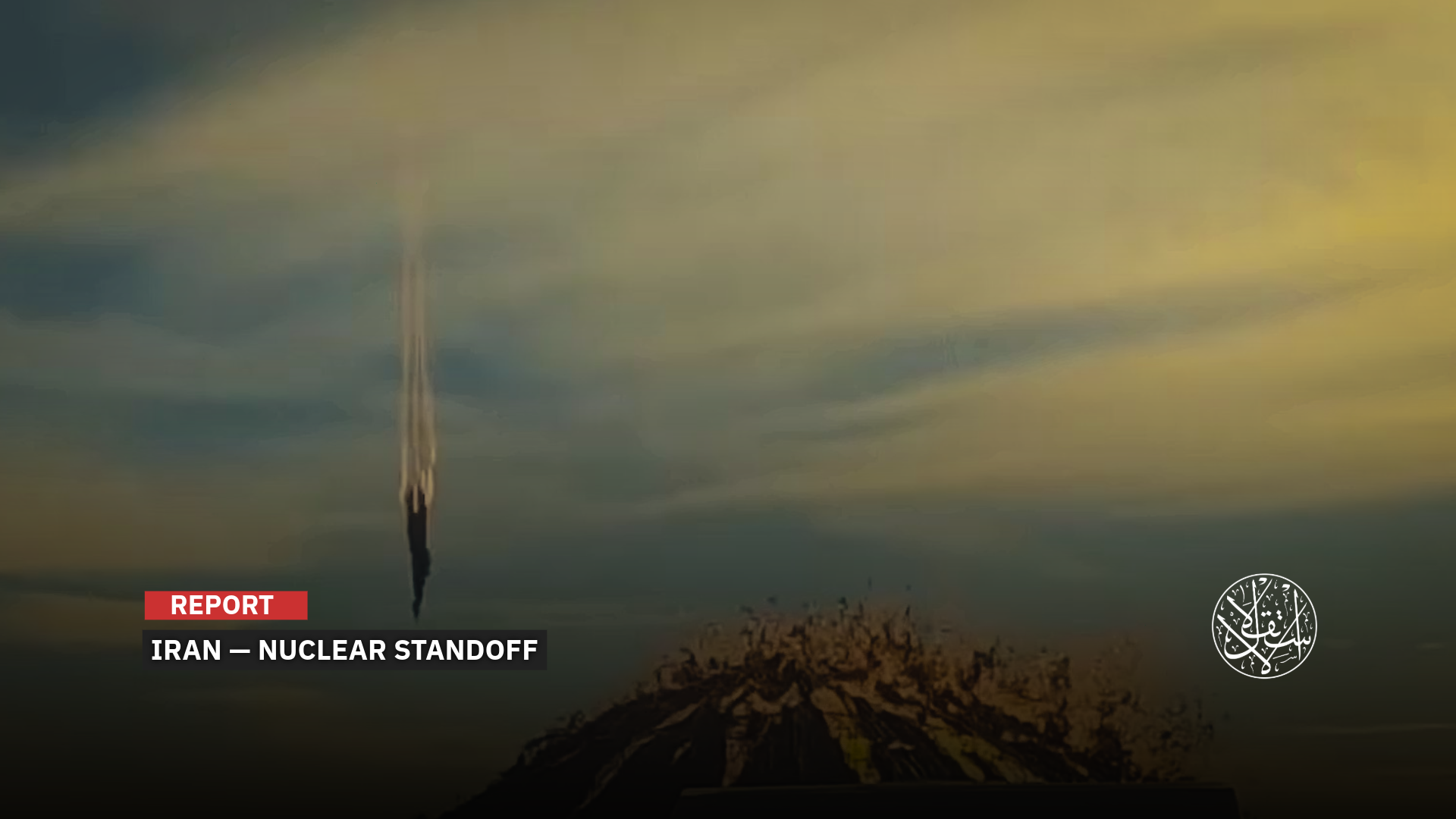
The Dimona reactor represents a symbol of “Israel’s” nuclear program.
After Iran threatened to strike “Israel’s” Dimona nuclear reactor, describing it as a “Samson Option” to bring down the temple on its enemies if the United States carries out a plan for a ground invasion using the Kurdish card, the recurring question has returned: why has Iran not bombed the reactor so far, even though “Israel” has previously targeted Iranian nuclear sites?
This time, Iran faces what it considers an existential threat, and the Dimona card may appear to be the last option it could resort to if the capability becomes available, as the only choice that reflects the concept of “Samson,” which increases expectations that it might be used despite the enormous risks and regional and international concerns.
The Dimona reactor represents a symbol of “Israel’s” nuclear program, but targeting it would carry massive consequences, including a regional-scale radioactive disaster and the possibility of a devastating Israeli response using nuclear weapons, according to the doctrine known as the “Samson Option.”
For this reason, striking the reactor would be an extremely dangerous step that could lead to military escalation that cannot be contained, which explains Iran’s hesitation in previous instances and its decision to limit itself to threats without moving to actual implementation, according to Western assessments and analyses by nuclear security experts.

Six Threats
On March 4, 2026, the semi-official Iranian Students News Agency (ISNA) reported that Iran would target “Israel’s” Dimona nuclear reactor if “Israel” or the United States sought to change the regime in the Islamic Republic.
The agency quoted an Iranian military official as saying that any American or Israeli attempt to topple the regime through “armed chaos” would be met with a direct response that could include targeting the Dimona reactor, a clear indication that “Israel’s” nuclear program has become part of Iran’s target bank in the event of potential escalation.
This threat comes after American and Israeli reports about a plan to invade Iran by pushing Kurdish militias supported by Washington and “Tel Aviv,” with the aim of destabilizing the Iranian regime through internal chaos.
This is the sixth in a series of Iranian threats directed at Dimona, following five previous threats that included the reactor among potential targets in the event of a war with “Israel.”
Previous threats have ranged between direct military signals and media hints in response to Israeli strikes on Iran’s nuclear program, while Tehran denies seeking to obtain a nuclear weapon, unlike “Israel,” which is said to possess several nuclear bombs.
Among the most notable previous threats:
-February 2018, officials in the Islamic Revolutionary Guard Corps threatened that Israeli nuclear facilities would be included in the target bank in the event of war.
-October 2, 2021, a senior commander in the Islamic Revolutionary Guard Corps confirmed that Iranian missiles are capable of striking the Dimona reactor if Iran comes under attack.
-December 2021, the Islamic Revolutionary Guard Corps conducted a simulation of a possible attack on the reactor, in the context of responding to Israeli threats.
-March 3, 2022, the commander of the Aerospace Force of the Islamic Revolutionary Guard Corps, Amir Ali Hajizadeh, threatened the accuracy of striking the reactor with Iranian missiles.
-May 2023, Iranian media confirmed that Dimona is on the list of targets in the event that Iran is subjected to an Israeli strike.
-June 2025, during the first Israeli attack on Iran, Tehran repeated the threat, but most of it came in the context of media deterrence without announcing an actual military plan.
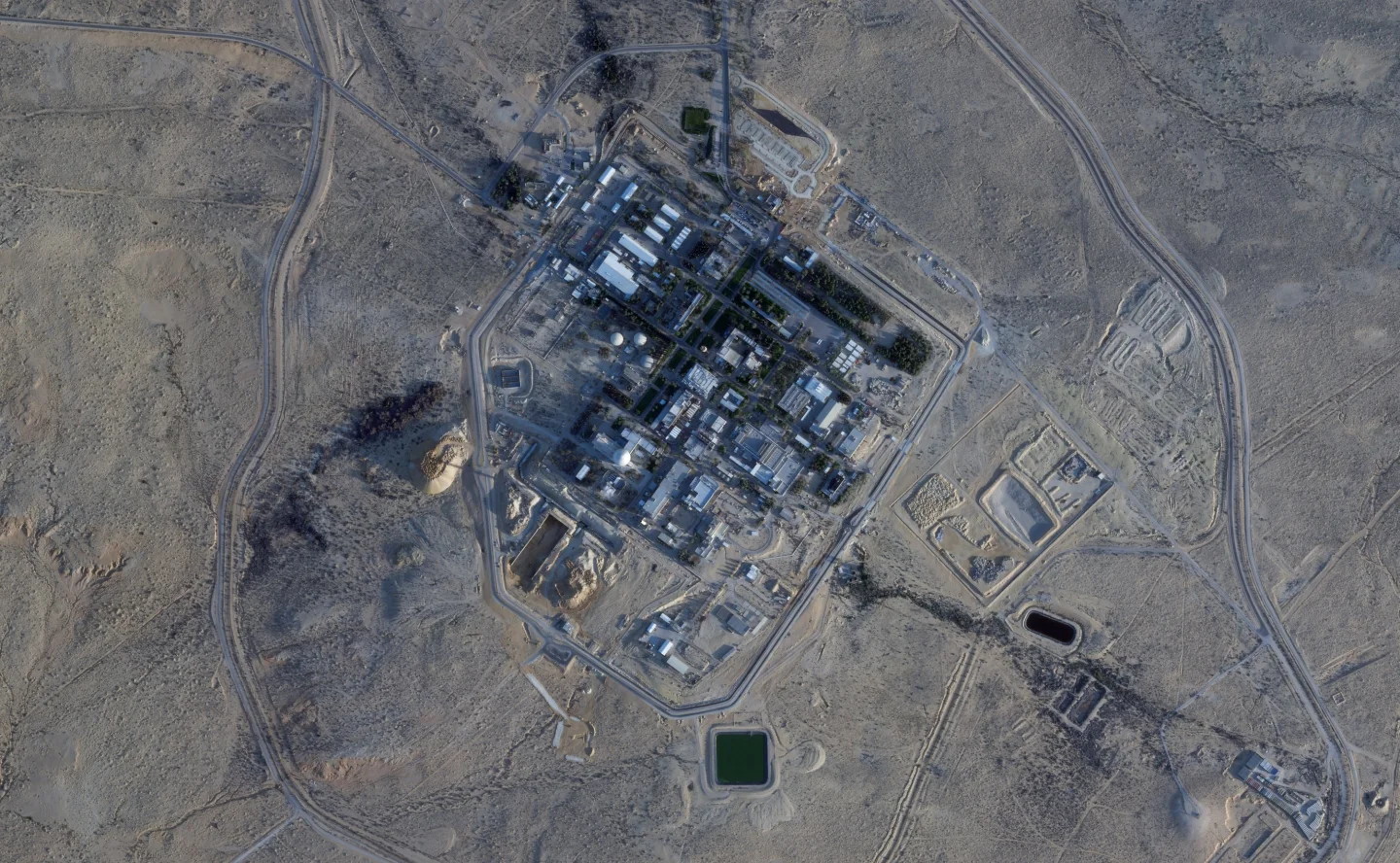
The Dimona reactor, officially known as the Shimon Peres Negev Nuclear Research Center, is located in the Negev Desert in southern “Israel,” about 30 kilometers southeast of the city of Beersheba, and it remains a symbol of “Israel’s” nuclear program.
Why Didn’t You Bomb It?
The Dimona nuclear reactor is considered one of the most sensitive facilities in “Israel,” and for decades it has been subject to strict security measures and multilayered air defense systems, making it an extremely complex target for any potential attack.
Several strategic and military reasons have been raised that make striking it difficult or unlikely, according to Western assessments, especially in light of the recent American and Israeli escalation against Iran during February–March 2026 and the targeting of the Iranian regime.
First, the risk of nuclear contamination
Bombing a nuclear reactor could lead to a massive radioactive disaster similar to or greater than the Chernobyl disaster and Fukushima Daiichi nuclear disaster.
The contamination could spread to neighboring countries such as Jordan, Egypt, and Palestine, and possibly parts of the Persian Gulf, meaning the strike could harm Arab and Muslim countries in addition to “Israel” itself.
Second, the possibility of an Israeli nuclear response
According to Israeli doctrine, any direct existential threat is classified as a strategic danger, and targeting the Dimona reactor could be interpreted as a step threatening the existence of the state.
In that case, “Israel” might resort to the so-called Samson Option, meaning a response with extremely destructive force that could include the use of non-conventional weapons, including nuclear ones. For this reason, targeting the reactor is considered a strategic “red line.”
Third, the defensive power surrounding the reactor
The reactor is protected by multilayered air defense systems, including the Arrow 2 missile defense system, Arrow 3 missile defense system, and David’s Sling, in addition to the American Terminal High Altitude Area Defense system and other modern interception systems.
This makes penetrating the air defenses extremely difficult, especially despite Iran’s advances in developing precision missiles and long-range drones.
Fourth, political and international calculations
Any attack on a nuclear facility could lead to direct military intervention by the United States or the outbreak of a wide regional war.
This makes Iran cautious about the consequences of international politics, despite the escalation of joint American-Israeli actions in the region and the targeting of Iranian bases in 11 countries.
Nevertheless, recent developments suggest that the possibility of targeting Dimona could become more likely, especially with Iran possessing a diverse arsenal of advanced ballistic missiles and long-range drones capable of reaching Israeli territory, including its southern areas where the reactor is located.
Within this complex equation, the Dimona reactor remains a highly sensitive target that carries enormous strategic risks and represents a test of Iran’s ability to employ its military arsenal against a target protected by the highest levels of defensive security.

Samson’s Option
The term “Samson Option” refers to the doctrine or strategy adopted by “Israel” as a plan for nuclear deterrence in the event of facing an existential threat.
The idea is inspired by the story of the biblical figure Samson, who destroyed the temple upon himself and his enemies to ensure revenge.
This option means that if the conventional Israeli military fails to repel a threat and “Tel Aviv” faces an existential danger, it may launch a large-scale nuclear attack against the aggressors.
The term became widely known after journalist Seymour Hersh used it in his 1991 book The Samson Option, in which he detailed “Israel’s” nuclear arsenal and deterrence plans.
An analysis published on the blog of The Times of Israel on June 25, 2025, indicates that the Samson Option is not a plan to achieve victory in everyday wars, but rather the last guarantee for the survival of the state during major existential crises.
It adds that its purpose is to deter any imminent threat that could directly endanger the existence of “Israel.”
According to Kelsey Davenport, Director for Nonproliferation Policy at the Arms Control Association, the Samson Option means readiness to deliberately use nuclear weapons against non-nuclear adversaries as a last resort to ensure the survival of the state, according to what was published by Progressive on June 24, 2024.
This option differs from the principle of “Mutually Assured Destruction” adopted by other nuclear powers, as it specifically threatens non-nuclear adversaries, whereas mutually assured destruction aims to deter any nuclear power from attacking for fear that both sides would be annihilated.
In the context of the current conflict, nuclear experts believe that any potential strike on the Shimon Peres Negev Nuclear Research Center, or its vital facilities, by Iran could carry serious consequences on both the environmental and strategic levels.
If the strike is limited to infrastructure surrounding the reactor, the damage could be military or industrial, such as disabling facilities or damaging the nuclear complex, which would represent a major symbolic and political blow to “Israel”.
However, if the attack were to hit the core of the reactor or nuclear fuel storage facilities, it could lead to potential radiation risks, although military nuclear reactors are usually built with thick concrete structures designed to withstand major attacks and accidents.
Israeli Nuclear Weapons
Although “Israel” has not officially acknowledged possessing nuclear weapons, most international estimates indicate that it maintains a secret nuclear arsenal, and its nuclear program is considered one of the most opaque weapons of mass destruction programs in the world.
The Shimon Peres Negev Nuclear Research Center in the Negev Desert, near the city of Dimona, is believed to represent the core of “Israel’s” suspected nuclear weapons program for decades, without official confirmation or denial from “Israel,” according to a report published by The Times of Israel on March 5, 2026.
Intelligence estimates regarding “Israel’s” nuclear capabilities began in the 1960s, when the Dimona nuclear reactor was put into operation.
The state adopted a policy of “strategic ambiguity,” under which it neither confirms nor denies possessing nuclear weapons.
The Federation of American Scientists estimates that “Israel” possesses about 90 nuclear warheads made from plutonium produced in the heavy-water reactor at Dimona.
According to Yedioth Ahronoth and i24NEWS, citing a report by the Center for Science and International Security in November 2015, “Israel” possesses about 115 nuclear explosive warheads and 660 kilograms of plutonium.
In October 1986, the former reactor technician Mordechai Vanunu revealed secrets of “Israel’s” nuclear arsenal, prompting a reassessment of its size to possibly around 200 nuclear warheads.
“Israel” has not conducted any publicly declared nuclear test, but there have been suspicions about a suspected nuclear explosion in the southern Indian Ocean in 1979.
Some researchers consider it likely to have been an Israeli nuclear test conducted in cooperation with South Africa during the apartheid era, according to The Progressive magazine on June 24, 2024.
“Israel” has not signed the Treaty on the Non-Proliferation of Nuclear Weapons, and therefore its nuclear facilities are not subject to the comprehensive safeguards system of the International Atomic Energy Agency, which allows periodic inspections of nuclear facilities in member states.
On July 5, 2025, satellite images revealed new construction work at the Dimona reactor, according to an analysis by the BBC’s fact-checking team in September 2025, indicating a possible expansion of the nuclear weapons program.
In February 2026, other images showed a massive structure that may be a modern nuclear reactor or a weapons assembly site, according to Associated Press.
In response to these Israeli capabilities, some Arab political experts have called for Iran to acquire nuclear weapons, citing the idea of international relations professor Kenneth Waltz, published in Foreign Policy in 2012, which argued that Iran obtaining nuclear weapons could enhance stability in the Middle East rather than undermine it.
Western estimates indicate that the escalating threats by the United States and “Israel” against Iran to destroy its nuclear program could push Tehran to accelerate its nuclear activities and produce an atomic bomb to ensure “ultimate deterrence,” similar to what occurred in the deterrence model between Pakistan and India.
This comes especially after the weakening of its traditional axis in confronting “Israel” and the West, according to Bloomberg on October 3, 2024, and the Bulletin of the Atomic Scientists published in early October 2024.
Sources
- Iran Threatens to Hit Dimona Nuclear Site if Israel and US Try to Topple Regime
- Iran Rained Down Ballistic Missiles on a Mockup of Israel’s Nuclear Reactor
- The Samson Option: Israel’s Plan to Nuke Its Opponents
- The Samson Option: Will the Temple Columns Soon Fall on Israel’s Enemies?
- Secretive Israeli Nuclear Facility Undergoes Major Project
- Report: Israel Possesses 115 Nuclear Warheads [Arabic]
- Iran vs. Israel Redux: The Enormous Difficulties and Ramifications if Israel Attacks Iran’s Nuclear Sites
- Weakened Iran Raises Fears It May Make Push for Nuclear Arms