From Silicon Valley to TikTok: Larry Ellison Between U.S. Politics and Support for Israeli Occupation
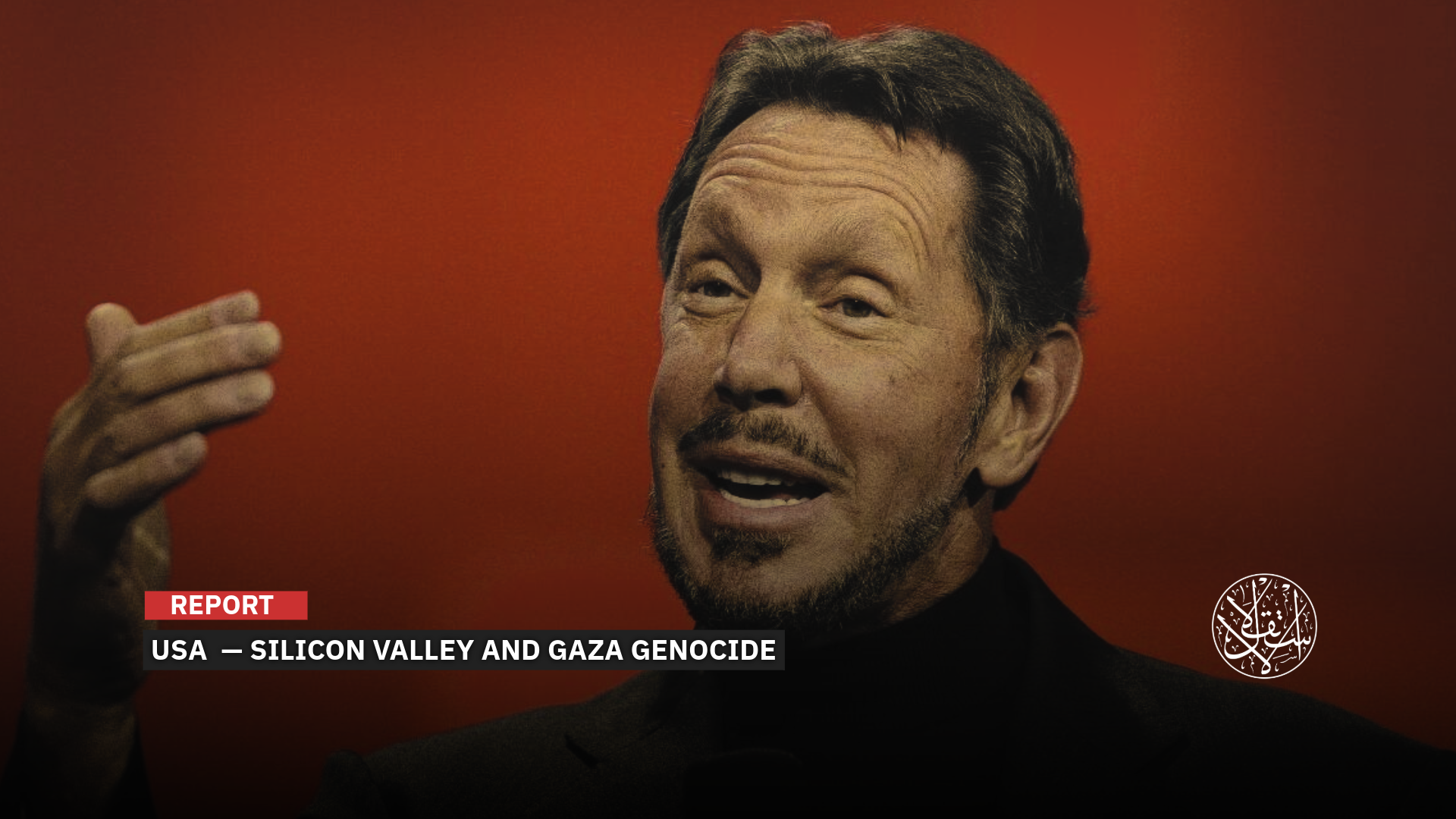
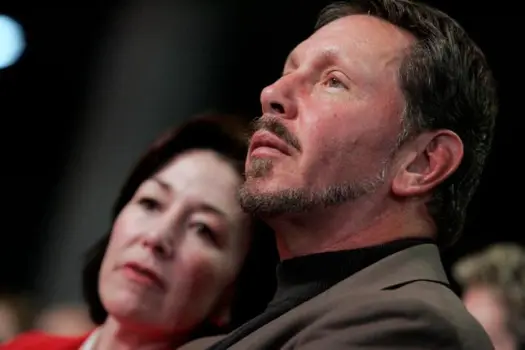
Larry Ellison, one of the world’s richest businessmen, now holds sway over TikTok.
Larry Ellison, the American billionaire behind Oracle, has moved back into the spotlight after ByteDance, the parent company of TikTok, announced the completion of a deal to create a new entity to operate the platform in the United States, majority-owned by a consortium of American investors.
Under the agreement, the management of U.S. user data and TikTok’s content recommendation algorithm has been transferred to cloud servers run by Oracle inside the United States, while ByteDance retains only a minority stake with no operational control.
The deal was crafted in response to a 2024 U.S. law requiring TikTok to divest its domestic operations or face an outright ban, on the grounds of protecting national security from the transfer of user data to China.
The Ellison Story
Larry Ellison’s rise to prominence in the TikTok saga has prompted a broader question about the man himself and the network of power he represents.
Ellison is an American businessman and software engineer best known as the founder of Oracle, the technology and database giant he launched in 1977. Over decades, he built one of the most powerful companies in Silicon Valley, anchoring his influence in deep ties with the U.S. government and the high end of the tech sector.
Ranked among the richest people in the world, with a fortune that at times has approached $300 billion, Ellison’s wealth has translated into political and strategic leverage. Oracle was originally launched with funding from the CIA, then went on to expand commercially and establish itself as a cornerstone of the software industry.
Ellison’s reputation for an uncompromising management style and outsized ambition has shaped both Oracle’s culture and his more recent investment moves into media and digital platforms. In 2020, he sparked controversy inside the company after hosting a fundraising event in support of Donald Trump during his first term, prompting protests from hundreds of Oracle employees who accused the company’s leadership of politicizing the workplace.
Despite internal backlash, Ellison continued to strengthen his role as a close ally of Trump and a major financial backer of the Republican Party. That relationship has fueled speculation about his role in the TikTok deal, with critics arguing that his presence in the investor consortium was no coincidence but the product of political connections and influence in Washington.
Trump himself has described Ellison as one of the most important figures in the technology world. In recent years, Ellison has pushed beyond Oracle, expanding his empire into media and entertainment. His son, David, now runs a film production company that merged with Paramount Pictures studios, while the Ellison family seized the CBS news network in 2025 in a multibillion-dollar deal.
Those moves have placed the family in an unusually powerful position across technology, media, and information security, an intersection that now comes sharply into focus with their control over TikTok’s U.S. operations.
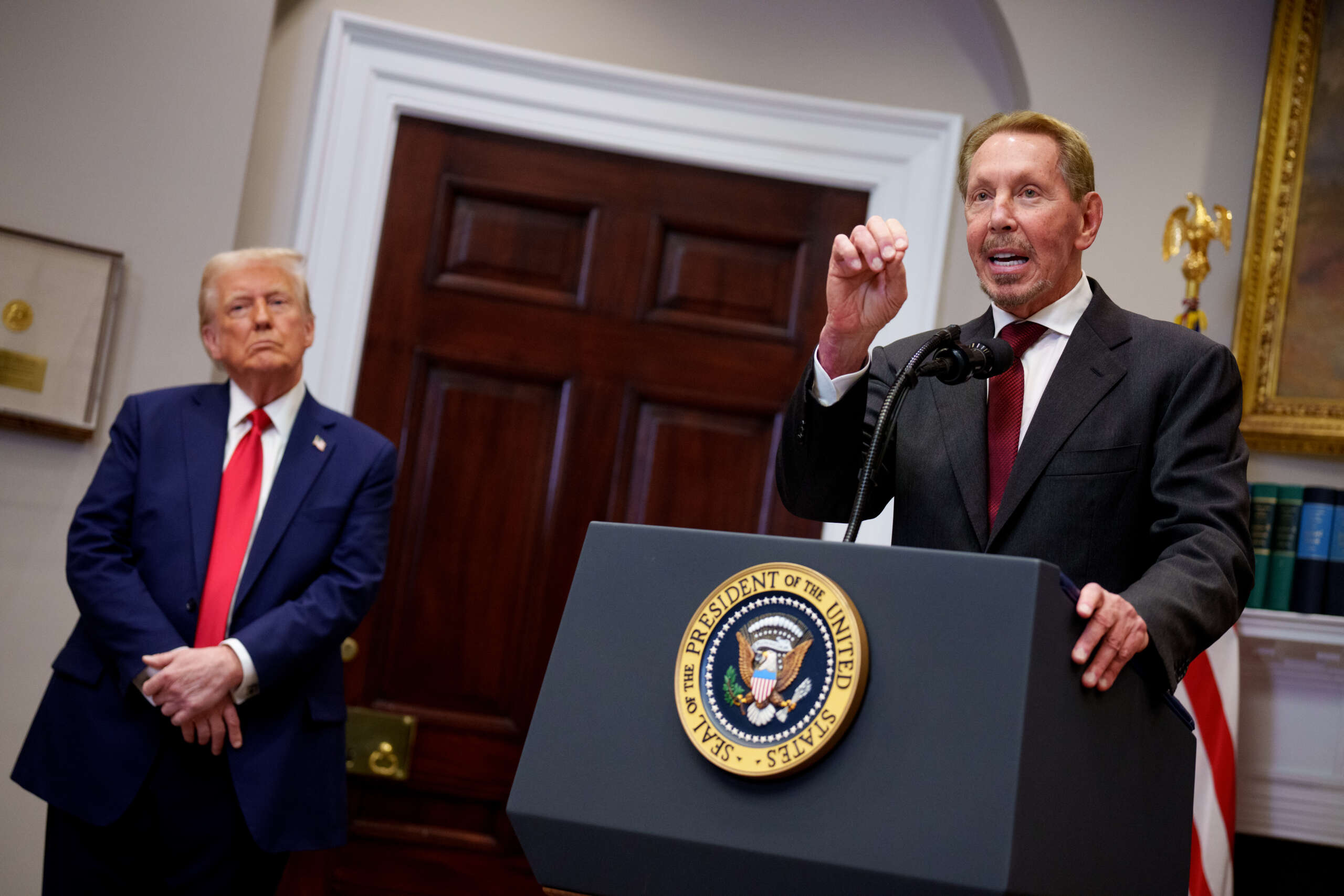
While the deal has been framed publicly as a technical and security-driven solution, political calculations appear to have shaped the choice of investors behind the scenes. Ellison’s ties to Trump, who was the first U.S. president to threaten a TikTok ban, loom large in that context. Ellison was visible at Trump’s 2025 inauguration and reportedly attended closed-door meetings on TikTok’s future, sitting alongside media mogul Rupert Murdoch when the president signed an executive order easing the financing of the acquisition.
These details have led some critics to accuse Ellison of leveraging political influence to secure a foothold in TikTok. His ideological stance also played a role in tipping the scales in Oracle’s favor. The company is known for its open support for the Israeli Occupation, making it the “natural” choice for pro-”Israel” lobbying circles in the U.S. that were pushing to place TikTok’s management in American hands.
In the end, national security arguments and political alliances converged to bring the deal together, leaving Ellison’s role at its center both decisive and deeply controversial.
Ellison’s Ties to Israeli Occupation
Larry Ellison’s ties to “Israel” are neither subtle nor private. They are public, longstanding, and deeply woven into both his personal relationships and Oracle’s corporate strategy.
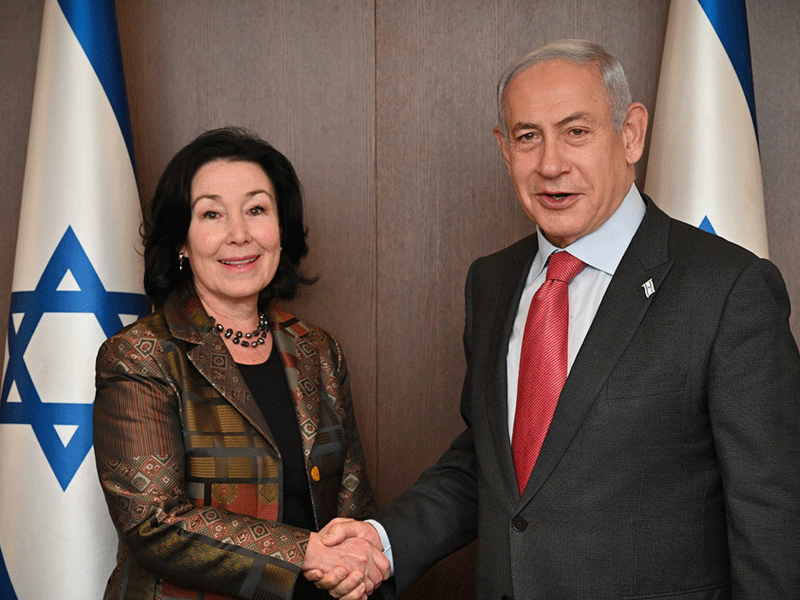
Israeli media have described Ellison as a close friend of Prime Minister Benjamin Netanyahu, with The Times of Israel calling him a personal confidant and other outlets labeling him “Israel’s” man in Silicon Valley. At one point, Ellison even offered Netanyahu a seat on Oracle’s board with an annual salary of roughly $500,000 in recognition of his experience, though the prime minister ultimately did not take up the position.
The closeness extended beyond formal gestures. In 2021, Ellison hosted Netanyahu and his family on his private island in Hawaii for a low-profile vacation, another signal of the strength of their relationship.
Financially, Ellison ranks among the largest American donors to “Israel’s” military establishment. According to The Times of Israel, he donated $16.6 million in 2017 to the “Friends of the Israel Defense Forces” to fund training and recreation facilities for Israeli Occupation soldiers, the largest single donation in the organization’s history at the time. Speaking at the event, Ellison said “Israel” represents a historic homeland for the Jewish people that must be defended, calling support for its soldiers the greatest honor of his life.
That support did not end there. Over the years, Ellison has continued to fundraise for Israeli Occupation soldiers and has contributed tens of millions of dollars to strengthen the army’s capabilities.
Oracle itself maintains extensive operational ties with “Israel.” In 2021, the company opened a government cloud data center in occupied Jerusalem under a contract worth approximately $319 million to provide cloud computing services to the Israeli Occupation government. Oracle has also been involved in classified projects with the Israeli Occupation military, including a four-year technology initiative with the air force known as “MENTA.”
Details of the project surfaced through Slack messages obtained by The Intercept and published in an investigation in February 2025. In internal posts, Shimon Levy, Oracle “Israel’s” head of communications, wrote in December 2021 that the project enabled the Israeli air force to do a “bunch of important military stuff that we can’t share with you,” adding a sword emoji to his message.
In 2022, Levy noted in the same Slack channel that Unit 81 of the Israeli Occupation military—essentially a tech solutions branch within the country’s intelligence services—was entering the final stage of a three-year collaboration with Oracle, aimed at speeding up procurement by enabling each soldier to submit their own military purchase requests.
Later that year, Oracle organized a hackathon with the Israeli military focused on “develop[ing] technical solutions to acute social challenges.”
“Look at those faces!” Levy wrote alongside a photo from the event. “We’re there to support the soldiers in their mission to make the world a better place, using Oracle’s technology!”
Oracle’s leadership has taken an openly political stance. In 2021, Oracle’s then-CEO Safra Catz told the Israeli outlet Calcalist that the company’s “commitment to Israel is second to none.”
If Oracle employees “don’t agree with our mission to support the State of Israel,” she said, “then maybe we aren’t the right company for them.”
The remarks came amid internal tensions, as Oracle employees complained about the company’s unqualified support for the Israeli Occupation during the Gaza genocide. In the summer of 2024, Catz attended a closed meeting lobbying U.S. senators to back continued arms shipments to “Israel.” That fall, Oracle announced a partnership with Rafael Advanced Defense Systems, one of “Israel’s” largest weapons manufacturers, on an artificial intelligence project designed to deliver rapid, actionable battlefield intelligence to combat units.
Taken together, these positions underscore how Ellison and Oracle’s leadership view the company not simply as a technology firm, but as a strategic partner to “Israel” in digital infrastructure, defense, and data. That context helps explain Ellison’s determination to play a central role in managing a global platform like TikTok, one with the power to shape information flows and public opinion far beyond Silicon Valley.
Potential Fallout
Amid these ties, Larry Ellison’s entry into TikTok ownership has sparked concerns over the platform’s future freedom of expression, particularly when it comes to content about Palestine.
In recent years, TikTok has emerged as one of the most influential spaces for Palestinian activists and their supporters, allowing them to reach global audiences with firsthand footage documenting Israeli Occupation war crimes in Gaza and the West Bank. For many users, especially younger ones, the platform has offered an alternative to the framing long dominant in mainstream Western media.
Lara Friedman, the president of the Washington, D.C.-based Foundation for Middle East Peace, told +972 Magazine that the political consciousness of a younger generation in the West has been shaped in large part by what they encountered on TikTok: images of war on Gaza and daily violations against Palestinians that bypass traditional media filters.
That visibility, she argued, is precisely what has made TikTok a strategic concern for pro-”Israel” lobbying groups. In 2023, Jonathan Greenblatt, chief executive of the Anti-Defamation League (ADL), warned publicly that the platform posed a problem for the Jewish community in the United States, claiming it had become a hub for what he described as “antisemitic” content influencing young people.
Similar warnings came from Republican senator and former presidential candidate Mitt Romney, who said the volume of pro-Palestinian content on TikTok far exceeded that on any other platform, a disparity he framed as evidence of the app’s power to shape public opinion against “Israel.”
Those anxieties helped build momentum in Congress for legislation forcing TikTok to sell or face a ban. According to experts cited by +972, concern over “Israel’s” public image played a quiet but significant role in the rare bipartisan consensus behind the law, alongside the stated national security arguments centered on China.
With TikTok’s algorithm and data infrastructure now moving under Oracle’s management, pro-”Israel” groups have openly voiced hope that the platform’s content policies will shift in their favor. Eric Fingerhut, president and chief executive of the Jewish Federations of North America (JFNA), welcomed the deal, having previously labeled TikTok the largest and worst publisher of hate and antisemitism online. He described the transfer to American ownership as a moment of great hope for tighter content controls.
Reports indicate that Oracle has already begun working with the Israeli Occupation government on “narrative management” across social media. During the war on Gaza in 2023, experts linked to Ellison’s company helped develop a digital tool in coordination with “Israel’s” foreign ministry called “Words of Iron,” designed to promote Israeli Occupation narratives on platforms including TikTok, Instagram, and X, while countering critical content.
A month into the war, Shimon Levy praised Oracle employees on the company’s internal Slack platform for leading what he called a major volunteer initiative to develop and operate a unique public relations tool for “Israel’s” online outreach.
In February 2024, Oracle collaborated with the Israeli military’s cyber unit in another hackathon aimed at developing technical solutions to rehabilitate Israeli Occupation settlements near Gaza using Oracle technology, according to internal Slack messages. Levy also announced that the company had donated medical and environmental supply kits worth $500,000 to Israeli Occupation soldiers.
An investigation by The Intercept later revealed a clear internal bias within Oracle during the war. The company reportedly removed Palestinian aid organizations, including Medical Aid for Palestinians (MAP) and UNRWA, from its employee charity donation platform, while management signaled that staff who expressed sympathy with victims in Gaza could face disciplinary action or dismissal.
That warning followed a LinkedIn post by Hani Risheq, a director of enterprise engineering at Oracle UK, who asked whether any of the company’s more than 155,000 employees worldwide were able to express views differing from those of Safra Catz without fear of punishment or termination.
Taken together, these developments point to a hardening corporate posture that could translate into tighter moderation of Palestinian or pro-Palestinian content on TikTok, under the banner of “combating antisemitism.” Rights groups warn that such shifts risk silencing Palestinian voices or sharply reducing their reach under new standards set by the platform’s owners.
“What’s pretty astounding to me is how flagrant the complicity is,” said Marwa Fatafta, MENA policy and advocacy director at Access Now. “They are definitely taking advantage of the impunity that Israel enjoys. There are no consequences.”
Sources
- Larry Ellison, one of the world’s richest businessmen, now holds sway over TikTok.
- Oracle allegedly suppresses Pro-Palestinian voices & cuts charity support amid TikTok takeover bid
- The billionaire family poised to rewire U.S. media in Israel’s favor
- Record $53.8 million raised for IDF soldiers at Beverly Hills gala
- Poised to Take Over TikTok, Oracle Is Accused of Clamping Down on Pro-Palestine Dissent
- Larry Ellison: Oracle co-founder who overtook Musk as world’s richest person