Abu Dhabi or the UAE? How Riyadh Draws the Line Between Capital and Country
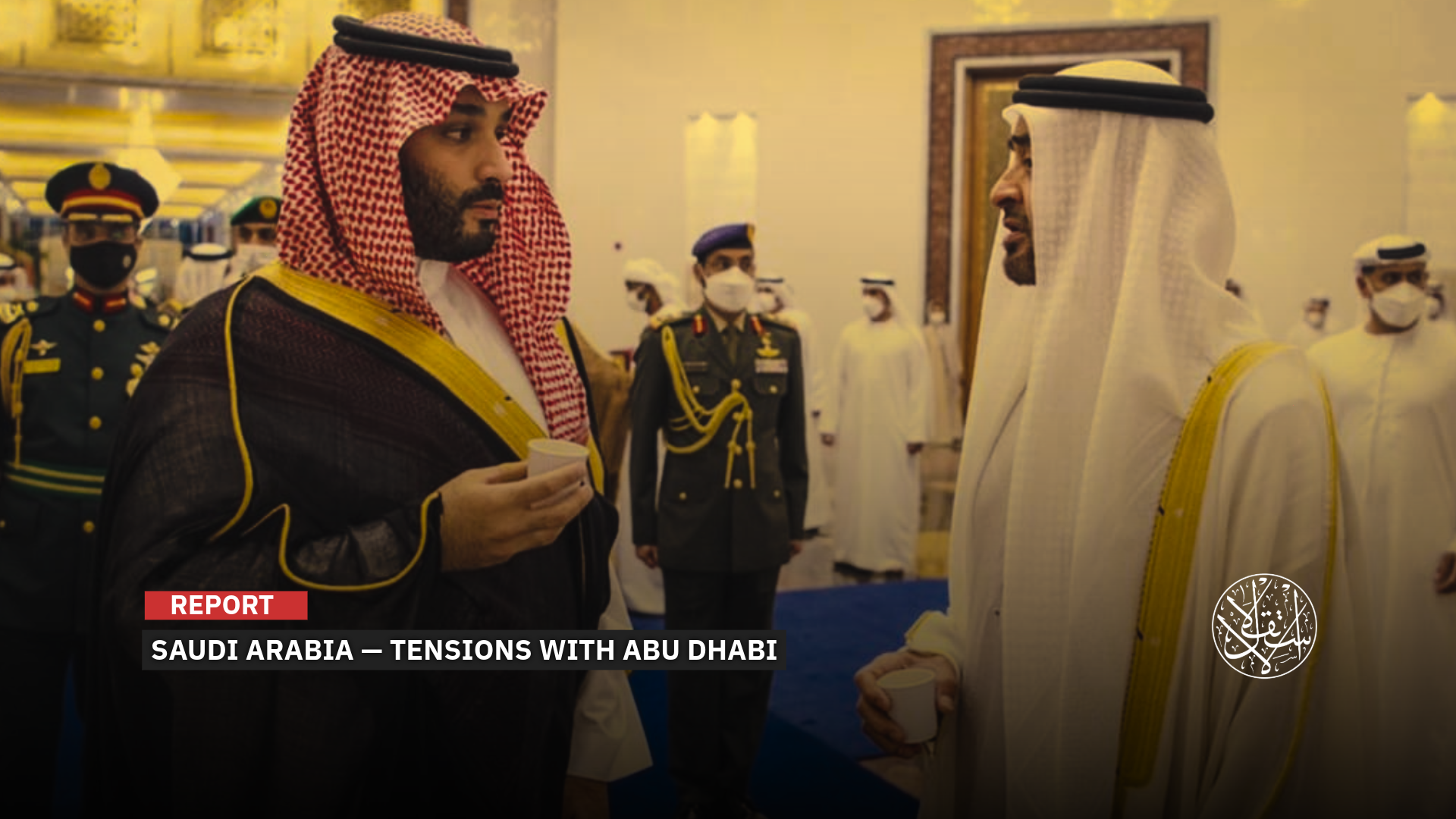
The term "Abu Dhabi" is used as a direct reference to Mohammed bin Zayed himself.
Amid ongoing tensions between Saudi Arabia and the United Arab Emirates (UAE), particularly over developments in southern Yemen, a deliberate and consistent distinction has emerged in Saudi official and semi-official discourse.
The approach draws a clear line between Saudi Arabia’s relationship with the UAE as a federal state and its people, and its position on the actions of Abu Dhabi as the center of sovereign and security decision-making.
Saudi writer Dr. Ahmed bin Othman al-Tuwaijri made this distinction clear in a January 22, 2026 column in al-Jazirah, emphasizing that Riyadh’s dispute is with Abu Dhabi’s policies, not with the bonds between the Saudi and Emirati peoples.
Al-Tuwaijri went further, framing the dispute as one with the political leadership in Abu Dhabi, represented by President Mohammed bin Zayed, rather than with the Emirati federation, the rulers of the other emirates, or Emirati society as a whole.
This language is not a matter of stylistic nuance or personal expression but a key to understanding how Saudi media defines the limits of the crisis. It reflects Riyadh’s view of the conflict as opposition to a political project led by Abu Dhabi and Mohammed bin Zayed, not a broader confrontation with a federal state or its people, nor an attempt to fracture the Gulf house, but an effort to isolate Abu Dhabi’s project and curb its influence.
A Sharper Tone
In recent weeks, as the dispute moved from closed rooms into the media and public platforms, Saudi coverage has increasingly singled out Abu Dhabi as the source of what it describes as escalatory and conspiratorial policies, particularly in Yemen.
Multiple reports and analyses noted a marked shift in tone on Saudi state television, with al-Ekhbariya intensifying its rhetoric and leveling direct accusations against the Abu Dhabi government of media incitement and proxy confrontations in Yemen. These reports framed such actions as a direct threat to Saudi national security, using language that hinted at the possibility of tougher measures ahead.
This Saudi distinction is not a matter of word choice but reflects a clear view of how power operates within the UAE. Riyadh’s reading is that foreign policy and sensitive security decisions are managed from a single center in Abu Dhabi, while the other emirates are not independent decision makers in these matters, or at least are not leading them.
That framing appeared clearly in a report published by the Saudi online outlet al-Marsd on January 19, 2026, which drew a contrast between Abu Dhabi as a political hub and Dubai as a commercial center, describing Dubai in Saudi discourse as an uncontested development success story.
The same distinction has echoed across social media, where clips and commentary from Saudi writers stress that what is unfolding reflects the actions of a political team in Abu Dhabi rather than a broad Emirati stance. This serves two purposes: assigning political responsibility to Abu Dhabi while keeping the door open for relations with the rest of the emirates.
A Political Message
When Riyadh signals, explicitly or implicitly through the media, that the problem lies in Abu Dhabi’s conduct, it is drawing a clear red line. It is not seeking to turn the dispute into hostility between peoples, undermine the Gulf Cooperation Council (GCC), or pressure the other emirates to fall in line behind Abu Dhabi.
This logic was reflected in a Financial Times report, which noted that the unusually sharp Gulf rhetoric has been accompanied by clear efforts to avoid casting blame on the UAE as a whole, instead distinguishing between decision-making centers within the federal state.
From a Saudi perspective, this distinction becomes a tool to isolate policies seen as threatening its interests in Yemen and beyond, without paying the high strategic cost of fracturing the Gulf from within.
That view aligns with analysis in The Washington Post, which argued that the core of the dispute is less about dominance than about competing approaches. Saudi Arabia favors a centralized nation-state model, while Abu Dhabi relies on networks of influence and local proxies, even at the expense of state cohesion.
According to the Financial Times, Yemen is the main arena where this distinction has become most visible.
Recent Saudi accusations have focused on Abu Dhabi’s backing of separatist factions in the south, particularly the Southern Transitional Council (STC), which Riyadh sees as a direct threat to its security and interests along its borders and in Hadramawt and al-Mahra.
When al-Ekhbariya aired reports on secret prisons and abuses in Hadramawt, the narrative placed responsibility squarely on Abu Dhabi as the sponsor and operator of such practices, elevating the dispute from a political disagreement to a national security issue.
Since tensions between Saudi Arabia and the UAE first surfaced in 2019 over diverging positions on Yemen, Saudi media and commentators have consistently used phrases such as “Abu Dhabi’s practices,” “Abu Dhabi’s policies,” or “the Abu Dhabi political team,” deliberately avoiding language that treats the UAE as a single, unified sovereign actor.
This reflects a deeply held Saudi assessment that sovereign and security decision-making in the UAE is effectively concentrated in Abu Dhabi, while the other emirates, particularly Sharjah, Ras al-Khaimah, Fujairah, Ajman, and Umm al-Quwain, are not parties to the interventionist and escalatory policies attributed to Abu Dhabi.
Saudi writer Jasser al-Jasser summed up this view on al-Arabiya on January 18, 2026, saying that Dubai is a remarkable economic city with an impressive development record and no real point of contention, while in Abu Dhabi there is a political team, not an Emirati consensus, backing Aidaros Azubidi and fueling instability.
On December 19, 2025, Saudi journalist Khaled al-Jumeih wrote on X, “Our dispute is with the policies of Abu Dhabi and Dubai, while Sharjah and Ras al-Khaimah follow a completely different approach.”
Saudi writer Ashq bin Saeedan went further in remarks to TV Yemen Shabab on January 19, 2026, saying the rift with Abu Dhabi had moved well beyond political differences, accusing it of betraying Saudi Arabia by fueling unrest and openly interfering in Yemen and other Arab countries.
A Historical Perspective
Yet al-Tuwaijri and other writers who share this view do not frame the dispute as a momentary clash. They place it within a longer historical arc, pointing to Saudi Arabia’s early role in encouraging the Gulf emirates to unite and gain independence after the British withdrawal, a role that, in their telling, gave Riyadh an intimate understanding of the federal system and the differences among the seven emirates.
In this account, the late Saudi king Faisal bin Abdulaziz emerges as a central figure in that period, a view supported by documented correspondence, meeting records, and historical studies on the end of British rule in the Gulf and the transition from the Trucial States to a federal state.
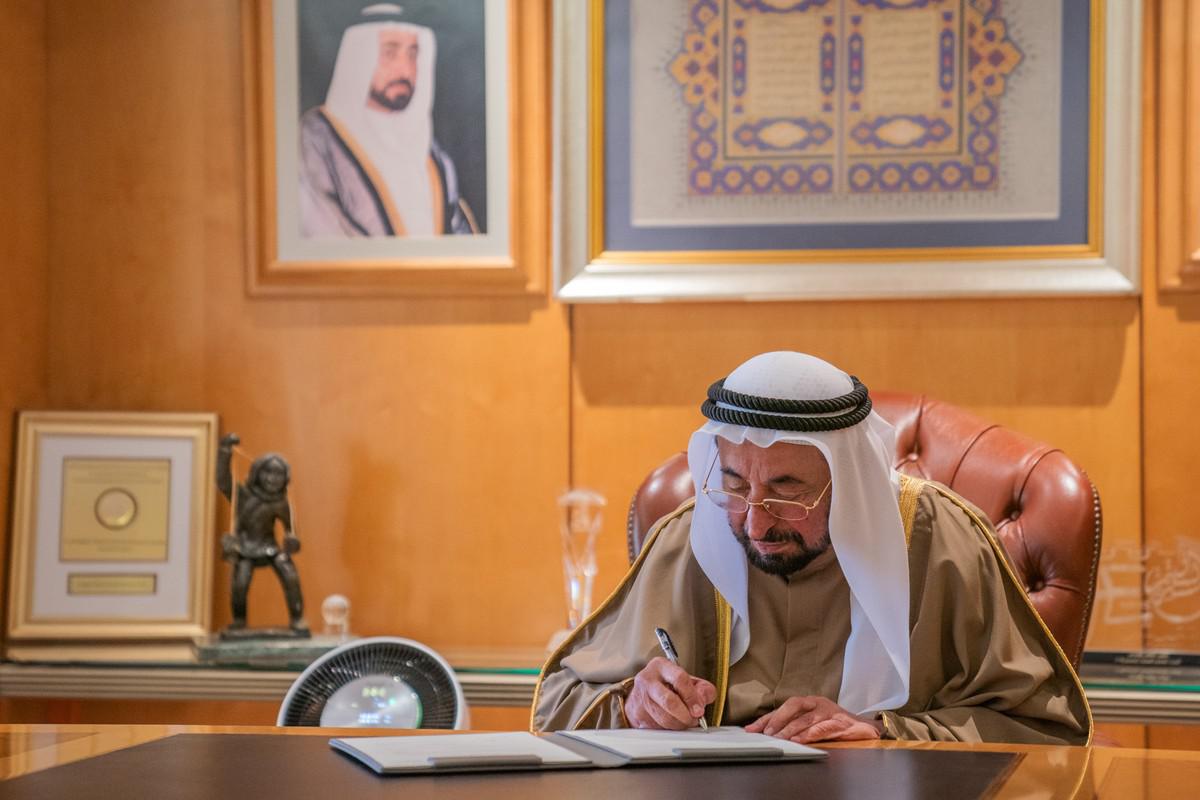
From this perspective, al-Tuwaijri stresses that the UAE is not only Abu Dhabi. It also includes figures who occupy a very different place in Gulf and Arab public imagination, most notably Sharjah’s ruler, Sheikh Sultan bin Muhammad al-Qasimi, widely seen as a cultural and humanitarian figure with a strong record of supporting cross-border knowledge projects.
On a practical level, Sharjah’s relationship with Saudi Arabia goes beyond diplomatic niceties. It includes well-documented moments that underscore Sheikh Sultan’s standing in Saudi Arabia, among them his receipt of the King Faisal International Prize for Service to Islam in 2002, an award carrying deep symbolic weight inside the kingdom and beyond, and reflecting mutual respect that extends past day-to-day politics.
Sharjah maintains a visible cultural presence in Saudi Arabia, notably through the Riyadh International Book Fair, where events linked to Sheikh Sultan’s publications and institutions have created a steady cultural bridge with Riyadh, separate from the political tensions around Abu Dhabi.
Taken together, Sharjah serves as a steady point of connection, showing how Saudi discourse can push back against Abu Dhabi’s policies while still respecting the other emirates, their leaders, and cultural and social figures.
Breaking the Balance
Political scientist Ahmet Yavuz of Turkiye’s Aydin University said Saudi Arabia is now acting from its position as the GCC’s primary power, handling disputes not with sudden reactions but by strategically countering what it sees as direct threats to its national security.
Speaking to Al-Estiklal, Yavuz said Riyadh does not seek to unravel its ties with the UAE as a state but has shifted from silence to open political confrontation with the decision-making center in Abu Dhabi and the figure at the heart of the tension, Mohammed bin Zayed.
“The real conflict is not simply between two countries, but between two competing regional projects, driven by a struggle for influence between Mohammed bin Zayed and Saudi Crown Prince Mohammed bin Salman over the shape of the regional order and who holds decisive power in the Gulf and the wider Arab world,” he added.
“Calling out Abu Dhabi by name is a deliberate move by the Saudi media to target the real seat of authority and block any attempt to spread blame across the wider federal structure.”
Yavuz stressed that the term “Abu Dhabi” is used as a direct reference to Mohammed bin Zayed himself, the architect of policies that clash with Saudi interests in Yemen and across the region.
This linguistic and political choice, he said, is intentional. Riyadh does not see it in its interest to drag other emirates or northern rulers into a confrontation that does not concern them, nor does it want to turn its dispute with Mohammed bin Zayed into a broader clash with Emirati society or emirates that do not control escalation decisions.
Saudi Arabia is drawing clear lines: those who threaten its security will be confronted, while those who stay out of that path will not be part of the conflict.
“This approach places Abu Dhabi’s leadership, particularly Mohammed bin Zayed, under growing internal pressure, leaving little room to shield himself behind the federal framework or appeals to Gulf unity.”
Sources
- The UAE We Hold Dear [Arabic]
- Al-Jasser Says Dubai Is a Success Story, but Accuses an Abu Dhabi Political Team of Betraying Its Partnership With Saudi Arabia in Yemen [Arabic]
- Saudi Arabian media steps up attacks on UAE as Gulf rift deepens
- After Yemen rift, Saudi Arabia aims to quash UAE’s power in wider region