Wells Destroyed, Pipelines Bulldozed: How Water Became a Weapon in the Besieged Gaza
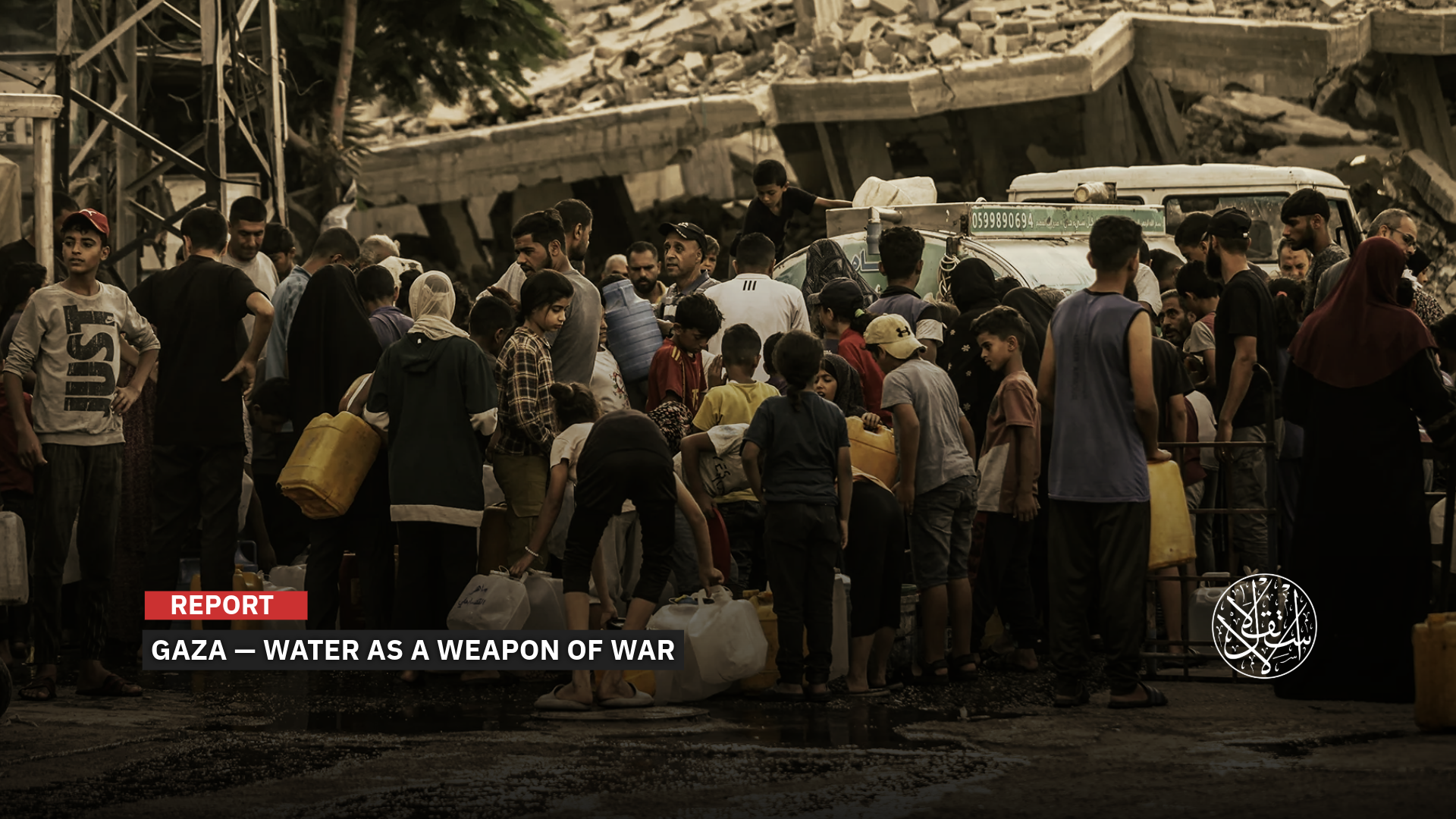
The amount of water available per person in Gaza has dropped to alarmingly low levels.
Outside his tattered tent in Gaza City’s al-Nasr neighborhood, Ahmed al-Habil, 45, stands beside neat rows of empty plastic jugs, waiting for the water truck that usually comes by. This time, it hasn’t shown up.
Speaking to Al-Estiklal, al-Habil’s voice carries quiet exhaustion. Life, he says, has been reduced to an endless loop: waiting days for the water truck, then scrambling after distribution tankers once it finally arrives. Since the war began, severe water shortages have turned that routine into a daily struggle.
Gaza has been grappling with an unprecedented water crisis for more than two years, one that has made access to water a constant burden for its residents. Over the past month, the situation has deteriorated even further, despite the fragile ceasefire now in place across the Strip.
Water Lines
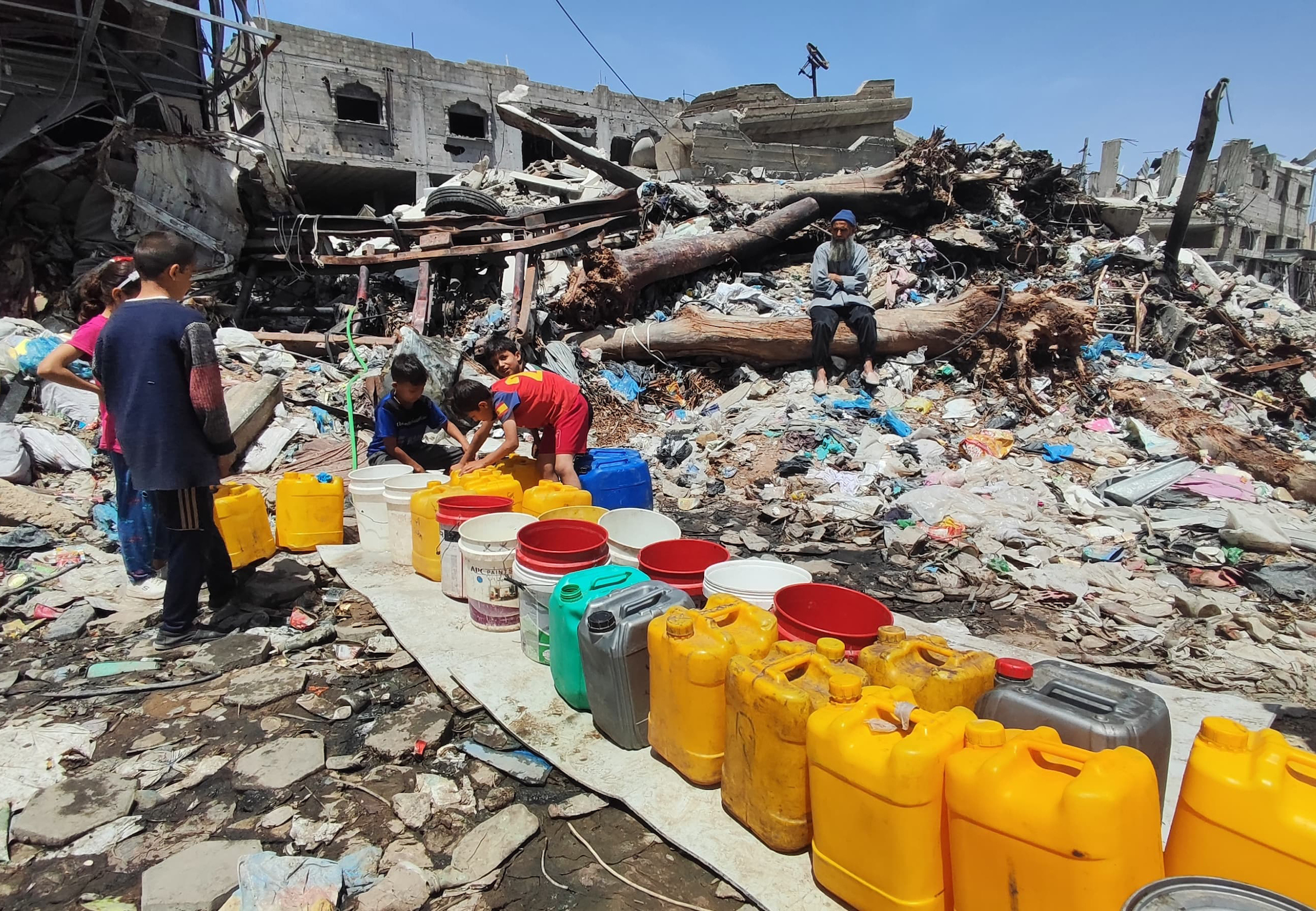
Across Gaza, people spend hours standing in long lines outside water distribution points run by municipalities or aid groups, hoping to fill containers that barely last a single day.
“We try to store whatever water we get in small jugs, afraid the trucks will be delayed or stop coming altogether,” he said. “We’re living on the edge of thirst.”
His family cuts back everywhere they can—showers, laundry, even washing dishes—saving water only for the bare essentials. In his household of four, what little water they have is rationed with care: drinking and cooking come first, while bathing has become a luxury postponed for a week or more.
For Hassan al-Shaafi, 54, who lives in the Nuseirat refugee camp in central Gaza, the daily search for water begins before dawn.
He loads several large plastic containers onto an old handcart and sets off on a grueling trek to the nearest distribution point, roughly three kilometers from his tent.
“I leave before sunrise to beat the crowds,” al-Shaafi told Al-Estiklal. “I arrive with an empty cart and find dozens of people just like me, all waiting their turn by the tanker.”
Some days, he manages to fill one or two jugs before the truck runs dry or moves on to another area. Other days, after hours of waiting, he returns with containers barely filled.
“It feels like chasing a mirage,” he said. “Water is rationed drop by drop.”
Despite chronic joint pain, al-Shaafi drags his heavy cart every day because he has no other option. “Water is life,” he said. “I can’t watch my children go thirsty. Even when my knees hurt, I keep going. Every liter I bring home is a lifeline.”
He pauses, then asks the question many in Gaza are asking. “How long are we supposed to keep searching for water like this? We’re not asking for the impossible, just clean water to drink and survive.”
That question has lingered unanswered even after a ceasefire agreement was signed in October 2025, following two years of Israeli genocide. The water blockade remains, and with it the daily struggle of more than two million people fighting for the most basic necessity of life.
According to a report by Oxfam, the systematic destruction of Gaza’s water infrastructure—compounded by Israeli restrictions on repairs—has slashed available water supplies by more than 94 percent compared with pre-war levels.
The impact has been devastating. Gaza City estimates that in many areas, residents now receive no more than five liters of water per person per day, barely enough to drink, and far below the minimum needed for basic human survival.
As a result, tens of thousands of families have been forced into harsh coping measures, cutting out bathing and laundry altogether so they can save what little water they have for drinking and cooking.
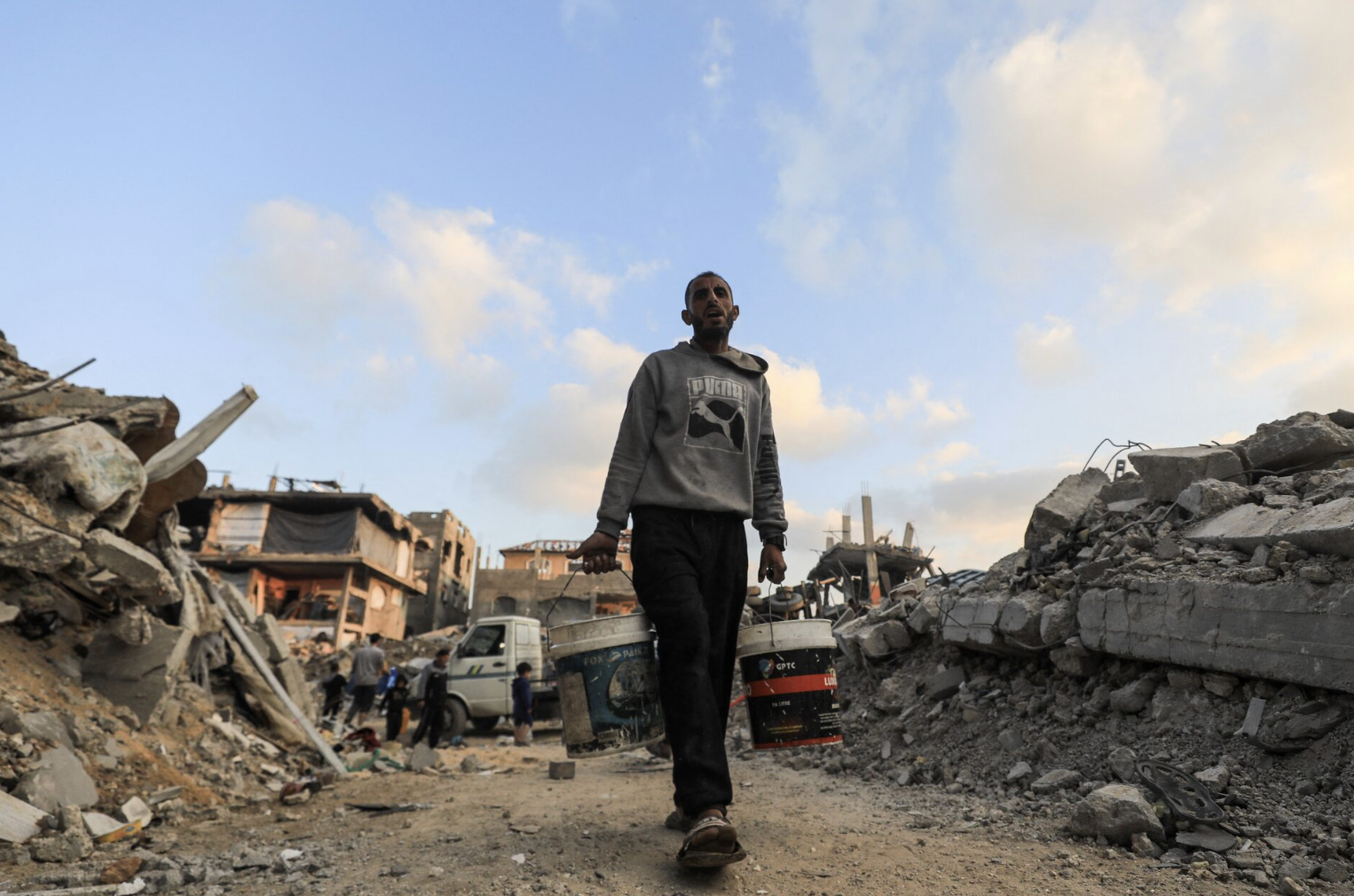
Wells Wiped Out
Gaza’s water crisis took a sharp turn for the worse in late January 2026, when “Israel’s Mekorot water line”—the single largest source of water for Gaza City—went offline after being damaged during Israeli Occupation land-clearing operations east of the city.
According to Gaza City officials, the line had been supplying roughly 70 percent of the city’s water needs during the Israeli war on the Gaza Strip. Its collapse pushed an already fragile system into free fall.
The failure came on top of sweeping destruction to Gaza’s water infrastructure over two years of genocide. Nearly 85 percent of the city’s water wells had already been destroyed, drastically shrinking the supply available to residents.
Once the Mekorot line was cut, entire neighborhoods were left completely dry, including al-Zeitoun, Shejaiya, the Old City, Tel al-Hawa, Sabra, and much of western Gaza, plunging most of the city into a collective thirst.
Before the Israeli Occupation war, Gaza City needed more than 100,000 cubic meters of water per day. Today, only a fraction of that amount is available, leaving a shortfall of nearly 90 percent compared with pre-war levels, according to Gaza’s municipality.
The scale of the deficit has pushed Gaza into an unprecedented thirst crisis, prompting city officials to warn of an imminent catastrophe as the water system remains close to total collapse. During and after the Israeli aggression, the city had relied heavily on the Mekorot line to compensate for the loss of its local water sources. Its shutdown removed that last buffer.
Rights groups say the crisis did not begin with the latest outage but reflects a broader, systematic policy targeting Gaza’s water sector throughout the war. According to human rights organizations, the Israeli Occupation has used “thirst” as a weapon of war, repeatedly striking water infrastructure.
A report by the Palestinian Center for Human Rights (PCHR) says more than 1,675 kilometers of water and sewage networks were destroyed, while at least 719 water wells were directly targeted and rendered inoperable. Overall, more than 89 percent of Gaza’s water and sanitation facilities sustained partial or total damage during the Israeli war.
The consequences are stark. More than 91 percent of Gaza’s population has lost safe access to water, and 65 percent of residents now survive on less than six liters per person per day, far below basic humanitarian standards.
Human rights groups describe these practices as a deliberate strategy to turn water into a tool of collective subjugation, warning that its use as a weapon of war is aimed at making Gaza unlivable and pushing residents toward forced displacement.
No part of Gaza’s water system has been spared. Roughly 70 percent of pumping stations have been destroyed, all wastewater treatment plants are out of service, and key water-quality testing laboratories have been damaged, according to Oxfam.
In Gaza City alone, the destruction rate of water wells has reached nearly 88 percent, alongside the complete destruction of all seawater desalination plants. The PCHR also reports that 71 percent of small desalination units across the Strip are no longer functioning, while about two-thirds of public water reservoirs have been damaged.
The result has been an 84 percent drop in overall water production across Gaza, widening the water deficit to levels that health and environmental experts warn could trigger a full-scale public health disaster, as water contamination spreads and basic hygiene becomes impossible.
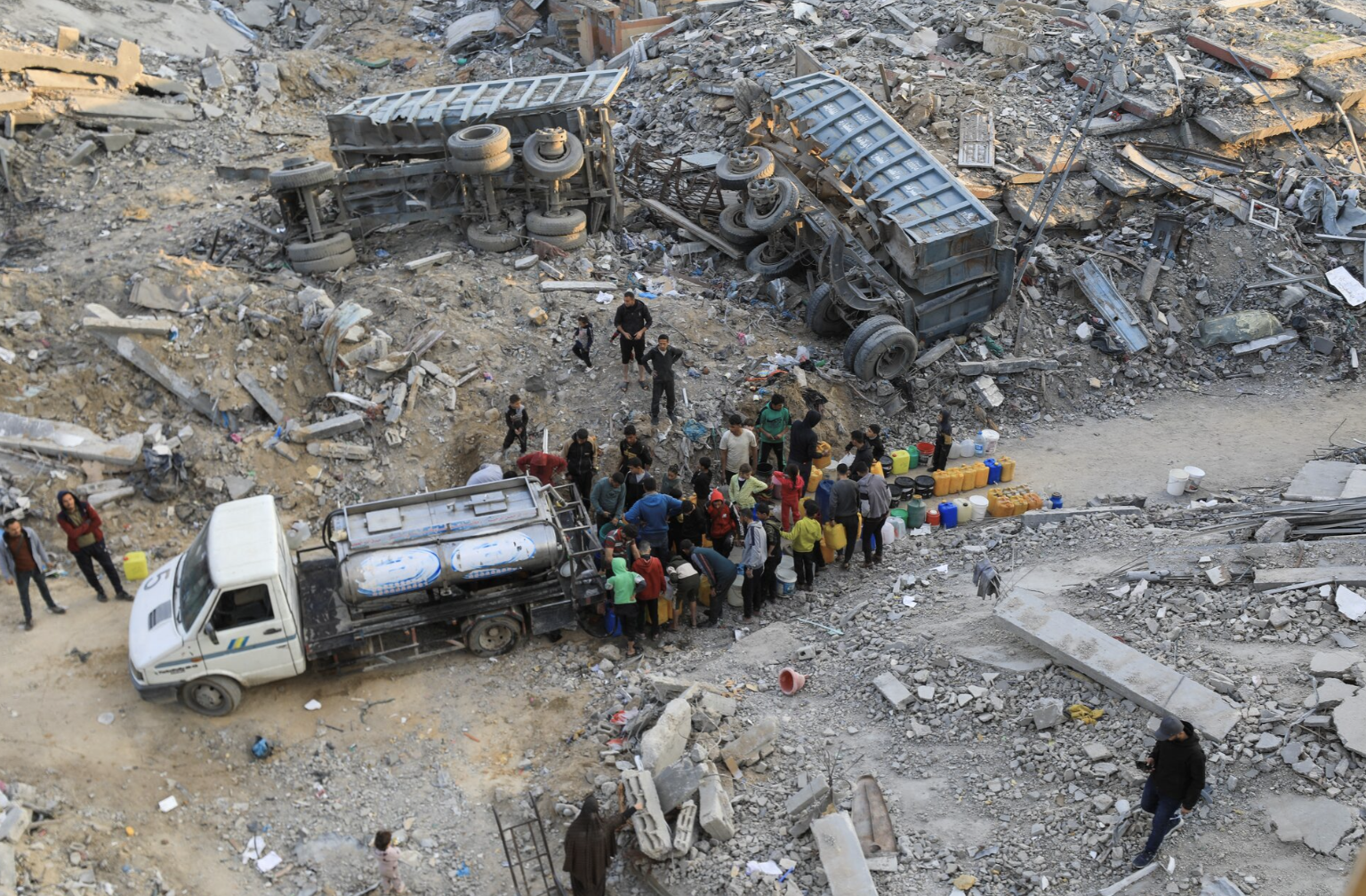
Repairs Blocked
Even after the ceasefire took effect in October 2025, the Israeli Occupation has continued to bomb infrastructure and block repair efforts, preventing any meaningful improvement in Gaza’s water crisis.
During the aggression, Israeli forces seized large swaths of eastern Gaza, leveling entire neighborhoods and their infrastructure in a clear violation of the agreement, while continuing to bulldoze and sabotage along the border areas.
These violations have had a direct impact on Gaza’s water system, as the Israeli Occupation forces block any efforts to repair the war-damaged infrastructure.
The United Nations disclosed that Israeli authorities blocked Palestinian and international maintenance teams from reaching the vital al-Safa wells east of Gaza City on January 19, 2026, halting urgently needed repairs.
The Israeli Occupation has also delayed the entry of spare parts and essential materials needed to rehabilitate damaged networks. As a result, roughly 60 percent of available water is lost through punctured and broken pipes instead of reaching households.
The obstacles go beyond denying access to repair sites. The blockade severely restricts the entry of heavy equipment and technology required to re-drill wells or bring damaged ones back online.
Municipal officials say “Israel” has barred the entry of excavators, bulldozers, and generators needed to operate wells and maintain water lines. Fuel restrictions have further compounded the crisis, sharply limiting municipalities’ ability to run pumps and backup wells that survived the Israeli war.
Gaza City officials say they are operating with “almost no capacity,” facing acute shortages of construction materials and spare parts after most municipal machinery was destroyed during the genocide.
These stopgap measures fall far short of addressing the scale of the damage, leaving large swaths of the Strip subject to repeated water cuts and severe shortages.
Quantity is only part of the problem. The quality of the remaining water has also deteriorated sharply. Most of the few functioning wells now rely on the coastal aquifer, which is already heavily polluted and saline. According to the UN Office for the Coordination of Humanitarian Affairs (OCHA), about 97 percent of its water is unfit for human consumption.
In desperate attempts to secure water, some residents have begun digging shallow, makeshift wells near the coast. The water drawn is often highly saline or contaminated with sewage, a consequence of the destruction of wastewater treatment systems.
Chronic power outages and fuel shortages have made it even harder to run small desalination units or household filtration devices, turning clean drinking water into a rare luxury in Gaza.
International organizations, including the World Health Organization (WHO), warn that the use of contaminated water and the collapse of basic hygiene due to shortages are already fueling the spread of serious diseases. These include acute diarrhea, skin conditions, and respiratory infections, particularly among children.
The Palestinian Water Authority (PWA) estimates the cost of repairing Gaza’s water and sanitation sector at roughly $2.7 billion, stressing the urgent need to allow in heavy machinery and essential materials to begin meaningful reconstruction.
Sources
- Israel using water as weapon of war as Gaza supply plummets by 94%, creating deadly health catastrophe: Oxfam
- Israel Continues to Destroy Water Sources: Civilians Targeted While Digging Well in North Gaza
- Gazans struggle to find water as clean sources become increasingly scarce
- Gaza Humanitarian Response | Situation Report No. 63
- Gaza Faces Unprecedented Humanitarian Crisis as Water Shortages Deepen [Arabic]
- Gaza Municipality: We’re Facing a Severe Water Crisis with Over 75% Shortfall [Arabic]
- 100 days into ceasefire Gaza still deliberately deprived of water as aid groups forced to scavenge under illegal blockade