Investigative Report Triggers Diplomatic Fallout Between Algeria and France
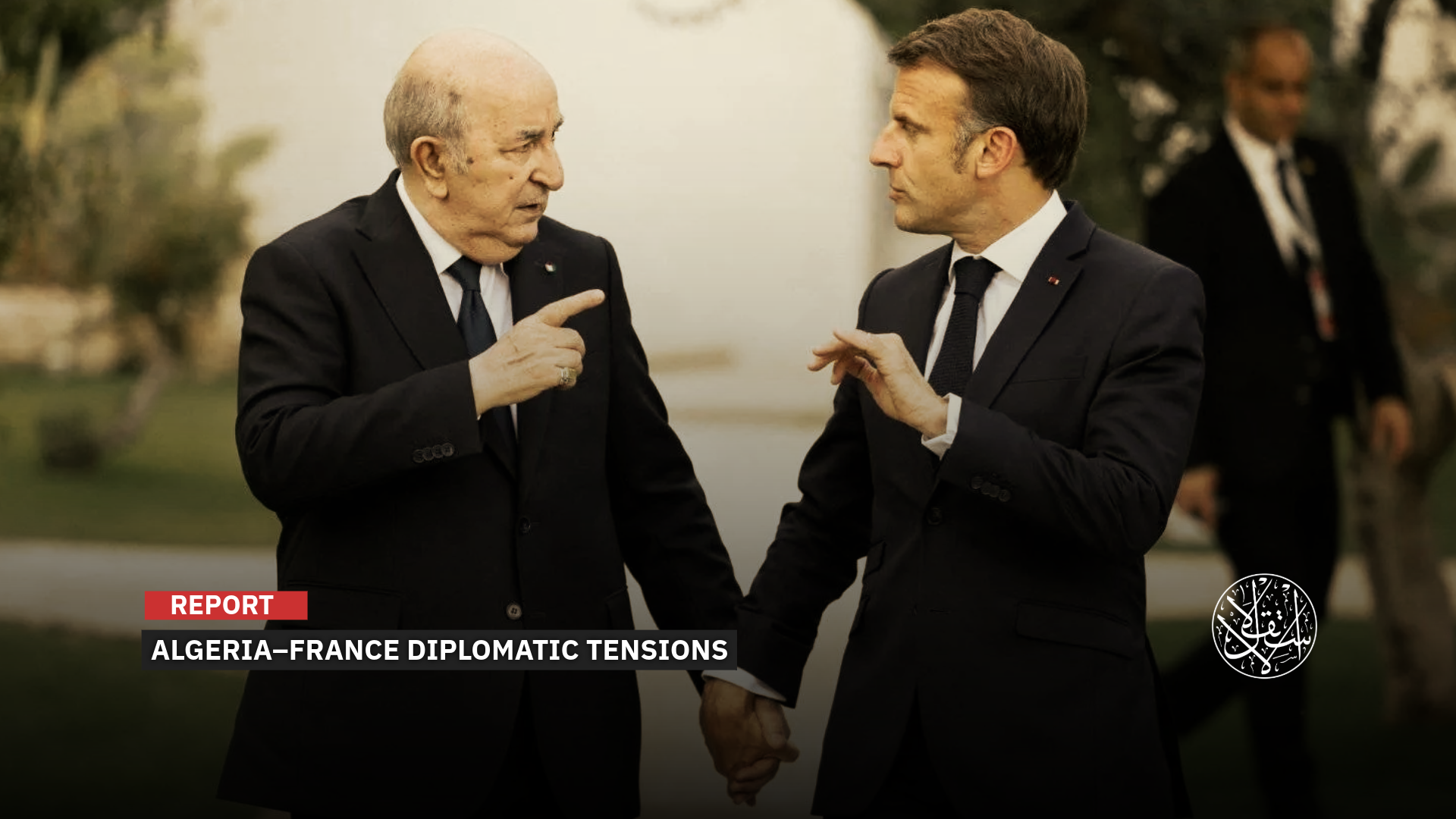
This development comes amid a rising state of tension.
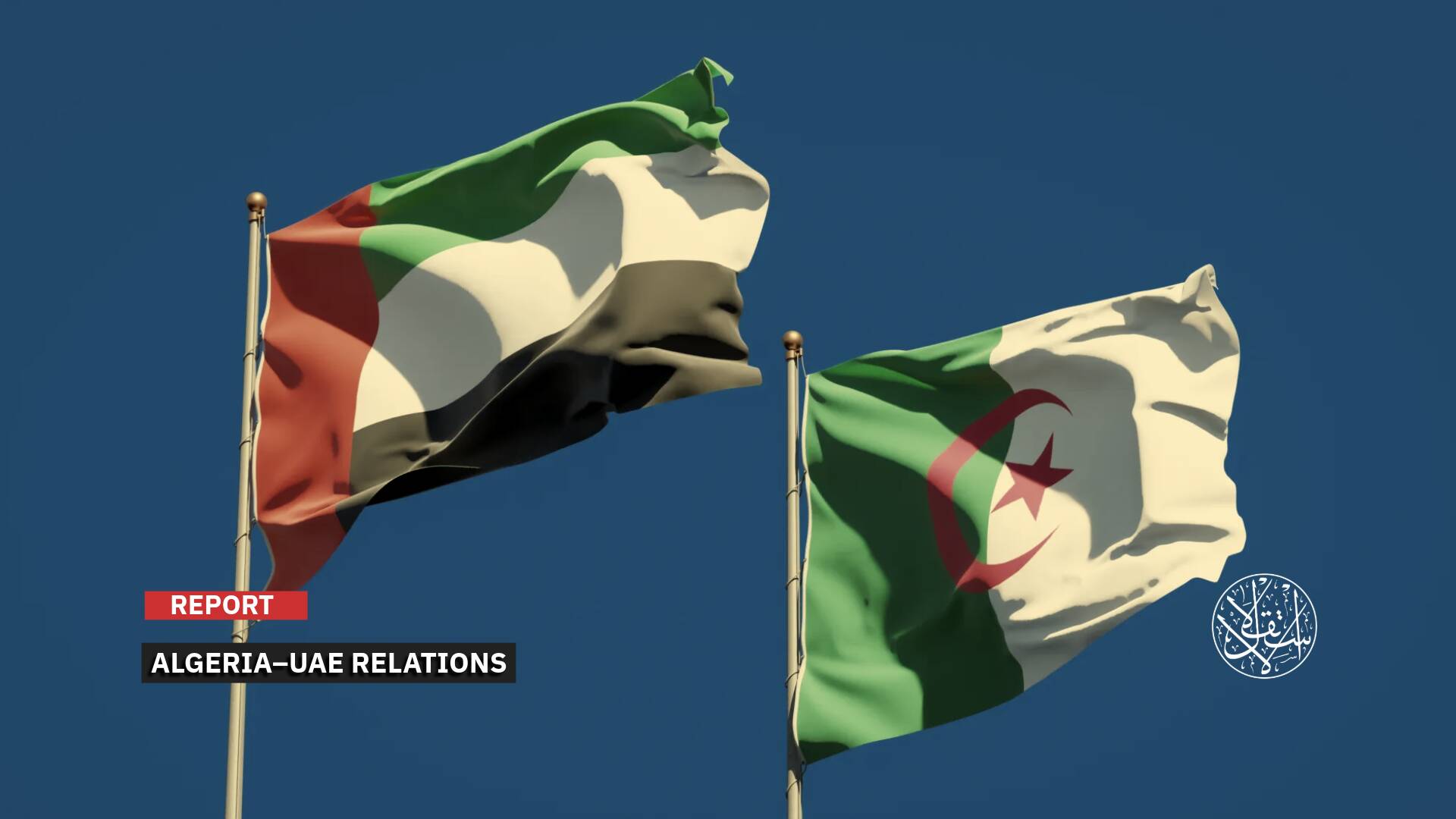
The political and diplomatic crisis between Algeria and France continues, as repeated calls for de-escalation have failed to extinguish the flare-up and ongoing dispute between the two countries.
The latest manifestation of the crisis came on January 24, 2026, when Algeria’s Ministry of Foreign Affairs summoned the acting head of France’s embassy, following the broadcast by the state-run channel France 2 of an investigative report that Algeria described as “offensive to it and to its symbols.”
The report alleged the involvement of Algerian authorities in orchestrating an “attempted kidnapping” of an Algerian blogger living in France, whom Algeria classifies as a “terrorist.”
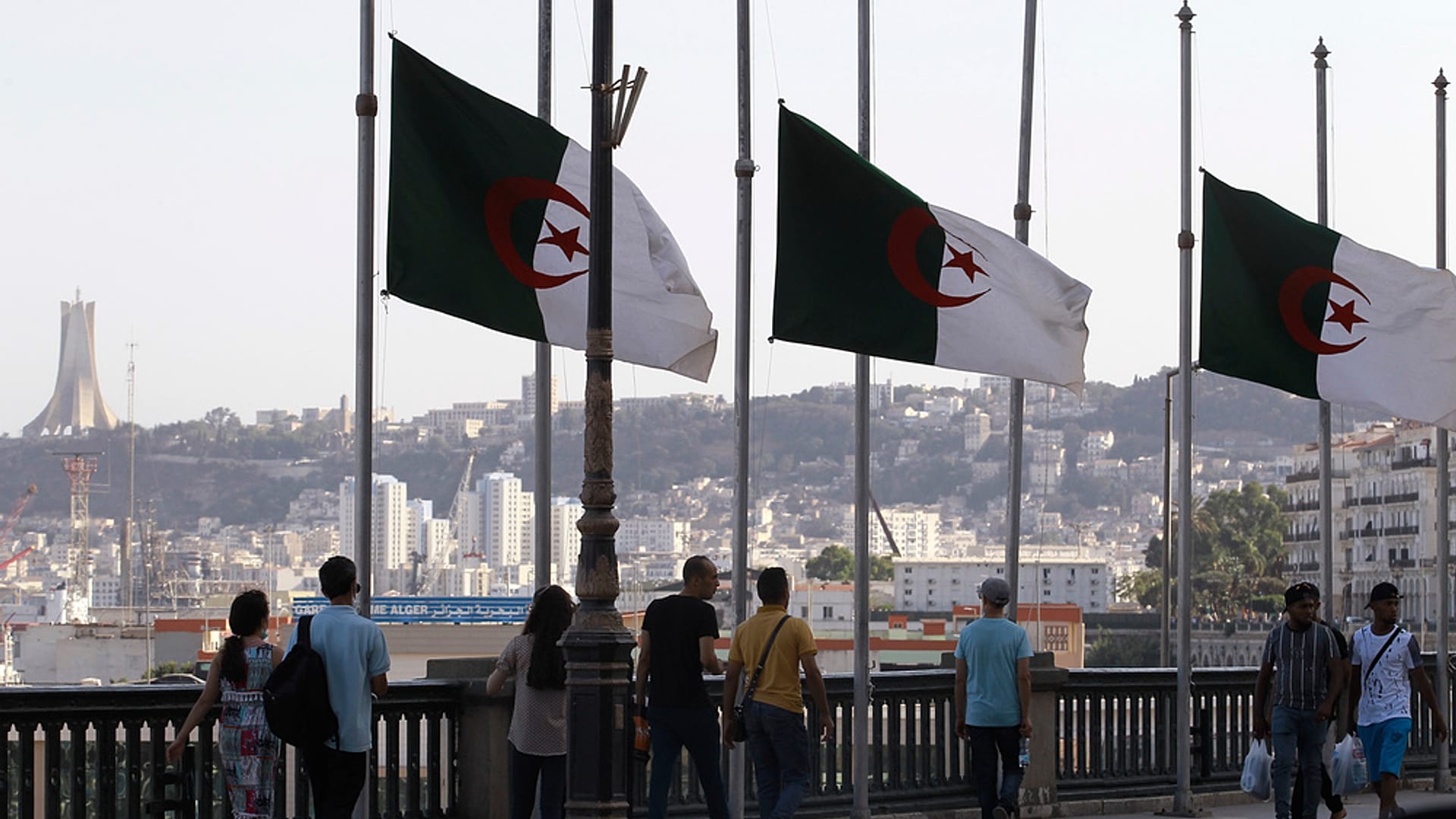
A Dangerous Escalation
In a statement, Algeria’s Ministry of Foreign Affairs said the decision to summon the French diplomat followed the airing of the program, which it viewed as a clear attack on the Algerian state, its institutions, and its symbols.
The ministry held the broadcaster responsible for what it described as “this dangerous escalation.”
The ministry also drew the attention of the acting head of the French embassy to the seriousness of what it called this media attack, arguing that responsibility does not rest solely with the channel that aired the report, but also extends to the official bodies that oversee it.
It added that, contrary to all established diplomatic norms and practices, the involvement of the French embassy in Algiers, and the personal participation of France’s ambassador, in what it described as this offensive media campaign, reinforces the impression that the campaign has the backing of the French authorities.
It said the French channel’s actions represented a new phase in the escalation of what it described as “anti-Algeria practices,” practices that, according to the statement, are overseen by official French circles in order to keep Algerian-French relations in a state of permanent tension.
The Algerian government condemned “in the strongest terms” the program in question and what it said were unacceptable accusations and insults directed at the Algerian state and its institutions.
Algeria’s response toward France has continued to escalate. On January 27, 2026, the state-run Algeria International channel reported that the government had decided to declare the French ambassador in Algiers, Stephane Romatet, a “persona non grata.”
The announcement was made by one of the channel’s journalists, Badis Khenissa, during the weekly program Hebdo Show Algeria.
“I say it, and I repeat it loudly: Ambassador Romatet is not welcome in Algeria, because his behavior does not honor diplomacy or the diplomatic norms observed in every country,” Khenissa said.
If the decision to designate Ambassador Romatet persona non grata is officially confirmed, he would be unable to return to carry out his duties in Algeria, even if diplomatic relations between the two countries were to resume.
In a related development, the Algerian channel also reported another decision taken by the authorities under the principle of reciprocity: the banning of the family of French journalist Christophe Gleizes from visiting him.
Gleizes has been sentenced to seven years in prison after being convicted of collaborating with a terrorist organization.
Journalist Badis Khenissa said, citing sources he described as private, that “the decision came in response to the French authorities preventing the family of the Algerian diplomat, who has been detained since April 2025, from visiting him.”
Direct Targeting
Against this backdrop of rising tension, Algeria’s state news agency accused French public media of conducting an organized campaign against Algeria and of deliberately damaging its image.
The accusation followed the announcement of a new episode of the France 2 program Complement d'Enquete, titled “Rumors and Backroom Blows: The Secret War Between France and Algeria.”
The agency said the title was “sensationalist, a promise of scandal, and above all a new episode in a slide that has become clear and openly declared,” accusing French public media of abandoning basic journalistic standards and embracing “the most extreme and rotten theses of the French far right.”
“It is time to name names and call a spade a spade,” the agency said. “This is neither a journalistic investigation nor balanced media work, but an institution built on systematic disinformation, in which Algeria is turned into an obsessive target and a product for media consumption.”
Relations between Algeria and France have further deteriorated over a series of contentious issues, including the arrest in France of an Algerian consular employee accused of involvement in the abduction of prominent opposition activist Amir Boukhors. That case led to reciprocal expulsions of diplomatic staff.
Tensions were also heightened by the conviction and imprisonment of the French-Algerian writer Boualem Sansal, who was ultimately granted a pardon by President Abdelmadjid Tebboune following German mediation.
In addition, both Algeria and France downgraded their diplomatic representation to the level of charges d’affaires after relations sharply worsened on July 30, 2024, when the French government recognized Morocco’s proposal for resolving the dispute over Western Sahara.
On January 22, 2026, France 2 aired an investigative episode of Complement d'Enquete that alleged the involvement of Algerian authorities in orchestrating an “attempted kidnapping” of an Algerian blogger living in France, whom Algeria classifies as a “terrorist.”
The program claimed that Algerian authorities have turned their diaspora in France into a tool for settling scores with the French state, using members of the community to gather intelligence, including sensitive information and data on political opponents abroad, and to attempt to penetrate decision-making circles.
In this context, testimony from a French-Algerian municipal adviser featured in the same investigation said that Algerian intelligence services had contacted several local officials of Algerian origin through consulates.
The same source highlighted that these officials are reminded of what it described as their duty toward Algeria and their ancestors, a duty that, according to the account, obliges them to support the Algerian narrative, monitor hostile discourse and seek to influence specific positions within political and media circles in France.
The investigation said that refusing to cooperate with Algerian intelligence is not met with neutrality, but can instead be answered with a language of threats and intimidation, ranging from warnings of consequences affecting relatives inside Algeria to administrative and legal harassment.
This, the report stated, was illustrated by a case detailed in a memo from French intelligence services, as cited in the investigative program.
Party Condemnation
Algeria’s rejection of the French investigation was not limited to official circles; it extended to political parties, which criticized what they described as “media campaigns” waged by French outlets against Algeria, arguing that they relied on disinformation and targeted the state, its institutions, symbols, and sovereignty.
In this context, the National Liberation Front (FLN) expressed its strong condemnation of what it described as “systematic hostile campaigns by French public media against Algeria, reflecting involvement in a ‘propaganda war’ that adopts the theses of the far right.”
In a statement on January 24, 2026, the party said that what was broadcast on the French channel did not constitute journalistic work, but had instead become a tool of “deliberate distortion, incitement, and misrepresentation of facts,” exploiting public media to convey what it described as “lies” aimed at undermining Algeria’s sovereignty and institutions.
The party linked these developments to what it called a “state of confusion” within French circles, which, it argued, had yet to understand that Algeria is “a sovereign state with independent decision-making and does not accept tutelage or dictates.”
The FLN also held “official French institutions politically and ethically responsible for this escalation,” and argued that “some actors in France remain trapped in a colonial discourse that has long been outdated.”
Similarly, the National Democratic Rally (RND) said that the French broadcast “falls within the framework of a brazen political smear campaign targeting Algeria, its institutions, and its symbols.”
The party stressed that the broadcast was nothing more than “a directed propaganda exercise, falsely dressed as journalism, designed to justify an outdated and hostile discourse by featuring individuals known for their animosity toward Algeria and their ties to paths that have lost all political and ethical legitimacy.”
The RND also noted that the timing of the broadcast “raises many questions, as it coincided with the same day the National Assembly approved the law criminalizing colonialism.”
It argued that “this reveals the determination of some circles to call upon the same faces, using the same language and the same grudges, in a desperate attempt to reproduce a discourse long surpassed by reality, ever since the era of tutelage was definitively closed.”
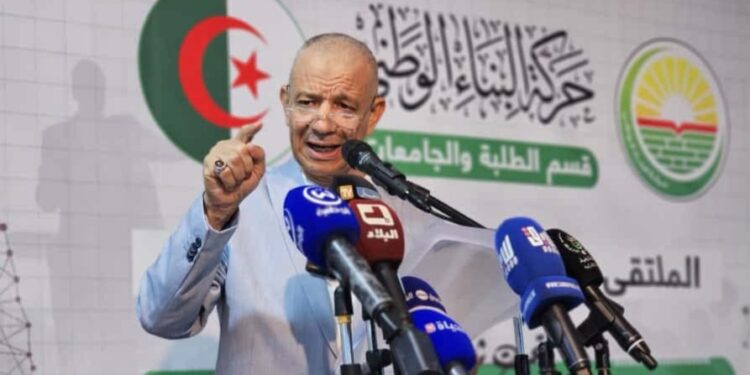
Meanwhile, the National Construction Movement expressed its condemnation of the broadcast, emphasizing that it constituted “deliberate distortion and a blatant attack on the image of the Algerian state.”
The movement said this development comes “amid a rising state of tension in Algerian-French relations, which Algeria has consistently sought to normalize within a framework of sovereignty, respect, and equality.”
It added that the broadcast reflects “recurrent old practices based on deliberate distortion of Algeria’s image and attacks on its symbols, in violation even of the legal standards of French media itself.”
Historical Roots
Political activist Djamel Soualah believes that “the crisis between Algeria and France is not new, but its roots extend back to the 17th and 18th centuries, when the Regency of Algiers was a major naval power in the Mediterranean and engaged in political and military conflicts with European countries, including France.”
Soualah told Al-Estiklal that “France carried out several naval campaigns against Algeria, including the campaigns of 1682, 1683, and 1688,” emphasizing that “all of these campaigns failed to subjugate Algeria.”
He said that this failure generated a French desire for revenge against Algeria, which ultimately culminated in the 1830 invasion, aimed at dismantling an existing state and establishing a replacement, a settler state built on its ruins, meaning that the conflict is one of sovereignty and of religion/civilization.
Accordingly, Soualah said, “France does not consider Algeria merely a political rival, but an Islamic land and a different civilization on the edge of the Mediterranean that must be reshaped. This explains what it did over 130 years, under slogans such as ‘civilizing mission’ and ‘liberating the population from Islam.’”
He added that this included the confiscation of religious endowments, the conversion of mosques into churches and barracks, the suppression of Quranic education, the marginalization of the Arabic language, and the promotion of Christianization, citing many and varied examples.
The political activist argued that “the current conflict is not a matter of administration, but one of identity and religion, taking different forms at each stage while pursuing the same objective.”
Accordingly, he believes that “these wounds will not be healed by apology, compensation, or justice.” Still, he added that a political truce between the two countries is possible, ambassadors could return, and bilateral interests might resume. However, he cautioned, “This would not be peace, but crisis management.”
“The investigation aired by France 2 is not purely journalistic, but rather an extension of a historical struggle and a message of pressure aimed at bargaining,” Soualah concluded.
Sources
- National Liberation Front Condemns Hostile French Media Campaigns Against Algeria [Arabic]
- RND Responds to French Channel “Investigation”: Blatant Political Smear and Assault on National Sovereignty [Arabic]
- National Construction Movement Condemns What It Describes as French Media Targeting of Algeria and Its Symbols [Arabic]
- Tensions Rise Between Algeria and France: Western Sahara and Opposition at the Heart of the Crisis [Arabic]