Why Moroccan Universities Are Rejecting Akhannouch’s Law After Parliamentary Approval
The bill threatens to roll back public university achievements and undermine their social and academic mission.
Amid mounting anger from labor unions and growing opposition from academics and political actors in Morocco, the government of Aziz Akhannouch pushed through a law reshaping higher education and scientific research.
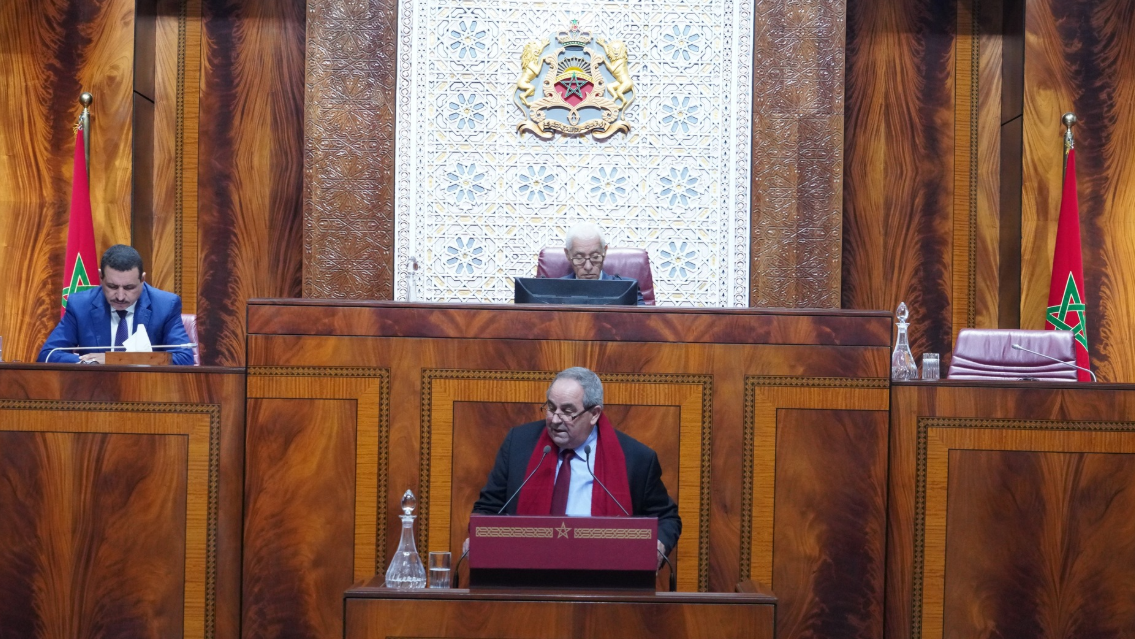
The lower house of parliament approved Bill 59.24 on higher education and scientific research during a legislative session on January 20, 2026, following its passage by the upper house on December 17, 2025, and its earlier adoption by the cabinet on August 28, 2025.
Critics say the law was adopted without any meaningful consultation with stakeholders or actors in the sector. They argue it sidelines the need to strengthen scientific research while advancing proposals that would open the door to privatization and greater control by capital, at the expense of vulnerable and marginalized groups.
Staffing Under Strain
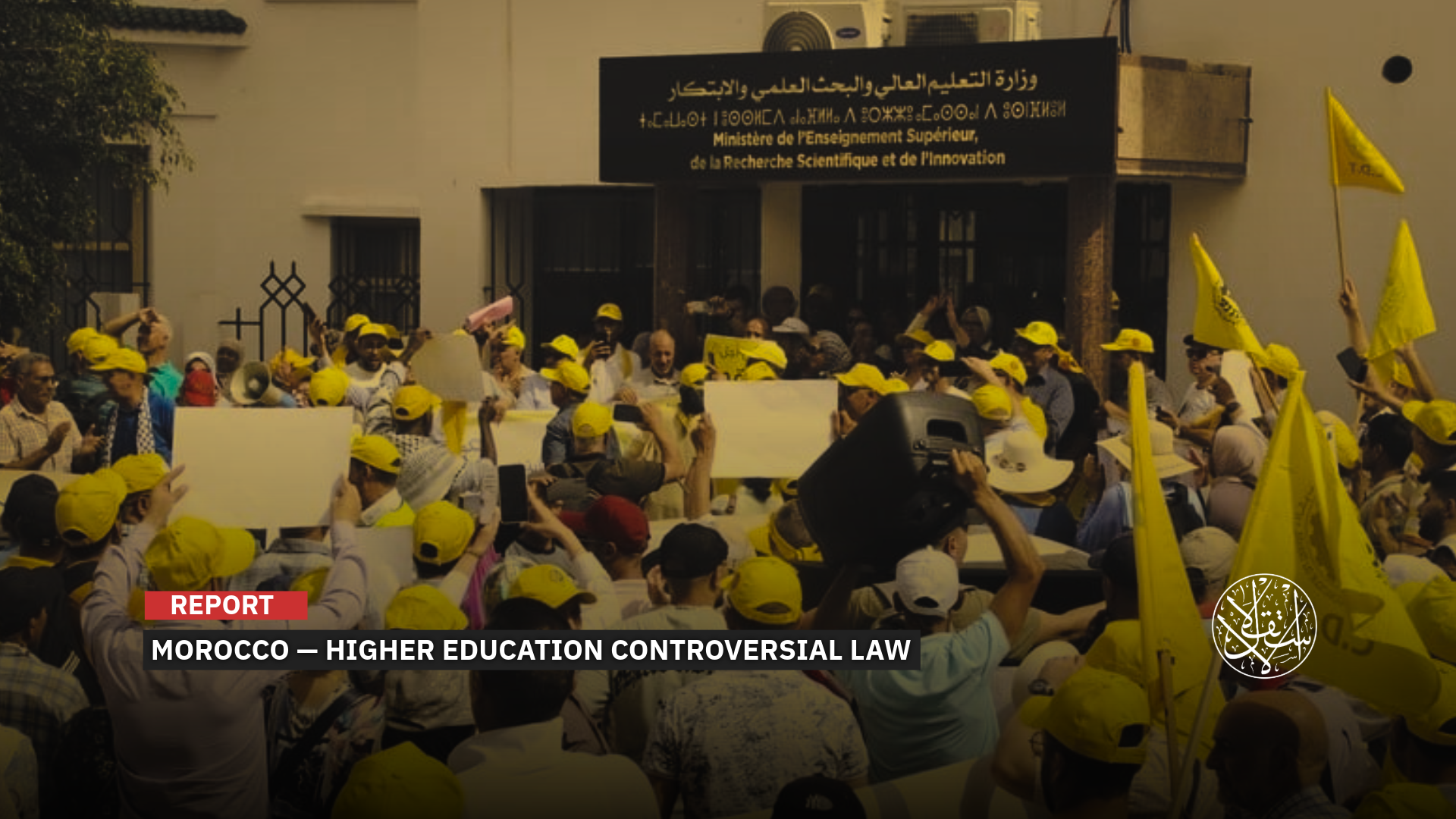
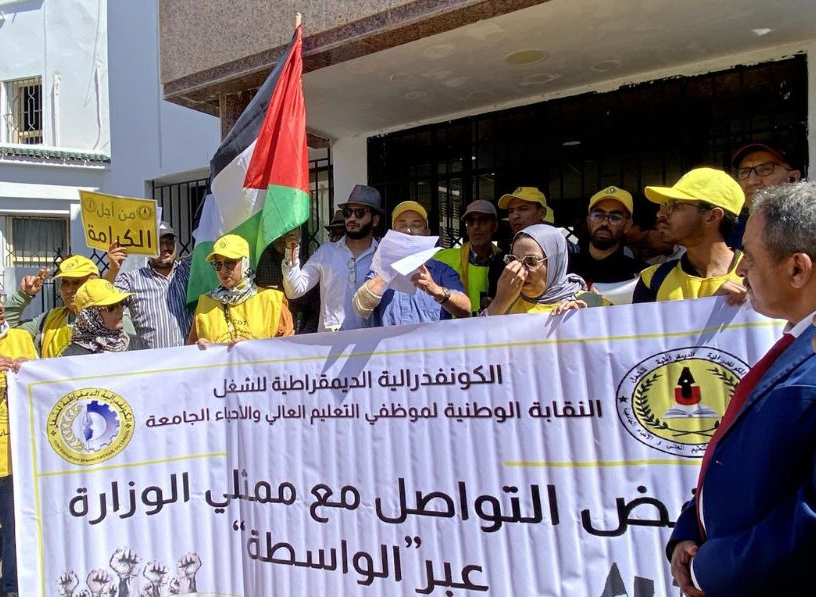
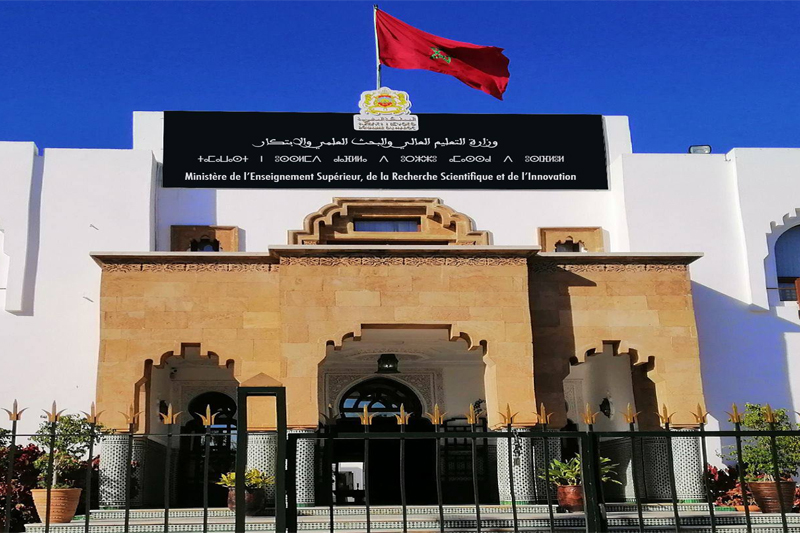
Some of the sharpest criticism has focused on what unions describe as the targeting of employees within the Ministry of Higher Education, Scientific Research, and Innovation. In response, the National Union of Higher Education and University Housing Employees (SNAFESCU) held a nationwide strike on January 20, 2026.
According to the local outlet I3lam TV, the SNAFESCU accused the ministry of backtracking on previous commitments to establish a fair employment framework governing workers’ conditions in the sector. It also condemned what it called deliberate stalling, the absence of dialogue, and the ministry’s refusal to meet with staff representatives to discuss the fate of the long-awaited statute.
The SNAFESCU warned that vague language in the current law could negatively affect the legal and professional status of university employees, stressing that the strike marked only the first step in an open-ended campaign if uncertainty and stalled dialogue persist.
Days later, the SNAFESCU staged a nationwide strike across Moroccan universities on January 22, shutting down public higher education institutions and research centers.
In a statement, it said the action was taken in defense of the public university, to safeguard existing gains, and to protest what it described as a lack of seriousness in social dialogue. The strike included a boycott of teaching activities, practical and scientific work, and internal meetings across higher education and research institutions, while excluding exams, conferences, and previously scheduled academic events.
The SNAFESCU reiterated its rejection of the higher education law, warning that it poses real risks to the identity of the public university and threatens its principles of independence and free access, while paving the way for privatization and a rollback of long-standing achievements in public higher education.
Key Observations
In his assessment of the bill and its latest developments, former labor minister and university professor Abdul Salam Siddiqui said the higher education and scientific research law has triggered genuine protests from faculty members and student organizations.
Speaking to Al-Estiklal, Seddiqui criticized what he described as the absence of consultation and dialogue with those most directly affected, namely professors and students, and the rushed adoption of a strategic law during a holiday period.
He also took aim at the growing privatization and commodification of public higher education, as well as a retreat from democratic governance through the expanded use of direct appointments to leadership positions. The minister, he said, had managed one notable achievement by uniting broad opposition to the project.
Seddiqui stressed that the issue is far too important to be handled solely by technical staff within the ministry, as it concerns the future of young people and the country’s development, and because the university is a core societal issue of the highest importance.
“The ministry should have launched broad consultations on the bill and revised it in line with the 2015–2030 strategic vision for education and Framework Law No. 51‑17 on the education, training, and scientific research system, which remains in effect,” he said.
“The ministry also ignored all recommendations issued by a constitutional body of experienced professionals,” Seddiqui added, referring to the opinion released in mid-2025 by the Higher Council for Education, Training, and Scientific Research (CSEFRS).
The university professor warned that the scale of rejection alone should have been enough to halt the law, saying no one is prepared to accept what he called “a farce.” He praised the decision by the national bureau of the SNAFESCU to refuse any meeting with the minister unless the bill is withdrawn and returned to the table for discussion.
Relying on the Majority
Mohammed bin Messaoud, a member of the SNAFESCU’s national bureau, said the way the bill was drafted and pushed through parliament reflects what he called a reliance on sheer numerical majority, an approach the government has previously used in other education-related laws.
Speaking to The Voice on January 18, 2026, bin Messaoud said the method signals failure in both outcome and purpose, arguing that laws imposed from above do not generate the mobilization or engagement needed for success.
He said the government and the Ministry of Higher Education deliberately excluded professors and students from taking part in shaping the bill, insisting on handling what he described as a strategic reform alone. That approach, he argued, represents a clear violation of the constitutional principle of participatory governance and has resulted in a top-down law imposed on the academic community.
At the parliamentary level, bin Messaoud said all proposals and demands put forward by the opposition were rejected, with the exception of a few procedural remarks. He noted that debate and voting sessions, particularly in the lower house, were marked by systematic refusal without justification, with the supervising minister responding simply that proposals were rejected.
Bin Messaoud said the law itself threatens to wipe out what remains of the Moroccan people’s achievements in public universities and research.
He warned the law threatens university independence and academic freedom by installing a centrally appointed oversight council over university councils, eroding their authority and cutting the number of elected faculty members, reflecting a security-driven, controlling mindset.
Bin Messaoud also criticized what he described as an erosion of free public education through the formalization of so-called facilitated education, which he argued in practice restricts lifelong learning opportunities, undermines equal access, and excludes large segments of society who cannot afford to continue their studies, in contradiction with the constitution.
He said the new law hands a strategic sector like higher education bluntly to domestic and foreign capital, dealing a direct blow to the public university, and argued that this shift reflects compliance with the demands of international financial institutions, particularly the World Bank and the International Monetary Fund.
Bin Messaoud also pointed to the absence of any clear government commitments on public funding for universities, forcing institutions to seek financing in an environment governed solely by profit logic.
He criticized what he saw as further fragmentation of the higher education system, split between universities, sectoral programs, non‑university tracks, private institutions, and non‑profit partners, arguing that this approach runs counter to successful global models.
“The law strips the university of its ethical and civic mission,” Bin Messaoud warned, noting that references to faith and Islamic values were removed from the text compared with the previous higher education law.
Key Legal Aspects
Presenting the bill to parliament on January 20, the Minister of Higher Education, Scientific Research, and Innovation, Azzedine el-Midaoui, said the text was drafted with complete neutrality and without any ideological considerations.
El-Midaoui said the primary aim of the law is to rehabilitate the higher education system and create the conditions for a university of the future capable of keeping pace with major transformations and developments.
He maintained that the amendments introduced to the bill were made through a participatory approach, noting that 52 amendments were accepted in the lower house and 22 in the upper house.
The minister noted that lawmakers from both the majority and opposition contributed to the debate, arguing that disagreements over rejected amendments reflected either overlap with other provisions or differing interpretations of the law’s core.
Regarding changes introduced by the upper house, el-Midaoui said they were largely limited to minor legal matters, including linguistic and structural revisions, as well as what he described as a positive response to demands raised by labor union representatives.
Since the government passed the higher education and research bill, opposition in Morocco has been widespread, with political parties, especially in the opposition, voicing strong criticism.
Abdeslam el-Aziz, secretary general of the Federation of the Democratic Left Party (FGD), warned the bill could weaken public universities’ independence and social role rather than deliver meaningful reform.
Speaking at a press conference on December 24, 2025, el-Aziz said the bill reflects broader political and economic choices and warned it risks stripping universities of their democratic character and limiting their role as independent spaces for knowledge and critical thinking.
He warned that the new bill would threaten the achievements of public universities and undermine their social and academic mission.
El-Aziz also focused on changes related to university governance, arguing that restructuring management bodies in ways that reduce the powers of elected academic councils while expanding the role of entities that include actors from outside the academic field constitutes a fundamental breach of institutional independence and reinforces administrative control at the expense of academic freedom and internal democracy.
He further criticized the approach to financial autonomy, warning that linking university funding to performance contracts and market‑driven targets threatens research stability and education quality while introducing a profit‑driven logic into a public institution.
Batoul Abladi, a member of the Justice and Development Party’s (PJD) parliamentary group, warned that the broad rejection of Bill 59.24 on higher education and scientific research will deepen the crisis of trust between the supervising ministry and its reform partners, particularly university professors.
Speaking at a House of Representatives committee debate, Abladi said that deepening the trust deficit would sabotage any reform efforts, especially as the bill ignores the demands of university faculty.
She argued that the proposed law diminishes the role of university professors and academic researchers, subjecting them to considerations that run counter to the standards of scientific research and the university’s core mission of knowledge production and dissemination.
Abladi accused the government of consistently manufacturing crises, turning a deaf ear to warnings and criticism, and ignoring opposing voices.
She highlighted opposition concerns that university councils are being reduced to advisory or executive roles, their decision-making powers cut and placed under the authority of the so-called board of trustees.
The lawmaker added that university councils would be formed in a way that favors appointment over election, without any legal or institutional guarantee that their leadership would be held by an academic figure with genuine ties to the university or the research community.
Sources
- University Official: Government Used Its Majority to Push Through Law Threatening University Independence [Arabic]
- Tension at Universities and Dorms: Higher Education Staff Escalate Pushback Against the Ministry [Arabic]
- After 25 Years, Bill 59.24 Opens New Horizons for Universities [Arabic]
- National University Strike on January 22 Protests Higher Education Law [Arabic]