The Post-SDF Militia Phase: How Damascus Is Leveraging Its Relationship with Moscow to Consolidate the State
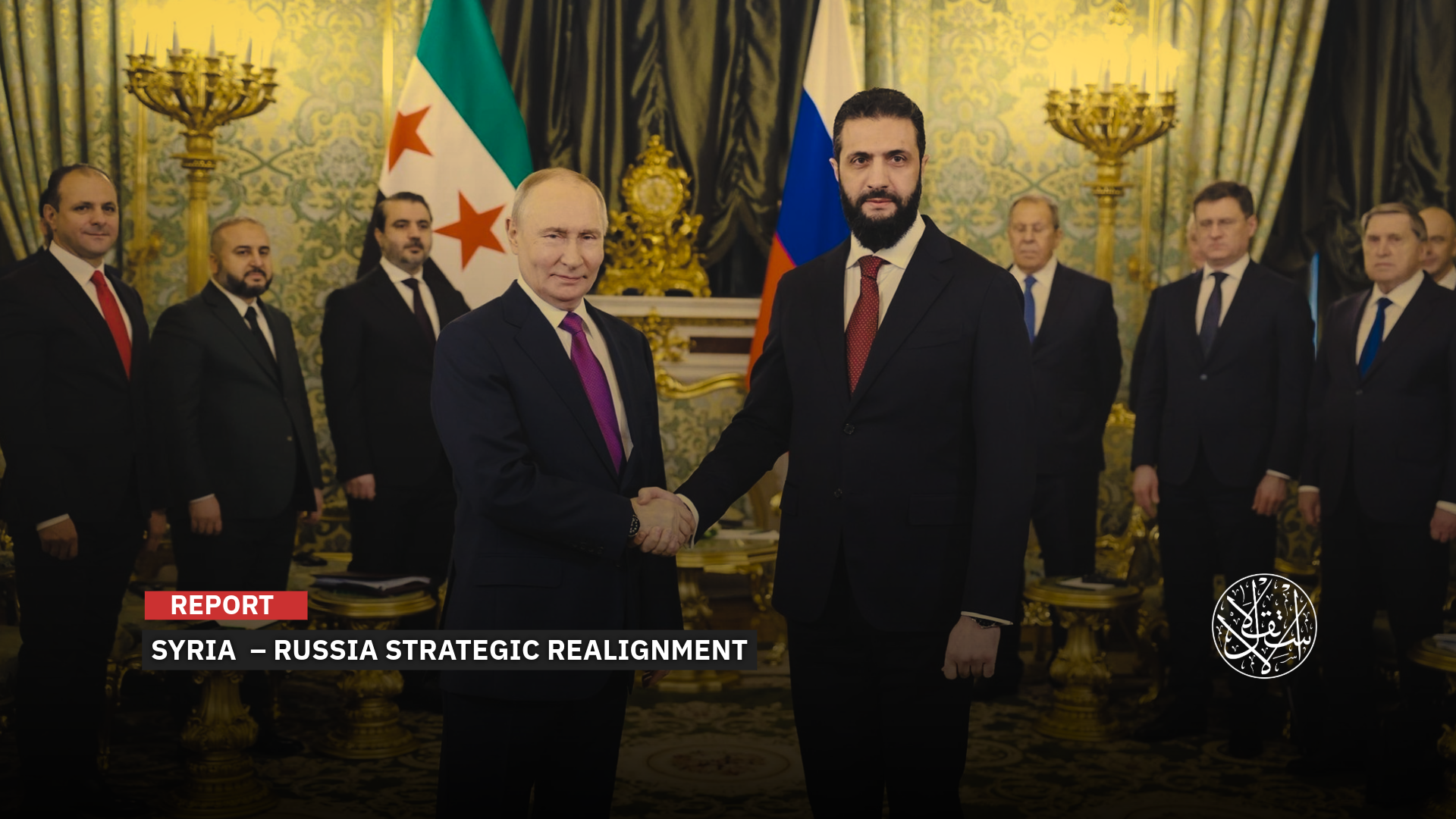
Russia appears keen to leverage the post-SDF militia phase to strengthen its economic influence in Syria.
The second visit by Syrian President Ahmed al-Sharaa to Russia, and his meeting with President Vladimir Putin, underscores that Moscow remains a key player in the Syrian landscape, and that its role is not limited to the political sphere alone.
It extends to issues of security and stability, energy, and the reshaping of regional balances.
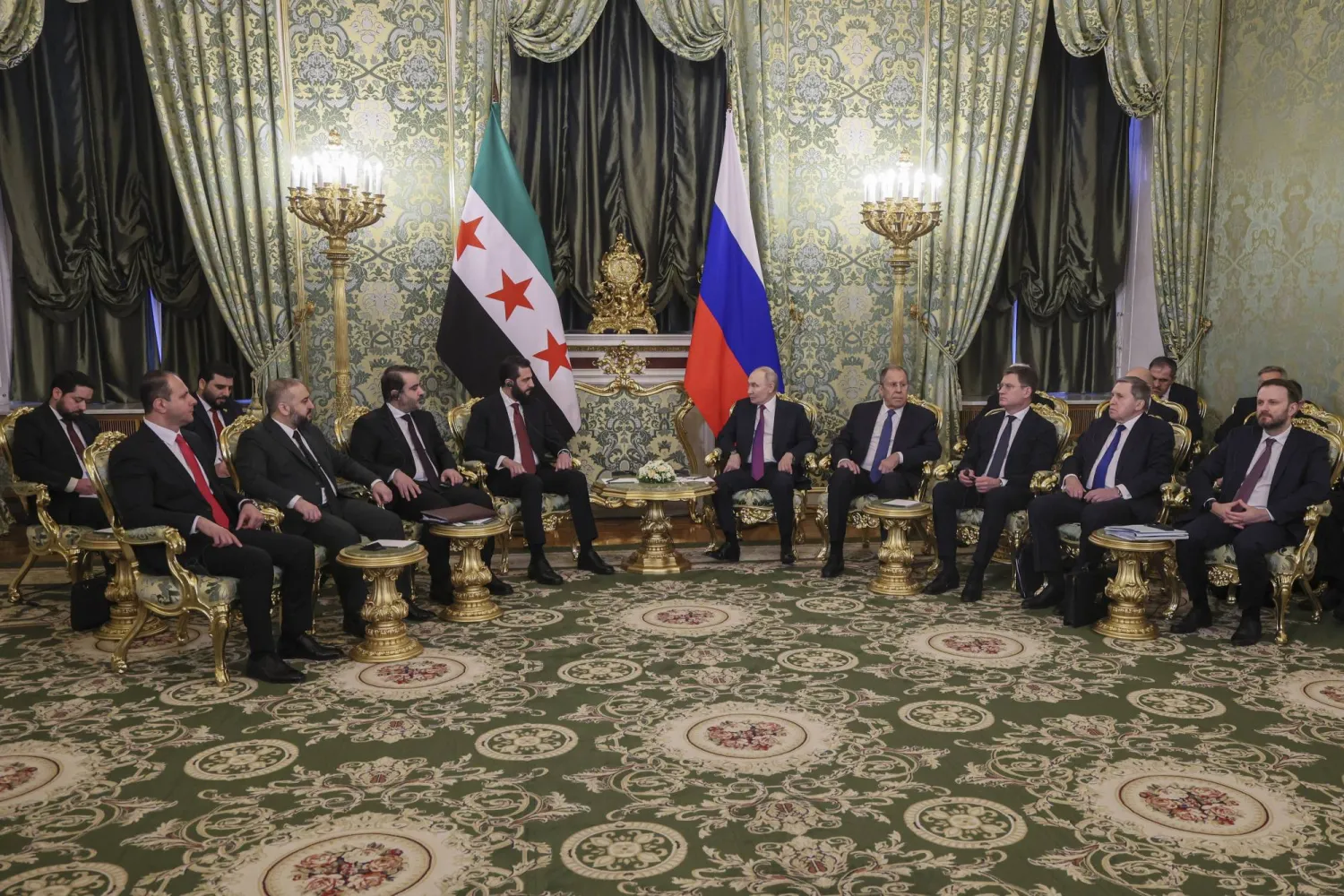
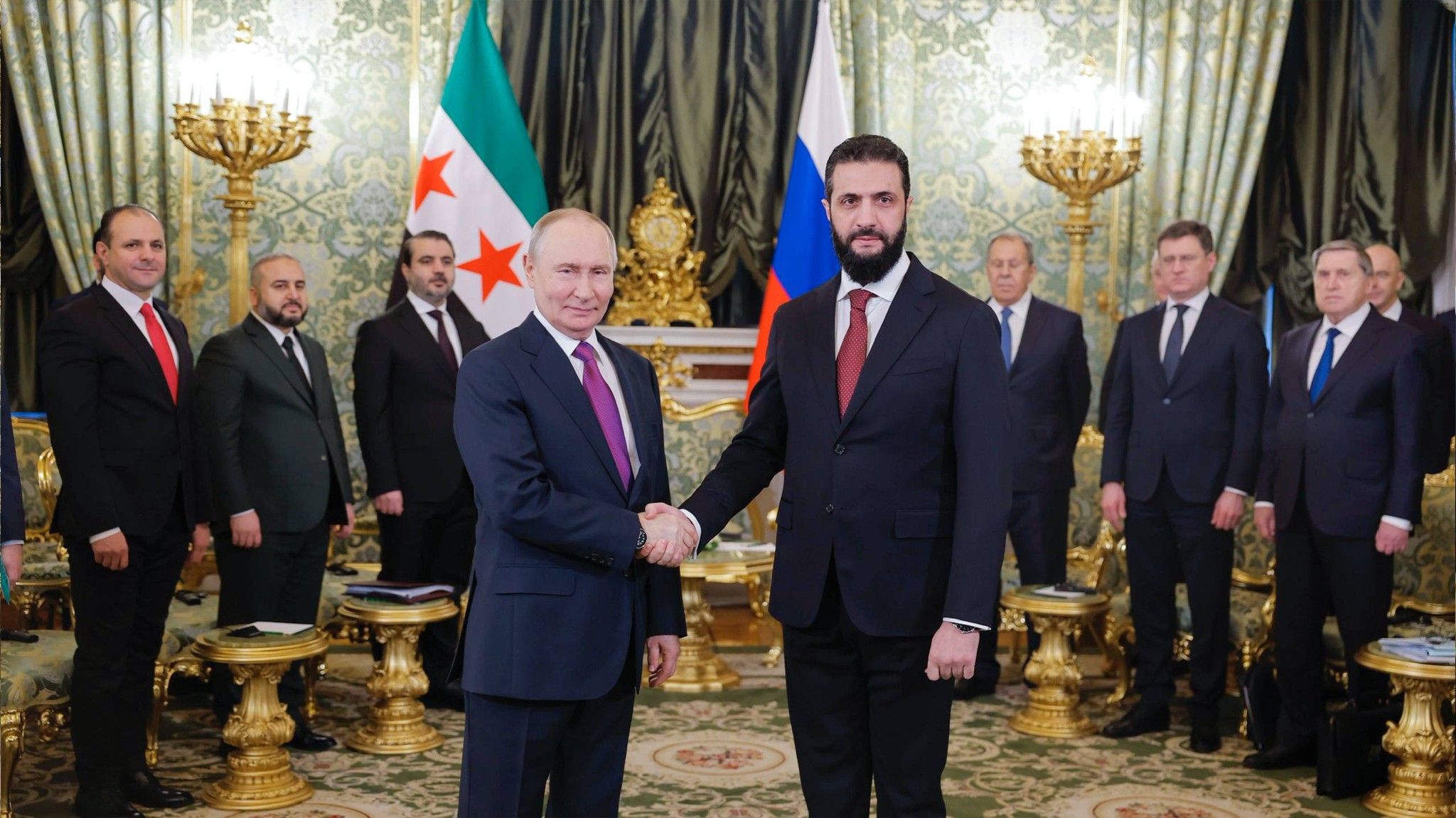
Syrian President Ahmed al-Sharaa arrived in Moscow on January 28, 2026, where he met Russian President Vladimir Putin at the Kremlin.
The two leaders discussed bilateral relations as well as shared political, military, and economic files between the two countries.
Multiple files
Syrian President Ahmed al-Sharaa said during his meeting with Russian President Vladimir Putin in Moscow that his country had managed over the past year to overcome many obstacles, the latest of which was the challenge of unifying Syrian territory.
Al-Sharaa added, “I am very happy with this second visit, and I believe this is the 13th visit held between Russian and Syrian delegations since last year,” noting that Moscow’s positions over the past year had supported the unity of Syrian territory.
The Syrian president stressed that his country “is playing a historic role in the unity and stability of the entire region,” expressing hope that these efforts would continue in a way that helps move the Middle East “from a state of ruin and destruction to a state of stability and development.”
For his part, Russian President Putin said, “We are pleased to see you again in Moscow,” noting that the period following their previous meeting had witnessed significant efforts to reactivate bilateral relations, particularly in the economic sphere.
Putin recalled the historical roots of relations between the two countries, explaining that Syrian-Russian ties date back to 1944, when the Soviet Union and Syria signed cooperation agreements during World War II.
“Under the new circumstances, and thanks to your personal efforts, Russian-Syrian relations are developing. There are many files under discussion, and ministries and agencies in both countries are working successfully,” Putin added.
The Russian president affirmed his country’s intention to increase the volume of trade with Syria and raise the level of cooperation across various fields, noting that economic exchange had recorded growth of 4.5 percent in the past period, with a shared desire to increase this rate in the future.
Putin also announced Moscow’s readiness to contribute to Syria’s reconstruction, stressing that Russian companies in construction, energy, and infrastructure are prepared to work inside the country, particularly on strategic projects related to electricity, water, and industrial facilities.
“We are closely following your efforts aimed at restoring the integrity and unity of Syrian territory. We congratulate you on the success of this process and its accelerating pace, and we fully support it,” he continued.
Putin concluded by saying, “I hope that the return of eastern Euphrates areas to the embrace of Damascus will be an important step in this direction, contributing to the completion of Syria’s territorial unity.”
This marks President al-Sharaa’s second visit to Russia since assuming power following the ouster of Bashar al-Assad’s regime, after a first visit that took place in mid-October 2025.
The Post-SDF Militia Phase
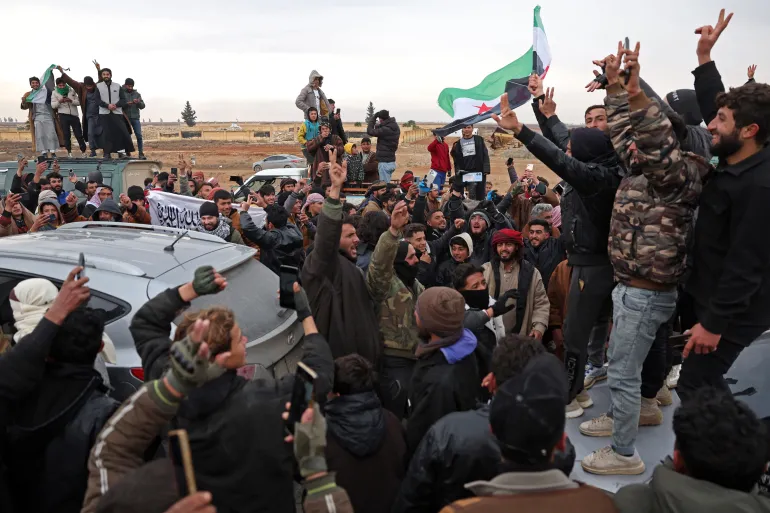
President Ahmed al-Sharaa’s visit to Russia came amid notable field developments in northern and eastern Syria, particularly after the Syrian army regained large areas that had been under the control of the Syrian Democratic Forces militia (SDF) in the provinces of Aleppo, Deir ez-Zor, and Raqqa.
The SDF influence has since been reduced to a limited number of cities within Hasakah province in the east of the country, in parallel with the start of a 15-day deadline for integrating the SDF forces into Syrian state institutions.
The visit signals a shift in Syrian-Russian relations toward a more pragmatic phase, now directly governed by the new balance of power on the ground, rather than by the traditional alliance formulas that prevailed in previous years.
The timing of the visit carries particular significance, as it came just two days after Russia’s rapid withdrawal from Qamishli Airport in northeastern Syria, following the expansion of Syrian army control over large areas in that geography and the expulsion of SDF militia forces from them.
Sources reported that the evacuation of the airport was carried out at Damascus’ request, as part of a Russian redeployment toward its main bases, notably the Hmeimim Air Base in the Latakia countryside and the naval base in Tartus.
On January 27, 2026, Russia withdrew equipment and forces from Qamishli Airport, which it had used as a military base since 2019 within SDF-militia-controlled areas, a move that reflected a practical shift in Moscow’s approach to its military presence in northeastern Syria.
Notably, the two presidents did not publicly address the issue of the Russian military presence, despite earlier statements by Kremlin spokesman Dmitry Peskov confirming that the talks would include “the matter of the presence of Russian forces in Syria.”
The future of that presence remains unclear, despite media reports pointing to a Russian role in southern Syria, focused on managing tensions between Syria and “Israel” along the border.
Observers believe Moscow views al-Sharaa’s visit as an opportunity to entrench the contours of a new relationship with Damascus that aligns with Syria’s evolving political and field realities, while preserving Russia’s military and economic interests and strategic influence in the country.
Against the backdrop of declining Russian influence in the Middle East following the ouster of Bashar al-Assad’s regime, President Vladimir Putin is seeking to secure the future of the naval base in Tartus and the air base in Hmeimim, Russia’s only two military sites outside the former Soviet space, under Syria’s new authorities.
On this basis, Moscow no longer views Damascus merely as a military ally, but as a political partner working to consolidate state unity and reshape the security landscape in a way that curtails the roles of rival local actors, foremost among them the SDF militia.
The most prominent shift lies in the redeployment of the Russian military presence, as demonstrated by the swift withdrawal from Qamishli Airport at Syria’s request, signaling a practical Russian acknowledgment of the Syrian state’s growing ability to manage reclaimed areas without the need for direct Russian deployment across multiple fronts.
In return, Moscow seeks to preserve its strategic influence by reinforcing its presence at Hmeimim and Tartus, and by entrenching its role as a security guarantor in southern Syria, particularly in managing tensions with “Israel.”
At the same time, Damascus is working to translate this field shift into strategic gains by granting Russia a significant share in reconstruction, energy, and infrastructure projects, in exchange for continued Russian political and military support.
Moscow appears keen to invest in the post-SDF militia phase to strengthen its long-term economic influence, tying Syria’s stability to the reassertion of Russia’s role as a consequential regional power in the Middle East.
Accordingly, Syrian-Russian relations can be said to have entered a new phase, built on a formula of “sovereignty in exchange for partnership,” amid a field reality that points to the retreat of parallel actors and the rise of the Syrian state as the sole player in areas that were previously beyond its control.
Shared Actors
In this context, Syrian political researcher Ammar Jallou told Al-Estiklal that President Ahmed al-Sharaa’s second visit to Russia was unscheduled and unannounced in advance, lending it particular significance, especially given the rapidly unfolding field developments in Syria related to national reunification and the extension of state sovereignty.
Jallou explained that Syria’s internal situation, particularly recent events in the northeast and central parts of the country, and the expansion of state control over those areas, formed one of the core axes of discussion, given their potential repercussions for other parts of Syrian geography, whether in the south or even along the coast.
He noted, however, that Russia had previously been an active player in those regions.
He pointed out that Russia’s role in southern Syria has relatively declined as a result of indirect understandings between Paris, Damascus, and “Tel Aviv” under U.S. sponsorship, but that Moscow remains a candidate to assume a certain role, possibly linked to border files and managing tensions.
Jallou said the Russian role could contribute to extending state sovereignty in southern Syria and closing the Sweida file, whether through regional or international arrangements, suggesting that Moscow is likely to play a part in this framework.
Another axis of discussions between Damascus and Moscow, according to Jallou, concerns the Syrian coast, particularly the issue of restoring fragile security stability, amid circulating media reports about activities by remnants of the defunct al-Assad regime aimed at creating security disruptions or even attempting to regain control over parts of the coast.
Jallou added that this file requires a firm stance from Moscow against supporting figures of the former regime, noting that a Russian commitment to this position could prove decisive in strengthening stability and resolving the issue.
In this regard, Reuters cited an unnamed Syrian official as saying that President al-Sharaa, during his new visit to Moscow, is seeking Russian guarantees that senior al-Assad loyalists and former army officers who fled to Russia will not be allowed to use their safe haven to finance or organize armed attacks against the Syrian state, particularly in coastal areas.
On the economic front, and after years of control by the SDF militia over Syria’s most significant oil fields, the new Syrian state has, since January 18, 2026, managed to reassert control over an important portion of this strategic wealth, in a notable development that has brought the energy sector back to the forefront as production resumes.
The pumping of oil from liberated fields in the provinces of Deir ez-Zor, Raqqa, and Hasakah to refineries marked a step with deep economic and political significance, extending beyond its technical and operational dimensions and reflecting a shift in the balance of control over natural resources.
In this context, the Syrian army’s field advances were not limited to changing maps of territorial control, but also contributed to redrawing the equation of influence over natural wealth, opening the door to a new phase centered on rehabilitating oil fields and attempting to revive an exhausted economy, despite ongoing technical and investment challenges.
According to Jallou, the Syrian government at this stage is seeking to diversify sources of investment, and Russia may be granted a significant share in reconstruction projects, based on the historical relationship between the two countries and the military and technical infrastructure tied to Russia for decades, particularly in the fields of energy, industry, military training, and spare parts for major sovereign facilities.
Jallou stressed that Syria attaches special importance to the energy sector, and that Russia is capable of contributing to its development, particularly in the northeast, where resources are concentrated.
He noted that Moscow, given its influence in global energy markets, is a key player in investments and projects linked to this sector.
Jallou also pointed out that one of the most important elements in the new Syrian leadership’s approach is an emphasis on avoiding alignment with international or regional blocs, and on pursuing balanced relations with the United States, relations that are witnessing rapid development, alongside efforts to move beyond the bloody legacy of Moscow’s support for the al–Assad regime.
Jallou argued that the evolution of Syrian-Russian relations has become a general international track no longer tied to a specific political system, a reality that was reflected in al-Sharaa’s first visit to Moscow.
Among other files of interest to Damascus, according to Jallou, is food security, an area in which Russia has provided support in recent years, both under the former regime and in the current phase.
At the regional level, Jallou noted that talk of a potential strike against Iran, whether by “Israel” or the United States, individually or jointly, adds a new layer of complexity to the regional landscape, with possible repercussions for Syria as a geographic and political link between Iran and Lebanon.
He concluded by saying that these files are likely to feature prominently in the Moscow talks, alongside discussions of Russia’s vision for the need to avoid turning Syria into an arena for settling others’ scores, whether internally or through regional conflicts that undermine its stability.
Sources
- Putin Receives al-Sharaa as Russian Military Presence in Syria Tops the Agenda [Arabic]
- Al-Sharaa and Putin Stress Syrian Territorial Unity from Moscow [Arabic]
- Three Tankers Carrying Crude Oil, Diesel, and Gas Arrive in Syria from Russia [Arabic]
- Over 74 Hours and 600 Documents Reveal Former Regime Loyalists’ Efforts to Destabilize Syria [Arabic]