‘Defend Yourselves’: The Key Pillars of America’s New Military Strategy
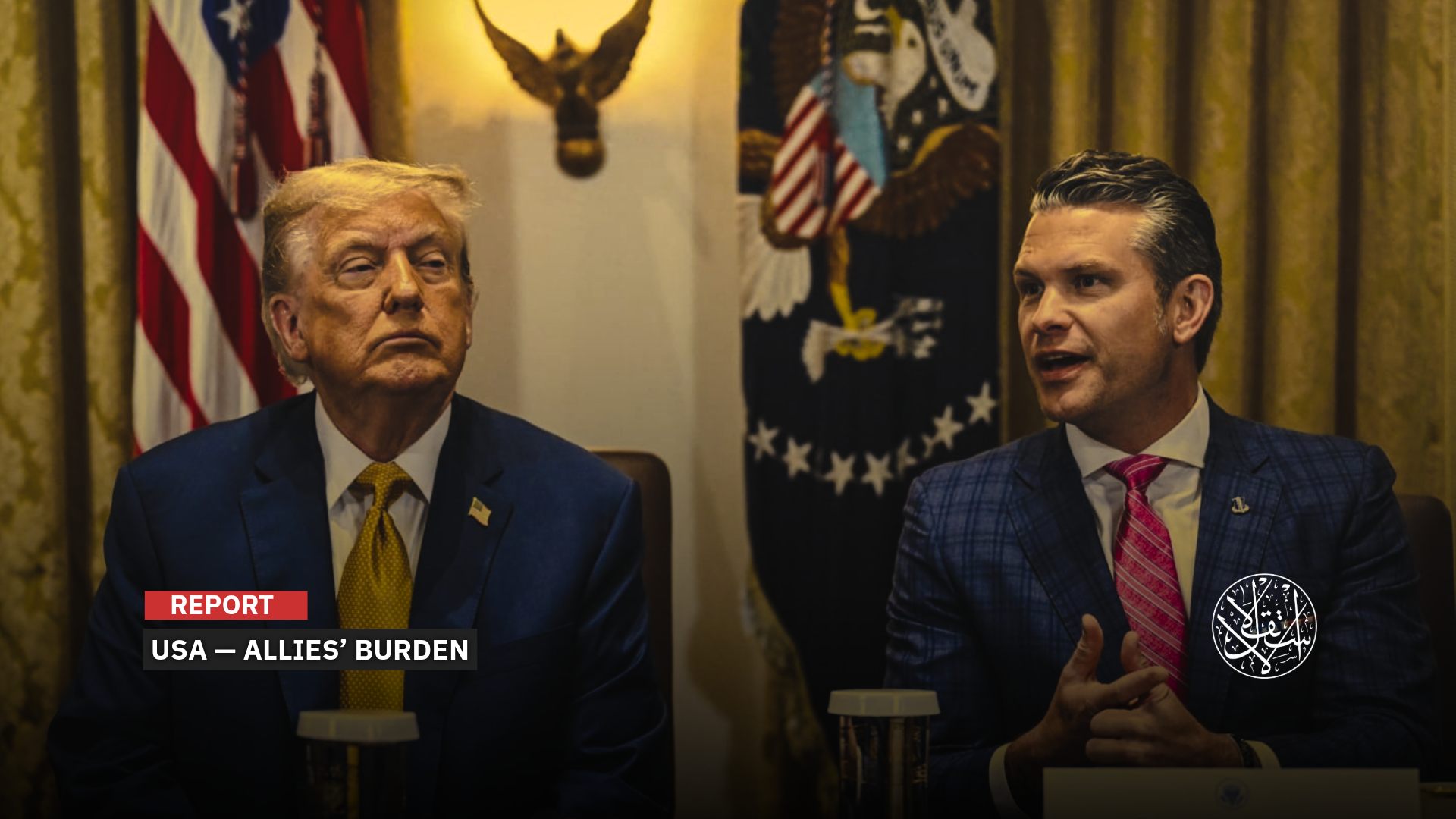
What was once dismissed as a fleeting spat between Washington and its allies has curdled into a profound structural fracture.
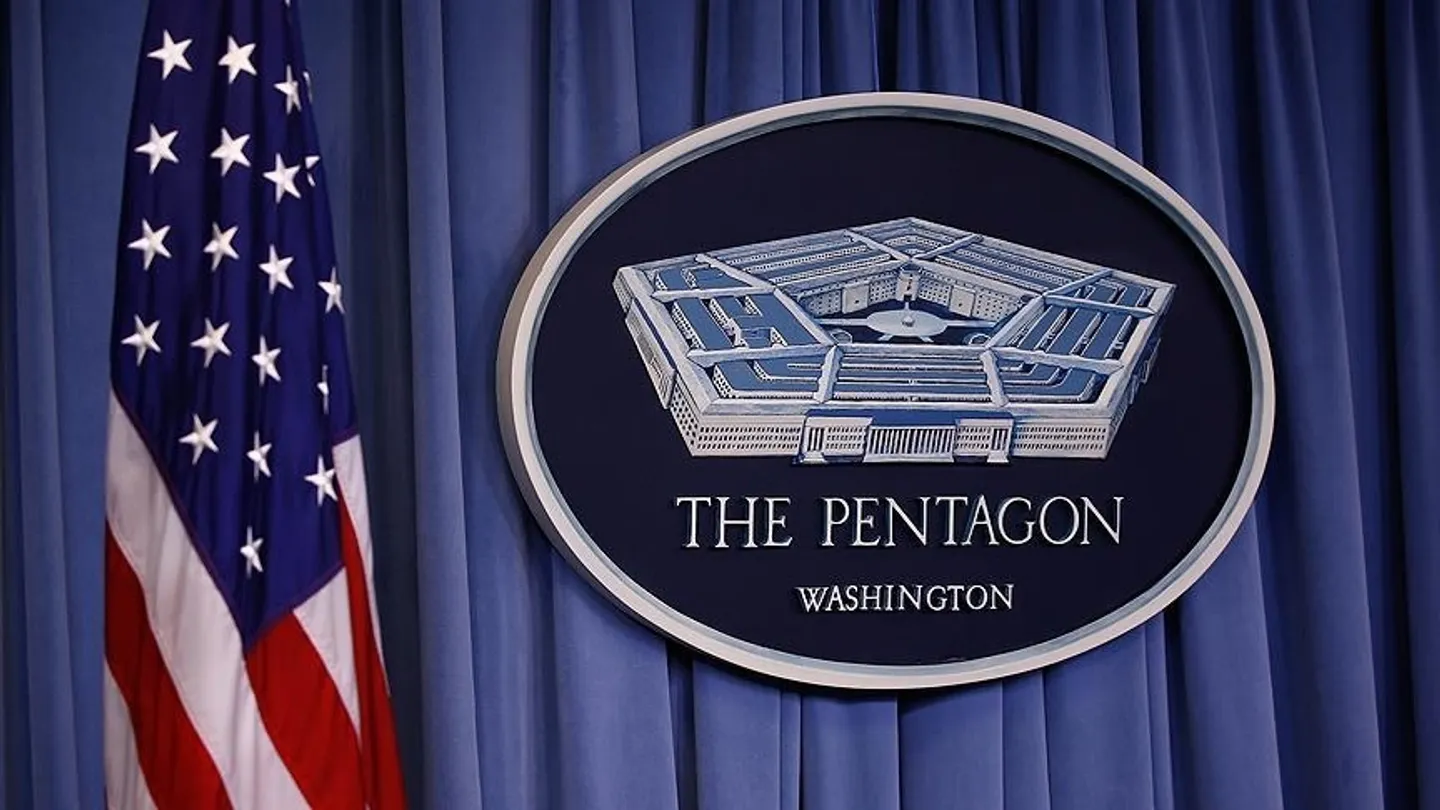
As U.S. President Donald Trump continues to undermine the international order, the Defense Department, the Pentagon, has issued a National Defense Strategy that shifts priorities and implicitly tells allies, defend yourselves.
The new strategy, released on January 23, 2026, calls on U.S. allies to protect themselves and take control of their own security, signaling Washington’s retreat from its longstanding commitments to their defense.
It underscores the Trump administration’s focus on dominance in the Western Hemisphere rather than its previous objective of confronting China, under which the United States protected allies in Asia, including Japan and South Korea, as well as in Europe.
The release follows a new 34-page National Security Strategy document issued in November 2025 that criticized America’s partners in Europe and Asia for relying on the United States for their defense and cast doubt on the future of the NATO alliance.
This amounts to an explicit American demand that allies shoulder more of the burden in confronting countries such as Russia and North Korea, prompting the European Union’s defense commissioner to call for the creation of a European military force to replace U.S. troops.
Key Pillars of the Strategy
After a string of confrontations between Trump and traditional allies in Europe, including threats to impose tariffs over their refusal to endorse his bid to acquire Greenland, the Pentagon released its new National Defense Strategy.
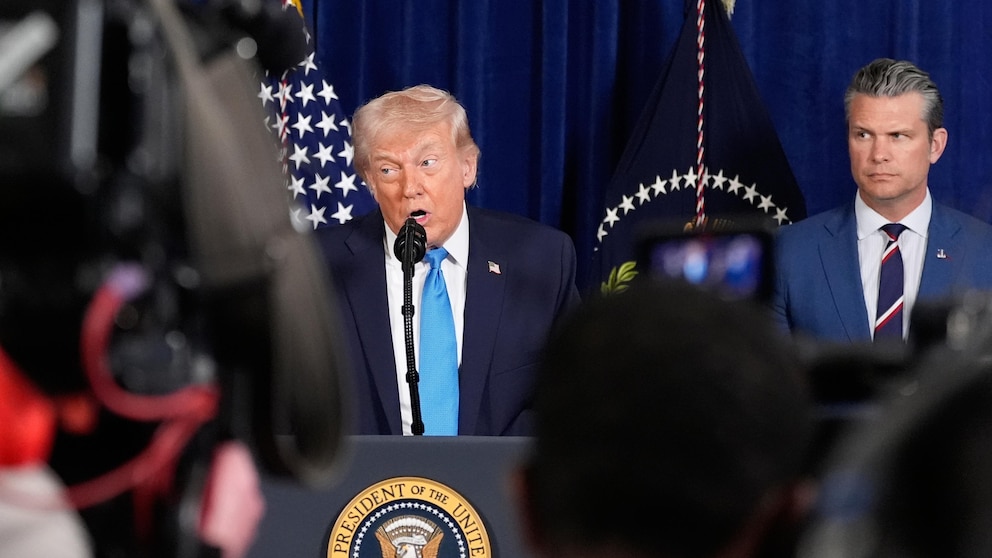
The strategy, unveiled by Defense Secretary Pete Hegseth, sets out its guiding theme on the opening page, “America First, peace- through-strength, common-sense efforts.”
Like the National Security Strategy issued by the White House, the new defense blueprint reinforces Trump’s “America First” doctrine, favoring restraint abroad, questioning decades of strategic alliances and prioritizing U.S. interests above all.
The document opens with a stark declaration, “For far too long, the United States government has neglected, and at times refused, to put Americans and their tangible interests first,” a line that encapsulates its underlying objective, stepping back from the defense of allies.
It is therefore no surprise that the strategy criticizes U.S. allies and urges them to assume primary responsibility for their own security, as the Trump administration shifts its focus to the Western Hemisphere, its so-called backyard in Latin America, recasting the Monroe Doctrine in what critics have dubbed a “Donroe” doctrine.
The strategy seeks assistance from partners across the hemisphere while warning that the United States “will actively and fearlessly defend America’s interests throughout the Western Hemisphere,” according to ABC News on January 24.
The document states, “We will engage in good faith with our neighbors, from Canada to our partners in Central and South America, but we will ensure they respect our shared interests and do their utmost to protect them.”
“And if they fail to do so, we will be prepared to take focused and decisive actions that materially advance the interests of the United States.”
The reference to “our interests” is widely understood to include access to the Panama Canal and Greenland.
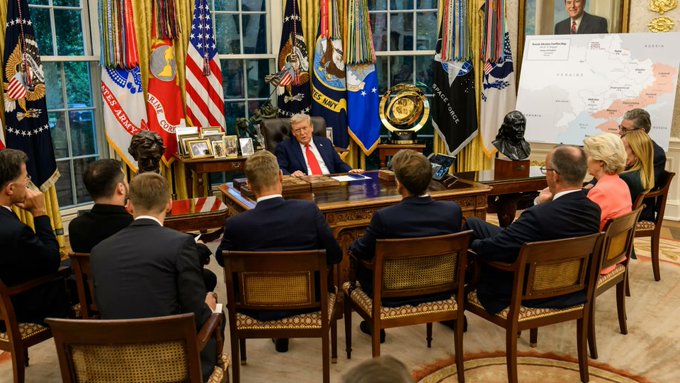
It came days after Trump said he had reached a “framework for a future agreement” on Arctic security with NATO Secretary-General Mark Rutte that would grant Washington “full access” to Greenland, an autonomous territory of NATO ally Denmark.
Trump has previously suggested the United States could consider reasserting control over the Panama Canal, accusing Panama of ceding influence to China.
Asked whether reclaiming the canal remained under consideration, he replied, “It’s somewhat under discussion.”
Regarding Canada, following a heated exchange at the World Economic Forum in Davos, Switzerland, with Canadian Prime Minister Mark Carney, the strategy calls for cooperation with Canada and other neighboring countries, while maintaining what it describes as a clear warning.
In a notable omission, the defense strategy makes no reference to Taiwan, the self-governed island claimed by Beijing as part of its territory and which China has vowed to take by force if necessary, offering no explicit security assurances.
By contrast, the document addresses cooperation with China in a tone less confrontational than previous strategies, while still identifying Beijing as a central factor in U.S. defense planning and emphasizing the management of competition to preserve strategic stability in the Indo-Pacific region, according to Bloomberg.
At the same time, it declares, “We will defend the US homeland and ensure the protection of our interests in the Western Hemisphere. We will deter China in the Indo-Pacific through strength, not confrontation.”
In another example of shifting regional security responsibilities to allies, the strategy states, “South Korea is capable of taking primary responsibility for deterring North Korea with critical but more limited U.S. support.”
While the document says Russia “will remain a persistent but manageable threat” to NATO’s eastern members for the foreseeable future, it argues that NATO allies are far stronger collectively and therefore “well positioned to assume primary responsibility for Europe’s conventional defense.”
In line with this approach, the United States has already confirmed plans to reduce its troop presence along NATO’s frontier with Ukraine, unsettling allies who fear a security vacuum at a time when European nations face what they describe as an increasingly assertive Russia.
To offset the anticipated U.S. drawdown, a senior NATO official said the alliance intends to significantly expand weapons and ammunition stockpiles along its eastern flank and establish a new defensive zone using automated technologies.
Brig. Gen. Thomas Lowin told the German newspaper Welt, on January 25, that the measures are designed to strengthen deterrence against Russia as part of a new multilayered defense concept aimed at slowing or halting any attack at an early stage.
No More Burdens
The strategy amounts to a sweeping shift in U.S. defense policy, asserting that allies in Europe, “Israel,” the Gulf, and Asia must now protect themselves.
Washington, it says, will “support” them, but “will not bear the burden of their defense.”
With regard to the Middle East, the document argues that the region has shifted from being a source of threats to U.S. interests to a destination for investment, trade, and partnership.
“Israel” and the Gulf states, it maintains, must defend themselves against Iran.
“Israel has demonstrated that it is capable and willing to defend itself following the brutal attacks of October 7, and has proven to be a model ally,” the strategy states.
It reads as an implicit declaration of the end of the era of “American global hegemony,” and the beginning of a new phase in which the U.S. role is recast from “world policeman” to steward of the Western Hemisphere.
Yet this theoretical retrenchment and renewed focus on the Western Hemisphere could draw Washington into friction with Europe and with emerging states or alliances, and could ultimately harm U.S. interests, according to American experts.
Most significantly, the document shifts Washington’s view of China from an “existential threat” to a strategic economic competitor.
It assigns Japan and South Korea primary responsibility for their own defense and makes no mention of Taiwan, a silence that some interpret as leaving the island to China in the future.
The strategy emphasizes strengthening homeland defense capabilities, including modernizing deterrence systems and restructuring force posture, amid what Washington describes as rising direct threats to its national security.
It specifies “securing America’s borders and maritime fleets,” defending U.S. airspace through the “Golden Dome for America,” and a renewed focus on countering unmanned aerial threats.
“We will maintain a strong and modern nuclear deterrent capable of addressing strategic threats to our nation. We will build and reinforce massive cyber defenses, and we will pursue and neutralize Islamist terrorists who have the capability and intent to strike our homeland.”
“At the same time, we will actively and fearlessly defend America’s interests throughout the Western Hemisphere. We will guarantee U.S. military and commercial access to key regions, especially the Panama Canal, the Gulf of America, and Greenland.”
Artificial Intelligence
Among the most significant elements of the defense strategy, which some analysts believe draws on lessons from “Israel’s” recent wars, is its emphasis on artificial intelligence in warfare.
Under the plan, the United States is preparing to accelerate the deployment of artificial intelligence for military purposes, aiming to become “the world’s undisputed AI-enabled fighting force,” according to The Conversation on January 22.
Like several militaries around the world, including those of China, and Israel,” Washington intends to integrate artificial intelligence into its operations to make the U.S. military more lethal and efficient through AI-driven warfighting technologies.
According to U.S. media reports, the strategy forms part of a broader effort to redefine America’s global military role by prioritizing homeland security, scaling back overseas commitments and shifting toward a defense model based on partnerships, and burden-sharing rather than large-scale troop deployments.
Explaining the inward turn toward domestic security, Defense Secretary Pete Hegseth said as he unveiled the strategy, “No longer will the Department be distracted by interventionism, endless wars, regime change, and nation building.”
“We will instead put our nation’s practical, concrete interests first. We will support a policy of real peace through strength. We will be the sword and shield to deter war in pursuit of peace, but ready to fight and win the nation’s necessary wars if called upon.”
“This does not mean isolationism. On the contrary, it means a focused and truly strategic approach to the threats facing our nation and how to manage them more effectively. That is essential to serving the interests of the American people,” he added.
The dilemma, however, lies in the Trump administration’s strategic and military doctrine, which treats Latin America and Canada as falling within the U.S. homeland and Washington’s core sphere of interest.
That framing may explain Washington’s unease over remarks by Canadian Prime Minister Mark Carney at the World Economic Forum in Davos, Switzerland, which The New York Times on January 25 described as the “Carney Doctrine,” saying it challenges Trump’s theory and sketches the outlines of resistance to American dominance.
In a January 20 speech, Carney declared that the decades-old rules-based international order built on law and international institutions “is over and will not return.” “When rules no longer protect you, you must protect yourself,” he said.
“Great powers now weaponize economic integration to impose dominance, dependency, pressure and coercion on other states.”
According to Carney, “But when we only negotiate bilaterally with a hegemon, we negotiate from weakness. We accept what’s offered. We compete with each other to be the most accommodating. This is not sovereignty. It’s the performance of sovereignty, while accepting subordination.”
In an analysis of Carney’s speech, New York Times columnist David French wrote on January 22 that “what was once seen as a temporary crisis in relations between the United States and its allies has now become a deep structural rupture.”
French attributed the shift to President Donald Trump’s second-term policies, which he characterized as marked by aggression, coercion and the erosion of the international order Washington has led since the end of World War II.
He said Carney “voiced publicly what many U.S. allies have been thinking privately, that the era of unconditional acceptance of American leadership is over.”
French argued that the danger of Trump’s conduct lies not only in its unpredictability, but in the reality that the system of checks and balances within the United States appears increasingly unable to restrain him.
Political removal is unlikely, he wrote, because Congress is dominated by the pro-Trump Make America Great Again MAGA movement, and Trump surrounds himself with officials aligned with his impulses.
From the perspective of allies, this suggests the risk is no longer temporary or tied solely to Trump as an individual, but structural and embedded in American politics.
Carney’s position on Greenland carried particular weight. He affirmed Canada’s full support for Denmark and its readiness to honor its obligations under Article 5 of the NATO treaty, even if the source of the threat were the United States itself, according to the New York Times columnist.
The standing ovation that greeted his remarks in Davos reflected a willingness among other countries to move in the same direction.
If middle powers heed Carney’s call, a formidable economic and military alliance could emerge, encompassing the European Union, the United Kingdom and Canada, a nuclear-armed and industrial bloc capable of balancing American power.