When Trade Becomes a Weapon: How Mossad Infiltrated Turkiye Through Supply Chains
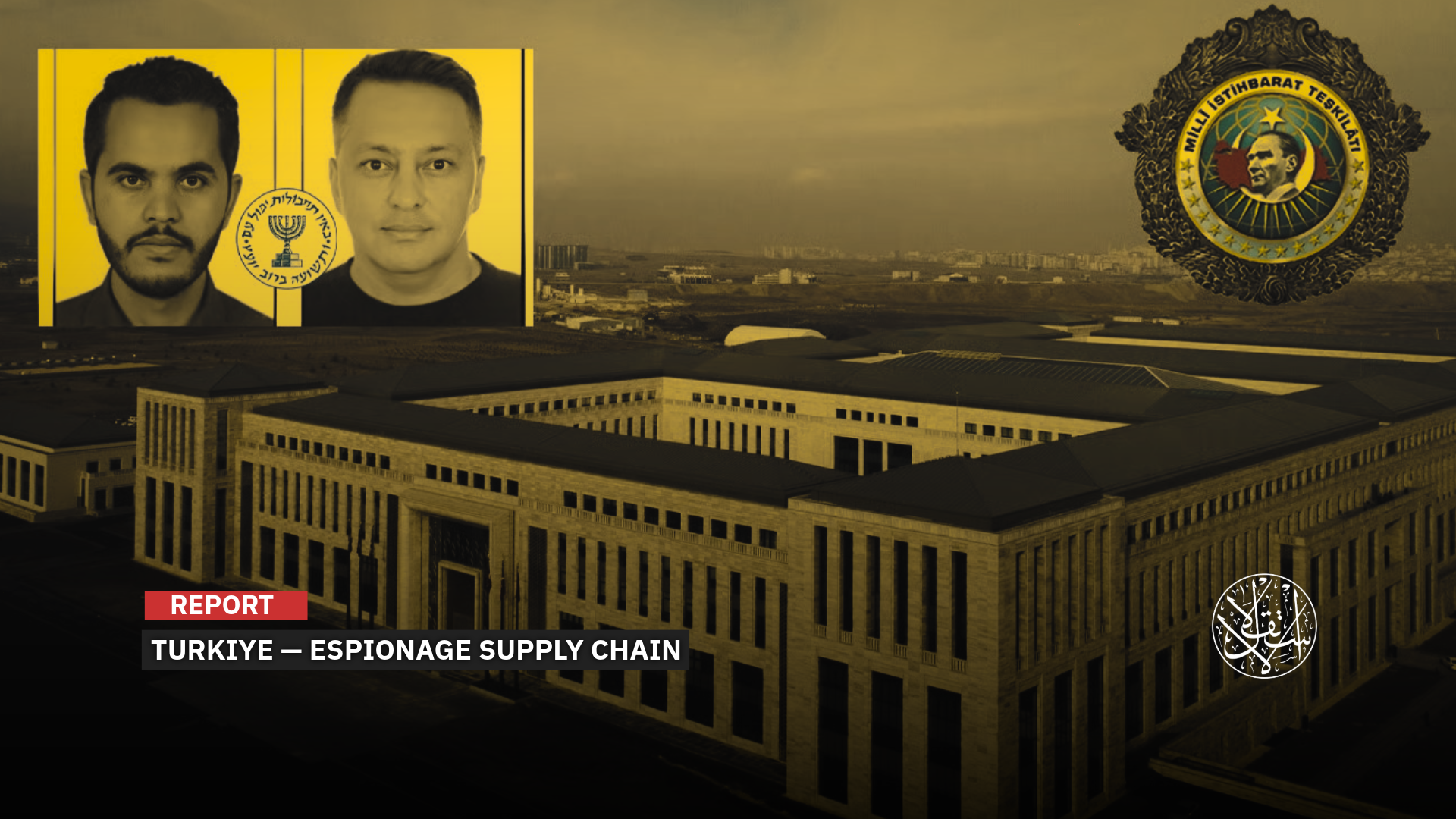
Whoever controls a supply chain holds two options at once: espionage and sabotage.
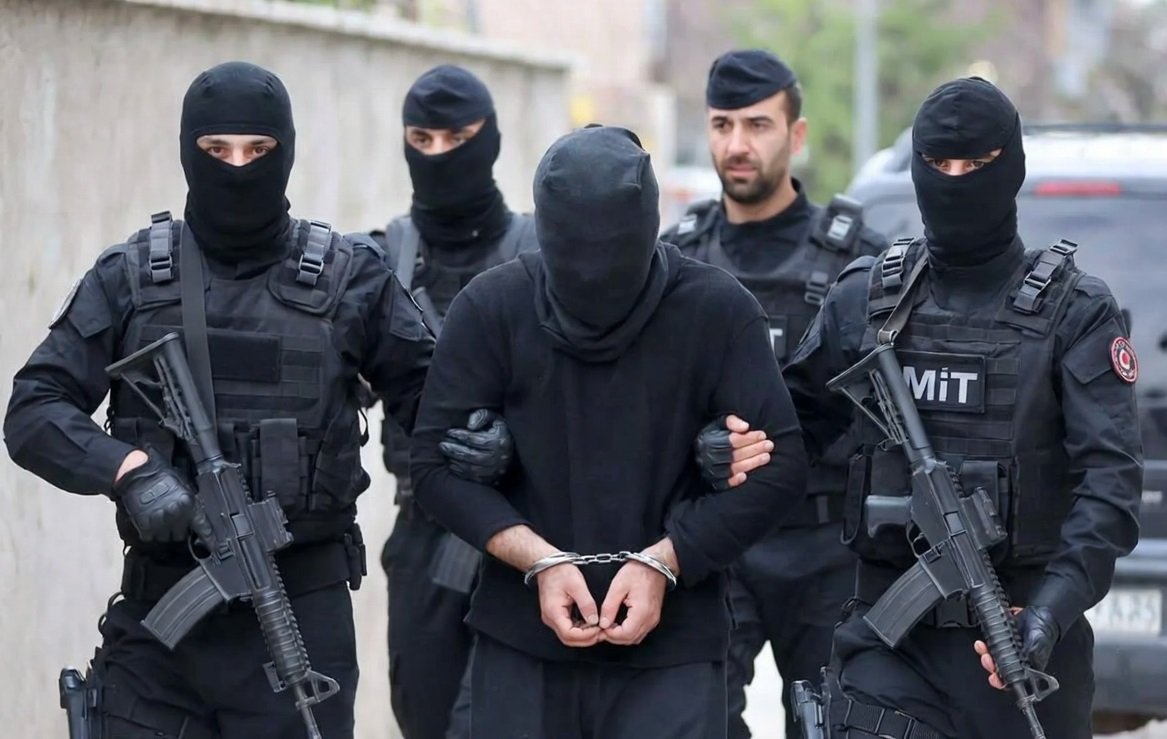
It was not a marble quarry, nor an international trading company, nor even the arrest of two Israeli Mossad agents in Istanbul.
What Ankara revealed on February 6, 2026, was broader and more dangerous: an economy turning into cover, supply chains managed like operations rooms, and trade used as a tool of systematic intelligence penetration.
From Mersin to Istanbul, from front companies to cross-border business intermediaries, a complex Israeli intelligence structure emerged, built not on traditional recruitment but on silent integration within the market: gathering information, testing loyalties, hunting targets, and moving sensitive products through misleading logistical routes.
This report does not chase names or merely recount arrests. It dissects how international supply chains were transformed into a theater of intelligence operations, and how “Israel,” over nearly two decades, sought to penetrate Turkiye through tools that appeared legal but were designed to operate outside the law.
The timeline begins in 2005, moves through pivotal moments in 2012 and 2013, then intersects with the drone file and the 2016 assassination of engineer Mohamed Zouari, before reaching its peak in early 2026 with a project involving Asian shell companies that concealed a logistical operation larger than officially disclosed.
What unfolded was not a passing security incident, but a model for a new phase of intelligence wars waged through the economy.
The Turkish narrative emerged from more than one official and semi-official window on the same day.
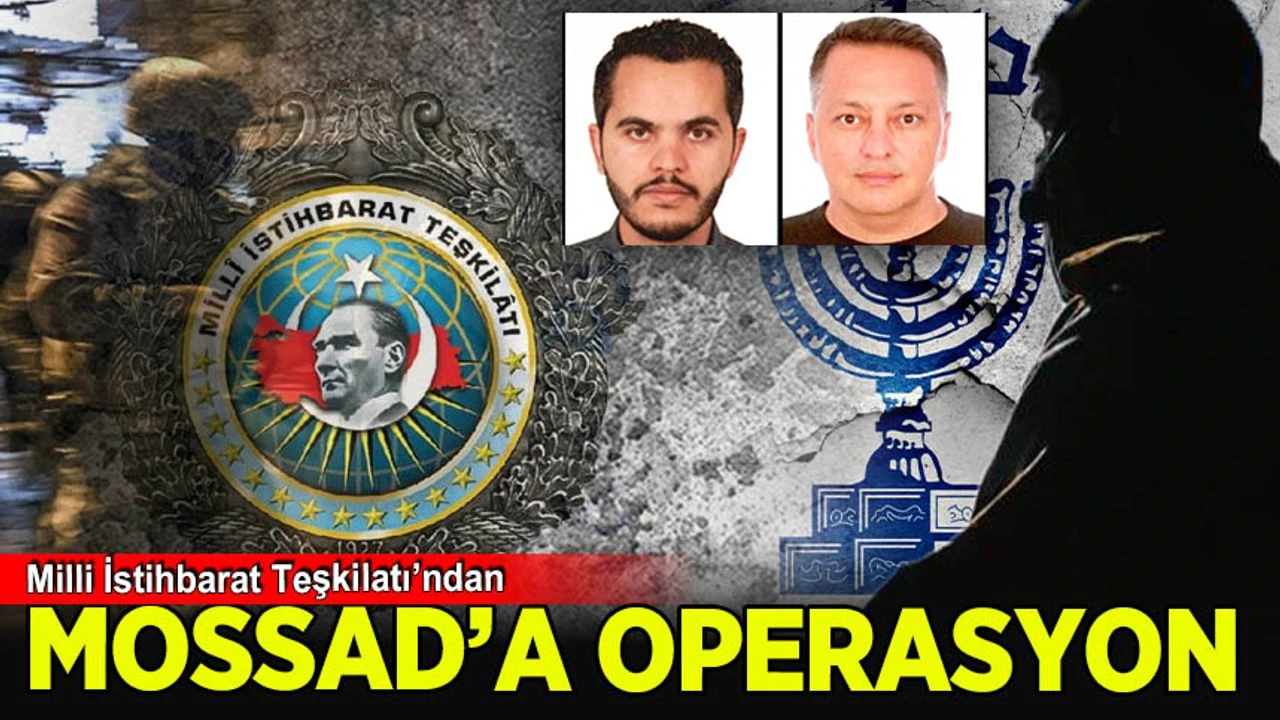
Anadolu Agency published detailed accounts of the operation, including the names of those detained and the context of their recruitment, confirming that Turkiye’s National Intelligence Organization, MIT, carried out the arrests in coordination with the Istanbul Chief Public Prosecutor’s Office and the Istanbul Police Department.
These details converged with reports in Turkish state media, most notably TRT Haber, which reconstructed the case and highlighted the use of encrypted communications and the transfer of technical data related to communication devices.
The report also cited a Turkish security assessment indicating that the Mossad had been preparing a logistical operation targeting countries and institutions.
According to the newspaper, the two detainees had been on the radar of Turkish intelligence for an extended period, suggesting prolonged surveillance rather than an emergency move.
The language of the official announcement itself carried particular weight. The phrase “transferring information to the Mossad” was not presented as a simple intelligence charge, but was coupled with confirmation that the information had contributed to the execution of assassinations.
That linkage elevates the case from conventional espionage to an integrated operational structure in which commerce intersects directly with targeted killing.
The Turkish account reveals that the threads of the case trace back to 2005, when Turkish businessman Mohammed Bodak Derya founded his own company. Derya, originally a mining engineer, later turned to the marble trade, the beginnings appearing purely economic: a startup company and ambitions of export.
Later, he opened a marble quarry near Turkiye’s southern coast, specifically in the Mersin–Silifke area, and began operating in international trade, a phase that Turkish security sources say marked the moment Mossad’s attention was drawn to him.
Here emerges one of the first rules of economic recruitment: when you operate an export business, travel, foreign meetings, financial transfers, and cross-border contracts become part of daily life, an ideal cover for intelligence work.
In September 2012, Derya was visited by an intermediary named Ali Ahmed Yassin, who introduced himself as an official at an Israeli economic company and offered him a job opportunity.
Turkish investigations would later reveal that the company was fictitious and that the man himself was operating under an alias.
In 2013, a pivotal meeting took place in Europe. Derya met with Mossad operatives who presented themselves as businessmen and proposed a partnership in marble exports.
During that meeting, a telling detail surfaced: a man identified as Louis, a codename, asked Derya to employ a Turkish citizen of Palestinian origin named Faisal, whose Turkish name was Veysel Kerimoglu.
From that moment on, the relationship was no longer merely a commercial venture but an economic activity conditioned on the insertion of a human operational element, a clear signal that the network was shifting from commercial cover to an active intelligence structure.
Operations and Recruitment Line
In early 2016, the most significant shift in the network’s trajectory occurred.
Veysel Kerimoglu proposed expanding the commercial activity from marble exports to the trade in drone spare parts.
The proposal was not casual; Mohammed Bodak Derya relayed it immediately to the Mossad, and approval came swiftly, accompanied by the provision of prototypes and technical samples.
From that moment, the deals no longer bore the character of ordinary commerce.
When an intelligence service finances a technical trade and supplies it with operational samples, the supply chain itself becomes an intelligence operations line, used for testing, concealment, and perhaps later execution.
In the same year, the Mossad required Derya to undergo a polygraph test in an Asian country.
The test was not a routine procedure but a clear signal of transition from situational cooperation to long-term reliance, governed by strict security verification protocols.
The pattern resurfaced eight years later. In August 2024, Derya underwent a second polygraph test inside a hotel in a European country.
According to Turkish assessments, passing this test was not an end in itself but a condition for moving to a higher operational tier.
This progression helps explain why Ankara treated the case as a long-term threat rather than an isolated security incident or a conventional espionage file.
The story reaches its clearest chapter in January 2026, when a decisive meeting was held outside Turkiye between Derya, Kerimoglu and Mossad operatives.
The objective was not a new deal but the planning of a front company that would oversee three shell companies in Asia, used to conceal the origins of multiple products intended for buyers preselected by the Mossad.
This conclusion reveals the network’s broader aim: constructing a commercial supply platform with operational and military functionality, not merely a channel for collecting human intelligence.
Trade becomes an operating mechanism, and supply chains become operational infrastructure.
According to TRT Haber on February 6, 2026, the economy is not presented as a mask concealing espionage but as an intelligence engine offering five simultaneous advantages.
First, it legitimizes international contact without arousing suspicion.
A businessman travels for meetings, signs contracts, and meets partners, activities that appear routine on the surface while providing, beneath it, secure and regular channels of communication.
Second, it enables the construction of an expansive network of relationships, stretching across partners, intermediaries, and clients, creating an ideal environment for monitoring, selection, and indirect recruitment.
Third, it grants access to sensitive logistical and technical structures, from purchasing SIM cards, modems, and routers to transferring technical data, serial numbers, and operational specifications of devices that could later be used for security or military purposes.
Fourth, it conceals intentions and plans within the flows of trade itself, by supplying dual-use materials, such as drone parts or communications components, through complex supply chains that are difficult to dismantle or trace to their final destination.
Fifth and finally, it opens the path to sabotage or assassination operations by approaching targets through deals and contracts rather than through direct surveillance or overt security movements.
That is precisely what underpins the Turkish narrative that the Mossad was preparing to execute a logistical operation in 2026.
Whoever controls a supply chain does not merely control a commercial channel, but holds at once the instruments of espionage and sabotage.
From Istanbul to Sfax
The most dangerous node in the Turkish narrative of the Israeli espionage network emerges around the name of the late Tunisian engineer and member of the Izz al-Din al-Qassam Brigades, Mohamed Zouari.
According to the investigations, both Mohammed Bodak Derya and Veysel Kerimoglu were among those who attempted to offer and sell drone parts to Zouari before his assassination in Tunisia in 2016.
Zouari, who was shot dead in the city of Sfax in December 2016, was known for his role in developing the drone capabilities of Hamas.
The significance of this episode does not stop at a failed sales attempt.
The logic of intelligence operations suggests something deeper: technical proximity to the target. Offering drone components automatically entails identifying technical needs, work environments, communication networks, and stages of project development.
In this light, penetrating the surrounding environment through trade becomes an ideal option for the Mossad.
Suppliers and intermediaries typically enter without the security sensitivity that follows politicians or military figures.
The market thus becomes a platform for surveillance: who buys what, who asks about what, what the project lacks.
All of it appears commercial on the surface, but in the context of Israeli assassinations, it becomes high-value intelligence material.
In this sense, the Turkish investigation file sketches a broader Israeli pattern, linking technology to targeting, not only through airstrikes but through supply channels that appear legitimate and are later leveraged to capture human and technical vulnerabilities.
According to a report by the Turkish newspaper Daily Sabah, Kerimoglu developed social and commercial relationships with Palestinians opposed to “Israel,” before transferring information about them to the Mossad.
The newspaper indicated that surveillance targeted Palestinians directly connected to positions on the war on Gaza and to trade networks suspected of supporting the resistance.
Turkiye’s sensitivity here is compounded for two reasons. First, it serves as a space of transit, residence, and activity for diverse Palestinian communities, including businessmen, students, activists, and media figures.
Second, any Israeli intelligence activity on its soil directly touches sovereignty and internal security, potentially drawing Ankara into complex political and security crises.Under this heading, a particularly serious detail emerges.
Anadolu Agency reported that Derya attempted, through commercial ties linked to occupation policies, to obtain entry permission to Gaza, and sent photographs of warehouses he was seeking there to Israeli intelligence, a behavior that resembles fieldwork under the cover of trade rather than mere informant activity.
If the Istanbul network file illustrates how trade can be used to operate an active Mossad network, Lebanon during the Israeli war presented the other side of the coin: how supply chains themselves can be turned into weapons of detonation and disruption.
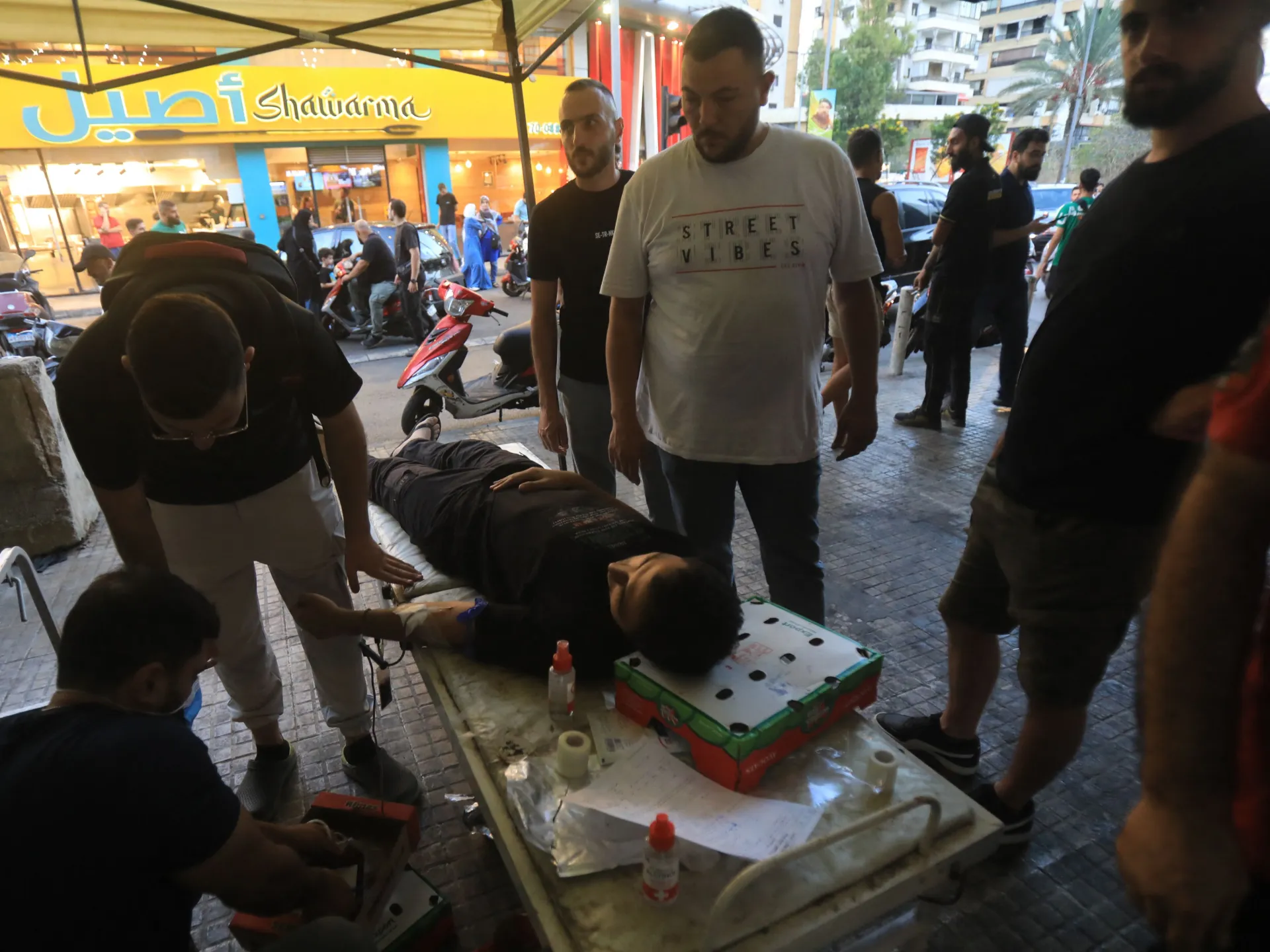
On September 17 and 18, 2024, Lebanon and areas in Syria witnessed simultaneous explosions of thousands of “pager” devices, followed by a second wave targeting walkie-talkies, in a large-scale Israeli military operation.
Reports revealed that the devices had been fitted with explosives before reaching users.
Reuters documented that the explosions killed and injured thousands and sparked a broad international human rights debate because the devices detonated inside homes, workplaces, and civilian spaces that included women and children.
The Wall Street Journal, in its September 20 report, summarized the strategic significance of the operation: the weaponization of supply chains themselves and the exposure of the fragility of modern electronics supply chains amid multiple intermediaries and weak oversight of technical integrity.
ABC News also noted that planning for this type of infiltration took years, underscoring that it was a systematic project rather than an improvised strike.
This comparison helps explain why Ankara treats a front company, three Asian shell companies, and data related to modems, and routers as a threat that exceeds conventional espionage.
Israeli expertise, as illustrated by the “pager” case, does not stop at information gathering. It may extend to wide-scale physical sabotage through devices, communications, and supply chains, without firing a single shot inside the targeted country.
Returning to the Istanbul file, the common thread becomes clear. In Lebanon, the supply of communication devices was infiltrated and transformed into tools of detonation and disruption.
In Turkiye, a technical supply chain, SIM cards, modems, and routers, was being constructed and its data transmitted to the Mossad, amid an official assessment that a logistical operation was being prepared.
The conclusion is stark: the supply chain is no longer a backdrop to conflict with “Israel” but has become a direct line of confrontation.
An Upcoming Clash
In remarks to Al-Estiklal, political researcher Mohammed Maher argues that what was uncovered in Istanbul cannot be separated from a broader pattern of Israeli conduct marked by increasing aggression and impulsiveness, aimed at eliminating regional rivals and attempting to redraw the map of the Middle East through the simultaneous use of hard and soft power.
Maher maintains that “Israel” no longer views Turkiye as a state that can be neutralized through temporary understandings or carefully managed disputes.
Instead, he says, it now sees Ankara as a strategic obstacle to its regional projects, particularly in Syria.
“Tel Aviv” understands, in his assessment, that any full or long-term dominance over the Syrian arena will remain impossible so long as Turkiye retains a strong and influential presence.
He adds that this realization explains “Israel’s” shift from traditional pressure tools to more complex and aggressive methods, built on indirect penetration, the construction of agent networks, and the use of the economy, trade, and supply chains as silent pathways to weaken adversaries and lay the groundwork for larger confrontations.
According to Maher, what is unfolding today represents a qualitative transformation in Israeli behavior.
The objective is no longer confined to gathering information or monitoring opponents.
It now extends to creating fragile environments within influential states, unsettling decision-making centers, and undermining regional maneuverability, paving the way for the imposition of new facts on the ground.
He notes that “Israel” is acutely aware that weakening Turkiye, or pushing it toward retrenchment, is a necessary condition for the success of its projects in Syria and the eastern Mediterranean.
That calculation, he argues, makes reliance on agent networks, economic fronts, and logistical penetrations a central, not marginal, option in the coming phase.
Maher concludes that confrontation between Turkiye and “Israel” is no longer a theoretical possibility or a distant scenario.
Rather, it is a probable trajectory gradually taking shape through a series of indirect clashes, beginning with intelligence and economics and potentially ending in open political and security confrontations across multiple arenas.
He closes by saying that dismantling the network in Istanbul does not mark the end of the story but serves as an early warning of a harsher phase ahead, one likely to witness escalation in the tools of covert conflict and more aggressive attempts to penetrate key regional states, within a broader struggle over influence, maps, and borders in the Middle East.
Sources
- MIT Captures 2 Found to Be Working for Mossad in Istanbul [Turkish]
- Turkiye Captures 2 Suspected of Spying for Mossad in Istanbul
- Pager Attacks in Lebanon “Weaponize” Supply Chains
- Operation by MIT Against Mossad Spies, 2 Detained [Turkish]
- Marble, Drones and Assassinations, Turkiye Announces the End of “Two Agents” for Mossad [Arabic]
- One Year After Israel’s Pager Explosions, Lebanese Are Still on the Road to Recovery [Arabic]