Fifteen Years After the Revolution: What Are the Prospects and Risks for Ending Libya’s Political Divide?
The path to stability remains open.
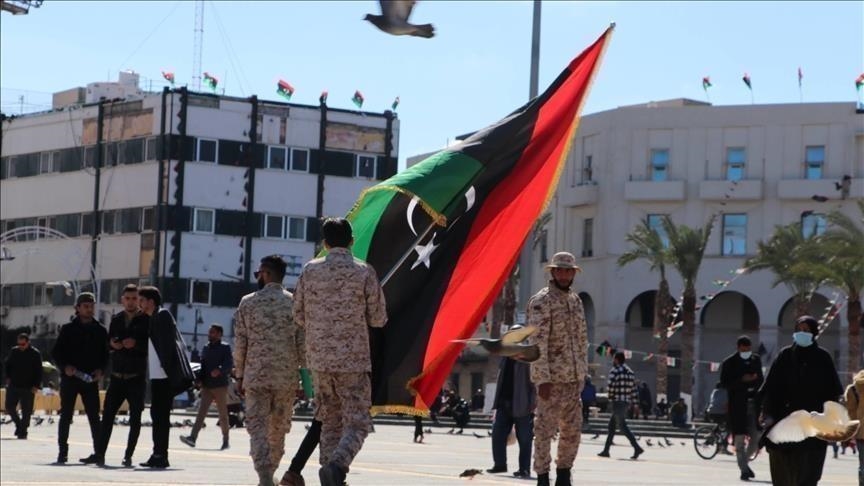
As the fifteenth anniversary of Libyans’ uprising against Muammar Gaddafi approaches, the country remains mired in a prolonged stalemate, amid hopes and calls to end the political and institutional divide between the West and the East.
The anniversary of the February 17, 2011, revolution comes at a moment when the country stands on the brink of a decisive political turning point, amid escalating political, security, and economic challenges, prompting the introduction of political initiatives aimed at addressing the situation.
Serious Efforts
In this context, Ahmed Langi, a member of the High Council of State, revealed what he described as serious attempts to open channels of communication between the House of Representatives and the High Council of State, in a bid to overcome the political paralysis that has negatively affected state institutions, and their stability.
According to the local website Libya24 on February 3, Langi affirmed that the High Council of State does not object to providing all forms of support that could help bring the two councils’ positions closer.
He said that “any genuine rapprochement serves the interest of the nation and represents a necessary step toward ending the division, particularly in files related to sovereign positions that have remained hostage to political wrangling for years.”
Langi explained that the current state of stagnation is inseparable from the absence of understanding among centers of influence, noting that the future of the political process now hinges on the outcome of dialogue among the key actors on the ground, amid the continued executive split and the multiplicity of decision-making centers.
He added that the Libyan citizen is paying the price for this ongoing obstruction, whether in terms of services or living stability, arguing that overcoming this reality requires genuine political will in which the national interest takes precedence over narrow calculations.
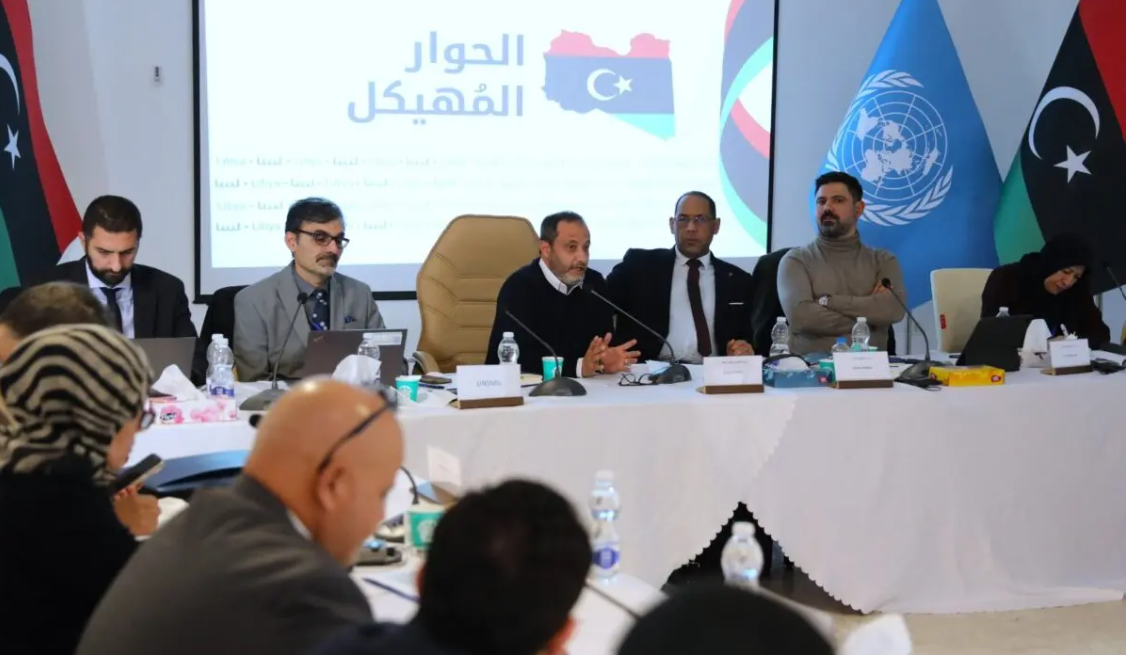
Regarding the role of the United Nations Support Mission in Libya, Langi stressed that the mission has been making sustained efforts for years to push the Libyan parties toward a comprehensive political settlement, despite the challenges and difficulties its efforts face on the ground.
He noted that U.N. initiatives remain part of the political track, expressing hope that they would help create the appropriate conditions to reach a consensual solution that would put an end to the state of political, security and economic instability the country is experiencing.
On the controversy surrounding the future of the political agreement, Langi affirmed that the agreement’s path will only conclude with the holding of simultaneous presidential and parliamentary elections, conducted within a national constitutional framework that enjoys consensus among Libyans and guarantees the integrity and transparency of the electoral process.
He argued that any attempts to circumvent this path would only lead to further complications, calling for adherence to the option of deferring to the will of the people as a final solution to the political crisis.
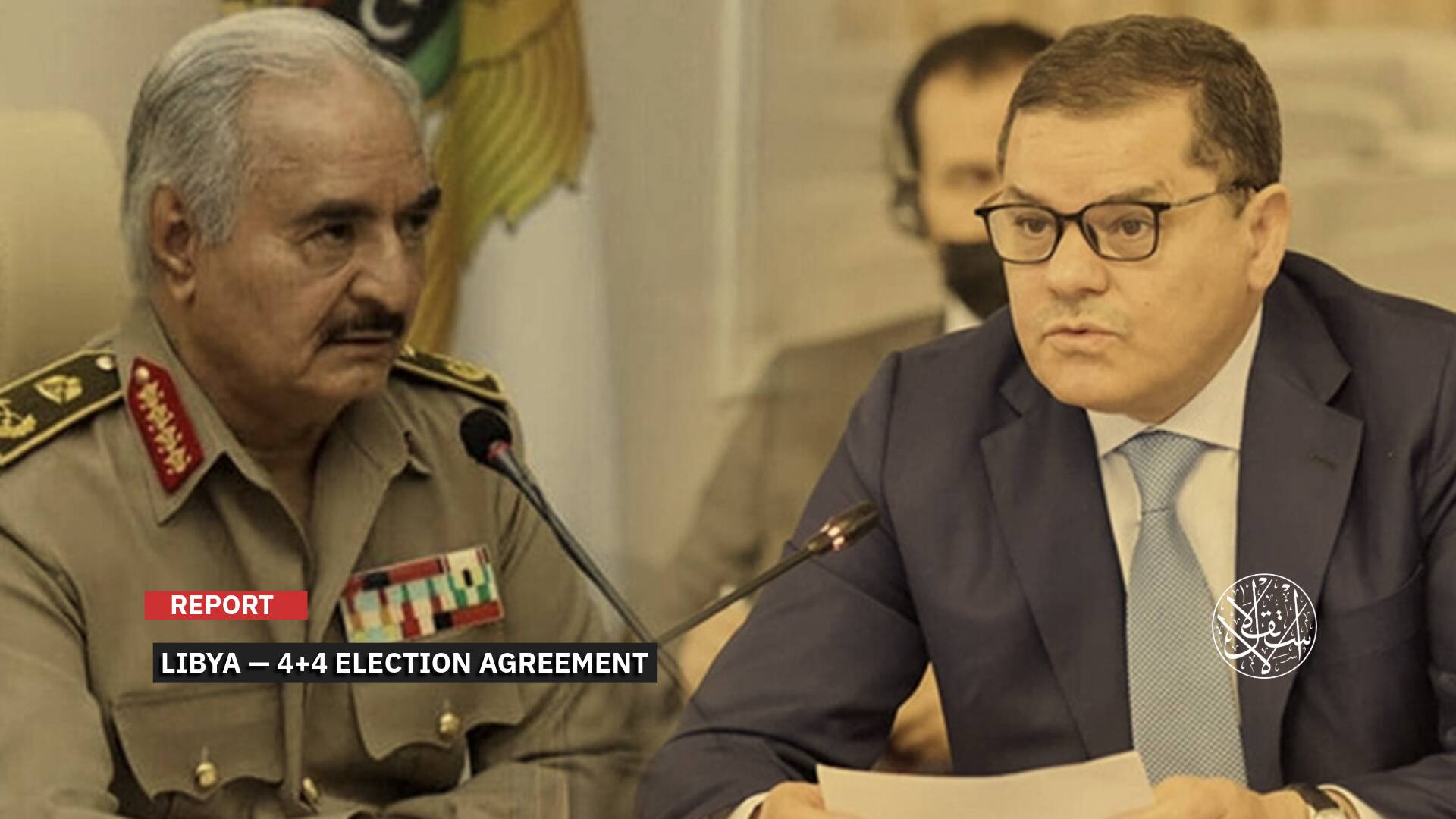
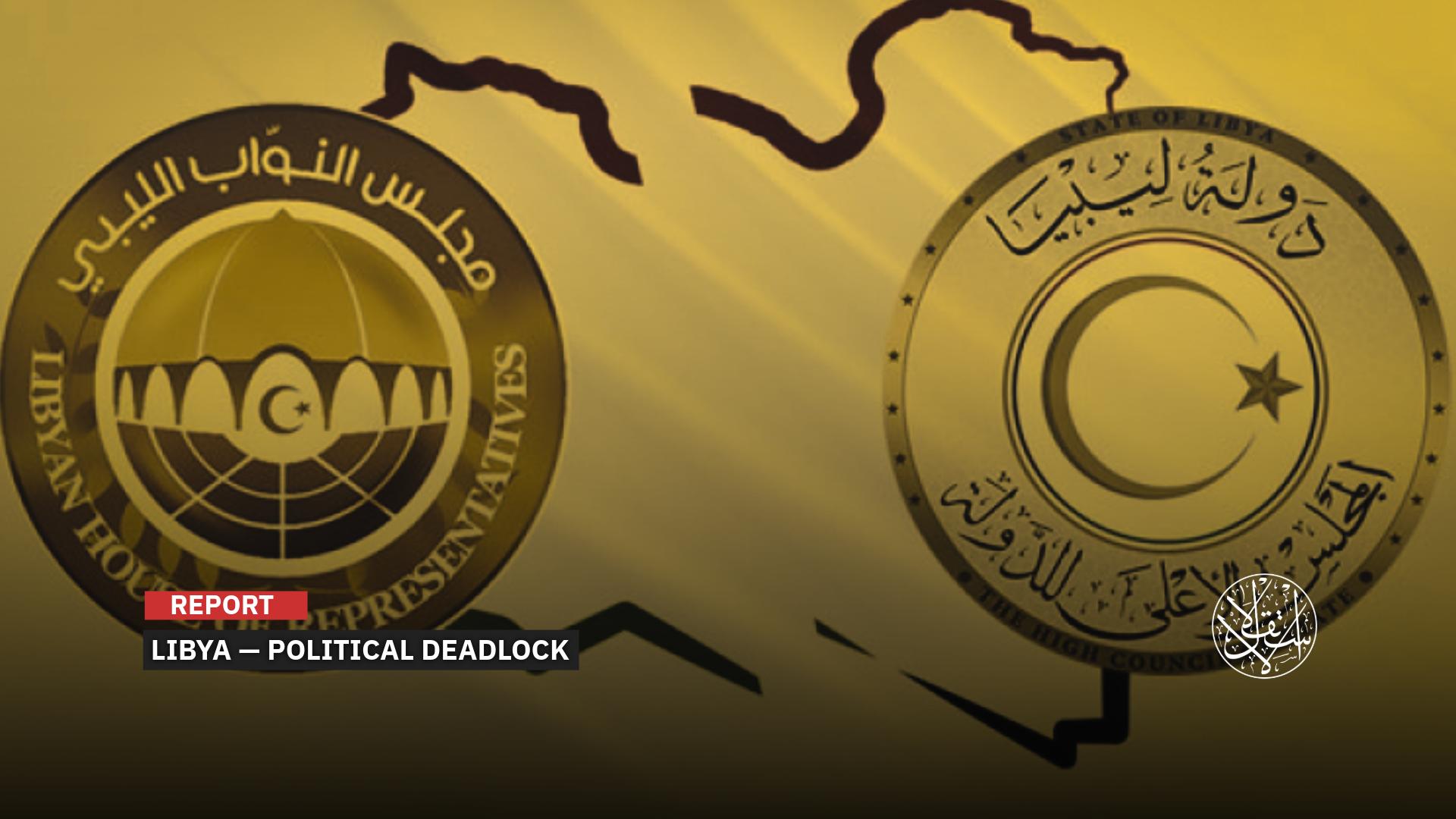
Libya has been experiencing political and institutional division for 10 years, with an internationally recognized government in Tripoli headed by Abdul Hamid Dbeibah and another in the East led by Osama Hammad.
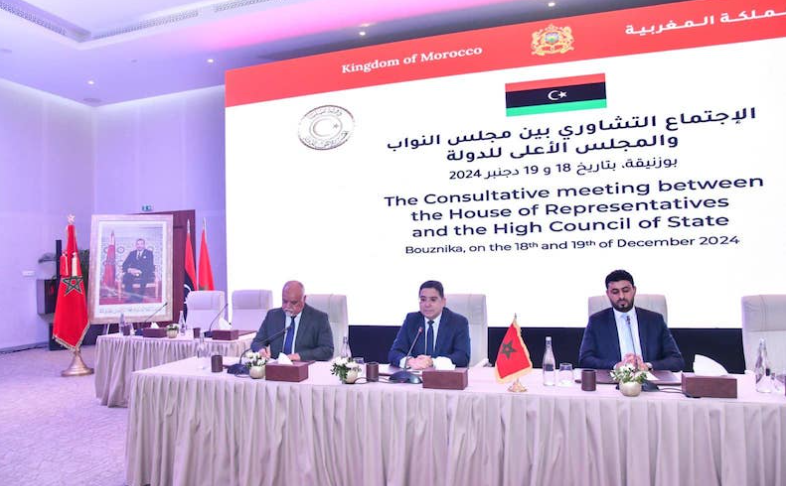
There is also the High Council of State in the Libyan capital, headed by Mohamed Takala, in contrast to the House of Representatives in the East, headed by Aguila Saleh, which is aligned with General Khalifa Haftar.
Amid this division, the United Nations, through its mission in Libya headed by Hanna Tetteh, is leading efforts to mediate and foster dialogue to reach an agreed-upon framework among the parties, though it faces mounting criticism over its role and the effectiveness of its efforts to resolve the crisis.
Comprehensive Dialogue
A number of political figures have engaged with this debate. In this regard, Muoad al-Manfoukh, a member of the Political Dialogue Forum, affirmed that efforts are currently underway to pursue a comprehensive local dialogue that would bring all Libyans together around common ground.
In an interview with Al-Masar TV on February 3, Al-Manfoukh said that “what is required is to work toward addressing political and social differences without any external interference.”
He stressed the need to seek a comprehensive local dialogue that unites all Libyans around common ground, within a framework aimed at reunifying the country and addressing all social and political problems.
He viewed this path as part of a long process, without any external tutelage and guided by a genuinely independent national vision that addresses all wounds and problems, improves living conditions and brings Libyans together around a unifying rather than divisive word.
By contrast, Ashraf Boduara, general coordinator of the Conference for Activating the Constitution of the Monarchy, argued that Libya’s crisis does not stem from a lack of initiatives or intentions, but from the absence of the constitutional foundation upon which the state should be built.
According to the website Libya Akhabar on February 3, Boduara said, “We have tried multiple governments, and division deepened. We tried temporary frameworks, and the transitional phase was prolonged. We ignored the constitution, and each time we returned to square one.”
“Today there is talk of a referendum, of new governments and of redistributing powers, as if these tools can succeed amid a constitutional vacuum, a divided judiciary, dual institutions and weapons outside the framework of the state,” Boduara added.
“There is no disagreement that the people are the source of authority, but the fundamental question that cannot be ignored is this: How do we defer to the people without a clear constitutional framework? And under what legal guarantees would everyone be bound to accept and implement the results?”
“A referendum without a stable constitutional foundation could shift from being a tool of resolution to becoming a new cause of division, and a government without clear constitutional legitimacy becomes a party to the conflict rather than an instrument of solution,” he continued.
Boduara argued that “a way out of the Libyan impasse begins with restoring the constitution as a unifying reference that ends the dispute over legitimacy, unifies institutions, and sets the rules of the political game before entering into its details. Only then can the door be opened for the people to have their say, in a safe and enforceable environment.”
Citizens’ Priorities
The website Ean Libya, in an analysis published on February 2, highlighted the priority of national reconciliation in the eyes of Libyan citizens as a means of addressing the country’s crisis, based on a survey conducted by the United Nations Support Mission in Libya, or UNSMIL.
The same source explained that participants stressed the need to reach a political agreement before holding national elections, with the survey showing that 86 percent of respondents are ready to vote.
It noted that more than 60 percent believe elections held without a prior political agreement would lack credibility and could lead to renewed conflict, calling for a binding agreement supported by enforcement mechanisms and international guarantees.
Seventy-two percent of respondents said the political division severely affects their daily lives, with economic concerns ranked among the top three priorities.
The survey also underscored the importance of supporting stability, unifying military and security institutions and strengthening security sector governance, pointing to the negative impact of political divisions on security risks and the increased potential for escalation and violence.
Regarding national reconciliation and human rights, with a focus on transitional justice, 81 percent of respondents said the absence of justice represents a major challenge.
It added that 72 percent expressed concerns about the shrinking space for freedom of expression, stressing its importance in combating corruption, monitoring authorities, and holding political leaders accountable.
Many also pointed to restrictions on freedom of assembly and the activities of civil society organizations, linking the weakness of judicial independence to political interference and the inability to resolve electoral and constitutional disputes.
Diagnosis and Remedy
Libyan political analyst Ibrahim al-Asifer affirmed that Libya is experiencing one of its most politically complex periods since the fall of Muammar Gaddafi’s regime in 2011, as the country stands at a new crossroads that will determine its fate between two opposing options.
Al-Asifer told Al-Estiklal that the first option is the continuation of the existing division, while the second entails embarking on serious efforts toward building a unified and stable state.
The political analyst noted that the sharp political split between the two executive authorities has left a deep mark on state institutions, which now operate along parallel tracks, making Libya’s sovereign decision-making hostage to internal and external pressures.
He added that in the capital, Tripoli, tensions have escalated in recent months following clashes between armed groups, alongside widespread public protests demanding a government change and the holding of general elections.
“Despite attempts at calm, the militias’ control over the security landscape remains the biggest obstacle to any genuine political transformation,” he cautioned
In the East, al-Asifer said, “There is relative stability under the authority of the National Army, yet that stability carries a distinctly military character, making the situation there driven more by force than by civilian consensus.”
Regarding the main sources of conflict, the political analyst said that oil wealth tops the list, with both sides contesting the management of revenues and control over the country’s resources.
He noted that many experts warn that continued disputes could lead to economic paralysis, threatening to worsen living conditions across the country.
He added that the political exploitation of oil has turned the economy into a tool of mutual pressure between East and West, rather than a driver of development and national unity.
On the external factor in Libya’s crisis and division, al-Asifer emphasized that the situation has never been purely domestic, as the country has become a theater for influence struggles among regional and international powers.
He explained that some countries politically and militarily support the government in Tripoli, while another bloc backs the Eastern camp for reasons related to regional security and economic interests.
“These overlapping interventions have contributed to delaying a Libyan-to-Libyan solution and have left national decisions hostage to delicate external balances,” he said.
Al-Asifer noted that Libyans have become increasingly aware of their need for new leadership capable of achieving stability and providing essential services, free from personal conflicts and regional loyalties.
Accordingly, the political analyst believes that “this restless public mood may soon become a pressure factor pushing the political process toward change.”
Regarding possible future scenarios, al-Asifer said the first scenario is “a successful settlement and holding elections,” which he described as the most optimistic option, in which the Libyan parties agree to organize presidential and parliamentary elections that lay the foundation for a unified transitional phase.
He stressed that achieving this outcome would require mutual concessions, security guarantees to prevent the country from sliding into chaos, and balanced international support to ensure the integrity of the political process.
The second scenario, according to al-Asifer, is “continued division and stalemate,” which he considers the most realistic option in the short term, with the situation remaining largely unchanged, the two governments continuing to operate, and influence exchanged between East and West.
He warned that “this path would mean further economic deterioration, eroding public trust in state institutions, and the continued daily suffering of the Libyan citizen.”
He added that the third scenario is “escalation of armed confrontation,” noting that if mediation efforts fail and conflict intensifies between factions, widespread clashes could recur, particularly in the western and southern regions.
He pointed out that, although the likelihood of this scenario is currently low, the absence of any effective political solution could make it possible in the near future.
Nevertheless, al-Asifer continued, despite the grim outlook, the opportunity to move toward a phase of stability remains possible if genuine political will exists that places the nation’s interest above individual calculations.
Among the conditions for this, according to al-Asifer, are “reuniting the military institution, dismantling militias, and ensuring transparent management of national resources,” which he described as “the fundamental pillars of any successful national project.”
“International and regional coordination must also be based on respect for Libyan decision-making, not on imposing tutelage over it,” he added.
“Libya’s future will not be determined by statements or conferences, but by the ability of Libyans themselves to overcome their differences and craft a comprehensive national project that restores the state’s prestige, the citizen’s dignity, and the country’s rightful standing in the region and the world,” he concluded.