Haftar or External Forces: Who Stands to Gain from Saif al-Islam Gaddafi’s Assassination?
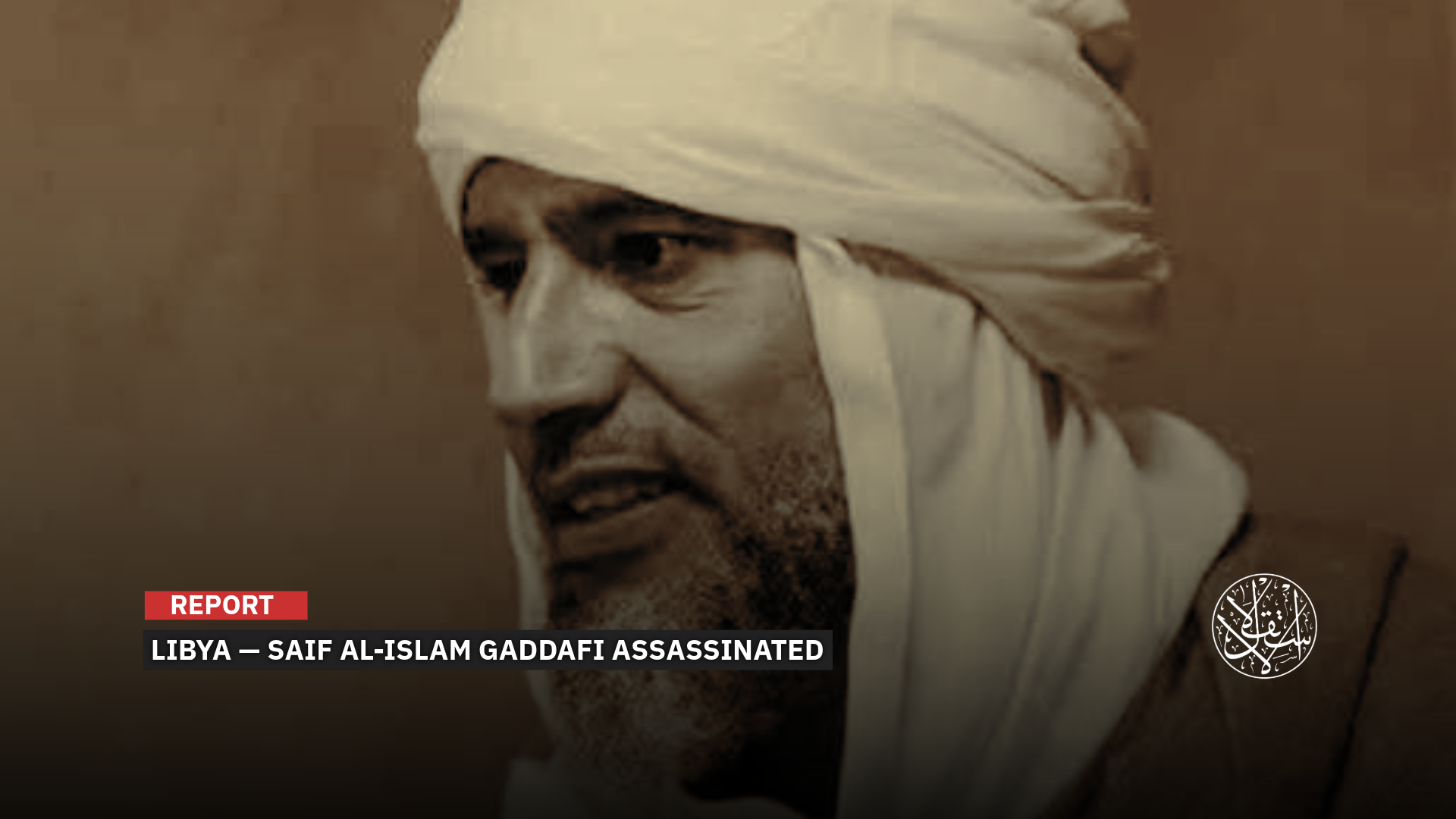
Prior to 2011, Saif al-Islam Gaddafi was regarded as the probable successor to his father.
The assassination of Saif al-Islam Gaddafi, son of Libya’s late leader Muammar Gaddafi, on February 3, 2026, in the northwestern city of Zintan, appeared to be one of the most opaque and unsettling episodes in Libya’s fractured political landscape.
Zintan, which does not fall under the effective control of a central authority, provided an almost ideal stage for a killing without clear fingerprints.
Saif al-Islam had not been a dominant political actor in recent years, aside from his failed attempt to run in the 2021 presidential election, a vote that was ultimately canceled before it could take place.
Despite his limited direct influence, he was killed because he remained, in the eyes of his adversaries, a symbol of a Libyan chapter that has yet to close.
For some, that chapter must be buried for good; for others, reviving it risks reigniting conflict and reshuffling the fragile political deck.
Inside Libya, rival factions swiftly traded accusations. Opponents of the militia forces of retired General Khalifa Hafter, particularly his son Saddam Hafter, who has been rising politically and militarily, blamed them for the killing, describing it as a move to clear the field of the “Gaddafi ghost” and narrow the options for any future electoral process.
Other fingers pointed outward, toward foreign powers believed to have a direct interest in prolonging Libya’s division and disorder.
The same actors, critics argue, have been accused of fueling conflicts in other regional arenas, including Sudan and Yemen, as part of a broader struggle over influence and resources.
Before 2011, Saif al-Islam had been widely seen as his father’s likely heir, amid a wave of republican succession projects that also touched the sons of Egypt’s former President Hosni Mubarak and Yemen’s late President Ali Abdullah Saleh.
The Arab Spring uprisings swept away those ambitions and upended the political calculus across the region.
Nearly every aspect of the killing is shrouded in ambiguity. Saif al-Islam had been living in Zintan, traditionally considered a relatively secure enclave, under the protection of the Abu Bakr al-Siddiq Brigade, a well-organized militia that maintained a degree of independence from both Haftar’s militia forces and the authorities in Tripoli.
His death within that security perimeter raises serious questions about how it was breached.
According to circulating accounts, four gunmen carried out the assassination inside the home of Ajmi al-Atiri, commander of the local militia that had been hosting him.
He was killed swiftly, reportedly with only one security companion present.
Surveillance cameras were deliberately switched off, deepening the mystery surrounding the operation and its true motives.
His body was later displayed in the back of a Toyota vehicle and filmed, a gesture that appeared almost like a public signature on the crime or a calculated message.
The assailants then disappeared without issuing any statement or formal claim of responsibility, leaving the field open to competing narratives.
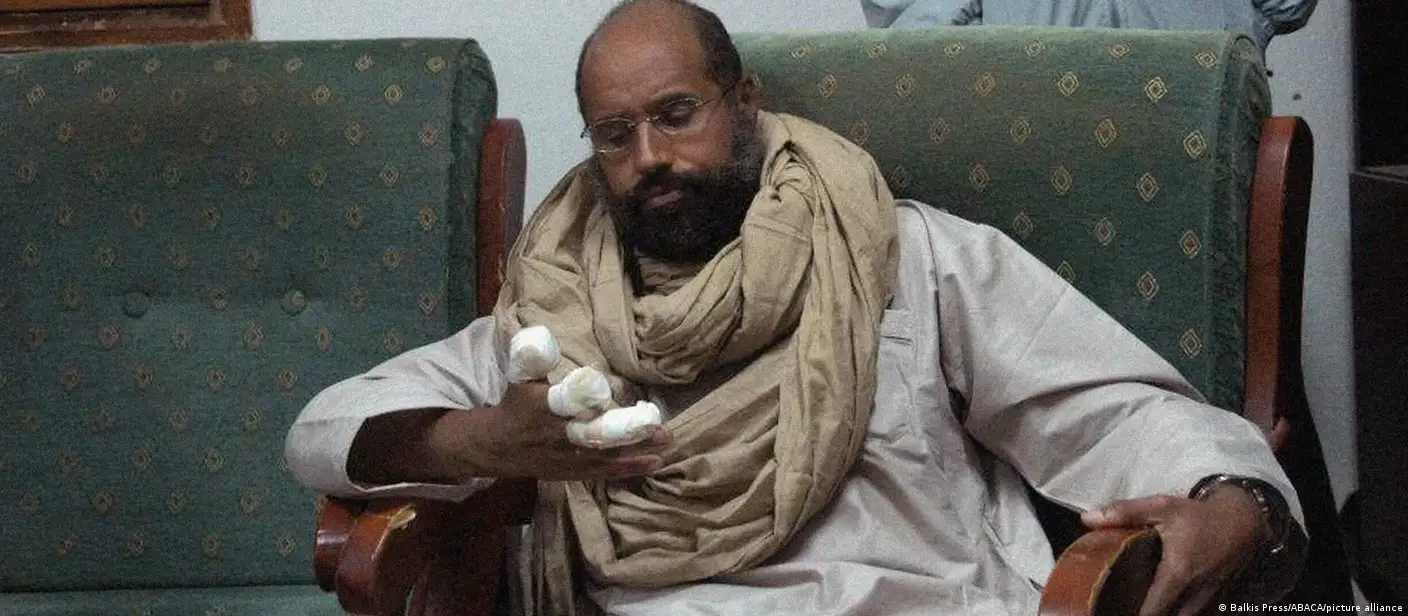
Since his capture in 2011, Saif al-Islam had remained under the protection of the Abu Bakr al-Siddiq Brigade, which announced in 2017 that he had been released and cleared of the charges against him.
His killing within its area of influence marks a highly sensitive development.
So far, no Libyan or international authority has formally identified those responsible, and no investigation has publicly named definitive suspects.
Rival Libyan actors continue to exchange blame in the wake of the incident.
The Libyan attorney general announced the opening of a formal investigation to uncover the circumstances of the assassination and identify the perpetrators, but no conclusive findings have yet been released.
In this context, Presidential Council head Mohamed al-Menfi called on political forces to await the results of the official investigation being conducted by the prosecutor’s office.
He said he was following the case closely to ensure there would be no impunity, acknowledging what he described as legitimate sources of concern.
Al-Menfi also urged political, media and social actors to temper their rhetoric and reject incitement, arguing that the objective of the assassination was to undermine national reconciliation efforts and obstruct the holding of free and fair elections in which Libyans could choose their leadership.
Saif al-Islam had survived two previous brushes with death. The first came in 2011, when his brothers Saif al-Arab and Khamis were killed in NATO airstrikes targeting prominent figures in the former regime.
The second followed his capture by Zintan militias while attempting to flee in disguise toward Niger.
He was later sentenced to death by firing squad on charges of inciting the killing of protesters.
He spent nearly five years in a prison in the mountains of Zintan after militias refused to hand him over to the Tripoli authorities, amid an intense struggle among Libyan cities over judicial and political influence and control of resources, foremost among them oil, the country’s primary source of revenue.
In the end, he died in the same city that had shielded him for years.
Who Stands to Gain?
Most analyses of the assassination of Saif al-Islam Gadhafi centered on the question of “who benefits?”, given his status as a symbol of the former regime and the symbolic weight he carried — one capable of unsettling the fragile balances within Libya’s political landscape.
His adversaries viewed him as a potential threat, whether as a “populist” candidate in any future election, as a card that could reshuffle the deck amid the entrenched east-west divide, or even as a compromise figure who might win acceptance from a segment of Libyans, according to Reuters on February 3, 2026.
Despite his long absence from the spotlight, his political and symbolic presence did not fade.
His name continued to surface in debates over elections, reconciliation and the future of the divided Libyan state.
For some, Saif al-Islam represented a symbol of lost sovereignty and the persistence of the past, while others saw in him an irredeemable legacy of authoritarian rule, according to The Libya Observer on February 4, 2026.
The French magazine Jeune Afrique reported on February 4, 2026, that Saif al-Islam did not appear to harbor concrete political ambitions, suggesting that his assassination was driven primarily by the fact that he remained a heavy political symbol in Libya’s collective memory.
Until as recently as 2021, when he registered as a presidential candidate, part of the population regarded him as either a possible gateway to the return of the old regime or a route to stability amid the struggle between the Tripoli-based government and Khalifa Haftar’s militia forces in the east.
At the time, supporters of the former regime bet on the enduring symbolic weight of the Gaddafi name inside Libya and launched an organized campaign portraying him as a potential reformer.
His candidacy, however, was marked by confusion. His file was first rejected, then accepted, before the entire election was canceled amid political deadlock and instability.
In this light, his killing appeared to some as the assassination of an entire narrative and the closing of a political era, as Libya analyst Jalel Harchaoui told Jeune Afrique.
After the deaths of his brothers Mutassim, Khamis and Saif al-Arab, Saif al-Islam was the only son of Muammar Gaddafi who had shown any willingness to play a political role, making his elimination akin to erasing the last remaining emblem of that period.
Hesham al-Shalwey, a researcher, told Mada Masr on February 4, 2026, that Saif al-Islam’s prominence did not stem from leading an organized political movement, but from his ability to draw elements of the so-called Green Resistance away from the orbit of Haftar and Abdul Hamid Dbeibah, and to attempt to reassemble an alternative patronage network beyond their control.
Khalid al-Mishri, former head of the High Council of State, said the assassination politically benefits several influential actors, including Haftar and his son Saddam Haftar, while stressing that this does not amount to a direct criminal accusation.
In remarks to Al Jazeera program on February 5, 2026, al-Mishri said that the exit of a figure of Saif al-Islam’s stature reduces congestion in the political arena, particularly amid renewed talk of elections.
He emphasized the need to distinguish between political benefit and criminal responsibility, leaving the task of identifying the perpetrators to the judiciary.
Al-Mishri added that in recent months, Saif al-Islam had not been advocating escalation or confrontation, even after his partial return to the political scene and his registration in the 2020 election process, making his assassination a source of wide-ranging questions.
Multiple media sources have pointed to the possible involvement of local militias aligned with forces inside Libya’s fractured landscape, whether factions in Zintan or tribal and military actors who saw his continued presence as an obstacle to their political ambitions.
The broader context remains one in which armed groups control key security and military levers.
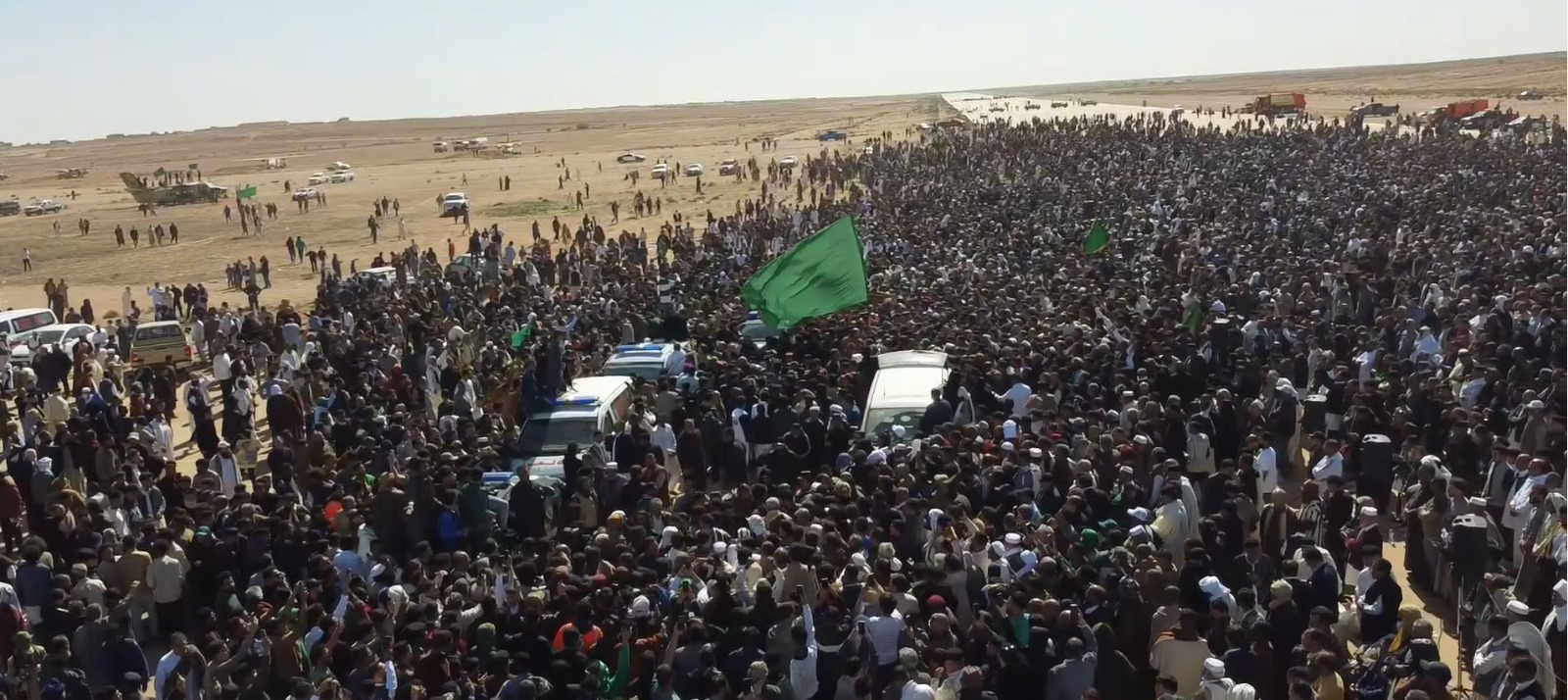
His funeral, held in the western Libyan city of Bani Walid on February 6, 2026, resembled a tribal referendum.
Thousands of supporters attended, and the green flags of the former Jamahiriya were raised, a scene that reflected both anger and nostalgia among a segment of Libyans.
Egyptian journalist Mohamed Khayal suggested in a Facebook post that the assassination may have been carried out by an international actor using domestic tools, within the framework of regional rivalries and the complexities of the American equation.
He argued that the funeral served as a direct rebuttal to those who had downplayed Saif al-Islam’s political weight, underscoring that he remained a formidable figure in Libya’s equation.
He noted that in the years following his release, Saif al-Islam had managed to build a political current that could not be ignored, particularly given Libya’s regional and tribal composition.
He also established a network of interests that included supporters of the former regime and critics of the political elites that had ruled since 2012, in addition to attracting marginalized armed groups between Tripoli and Benghazi.
In the same context, journalist Mostafa Barakat, a specialist in Libyan affairs, said that “everyone, more or less, agreed on getting rid of Saif al-Islam Gaddafi,” explaining that external motives stemmed from him being “his father’s keeper of secrets” and the sole witness to the true size of Libya’s frozen funds abroad, as well as possessing sensitive information about corrupt ties with European leaders.
According to documents released by the U.S. Department of Justice, the correspondence, linked to billionaire Jeffrey Epstein, discussed exploiting the chaos in Libya to seize frozen assets in collaboration with elements of British and Israeli intelligence, in a bid to control funds estimated in the tens of billions of dollars.
Libyan officials estimate the value of these assets at up to $200 billion, spread across European countries in the form of deposits, investments, and fixed assets.
Barakat argues that intelligence agencies were aware that keeping Saif al-Islam alive could pose an obstacle to division projects, as he was the only figure promoting a unifying discourse outside the camps of conflict.
Meanwhile, internal actors viewed his assassination as a step toward clearing the path to power in both east and west Libya.
Did the Haftars kill Saif al-Islam?
Given the concentration of the Qadhadhfa tribe within areas controlled by Khalifa Haftar’s militia forces, backed by the UAE and, to some extent, Egypt, and the social symbolism of the Gaddafi family in those areas, which could conflict with the rising influence of Saddam Haftar as the de facto heir to eastern Libya, fingers were pointed at him as a potential beneficiary of Saif al-Islam’s elimination.
Tobruk Platform cited a source from the Abu Bakr al-Siddiq Brigade, which had previously protected Saif al-Islam, saying, “Saddam Haftar stands behind the assassination of Gaddafi’s son.”
The source emphasized that the operation was neither a random clash nor an incidental killing, but a direct, premeditated targeting, part of a series of previous and repeated attempts to eliminate Saif al-Islam.
The source also noted that Saddam Haftar had, over the past years, led multiple attempts to track or assassinate Saif al-Islam, the most notable being his pursuit of him in Sebha following Saif al-Islam’s announcement of his presidential candidacy in 2021, using a force under his command, before Saif al-Islam escaped due to leaked information about the security operation targeting him.
In contrast, accusations were also directed at the 444 Combat Brigade of the Ministry of Defense within the Government of National Unity in Tripoli, claiming a connection to Saif al-Islam’s killing, although the brigade issued an official statement categorically denying any involvement in the assassination or previous pursuits.
During Saif al-Islam’s funeral in Bani Walid, members of the 444 Combat Brigade were present, overseeing the ceremony, distributing water and juice to mourners, and interacting with them with notable respect, in what appeared to be a direct practical response to attempts to implicate the brigade in the crime.
Meanwhile, despite condolences and statements of condemnation from parties in the Tripoli government, the forces controlling eastern Libya under Khalifa Haftar refused to allow Saif al-Islam to be buried in Sirte, his birthplace and the stronghold of his tribe.
Reports indicated that Saddam Haftar issued orders to respond immediately to anyone raising the old Jamahiriya flag.
The Gaddafi family hails from the central Libyan city of Sirte, currently under the control of Haftar’s militia forces, while Bani Walid, where Saif al-Islam enjoyed broad social and political support, falls within the area controlled by the internationally recognized government in Tripoli.
Nevertheless, Jeune Afrique noted that Saif al-Islam was aware of his limited chances against the security and military apparatus built by Saddam Haftar in the east, considering that he was not a real rival for power.
The magazine added that rumors of political competition between the two had been exploited by local actors in Zintan, who used Saif al-Islam’s name as a bargaining chip or threat from time to time, possibly paving the way, indirectly, for his assassination.
The timing of the killing carries additional significance, coming just 48 hours after a meeting in Paris, mediated by the United States, which brought together Saddam Haftar, son of the militia military commander controlling eastern Libya, with the nephew of Prime Minister Abdul Hamid Dbeibah, under undisclosed political and security arrangements, raising new questions about the crime’s regional and international context.
Repercussions of the Assassination
Libyan observers expect that the assassination of Saif al-Islam Gaddafi will heighten tensions in areas where he held social and political influence, particularly in central and southern Libya, including Zintan and Bani Walid, a development that could negatively affect any potential electoral process in the coming period.
Others argue that the killing created an unexpected political vacuum, as Saif al-Islam was, in theory, one of the few figures capable of reshuffling alliances within Libya’s fractured landscape or attracting supporters of the former regime, making his elimination a factor that could push the country back into a cycle of instability.
In this context, Saif al-Islam’s political team wrote on their Facebook page that his death came “following a treacherous and cowardly assassination carried out by sinful hands in his home in Zintan,” describing the crime as “an assassination of opportunities for peace and stability in Libya.”
The statement stressed that the perpetrators “will not escape pursuit and punishment for planning and executing this crime.”
In contrast, Khaled al-Mishri, former head of the High Council of State, downplayed the likelihood of a wider outbreak of chaos, noting that Saif al-Islam’s supporters lack significant coercive power and do not pose a direct security threat, especially since their statements have called for calm and restraint.
Al-Mishri, however, warned of the danger of repeated public assassinations, whether in Tripoli or elsewhere, seeing such incidents as evidence of unacceptable security lapses or possible collusion by security actors seeking to obscure evidence and complicate investigations.
Libyan estimates suggest that Saif al-Islam’s assassination may be linked to future political scenarios, as his fall removed a political card that, even symbolically, played a role in internal bargaining that excluded the traditional poles of conflict in east and west Libya.
With his elimination, a political symbol capable, in theory, of uniting broad social bases was sidelined in favor of internal forces seeking to reproduce the state according to military and tribal power-sharing logic rather than a political path, deepening the sense of vacuum and instability.
If it is confirmed that militias affiliated with Khalifa Haftar’s militia forces acted on behalf of his son, Saddam, backed by domestic and foreign actors, it would, at least in eastern Libya, clear the way for Saddam Haftar without a symbolic rival of weight.
If, instead, the crime was orchestrated by actors in western Libya or forces linked to the Tripoli government, despite the absence of supporting evidence, the outcome would still remove a third element from the conflict equation with Haftar and could drive part of Saif al-Islam’s supporters to align with the western camp against the east.
In both scenarios, Saddam Hifter appears to be the main political beneficiary of Saif al-Islam’s removal, as his absence leaves the political landscape open and ambiguous, especially if Saif al-Islam were to return to the race for the presidency or other sovereign positions representing his tribe in Sirte, within Haftar’s area of control.
The International Crisis Group warns that the elimination of political options risks returning Libya to armed conflict, according to Agence France-Presse on February 4, 2026.
Claudia Gazzini, the group’s Libya analyst, described the timing of Saif al-Islam’s killing as “strange,” while Anas al-Qamati, head of the Sadiq Research Institute in Tripoli, called it “blatant.”
Housni Obaidi, director of the Center for Studies and Research on the Arab and Mediterranean World in Geneva, said Saif al-Islam’s death “benefits all the political actors currently competing for power in Libya.”
Anas al-Qamati also suggested the potential involvement of foreign powers, noting that “the complexity of the operation, the number of assailants, the ability to penetrate the compound, and the disabling of surveillance cameras all point more to an intelligence operation than a conventional militia action.”
These suspicions were reinforced by information broadcast on Al Arabiya, of uncertain accuracy, citing sources from the parliamentary investigative committee that 19 bullets were found in Saif al-Islam’s body, and that his security detail had withdrawn from the vicinity of his residence approximately an hour and a half before the assassination.
Libya analyst Alaa Farouk warned that the assassination could become a new instrument in the Libyan conflict, asking on his Facebook account, “Does the killing of Saif Gaddafi open the door to assassinations for anyone considering a presidential run, or was Saif a special case targeted because of his project and symbolism?”
Farouk added that the circulating narrative of foreign planning and internal betrayal places all Libyan parties under heightened pressure and shared responsibility, particularly in the face of external powers that did not see their interests aligned with Saif al-Islam and chose the timing of the fifteenth anniversary of the February revolution to carry out his elimination.
Sources
- Who Is Behind the Killing of Late Ruler Gaddafi's Son, and Why Now?
- Libya: Who Had an Interest in Assassinating Saif al-Islam Gaddafi? [French]
- Libya's Saif al-Islam Gaddafi, Who Crushed Dissent Then Sought Political Comeback, Dies at 53
- Al-Mishri: Assassination of Saif al-Islam Benefits Hifter and His Son [Arabic]
- Gaddafi’s Son Is Still Alive and Wants to Reclaim Libya [Arabic]