Blocked at the Door: How Israeli Occupation Is Undermining National Committee for the Administration of Gaza
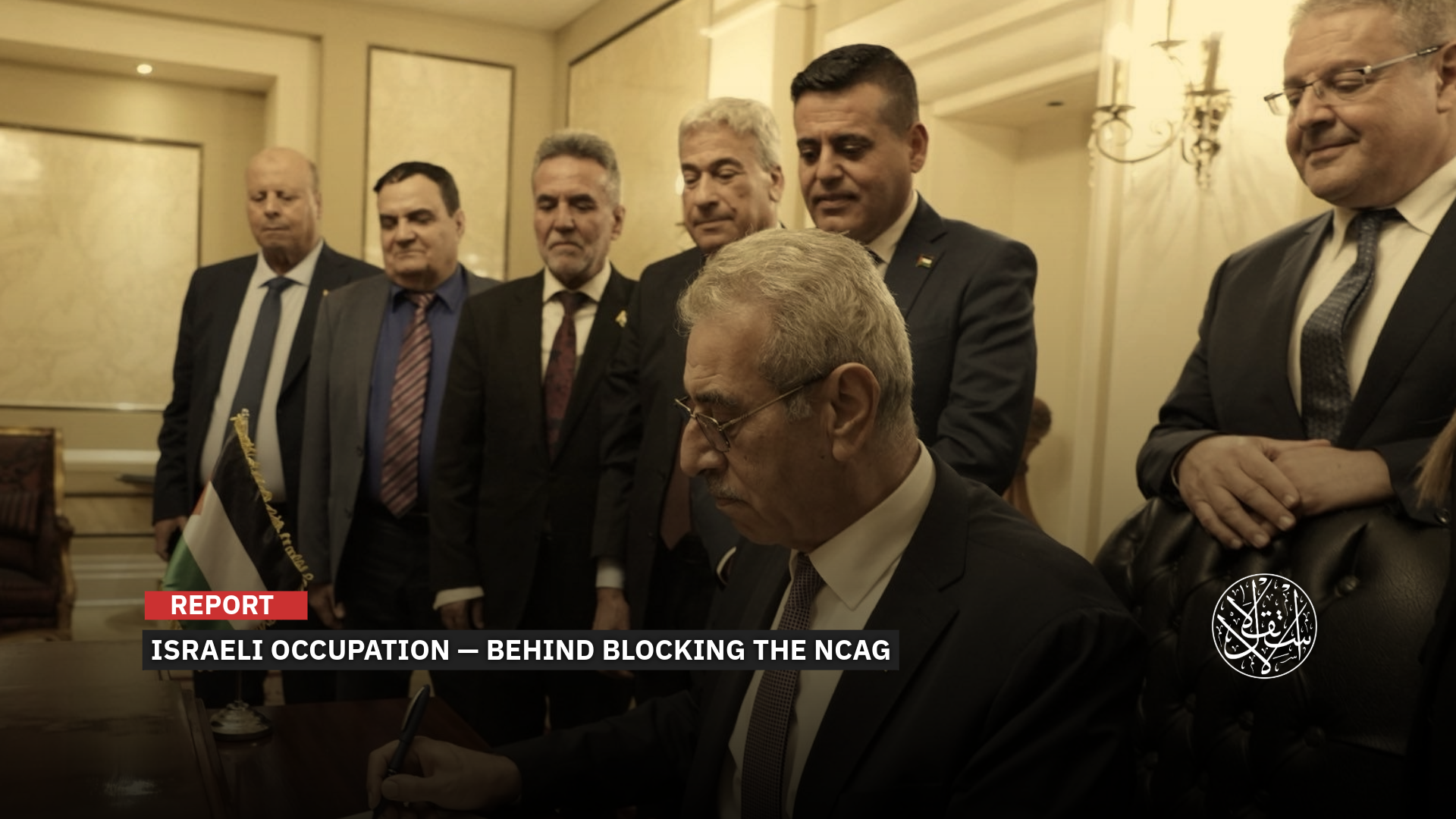
The Israeli Occupation is imposing a veto on who can oversee from abroad and who can govern on the ground.
In mid-January 2026, the National Committee for the Administration of Gaza (NCAG) emerged as the emblem of a new phase, supposed to steer the besieged Strip from a fragile ceasefire toward post-war management.
At the time, Washington announced the launch of the second phase of the ceasefire plan, which included the formation of a 12-member Palestinian technocratic committee, headed by Ali Shaath, tasked with emergency relief and laying the groundwork for reconstruction.
Shut Out
Within the broader architecture of the plan, U.S. President Donald Trump launched what he called the “Board of Peace,” which he chairs, as the political and financial umbrella overseeing the NCAG.
This board is also tasked with supervising the tracks of disarming the Palestinian Resistance Movement (Hamas) and rebuilding the Strip, while bringing in international figures and conditioning permanent membership on substantial financial contributions.
In theory, this structure casts the committee as a kind of “service government,” but in practice its freedom of movement and ability to access Gaza remain hostage to external gatekeepers, foremost among them the Israeli Occupation.
Israeli objections to this part of Trump’s plan surfaced early, not over the idea of managing Gaza through a new body itself, but over the “political legitimacy” of the structures set to oversee the second phase.
According to the plan, the NCAG is one of four bodies designated to manage Gaza’s transitional period, alongside the Board of Peace (BP), the Gaza Executive Board (GEB), and the International Stabilization Force (ISF).
The office of Israeli Prime Minister Benjamin Netanyahu said Washington’s announcement of the GEB’s composition was made without coordination with “Israel” and ran counter to its policy.
It added that Netanyahu instructed Foreign Minister Gideon Sa’ar to reach out to his U.S. counterpart, Marco Rubio, to address the matter, emphasizing that “Israel” rejects “any Turkish role,” referring to the presence of Turkish Foreign Minister Hakan Fidan on the GEB.
By contrast, a U.S. official said “Israel” had been aware of the formation of the GEB, according to Israel Hayom.
This Israeli move signals a practical push to impose an early veto on who supervises and manages Gaza from the outside, even before addressing who would handle implementation on the ground.
The objection was not limited to the external dimension. It was accompanied by internal pressure toward greater hardline positions, with ministers from the far-right wing of the governing coalition calling for a return to war.
They publicly backed Netanyahu’s stance on the GEB. Extremist Finance Minister Bezalel Smotrich said countries that kept Hamas alive cannot replace it, referring to Turkiye and Qatar, both of which “Tel Aviv” rejects having any role in Gaza.
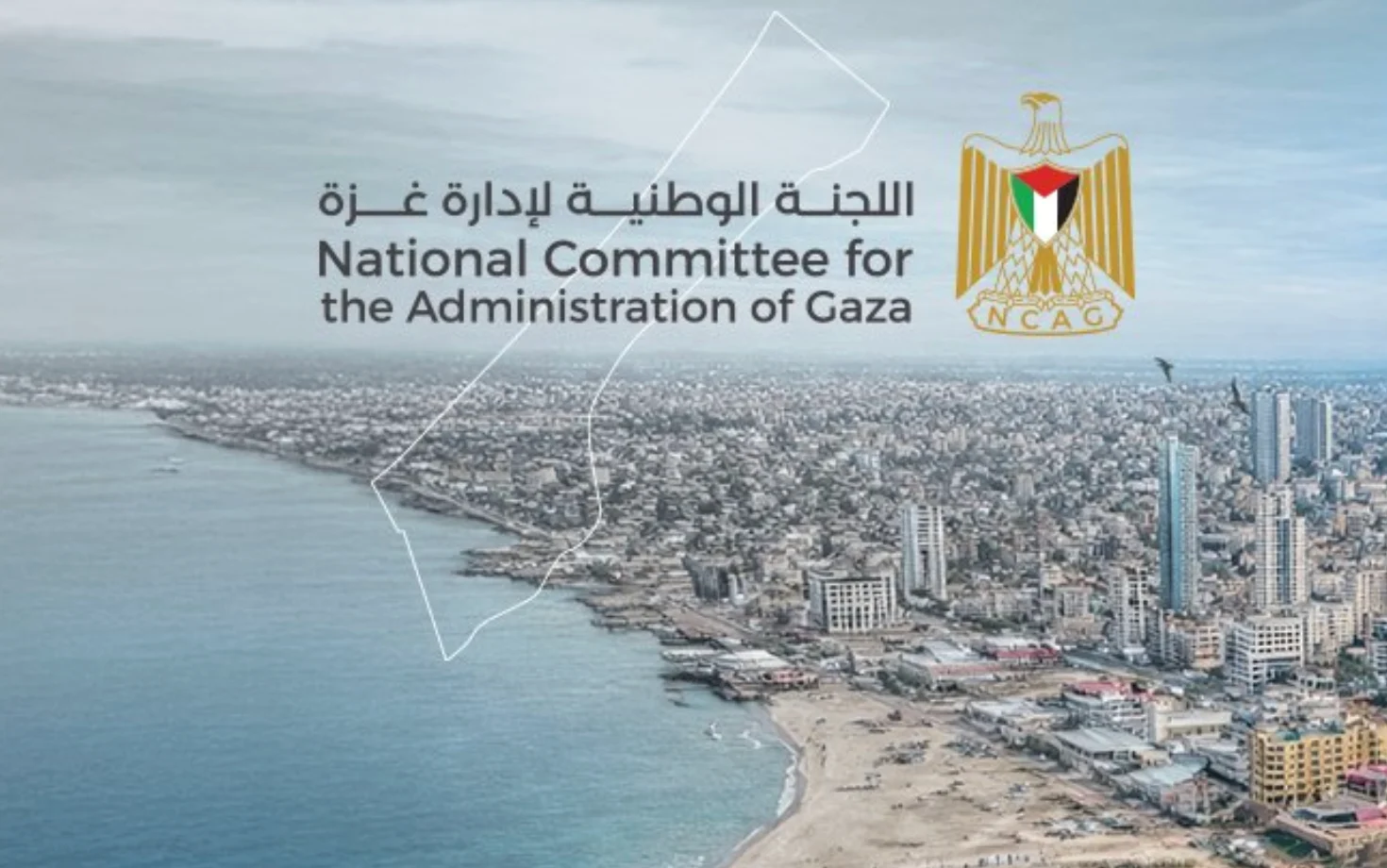
The controversy did not stop at who would govern Gaza from inside and outside. On February 3, 2026, the logo of the NCAG became a flashpoint that exposed the committee’s political dimension.
The NCAG changed its logo for the third time within weeks of its announcement. In its latest version, the emblem of the Palestinian Authority (PA) appeared, featuring the well-known golden eagle.
“The logo of the NCAG, which was presented to Israel, was entirely different from the one published this evening,” Netanyahu’s office said in a statement.
“Israel will not accept the use of a Palestinian Authority symbol; the Palestinian Authority will have no part in the administration of Gaza,” it added.
The NCAG said that its logo designs “may evolve” and that the final decision rests with it.
Former Israeli war minister Benny Gantz dismissed the controversy as a trivial fuss, emphasizing that in the end what matters most is preventing Hamas from controlling the Strip.
No Room to Act
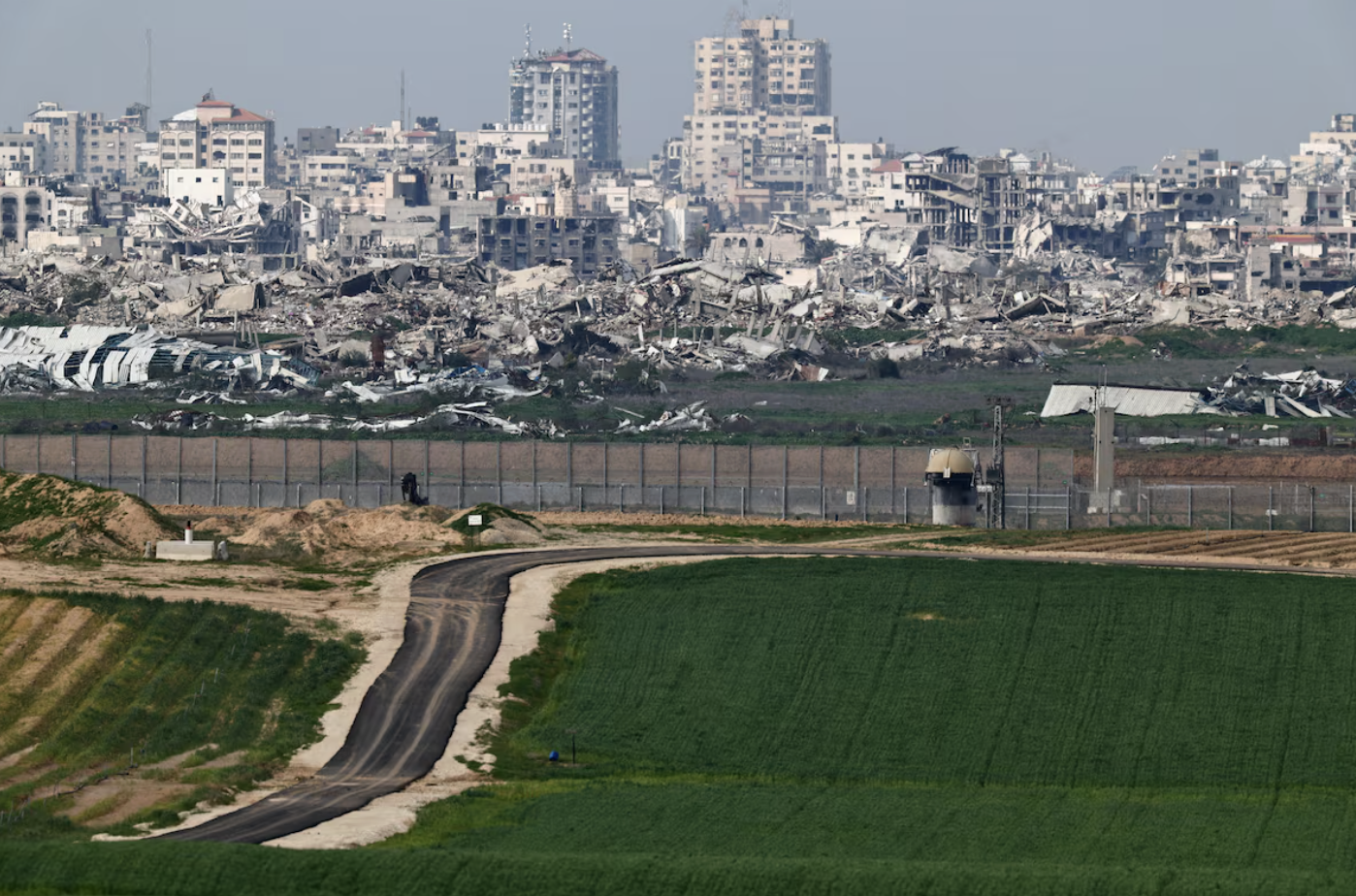
The Israeli Occupation still does not recognize or engage with the NCAG; it continues to operate from outside the Strip, without a permanent headquarters or a near-term plan to establish one inside Gaza, according to Reuters.
A Palestinian source told the agency that the absence of a proper headquarters is tied to the scale of destruction in the Strip, noting that “Israel” bears part of the responsibility for not allowing caravans that could serve as temporary offices or infrastructure for operations. The source added that the NCAG’s current role is limited to “technical and logistical” tasks, without broad executive powers.
So far, the Israeli Occupation has refused to allow committee members to enter Gaza via the Rafah crossing on the Egyptian side, meaning the committee’s work, effectively absent on the ground, is managed from Cairo.
Haaretz reported that “Israel” continues to obstruct the committee’s operations by preventing its members from entering Gaza from Egypt, despite Rafah’s reopening and the committee’s formation having been announced weeks ago.
Haaretz noted that this obstruction goes beyond claims of “unpreparedness” to a policy of “non-permission,” keeping the committee in a perpetual waiting state, producing an administrative vacuum that allows civil institutions to remain paralyzed or continue under the Hamas authority without an organized transfer of power.
Since Rafah’s reopening, “Israel” has restricted the number of entrants to Gaza, with departures exceeding returns, and daily crossings on both sides remain extremely limited.
The Israeli Occupation Forces (IOF) also set up a checkpoint inside Gaza near the border to conduct security screenings on all entries and exits, meaning committee members’ movement between Gaza and the outside will remain subject to political and security conditions imposed by “Israel,” not independent administrative planning.
When the crossing was partially reopened in early February 2026, the details revealed that it was more like a “trap” than a real opening: reaching the Rafah gate required passing through multiple security checkpoints, while local groups cooperating with the Israeli Occupation questioned and interrogated those returning before allowing them into the Strip.
Hamas has repeatedly said that the necessary protocols are ready, files are complete, and the supervisory committees for transferring control to the NCAG are prepared, but Israeli obstruction continues to prevent practical implementation.
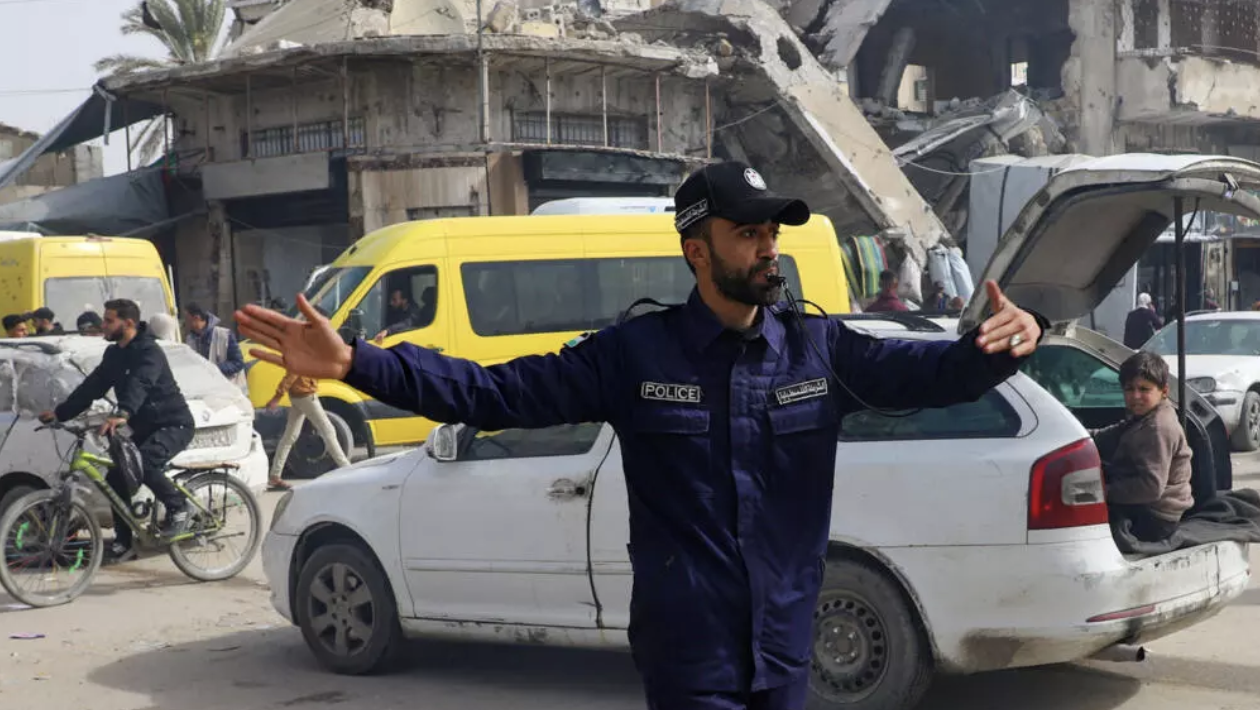
Observers note that the most complex issue is not just who will be allowed into Gaza, but who will carry out operations after entering. Reuters reported that Hamas is pushing to integrate roughly 10,000 of its police into the new administrative structure.
The Gaza government sent a message to its more than 40,000 civilian and security employees, urging them to cooperate with the NCAG, pledging to incorporate them into any future administrative framework.
Hamas spokesperson Hazem Qassem said the movement is ready to hand over control of the Strip immediately but stresses the importance of not “wasting the rights” of former employees, which is likely to clash with clear Israeli objections.
Even if the committee overcomes the hurdles of entry and administration, funding remains a major obstacle. Reuters said international donors are hesitant to finance the U.S. reconstruction plan due to uncertainty over the disarmament of Hamas and fears of a new large-scale war.
The agency also noted that some countries prefer channeling reconstruction funds through the United Nations rather than the BP, with no set date yet for the reconstruction donor conference previously discussed under the BP’s framework.
What Does ‘Israel’ Want?
Observers say “Israel’s” objections go beyond formalities like the committee’s logo or composition; they reflect a deeper effort to keep Gaza under tight security control and prevent any pathway that could restore the PA or limit direct Israeli Occupation influence.
Haaretz interprets “Israel’s” steps as a struggle over “who will sign” and provide institutional cover for Gaza’s “day after,” explaining, according to the paper, “Israel’s” heightened sensitivity to the NCAG’s emblem and symbolic nature.
The newspaper raises key questions: is this truly an independent technocratic committee, or a disguised return of the PA? How far can Prime Minister Benjamin Netanyahu present any PA role to his audience and the hard-right coalition parties?
Haaretz notes deep divisions within “Israel” over the committee’s role and future management, suggesting Netanyahu’s government does not appear willing to relinquish any influence in Gaza at this stage.
This reading shows “Israel” does not see the NCAG as a purely service-oriented body but as a symbolic threat touching its “red lines” regarding who governs Gaza, even if that governance is limited to providing basic civil services.
The PA has stated it is not represented in the committee and that its members are independent technocrats. However, some members’ past ties to the PA lead the Israeli Occupation to view the committee as an indirect extension of it, according to the Times of Israel.
The Israeli government opposes any PA role in Gaza, though Netanyahu acknowledges PA representatives will participate in operating the Rafah crossing.
In this context, the Israeli Occupation seeks to retain control over crossings and security, avoiding any structure that could grant Palestinians independent administration or allow Hamas to reorganize under a technocratic cover.
Israeli media describe the committee as a “powerless front”: the Kan broadcaster noted that while the committee appears as a professional civil umbrella, it may in essence be a “silent return” of the PA through an indirect route.
Kan also suggested Hamas might use the committee as cover for reconstruction and funding while retaining actual security control, raising questions about a “Hezbollah-style” scenario in Lebanon: a civil façade with real armed decision-making in the background.
Based on repeated Israeli objections, security and political conditions, and scrutiny, “Israel” seems unwilling to give the committee room to generate real stability or function fully as a service body within Gaza.
At the same time, observers warn that keeping the committee in Cairo, without real authority or on-the-ground presence in Gaza, risks turning it into a nominal entity that changes nothing on the ground while giving the Israeli Occupation an additional excuse to question the viability of any proposed political solutions.
Sources
- Prime Minister’s Office Rejects New Logo of the Technocratic Government [Hebrew]
- Exclusive: Donors reluctant to fund US-led Gaza plan as Hamas disarmament push stalls, sources say
- Hamas says ready to transfer Gaza governance to Palestinian technocratic committee
- Exclusive: Hamas seeks role for its police in Gaza ahead of disarmament talks, sources say
- Israel and Palestinian Authority Impeding Gaza Technocrats Committee's Start, Palestinian Officials Say
- No Headquarters, No Budget: The Day After Arrives, NCGA Unprepared [Hebrew]
- Analysis Too Palestinian or Too Real? This Logo Drove Israel's Government Crazy for a Reason
- Prime Minister’s Office Disowns New Logo of the Technocrats’ Government [Hebrew]
- Gaza technocratic committee replaces its logo with the PA’s; Israel fumes
- UN deplores Israel's 'systematic' refusal to grant access to north Gaza
- Hebrew Media: Israel Knew Gaza Bodies’ Composition, Netanyahu Pretends to Object [Arabic]