With 71 Mining Licenses Cancelled and Energy Deals Reassessed, Is Senegal Pushing Back Against Foreign Exploitation?
“State sovereignty is not measured by the severity of laws but by the quality of life of the most vulnerable citizens.”
The Senegalese government continues to pursue its election pledges, including a review of foreign investment contracts seen as contributing to the exploitation of national resources and the waste of public wealth.
The government of Ousmane Sonko announced the cancellation of 71 mining licenses and the freezing of bank accounts belonging to the Senegalese Chemical Industries (ICS), as part of a broader overhaul of agreements with foreign firms operating in the country’s natural resource sector.
‘A Grave Injustice’
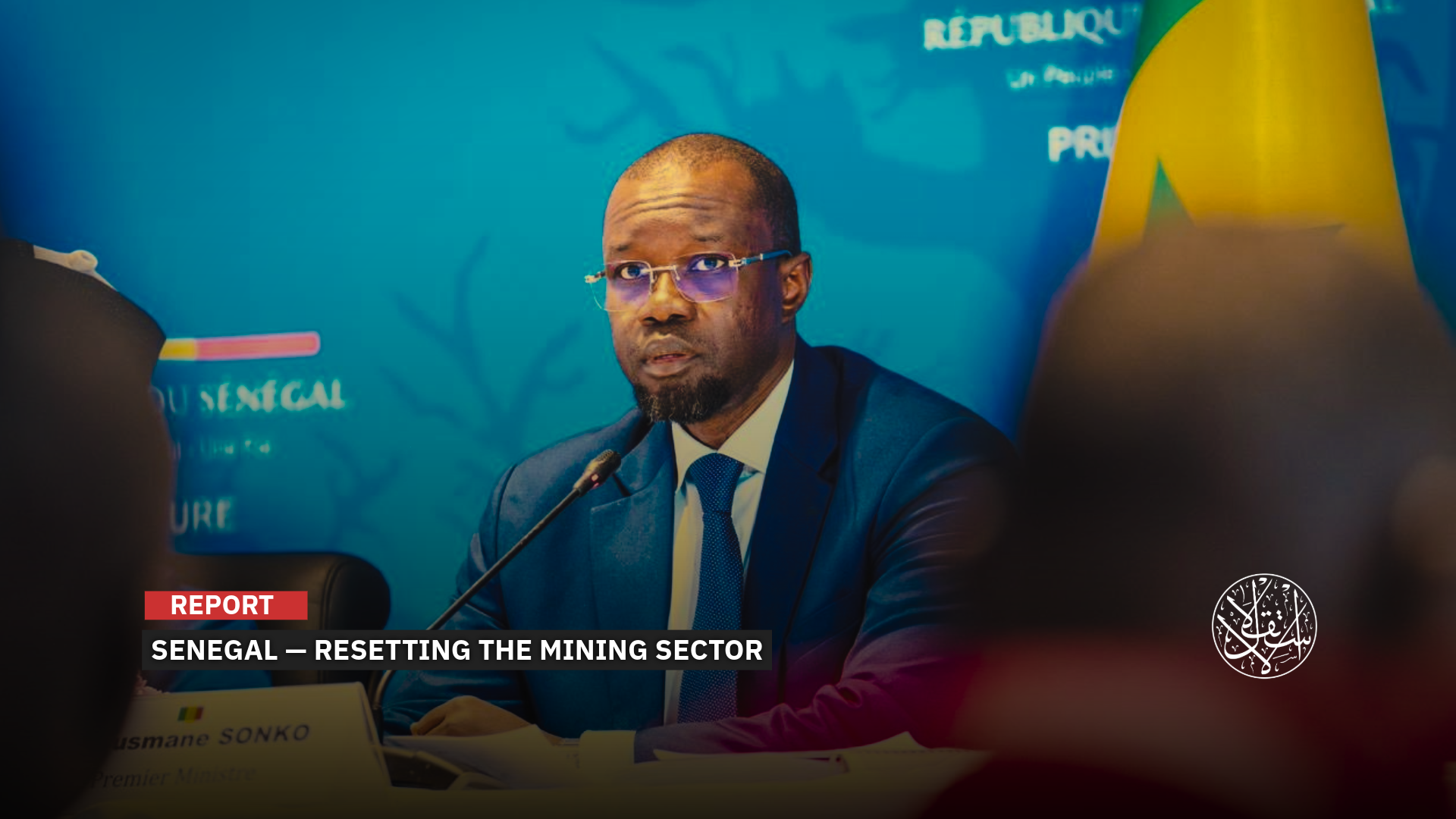
At a press conference on March 12, 2026, Sonko said the measures come nearly two years after the current administration took office, with a pledge to reassess contracts signed with multinational companies.
He said the state had suffered what he described as “gross injustice” in several of these agreements.
Sonko pointed in particular to the ICS as a key case in the review, noting that the firm, one of the oldest phosphate fertilizer producers in sub-Saharan Africa, had breached several financial and tax obligations.
The Indonesian chemical group Indorama Corporation has controlled the company since 2014, and the Senegalese government estimates that the country has lost around 1.075 trillion CFA francs since then, equivalent to just over 1.5 billion euros, due to unpaid taxes, fees, and tax exemptions that the new authorities now consider illegal.
The state has demanded that the company’s owners repay about 381 million euros, while on March 12, the government announced the freezing of Indorama’s bank accounts until it pays 250 billion CFA francs in outstanding dues.
The government has also decided not to renew three mining concessions granted to the ICS as part of a plan to bring all of the company’s assets under state control, with a view to using them in future domestic fertilizer production.
The authorities also cancelled 71 mining licenses, including 14 gold mining permits, after finding that the companies holding them had failed to comply with the terms of their contracts with the state.
In his concluding remarks, the prime minister said negotiations were ongoing with the British energy company BP, the operator of the offshore Grand Tortue Ahmeyim (GTA) gas field shared with Mauritania, to review a contract the government has described as “unfair.”

Electoral Commitment
Sahel Tribune noted in an analysis published on March 13, 2026, that these measures form part of a broader project launched by the new authorities upon taking power, centered on the systematic audit of mining, oil, and gas contracts signed in recent years.
During the election campaign, the camp of Ousmane Sonko condemned agreements it described as unbalanced and unfavorable to Senegal’s interests, pledging to renegotiate them if necessary.
Through these initial decisions, the Senegalese government aims to reaffirm that natural resources “must benefit the national economy more significantly now.”
For the government, the issue goes beyond recovering lost tax revenues and extends to redefining the model for managing the extractive sector in a country on the verge of becoming a new oil and gas producer in West Africa.
The remaining question, according to Sahel Tribune, is how far this stance will go with multinational companies, as Senegal seeks to balance economic sovereignty with foreign investment appeal.
Class Export described the developments in an analysis as dramatic, stressing that few had expected such a move.
On March 16, 2026, it noted that while the decision had been part of the ruling party’s electoral promises, challenging existing contracts remains legally sensitive and carries implications for the country’s international reputation.
The French outlet reported that Sonko believes he has identified a legal basis for terminating these contracts on the grounds that they are unjust and has pledged to publish a detailed report analyzing them.
The developments mark a new turning point in renegotiations with BP, which have stalled for months, as the government seeks improved returns through sustained pressure.
The report also noted that Senegal’s broader motivation includes fiscal pressures and efforts to reduce deficits and debt, prompting renewed focus on tax revenue collection.
Beyond the initial announcement of contract reviews, this marks the beginning of a major legal battle in which no clear winner is expected.

Broader Objectives
Overall, these measures reflect a growing determination across West African states to assert greater sovereignty over their natural resources, given their central economic importance.
This was emphasized in an analysis published on March 16, 2026, by Agence Ecofin, which noted an increasing focus on renegotiating mining concession terms, as seen in Mali, or even the nationalization of concessions, as in Niger with SOMIR.
In all scenarios, the measures aim to safeguard national economic interests and establish fairer partnerships for all parties.
The outlet stressed that this approach is particularly significant as Senegal seeks to mobilize greater revenues to support an economy burdened by public debt that could reach 132 percent of GDP, according to the International Monetary Fund (IMF).
Extractive industries, including mining, quarrying, and hydrocarbons, accounted for 31.89 percent of Senegal’s exports and 4.7 percent of its GDP in 2023, according to the Extractive Industries Transparency Initiative (EITI).
The impact of these announcements on the sector still needs to be assessed in the coming months, as authorities simultaneously prepare a new mining law to replace the framework in force since 2016.
The outlet noted that Guinea’s experience particularly illustrates the challenges of this approach, where the cancellation of mining licenses, for example, led Axis International Ltd to file for arbitration against the state, seeking $28.9 billion in compensation.
In Senegal, the mining sector hosts a number of foreign operators, including France’s Eramet, alongside gold mining groups such as Endeavour Mining, Resolute Mining, and Fortuna Mining.
Political Lens
Senegalese journalist and international relations specialist el-Hadji Ndiaye said the government’s new economic decisions coincide with measures tightening penalties for homosexuality-related offenses, indicating a broader sovereign political direction.
Speaking to Al-Estiklal, Ndiaye stressed that March 11 would be remembered as the week Senegal redefined both its moral and economic boundaries.
“The two measures send a message that is both clear and complex: the state has decided to govern itself fully, while leaving open the question of whether this represents a surge of dignity or a risky gamble.”
Ndiaye noted that the figures are striking, with 71 mining licenses revoked, including 14 gold permits, and another 313 withdrawn over contract breaches and speculation, as operators secure permits only to resell them to foreign actors without developing the resources.
He also pointed to the freezing of accounts belonging to the ICS, linked to Indonesia’s Indorama, until the state receives €380 million.
He further stated that the GTA gas project operated by BP is considered “unbalanced and unfavorable” to Senegal and is currently under review.
Ndiaye added that the state has regained the Yakaar-Teranga field from Kosmos Energy without spending any funds, according to statements by Sonko.
At the same time, losses across reviewed contracts are estimated at more than 1.075 trillion CFA francs, alongside an average 15 percent overbilling rate on infrastructure projects.
He argued that these figures should be taken seriously, as they reflect findings long documented by economists, legal experts, and civil society organizations rather than populist claims.
Ndiaye stressed that Senegal is not an isolated case but the first in the region to take concrete administrative action rather than issue statements of intent, adding that multinational companies have gotten the message.
The journalist said the decisions aim to restore control over natural resources while ensuring conditions for their exploitation, provided that renegotiations lead to fairer contracts rather than legal loopholes that new actors, this time domestic, could exploit.
He argued that under the leadership of President Bassirou Diomaye Faye and Prime Minister Ousmane Sonko, Senegal is witnessing a genuine break from four decades of postcolonial governance.
The real question, he said, is whether Senegal will turn its gas and phosphate wealth into roads, schools, and hospitals over the next decade, or whether its citizens will become poorer, more controlled, and less free.
“State sovereignty is not measured by the severity of laws, but by the quality of life of the most vulnerable citizens, and by that measure, judgment on the Senegalese government remains open.”