Engineers’ Elections: Why the Egyptian Opposition Wins in Unions but Loses in Parliament
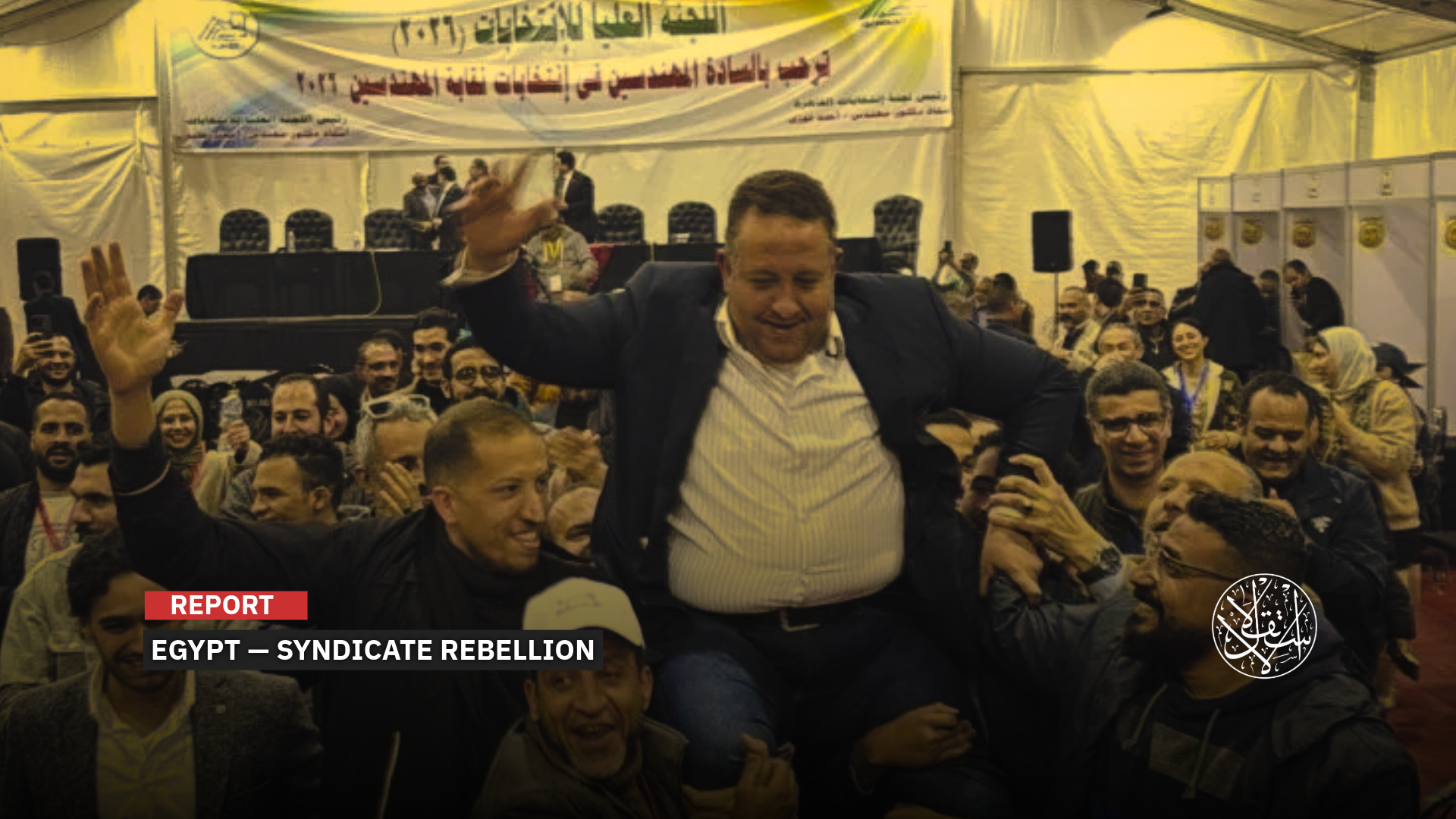
Nasserist leader and former MP Mohamed Abdel Ghani has won the presidency of the Engineers Syndicate.
The results of the Egyptian Engineers Syndicate elections, announced on March 13, 2026, raise broader questions beyond mere union competition, touching on the nature of the relationship between authority and the professional community, and the limits of official influence in electoral outcomes.
The victory of a candidate aligned with the opposition, and the loss of another backed by the state despite government mobilization, cannot be interpreted in isolation from the wider political context, which is witnessing an erosion of trust among segments of society toward candidates associated with the authorities.
In this context, the rise of the Nasserist leader and former parliament member, engineer Mohamed Abdel Ghani, to the position of Engineers Syndicate head, over former minister and previous syndicate head Hany Dahy, appears indicative of what can be described as “punitive voting,” where union members use their votes to penalize candidates perceived as extensions of the executive branch, regardless of their competence or professional experience.
This phenomenon does not seem isolated; it has recurred in elections of other syndicates, such as journalists, and to a lesser extent in lawyers’ unions, reinforcing the hypothesis of a growing voting pattern within professional circles that reflects a desire to preserve union independence and resist government overreach.
In contrast, a striking paradox emerges when comparing these results to general elections, where opposition candidates often fail to achieve similar outcomes.
Observers attribute this to the nature of oversight in union elections, which are conducted under the direct supervision of their members and with a higher degree of transparency and organization, providing a greater space for genuine competition and reducing opportunities for interventions that could influence the electoral process.
This paradox raises fundamental questions about the credibility of broader political contests, particularly parliamentary elections, as political forces argue that these contests have, at various stages, been subject to security interventions and electoral “engineering,” limiting equal opportunities and contributing to the decline of opposition representation within legislative institutions.
In sum, the results of the syndicate elections do not appear to be merely an isolated exception; rather, they reflect a limited space still available for free expression within society, compared to the broader political sphere.
Amid this ongoing disparity, the key question remains: do syndicates represent the last arenas of balance in the Egyptian political landscape, or is this model itself likely to be recalibrated in line with the rules of the broader political game?
A Union Battle or a Political One?
From the first day of the elections, it was clear that the contest was not purely a union matter, but primarily political, as the weight of the authorities and their party, Future of the Nation, was deployed to support a specific candidate.
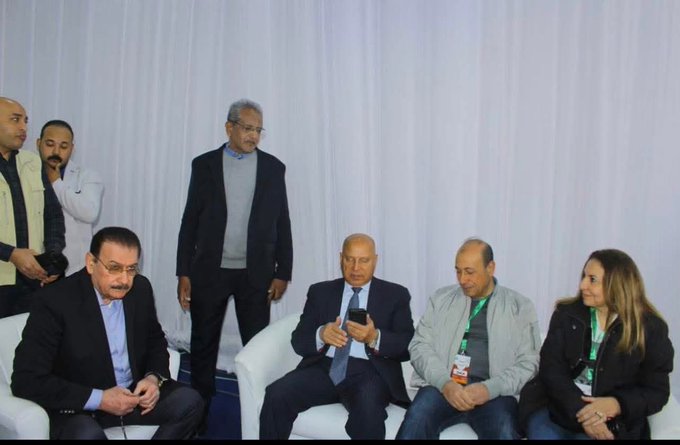
Transport Minister and former military officer, Kamel al-Wazir, publicly endorsed the government-backed Future of the Nation candidate, Hany Dahy, against independent opposition candidate Mohamed Abdel Ghani, prompting politicians and union members to call for support for the independent candidate in order to preserve the syndicate’s independence and prevent the authorities from dominating it.
According to journalist Kotb El-Araby, the results of the Engineers Syndicate elections carried both political and union significance, representing a political event larger than a mere union contest, especially amid the near-total stagnation of political and union activity in Egypt and the dominance of ruling parties following the “engineering” of parliamentary elections, which contributed to the government-backed list winning by default, with only a limited number of opposition parties.
The victory of opposition syndicate head Mohamed Abdel Ghani reflects the rise of an independence current within the unions; ruling parties, particularly Future of the Nation, had attempted to control the Engineers Syndicate to ensure its silence on major national engineering-related issues such as irrigation, water, dams, informal settlements, urban development, electricity, roads and bridges, and new cities, and to prevent dissenting voices from opposing government projects.
According to an analysis published by al-Wafd on March 16, 2026, the reason former minister Hany Dahy lost is attributed to his being perceived as close to the authorities, while Mohamed Abdel Ghani presented himself as an independent candidate representing professional independence, away from political entanglements.
The newspaper noted that the government’s extensive support for Hany Dahy, including backing from numerous ministers, reinforced his image as a political candidate, prompting the Engineers General Assembly to vote against him.
Mohamed Abdel Ghani succeeded in uniting independent and opposition union forces against political party influence within the syndicate, enabling him to secure the runoff by a large margin.
Professional unions in Egypt have seen clear shifts in leadership over the past two years, with candidates aligned with Nasserist and leftist currents winning leadership positions in several prominent unions, notably the journalists’ and engineers’ syndicates, alongside a noticeable presence within the lawyers’ syndicate.
In contrast, the Islamist current was absent from union competitions, having previously been a major electoral force in many professional unions, due to security crackdowns, arrests, and the emigration of its leaders and supporters.
The Engineers Syndicate elections in November 2011, following the January 25 Revolution and the end of government oversight after 17 years, saw the “Egyptian Engineers Gathering” list, affiliated with the Muslim Brotherhood, win a majority of seats, with Brotherhood candidate Dr. Mohamed Magdy Khallousi winning the syndicate head position over Tarek al-Nabrawi.
Following the 2013 coup, professional unions, including the journalists’ syndicate, underwent extensive leadership restructuring, before subsequent election results confirmed the ability of independent and opposition forces to achieve electoral breakthroughs.
In the Engineers Syndicate elections on March 11, 2022, Tarek al-Nabrawi, representing the “Independence Current,” won the head position in a runoff against former minister Hany Dahy.
In the 2025 journalists’ syndicate elections, opposition candidate Khaled elBalshy won the head position for a second term.
In the most recent Engineers Syndicate elections on March 13, 2026, Hany Dahy won the first round with 8,178 votes, versus 4,724 for Abdel Ghani out of 22,288 valid votes, with the remainder distributed among 17 other candidates; Abdel Ghani ultimately won the runoff by a significant margin.
The same scenario repeated in the lawyers’ syndicate, where opposition candidates achieved breakthroughs against authority-backed candidates, with Abdel Halim Allam, representing the “Reform Front,” winning by thousands of votes over the closest authority-backed competitor, Sameh Ashour.
Union officials from the journalists’ and engineers’ syndicates told Al-Estiklal that the government’s overt support and bias toward its candidates was the main reason members voted against them, and that repeated losses by authority-backed candidates in previous elections, despite high-profile government endorsements, strengthened the assembly’s rejection of them.
Pro-government media, including the website el-Balad, highlighted on March 13, 2026, that the elections saw a notable participation of seven ministers, while the engineers themselves were largely absent, with the ministers’ presence outshining that of the voters.
Transport Minister Kamel al-Wazir led the scene alongside the ministers of Petroleum and Mineral Resources, Electricity, Military Production, Higher Education, and Water Resources and Irrigation, in an effort to support the authority-backed candidate Hany Dahy.
Victory Signals
It was a striking paradox that between the first round, held on March 6, 2026, and the second or runoff round on March 13, the opposition candidate experienced a major reversal, winning nearly twice the votes of the government-backed candidate in the Engineers Syndicate elections.
In the first round, government-backed candidate and former minister Hany Dahy received 8,178 votes, compared to 4,724 for Mohamed Abdel Ghani, out of 22,288 valid votes, with the remainder distributed among 17 other candidates.
However, during the week between the first-round results and the runoff, the syndicate experienced a counter-voting movement against the authority-backed candidate, resulting in a doubled vote share for the opposition candidate.
At the end of counting, the judicial committee overseeing the syndicate elections announced Mohamed Abdel Ghani’s victory with 10,505 votes, versus 6,389 for the government-backed candidate, out of 17,517 engineers who cast ballots, including 623 invalid votes.
The engineers’ elections saw a significant decline in turnout; although the syndicate’s general assembly includes roughly one million engineers, only about 23,000 participated in the first round and around 17,000 in the runoff, reflecting abstention for multiple reasons.
Engineers told Al-Estiklal that one of the main reasons for this shift was the government’s decision to raise fuel prices significantly, by 17–22%, during the week between the first round and the runoff.
They noted that heated discussions took place within the syndicate over the price hike on March 10, five days after the preliminary victory of the government-backed candidate, prompting a majority of engineers to vote against him as a form of punishment.
Other estimates indicated that repeated mobilization by Future of the Nation, including the use of collective transportation to support the authority-backed candidate, provoked swing voters, who chose to support Mohamed Abdel Ghani as a form of retaliation.
Outgoing syndicate head and current president of the Arab Engineers Union, Tarek al-Nabrawi, also backed opposition candidate Abdel Ghani and publicly supported him as his successor, which helped consolidate votes and unite supporters around the opposition candidate.
Why Do They Win?
Although the new Engineers Syndicate head, Mohamed Abdel Ghani, brother of journalist Hussein Abdel Ghani, former head of Al Jazeera’s Cairo office, and of leftist party leader Said Abdel Ghani, had previously lost in the 2020 parliamentary elections, he managed to achieve a landslide victory in the recent union elections.
This victory raises questions about why the opposition repeatedly wins in syndicate elections but loses in parliamentary contests, whether this reflects the integrity and oversight of union elections, in contrast to parliamentary elections that are more susceptible to fraud, bribery, and government interference, or whether it represents punitive voting against authority-backed candidates.
Abdel Ghani lost his parliamentary seat in 2020, despite defending Egypt’s sovereignty over Tiran and Sanafir islands while in the 2015 parliament, yet he succeeded in winning the Engineers Syndicate head position in the latest elections.
Egyptian researcher Ammar Ali Hassan notes that Abdel Ghani’s victory reflects the desire of Egyptians, if given freedom of choice, to select new and independent figures, adding that the majority of Egyptians abstain from participating in other elections and referenda for well-known and specific reasons.
Engineers attribute the dramatic shift in results between the first round, where the government-backed candidate won and the opposition candidate lost, and the runoff, where voters reversed their choices, to events on May 30, 2023.
On that day, members of the ruling party Future of the Nation stormed the syndicate headquarters, attempting to withdraw confidence from the former general syndicate head, Tarek al-Nabrawi, and proceeded to destroy ballot boxes.
When engineer Tarek al-Nabrawi won the syndicate head position in the 2022 elections, attempts by council members loyal to the authorities or former military officers to remove him did not stop; an emergency general assembly was held, which witnessed violent incidents but failed to oust him.
At that time, the syndicate experienced a state of division, as the head belonged to the Nasserist current while most council members were loyal to the ruling party Future of the Nation, angering many engineers who opposed turning the syndicate into a political arena for government dominance.
During the emergency general assembly, assaults and acts of intimidation occurred; individuals stormed the assembly headquarters, broke ballot boxes, tore up papers, and scattered them, with four of the perpetrators later identified as members of parliament from Future of the Nation.
Engineers expect that the new Nasserist syndicate head, Mohamed Abdel Ghani, will face similar challenges from the authorities and their parties, especially since the results for the upper council membership showed that candidates from the military and Future of the Nation won a majority of seats, with the final composition of the executive office expected to be announced in early April.