A Generation at Risk: How War Has Undermined Sudan’s Education System
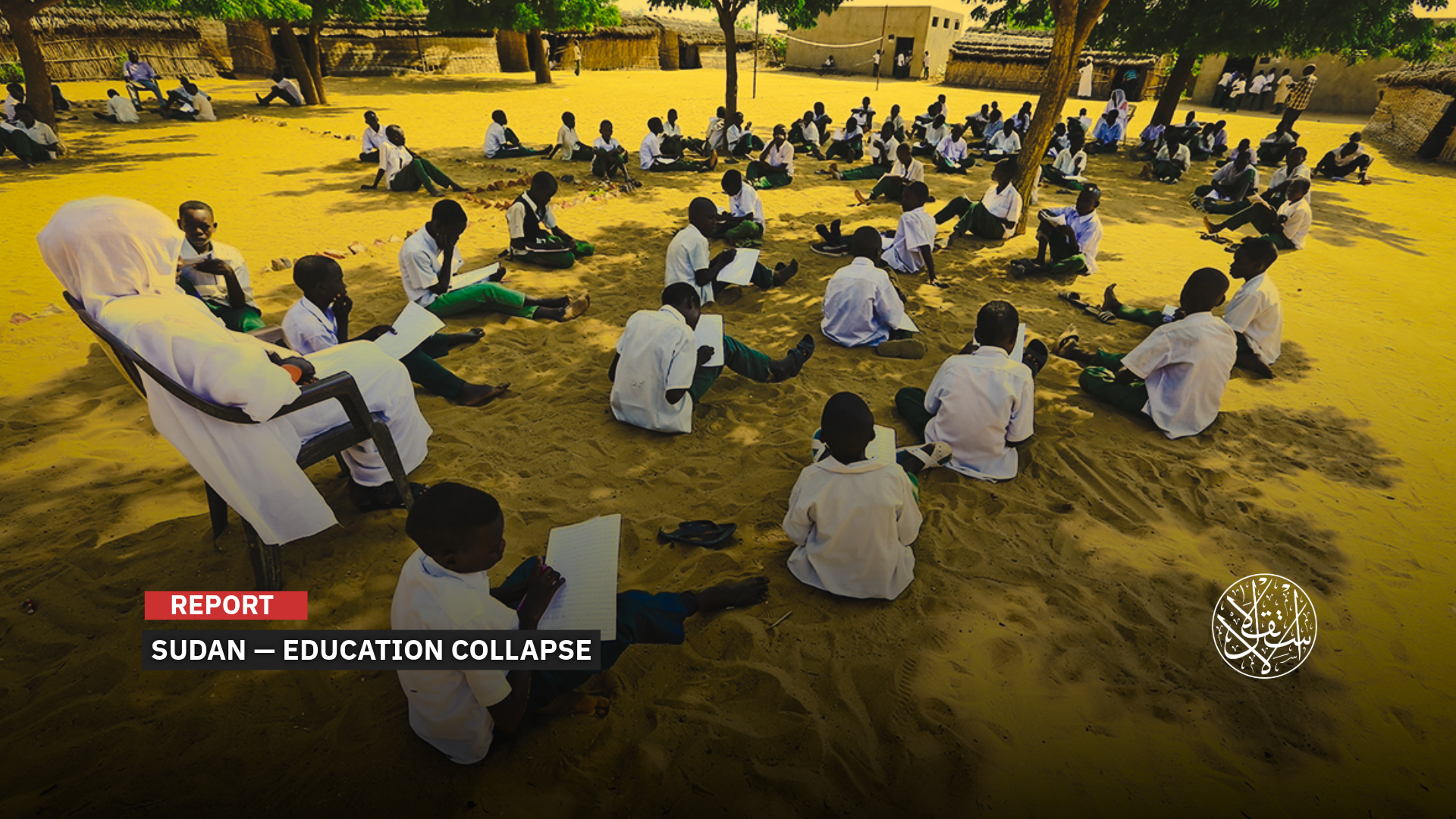
Many schools and educational institutions have been turned into military barracks for soldiers.
Sudan’s education system has been facing an unprecedented collapse since the outbreak of the war, with millions of children out of school and the educational process and examinations disrupted across vast areas of the country, in a scene that threatens the loss of an entire generation.
Sami al-Baqir, rapporteur of the Sudanese Teachers Committee, estimated on March 22, 2026, that around 11 million male and female students have not yet been able to resume their education, out of approximately 14 million who were enrolled in the education system before the war.
These figures intersect with estimates from international organizations; UNICEF indicates that millions of Sudanese children have lost hundreds of school days, in one of the worst education crises in the world.
The repercussions of the crisis are not limited to school closures, but extend to the disruption of student registration, the collapse of the examination system, and the transformation of educational institutions into shelters for displaced people, further complicating the situation and putting the future of an entire generation at risk in the absence of comprehensive solutions.
UNICEF had previously warned, in its 2025 humanitarian appeal document, that about 17 million children out of 19 million of school age were out of school for most of the 2024/2025 academic year, noting that 8.4 million of them were directly deprived of education due to the conflict.
It also confirmed that nearly 11 million children have lost safe learning environments due to the destruction of schools or their use for non-educational purposes, in addition to displacement and the disruption of basic services.
UNESCO estimated the number of out-of-school children at around 19 million, noting that more than 10,400 schools have closed or been disrupted due to the war.
Amid these figures, which may appear different on the surface but are close in their implications, one reality emerges: Sudan is not facing merely an educational setback, but a widespread collapse of its education system, and a dangerous exposure of a state that is no longer able to protect one of its children’s most basic rights.
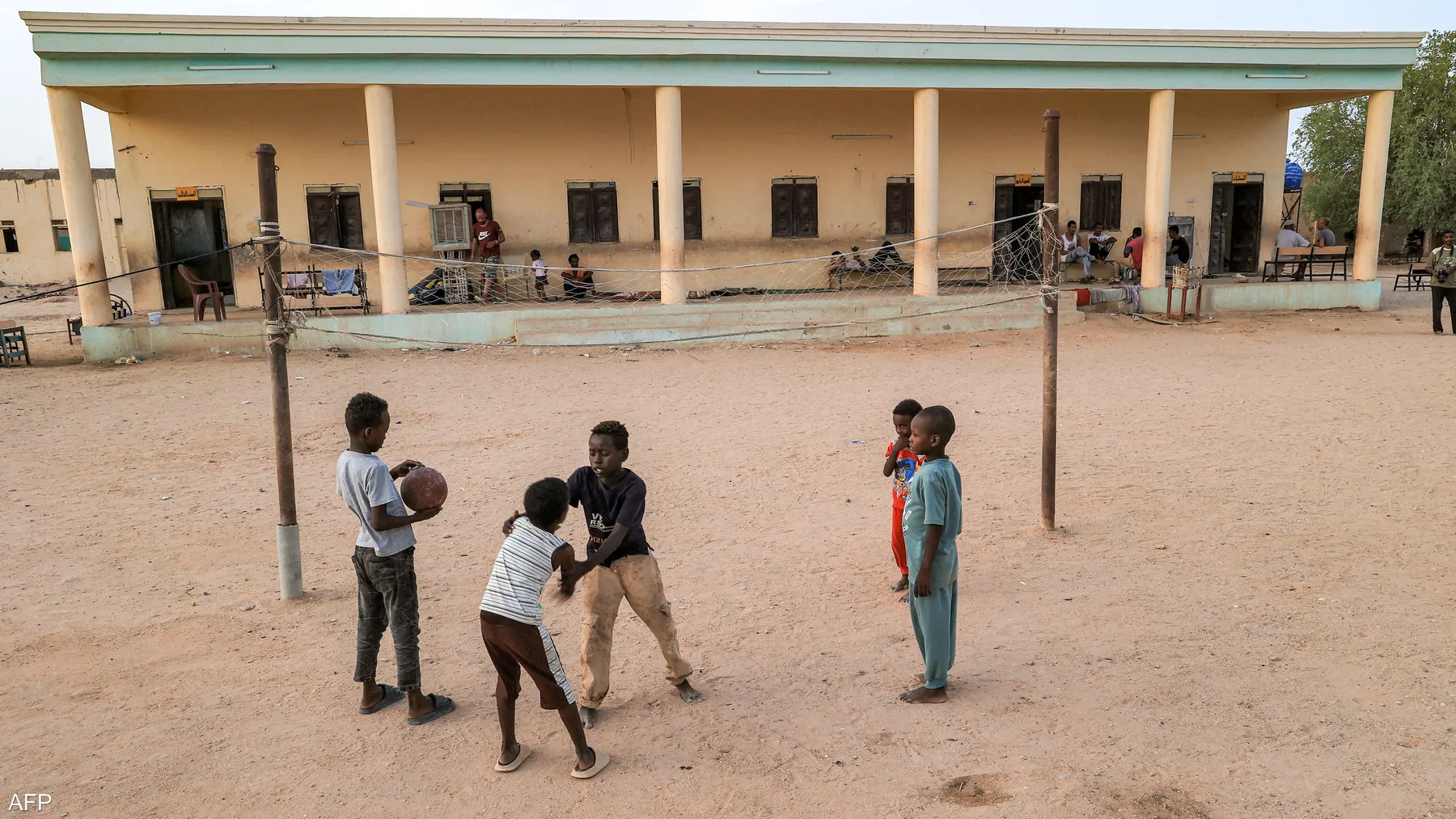
500 Days of Disruption
Testimonies from teachers in Sudan reflect a picture no less grim than the figures reported by international organizations, particularly regarding the collapse of the examination system.
According to Sami al-Baqir, rapporteur of the Sudanese Teachers Committee, around 570,000 male and female students sat for the Sudanese certificate exams in the year before the war (2023), before the number dropped to only about 200,000, meaning that nearly 370,000 students were deprived of taking the exams in just one year.
In the Darfur region, the tragedy is even more severe. Estimates indicate that between 150,000 and 200,000 students, most of them girls, have been unable to sit for secondary school certificate exams for three consecutive years.
Meanwhile, the number of those deprived in conflict areas in West Kordofan State and parts of North and South Kordofan, as well as Blue Nile State, is estimated at around 80,000 additional students.
This collapse in the examination system aligns with warnings from Save the Children, which announced on January 22, 2026, that millions of children in Sudan have lost nearly 500 days of learning since the outbreak of the war, in one of the longest periods of school closures globally.
The organization noted that more than 8 million children, about half of all school-age children, are no longer attending school.
Its Executive Director, Inger Ashing, blamed the international community for a “clear failure” toward Sudan’s children, emphasizing that the number of lost school days exceeds what many children around the world lost during the COVID-19 pandemic.
Based on data from the Global Education Cluster, Save the Children explained that more than three-quarters of school-age children were out of school at the start of the academic year, while about 55% of schools remained closed, and roughly one in every ten school buildings was being used as a shelter for displaced people.
These indicators do not merely reflect the loss of an academic year or the postponement of exams; they reveal a transformation of the school itself, from an inclusive educational space into a structure that is threatened, closed, or preoccupied with basic survival functions.
In a country that was already suffering from educational fragility before the war, this prolonged disruption represents not just a sectoral crisis, but an accelerated path toward producing a generation that is less educated, more vulnerable, and more exposed to poverty, exploitation, recruitment, and social fragmentation.
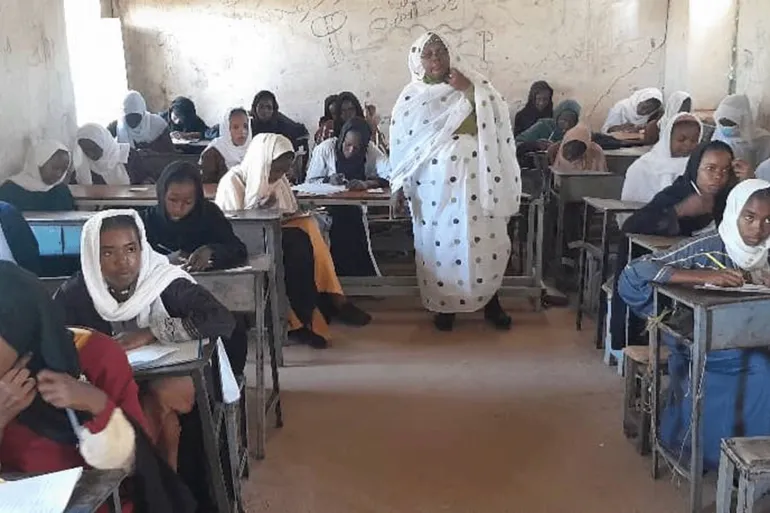
Schools Turned Into Barracks
But one of the harshest aspects of the tragedy in Sudan is that the war has not been limited to depriving children of education through closures and fear; it has gone even further by turning schools themselves into military spaces, in a scene that embodies a severe collapse in the country’s social structure.
According to a report by the Global Partnership for Education issued on February 8, 2026, large numbers of schools and educational institutions have been transformed into military barracks and bases for combat use, while more than half of schools remain closed, and many others have also been used as shelters for displaced families.
The report noted that education in Sudan is “under attack,” with millions of children still out of school despite the partial reopening of some institutions.
In a field example reflecting the depth of the crisis, the organization documented a primary school that hosts around 1,200 students during the day, including 400 displaced children from el Fashir and Tawila, only for the same classrooms to turn at night into overcrowded shelters for families fleeing the war.
This harsh contradiction captures the reality: a child comes in the morning to learn, then returns in the evening to find their school a refuge for displaced people, or completely closed because those who sought shelter there have nowhere else to go.
In North Darfur, where the fiercest fighting is concentrated, only 3% of schools remain open, a shocking indicator of the scale of the collapse.
In the same context, UNESCO confirms that thousands of schools have been closed or disrupted, while human rights reports indicate that the use of schools for military or conflict-related civilian purposes strips them of their safe status and turns them into potential targets for attacks, prompting many families to keep their children away.
As a result, the education crisis in Sudan is no longer limited to disrupted curricula, teacher shortages, or registration challenges; it has gone beyond that to the collapse of the “place” itself, the school as a safe and protected environment.
This is why the protest witnessed in eastern Sudan, specifically in Port Sudan in early January 2026, by displaced people residing inside schools and refusing eviction decisions, appeared as a stark expression of a dual dilemma: a state seeking to resume education, yet lacking humanitarian alternatives for thousands of families who have found no shelter but classrooms.
Between these two needs, the image of war emerges in its clearest form, when basic rights themselves collide, education becomes a victim of displacement, and displacement, in turn, becomes a new cause for the disruption of education.
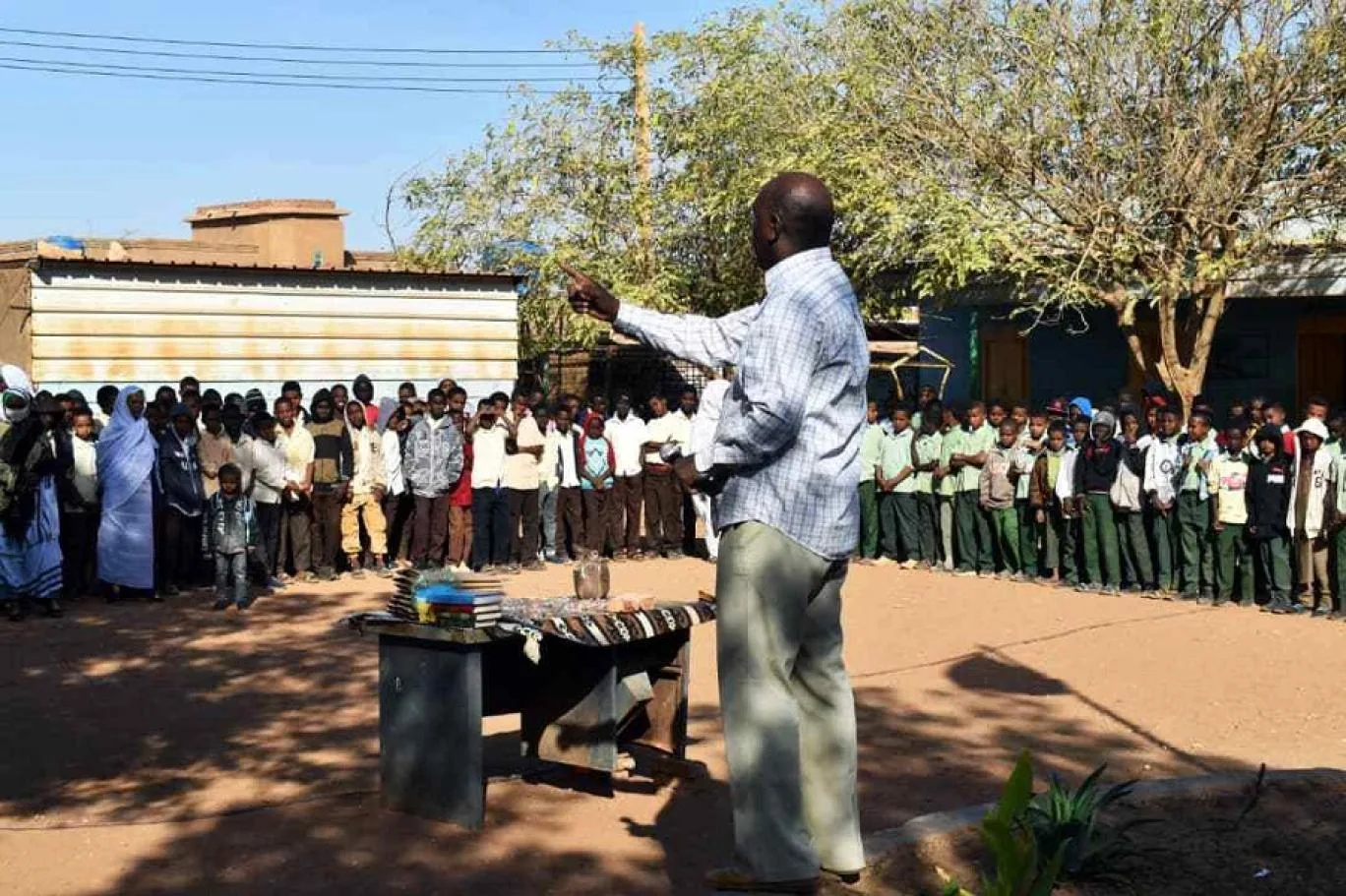
Certificate Exams
It was therefore not surprising that the issue of the Sudanese certificate exams has turned into a national cause that goes beyond its purely academic dimension.
The certificate exam is not merely an educational milestone; it represents one of the last symbols of the idea of a unified state, and its disruption in this manner reflects the deep institutional and geographic fragmentation caused by the war.
At a meeting held on February 23, 2026, attended by academics, professionals, and civil society leaders alongside the Sudanese Teachers Committee, as well as parents and students from different states, the “National Initiative to Guarantee the Right of Sudanese Students to Sit for the Sudanese Certificate Exam” was launched.
The initiative called for the formation of a national emergency committee operating from a humanitarian, rights-based approach, away from political polarization, and for postponing the exams by one or two months to allow time to address obstacles and ensure that around 200,000 students can sit for the exams this year.
It also submitted an urgent letter to UNICEF, with a copy to the UN Humanitarian Coordinator in Sudan, calling for the facilitation of a neutral humanitarian dialogue among all parties.
The proposals included exploring the possibility of international technical and logistical supervision of the exams, supporting mechanisms to identify and register affected students through safe and flexible channels, and securing educational corridors or special alternatives in high-risk areas.
These proposals align with what international organizations emphasize regarding the life-saving nature of education in times of conflict.
The Education Cannot Wait (ECW) fund stressed in its 2025 global update that education in fragile settings is not a luxury, but a form of psychological and social protection and a means of restoring a minimum level of stability.
In Sudan specifically, the fund noted in April 2025 that the education system had become severely fragmented, with about 3.1 million children internally displaced and another 1.2 million having fled across borders.
In its 2025 report, UNICEF stated that it had managed to provide education, protection, and psychosocial support to 3.5 million children, including supporting school reopenings and creating safe learning spaces, but that this response remains far below the scale of the collapse.
When millions are out of school, the issue is no longer just a service that can be gradually expanded; it becomes a battle to prevent disruption from turning into a permanent condition, and to ensure that the Sudanese certificate itself does not become a geographic privilege determined by the map of war rather than the map of the nation.
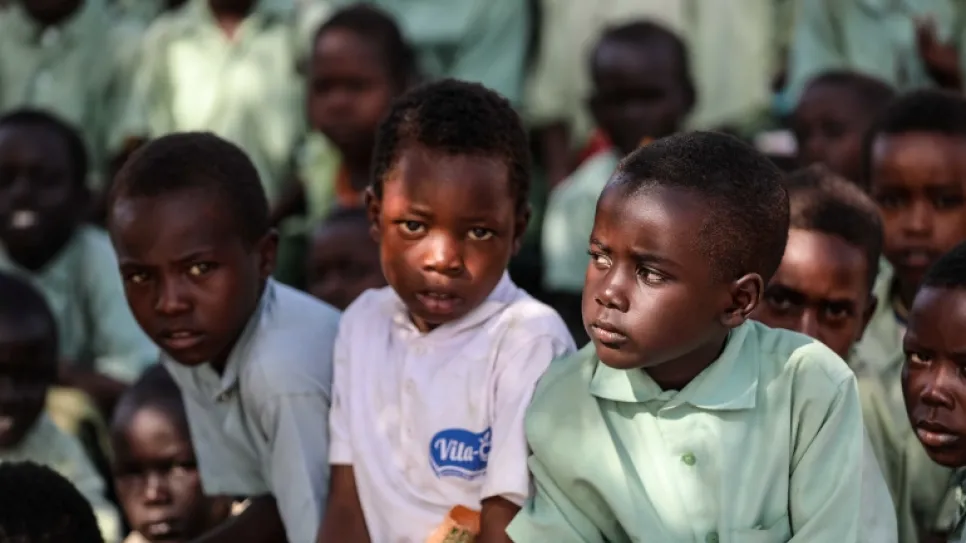
A Generation at Stake
Sudanese political activist Khaled Youssef al-Rakabi told Al-Estiklal that Sudan today faces the risk of the emergence of an entirely lost generation, after millions of children have been cut off from education for years due to the war.
Al-Rakabi pointed out that the loss is not limited to the academic aspect, but extends to the loss of the social and psychological environment that schools provide, elements that are essential in shaping the awareness of generations and the stability of societies.
He explained that the experiences of countries that have witnessed prolonged conflicts, such as Nigeria, Rwanda, and Kenya, confirm that reintegrating children who have dropped out of education is a complex and costly process that may take many years, raising the risk of long-term consequences that extend beyond Sudan.
He added that rising school dropout rates are directly linked to increased child labor, irregular migration, and recruitment into armed conflicts, factors that threaten to reproduce regional instability for years to come.
Al-Rakabi also highlighted a stark paradox: while countries around the world are moving toward developing their education systems to keep pace with the knowledge economy and technological advancement, millions of Sudanese children find themselves out of school, at risk of illiteracy and complete educational disconnection.
He noted that global discussions about artificial intelligence and the digital revolution are contrasted by a harsh local reality in which children are deprived of the most basic elements of education.
He stressed that responsibility for this crisis lies with all parties, both domestically and internationally, emphasizing the need for warring sides to recognize that education must remain outside the circle of conflict, as a non-negotiable human right.
Al-Rakabi called on the international community to move beyond statements and warnings toward practical steps that ensure the continuation of the educational process, even at its minimum level.
He added that Sudan has entered, in 2026, a critical phase in the history of its education system; the search for alternative solutions, such as distance learning or flexible education models, is no longer a secondary option, but an urgent necessity to save an entire generation at risk of losing its future, and to protect what remains of the country’s human and economic capital.
He concluded by emphasizing that the education crisis in Sudan cannot be reduced to numbers, no matter how shocking, because each number represents a child who has lost their right to learn, and a family that has lost hope for the future, warning that the continuation of this situation without urgent and effective intervention will transform the crisis from a consequence of war into a long-term legacy that will reshape Sudan for decades to come.
Sources
- 11 Million Sudanese Students Are Out of School [Arabic]
- The Right to Education in Wartime Sudan [Arabic]
- Education in Sudan: How Did the War Destroy It? [Arabic]
- UNICEF Sudan Humanitarian Situation Report 2025
- More Than Three-Quarters of Sudan’s Children Are Out of School as the New Academic Year Begins
- Children Dying From Hunger as Famine Risks Are Detected in Two New Locations in Sudan