How the Iranian Cluster Attacks Bypassed Israeli Defenses
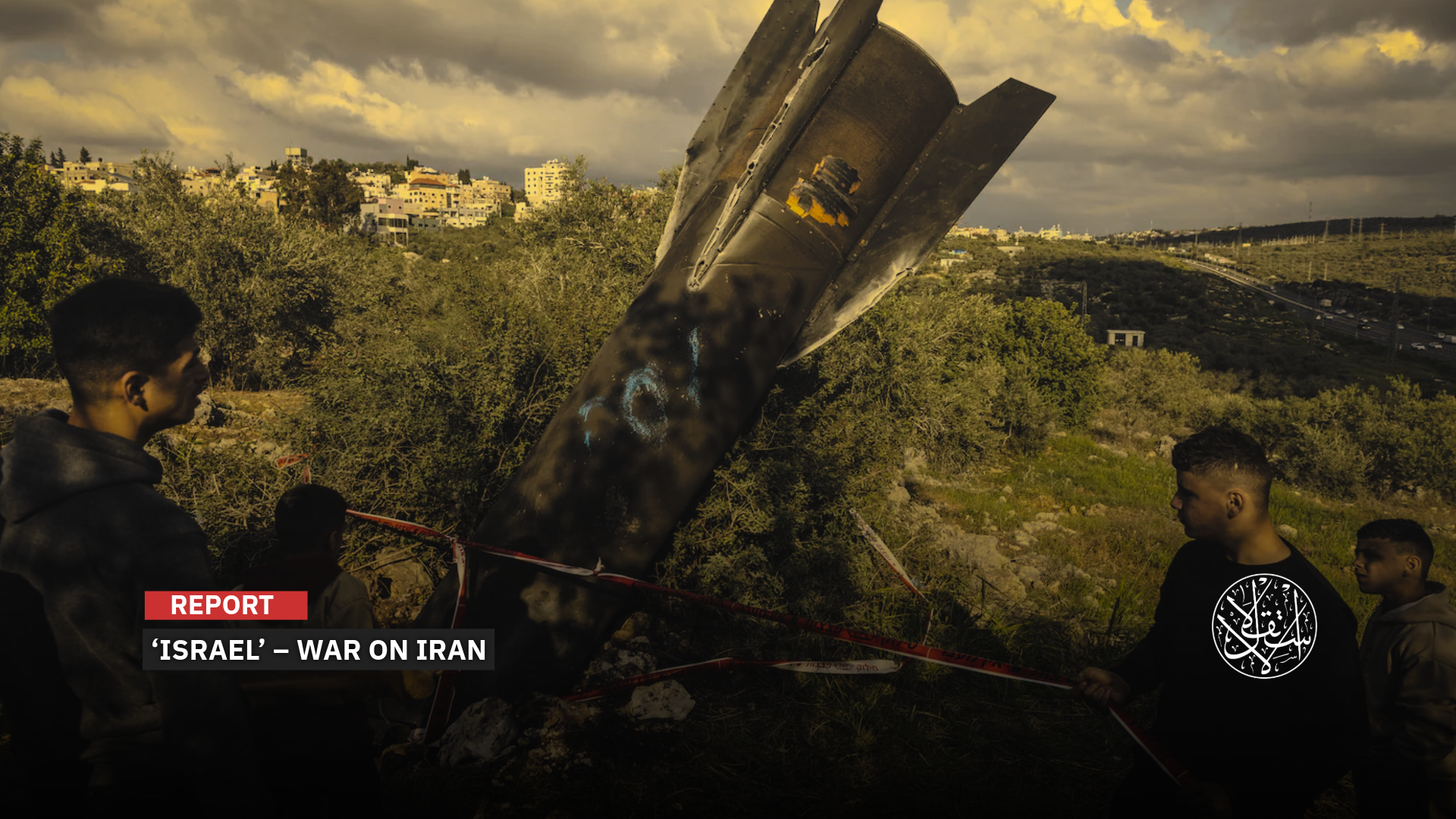
“Iran's recent strikes laid bare Israel’s vulnerability.”
The Iranian missile strikes targeting Dimona and Arad have raised widespread questions in “Israel” after the failure of its air defense systems to intercept them, despite the activation of the Iron Dome and David's Sling.
Reports indicate that the advanced ballistic missiles, with their high speed and maneuverability, overwhelmed these systems, which are primarily designed to intercept shorter-range threats.
These attacks have revived concerns that the Israeli military may be reluctant to use its more sophisticated and expensive interceptor missiles, especially given reports that its stockpiles were depleted during the 12-day war with Iran last year.
These concerns could intensify in the coming weeks if the current campaign against Iran remains in its early stages, according to Israeli Chief of Staff Eyal Zamir.
Cluster Warheads
As the US-Israeli war on Iran enters its fourth week, the battlefield has witnessed a tactical shift: Iran's increasing use of ballistic missiles equipped with cluster warheads.
The recent Iranian missile strikes revealed an unconventional attack pattern. Israeli media reported that a missile targeting Tel Aviv split into four bombs, each weighing approximately 100 kilograms, scattering submunitions across multiple locations and causing widespread destruction.
Unlike a conventional warhead that explodes as a single unit upon impact, cluster warheads rely on a mechanism of early fragmentation.
According to an Associated Press, these missiles are programmed to release their outer casing at an altitude of 7 to 10 kilometers above the Earth's surface.
Upon release, they scatter dozens of smaller submunitions—some weighing between 2 and 5 kilograms—over a wide geographical area that can extend for several kilometers.
Missile expert Tal Inbar explained to CNN that defense systems like Arrow are designed to intercept missiles as single units outside the atmosphere or in its upper layers.
He said that if the missile is not destroyed before it opens, or if it is only partially hit after releasing its payload, the mission becomes extremely complicated, as systems designed for low altitudes (such as the Iron Dome) are unable to track and intercept dozens of small targets falling at high dive speeds simultaneously.
Experts also pointed out to The Guardian the economic dimension and the war of attrition involved. It is neither militarily nor economically feasible to launch an expensive interceptor missile to shoot down each small submunition individually.
Military analysts have described Iran’s missile program as the largest in the Middle East, while precise and confirmed details about all models equipped with cluster warheads are unavailable.
The Associated Press quoted the Missile Defense Project at the Center for Strategic and International Studies in Washington as saying that the Khorramshahr medium-range missile is capable of carrying multiple warheads and dispersing up to 80 bomblets.
Tehran also possesses shorter-range missiles, such as the Zulfiqar, equipped with the same technology.
Israeli military spokesman, Lieutenant Colonel Nadav Shoshani, stated that estimates indicate approximately half of the ballistic missiles launched from Iran (more than 400 out of 850, according to Israel's Kan 11 channel) were equipped with cluster warheads.
Although most of the Iranian missiles were intercepted, a significant number—or the submunitions they produced—reached targets inside “Israel”, causing considerable casualties and material damage compared to previous conflicts between the two sides.
Besides the direct damage, the greatest danger lies in unexploded ordnance. Military estimates indicate that approximately 20% of cluster munitions may fail to detonate on impact, becoming landmines that could explode later.
In the short term, cluster munitions appear to be Iran's tool for maximizing psychological and operational impact with a limited number of missiles. They force millions of Israelis to repeatedly seek shelter, deplete missile defense stockpiles, and create a long-term burden of unexploded ordnance.
But in the longer term, this widespread use reopens the debate about the viability of normalizing relations with these weapons, both among countries that have not signed the ban treaty and among the general public.
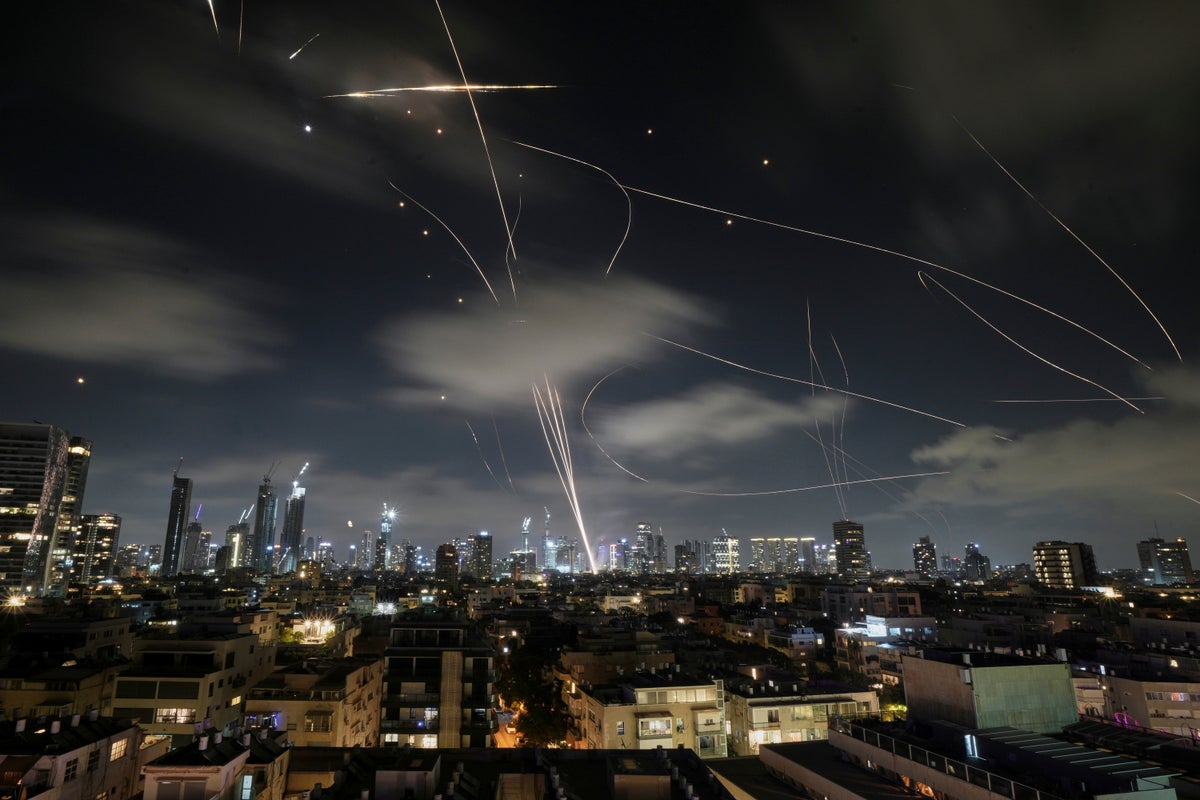
Israeli Failure
The failure of Israel’s air defenses to intercept two Iranian missiles targeting the southern cities of Dimona and Arad has raised troubling questions about the effectiveness of the costly, multi-layered missile defense system and its interception capabilities.
Last weekend, approximately 100 people were injured in Arad and about 50 in Dimona when two Iranian missiles struck the cities, failing to intercept them.
However, Shoshani stated that the missiles that hit the two cities were of a type that Israel had previously dealt with and successfully intercepted.
Israeli military officials confirmed they are investigating the reasons for the failure but declined to provide details.
During a visit to the strike sites, Israeli Prime Minister Benjamin Netanyahu said a miracle prevented casualties, urging Israelis to use the time provided by missile alerts to seek shelter.
He offered no explanation for the interception failure, nor did he address the air defense system in which “Israel” and the U.S. have invested billions of dollars over decades to intercept short-, medium-, and long-range missiles.
While the Israeli military estimates its interception rate of Iranian ballistic missiles at over 90%, officials and experts emphasize that such defenses cannot be 100% effective.
Israeli Brigadier General Ran Kochav said: “Dimona is protected by multi-layered defense systems, both Israeli and American, but nothing is perfect. There was an operational failure.”
For his part, Israeli military spokesman Effie Defrin explained that the failures are not related.
The Iron Dome system is the most well-known element of Israel's missile defenses, but it is primarily designed to intercept short-range rockets fired by Hamas.
The most advanced system for countering ballistic missiles is Arrow 3, developed by “Israel” in cooperation with the U.S. to intercept targets in near-Earth space outside the atmosphere.
The David's Sling system intercepts cruise missiles and medium-range missiles. The American THAAD system is also deployed in “Israel”.
The Arrow 3 system has come under increasing scrutiny due to the high cost of its interceptor missiles and the lengthy production time required, necessitating its cautious use.
Israeli media reported that this system was not used to intercept the missiles that struck Arad and Dimona.
As the end of the “Israel”-Iran war approached in June 2025, Israeli security officials expressed concerns that their air defense missiles might run out before Iran exhausted its ballistic missile arsenal.
Officials at the time said “Israel” had to ration its use of interceptor missiles, prioritizing the protection of densely populated areas and critical infrastructure.
The Israeli military denied recent reports of a shortage of interceptor missiles, asserting that it was prepared for a protracted conflict.
In a statement last week, the military said it was monitoring the situation and that, so far, there was no shortage, but that the longer the war lasted, the greater the pressure would become.

Military Targets
The Israeli newspaper Haaretz revealed new data regarding the military escalation between Iran and “Israel”, indicating that 35 Iranian cluster munitions have managed to penetrate Israeli air defense systems since the start of the war.
It explained that Iran launched a total of 470 missiles toward “Israel” in 25 days, noting that the pace of attacks has accelerated significantly in the last seven days, indicating an escalation in the confrontation.
The missile attacks have resulted in the deaths of 15 people in “Israel” since the beginning of the war, in addition to the hospitalization of approximately 5,000 wounded as a result of missile strikes from Iran and Lebanon.
More than 100 countries agreed at an international conference held in Dublin in 2008 to ban the use of cluster munitions. But “Israel” and Iran did not join the embargo, nor did the major powers, including the United States, China, and Russia.
A Guardian investigation last year found evidence of “Israel” having used cluster munitions in Lebanon during its war with Hezbollah which started in October 2023.

Political analyst Mahmoud Afandi told Al-Estiklal that several factors combined to enable the Iranian strikes to reach their targets without effective interception by Israeli air defense systems.
“The first factor is Iran’s targeting of early warning systems in the Persian Gulf region, which are used to detect Iranian missile launches and provide accurate warnings to defense systems. This significantly reduced the possibility of intercepting the missiles,” he said.
“Instead of having a warning time of 10 to 15 minutes, it sometimes became only 5 minutes, rendering air defense systems unable to deal with the missiles effectively,” he added.
He pointed out that the second factor relates to the shortage of munitions in Israeli defense systems, such as THAAD and Patriot missiles, which are used to intercept ballistic missiles.
But he emphasized that the most prominent factor that confounded Israeli interception systems is the diversification of Iranian missile systems, coinciding with the emergence of advanced guidance systems and maneuverable warheads.
He concluded his statement by saying, “These operations demonstrate that Iran still possesses multiple strengths, capable of achieving its military objectives even without resorting to its most advanced weapons.”
Sources
- Israel’s Missile Defense Under Scrutiny After Iranian Attack
- Breaching the Iron Dome: the Iranian cluster bombs bypassing Israeli air defences
- Iran’s missiles pierce Israel’s defenses, raising doubts about interceptors
- How Iran’s use of cluster munitions is challenging Israel’s air defenses
- Through Trial and Error, Iran Found Gaps in Israel’s Storied Air Defenses