Repeated Strikes: Who Is Behind the Bombing of Baghdad’s Karkh Central Prison?
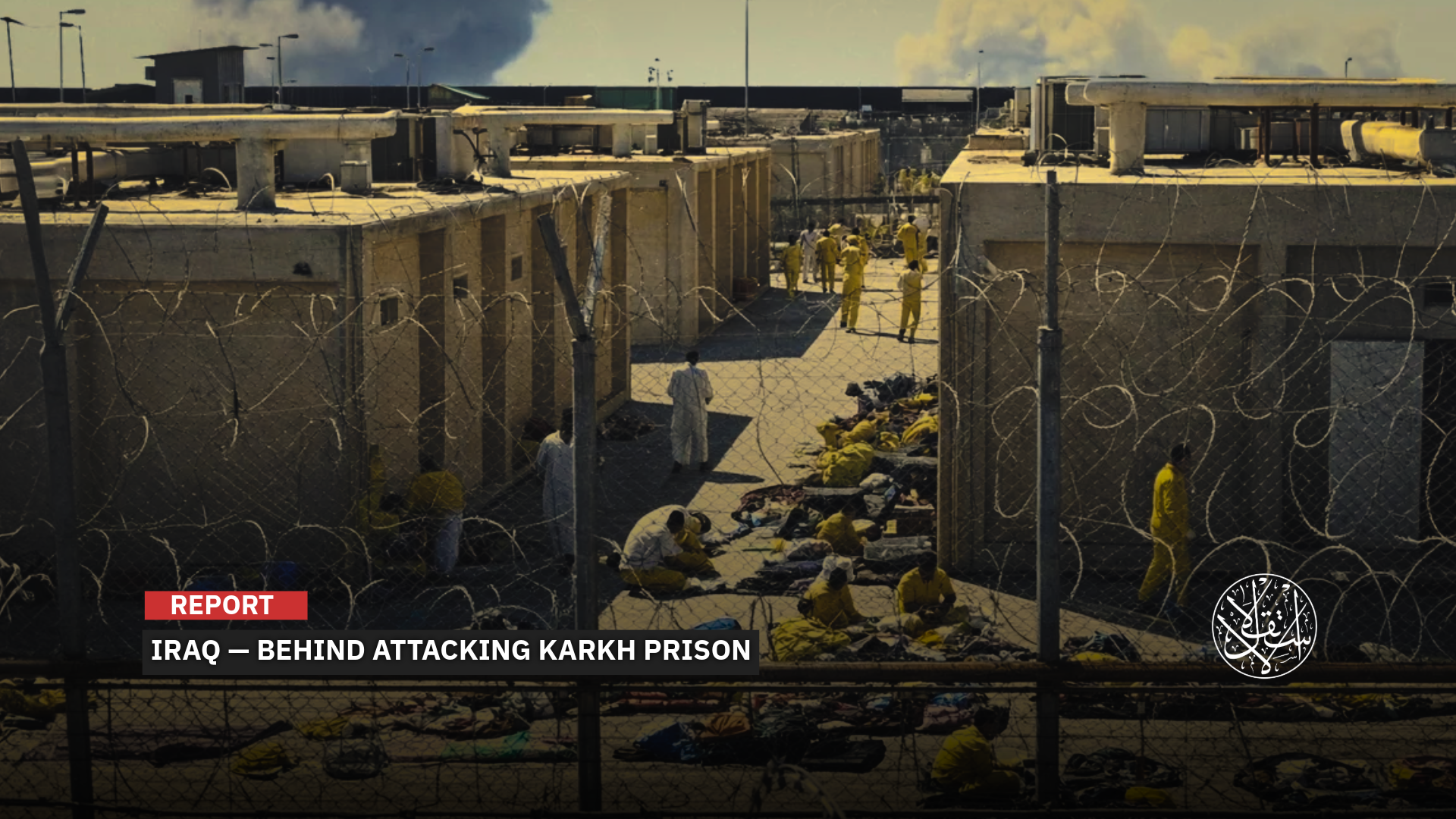
The Iraqi National Security Advisory warned of a possible attack targeting the Airport Prison in Baghdad.
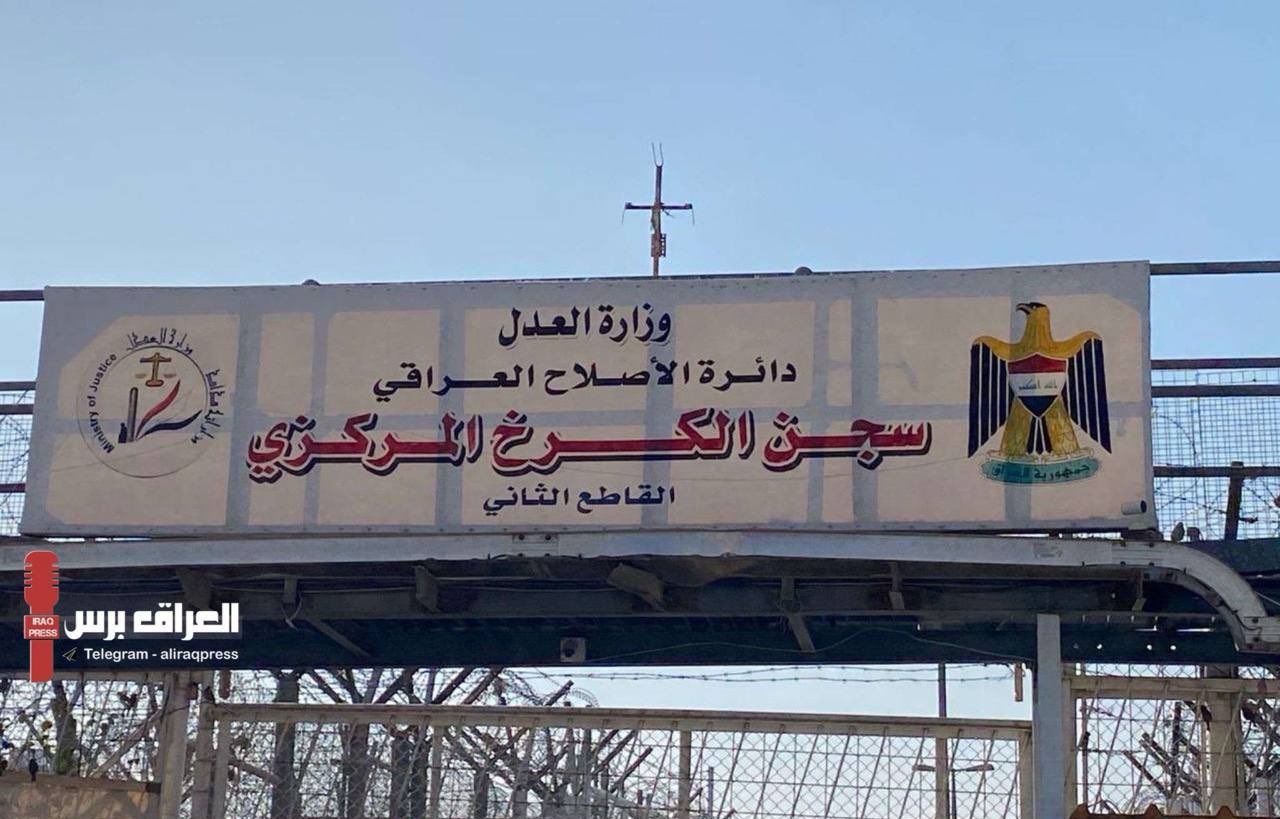
The Karkh Central Prison in Baghdad, formerly known as Cropper, has come under repeated rocket attacks since the outbreak of the U.S.-Israeli war on Iran, amid growing instability across Iraq. The facility sits within the perimeter of Baghdad International Airport, which also hosts the Victoria military base.
Between February 28 and March 22, 2026, the Diplomatic Support Center, formerly Victoria Base and now linked to the U.S. embassy in Iraq, was hit by at least 16 confirmed attacks, according to Iraqi reports and official statements.
Official Warnings Mount
On March 16, Iraq’s National Security Advisory warned of repeated attacks near Baghdad International Airport, saying the strikes pose a direct and serious threat to Karkh Central Prison, which houses high-risk detainees linked to extremist groups.
According to the Iraqi News Agency (INA), officials described the continuation of attacks near the airport as “completely unacceptable” and called for immediate, decisive measures to prevent further drone and rocket strikes, citing the risks they pose to the prison and surrounding areas.
That same day, Justice Ministry spokesperson Ahmed Laibi said areas around the airport and the prison had come under a wave of strikes in recent days, some landing dangerously close to the facility. He noted that the most intense barrage occurred on March 16, with six strikes recorded from early evening, several near the prison itself, raising concerns about the security of the site.
Laibi said that while existing security measures remained reassuring, projectiles landing near the prison could undermine precautionary plans and potentially damage infrastructure, heightening fears over the facility’s safety.
On March 22, the Baghdad airport complex, which includes the U.S.-linked Diplomatic Support Center, was hit by eight rocket and drone attacks at different times, according to an Iraqi security official speaking to Agence-France Presse (AFP). Some projectiles landed near the base without causing casualties, though a drone struck a civilian home near the airport, causing material damage.
Early on March 23, authorities discovered a vehicle equipped with a rocket launcher in the nearby al-Jihad district, believed to have been used in one of the attacks. The car had been abandoned in an empty parking area.
Iran-aligned Iraqi factions, operating under what is known as the Islamic “Resistance in Iraq,” have claimed near-daily drone and rocket attacks on what they describe as “enemy bases” in Iraq and the wider region, often without specifying their targets.
Possible Scenarios
Questions are mounting over whether the repeated strikes near Baghdad airport are deliberately targeting the prison itself. Security sources close to the prison security authorities say the attacks have so far hit the perimeter of the fortified complex, but their frequency has raised fears of a coordinated attempt to enable a prison break under unclear circumstances.
Speaking to Al-Estiklal on condition of anonymity, the sources suggested multiple scenarios. One possibility is that any escape could be intentional, allowing fugitives to be tracked and eliminated later, amid concerns they could otherwise be used to destabilize the country, echoing the turmoil of 2014. Another, more alarming scenario is a direct attempt to free prisoners and revive a familiar pattern, recalling the prison breaks that preceded the rise of ISIS after inmates escaped from Abu Ghraib and Taji.
According to these accounts, the pattern of strikes suggests the prison itself may be the real target, rather than the airport or nearby military sites alone, raising serious questions about who stands behind the attacks and what they aim to achieve.
Iraqi security analyst Saif Raad has warned that any targeting of the prison inside Baghdad International Airport’s perimeter could be part of a deliberate effort to trigger broader instability and strain state institutions. According to Jareda on March 17, he said identifying those responsible is the first step, questioning whether a specific actor is behind the attacks or whether multiple groups are exploiting the current tensions to sow chaos.
Raad noted that the prison’s location near key military installations, including Victoria Base and Victoria Camp, could make it an attractive target for armed groups seeking to create disruption or potentially free prisoners. Despite tight security and multiple layers of protection that make escapes difficult under normal conditions, he warned that coordinated strikes or explosions could create temporary gaps in security under exceptional circumstances.
He added that those behind such operations are likely aiming to generate confusion and instability inside Iraq, with consequences that could spill over into national security and economic stability. Some actors, he cautioned, may be attempting to recreate past scenarios by targeting prisons and releasing extremist elements as part of wider regional power struggles.
A Calculated Plan
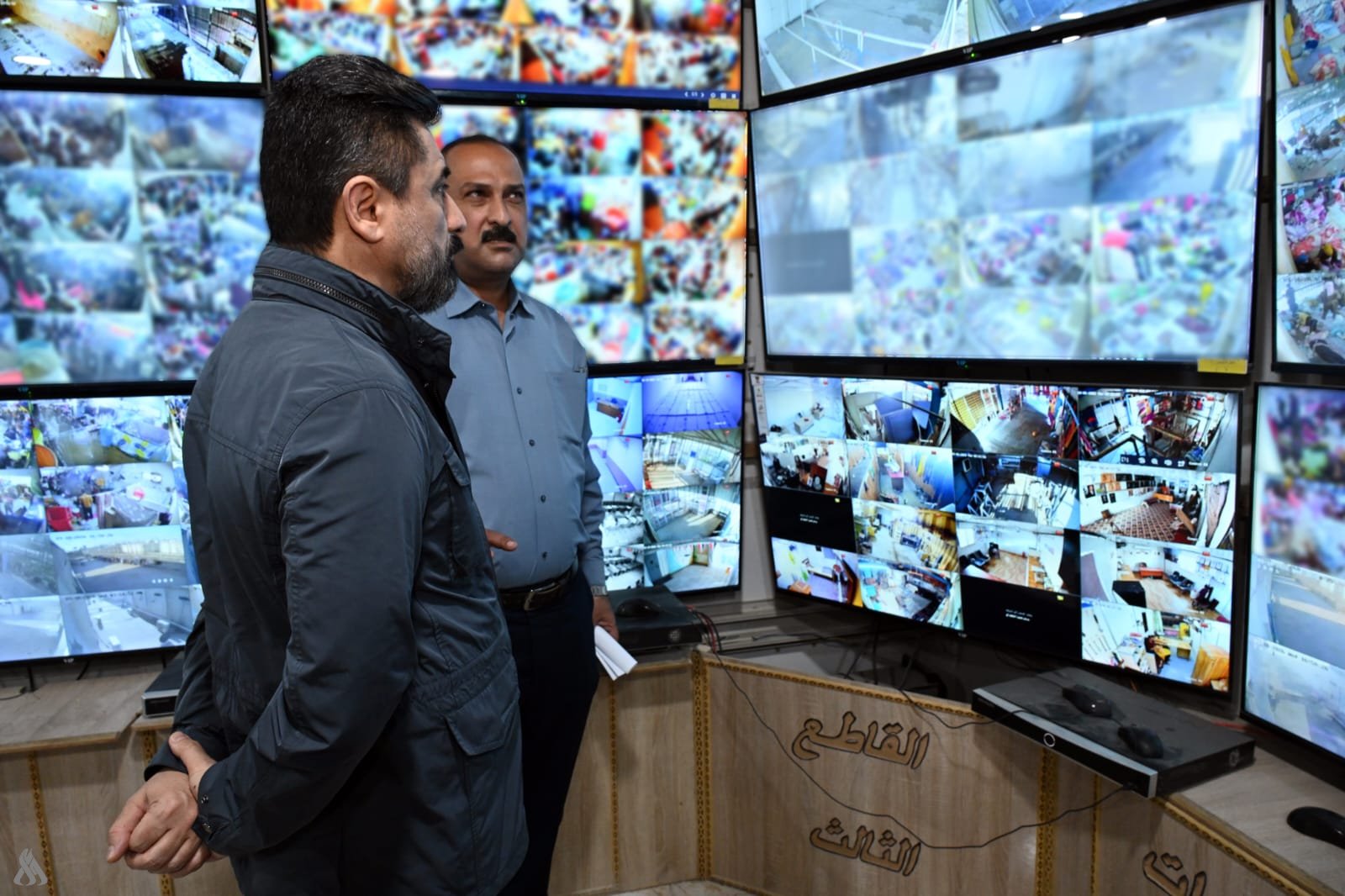
Security analyst Alaa al-Nashua argues that prisons holding high-risk extremist prisoners in Iraq are, by their nature, magnets for armed groups, as well as for actors seeking to stir chaos or exert political and security pressure on the government. That reality, he says, demands heightened vigilance from policymakers managing what has become an increasingly sensitive file.
Speaking to al-aalem al-jadeed on March 19, al-Nashua said the refusal of several European countries to repatriate their nationals linked to ISIS reflects genuine security concerns, as governments seek to avoid reigniting extremist networks at home or drawing the attention of groups that could exploit the issue to launch new attacks.
Past experience, he warned, suggests that attacks on prisons are rarely random. In Iraq, such operations have historically followed carefully planned strategies, relying on coordinated strikes and widespread disruption to overwhelm security forces and free as many prisoners as possible.
Any escalation near these facilities, he added, should be read within a broader context that may include testing security readiness or preparing the ground for larger operations, particularly given the overlap of regional tensions and the number of actors involved.
The stakes have risen further after more than 5,700 ISIS prisoners were transferred from Syria to Iraq, according to U.S. Central Command, increasing the strain on Iraq’s already stretched security apparatus and forcing authorities to reassess protection measures.
The risks are not theoretical. In June 2014, ISIS seized Mosul and declared its so-called caliphate amid deep political unrest and demands for the release of prisoners. But the fall of the city was preceded by a major prison break in July 2013, when around 600 prisoners, including senior al-Qaeda figures, escaped from Abu Ghraib and Taji prisons in Baghdad.
Former justice minister Hassan al-Shammari, a Shiite belonging to the Islamic Virtue Party, later said the operation, known as “Breaking the Walls,” was highly coordinated and facilitated by senior figures within the state. He added that intelligence services had issued a top-secret warning just a week before the attack, alerting authorities to plans involving car bombs and a mass breakout, but no preventive action was taken. Instead, some security units withdrew from protecting the prisons, paving the way for the assault to unfold almost exactly as predicted.
For analysts, those precedents underscore a troubling possibility: that today’s attacks may not be isolated incidents but part of a deliberate and potentially far-reaching strategy to destabilize Iraq once again.
Former Iraqi lawmaker Liqaa Wardi, from the National Political Council, said what al-Shammari stated about the involvement of senior state figures in prisoner escapes was the most credible and closest to reality.
In a televised interview in January 2014, Wardi held the al-Maliki government responsible for the prison breaks at Abu Ghraib and Taji, as well as other detention facilities across the country. She said individuals working within the prime minister’s office had previously been involved in smuggling al-Qaeda prisoners out of presidential prisons in Basra.
Wardi added that the escaped prisoners were picked up by waiting vehicles, given ready-made identities, and smuggled into Syria, while their official records were later destroyed at the Ministry of Justice.
The smuggling of prisoners, according to the former lawmaker, was carried out through coordination between Iraqi and Iranian authorities to push them into Syria in order to support ISIS and enable it to kill innocents under the pretext of fighting such groups, raising fears of a repeat of the same scenario in Iraq.
Sources
- Baghdad Shelling Raises Fears of ISIS Prison Break
- Justice Ministry Warns: Baghdad Airport Area Targeted Over High-Risk Terrorist Prison [Arabic]
- Security Expert Warns: Targeting Baghdad Airport Prison May Signal an ISIS-Style Comeback [Arabic]
- Airport Prison Protocols: Could the Taji and Abu Ghraib Escape Scenario Happen Again? [Arabic]
- Iranian Media: Drones Target Victoria Base Near Baghdad International Airport [Arabic]
- Iraqi National Security Adviser: Attacks Near Baghdad Airport Threaten Karkh Prison Holding Terror Suspects [Arabic]
- Eight Overnight Rocket and Drone Attacks Hit Baghdad International Airport Complex [Arabic]
- Not Content With His Past: Why Does Nouri al-Maliki Continue to Provoke Iraq’s Sunnis? [Arabic]