From Hormuz to Bab Al-Mandab: Is the Global Economy Entering a Shock Phase?
“Any threat arising within Bab al-Mandab affects the stability of the entire global economy.”
The shifting landscape of the U.S.-Israeli War on Iran has begun to transcend the realm of mere threats, evolving into a tangible reality taking shape on the ground.
On March 26, Abdul-Malik al-Houthi—the leader of the Houthis in Yemen—announced that his group was at a state of full military readiness to join the war alongside Iran against the United States and “Israel”, should developments necessitate such a move.
He added that the decision to act ultimately rests with the leadership—a calculated signal reflecting a state of readiness, yet without haste.
The inclusion of the Bab al-Mandab Strait in news coverage was no mere passing detail; rather, it emerged as the most probable target should the group decide to open a new front.
It is viewed as the vital artery controlling maritime traffic bound for the Suez Canal—a significance heightened by the de facto closure of the Strait of Hormuz.
The Red Sea is no longer a marginal theater in the course of the war, but has turned into a wider conflict for control of the sea lanes that transport energy, goods and food between Asia and Europe.
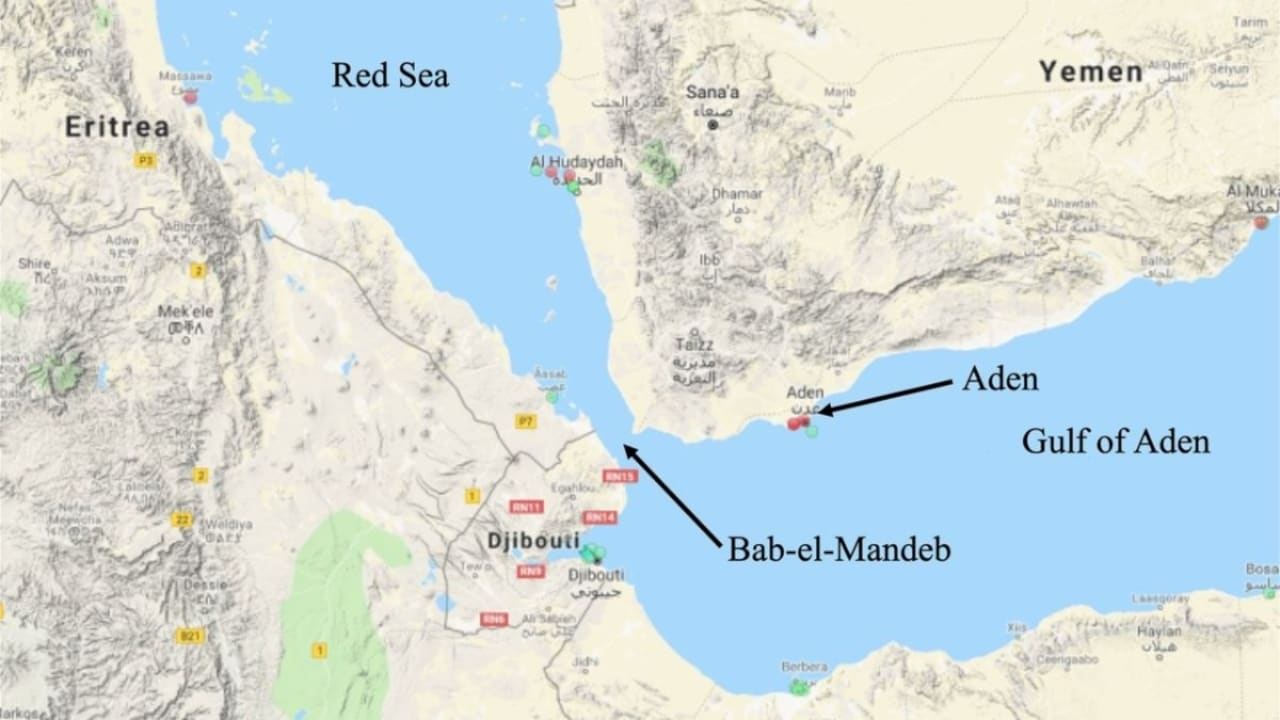
The critical significance of Bab al-Mandab stems from the fact that it is far more than just a geographical location; it serves as a vital node within the global maritime transport network.
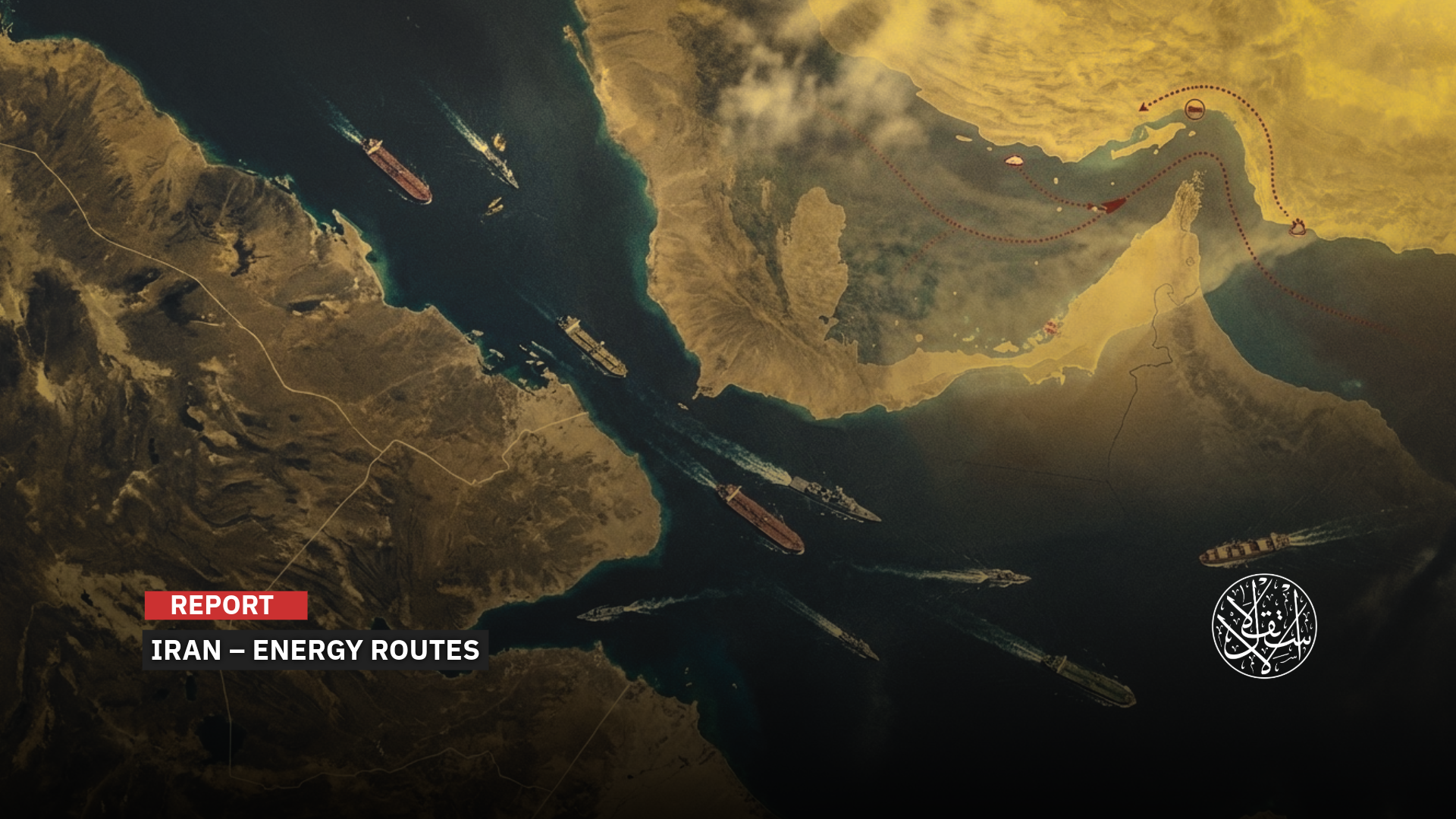
Situated at the southern entrance to the Red Sea—flanked by Yemen on one side and Djibouti and Eritrea on the other—the strait narrows to approximately 18 miles (roughly 29 kilometers) at its narrowest point. This geographical constriction means that maritime traffic through the strait is channeled through two narrow lanes for incoming and outgoing vessels.
This geographical constriction imbues any security threat within the strait with an immediate international dimension. It severely limits vessels' ability to maneuver, rendering any targeted attack, mining operation, or prolonged disruption a direct catalyst for paralyzing one of the most critical maritime routes leading to the Suez Canal.
Consequently, for decades, the strait has remained one of the world's most prominent choke points—not merely as an alternative option, but as an indispensable gateway for anyone seeking a rapid link between the Indian Ocean and the Mediterranean Sea.
Statistics underscore this strategic significance; a review of maritime transport for 2024 by the United Nations Conference on Trade and Development (UNCTAD) indicates that approximately 8.7% of total global maritime trade in 2023 passed through Bab al-Mandab.
Furthermore, data reveals that the most prominent commodities transiting the strait included containerized cargo and automobiles—each accounting for 20% of the total—followed by refined petroleum products at 15%, and crude oil at 13%.
As for the Suez Canal—for which Bab al-Mandab serves as the southern entrance—it handles approximately 10% of global maritime trade and 22% of container traffic.
Accordingly, Bab al-Mandab cannot be viewed in isolation as a standalone strait; rather, it must be understood as an integral component of a unified trade and energy corridor extending from the Indian Ocean, across the Red Sea, to the Suez Canal and Egypt’s SUMED pipeline.
This explains why any threat arising within this corridor invariably transcends the regional sphere, impacting the stability of the entire global economy.
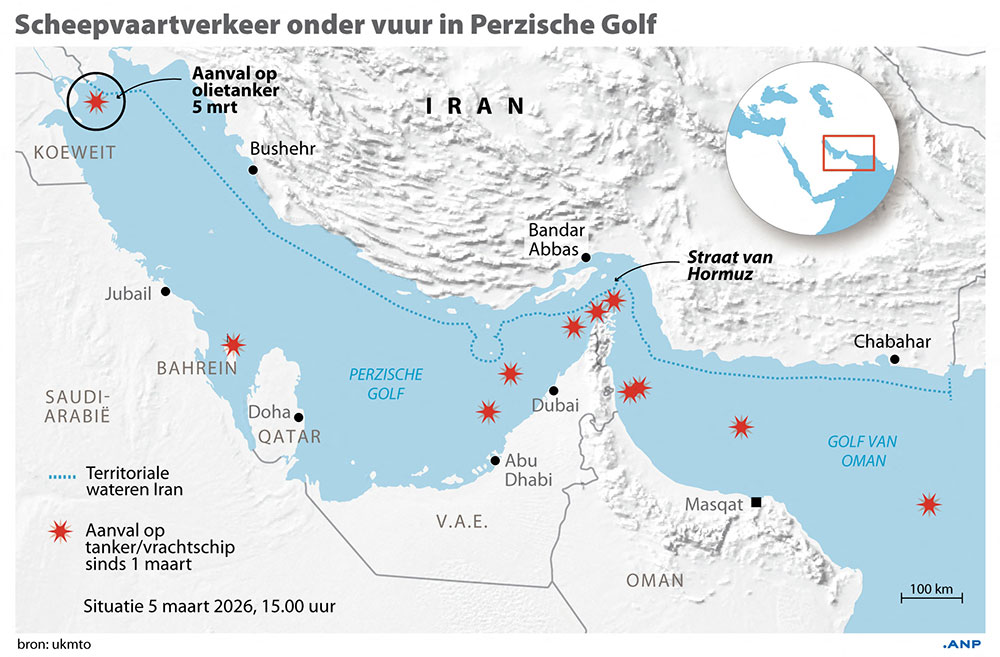
Hormuz and Bab al-Mandab
From the specific vantage point of energy, the situation acquires even more sensitive dimensions.
Data from the U.S. Energy Information Administration indicates that oil flows through the Bab al-Mandab Strait reached approximately 8.7 million barrels per day in 2023, before declining in 2024—through August—to nearly 4 million barrels per day, driven by Red Sea disruptions linked to the Israeli aggression against Gaza.
Furthermore, data indicates that Bab al-Mandab—alongside the Suez Canal and the SUMED pipeline—facilitated the transit of approximately 12% of the world's total seaborne oil trade and nearly 8% of its liquefied natural gas (LNG) trade during the first half of 2023.
These figures carry more than just technical significance; they reveal why this strait—in times of war—becomes a tool of influence within global energy markets, rivaling in importance even the world's major oil fields and facilities.
In this context, the organic link between the Straits of Hormuz and Bab al-Mandab becomes evident.
Any disruption to—or closure of—the Strait of Hormuz not only halts Gulf exports but also compels producing nations to reroute their energy flows through alternative pathways, foremost among them the Red Sea.
Reuters data from March 24 clearly reflected this shift; Saudi crude oil exports from the Red Sea port of Yanbu surged to nearly 4 million barrels per day in mid-March—a stark contrast to the average of no more than 770,000 barrels per day recorded during January and February.
This surge is attributable to a heavy reliance on Saudi Arabia’s East-West Pipeline, which boasts a capacity of approximately 7 million barrels per day, with the potential to allocate nearly 5 million barrels per day for export after satisfying domestic demand.
However, this maneuver—despite its tactical efficacy—does not resolve the core crisis; rather, it merely redistributes it geographically, effectively shifting a portion of the oil flows from being held hostage by the Strait of Hormuz to being held hostage by the Strait of Bab al-Mandab.
In other words, the pressure that proved insurmountable at the entrance to the Gulf may simply re-emerge at the entrance to the Red Sea.
Thus, the concept of a double chokehold becomes more than just a rhetorical descriptor; according to U.S. energy data, approximately 20.9 million barrels per day transited the Strait of Hormuz in 2023—a volume equivalent to nearly 20 percent of global consumption of petroleum liquids.
While the war on Iran has prompted efforts to reduce reliance on Hormuz and maximize the role of alternative routes via Yanbu and the Red Sea, jeopardizing the Bab al-Mandab Strait effectively amounts to targeting this very alternative—thereby once again constricting supplies, albeit from a different route.
Complex Calculations
This is where the two fronts directly intersect: the first constricts the primary export outlet from the Gulf via the Strait of Hormuz, while the second targets the alternative route—the very pathway intended to accommodate a portion of these flows—via the Bab al-Mandab Strait.
At this juncture, the question shifts radically; it is no longer a matter of whether markets will be affected, but rather of the magnitude of the potential shock should the world’s energy arteries face simultaneous disruption.
Recent events in the Red Sea confirm that this scenario is not merely a theoretical hypothesis.
On March 25, Reuters published an in-depth investigation concluding that Western efforts to safeguard shipping since late 2023 have cost billions of dollars—with over a billion dollars spent on munitions alone—and resulted in the sinking of four vessels, yet failed to restore confidence in the route.
Despite this heavy cost, the route—which previously carried approximately 12 percent of global trade—remains a corridor largely shunned by shipping companies.
In a related context, Bloomberg reported on March 21 that daily shipping volumes at the choke points in the Red Sea and the Suez Canal remain roughly 60 percent lower than pre-Houthi attack levels.
Moreover, the ramifications are not confined to the security sphere; they clearly extend to the very structure of global trade.
On March 7, 2024, the International Monetary Fund (IMF) noted that the volume of trade passing through the Suez Canal had declined by 50% year-on-year during the first two months of the year—a drop offset by a 74% surge in shipping traffic rerouted around the Cape of Good Hope.
In turn, the World Bank presented a more comprehensive picture in May 2024, explaining that traffic through the Suez Canal and Bab al-Mandab had been cut in half by the end of March.
Conversely, shipping activity around the Cape of Good Hope doubled, resulting in a 53% increase in voyage distances and a rise in shipping times—51% for container ships and 39% for oil tankers.
These indicators reveal that rerouting around Africa is less of a solution and more of a redistribution of the crisis—shifting it from a supply bottleneck to an escalation in costs, transit times, and insurance risks.
On an immediate economic level, Egypt was among the first to suffer the repercussions of this shift.
On July 18, 2024, the Egyptian government announced that Suez Canal revenues for the 2023–2024 fiscal year had declined to $7.2 billion, down from $9.4 billion the previous year.
This decline coincided with a drop in the number of transiting vessels, falling to 20,148 ships compared to 25,911 previously.
This followed an earlier loss of approximately 40 percent of the Canal’s dollar-denominated revenues during the first days of 2024—according to statements by the Canal Authority’s then-chairman, Lieutenant General Osama Rabie—amidst a 30% drop in vessel traffic between January 1 and January 11, 2025, compared to the same period the previous year.
Consequently, the impact of targeting Bab al-Mandab is not limited to disrupting energy flows; it extends to striking one of the region’s most vital financial arteries, forcing economies dependent on transit—such as Egypt—to confront a dual shock: declining revenues on one hand, and rising import costs on the other.

A Blow to Businesses
At the level of global corporations, the repercussions appear far more distinct and immediate.
Within just hours of the war’s outbreak on March 1st, major maritime shipping companies—such as Maersk, Hapag-Lloyd, and France’s CMA CGM—rushed to reroute their vessels away from the Suez Canal and Bab al-Mandab routes, opting instead to circumnavigate the African continent.
With the outbreak of war, major shipping companies —such as Maersk and Hapag-Lloyd—rushed to reroute their vessels away from the Suez Canal and Bab al-Mandab routes, opting instead to circumnavigate the African continent.
It took only a few days for the true cost of this shift to begin surfacing. Rolf Habben Jansen, CEO of Hapag-Lloyd, announced that the company is incurring additional burdens ranging between $40 million and $50 million per week—costs distributed across increased fuel consumption, insurance premiums, and container storage expenses.
However, these figures are not unique to any single company; rather, they reflect the mechanism by which the impact of war propagates from the geopolitical sphere to the economic one—moving from maritime corridors to shipping invoices, and subsequently to the prices of goods ultimately borne by the end consumer.
Indeed, every additional day vessels spend at sea translates into higher fuel consumption, longer working hours for crews, and delays in the container rotation cycle—factors that ultimately ripple through to affect shipping costs and the prices of goods in ports and markets alike.
The intensity of this trend is further amplified by the insurance factor, which—during times of crisis—transforms into a decisive element in commercial decision-making.
In September 2024, the World Bank reported that the cost of war-risk insurance for vessels transiting the Red Sea had more than doubled within a span of just a few weeks.
Indeed, some insurance providers have already begun scaling back or withdrawing coverage for voyages in the region, while some insurance offers reached as high as 2% of the ship's value per voyage.
At this level of risk and cost, the decision ceases to be a mere exercise in traditional profit calculation; rather, it evolves into a matter of survival.
When these burdens are added to the costs of fuel and transit time, the most logical choice for many companies becomes to bypass the route entirely, rather than risking passage through it.
Thus, a military threat—even before materializing as a direct strike—transforms into actual economic disruption, redrawing the map of global trade driven by fear alone, rather than solely by force.
Global Crisis
In the context, the contours of a crisis are unfolding—one that transcends geographical boundaries to strike at the very structure of the global economy.
An analysis by Canadian economic researcher Rory Johnston, published by the platform Dispatch Energy on March 26, indicates that the global spare oil capacity is eroding at an accelerating pace.
This erosion is driven by disruptions to flows through the Strait of Hormuz, coupled with the looming possibility that the Bab al-Mandab Strait could be drawn into the heart of the conflict.
This implies that markets are no longer facing merely a temporary disruption; rather, they have effectively begun to balance the supply-demand deficit through a coercive mechanism—namely, a reduction in demand resulting from soaring prices—rather than through an increase in supply.
The analysis underscores that the mere availability of oil is no longer sufficient, in and of itself, to guarantee market stability; the security of maritime corridors remains a critical prerequisite for the continued flow of supplies.
Consequently, the strategic importance of the Bab al-Mandab Strait acquires a heightened significance—not merely as a navigational passage, but as a pivotal link within the network of alternative routes upon which the world relies during times of crisis.
The repercussions of this crisis manifest most acutely in developing nations, which often lack the financial capacity to absorb price shocks.
Rising energy costs do not merely impact fuel prices; they ripple outward to affect the electricity, transportation, and manufacturing sectors. This dynamic compels some societies to revert to traditional energy sources—alternatives that are both more polluting and less efficient.
Concurrently, international institutions—such as the United Nations Conference on Trade and Development (UNCTAD), the International Monetary Fund (IMF), and the World Bank—have issued warnings that the crisis’s effects are beginning to spill over into food and basic commodity prices.
This escalation is a direct consequence of the sharp rise in transportation and insurance costs, thereby adding a new layer of inflationary pressure—particularly within fragile economies.
World Bank estimates indicate that rising shipping costs could push up the global inflation rate by approximately 0.7%, while the Organization for Economic Co-operation and Development (OECD) warned on March 26 that global growth could potentially dip to 2.9% if the energy shock persists.