Through the Coast: How Damascus Can Benefit From the Shift in Iraqi Oil Routes
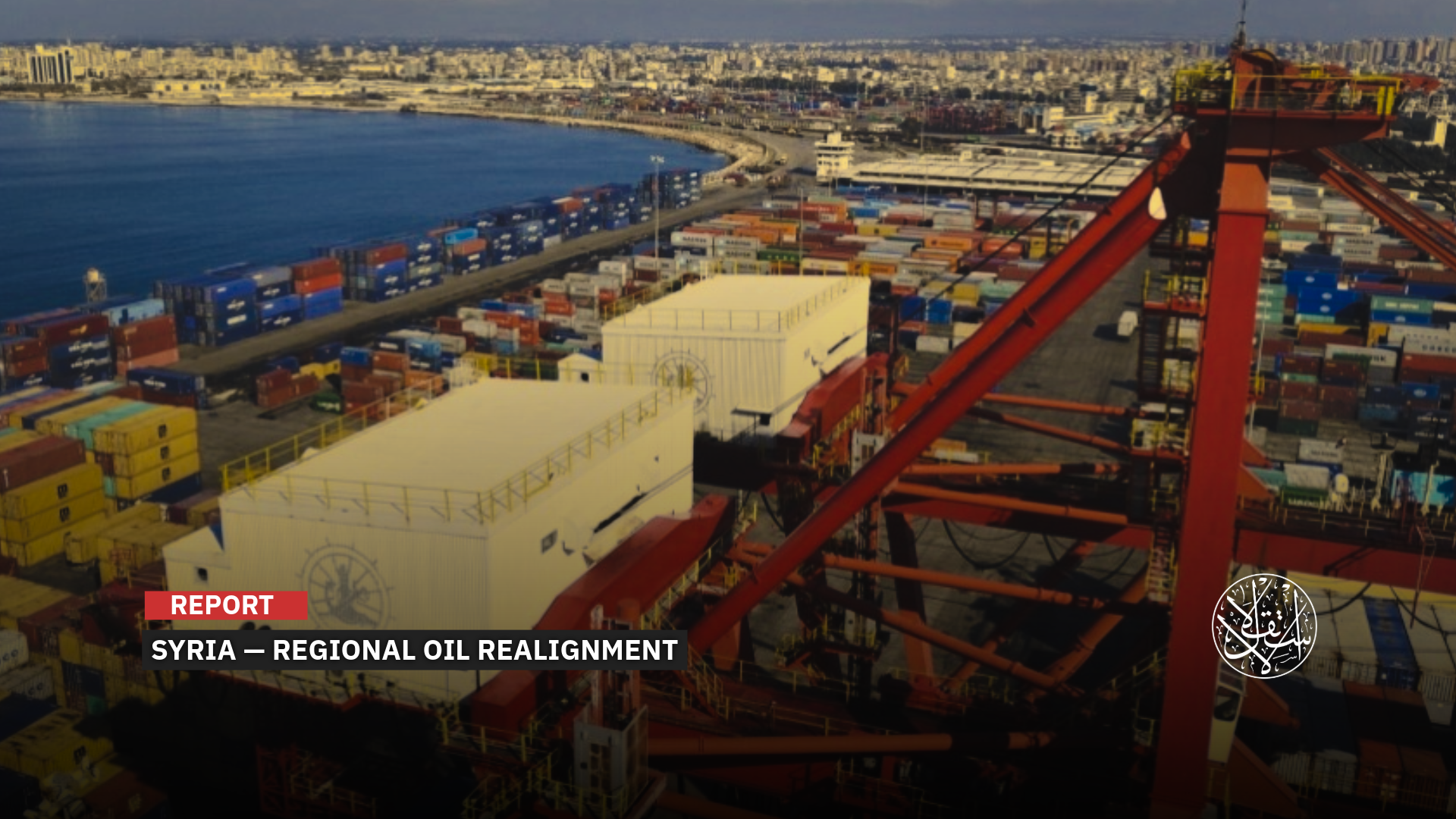
Historically, Syria has long served as a bridge between East and West.
Amid the rapid transformations reshaping global energy markets, Iraq is moving to redraw its oil export map by opening alternative corridors that bypass the bottleneck of the Gulf and redirect flows toward neighboring countries, foremost among them Syria.
With traditional routes through the Gulf disrupted, and Baghdad turning to land and maritime alternatives via neighboring states, a rare economic window is opening for Damascus at a highly sensitive moment.
This opportunity could enable it to regain its position within the regional energy network after years of isolation and marginalization caused by war and U.S. and European sanctions, which were lifted following the fall of Bashar al-Assad’s regime.
Trade Corridor
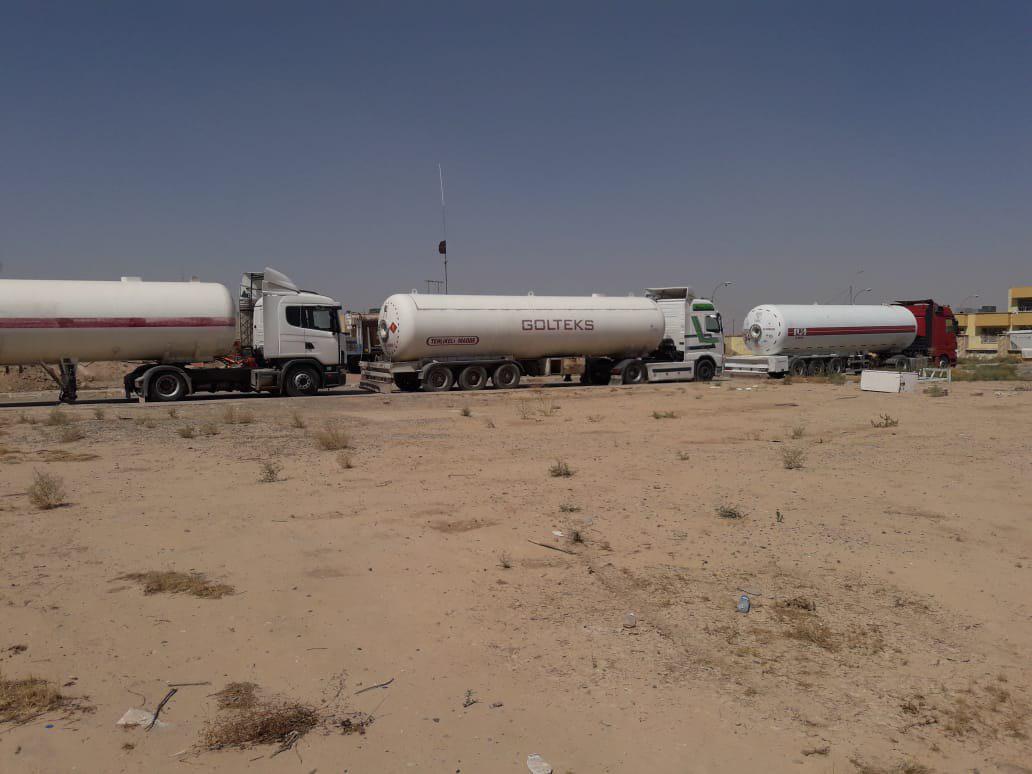
In this context, the Iraqi News Agency reported on March 18, 2026, that the state-run Iraqi Oil Marketing Company (SOMO) had signed contracts with transport companies and international buyers to export crude oil via Turkiye, Jordan, and Syria, in a move reflecting a strategic shift in export policy.
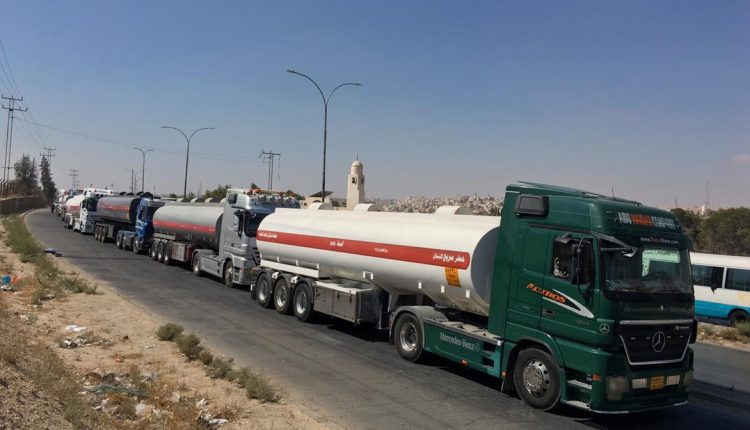
Oil Minister Hayan Abdul Ghani stated that Iraq has already begun transporting around 200,000 barrels per day by tanker trucks along these alternative routes, confirming that Baghdad has put in place an emergency plan to manage the repercussions of the crisis, particularly following disruptions in the Strait of Hormuz.
This move comes amid a sharp decline in production, as Iraq decided to cut output to about 1.4 million barrels per day, compared to pre-war levels before the U.S.-Israeli war on Iran, which erupted on February 28, 2026.
The Strait of Hormuz stands out as the most critical maritime artery for global energy flows, with roughly one-fifth of the world’s oil and liquefied natural gas supplies passing through it, making any disruption there immediately impactful on global markets.
With Iran closing this vital passage during the recent war, Iraq’s oil sector suffered a severe blow, as production dropped from around 4.3 million barrels per day to approximately 1.3 million, according to estimates cited by Iraqi media and Reuters, which noted that output from southern fields fell by as much as 70%.
This sharp decline threatens to deepen Iraq’s financial crisis, as the country relies on oil revenues to fund more than 90% of its budget, pushing it to increasingly seek stable alternatives for exporting its oil away from geopolitical risks in the Gulf.
In this context, Syria emerges as a strategic option for Baghdad, not only as a transit corridor, but as part of an alternative logistical network that could reshape energy routes in the region.
While this shift represents a lifeline for the Iraqi economy, it also opens a vital window for Syria’s strained economy through transit revenues and logistical services, enhancing its chances of gradually returning to the regional energy map.
Iraq is the second-largest producer in OPEC, with proven reserves estimated at around 145 billion barrels, and its average exports under normal conditions reach about 3.5 million barrels per day, making any disruption to its flows a significant factor in the balance of global energy markets.
A Significant Opportunity
By contrast, Syria, whose oil production did not exceed about 350,000 barrels per day before 2011, appears to be searching for an economic outlet amid a severe crisis in securing petroleum derivatives and stalled efforts to launch reconstruction due to a significant lack of resources.
In this context, the possibility of Iraqi oil transiting through Syrian territory emerges as a promising economic opportunity that could serve as a partial lever to restart economic activity and improve the country’s fiscal balance.
Syrian academic and economic expert Firas Shaabo told Al-Estiklal that opening routes or corridors to transport Iraqi oil via the Syrian coast carries important economic and strategic gains for Damascus.
He explained that these gains include generating direct revenues from transit and port fees, in addition to returns from logistical services related to transport, insurance, unloading, and re-exporting, thereby opening new sources of income for the Syrian treasury.
Shaabo noted that Syria’s logistical infrastructure, including the ports of Baniyas and Tartus, is well positioned to benefit from this activity through transit fees, as well as the possibility of Syria obtaining a share of the transiting oil, estimated at between 5% and 10%, providing an additional resource that could be directed toward improving infrastructure, particularly in the heavily damaged energy sector.
He added that such arrangements could also give Syria the opportunity to obtain oil at preferential prices, depending on the nature of the agreements, helping to reduce import costs and ease pressure on public finances.
He further considered that activating oil transport routes through Syrian territory toward the coast could help alleviate the fuel crisis, support the trade balance, and revive domestic supply chains by stimulating the transport, maintenance, services, and storage sectors.
Geopolitical Dimension
The new oil routes do not appear to be merely temporary solutions imposed by the war on Iran; rather, they carry the features of a deeper transformation that could reposition Syria as a central player in the regional energy equation and grant it new leverage in the post-war phase.
Since the fall of Bashar al-Assad’s regime, Iraq has begun exploring alternatives, taking advantage of Syrian ports on the Mediterranean Sea to export its oil, reflecting a growing recognition of the Syrian route as a strategic option.
In this context, Baghdad and Damascus have returned to the negotiating table to revive the Kirkuk–Baniyas pipeline, which has been inactive for more than two decades, in an effort to restore one of the oldest energy arteries in the region.
Iraqi Deputy Oil Minister Bassem Mohammed Khudair revealed that his country is holding talks with the Syrian government to rehabilitate the pipeline, alongside consultations with the American company ExxonMobil to develop oil infrastructure and export systems.
These moves also intersect with broader Iraqi plans to rehabilitate internal pipeline networks and storage facilities, enhancing the country’s ability to overcome export bottlenecks through the Gulf.
Syrian Energy Minister Mohammed al-Bashir had visited Baghdad in August 2025 to discuss restarting the pipeline, emphasizing the strategic importance of linking the two oil networks at a time when Syria imports about 3 million barrels per month to meet its needs.
The Kirkuk–Baniyas pipeline is considered a historic project: it was built in the 1950s and began operations in 1952, stretching approximately 800 kilometers with a capacity of up to 300,000 barrels per day, before being shut down in 2003.
The cost of rehabilitating it is currently estimated at between $300 million and $600 million.
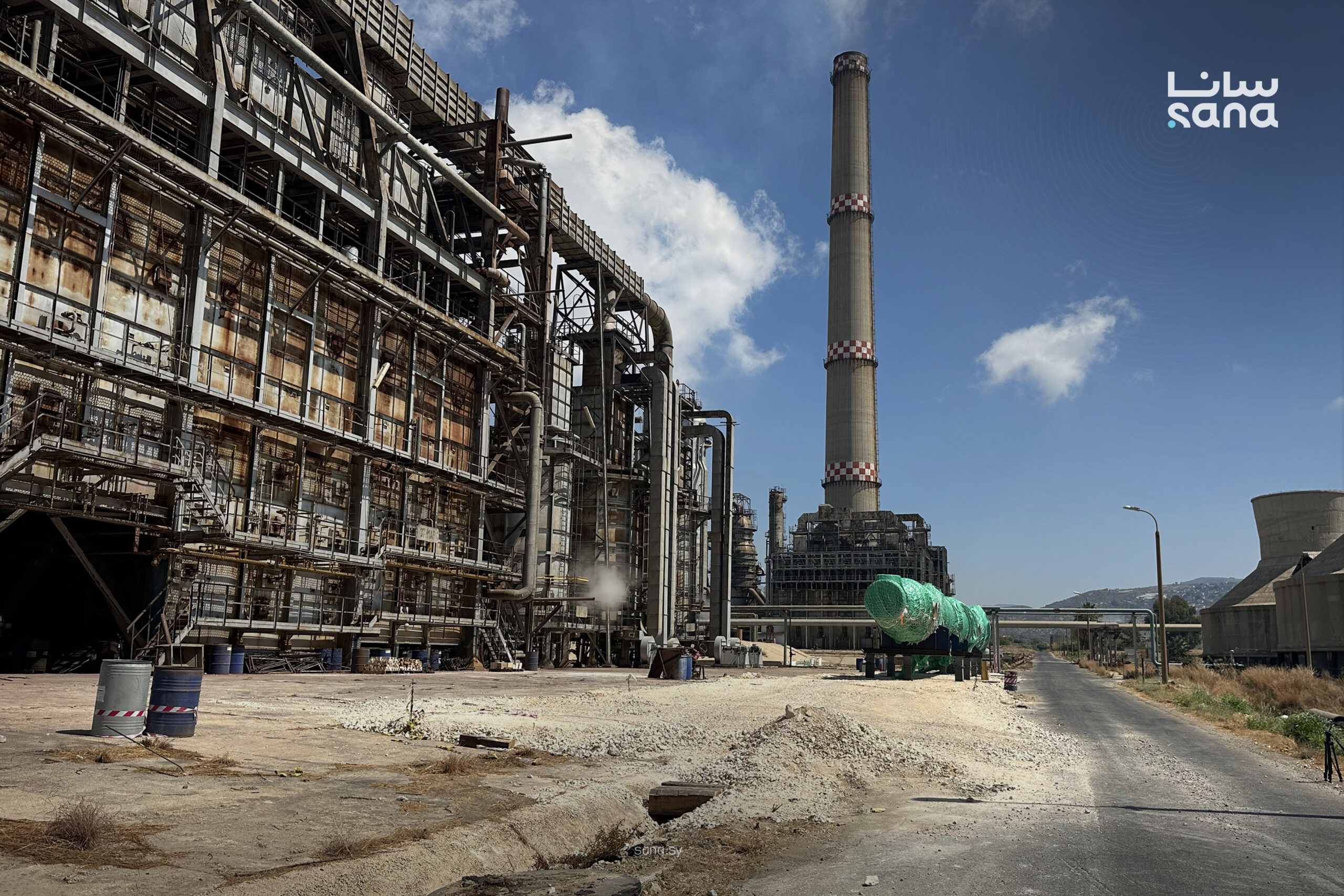
At the same time, Damascus is studying the construction of a new oil refinery as part of its effort to shift from being an importer to a producer of refined petroleum products, further enhancing the attractiveness of its future role in the energy market.
According to Syrian Energy Minister Mohammed al-Bashir in remarks to the Alikhbaria Syria channel on July 6, 2025, a study is underway to establish a new oil refinery in Syria, with the aim of turning the country into an exporter of refined petroleum products.
In this context, Syrian academic and economic expert Firas Shaabo believes that reactivating oil transport routes through Syria, whether from Iraq or Gulf countries, would strengthen its position as a strategic energy corridor, noting that this role has long been a cornerstone of Syria’s economic geography.
He told Al-Estiklal that restoring this role goes beyond financial returns, extending to alleviating the domestic energy crisis and opening the door to broader integration into regional and international energy networks.
He also suggested that these projects could receive Western support, given European markets’ need for more stable alternatives, especially as energy flows have been affected by tensions in the Strait of Hormuz.
Shaabo concluded that these transformations could pave the way for the return of broader regional projects, with the participation of Gulf countries such as Saudi Arabia, the United Arab Emirates, and Qatar, to revive energy transport routes through Syrian territory, reducing reliance on sensitive maritime corridors and limiting the impact of security disruptions in the region.
Sources
- Iraqi SOMO Signs Contracts to Export Oil via Turkiye, Jordan, and Syria [Arabic]
- Part of It Passes Through Syria, Oil Minister Confirms Transport of 200,000 Barrels per Day [Arabic]
- Minister Says Iraq Continues Oil Production at 1.4 Million Barrels per Day [Arabic]
- Iraqi Oil Minister to Asharq, A Complete Pipeline to Syria’s Baniyas Port Will Be Rebuilt [Arabic]