Defense Deals in Wartime: Why Is the Gulf Knocking on Ukraine’s Door?
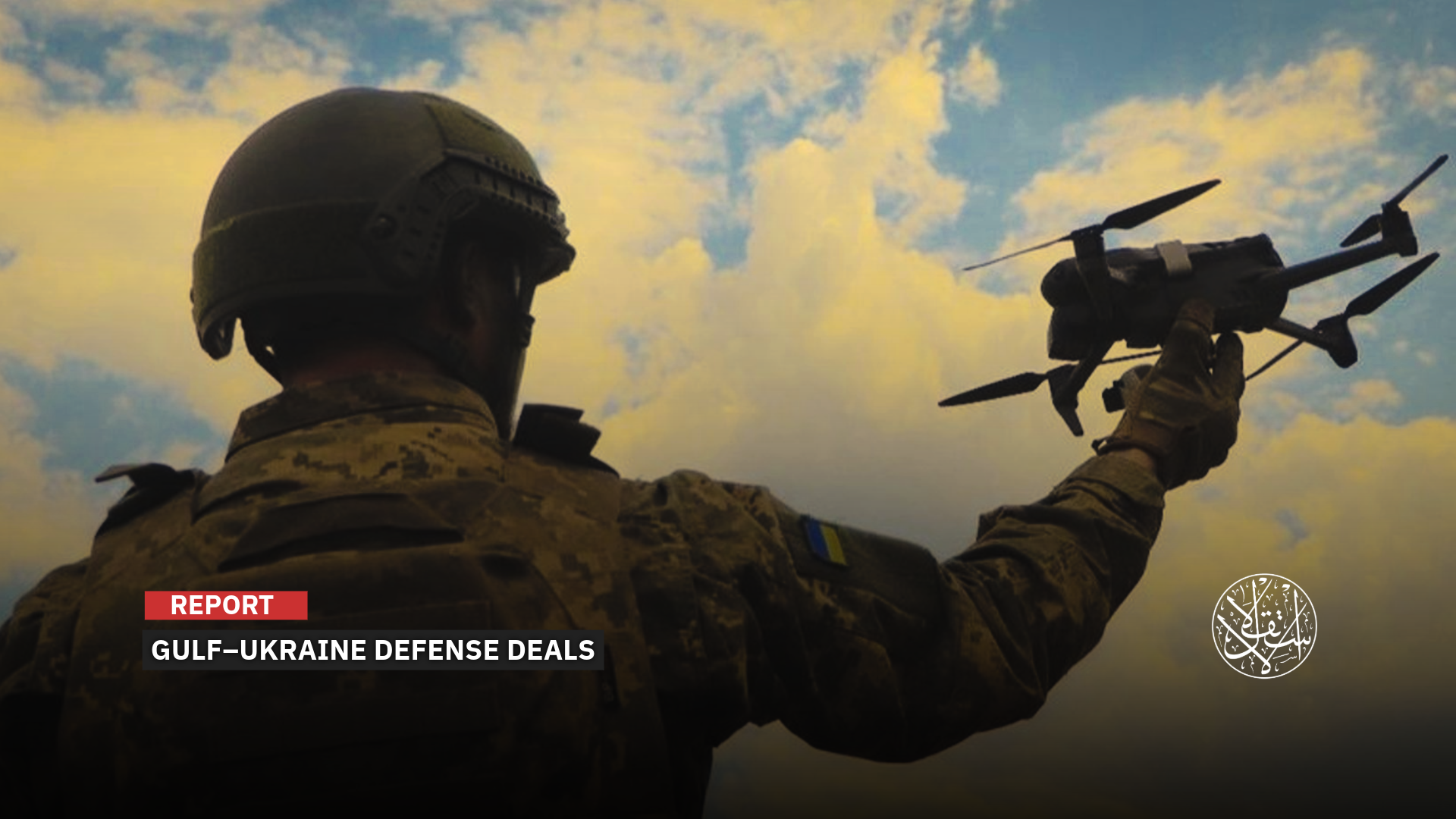
Iranians launched hundreds of cheap ‘Shahed’ missiles at Gulf cities.
Amid the escalating U.S.-Israeli War on Iran and the continued strikes on Gulf countries that followed, the latter have turned toward Ukraine—a country exhausted by four years of war with Russia.
Iranian attacks using ballistic missiles and drones have exposed gaps in traditional missile defense systems, prompting Gulf states to seek additional technologies capable of countering such strikes, which have hit critical infrastructure.
Defense Agreements
This shift came into focus with Ukrainian President Volodymyr Zelenskyy’s visit to three Gulf countries—Saudi Arabia, Qatar, and the United Arab Emirates (UAE)—at the end of March 2026, during which he announced the signing of defense agreements.
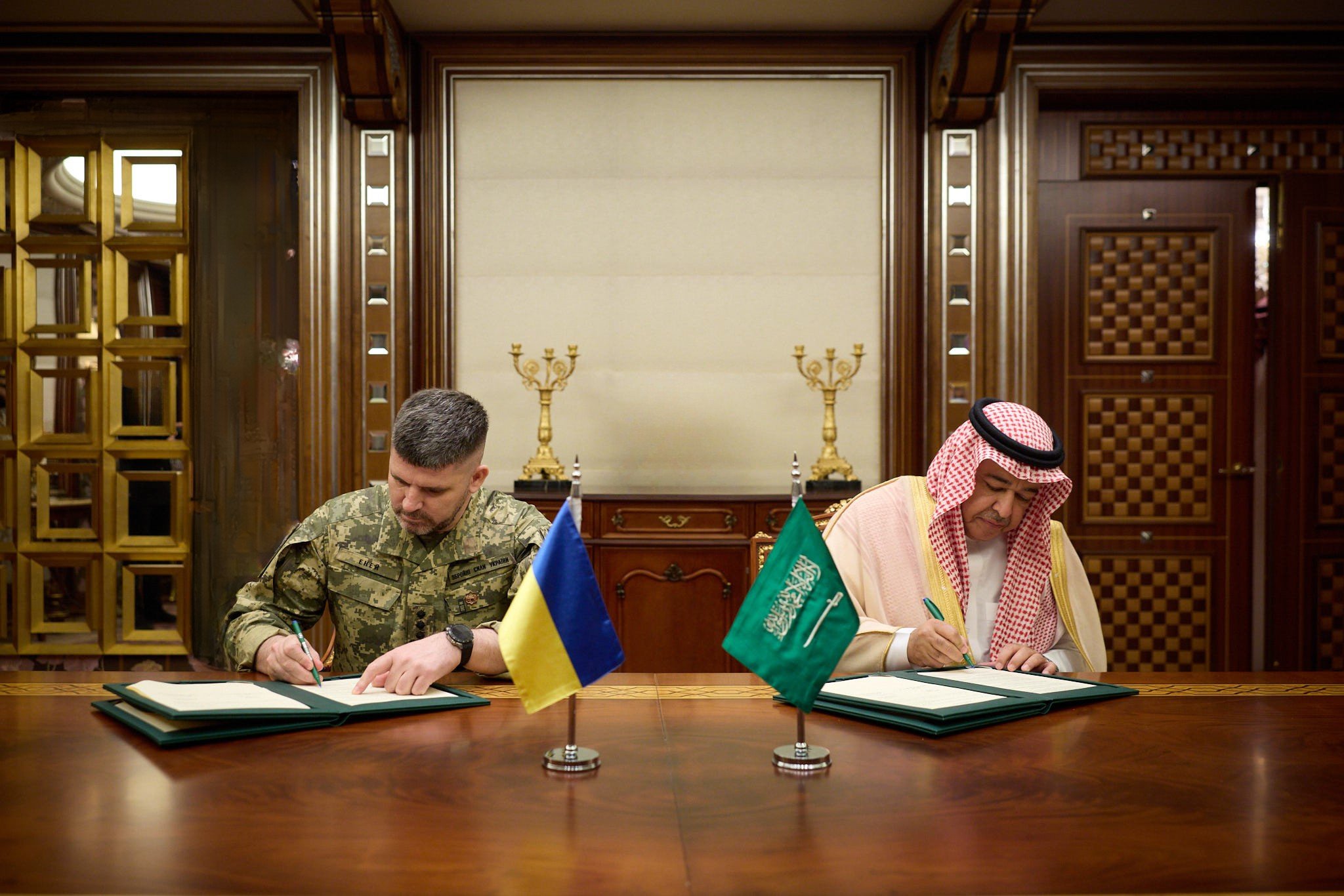
On March 27, speaking from Jeddah, Zelenskyy announced the signing of a defense cooperation agreement with Saudi Arabia, stating in a post on his social media accounts, “We have reached an important Arrangement between the Ministry of Defense of Ukraine and the Ministry of Defense of the Kingdom of Saudi Arabia on defense cooperation.”
“The document was signed ahead of our meeting with the Crown Prince of Saudi Arabia, Mohammed bin Salman Al Saud. It lays the foundation for future contracts, technological cooperation, and investment. It also strengthens Ukraine’s international role as a security donor.”
“We are ready to share our expertise and systems with Saudi Arabia and to work together to strengthen the protection of lives. Now into the fifth year, Ukrainians are resisting the same kind of terrorist attacks—ballistic missiles and drones—that the Iranian regime is currently carrying out in the Middle East and the Gulf region,” he added.
Zelenskyy also praised Saudi Arabia, saying it “has capabilities that are of interest to Ukraine, and this cooperation can be mutually beneficial.” He noted that the two parties discussed “the situation in the Middle East and the Gulf region as a whole, Russia’s assistance to the Iranian regime, developments in fuel markets, and potential energy cooperation.”
The following day, Zelenskyy met with the Emir of Qatar, Sheikh Tamim bin Hamad al-Thani, while Qatar’s Defense Minister, Saoud bin Abdulrahman al-Thani, signed a joint defense agreement with Ukraine’s National Security and Defense Council Secretary, Rustem Enverovych, during the Ukrainian delegation’s visit to Doha.
The Qatari Ministry of Defense stated that the agreement includes “cooperation in technological fields, the development of joint projects and defense investments, and the exchange of expertise in countering missiles and drones.”
The matter did not stop with these two countries, as Zelenskyy continued his tour to the UAE, where he met with its president, Mohammed bin Zayed. He stated that a similar agreement would be signed with the UAE in the following days and that both sides had agreed on “cooperation in the fields of security and defense,” without announcing a final deal.
On X, the Ukrainian president posted a video from his meeting with bin Zayed, saying, “Terror must not prevail anywhere in the world. Protection must be sufficient everywhere. That is why we are open to joint work that, in a strategic perspective, will certainly strengthen our peoples and the protection of life in our countries.”
“We discussed the security situation in the Emirates, Iranian strikes, and the blockade of the Strait of Hormuz, which directly affects the global oil market.”
“Ukraine has relevant expertise in this area—our cities, unfortunately, have been under daily attack for four years of full-scale war. Ukrainians have developed an appropriate protection system that delivers a significant interception rate against enemy drones and missiles. This systematic approach and integration of experience is exactly what we are offering to our partners,” he added.
Coinciding with this visit, Kyiv sent more than 200 counter-drone specialists to the UAE, Qatar, and Saudi Arabia to operate interception systems and train local forces, according to Reuters.
This is not the first time Gulf states have cooperated with Kyiv. Saudi Arabia has previously provided humanitarian aid to Ukraine, while Qatar has mediated prisoner exchanges between Ukraine and Russia. However, this marks the first time Gulf countries have engaged in long-term defense agreements with Ukraine.
Why Ukraine?
During the first two weeks of the U.S.-Israeli War on Iran, Iranians launched hundreds of cheap Shahed drones at Gulf cities, each estimated to cost between $20,000 and $30,000.
To intercept them, Gulf states fired more than 800 Patriot missiles in the first three days of the war, a level of depletion that creates a major strategic challenge, especially if interceptor stockpiles are exhausted, according to a study by the Arab Gulf States Institute in Washington.
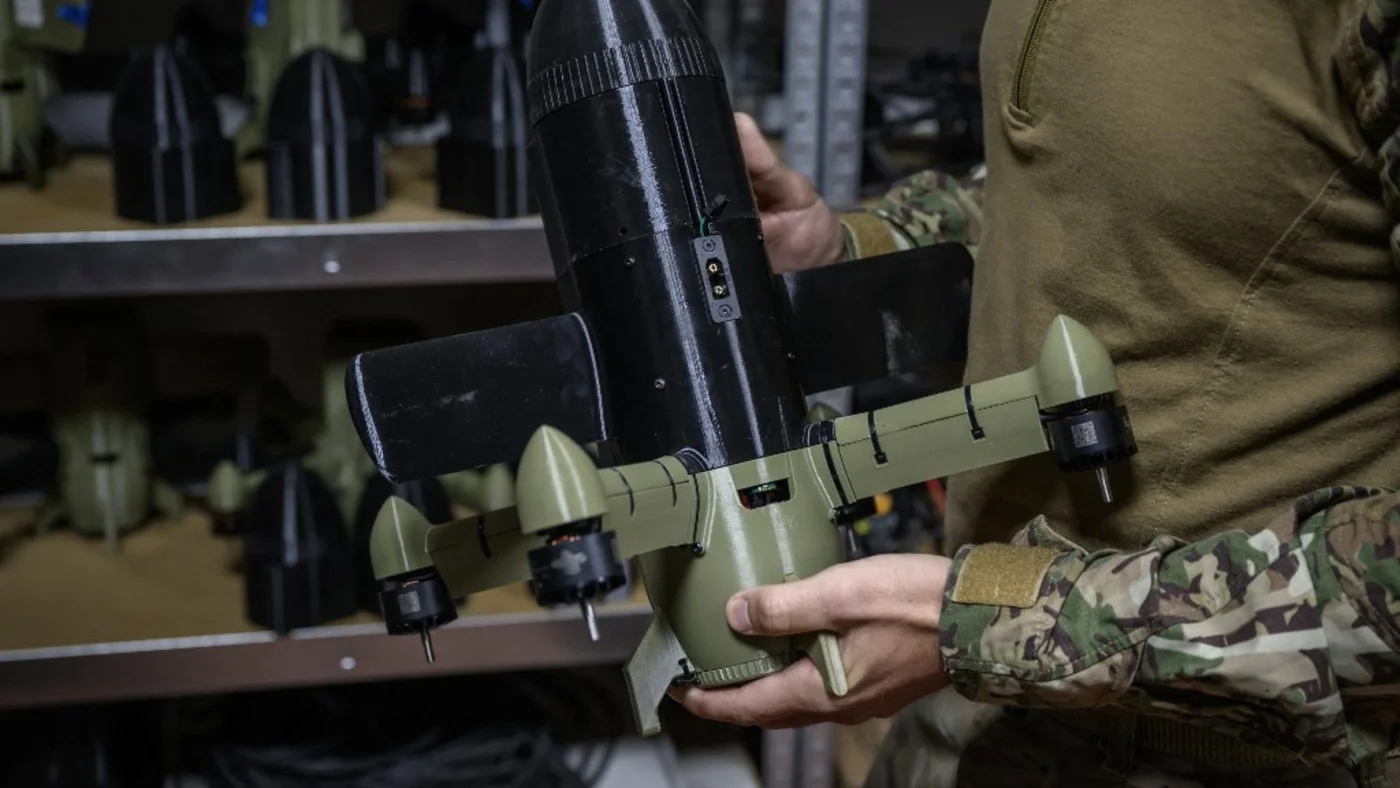
The institute estimates that an Ukrainian interceptor drone costs between $800 and $3,000, while a Patriot missile costs about $4 million and a THAAD interceptor around $12.7 million.
These traditional U.S. systems were designed to counter ballistic missiles but were forced to shoot down drones worth only a few thousand dollars.
Since 2022, Ukraine has faced similar waves of attacks from Russia, which also uses Iranian-made Shahed drones. In the absence of sufficient missile stockpiles, Ukrainians developed a new low-cost air defense layer based on interceptor drones.
In addition to equipment, Ukraine has built a layered air defense network: distributed radar systems, mobile field units, and operators trained in the use of drones and electronic warfare systems.
A report by War on the Rocks notes that this system operates as an integrated unit linking detection, targeting, and engagement, enabling interceptor drones to be launched rapidly from multiple locations—a model that reduces reliance on expensive missiles.
A report by Breaking Defense highlights that Ukraine developed a low-cost defense layer to avoid an unsustainable equation in which a $20,000 drone is destroyed by a missile costing millions.
On the supply side, Ukraine is capable of producing 2,000 interceptor drones per day, while needing only 1,000 for domestic defense, meaning it could potentially export around 30,000 units per month, according to statements by President Volodymyr Zelenskyy to the British Parliament.
Ukrainian defense firms such as Wild Hornets produce tens of thousands of drones monthly and are working on faster models to track Shahed drones.
A report by the Washington Institute states that Ukraine has an entire generation of operators and engineers with hands-on experience in counter-drone warfare, including the integration of radar systems, software, and rapid unit training—expertise that Gulf militaries currently lack.
The institute says no other country possesses such a level of human and manufacturing experience. The Atlantic Council also notes that Ukraine has flexible engineering capacity and a fast-paced innovation culture.
Rethinking Defense Doctrine
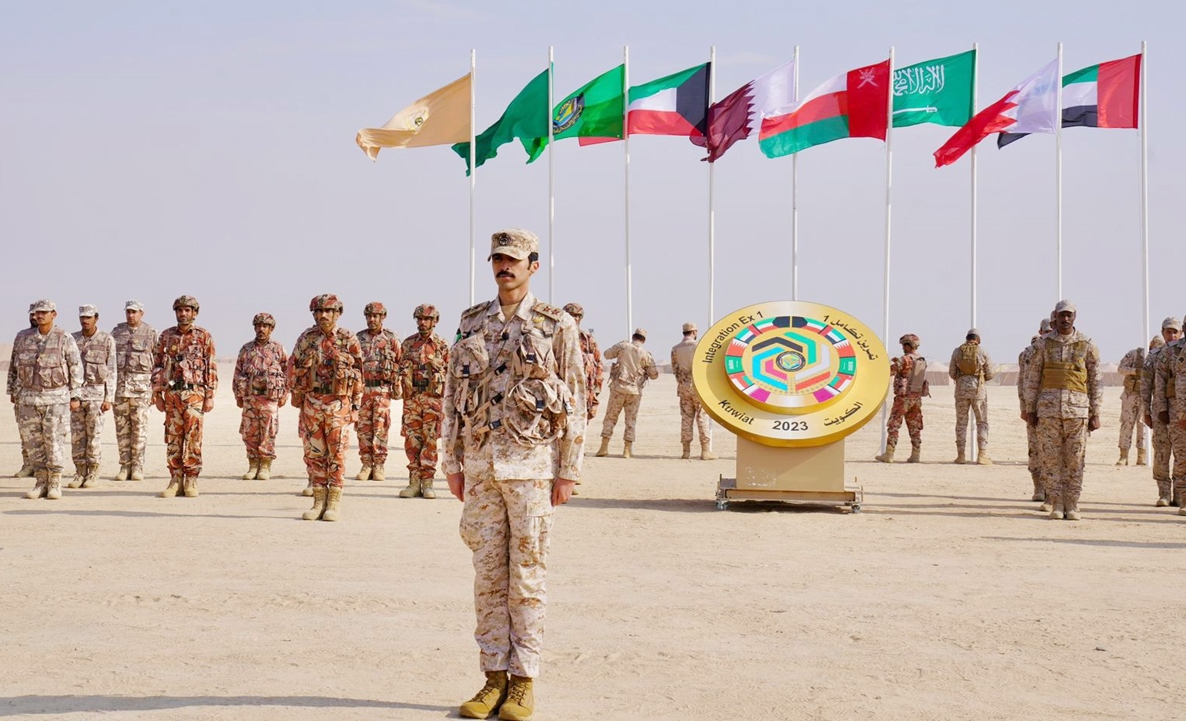
The Gulf states’ historical reliance on Western heavy systems—Patriot, THAAD, and early-warning radars—has provided protection against ballistic missiles, but has proven insufficient against waves of low-cost drones.
Analytical articles in the Middle East Eye (MEE) and the Gulf International Forum suggest that recent attacks have exposed the limits of these defenses when missile stockpiles are depleted within days, with experts warning that continuing at this pace could consume an entire year’s production of interceptor missiles within weeks.
The Arab Gulf States Institute argues that this will force the Gulf to reconsider its neutrality toward the war in Ukraine, as military support for Kyiv could strain relations with Russia or expose the region to continued Iranian threats.
In contrast, the Washington Institute believes the cooperation represents an opportunity for the United States to strengthen its alliance network in the Middle East and curb Russian and Iranian influence.
In particular, Zelenskyy and government sources have indicated that the agreements provide these capabilities in exchange for receiving Patriot missiles and other systems, reinforcing the idea that the initial driver is to close a tactical gap on both sides in wartime conditions.
The Atlantic Council views these agreements as part of a broader shift toward diversifying sources of military technology, noting that Saudi Arabia, the UAE, and Qatar are seeking to develop domestic defense capabilities and reduce reliance on the United States and the United Kingdom.
However, despite their advantages, Ukrainian drones cannot solve all defense challenges. They are suitable for intercepting drones and loitering munitions but cannot replace long-range missiles required to intercept ballistic missiles or fighter aircraft.
The International Institute for Strategic Studies (IISS) stresses that Ukraine’s defense system should be seen as complementary rather than a replacement for long-range interceptors.
Meanwhile, the Atlantic Council notes that cooperation with Ukraine could open the door to knowledge transfer and joint production of drones and software, contributing to the development of Gulf defense industries.
However, it warns of the risk of Ukrainian technology being leaked to Russia or China through Gulf companies, which would require a precise legal and regulatory framework.
Reuters says both sides are driven by mutual need: Kyiv urgently requires Patriot missiles to protect its cities, while the Gulf needs Ukrainian expertise, interceptor drones, and funding.
Ukraine has the drones, while Gulf states provide capital and marketing networks, making the partnership an opportunity to establish joint defense industries, particularly in software, artificial intelligence, and electronics, as per the Washington Institute.
Sources
- Defending the skies of the Arab Gulf states
- Ukraine and Saudi Arabia sign deal on defence cooperation, Zelenskiy says
- Ukraine’s Counterdrone Assistance to the Gulf States
- Lessons from Ukraine for Defending Gulf Airspace from Shaheds
- Gulf nations ‘trying to reach out’ for Ukrainian counter-drone capability
- Washington Should Jump on Ukraine’s Outreach to the Middle East
- Drone superpower Ukraine is an ideal tech partner for the Gulf states
- Could Gulf states learn from Ukraine's drone revolution?
- Ukraine’s Drone War is Reshaping Gulf Defense