From Refuge to Investment: How Germany Is Redefining Its Role in Post–War Syria
Syria needs to offer incentives and guarantees to attract German companies.
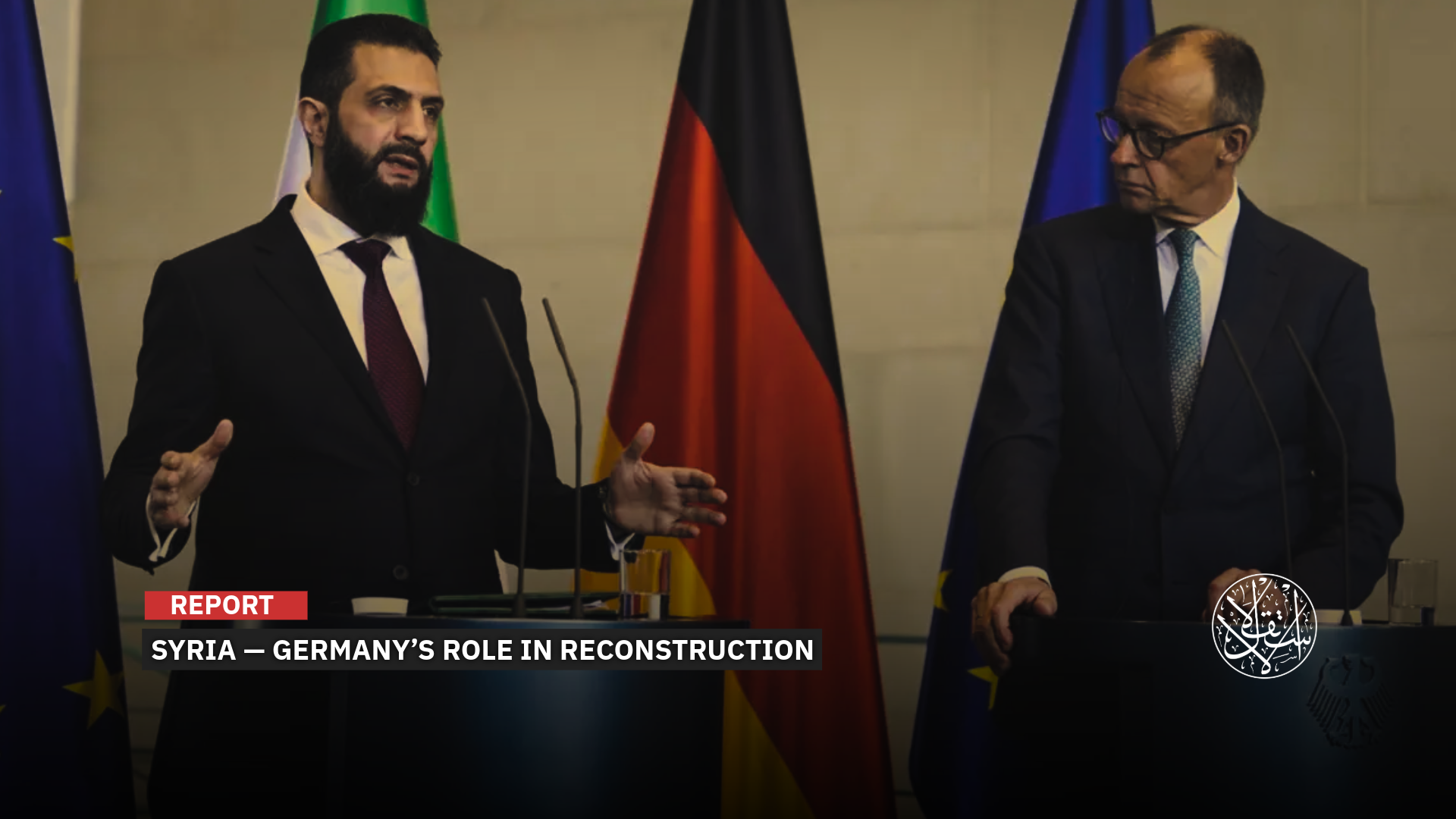
At a moment of acute regional sensitivity, where geopolitical realignments are colliding with a global reshaping of energy routes and supply chains, Syrian President Ahmed al-Sharaa’s visit to Germany on March 29, 2026, has opened the door to far-reaching questions about Berlin’s future role in Syria’s reconstruction.
Far from a routine diplomatic stop, the trip pointed to a gradual shift in relations between Damascus and Berlin, moving from political caution toward an early-stage test of economic partnership. Both sides appear increasingly aware of Syria’s potential as a future geoeconomic hub at a critical crossroads.
‘Circular Migration’
Al-Sharaa said Syria would “never forget” how Germany opened its doors to Syrians seeking to rebuild their lives, adding that the country is now returning to the international community with “firm determination” after rising from the rubble.
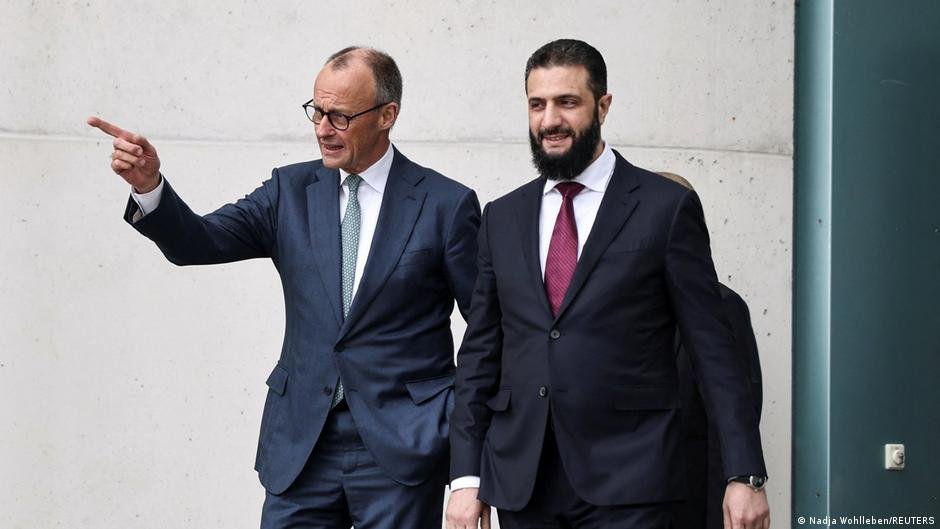
Speaking at a joint press conference with German Chancellor Friedrich Merz in Berlin on the second day of his visit, al-Sharaa said work was underway to formally redefine the partnership between Damascus and Berlin.
“We are working with our friends in the German government to establish a ‘circular’ migration model,” al-Sharaa told journalists.
He said such a model would “enable Syrians to contribute to the reconstruction of their homeland without giving up the stability and lives they have built here, for those who wish to stay.”
On energy, al-Sharaa announced that Syria is working to rehabilitate its infrastructure, noting that Siemens would be allocated 2,000 megawatts out of a total 5,000 megawatts being invested in the power sector.
He added that Syria offers broad opportunities in infrastructure, including tourism, oil resources the government has regained control over, as well as transport and railways.
He also stressed that Syria’s geographic position and its Mediterranean coastline give it a strategic advantage as a potential hub for global supply chains, particularly amid tensions in the Red Sea and the Strait of Hormuz.
German Chancellor Friedrich Merz said on March 30, 2026, that he and the Syrian president were aiming for up to 80% of Syrians living in Germany to return to Syria over the next three years.
Merz, who has made tougher migration policy a priority since taking office in 2025, said between 700,000 and 800,000 Syrians are seeking asylum in Germany, and he expects most to eventually return.
He added that priority would go to those without legal residency status, particularly individuals who have committed crimes.
He said Germany remains committed to supporting reconstruction in Syria and is working with Damascus to facilitate voluntary returns, noting that an “ambitious” joint action plan is being developed, along with plans to send a German government delegation to Damascus soon.
At the same time, he stressed that progress on joint projects would depend on advances in establishing the rule of law in Syria.
According to Merz, Germany will provide around 200 million euros in 2026 to support critical projects, including water networks and hospitals.
The approach drew criticism from some politicians and economists, who argued that the goal of returning 80% of Syrians is unrealistic and could worsen labor shortages in parts of Germany’s economy.
Merz responded, saying that the Syrian president raised this figure, and they are aware of the scale of the challenge.
In his first visit to Germany since the fall of Bashar al-Assad’s regime in 2024, al-Sharaa took part in a forum organized by the German Foreign Ministry, where he pointed to the scale of destruction in Syria and said Syrians draw inspiration from Germany’s post–World War II reconstruction model.
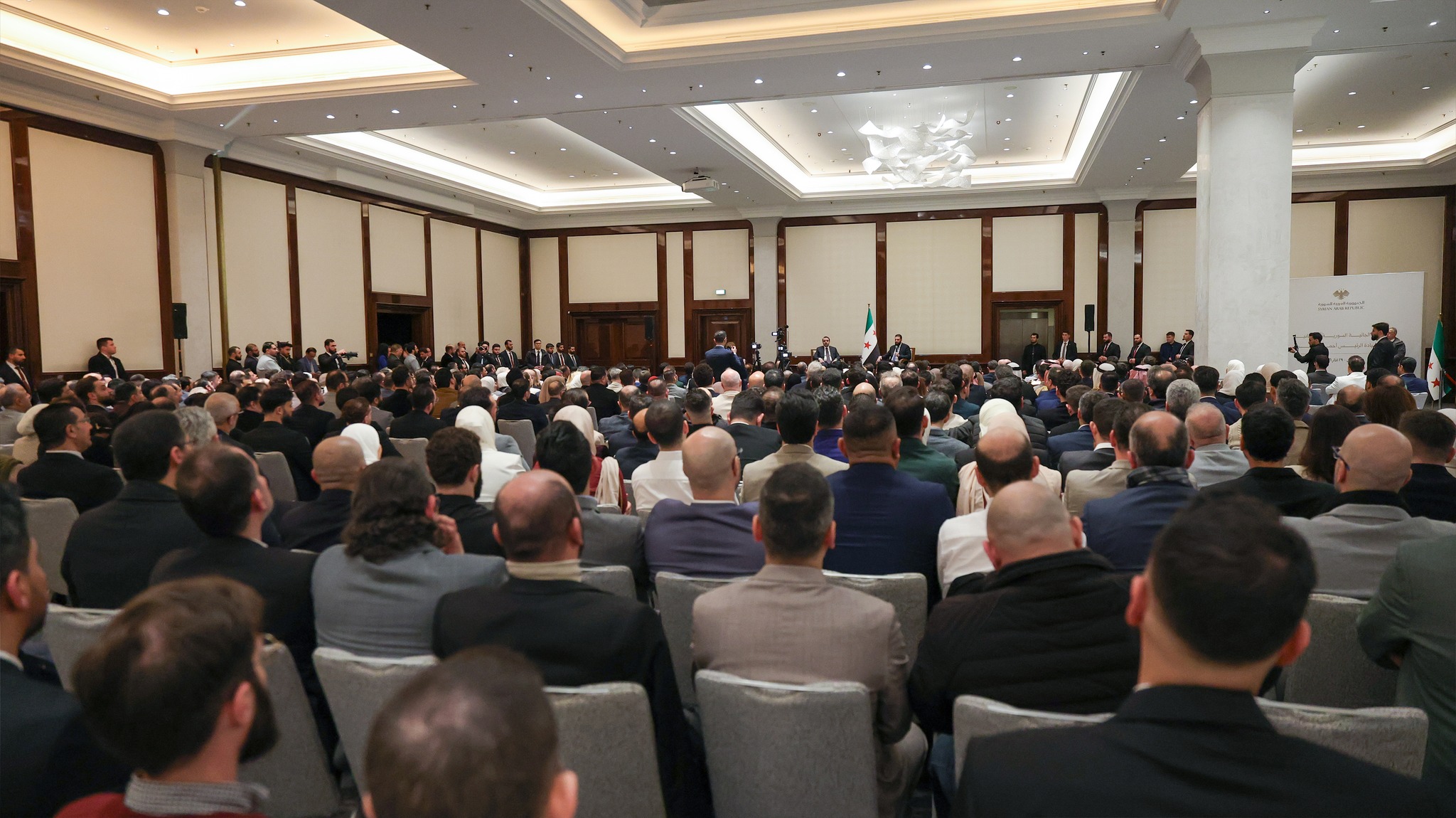
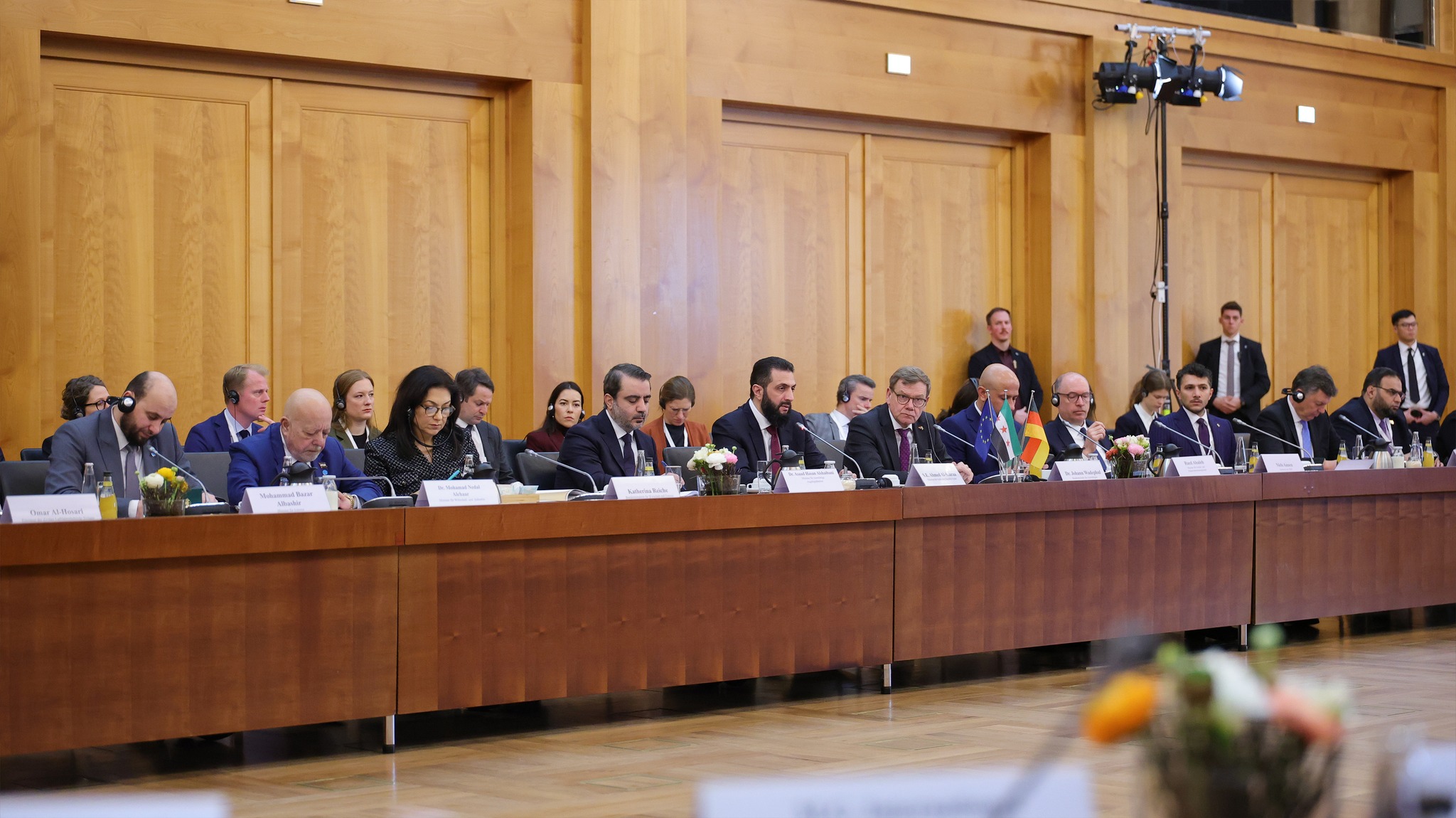
He also held a roundtable on March 30, 2026, with representatives of German companies, attended by Syrian ministers responsible for the economy, energy, and emergency sectors.
The Syrian presidency said the meeting featured investment proposals in energy, finance, security, digital transformation, construction, healthcare, and logistics, along with the signing of several memorandums of understanding.
During the meeting, Syrian Energy Minister Mohammed al-Bashir revealed plans to sign two memorandums with Siemens to develop a grid control and operating system for the electricity network, as well as an agreement with Knauf on construction materials cooperation, alongside projects in the water and energy sectors.
Incentives Package
German Foreign Minister Johann Wadephul said, coinciding with Syrian President Ahmed al-Sharaa’s visit, that Germany could play a pivotal role in rebuilding Syria’s economy.
Wadephul noted that more than one million Syrians have sought refuge in Germany since 2011, saying that for many, Germany has become a “second home alongside their first homeland, Syria,” in a reference to growing interest in voluntary return.
He also acknowledged the new Syrian government’s success in preventing the war with Iran from spilling onto Syrian territory, describing it as a major achievement.
Economy Minister Katherina Reiche, meanwhile, pointed to promising business opportunities for German companies in Syria, expressing hope for stronger trade between the two countries.
She said these opportunities span key sectors, including energy, construction, mechanical engineering, industrial systems, IT, software solutions, security technologies, and power generation projects.
This builds on Germany’s long-standing presence in Syria, where German technology and equipment have historically been embedded across multiple sectors, opening the door to a potential revival of that role during reconstruction.
Economic ties between Damascus and Berlin date back to before 2011, when Germany was Syria’s largest European trading partner, with bilateral trade reaching around $1.8 billion. That figure has since collapsed to roughly $4 million in the first month of 2026, less than 1% of its previous level.
Against this backdrop, Germany, as Europe’s largest economy, is emerging as a potential gateway for investment in Syria and a key player in linking economic recovery with humanitarian and diaspora-related issues, including the large Syrian community in Germany.
Al-Sharaa’s visit to Berlin reflects these intertwined political and economic dimensions, particularly as the Syrian-German business forum convened with ministers in attendance, signaling Damascus’s push to revive the economy and attract German firms with advanced technological expertise.
In this context, the idea of “circular migration” has emerged as a notable theme, aimed at leveraging Syrian talent abroad in a way that benefits both sides and facilitates the transfer of knowledge and expertise back to Syria.
The concept, however, remains under discussion, as it involves legal frameworks that would allow refugees to contribute to reconstruction without losing their residency status in Germany. These proposals were raised by Berlin after the fall of Bashar al-Assad’s regime but have yet to be implemented.
Cross-cutting indicators suggest that the Syrian leadership is seeking long-term investment from Germany rather than short-term financial aid.
Syria’s geographic position further strengthens this approach, with its potential role as a transit hub for supply chains and an energy corridor to Europe helping explain growing German interest in reconstruction efforts.
The presence of major German companies alongside Syrian officials also signals an early willingness to engage in reconstruction projects and explore direct investment opportunities.
Economic analyst Osama Qadi said the president’s visit marks an important step toward strengthening bilateral relations and drawing on Germany’s experience in rebuilding a country devastated by war.
He added that Syria needs to present a comprehensive package of incentives and facilitation measures to attract German companies and create job opportunities capable of absorbing Syrian talent based in Germany.
He stressed that achieving mutual interests requires a genuinely attractive investment environment, noting that the entry of major firms such as Siemens and the signing of memorandums of understanding represent an important step in that direction.
Sustaining this trajectory will require real guarantees and facilitation measures that allow German companies and training institutions to enter the Syrian market, laying the foundation for a durable partnership in the reconstruction phase, according to Qadi.
Investment Opportunity
Germany’s role in Syria’s reconstruction is no longer being framed solely as a humanitarian responsibility but increasingly as an investment opportunity where the interests of both states and German companies converge. Following the fall of Assad, Germany’s engagement has taken shape through meetings with key economic actors and discussions covering sectors ranging from energy and infrastructure to digital transformation.
In this context, Berlin appears to be entering a phase of “structured exploration” that typically precedes full-scale involvement in reconstruction projects, tying its engagement to conditions related to stability and reform.
The visit also reflects a German push to link reconstruction with migration policy through new approaches such as “circular migration,” aimed at turning Syrian communities in Europe into a human and economic engine for recovery.
Signs of this measured economic engagement are already emerging. The German development bank KfW is preparing to provide financial support to revive the Syrian economy, having signed grant agreements worth a total of 119 million euros since early 2025 on behalf of the Federal Ministry for Economic Cooperation and Development, according to the bank on the sidelines of a meeting with President al-Sharaa.
The main focus is on rebuilding markets and production facilities to secure access to essential resources.
Basic infrastructure, particularly hospitals, is also a priority. In cooperation with UNICEF, grants worth 40 million euros are being allocated to water and sanitation systems, as well as schools and psychosocial and educational support programs for children and young people.
The United Nations Development Programme (UNDP) is investing 30 million euros to upgrade selected hospitals, connect them to wider healthcare infrastructure, and equip them with medical technology.
Another 20 million euro project aims to revive key markets and commercial centers and rebuild production facilities such as mills, silos, slaughterhouses, and textile factories.
These reconstruction efforts are designed to strengthen income generation and economic growth, benefiting up to three million Syrians, with the UNDP overseeing implementation.
Sources
- German lawmaker urges focus on minority rights during Syrian leader's visit
- President al-Sharaa meets representatives of German companies in the presence of the government delegation [Arabic]
- President al-Sharaa in Berlin: Syria is a safe haven and an alternative energy supply route between East and West [Arabic]
- Action plan for Syria: Germany supports reconstruction and return [German]
- Wadephul pledges support to al-Sharaa – KfW grants €119 million in funding [German]
- Wadephul pledges support for Syria’s reconstruction [German]