How Judge Faiq Zaidan Became a Key Obstacle to al-Maliki’s Comeback
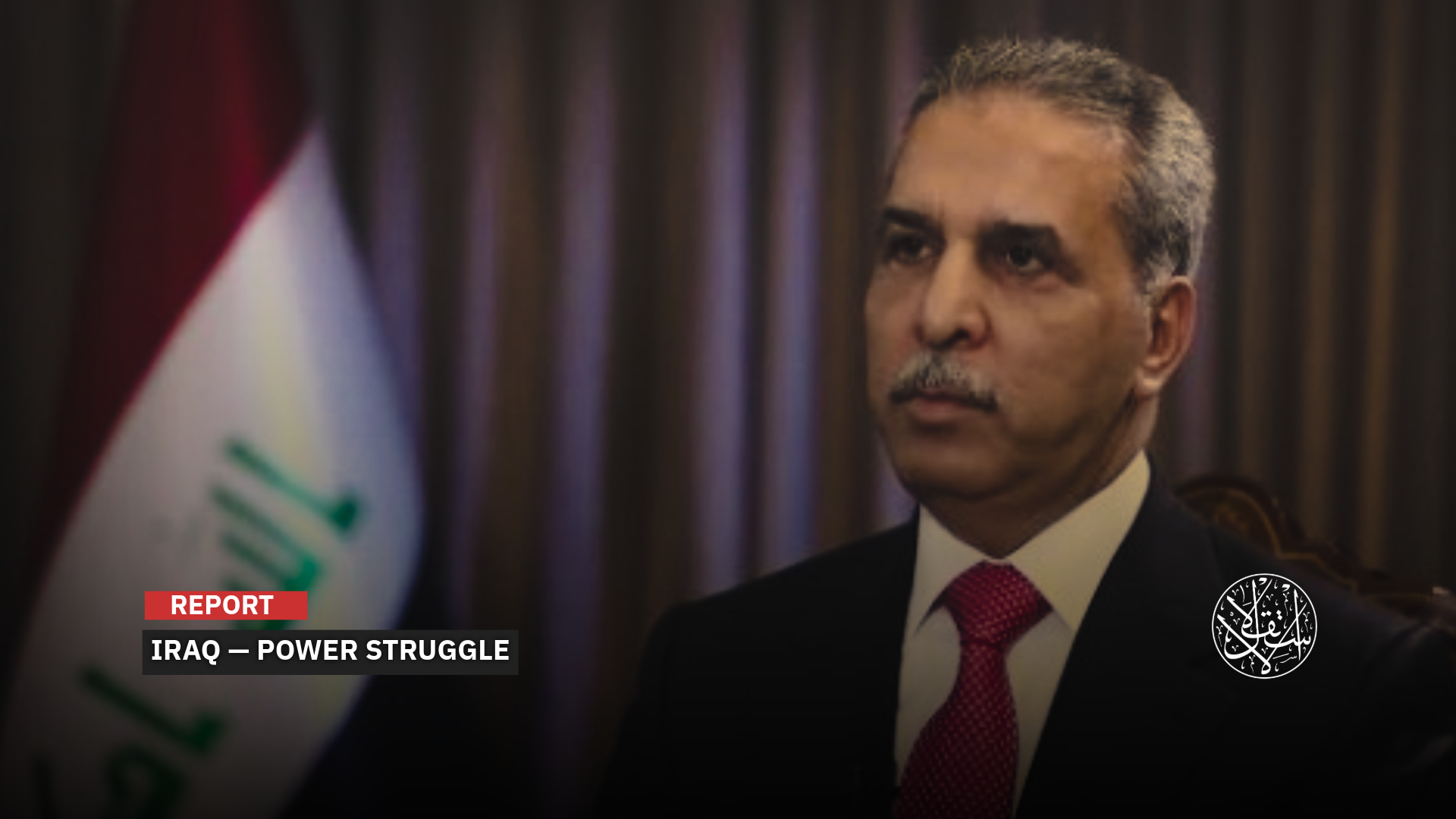
An American report said Zaidan has turned the judiciary into a shield for militias.
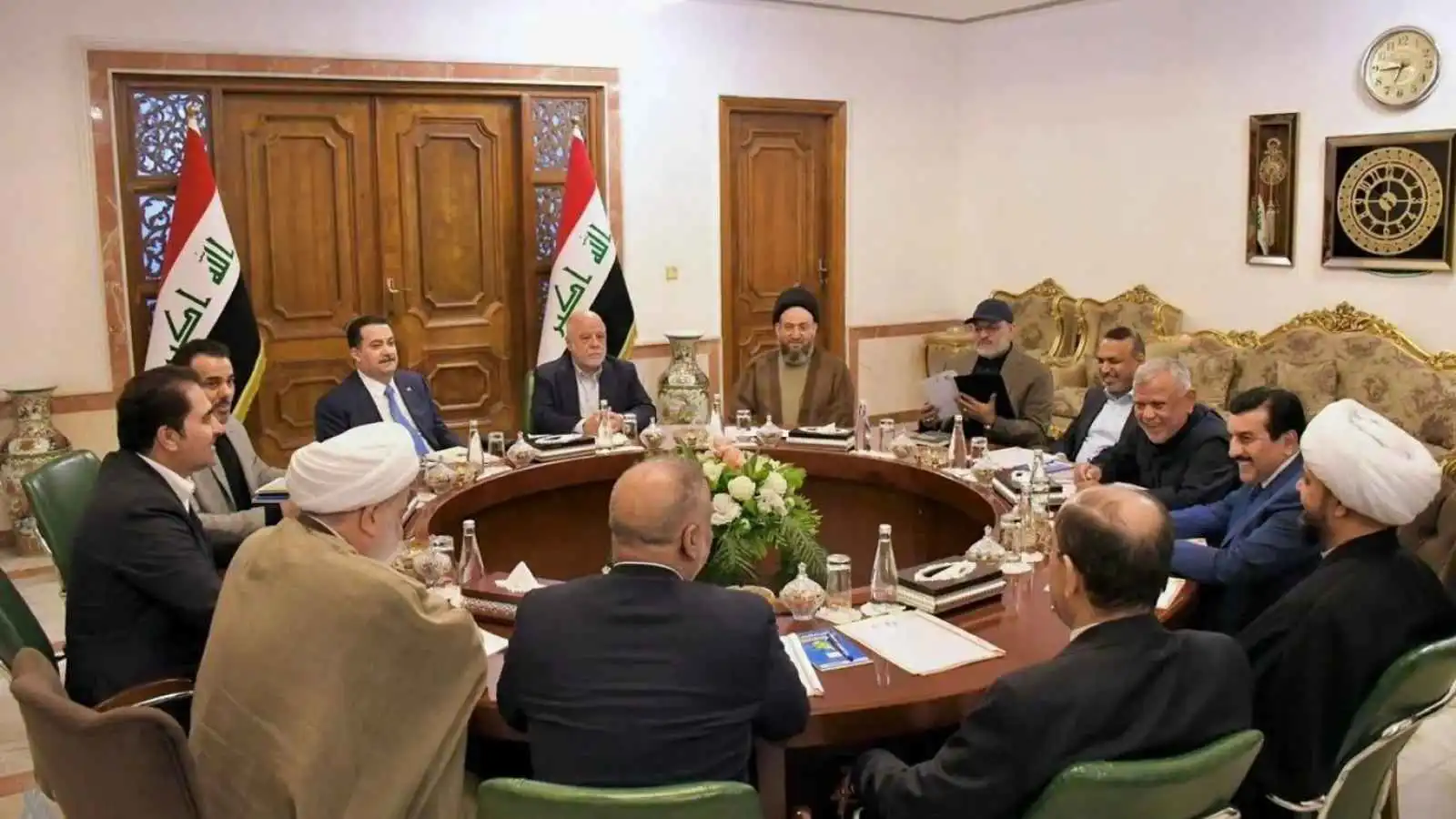
The intra-Shiite dispute over the nomination of former Prime Minister Nouri al-Maliki by most forces within the ruling Coordination Framework (CF) has laid bare a sharp, largely hidden power struggle between two Iran-aligned poles inside what is increasingly described as Iraq’s deep state.
Since al-Maliki’s name was put forward on January 24, 2026, his bid has faced objections from four factions within the CF and three parties from the Sunni National Political Council (NPC), followed by an explicit veto from U.S. President Donald Trump, voiced in a social media post on January 27.
The Puppet Master
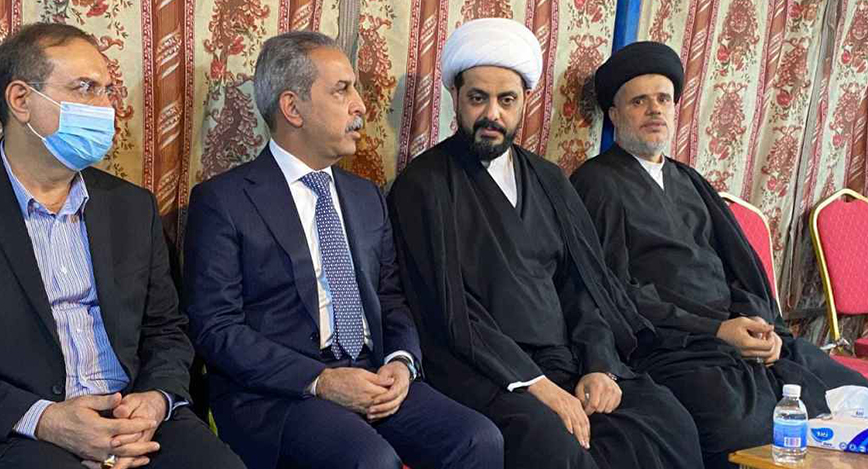
Although his name is rarely mentioned publicly, Faiq Zaidan, Iraq’s Supreme Judicial Council chief and a figure close to Iran, has recently emerged in the open amid infighting within the Shiite camp, particularly over objections to Nouri al-Maliki’s bid to return as prime minister, with growing talk that he is operating behind the scenes to back factions opposing the nomination.
Among the most prominent opponents of al-Maliki within the CF are Qais al-Khazali, Ammar al-Hakim, Shibl al-Zaydi, and Haider al-Abadi, while on the Sunni side of the NPC, the leading figures include Mohamed al-Halbousi, Khamis al-Khanjar, and Ahmed al-Jubouri, known as Abu Mazen.
Haider al-Mulla, a senior figure in the Sunni Azm Alliance, said in an interview on January 20 that social media posts issued by al-Halbousi and Abu Mazen were carried out at the behest of nonpolitical Iraqi actors who asked them to take positions opposing al-Maliki’s nomination, adding that those actors receive instructions from elsewhere and that both his camp and the CF know well where those directions come from.
Yahya al-Kubisi, a writer and political analyst, tweeted on February 4 that putting Trump’s veto aside, which he expects will be followed, the real battle is between al-Maliki on one side and Faiq Zaidan and Qais al-Khazali on the other.
He added that Zaidan knows al-Maliki’s comeback would shatter his political network, while al-Khazali fears his own fiefdom would be undermined, and described Speaker al-Halbousi as little more than a shadow puppet controlled by the two power players.
Three days later, al-Kubisi followed up, warning that beyond the shadow puppet controlled by Faiq Zaidan and with Qais al-Khazali partly pulling the strings after being sidelined from the speakership, any Sunni figure without real clout who backs al-Maliki for prime minister should face political and social consequences.
Iraqi journalist Husham Hussein wrote in a post on X after the election of Haibat al-Halbousi as speaker of parliament on December 29, 2025, that a maestro does not need to speak to lead the orchestra, saying a single gesture is enough once everyone has already understood their role.
In a clear reference to Judge Faiq Zaidan, Hussein said managing the rhythm requires a man of exceptional intelligence, one who knows precisely where silence comes before sound and when discord must be restrained so the overall mood is not disrupted and the constitutional timing of the melody is not broken.
The Man Behind the Militias
On the question of how far Faiq Zaidan has encroached on Sunni decision-making, a senior political source told Al-Estiklal, speaking on condition of anonymity, that Zaidan has effectively become the real power broker over Sunni forces at this stage, operating with direct backing from Iran and intervening to determine who occupies sovereign posts, foremost among them the speakership of parliament.
The source said Zaidan has stepped into the role once played by Abu Mahdi al-Muhandis, the former deputy head of the Popular Mobilization Forces (PMF), running the political scene from behind the curtain, noting that some Shiite actors, particularly Qais al-Khazali, are now moving within the same orbit, alongside Zaidan’s efforts to push figures close to him onto Sunni electoral lists.
According to the source, Zaidan fears Nouri al-Maliki’s return to power because al-Maliki is the only figure capable of dismantling his influence across the Iraqi state, adding that while both men maintain close ties with Iran, Zaidan is unwilling to accept any partner in managing absolute power.
In an interview dating back more than six years, al-Maliki himself shed light on Zaidan’s early reach, recalling that Judge Faiq Zaidan once came to his office accompanied by another judge and two or three officers to inform him of a decision to search the home of then Vice President Tariq al-Hashimi.
Al-Maliki said he warned Zaidan that al-Hashimi was serving as vice president and that carrying out such a move would trigger a major political crisis, but Zaidan insisted the decision was based on evidence and confessions and demanded the search proceed, threatening to issue an arrest warrant against al-Maliki himself if he obstructed the judiciary.
Tariq al-Hashimi left Baghdad in 2011 for the Kurdistan Region after the al-Maliki government leveled “terrorism charges” against him, accusations he flatly denied and described as politically motivated and issued at Iran’s behest, before leaving the country altogether in 2012 and never returning.
In December 2023, a report by West Point’s Combating Terrorism Center said Faiq Zaidan had crossed the line from state judge to what it called a “guardian of the Shia project,” becoming the linchpin of a so-called soft coup engineered by actors linked to Iran.
The report detailed Zaidan’s role in enabling the CF to secure control of the premiership following armed clashes between militia factions and the Sadrist movement inside Baghdad’s Green Zone after the 2021 elections, in which the Sadrists won around 75 seats before withdrawing from politics in August 2022 amid the violence.
According to the report, Zaidan’s rise was not the product of a normal bureaucratic trajectory but the result of a carefully constructed project dating back to 2004, when certain actors identified him as the most suitable tool to convert militia military power into stable constitutional influence. Abu Mahdi al-Muhandis dubbed him the “guardian of the Shia project,” a label the report said carried clear political meaning.
Zaidan maintained direct contact with leaders of groups designated as terrorist organizations, including Kata’ib Hezbollah (KH) and Asa’ib Ahl al Haq (AAH), as well as officials in Iran’s Quds Force, noting that these ties coincided with pivotal judicial rulings that helped militias and CF forces tighten their grip on the state despite losing at the ballot box.
The report concluded that Iraq’s judiciary no longer functions as an independent authority but has become a central political engine deciding who governs, who is sidelined, and who enters the political arena and who is shut out.
Zaidan has turned the Supreme Judicial Council into a political weapon and a stage for power struggles, transforming the judiciary from a state pillar into a bridge for armed groups that see themselves not as Iraqi but as part of a broader regional axis.
A Former Contender
Ahead of the parliamentary elections held on October 10, 2021, Faiq Zaidan’s name surfaced as a potential candidate for Iraq’s premiership, driven by several factors, most notably his close ties to Iran.
It was not the first time. His name had already been floated in 2018, but he declined the post then, opting instead to remain as head of the Supreme Judicial Council.
Zaidan comes from the family of Sheikh Farhan al-Aboudi, originally from the al-Shatrah district in Dhi Qar province in southern Iraq, though he was born in Baghdad on March 9, 1967, where he completed his primary and secondary education. He later enrolled in the College of Law and Political Science at the University of Baghdad. He is married and has six children, three of them daughters.
He worked as a lawyer in Baghdad for seven years during the 1990s before joining the Iraqi Judicial Institute, where he was appointed a judge in 1999. Since then, he has served in a range of civil and criminal courts.
In a televised interview in April 2021, Zaidan described his judicial career as “very complex and exhausting,” saying he would not wish the same path for his children. “I went through many problems, and I do not want my children to take this road. I hope they choose something else, away from the judiciary,” he said.
He added that he didn’t want his children to pursue careers in the judiciary because of Iraq’s current realities, explaining that “after the state lost its central authority, the system became nearly ungoverned, and working in the judiciary is extremely challenging, especially in today’s environment.”
Zaidan also acknowledged that Iraq’s judiciary faces intense pressure from politicians, saying that “the slogan of judicial independence is raised during elections but not respected in practice,” as some actors neither adhere to the rule of law nor respect the independence of the courts.
He has been openly critical of Iraq’s constitution, arguing that “linking the appointment of senior judicial positions to parliament is a real catastrophe” and calling for constitutional amendments on this point.
Zaidan holds a higher diploma in judicial sciences from the Judicial Institute in Baghdad, a master’s degree in international law from the Islamic University of Beirut, and a PhD in public law.
He currently serves as president of the Supreme Judicial Council. Previously, he headed the Federal Court of Cassation, after serving as its deputy president in 2014 and then president in 2016.
Zaidan practiced law in Baghdad between 1991 and 1997, studied at the Judicial Institute from 1997 to 1999, and was appointed a judge in Baghdad in 1999. He worked in civil and criminal courts until 2005, after which he was named head of the Central Investigative Court for terrorism and major crimes, a post he held from 2005 to 2012.
In 2012, he became a member of the Federal Court of Cassation and rose through its ranks until assuming the presidency of the Supreme Judicial Council in 2017, following the issuance of Supreme Judicial Council Law No. 45 of 2017, which stipulated that the president of the Federal Court of Cassation would also serve as head of the council.