What Is the Motive Behind the Arrest of Reformists in Iran?
“Nobel Peace Prize laureate Narges Mohammadi received seven more years in prison.”
Iran’s Reformist Front is facing what has been described as its most severe crackdown in over a decade, with authorities launching a wave of arrests targeting its prominent figures following public criticism of the regime’s handling of popular protests.
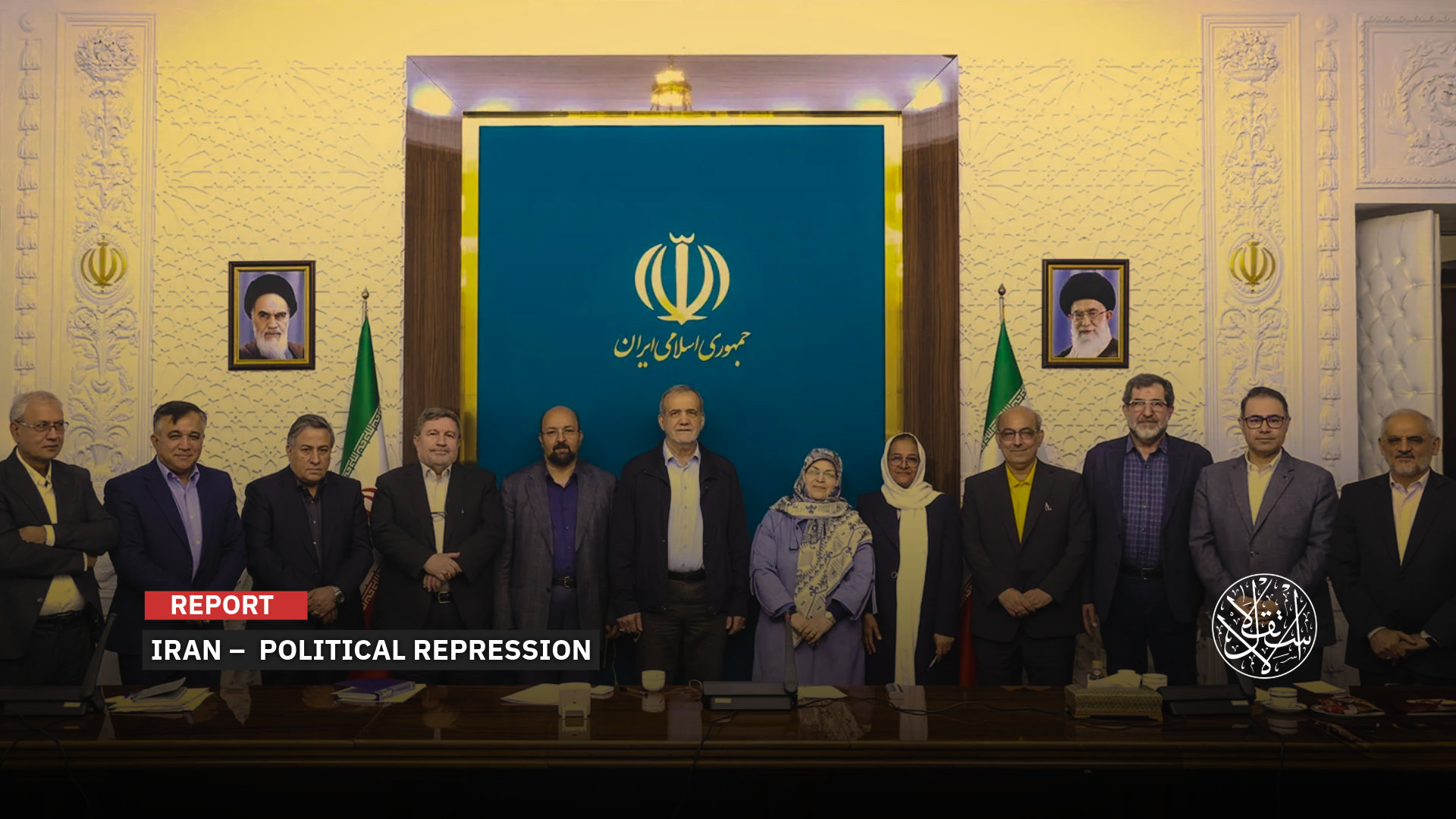
The Reformist camp is the broadest coordinating body for reformist parties in Iran and was among the most prominent groups supporting President Masoud Pezeshkian in the last elections.
Observers believe the immediate trigger for this crackdown was a statement issued by the Front in January calling on Iran’s Supreme Leader, Ayatollah Ali Khamenei, to resign.
These developments come at a highly sensitive time, marked by converging internal and external crises, a widening gap between the government and the public, and escalating geopolitical tensions with the United States.
Widespread Arrests
In recent hours, Iranian authorities have arrested several prominent figures from the Reform Front who expressed sympathy for the protesters during the recent widespread demonstrations.
Among those arrested are Azar Mansouri, who has led the Reform Front since 2023, and Javad Emam, the spokesperson for the main reformist coalition.
On January 27, Mansouri expressed her anger and condemnation of the merciless bloodshed of young people during the recent protests.
Also among those arrested are former MP Ebrahim Asgharzadeh, who heads the political committee, and former Foreign Ministry official Mohsen Aminzadeh, a long-standing member of the Front.
Political activist Hossein Mehdi Karroubi was also arrested, whom the conservative Fars News Agency accused of being the instigator, preparer, and promoter of the statement issued by his father, Mehdi Karroubi.
Mehdi Karroubi, the former Speaker of Parliament (2000-2004), had been under house arrest since 2011 before being released a year ago. He had taken a strong stance against the events of the recent protests.
The arrests also targeted political activists who had signed statements criticizing the crackdown on protests, including Narges Mohammadi, the 2023 Nobel Peace Prize laureate, who was sentenced to seven years and six months in prison and banned from traveling.
Iranian authorities arrested Mehdi Mahmoudian, Abdollah Momeni, Ghorban Behzadian-Nejad and Vida Rabbani, among the 17 civil and political activists who signed a joint statement calling for a peaceful transition of power.
They described their main demand as an indispensable necessity and affirmed their support for the public protests and the Iranian people’s right to freedom, justice, and self-determination.
Mohsen Armin, Badralsadat Mofidi, and Faraj Komijani, members of the central committee of the Reform Front, were also summoned by court order.
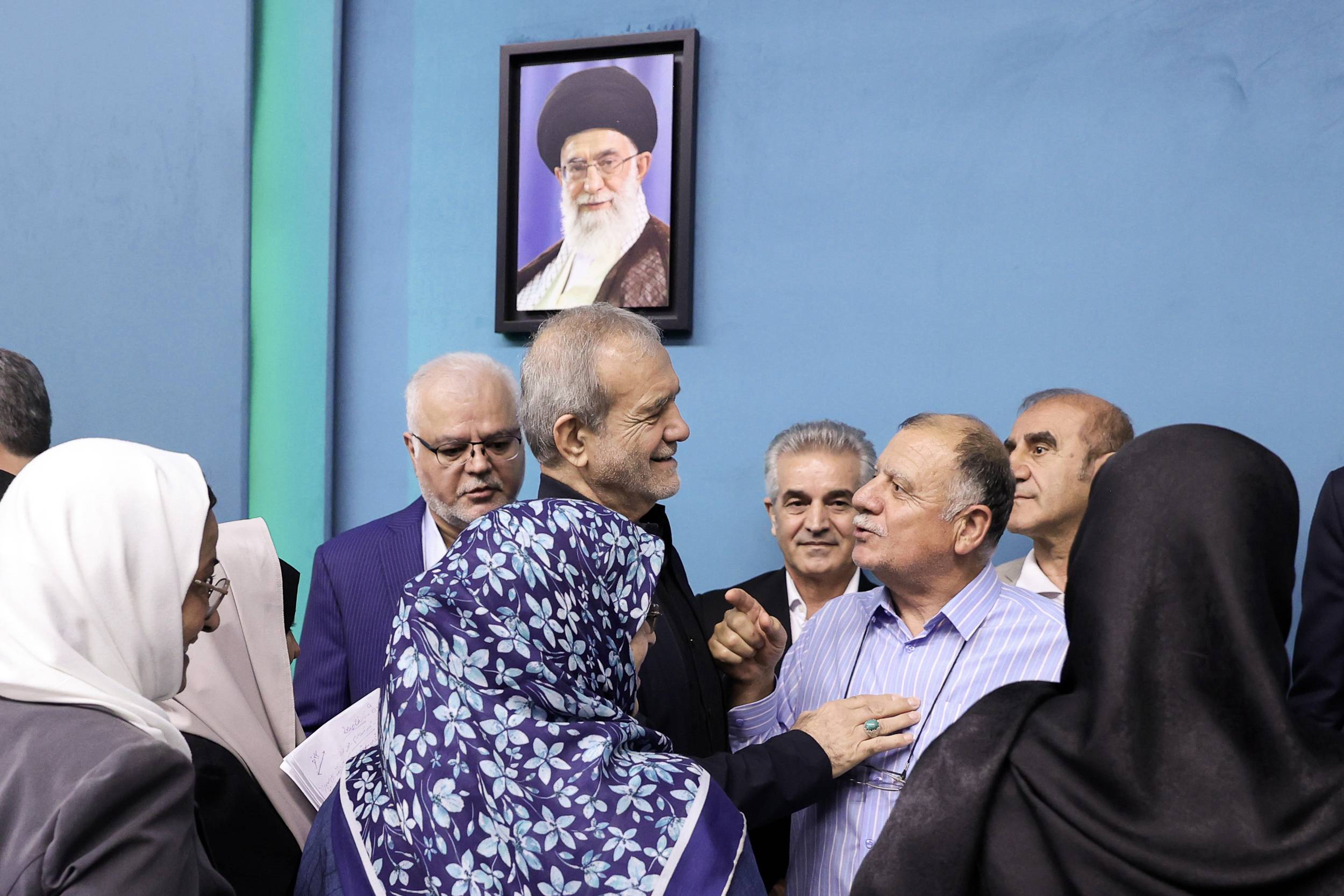
These arrests come in the wake of protests that erupted across Iran on December 28 over living conditions, before quickly escalating into a widespread anti-government movement that peaked on January 8 and 9.
Iranian authorities claimed the protests began peacefully before turning into riots involving killings and vandalism, accusing the United States and “Israel” of orchestrating what they termed a terrorist operation.
They also claimed that 2,427 of the dead were killed by armed groups and rioters, referring to them as martyrs.
The opposition, however, accused security forces of suppressing the protesters and killing more than 3,000 people.
This bloody crackdown and the subsequent arbitrary arrests effectively ended the protests, which were considered the biggest political challenge to Khamenei's regime since 1979.
Accusations and Criticisms
The conservative Tasnim News Agency reported that the charges against the detainees include targeting national unity, adopting positions contrary to the constitution, coordinating with hostile propaganda, promoting a policy of surrender, and establishing secret mechanisms of a subversive nature against the regime.
The Iranian judiciary defended these actions by accusing the detainees of carrying out coordinated behind-the-scenes activities aimed at undermining national security and justifying violence.
Judiciary chief Gholamhossein Mohseni Ejei described those involved in writing the statements as being aligned with foreign powers such as “Israel” and the United States, despite their history of supporting the Islamic Revolution.
The conflict between reformists on one side and conservatives and the regime on the other is not new, but it has intensified this time with the conflicting accounts surrounding the recent protests and the circumstances of the deaths of more than three thousand people.
For its part, the Iranian authorities maintain that the country faced what they describe as an American-backed sedition or a quasi-coup during those protests, in which armed and terrorist groups and cells participated.
In contrast, prominent reformist leaders reject this narrative and continue to criticize the performance of the security and police forces, accusing them of suppressing the protests and killing demonstrators.
Leaked recordings of Ali Shakourirad have circulated in which he questions the official account of events, accusing the security services of fabricating scenes of violence to justify the violent repression of opponents.
However, he said that the protests spiraled out of control after the Shah's son, Reza Pahlavi, called for demonstrations, and he also accused the security forces of involvement in the killings, violence, and sabotage.
This has drawn criticism from parliamentarians and conservative figures, amid calls for his prosecution if he does not provide evidence to support his account.
Recently, conservative media outlets have criticized the reformists' stance on the recent protests.
The newspaper Farheekhtegan criticized the Iranian reformist movement's position, arguing that it adopted a vague and ambiguous stance that failed to align with the existing polarization, which the newspaper describes as a polarization between revolutionaries and counter-revolutionaries.

Political Tensions
In a political reaction, the reformist Union of Iranian Nations Party stated that the arrest of Azar Mansouri, along with other reformist figures, represents a strategic mistake that will only exacerbate the crises.
It demanded the immediate and unconditional release of all political prisoners, criticizing what it described as the security forces' handling of peaceful political forces.
The Reform Front, in a statement signed by several of its members, indicated that a broad segment of Iranian citizens has lost faith in all the institutions that were supposed to be their refuge and representatives of their demands.
It called for the formation of an independent commission of inquiry and the submission of a transparent report to the public.
The Front urged the government of Masoud Pezeshkian to take immediate action to ensure the immediate and unconditional release of its detained leaders and all other political prisoners, warning that the continued policy of repression could lead to increased tension on the domestic front.
It noted that these measures demonstrate that the country is moving toward greater isolation instead of addressing crises through dialogue.
The Front expressed its concern regarding the Public Prosecutor's statement on these arrests, considering it to be a heightened concern about the current political and security trajectory.
These recent arrests take on deeper dimensions given their timing, as speculation has grown that the Iranian regime is seeking to intimidate the population in anticipation of a potential military conflict with Washington, or as a prelude to internal arrangements concerning the succession of Supreme Leader Ali Khamenei.
By eliminating radical voices within the reformist camp, the hardline faction ensures a smooth transfer of power, preventing any calls for a constitutional referendum or democratic transition.
While some in Iran believe the reformists have lost their influence and become part of the system's structure, the authorities still view them as a potential threat capable of providing political cover for any future movement. This has made eliminating their political presence a pressing security imperative for Tehran.
Reformist analyst Ahmad Zeidabadi stated that the arrest and summons of reformist leaders at this time is deeply regrettable.
He warned that these measures only exacerbate psychological tensions in the short term and deepen the rifts between political forces in the long run.
He believes that past experiences after every upheaval show that reformists often pay the price, whether they participate or not, by losing their personnel and organizational capabilities.
However, despite the renewed waves of arrests, he does not rule out a glimmer of hope that might allow Iran to overcome its crises without collapse.
Journalist Zaid Misto explained to Al-Estiklal that the recent arrests, which targeted prominent figures within the reformist movement, raise serious questions about the future of public freedoms and the limits of political activity in Iran.
He said that the timing of the arrests coincides with escalating domestic criticism and increasing international pressure on Tehran due to its human rights record and nuclear arsenal.
However, he pointed out that the main message behind these arbitrary measures is to curb any attempt to reorganize the opposition or politically exploit popular anger.
He emphasized that the continuation of the security approach will exacerbate the situation and inevitably lead to more popular protests in the country.
While Tehran continues its campaign of repression domestically, it maintains its positions on the negotiating front with the Americans, particularly its continued uranium enrichment and refusal to discuss its missile program, while simultaneously expressing its lack of trust in Washington.
Nevertheless, on February 9, it announced its readiness to reduce the enrichment level of its stockpile of highly enriched uranium (60%) in exchange for a complete lifting of sanctions.
While this position is not entirely new, its timing is noteworthy, coming as both Tehran and Washington have expressed their readiness to resume talks on the Iranian nuclear issue soon.