Death in Police Stations and Deportation at the Borders: What Is Happening to Sudanese in Egypt?
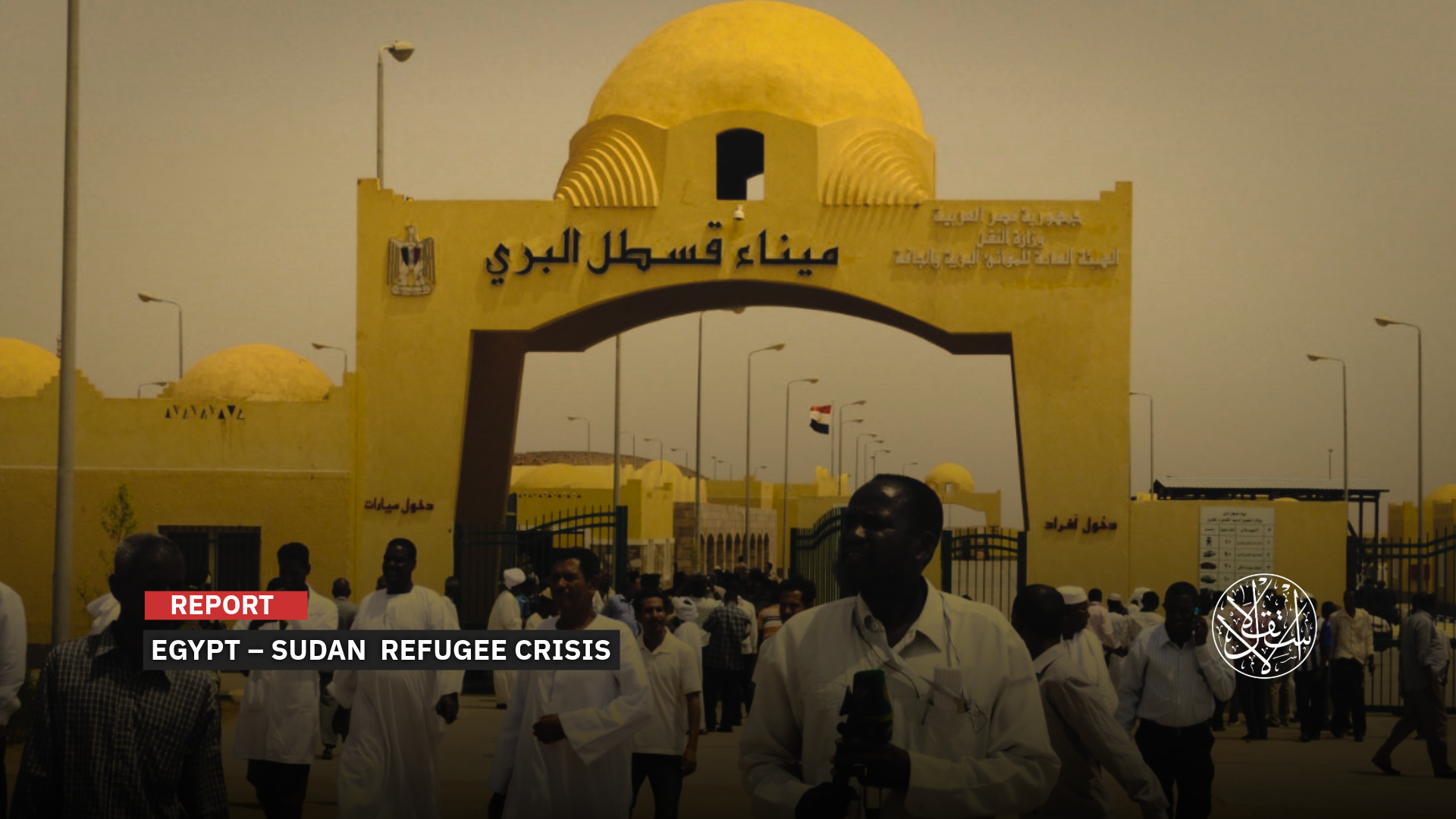
Young Sudanese man Mohamed Adam Youssef was detained and tortured, body was found in the Cairo morgue bearing signs of burns.
Egypt has, over many decades, formed a natural social and cultural extension for the Sudanese people, shaped by intertwined geography and a unity of destiny forged by a shared history along both banks of the Nile.
At every political or security turning point, Cairo was the first stop for those fleeing turmoil, a refuge closer to a “second home” than to a country of asylum in the conventional sense.
However, the war raging in Sudan since the spring of 2023 has driven an unprecedented wave of displacement, putting this legacy to a harsh test.
With an estimated influx of about 1.5 million Sudanese into Egypt, the features of the landscape have gradually shifted, and the challenges of residency, employment, and legal and humanitarian care have moved to the forefront of refugees’ daily lives.
Amid domestic economic pressures and administrative and security complications, the stories of some who fled the fires of war have moved from seeking safety to confronting detention and deportation measures, and even reports of deaths inside holding facilities, according to circulating human rights accounts. These scenes have revived uncomfortable questions about the gap between the idea of a “safe haven” and the reality experienced by some of those affected.
Between broad popular solidarity and official concerns over mounting burdens, Sudanese refugees today stand at an acutely sensitive crossroads.
Will Egypt remain a space of temporary survival until the war subsides, or will the experience of asylum itself turn into a new crisis, added to the tragedies of the conflict they escaped?
Death in Police Custody
On February 6, 2026, the shock among Sudanese in Egypt deepened as repeated reports emerged of deaths inside detention facilities, following the death of an elderly Sudanese man, Mubarak Qamar al-Din, 67, inside el Shorouk Police Station, after he was detained during security campaigns targeting foreigners in violation of residency rules.
According to accounts from his family and the Sudanese community platform in Egypt, the man suffered from diabetes and kidney failure and was held for nine days, during which his health deteriorated, despite the submission of medical documents and the delivery of medication to him.
He later suffered a severe diabetic episode at dawn on the day of his death, an incident that brought renewed attention to the issue of health care inside places of detention.
The case raises suspicions of serious medical neglect and places the duty of legal and humanitarian care for detainees under scrutiny.
When a person is in custody and under the authority of an official body, responsibility for their health rests fully with that authority.
This raises a direct question: Was an appropriate medical follow-up provided for a clearly documented chronic condition, and who bears responsibility when a period of detention ends in death?
Days later, on February 11, 2026, human rights organizations and Sudanese media outlets announced the death of a young man, Mohamed Adam Youssef, 18, following his arrest.
His family said they found his body in one of Cairo’s morgues bearing signs of burns and torture, according to testimony from his brother.
The family stated that the young man had left the Tenth of Ramadan area heading to al-Maadi on January 31, and that he was carrying a valid asylum card issued by the United Nations High Commissioner for Refugees, along with an appointment to obtain residency.
This incident opens the door to more dangerous questions about what happens in the dark space between the moment of arrest and the appearance of a body, and about the actual guarantees in place to protect holders of international protection cards from serious violations.
For human rights advocates, the two cases do not appear isolated, but rather part of a broader context suggesting that exceptional measures are turning into a recurring pattern, making each incident part of a larger picture that goes beyond individual coincidence.
The Sudanese Refugees platform, which monitors the conditions of refugees in Egypt, reported in a document covering late December 2025 and late January 2026, an unprecedented escalation in policies and practices toward refugees and asylum seekers.
It argued that what is taking place has moved beyond sporadic measures into a broader and more stringent pattern.
According to the report, the campaigns no longer focus solely on individual residency violations, but have taken on, in the platform’s description, a systematic character that includes forced deportation and the targeting of specific communities, among them Sudanese nationals.
Testimonies collected in the field spoke of arrests in streets, on public transportation, and at security checkpoints, in addition to raids on homes and the detention of women and children.
Most serious, according to the platform, is what it described as the effective suspension of legal safeguards even after release orders are issued, turning detention from a judicial process into a closed administrative and security measure that may end in deportation or the threat of it.
This point in particular explains a growing sense among refugees that the door to legal exit may not open even when they believe the matter has been settled by a court decision.
From an international perspective, Amnesty International has previously accused Egyptian authorities of detaining and deporting Sudanese without granting them a genuine opportunity to seek asylum.
Press reports have also pointed to arrests targeting dark-skinned individuals in areas such as Cairo, Giza, and Aswan since 2023.
In December 2025, the Sudanese outlet Ultra Sudan published an investigation examining the rise in arrest and deportation operations, linking it to stricter enforcement of residency laws and lengthy registration procedures with the UN refugee agency, and the resulting risks of detention across several governorates.
Notable Presence
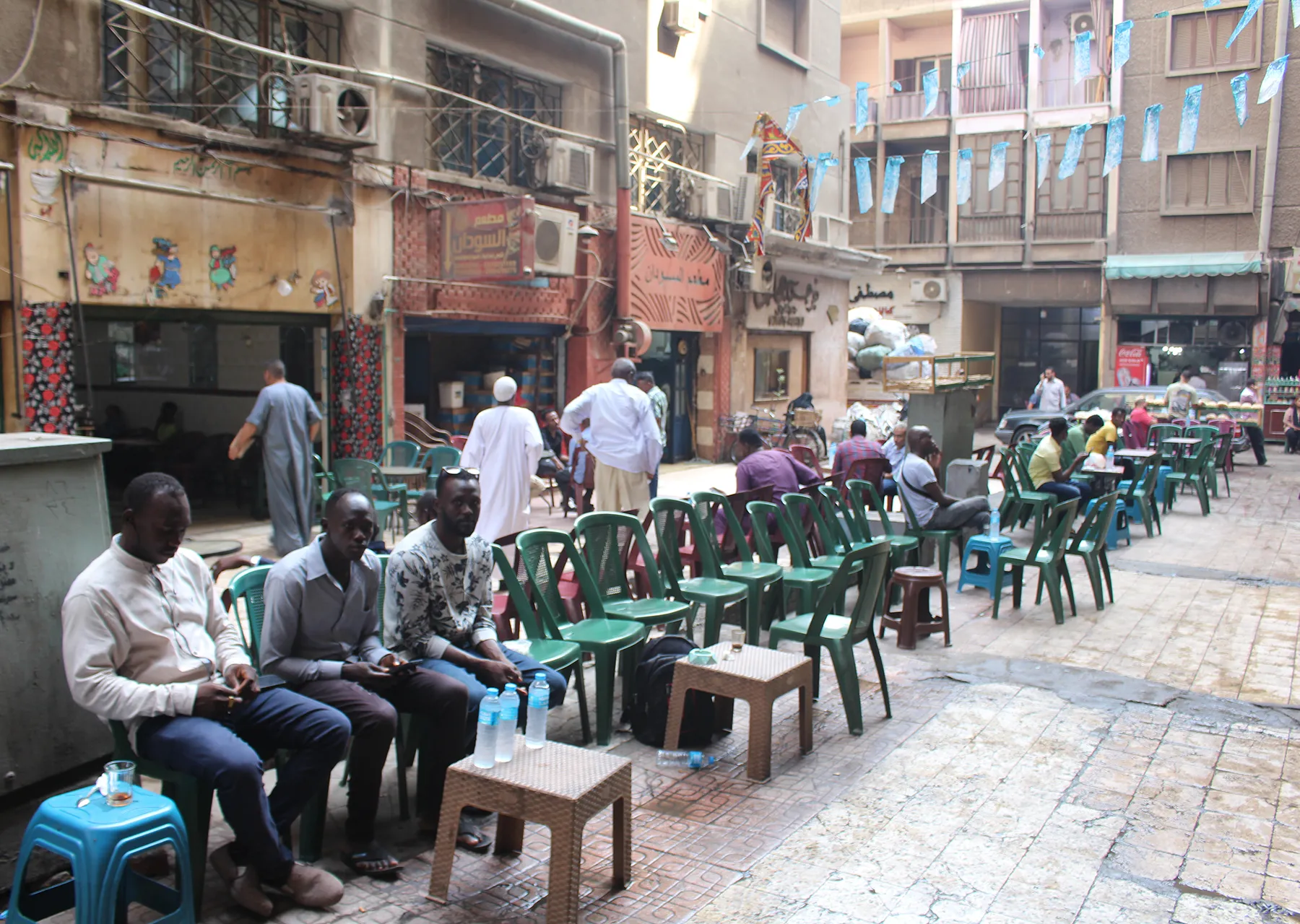
The United Nations High Commissioner for Refugees confirms that Sudanese refugees and asylum seekers in Egypt live in an open urban environment, with a heavy concentration in Greater Cairo, Alexandria, Sharqia, Damietta, and other cities.
This urban setting means their presence is not isolated in camps, but woven into the fabric of crowded and complex cities.
Within Cairo itself, some field studies offer a more detailed picture of their distribution in specific neighborhoods.
A health survey conducted by the agency in 2024 on access to health services pointed to a notable presence in districts such as Ain Shams, al-Maadi, and East Nasr City, areas marked by high population density and daily overlap in housing, schools, informal work, and transportation.
These are not merely geographic details, but keys to understanding the sensitivity of the situation.
When refugees live in the heart of cities, any sudden security tightening in streets, checkpoints, or public transport becomes a direct factor in their daily lives.
The city of 6th of October City also stands out as an important hub, as it hosts the UNHCR office that thousands of Sudanese visit, in queues stretching for long hours, reflecting the scale of pressure on registration and case processing.
In the south, Aswan remains a key transit and settlement point for many arriving across the border, whether as a temporary stop or a longer stay for those unable to bear the cost of living in the capital.
Greater Cairo and Alexandria also appear in international health reports examining the response of Egyptian institutions to the influx from Sudan, reflecting the breadth of this geographic spread.
Against this backdrop, the Sudanese Journalists Syndicate said in a statement issued on February 7, 2026, that it was concerned about the rise in hate speech and tension on social media platforms between some Sudanese and Egyptians, particularly toward refugees.
The syndicate noted that Egypt hosts large numbers of Sudanese and provides them with refuge under extremely difficult circumstances, warning that online escalation could spill onto the ground and further increase their vulnerability.
It called on journalists to uphold professional responsibility and to confront rumors and hostile rhetoric.
Embassy Under Pressure
At a press conference held in Cairo in late January 2026, Sudan’s ambassador to Egypt, Emad Adawi, announced that around 400 Sudanese were being held in Egyptian prisons, noting that Egyptian authorities had deported 2,970 Sudanese during 2025.
He confirmed that the embassy was ready to provide assistance to its nationals, calling on Sudanese to visit its offices in the Fifth Settlement area for the necessary consular support.
The embassy, however, faces criticism from some members of the community, who see its intervention as insufficient to secure the release of detainees during the recent security campaigns.
This comes in a broader context, with data from the United Nations High Commissioner for Refugees indicating that about 1.5 million Sudanese have sought refuge in Egypt since the outbreak of the war, and that a significant number entered through irregular routes from northern and eastern Sudan due to visa restrictions, complicating their legal situation.
On February 12, 2026, human rights lawyer Walid al-Tahir, specializing in refugee guidance, published a lengthy post on Facebook in which he said that Sudanese in Egypt are experiencing “one of the harshest periods of persecution and human rights violations,” arguing that forced return has become a reality imposed by coercion rather than choice.
Al-Tahir pointed out that “arrests take place in streets and homes without legal orders, detention occurs under humiliating conditions, children are held with their families in violation of international standards, and some families are asked to pay sums of money for the release of their relatives.”
He added that even holders of asylum or official residency cards “are no longer safe,” estimating that what is happening goes beyond individual violations to a pattern of organized abuses threatening thousands of families.
While this testimony reflects the perspective of its author, it adds a human dimension to the ongoing legal and political debate and highlights a growing sense of vulnerability within the Sudanese community, at a moment when security pressures intersect with human rights concerns and diplomatic stakes.
Red Line
Egyptian human rights lawyer Mostafa Ezz el-Din told Al-Estiklal that the core of the ongoing legal debate over the situation of Sudanese in Egypt revolves around the principle of non-refoulement enshrined in the 1951 Refugee Convention, emphasizing that this principle is not a formal clause to be bypassed, but the backbone of the entire international protection system.
EzzeEl-Din explained that any measure involving the detention or deportation of a refugee or asylum seeker must be preceded by a thorough individual assessment of each case.
“The question here is direct and clear: Are cases examined individually before a decision is made? Is the person given a genuine opportunity to demonstrate the need for protection? Or is the matter sometimes handled collectively, blurring the line between administrative violations and the legal status of a refugee?” he said.
He stressed that the distinction between a residency violation and an international protection status is a legal “red line” that must not be crossed, adding that anyone holding a card issued by the United Nations High Commissioner for Refugees or with an official residency appointment should not automatically fall under suspicion or be detained merely for being in public.
Even those without complete documentation, he noted, retain clear procedural rights under international law, and any decision that may endanger their life must be preceded by genuine access to defend themselves and seek protection.
Ezz el-Din acknowledged that Egypt faces real challenges, from economic crisis and social pressures to regional tensions, and that migration issues intersect with security and sovereignty concerns, but he emphasized that this does not absolve the state of its legal and humanitarian obligations, especially in a case with historical and ethical specificity such as that of the Sudanese.
He pointed out that the Sudanese community in Egypt is concentrated in Greater Cairo, Alexandria, Aswan, and other governorates, living in crowded neighborhoods, relying on a fragile economy, and standing for long hours in queues to renew protection documents.
Ezz el-Din also addressed deaths in detention, noting that the cases of Mubarak Qamar al-Din, who died inside el Shorouk Police Station, and Mohamed Adam Youssef, whose family found his body after his detention, are not mere passing news items but serious legal and ethical warnings.
He said that any death in custody places the state under a clear obligation for an independent and transparent investigation, as the person is entirely in its care, and any failure in medical attention or detention procedures can lead to tragic outcomes.
The Egyptian lawyer concluded by stressing that the question many Sudanese ask today is simple in wording but severe in substance: Does asylum remain true asylum, or does it gradually turn into detention? He suggested that the answer to this question represents the true test of respect for the principle of non-refoulement and the nature of the historical relationship between the two peoples at this delicate stage.
Sources
- Death of Sudanese Citizen in Police Station Deepens Refugee Crisis in Egypt [Arabic]
- Egypt: Justice Committee Reports Death of Sudanese Refugee from Medical Neglect in Cairo Police Station, Calls for Investigation and Accountability [Arabic]
- Sudanese in Egypt Tell Al-Quds Al-Arabi: We Fear Leaving Our Homes [Arabic]
- “Guests of Egypt” in Danger [Arabic]
- Sudanese and International Human Rights and Civil Organizations Call for Halt to Deportations of Sudanese from Egypt [Arabic]