Sahara Conflict Parties Meet in Madrid: Is Washington Imposing a Solution on Algeria and Morocco?
After more than half a century of conflict, the two rivals met again on both the military and diplomatic fronts.
The United States is seeking a “solution” to the dispute over Western Sahara, which calls for self-determination, by encouraging the parties to sit at the negotiating table and engage in direct talks.
On February 8, 2026, Washington brought together representatives of the countries involved in the issue, the foreign ministers of Morocco, Algeria, and Mauritania, as well as the head of diplomacy of the Polisario Front, at the headquarters of the U.S. Embassy in Madrid, Spain.
The U.S. Department of State said in a post on X that senior-level delegations from the United States and the United Nations facilitated talks in Madrid, Spain, bringing together Morocco, the Polisario Front, Algeria, and Mauritania.
The department stated on February 9 that the talks centered on implementing UN Security Council Resolution 2797 (2025) regarding Western Sahara.
In another post, it said that the United States senior adviser for Arab and African affairs, Massad Boulos, is leading the talks, under the leadership of President Donald Trump, saying the United States continues its commitment to supporting a just solution.
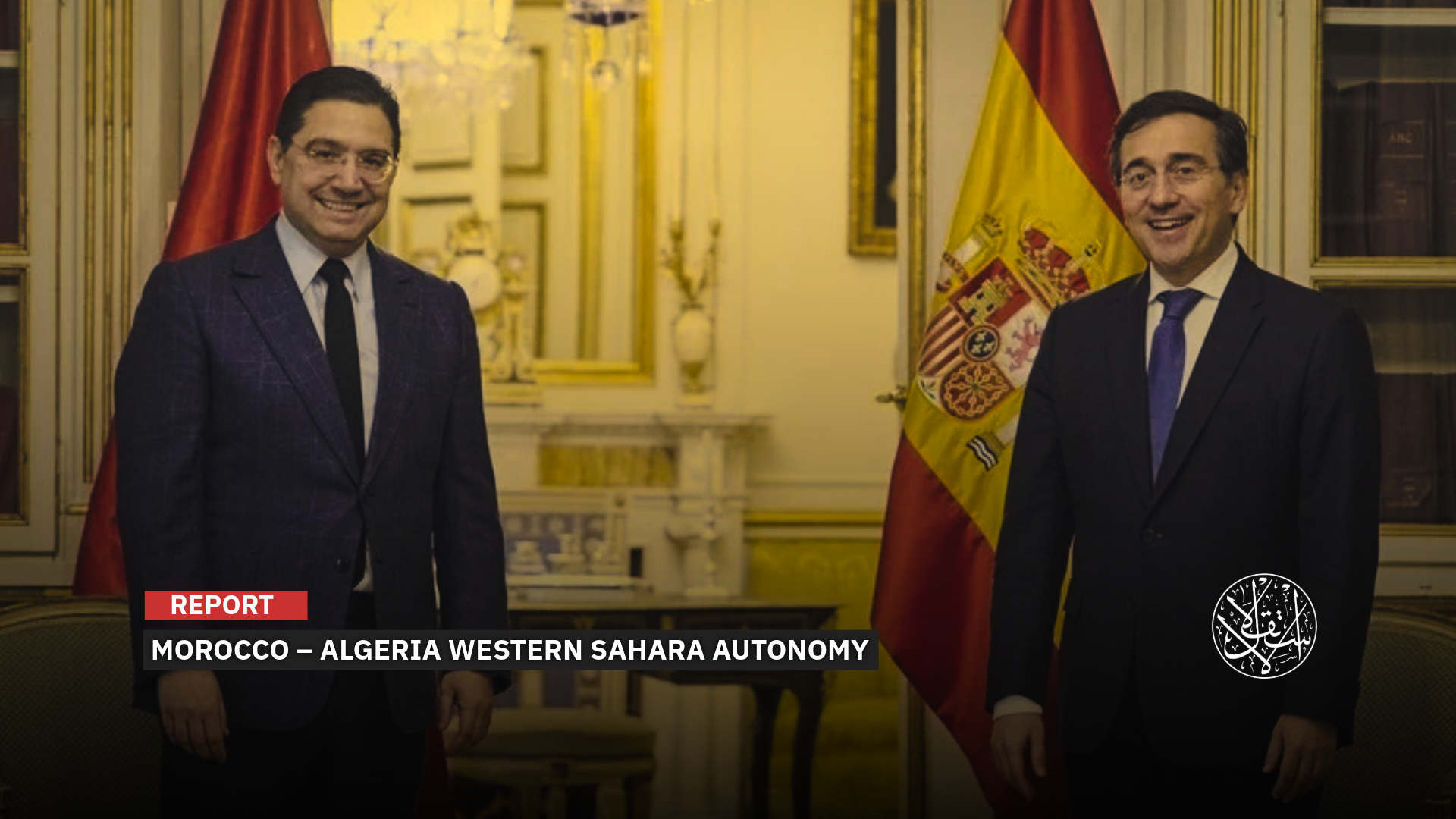
On the Spanish side, the Foreign Ministry limited itself to saying that the minister, Jose Manuel Albares, met separately with his counterparts from Algeria, Ahmed Attaf, and Mauritania, Mohamed Salem Ould Merzoug.
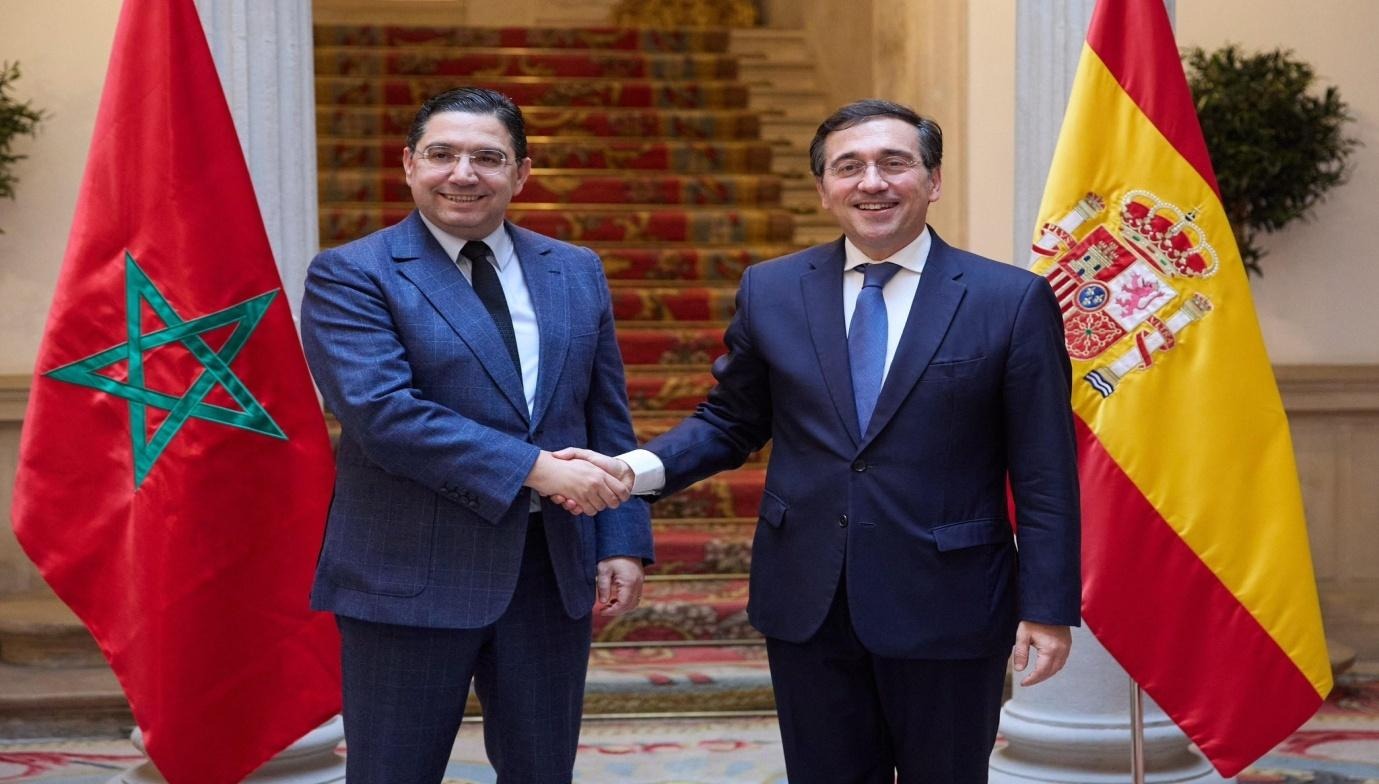
The Spanish minister also met in Madrid with his Moroccan counterpart, Nasser Bourita, with the UN secretary-general’s personal envoy for Western Sahara, Staffan de Mistura, and with the United States representative to the United Nations, Michael Waltz.
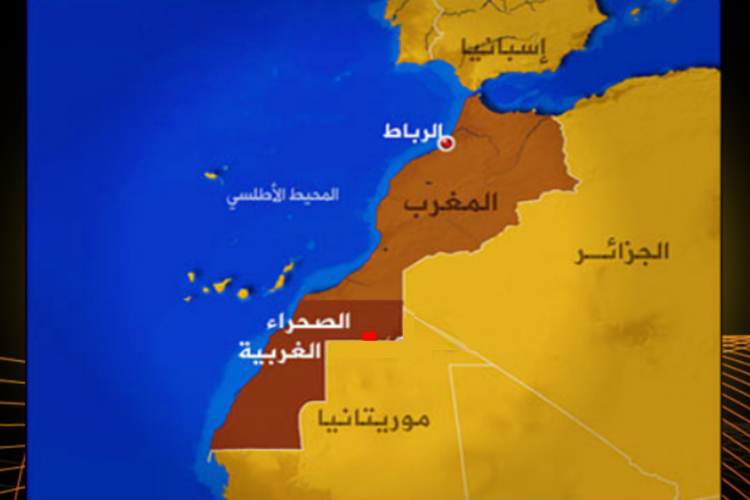
In 2007, Morocco proposed broad autonomy for the territory under its sovereignty, while the Polisario Front called for a referendum on self-determination, a proposal backed by Algeria, which hosts refugees from Western Sahara.
An Exceptional Step
This development comes as part of multilateral dialogue efforts, unprecedented since the Green March, organized by Morocco in November 1975, which led to the withdrawal of Spain’s forces from Western Sahara.
It also comes amid mounting diplomatic pressure from the United States over stalled international conflicts, including the Western Sahara file on the African continent.
The parties to the dispute are engaging around the UN Security Council resolution issued on October 31, 2025, which endorsed Morocco’s proposal for resolving the conflict based on “autonomy,” describing it as the “most achievable” objective.
On January 29, 2026, the European Union also backed the autonomy plan proposed by Morocco as a basis for a political solution for the Sahara, “in order to achieve a just, lasting and mutually acceptable solution to the conflict.”
The last rounds of dialogue between Rabat and the separatist Polisario Front were held in Manhattan, in the United States, between 2007 and 2008, and in Geneva between 2018 and 2019. By contrast, the four-party format under U.S. and UN auspices, with Madrid as the venue, is unprecedented.
The Spanish newspaper El Pais said that, regardless of the brief official announcements about the meeting, this first round of direct negotiations on the Sahara confirms that Morocco and the Polisario Front have accepted the procedural road map put forward by the United States to try to sign a political framework agreement in May 2026 in Washington.
The paper reported on February 9 that, after more than half a century of conflict, which had stalled in recent years without negotiations or contacts, the two rivals on both the military and diplomatic fronts met again in search of a negotiated solution.
“This time, the venue was the U.S. Embassy in Madrid, under a strict commitment to silence imposed by the host state on the parties,” it added.
The newspaper reported that “Morocco has drafted a new legal document on the autonomy proposal, spanning 40 pages, over recent months, a marked improvement compared with the just three pages of the autonomy plan it initially presented in 2007.”
“The new document details an institutional model for autonomy, as well as a tax system, an independent judicial system, and its own security forces,” adding that “Morocco considers this document a technical paper, paving the way for the stage of political negotiations,” it stated.
A Steadfast Algerian Position
Coinciding with these developments, Algeria continues to reaffirm its support for the Polisario Front, including remarks by the parliament speaker, Ibrahim Boughali, during his reception of the Polisario Front’s ambassador to Algeria, Khatri Addouh.
The Algerian Parliament posted on its Facebook account on February 10 that Boughali “reaffirmed Algeria’s steadfast position supporting the right of the Sahrawi people to self-determination, in accordance with international legitimacy and relevant United Nations resolutions.”
The Polisario Front receives financial, military, and diplomatic support from Algeria, and also maintains Sahrawi refugee camps on its territory in the Tindouf region in the south of the country.
Meanwhile, although Foreign Minister Ahmed Attaf participated in the Madrid talks, based on the outcomes of the latest UN Security Council resolution, the ministry did not address this aspect in the statement it issued on the occasion.
The ministry limited itself to noting that Attaf met with his Spanish counterpart, Jose Manuel Albares, which took place “as part of a working visit by the minister to Spain.”
It said that the meeting addressed the state of cooperation and partnership relations between the two countries and the prospects for further enhancing them, particularly in areas related to energy, trade, investment, and transport, as well as judicial and consular cooperation.
The two ministers also exchanged views on a number of international and regional issues of mutual interest, foremost among them developments in the Sahel-Sahara region and shared challenges in the Euro-Mediterranean space.
By contrast, Algerian political analyst Walid Kabir said that “Algeria, by participating in the Madrid meeting, confirms that it accepts sitting for negotiations on the Sahara file based on a single framework, namely the autonomy proposal.”
Kabir told Al-Estiklal that “according to U.S. statements, the talks show that Algeria was invited to these negotiations as a party to the conflict,” stressing that “the United States managed to impose its formula for negotiating to resolve the dispute.”
He said that no one on the Algerian side has expressed public rejection of the Security Council resolution, whether it is President Abdelmadjid Tebboune or his Foreign Minister, Ahmed Attaf.
Accordingly, Kabir sees “the start of these negotiations as a major diplomatic victory for the Moroccan side, and also a success for the administration of President Donald Trump, after pushing Algeria to sit down for negotiations.”
He added that “leaks regarding the Madrid round show that it paves the way for reaching a political agreement to be signed in Washington in the coming months.”
“The concept of self-determination, which is adopted or echoed in Algeria and by the Polisario Front, will not be repeated in the next phase, because the general direction is to settle any dispute over Morocco’s sovereignty over the Sahara,” Kabir continued.
The political activist also said that, according to multiple reliable sources, Algerian authorities requested a period to prepare domestic public opinion regarding developments in the file.
He concluded that the latest UN Security Council resolution, and the positions of the United States and the European Union, all confirm that the conflict is in its final stages before a settlement is reached based on Morocco’s proposal.
A Manufactured Dispute
On the Moroccan side, international relations professor Khalid Chayat said that “the context in which these talks take place is the implementation of the outcomes of Security Council Resolution 2797 on the Moroccan Sahara issue.”
Chayat told Al-Estiklal that “this context defines the general, fundamental, and final framework for resolving this manufactured dispute.”
“Alongside this general framework of legitimacy, there are other measures and positions issued by a number of bodies, such as the European Union as a unified group, which underline the seriousness and priority of the proposed Moroccan autonomy project, reinforcing the path the talks will follow within the United Nations framework,” Chayat added.
He warned that “the parties to the conflict are now defined and are participating at the negotiating table within the single framework established by the detailed and revised autonomy proposal under full Moroccan sovereignty, and that other parties will enter these consultations within this legal context.”
“This ceiling is supported by the United States through its involvement under international legitimacy, as it sponsors these negotiations within the legal and legitimate framework of the United Nations,” he added.
According to Chayat, “The opportunities to accelerate a solution depend on holding accountable those who oppose or seek to freeze the UN direction, and there must also be greater pressure on parties attempting to bypass this historic moment for adopting a political and final solution to the Moroccan Sahara issue.”
Madrid Is Not a Random Choice
Former Peruvian Foreign Minister and international relations expert Miguel Angel Rodriguez Mackay said that the confidential meeting on the Western Sahara issue was held based on the outcomes of the UN Security Council, stressing that the choice of Madrid to host the negotiations was not random.
Rodriguez Mackay wrote in an opinion piece published on the Spanish site Expreso on February 10 that Spain does not intervene in these negotiations, despite being the occupying power in Western Sahara until 1975, when it withdrew from the territory.
“Although Spain maintains a clear and firm official position supporting Morocco’s sovereignty over the Sahara and fully backing the autonomy proposal, Madrid has no direct interest in the matter,” he added.
Nevertheless, the former minister said, “I believe it is very appropriate that these negotiations start in Madrid, as it creates a promising environment for a realistic, serious and lasting solution, as has always been said, given Spain’s participation, having been the occupying power in the Moroccan Sahara.”
Rodriguez Mackay noted that the United States is leading the negotiations at this new stage of the issue, under the framework of the United Nations, due to its enormous influence in international relations.
“I have no doubt that Washington will contribute to preparing and facilitating initial conditions dynamically, avoiding deadlock, and given the significance of Resolution 2797, it will explicitly ensure that no party withdraws from the negotiating table, under threat of international criticism and even sanctions for violating international peace and good faith,” he continued.
“The greatest advantage of the text is that the parties sat voluntarily, for the first time, at the negotiating table, without starting from scratch or having nothing at hand, and without imposing any constraints.”
“In fact, all four parties were fully aware, even before freely engaging in the negotiations, that the basis for in-depth discussions was the autonomy proposed by the Kingdom of Morocco, which received full backing from the UN Security Council itself, by an overwhelming majority of its fifteen members,” Mackay noted.
He stressed that the Madrid meeting reflected recognition among the parties of each other as stakeholders in the issue, and that they sat to negotiate on the basis of Sahrawi autonomy or administrative autonomy.
He concluded that it is certain the Moroccan proposal will be reasonably expanded by the Kingdom, but of course, while preserving Morocco’s territorial integrity and within the limits of the United Nations.
The Spanish newspaper Atalayar published on February 12 the text of the document that Morocco is assumed to have presented during consultations at the U.S. Embassy in Madrid.
The document contained updates revising some provisions of the original proposal Morocco presented in 2007, moving the position of the local government head for the Sahara region from “election” through the local parliament, followed by installation by the king, to first royal appointment followed by parliamentary installation, as is currently the case with the Moroccan government head.
The previous Moroccan proposal had left open the possibility of forming a regional parliament with two chambers, specifying that its members would be divided between those elected by direct universal suffrage and others elected by recognized Sahrawi tribes.
The updated document settled on a single-chamber parliament, but with “dual” legitimacy, combining members elected by direct universal suffrage through a proportional regional voting system and members appointed by recognized Sahrawi tribes.
The document defines the exclusive powers of the state in defense, strategic security, foreign policy, diplomatic representation, currency, monetary policy, nationality, symbols of sovereignty, and the highest judicial system.
Meanwhile, the regional government’s powers cover spatial planning, urban development, regional economic planning, industrial and tourism development, management of marine resources, social policy, health, education, environment, management of water and energy infrastructure, and cultural promotion, with the authority to enact binding rules in these areas.
The document proposes submitting the autonomy system to a national referendum, including the entire Moroccan electorate, integrating it into the Moroccan constitution as a dedicated chapter, and subjecting any subsequent amendments to strict procedures requiring an absolute majority in both the regional and national parliaments.
It links the implementation of the autonomy system in the Sahara to the national advanced regionalization process, to avoid any violation of the principle of territorial equality.
The document also includes provisions allowing the state, in exceptional and temporary cases, to suspend some regional powers in the event of a serious breach of the constitutional system, territorial integrity, or normal institutional functioning, under a controlled procedure subject to legal oversight.
It grants the local government head, appointed by the king and installed by the regional parliament, the status of state representative, thereby reinforcing the unity and continuity of Morocco.