How the British Judiciary Vindicated Palestine Action and Dealt a Political Blow to Starmer’s Government
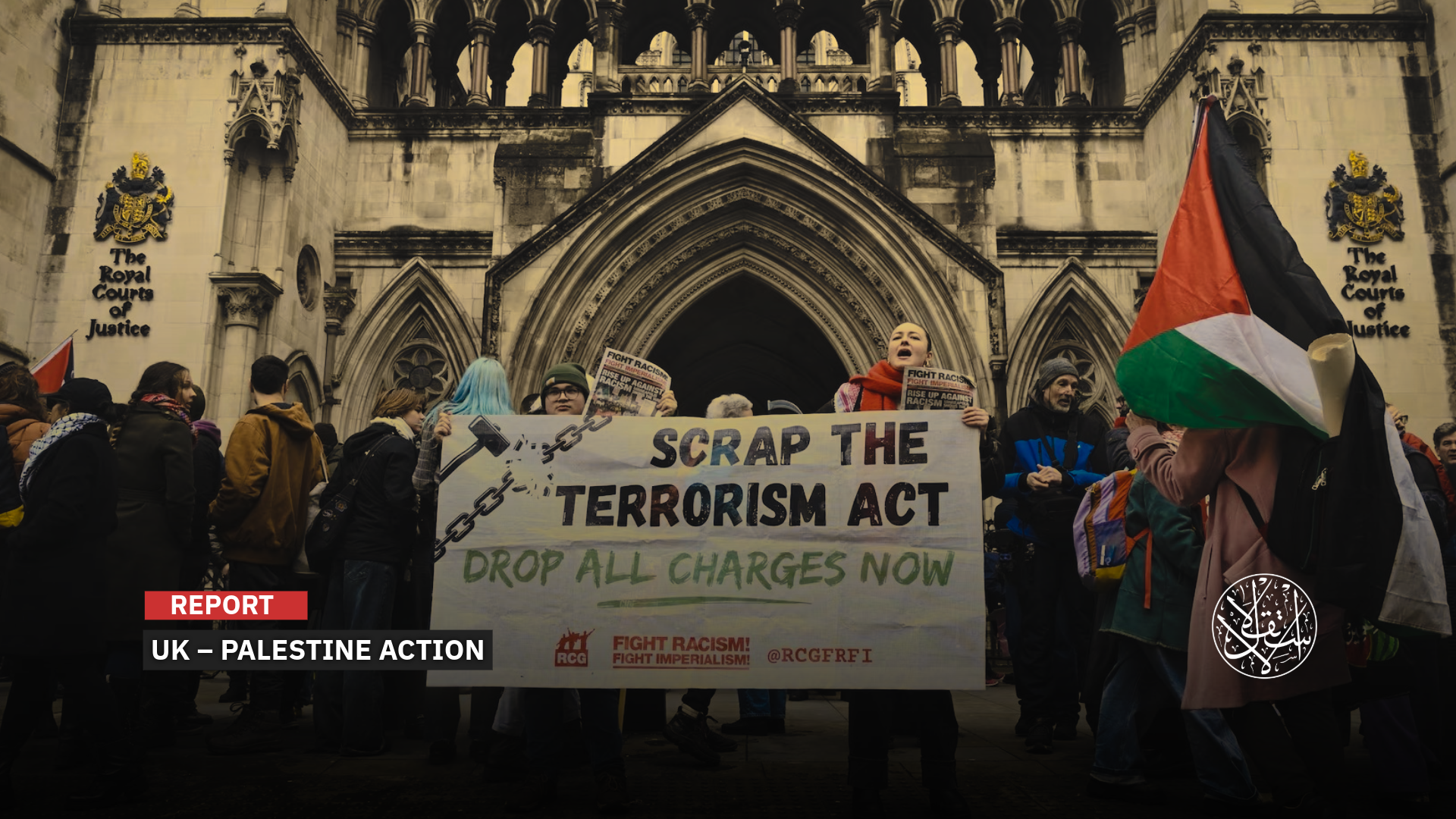
“The Government plans on appealing the ruling, even as the Met Police say they will stop enforcing it.”
The High Court's ruling to overturn the ban on the pro-Palestinian campaign group, Palestine Action, dominated headlines on Saturday, February 14, in a decision that reopened the debate on the limits of using counter-terrorism legislation in the political sphere.
The court ruled that the Home Office had not met the legal criteria required to list the group as a proscribed entity, either in terms of the sufficiency of evidence or the nature of the activities attributed to it.
The recent ruling is seen as a significant milestone in the legal debate surrounding the role of the judiciary in ensuring a balance between state powers and the rights to protest and political action.
Unlawful Ban
In a remarkable legal development that represents a political blow to the British government, the High Court ruled that the decision to ban the Palestine Action group under counter-terrorism laws was unlawful, ending one of the most controversial government decisions in recent years.
It said that when the former home secretary Yvette Cooper decided to ban the organization last June, she had failed to take into account what impact that decision would have on the right to protest.
The ruling comes a week after a jury decided not to convict six Palestine Action members accused of some of the most serious criminal charges leveled against the group.
Judge Victoria Sharp affirmed that the ban constituted a very significant interference with the rights to freedom of expression and freedom of assembly guaranteed under the European Convention on Human Rights.
Huda Ammouri, a co-founder of the group, described the ruling as a monumental victory for fundamental freedoms in Britain and a stand against what she called the most extreme attack on freedom of expression in modern British history.
She argued that the government had abused its power by classifying a non-violent civil disobedience movement as a terrorist organization.
The government banned Palestine Action in July, days after activists protesting against Israel's military assault on Gaza broke into an air force base in southern England and caused millions of pounds worth of damage to two aircraft.
The Home Office had tried to stop the judicial hearing from going ahead, arguing that Parliament had set out a specific and alternative process for appealing against banning orders.
But ministers' Court of Appeal bid to block the challenge failed in October, paving the way for the final ruling.
During hearings held last November in London, Amouri’s lawyer argued that the ban lacked legal basis, pointing out that the movement had a long-standing tradition of direct action and civil disobedience before it was designated a terrorist organization.
In contrast, Home Office lawyers defended the decision, arguing that it had achieved its aim of disrupting the pattern of escalation.
They emphasized that the ban did not prevent citizens from demonstrating in support of the Palestinian people or protesting Israeli operations in Gaza.
According to observers, the ruling not only overturned a measure considered arbitrary but also dealt a direct blow to attempts to use counter-terrorism laws to criminalize political solidarity and suppress peaceful protest.
Moreover, the ruling was not merely a legal ruling, but was considered a political and moral shift that restored respect for freedom of expression and protest in Britain, and proved that justice is capable of curbing the overreach of executive power even in the most sensitive and pressured cases.
Government Appeal
After the ruling, the Metropolitan Police said it would not arrest people for expressing support for Palestine Action until court proceedings are fully concluded.
But it stressed that despite the unusual circumstances, expressing support is still a criminal offence and officers will continue to gather evidence of any offences.
The government reacted swiftly, with Home Secretary Shabana Mahmood saying she would appeal.
“I am disappointed by the court's decision and disagree with the notion that banning this terrorist organization is disproportionate,” she said.
“Home secretaries must retain the ability to take action to protect our national security and keep the public safe. I intend to fight this judgement in the Court of Appeal,” she added.
The foreign secretary Yvette Cooper defended the government’s decision to proscribe Palestine Action, saying it was based on serious security advice.
More than 2,000 people have been arrested for holding signs since the ban took effect, and nearly 700 people have been charged with a terrorism offence involving Palestine Action, although none have yet been convicted.
Conservative MPs said they welcome the government’s intention to appeal against the high court’s ruling.
Shadow home secretary Chris Philp said: “There can be no hesitation when public safety and national security are at stake.”
The Board of Deputies of British Jews and the Jewish Leadership Council said they were deeply concerned by the High Court ruling, saying that the practical impact of Palestine Action’s activities on Jewish communal life has been significant and deeply unsettling.
Despite the decision, the judges ruled that the ban, imposed under the UK's 2000 Terrorism Act, would remain in place, pending another hearing on February 20.

Monumental Victory
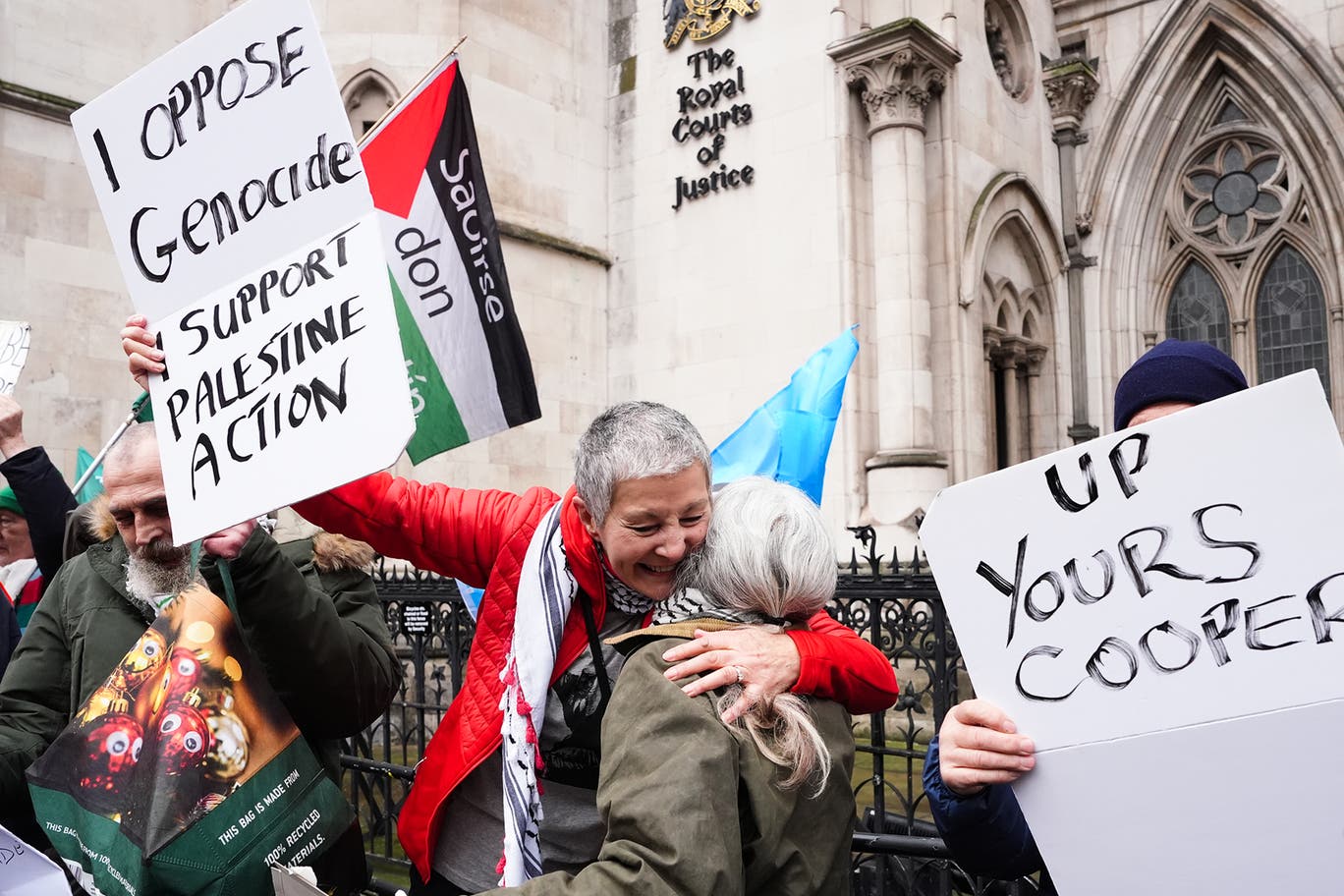
The decision was widely welcomed in political, human rights, and media circles within Britain. It was considered a political and legal defeat for Keir Starmer's government and a clear message that the judiciary remains the last line of defense for freedoms when the executive branch succumbs to political pressure and powerful lobbies.
The Green party leader, Zack Polanski, said: “It is time for the government to stop criminalising the people protesting a genocide.”
The Liberal Democrat home affairs spokesperson, Max Wilkinson, said: “Placing Palestine Action in the same legal category as Isis was disproportionate.”
For his part, Jeremy Corbyn described the decision as a major victory for the Palestine solidarity movement, for civil liberties, and for our shared humanity.
He asserted that the real crime was the government's complicity and affirmed that the struggle for justice for the Palestinian people would continue.
MP Zarah Sultana said the ruling confirmed what everyone already knew, demanding the Labour government immediately lift the ban, drop all charges, and stop using counter-terrorism powers to intimidate the working class and prevent them from protesting.
MP Diane Abbott described the ban as an affront to democracy, asserting that the government's pursuit of the appeal only further damaged its reputation and emphasizing that authoritarianism had lost.
MP Adrian Ramsay also welcomed the ruling, calling on the government to stop interfering with legitimate, peaceful protests and to address its complicity in the ongoing genocide in Gaza instead of suppressing dissenting voices.
Journalist Roshan Saleh said the court overturned the clearest example of suppressing free speech at the behest of the Israeli lobby, arguing that the decision opens the door to holding the government and police accountable for thousands of unlawful arrests.
Journalist Owen Jones considered the ruling a crushing defeat for a government that facilitated genocide and attempted to persecute those who opposed it.
He asserted that it was a victory for those who confronted the crimes committed against the Palestinian people.
Campaign group CAGE International said in a statement that the ruling represented a decisive rejection of attempts to shield corporations complicit in arming the genocide in Gaza.
Akiko Hart, director of human rights organization Liberty, said they welcomed the court’s finding but said the practical effect will depend on the government’s appeal.
Areeba Hamid, a director at Greenpeace UK, said the government’s use of terror laws had been the stuff of dystopian novels.
“The Crown Prosecution Service should immediately drop the terror charges against the peaceful protesters who opposed this ban,” she added.
The International Centre of Justice for Palestinians (ICJP) welcomed the Court’s decision as a victory for freedom of expression and civil liberties in the UK.
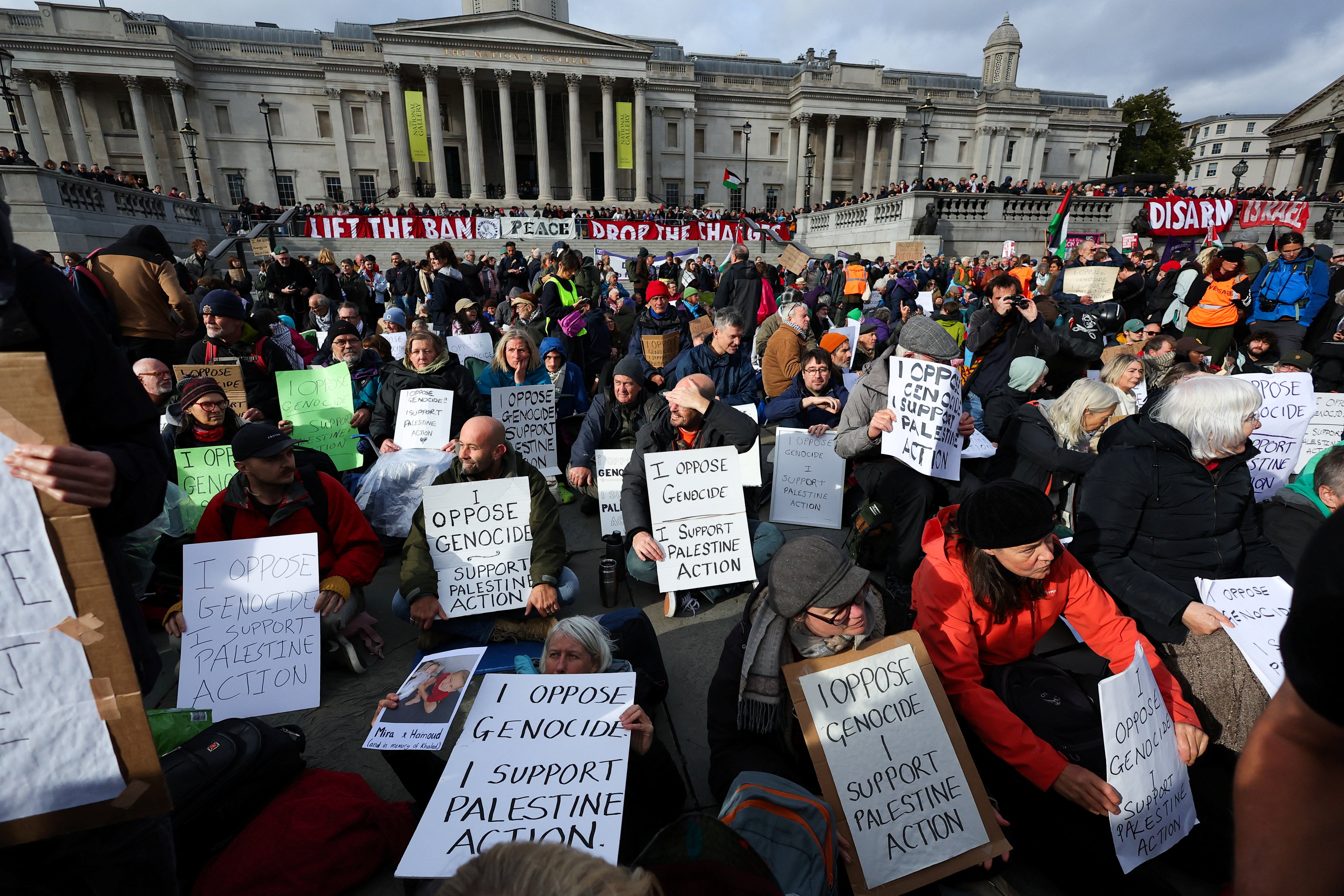
In turn, lawyer Bassam Tablieh welcomed the ruling in a statement to Al-Estiklal, describing it as an essential check on overreach and a powerful reminder that fundamental rights still carry weight in UK law.
“The High Court’s decision sends a clear message: the Government cannot simply reach for sweeping counter-terrorism powers to suppress protest,” he added.
He concluded, “This ruling has confirmed the widespread concerns within the trade union movement that the decision to ban Palestine Action was politically motivated and a serious overreach of counter-terrorism laws.”