Islamists in Second Place: What Does the Bangladesh Nationalist Party’s Election Victory Mean?
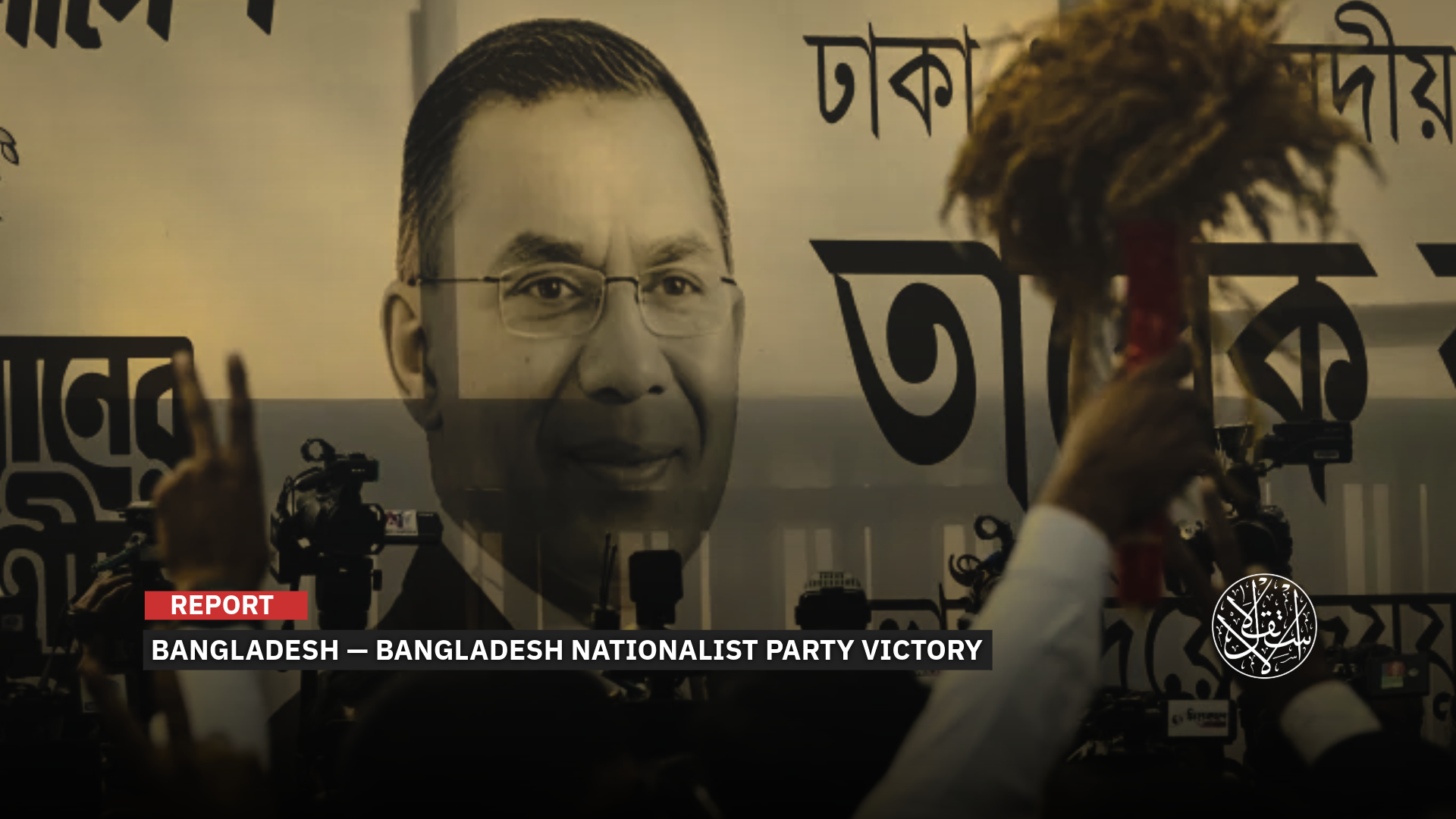
The Bangladesh Jamaat-e-Islami alliance came second, winning 77 seats.
In the first democratic elections Bangladesh has held since the fall of former Prime Minister Sheikh Hasina on August 5, 2024, following a popular uprising, the conservative Bangladesh Nationalist Party achieved a sweeping victory, winning at least 212 seats out of 350 in parliament, giving it a two-thirds majority and allowing it to form a government without the need for additional alliances.
The Bangladesh Jamaat-e-Islami alliance came in second with 77 seats, and although it questioned the integrity of the electoral process, the result represents a historic gain for the party, marking its best electoral performance in history compared with just 18 seats in the 1991 election, bringing the party back to the center of the political stage after years of marginalization under Hasina’s rule.
A striking phenomenon was the diminished influence of “Gen Z” youth who had led the popular movement, as their party, the National Citizen Party, failed to become a significant political force, running instead as part of an alliance with Jamaat-e-Islami and winning only six seats, highlighting the gap between street momentum and the ability to translate it into electoral success.
In a scene underscoring deep political polarization, 41 parties failed to win a single seat in the 13th parliamentary election, producing a parliament of limited representation dominated by the major forces.
Bangladesh, with a population of around 175 million, where the Muslim majority holds significant social and political weight, now faces a new phase in which bets on political stability intersect with the challenges of rebuilding trust in democratic institutions.

The Political Structure
Before the February 2026 elections, the last parliamentary vote had taken place on January 7, 2024, in the absence of the main opposition forces, led by the Bangladesh Nationalist Party and the Bangladesh Jamaat-e-Islami, who boycotted the process citing a lack of integrity.
The ruling party at the time, the Awami League, won 224 seats out of 300, while the remaining seats were divided among independents and small parties.
But the political landscape changed radically after the popular revolution led by “Gen Z” youth that toppled Sheikh Hasina’s government in August 2024, bringing previously marginalized forces back to the forefront of parliament.
The Bangladesh Nationalist Party swept the new elections, winning 212 seats with its allies, while the Jamaat-e-Islami alliance captured 77 seats, according to official results, marking a transformation that reflects a complete reshaping of the political map.
From her exile in India, Sheikh Hasina described the elections as a “farce” due to the ban on her party’s participation, at a time when the legacy of her rule faces broad criticism following its fall.
Meanwhile, both the Awami League and Jamaat-e-Islami questioned aspects of the electoral process, accusing the winning party of irregularities.
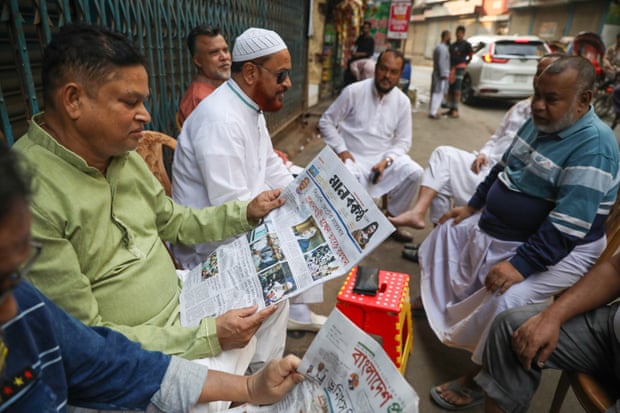
Local press reports indicate that the post-revolution transfer of power has not been entirely smooth, despite elections proceeding without major incidents, due to changes in institutional structures and the disappearance of many former parliamentary figures after its dissolution.
Under normal circumstances, the outgoing speaker of parliament administers the oath to new members, but the absence of this framework has necessitated a search for a new constitutional path to complete the transfer of power.
As attention turns to acting President Muhammad Yunus and constitutional experts to determine the mechanisms of appointment, Tarique Rahman, leader of the Nationalist Party, is expected to form the new government after his party secured a comfortable majority exceeding the required threshold of 151 seats out of 300.
The results also revealed a fragmented party landscape, with four small parties winning one seat each, independents taking seven seats, and 41 parties failing to win any representation.
Voter turnout reached 59.44 percent, with 50 political parties and 2,028 candidates contesting 299 constituencies, in elections that reflect the return of political competition after years of closure.
The Return of the National Party
The Bangladesh Nationalist Party is not classified as a strictly secular party nor an explicitly Islamic one, but is usually presented as a conservative nationalist party that tends to employ Islamic identity within a national framework, with a traditional political stance marked by caution toward India.
The party was founded by the late President Ziaur Rahman and made an early mark in political life by winning 207 seats out of 298 in the 1979 election.
After the assassination of its founder, his wife Khaleda Zia took over leadership of the party, returning it to power in 1991 with the support of the Jamaat-e-Islami, making Khaleda Zia the first woman to serve as Prime Minister in the country.
The party formed a short-lived government following the February 1996 elections, before losing to the Awami League in the June vote of the same year.
It returned to power again in 2001 within a coalition with Jamaat-e-Islami, winning 195 seats, marking its last government before its strong comeback in the 2026 elections.
Today, with the party once again at the forefront of the political scene, it faces immediate challenges related to restoring political stability, regaining investor confidence, and revitalizing key economic sectors, particularly the garment industry, which represents one of the pillars of the Bangladeshi economy after years of political disruption.
Economic experts say that the party’s comfortable parliamentary majority could help it push through reforms quickly and avoid legislative paralysis, which could have a positive effect on short-term stability.
Yet the incoming government will inherit a strained economy in a country that is the world’s second-largest clothing exporter, alongside sensitive regional relations, especially with India, requiring a delicate balance between nationalist rhetoric and the demands of foreign policy.
Around 127 million voters participated in the elections, which coincided with a popular referendum on proposed constitutional reforms, including limiting the Prime Minister’s terms, establishing an upper parliamentary council, expanding presidential powers, and strengthening judicial independence, issues that could shape the contours of the country’s new political phase.
Acting President Muhammad Yunus, the Nobel Peace Prize laureate, is expected to step down once the new government assumes office, ending the transitional period that followed the fall of Sheikh Hasina’s government and opening the door for a reshaped political landscape in Bangladesh.
Are the Islamists on the Decline?
Some Western and Indian newspapers saw the Bangladesh Jamaat-e-Islami alliance’s second-place finish in the elections as a setback, particularly since its alliance with the “Gen Z” youth who led the revolution yielded only 77 seats, including just six for the National Citizen Party.
However, another reading of the results sees the opposite; this figure represents an unprecedented advance compared with the party’s electoral history.
The Jamaat-e-Islami alone won 68 seats, marking its highest parliamentary representation in its political history, making it a strong opposition bloc in parliament and capable of influencing legislation and public debate.
Analysts say this performance has returned the party to the mainstream of Bangladeshi politics after years of bans and marginalization, giving it the position of main opposition in the new political landscape.
The alliance’s seats were distributed as follows: Jamaat-e-Islami, 68 seats; National Citizen Party, six seats; Bangladesh Khilafat Party, two seats; and another Khilafat party, one seat, bringing the total to 77.
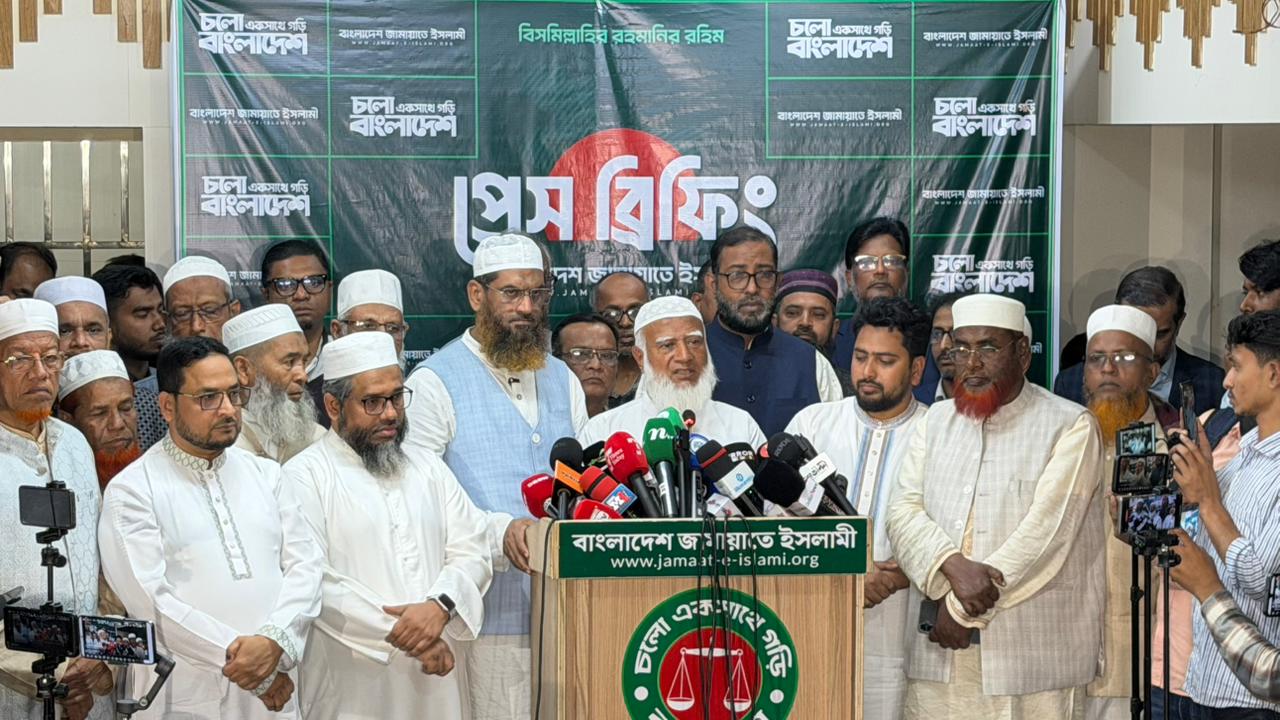
Despite this, the party questioned the integrity of the electoral process, stating in an official release that it was dissatisfied with the way results were announced, citing “repeated inconsistencies and manipulations” that raised doubts about the transparency of the vote.
Jamaat leader Dr. Shafiqur Rahman confirmed the existence of irregularities, including the expulsion of candidate agents from some polling stations, reported instances of fraud, and attacks against activists and voters, noting that violence occurred in several areas.
Party leaders, during a meeting with an 11-party alliance, called for an end to what they described as violations and demanded neutrality in the political process.
Security reports indicate that five people were killed and hundreds injured in clashes linked to the election campaigns, reflecting the depth of political polarization in the country.
This comes within a complex historical context, as the party has faced extensive suppression since 2009 under Sheikh Hasina’s rule, including the execution of several leaders and a ban from contesting the 2013 elections, citing conflicts between its charter and the secular constitution.
The party’s sensitive position is also linked to its historical stance during the 1971 Bangladesh Liberation War, when it opposed separation from Pakistan based on a vision of Islamic unity, a position that continues to affect it politically today.
A special tribunal was established in 2010 to try alleged war criminals, with several Jamaat leaders among those targeted by the proceedings.
Despite this, its current return to parliament with its largest representation in history suggests that claims of an “Islamist decline” may be premature.
Rather than diminishing, the party appears to have regained political and popular legitimacy, enabling it to operate from within the institutions in a new political phase that is reshaping the balance of power in Bangladesh.

Where is Generation Z?
The students who led the popular protests that toppled Sheikh Hasina’s government in 2024 formed their own political party under the name National Citizen Party, entering the elections as part of an alliance with the Bangladesh Jamaat-e-Islami.
But the results fell far short of expectations, with the party winning only six seats out of thirty contested, despite its candidates representing the generation that sparked the revolution.
According to international press reports, most of the party’s winners are in their twenties, making them the youngest legislators in modern Bangladeshi history.
Yet this limited symbolic presence has raised widespread questions about the fate of the revolutionary momentum, and why major political gains went to traditional parties, led by the Bangladesh Nationalist Party, rather than the youth forces that led change on the streets.
The National Citizen Party’s alliance with Jamaat-e-Islami came in late December 2025, after months of difficulty breaking into the deeply divided and violent Bangladeshi political scene.
Naomi Hossain, Professor of Development Studies at SOAS University in London, says the alliance was partly motivated by political protection, as entering parliament within a larger bloc gives young politicians cover in a highly tense environment, reducing the likelihood of violent backlash.
Following the uprising that ousted the previous regime, the elections were seen as a decisive test of the country’s ability to transition from a moment of protest to building a stable political path.
Some Western assessments suggest the Bangladesh Nationalist Party’s victory reflects voters’ preference for a party with previous governing experience amid complex economic and security challenges, rather than entrusting power to an emerging political force whose members lack experience.
Conversely, other readings argue that the return of traditional parties, including the Bangladesh Nationalist Party, does not fully reflect the spirit of reform carried by the student uprising, but rather a return to an older political model, explaining why some youth feel the revolution has yet to translate into fundamental change in the power structure.
Thus, “Gen Z” appears to have moved from the forefront of the streets to a limited presence in parliament: a symbolic presence that asserts political existence, yet remains far from wielding enough weight to lead the next phase, raising the open question of whether this generation is laying the foundations for a longer-term role, or has lost the moment of transformation it created itself.
Sources
- BNP And Allies Win 212 Seats, Jamaat-Led Bloc Bags 77
- Bangladesh Nationalist Party Wins Big In Pivotal Election
- After Two Decades, BNP Set To Form Govt
- Bangladesh Election: BNP Wins Historic First Vote Since Overthrow Of Hasina
- Son of Bangladesh's Former Rulers Poised for Power as BNP Sweeps Poll
- How Will The Transition Of Power Look In Post-Revolution Bangladesh?
- Allegation Of Vote Counting Manipulation Raised By Jamaat Ameer
- Gen Z Won The Revolution. The Old Guard Are Dominating The Election