Gaza Municipality Spokesperson: Thirst, Trash, and Rubble as City Faces Service Paralysis Despite ‘Ceasefire’
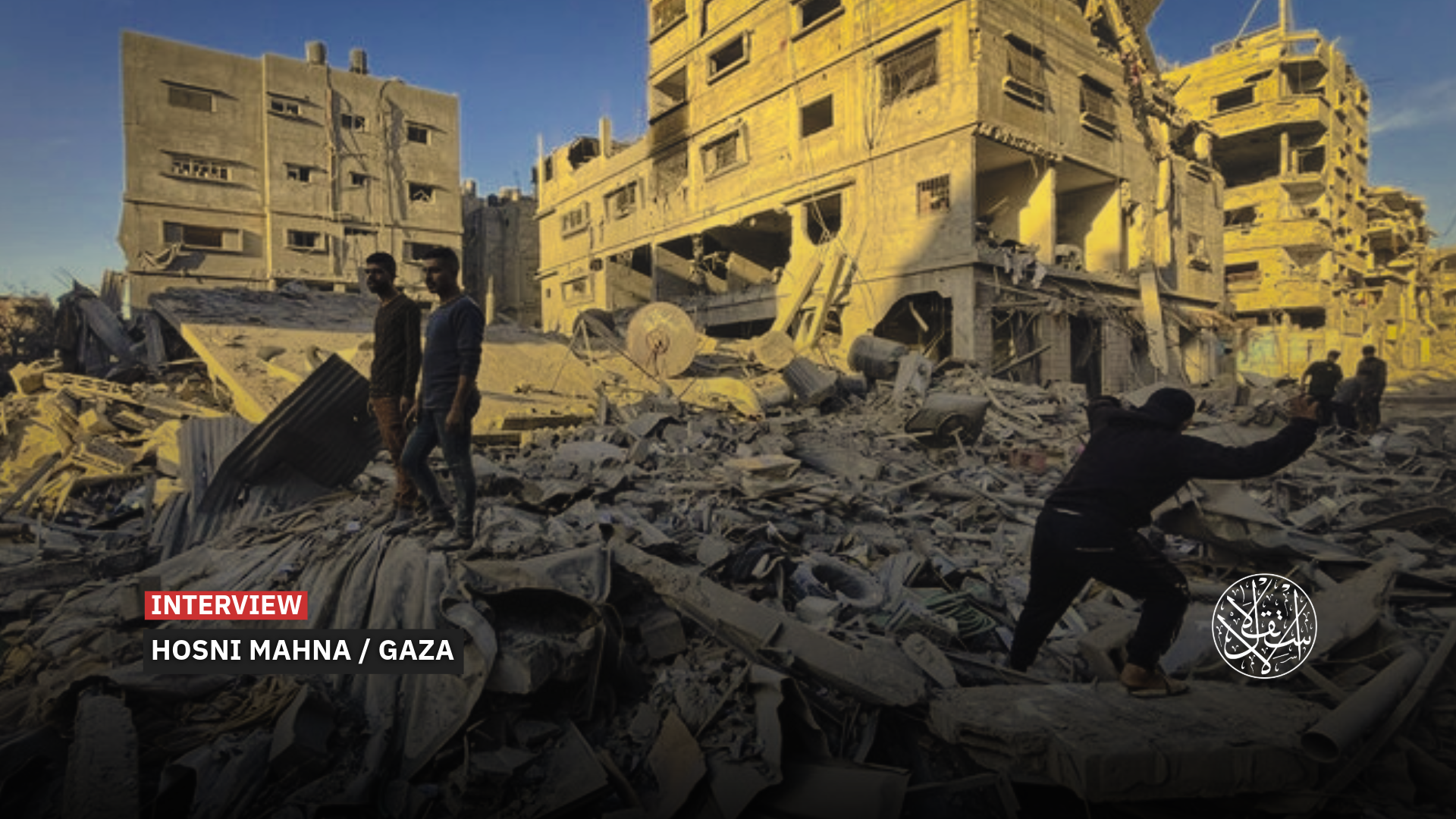
Some 350,000 tons of waste now pile up across Gaza City.
Gaza municipality spokesperson Hosni Mahna painted a stark picture of the besieged territory’s multiple crises, spanning from severe water shortages and contamination to piled-up waste and the rubble of homes destroyed in Israeli attacks, alongside the daily hardships these conditions impose on Palestinians.
In an interview with Al-Estiklal, Mahna said the city of Gaza, in particular, is facing a genuine thirst crisis due to drastically reduced water supplies, despite the signing of a fragile cease-fire on October 10, 2025.
Gaza’s troubles do not end there. Mahna highlighted the catastrophic environmental situation caused by accumulating waste, with many areas of the city turning into potential disease hotspots, as “Israel” has prevented the transfer of garbage to designated landfills.
He added that the danger is compounded by the collapse of sewage networks due to Israeli attacks, which has caused raw sewage to spill into the streets, creating what he described as a "catastrophic" public health reality, in the context of the municipality’s lack of resources to address the crisis.
Mahna explained that the municipality had hoped conditions would improve, and the crises begin to be addressed following the cease-fire, but the reality was very different, as the occupation shirked its obligations, leaving Gaza in a state of ongoing service paralysis.
Water Outage
What is the nature of the escalating water crisis in Gaza City, and what is its direct cause?
Gaza City is currently facing a genuine thirst crisis due to a severe shortage of water, particularly after the main supply line from “Israel’s” Mekorot company to the besieged enclave was cut off.
During the war, this line had become one of the primary sources of water for Gaza, before it was halted as a result of Israeli military operations and ongoing land clearance in what is known as the "Yellow Zone" under occupation control east of the city.
Reliance on this line increased after the Sudanese Desalination Plant, the only one in the city’s northwest, went out of service, resulting in the loss of roughly 15 to 20 percent of the city’s total water supply.
During the war, the central northern wells in the Be’er al-Najja area, as well as the Safa wells, which had been rehabilitated at the start of the conflict, were also rendered inoperable after being destroyed again by the occupation.
The situation worsened as the war continued, with the destruction of 72 other municipal water facilities, including central wells inside and outside Gaza City that previously fed the city.
This led to a dramatic drop in available water, forcing the Mekorot line from being a supplementary source to becoming the city’s main provider.
What is the scale of the water deficit today, especially after the last supply line was cleared by occupation forces?
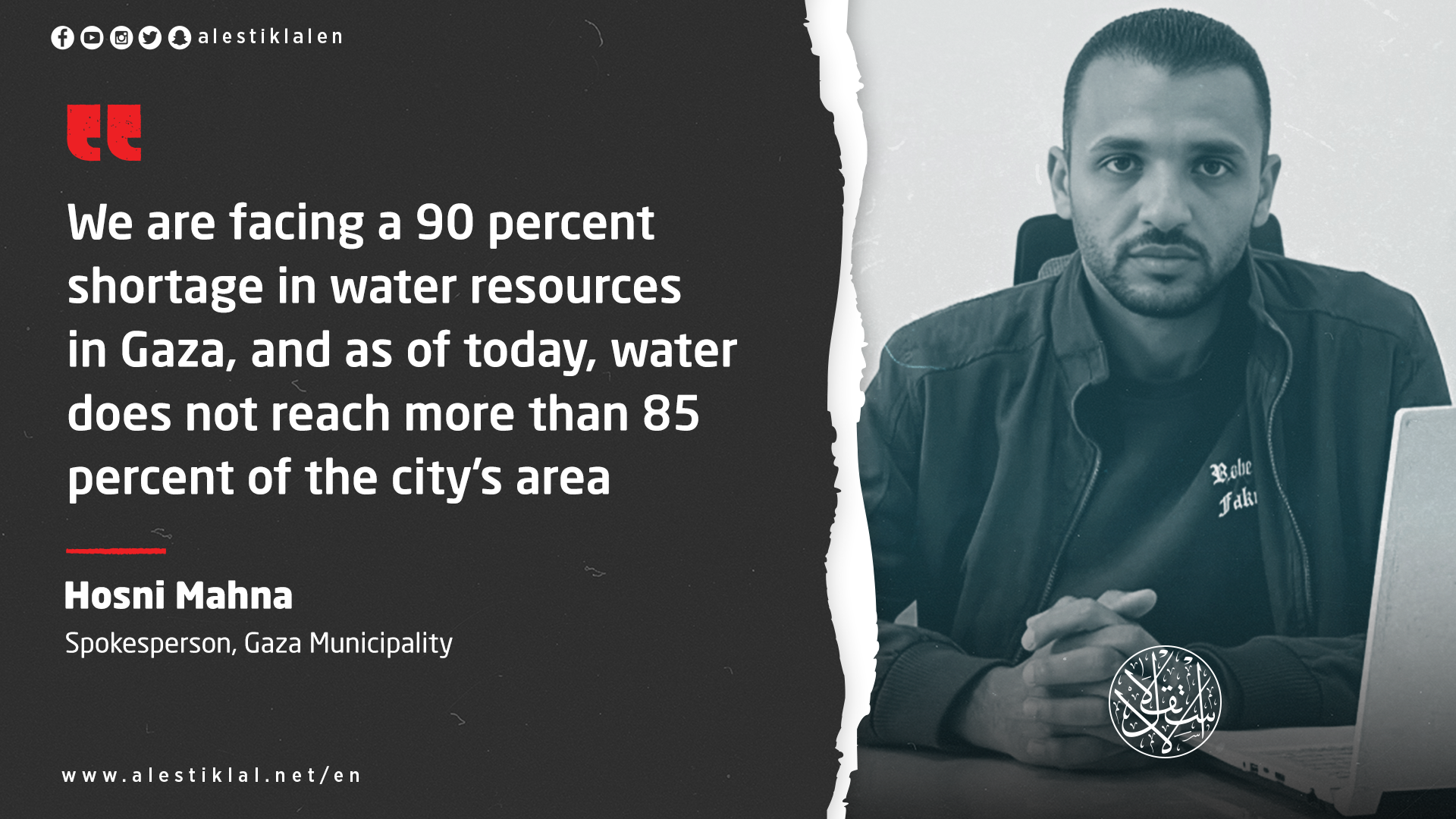
Today, water sources in Gaza City are estimated to be at a 90 percent deficit, resulting in an almost complete paralysis of the water system, with water no longer reaching more than 85 percent of the city.
Some areas remain without service due to scarce resources, compounded by extensive damage to the networks after the occupation destroyed more than 150,000 linear meters of water pipes, along with four main reservoirs.
Following the destruction of the main lines, the Mekorot line now provides the city with at least 70 percent, and sometimes up to 90 percent, of the total water supply, depending on demand and the limited operational capacity of the remaining wells.
Gaza City’s daily water requirement is approximately 100,000 cubic meters, while only about 12,000 cubic meters are currently available at best. More than two weeks have passed since the water crisis began, due to the sharp decline in supply.
The humanitarian situation has become extremely serious, with displaced people and residents struggling daily to obtain water, as the per capita share has dropped to roughly 5 liters a day, a dangerously low amount that fails to meet basic needs.
Waste and Debris
What is the scale of waste and rubble accumulation in Gaza City, and why has it recently worsened?
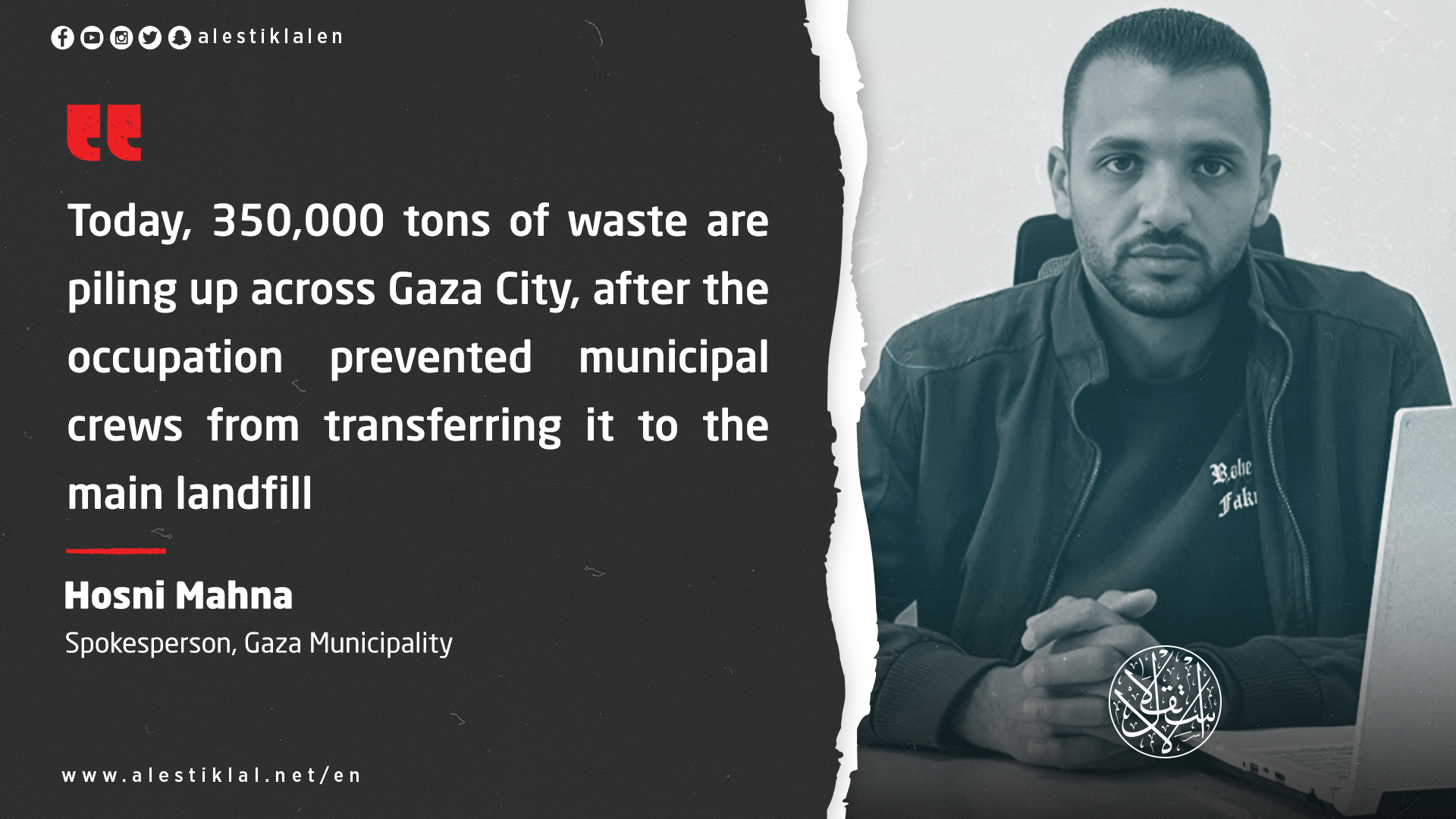
Gaza City is facing massive waste accumulation, estimated at around 350,000 tons, after Israeli authorities prevented Gaza municipal crews from transferring it to the main landfill east of the city.
Due to this restriction, the municipality has been forced to store waste within the city, specifically at the historic Ardh Souq Firas landfill in central Gaza, instead of moving it to areas away from population centers, heightening both environmental and health risks.
The crisis is not limited to solid waste. Sewage is also leaking into the streets, overflowing in low-lying areas, and reaching the seashore, following extensive damage to sanitation networks, creating a highly dangerous environmental reality.
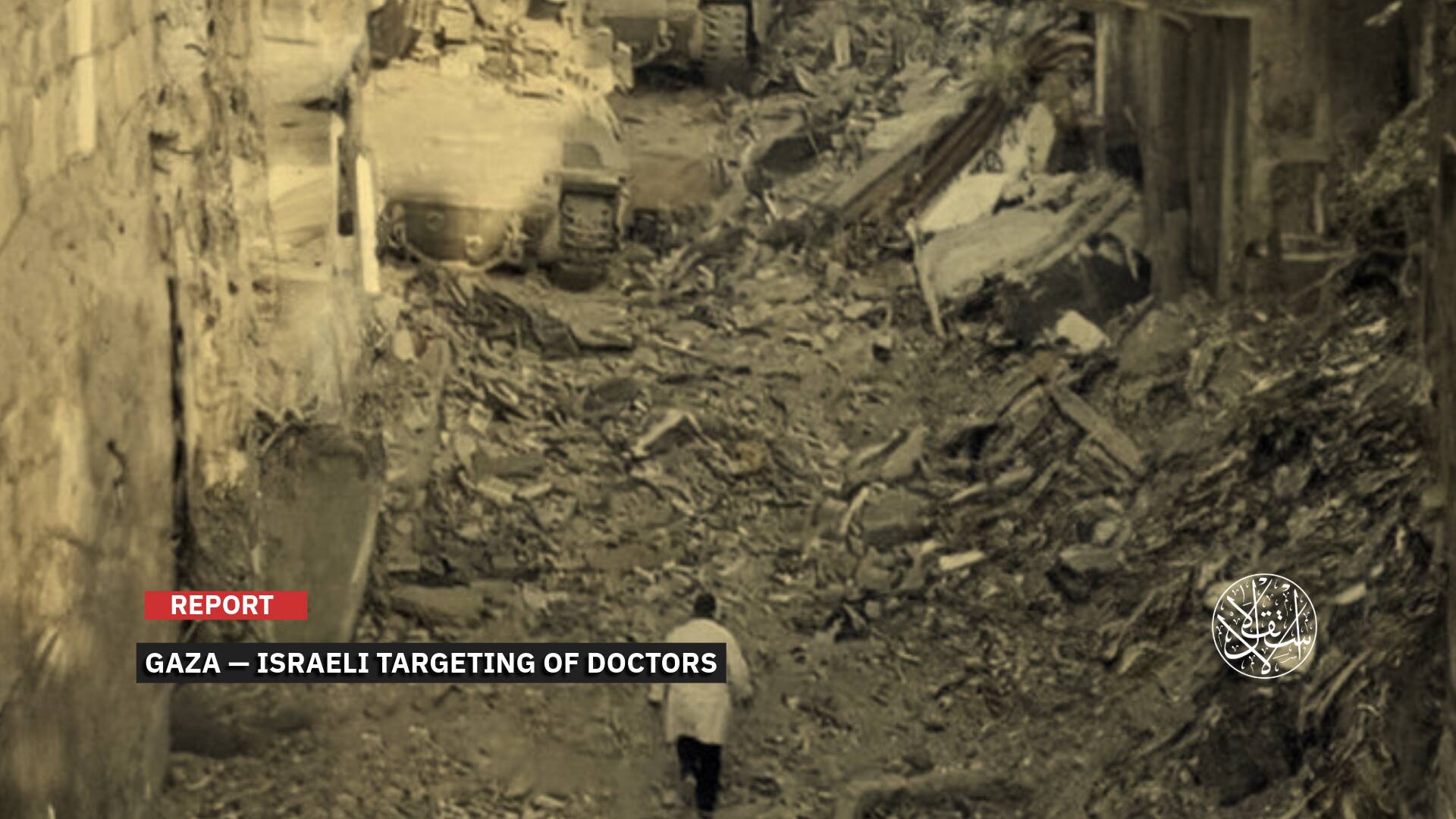
In addition, a major challenge involves handling the rubble of destroyed homes and residential buildings across the enclave.
Estimates indicate there are more than 70 million tons of rubble in Gaza, with Gaza City accounting for the largest share, around 25 million tons.
These are enormous quantities that cannot be managed under current conditions, especially given the severe shortage of heavy machinery and equipment.
How does waste accumulation affect public health, and does the water crisis worsen the situation?
Areas where waste accumulates within the city have become public health hazards and breeding grounds for rodents and insects, greatly complicating the health situation.
This reality naturally requires adequate water supplies for disinfection and personal hygiene to curb the spread of diseases and epidemics, particularly given the severe overcrowding of displaced people and residents in camps, shelters, and public facilities.
Nearly one million displaced people are concentrated in western and central Gaza City, all of whom require sufficient water, especially amid this catastrophic environmental situation.
Consequently, Gaza faces a severe and complex crisis directly affecting residents’ lives, at a time when the municipality lacks the resources or capacity to mitigate its severity or carry out urgent cleaning and maintenance of destroyed networks and infrastructure.
Available Resources
Speaking of capabilities, what are Gaza municipality’s resources today, and what solutions do they have to address these crises?
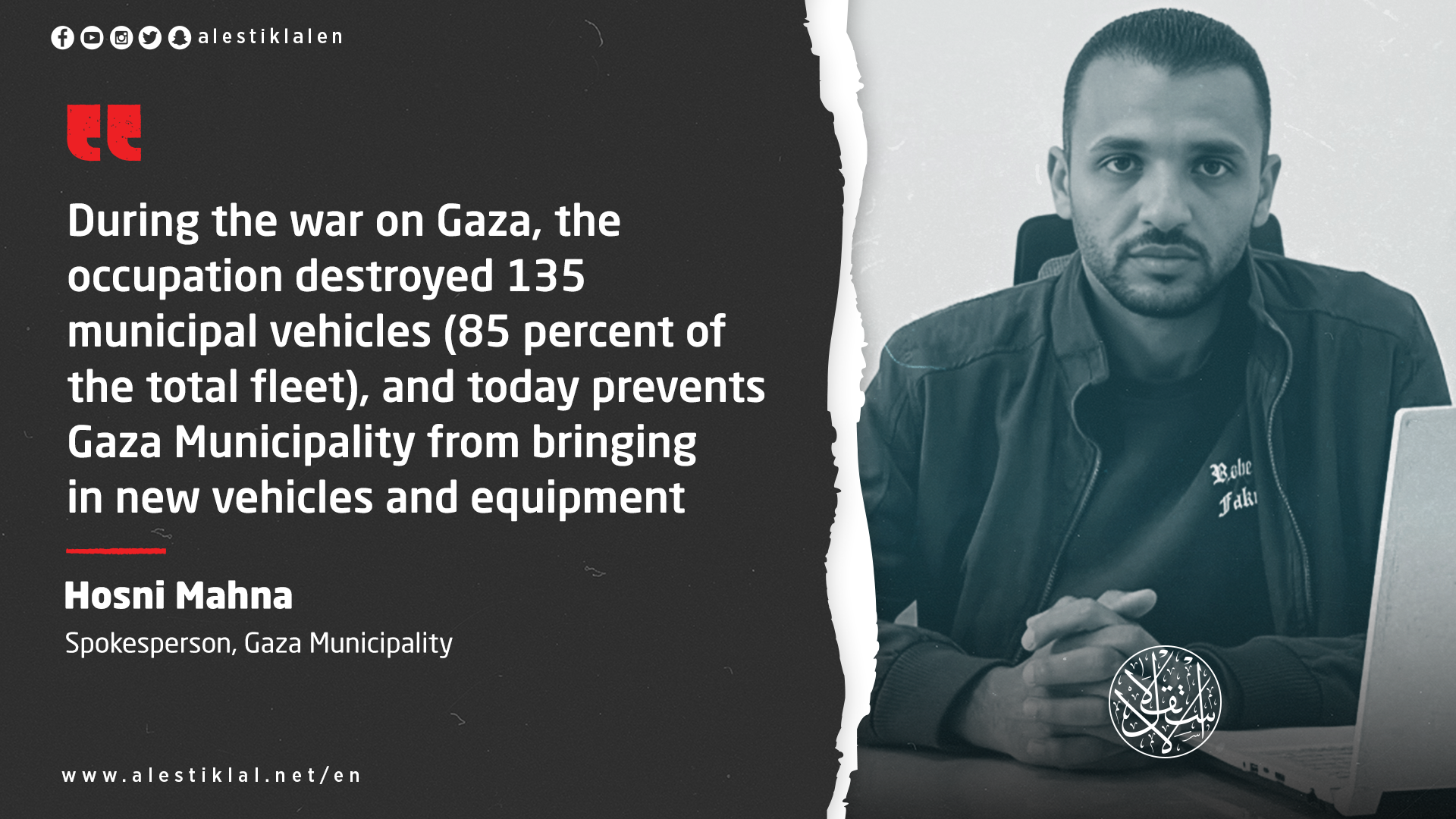
During the Israeli war on Gaza, occupation forces destroyed 135 Gaza municipality vehicles, equivalent to 85 percent of the total fleet that provided essential services to city residents across multiple sectors.
Today, the municipality suffers from a severe shortage of vehicles and equipment, leaving services in a catastrophic and extremely difficult state.
Municipal crews are attempting limited maintenance work, but these efforts remain emergency-level and minor, falling far short of the scale of destruction to networks and facilities, particularly in the water and sanitation sectors.
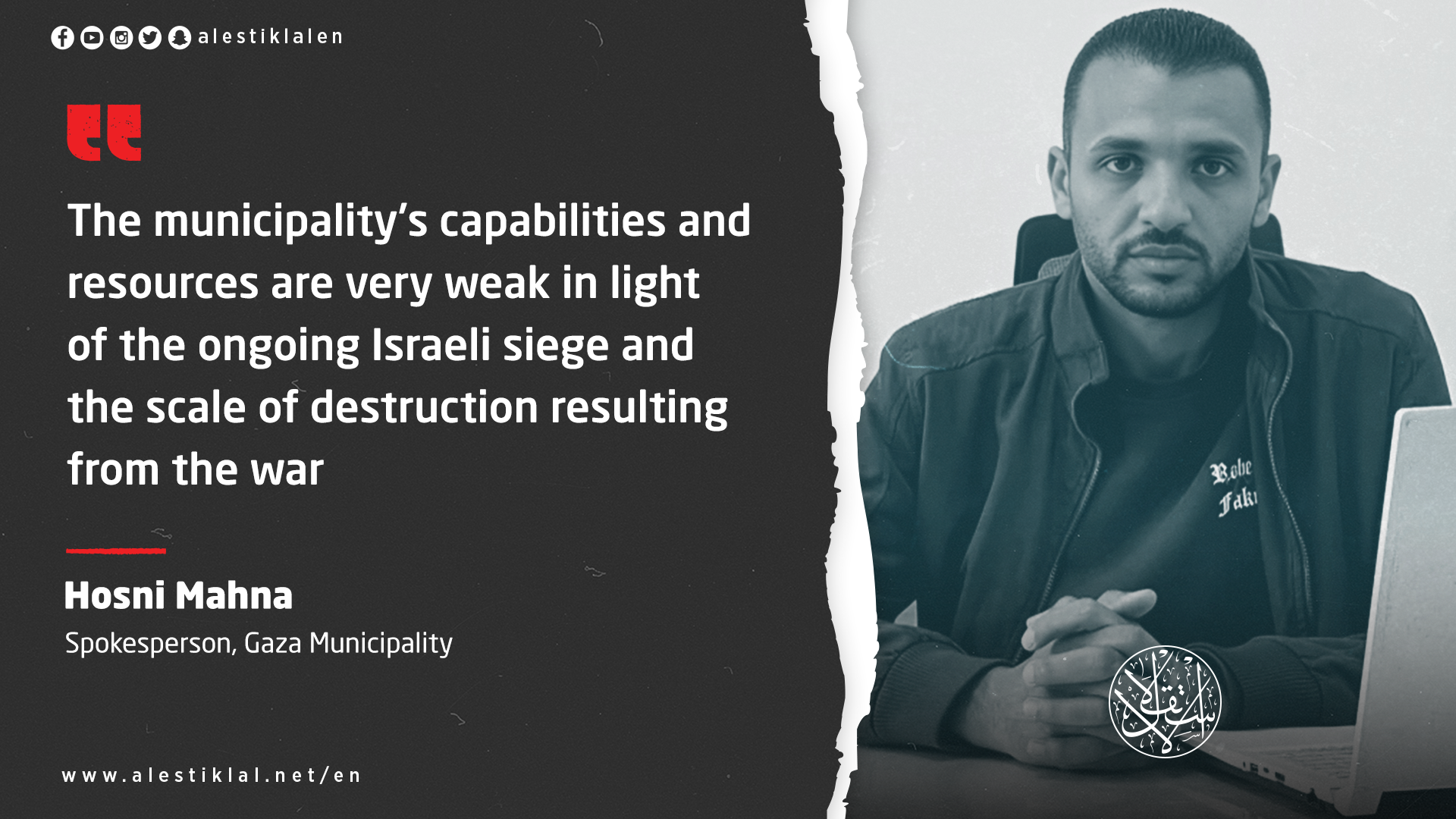
The municipality’s resources today are extremely weak and fragile, amid harsh field conditions, the ongoing strict Israeli blockade, and the massive destruction left by the war.
On top of that, the occupation continues to block the entry of tools and materials needed for municipal work, including maintenance and construction equipment, and medium and heavy machinery, preventing even the initial stages of recovery from the effects of the war, let alone the launch of comprehensive reconstruction.
Can it be said that nothing has changed in municipal services since the ceasefire began?
Certainly, no significant improvement has occurred. The occupation today allows the entry of nonessential goods and luxuries, while blocking urgent supplies, foremost among them the tools and equipment needed for municipal work, despite having destroyed backup electricity systems and solar energy infrastructure during the war.
These systems are urgently needed now, as power outages have continued since the start of the war.
There is also a critical need for machinery and vehicles that enable municipalities to provide essential services, such as clearing streets and removing waste.
This situation calls for serious action from the international community and freedom-loving nations, to pressure the occupation into opening crossings and allowing the entry of all equipment, machinery, and essential consumables required by municipalities, including batteries, vehicle tires, oils, and more.
We need every resource municipalities can possibly imagine, so we can restore at least a minimum capacity to operate, fulfill our duty to ease the suffering of residents, and bring life back to the exhausted city.