Political Stability and Breaking Isolation: Where Are Saudi Billions Steering the New Syria?
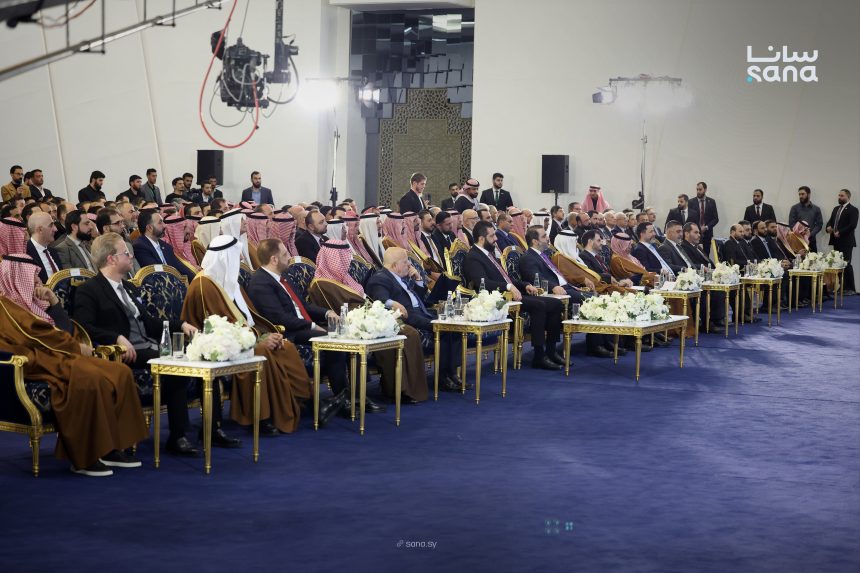
The new Syria continues to send reassuring signals to investors.
In a move that goes beyond its immediate economic dimensions and carries multiple political and strategic messages, Saudi Arabia has redrawn the contours of Arab engagement with the Syrian file through an investment package described as the largest since the lifting of U.S. sanctions on Damascus.
This step is not viewed merely as a financial or commercial move, but as an indicator of a shift in Riyadh’s approach to the next phase and an effort to reposition itself as an active player within the equation of influence in Syria, amid rapidly changing regional and international dynamics.
According to observers, these generous investments open the door to a new phase of regional repositioning toward “postwar Syria,” where reconstruction calculations intersect with assessments of political influence and power balances in the Arab Mashreq region.
The move also reflects a desire to preempt potential vacuums and to gradually reintegrate Damascus into its Arab surroundings through the tools of economics and investment, granting Riyadh a central role in shaping the contours of the coming phase and setting its priorities.
Major Investments
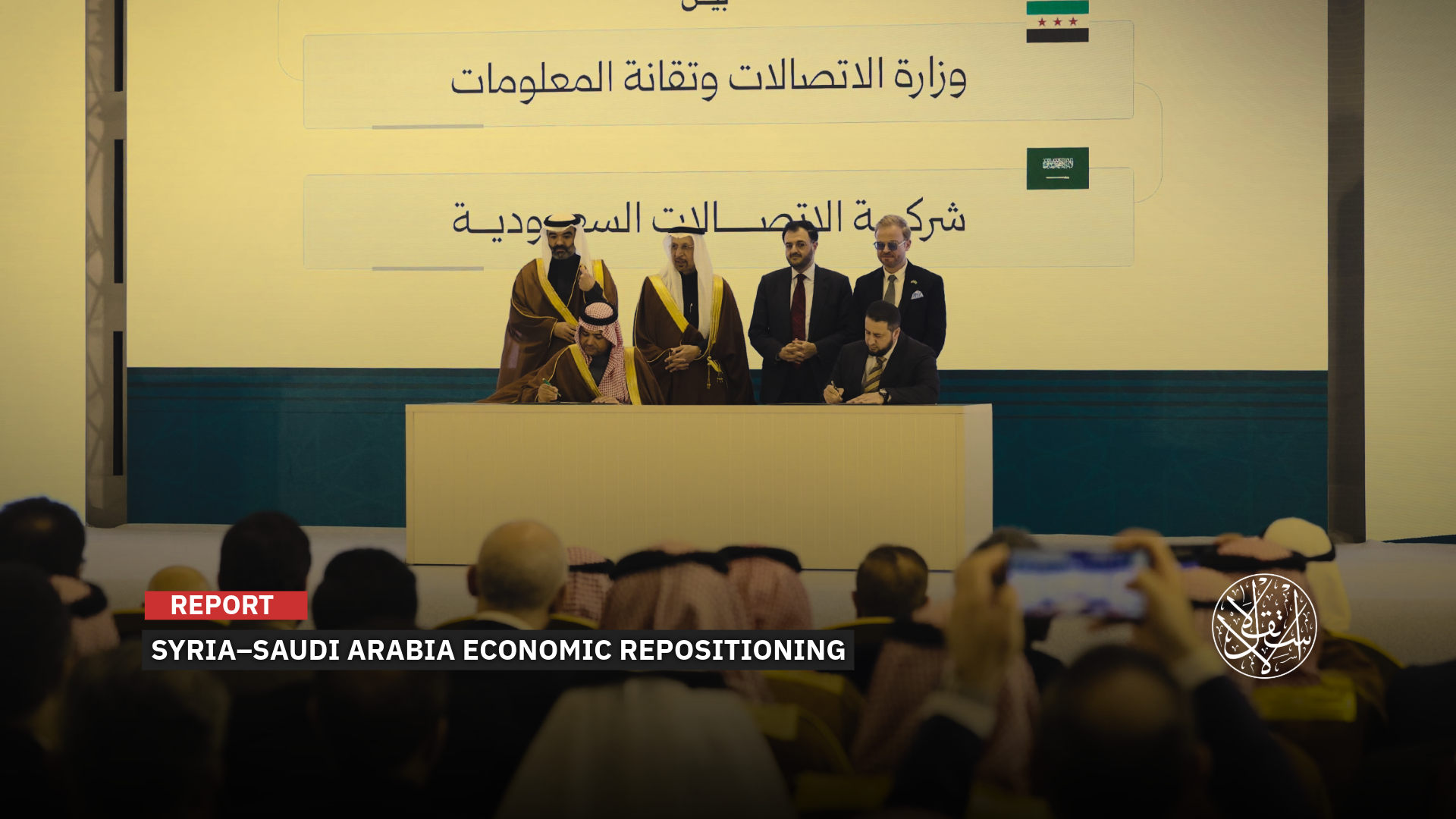
Saudi Arabia announced on February 7, 2026, a major package of investments in Syria covering the energy, aviation, real estate and telecommunications sectors, as the kingdom moves to position itself as a leading backer of what it describes as the new Syria.
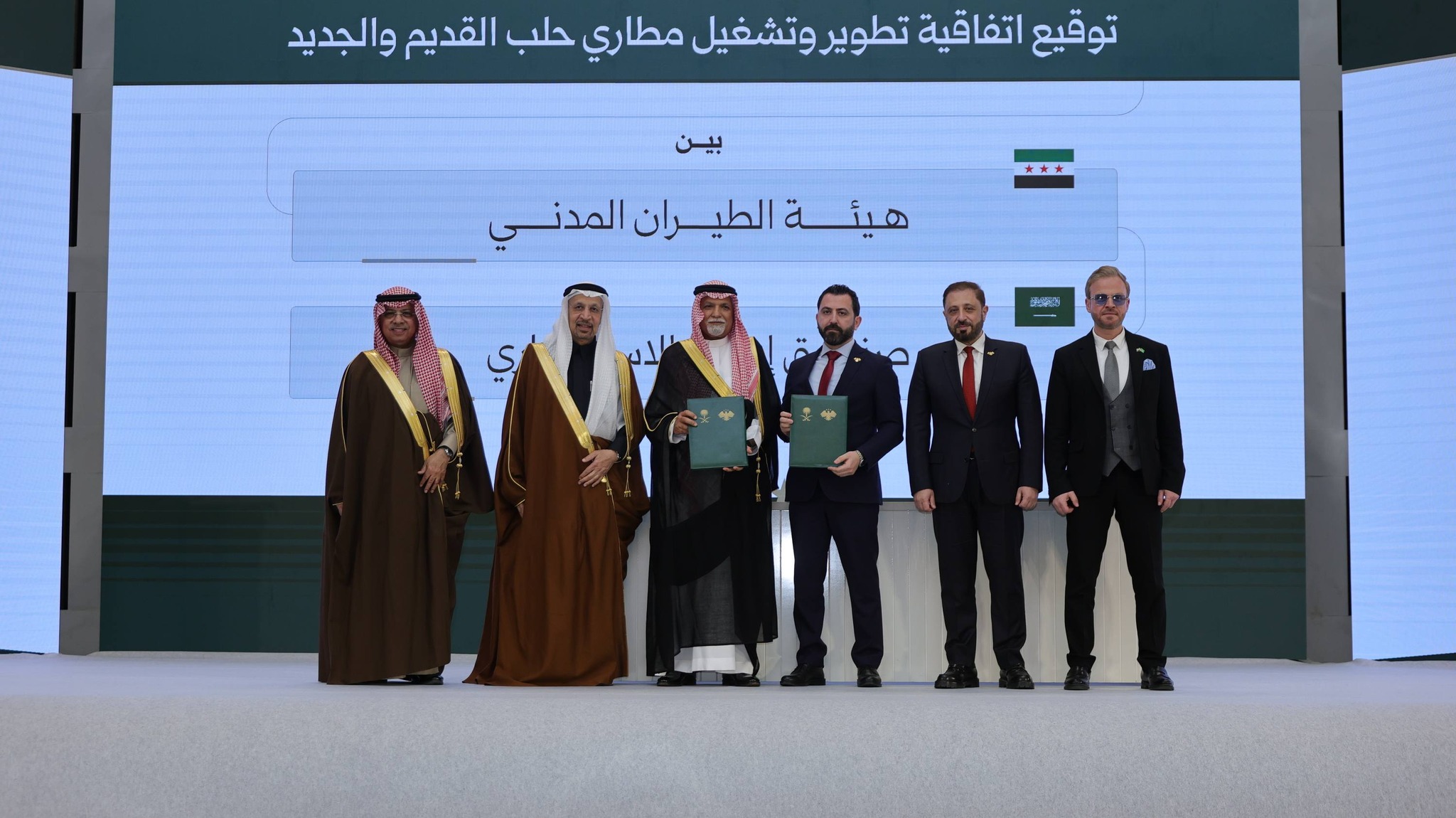
Saudi Investment Minister Khalid al-Falih said at the time that the kingdom had launched an investment fund for Syria that would allocate 7.5 billion riyals, or $2 billion, to develop two airports in the city of Aleppo in multiple phases.
Al-Falih added that the Elaf Fund aims to finance large projects in Syria with the participation of Saudi private sector investors.
In civil aviation, Saudi low-cost carrier Flynas and the Syrian General Authority of Civil Aviation signed an agreement to establish a new airline under the name “flynas Syria”.
The company said the Syrian side would own 51% of the joint venture, while Flynas would hold 49%, with operations expected to begin in the fourth quarter of 2026.
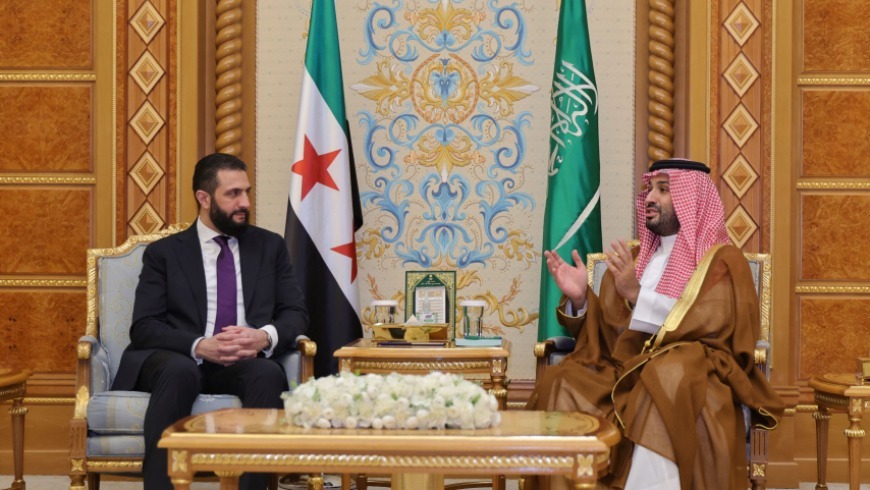
Saudi Arabia is considered a key supporter of the new Syria, alongside Qatar and Turkiye. In mid-May 2025, Crown Prince Mohammed bin Salman brought together U.S. President Donald Trump and his Syrian counterpart Ahmed al-Sharaa in Riyadh for the first time, during which Trump pledged to lift all sanctions on Syria.
The Saudi Press Agency said that Saudi Telecom Company, known as STC, would also invest more than 3 billion riyals, or $799.96 million, to strengthen the telecommunications infrastructure and connect Syria regionally and internationally through a fiber-optic network extending more than 4,500 kilometers, in addition to building data centers and international subsea cable stations.
The two sides also signed a memorandum of understanding and a joint development agreement with Saudi companies ACWA Power and Saudi Water Transmission Company to define a roadmap for cooperation in the water sector.
Syrian Energy Minister Mohammed al-Bashir said the two sides had set out “a clear roadmap for cooperation in the water sector, including the preparation of a precise technical study for a highly important project involving the construction of a seawater desalination plant, the harvesting of freshwater, and its delivery to areas in need through the building of a national carrier extending from the Syrian coast to southern Syria.”
Earlier, Damascus and Riyadh had signed, on February 7, 2026, a $1 billion agreement to develop Syria’s telecommunications and internet networks.
At the end of January 2026, Syrian Economy and Industry Minister Nidal al-Shaar issued a decision to form the Syrian-Saudi Business Council.
According to Reuters, two Saudi companies and three U.S.-based firms will form an alliance to explore and produce oil and gas in northeastern Syria.
The agency reported on February 10, 2026, citing unnamed informed sources, that Baker Hughes, Hunt Energy and Argent LNG plan to establish an energy project in cooperation with ACWA Power and Saudi firm TAQA.
The project would include four to five exploration sites in the northeastern region.
The agreement would be the latest in a series of major deals spanning multiple sectors of the Syrian economy since the ouster of Bashar al-Assad’s government and the lifting of the most consequential U.S. sanctions in December, notably the Caesar Act, which had severely constrained the Syrian economy.
Syria’s energy infrastructure has suffered extensive damage over the past 14 years and requires investments worth billions of dollars, which the government is seeking to secure from abroad.
Jonathan Bass, chief executive of Argent LNG, said the companies expect to sign a memorandum of understanding for the project in the coming weeks.
“We're very excited to be realising the visions of U.S. President Donald Trump and Syrian President Ahmed al-Sharaa, bringing the country forward from darkness to light,” Bass said.
Stimulating the Economy
Saudi Arabia’s latest investments in Syria represent the largest announcement of their kind since the United States decided to lift sanctions on Damascus in December 2025, sanctions that for years had stood as a major obstacle to the recovery of the Syrian economy in the postwar period.
The move comes as part of a series of support pledges made by the kingdom to the new Syria, particularly as Riyadh’s steps toward Damascus following the fall of Bashar al-Assad’s regime were marked by speed and clarity.
In 2025, Saudi Arabia announced investments worth $6.4 billion, spread across 47 deals involving more than 100 Saudi companies operating in the real estate, infrastructure and telecommunications sectors.
These investments, spanning energy, aviation, telecommunications and water, do not merely reflect a bet on economic recovery.
They also carry deeper implications linked to breaking the economic isolation imposed by years of war and sanctions, and to gradually reintegrating Syria into its Arab and international surroundings.
In this context, Syrian economic expert Firas Shabou told Al-Estiklal that “the agreements have shifted from memorandums of understanding to time-bound agreements with clear obligations, within a legal framework that provides clarity on rights and duties for both sides.”
Shabou added that the importance of the projects lies in their focus on vital sectors, explaining, “For example, the development of Aleppo airport. Aleppo is an industrial and commercial city par excellence, and having an effective airport will stimulate trade, tourism and exhibitions, and enhance the city’s capacity for operation and production, creating additional job opportunities.”
He noted that water projects are directly linked to food security and water security, particularly in southern Syria, which suffers from water scarcity, stressing that this type of project “carries a strategic dimension that goes beyond service provision to long-term developmental stability.”
Shabou also pointed out that the focus on infrastructure, energy and training reflects a broader vision, adding that “the impacts of these projects will appear on the service and living reality within a year or two, if they enter actual implementation.”
He cautioned, however, that the real impact will remain contingent on the speed of transition from signing to operation, saying, “What matters is that these projects move into the phase of actual implementation, contribute to employing labor, push the economic wheel forward, and begin a sustainable cycle of capital injection into the Syrian market.”
He concluded by emphasizing that these steps send reassuring messages internally and externally, signaling that Syria is moving along a path of gradual economic recovery, backed by clear Arab and investment support.
Political Message
The new Syria is betting on a package of major projects to launch a cycle of production and employment that would restore life to sectors exhausted by more than a decade of war, sanctions and severe deterioration in infrastructure.
In this context, Damascus continues to send reassurance messages to regional and international investors, saying the country has become a viable environment for investment, and that the shift from memorandums of understanding to binding agreements marks a qualitative change in the path of economic recovery, one closely linked to Syria’s political repositioning in the region.
Since the fall of Bashar al-Assad’s regime, the Syrian government has succeeded in attracting political and economic support for the development process and in stimulating foreign investment in key sectors, foremost among them energy, infrastructure, transport and telecommunications.
One of the most notable outcomes of this approach was the signing of investment agreements and partnerships worth $6.4 billion during the Syrian-Saudi Investment Forum in Riyadh in July 2025, with the participation of dozens of companies.
Qatari firm Power International was also part of a consortium of four companies that on May 29, 2025, signed an agreement and a memorandum of understanding in the energy sector valued at $7 billion.
The deal includes the development of four power generation plants with a combined capacity of nearly 4,000 megawatts, a step described as a cornerstone for rebuilding the electricity sector.
In August 2025, Damascus signed additional agreements with more than one company worth more than $14 billion, covering investments in Damascus International Airport and projects in transport, real estate and services.
Against this backdrop, academic and economic expert Firas Shabou said these investments are “political in nature par excellence.”
He explained that a Syrian minister conveyed that the Syrian leadership had discussed investment risks in Syria with Saudi Crown Prince Mohammed bin Salman, and that the response was that the kingdom views Syria as a suitable investment environment.
Shabou added that this stance “carries a positive message to regional countries and the international community, and aims to restore confidence and open a window to rescue the Syrian economy and enter a phase of actual recovery.”
He said the Saudi agreements in particular represent a step toward breaking the economic isolation Syria has endured, noting that Riyadh is playing the role of the “spearhead” in pushing Gulf capital flows toward the Syrian market at this sensitive stage.
He concluded that these moves help ease the stereotypical image of Syria as a high-risk, isolated economy, pointing out that the psychological and political impact of these investments may precede their direct financial effect, but is no less important in rebuilding confidence at home and abroad.