For Gaza, Senegal’s Cultural Elite Pushes to Sever Ties With ‘Israel’
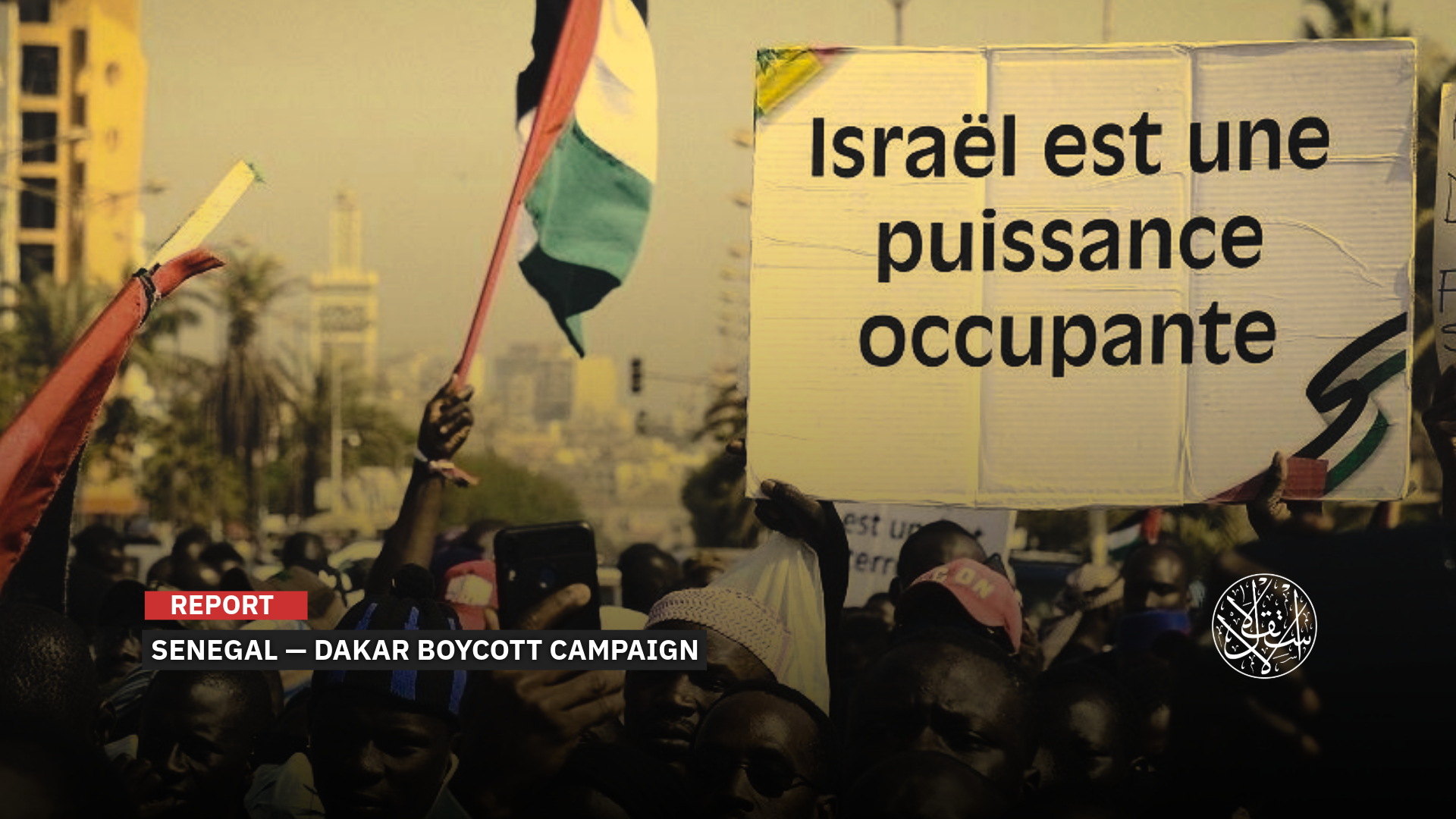
The Israeli embassy remains open in Dakar, but Senegal has yet to open an embassy in “Israel”.
In full swing, popular African solidarity with the Palestinian cause continues, with Senegal playing an active role in this stance.
Recently, notable positions have emerged from its artistic and cultural elite.
On February 3, 2026, this elite called on the Senegalese government to cut all ties with “Israel,” reaffirming its support for Palestinian rights.
The appeal came in a statement signed by prominent Senegalese figures, urging the country to take the lead in what they described as African diplomatic resistance against the "apartheid" and "genocide" carried out by “Israel” in Palestine.
Senegal and “Israel” first agreed to establish official relations in 1960, and the country’s first president, Leopold Sedar Senghor, visited “Tel Aviv” in 1971, before relations were suspended in 1973 in solidarity with Arab nations following their war with “Israel.”
Relations resumed in 1995 in the context of the Camp David and Oslo accords, and the wave of Arab normalization.
In 2016, “Israel” withdrew its ambassador, Paul Hirschson, after Senegal presented Resolution 2334 to the UN Security Council, condemning settlements, which passed with 14 votes in favor and the United States abstaining.
Relations were restored following a tour of African countries by Prime Minister Benjamin Netanyahu in 2016, and his participation in the Economic Community of West African States summit in 2017.
Then came the visit of Senegalese Foreign Minister Sidiki Kaba to “Israel” in 2018, the first high-level trip since Senghor’s visit in 1971, which sparked Palestinian criticism and protests within Senegal, where Muslims make up 95 percent of the population.
120 Artists and Intellectuals
According to the local site Seneplus, more than 120 Senegalese artists and intellectuals sent an open letter to President Bassirou Dior Macky Faye, calling for a complete severing of diplomatic and commercial ties with “Israel” in the wake of what they described as genocide in Gaza.
The signatories emphasized that their message comes “at a historic moment in which the collective spirit of humanity is suffering... as perpetrators of the genocidal war in Gaza continue their crimes with impunity.”
“We are overwhelmed with pain, anger, and despair over the ongoing atrocities in Gaza, where Israel has destroyed all the foundations of life. For more than two years, images of civilians, their stories, and their screams, from children to mothers to the elderly, have haunted us daily,” they added.
Senegalese intellectuals and academics asserted that the genocide committed by “Israel,” alongside its ongoing land grabs and ethnic cleansing in the West Bank, including Jerusalem, undermines the foundations of international law and the multilateral system.
They argued that "silence, inaction, and hesitation are no longer acceptable."
The letter urged the president to translate his stated support for Palestine and its historic and legitimate rights into action, and to uphold international law in condemning the Israeli presence in the West Bank and Jerusalem.
“In times of crisis, the greatness of nations is revealed. Africa, having endured slavery, colonialism, and apartheid, must reject injustice and oppression,” it added.
The signatories said the Senegalese people expect concrete and urgent measures, including ending diplomatic relations with “Israel,” beginning with expelling its ambassador, cutting trade, military, developmental, and other complicit ties, and terminating all contracts with Israeli companies operating in collusion.
They also called for “full participation in the Hague group and rallying African countries to join it,” and “cooperation with other African states to ensure Israel does not regain observer status at the African Union.”
The letter stressed the need to prevent any maritime transfer of military equipment to “Israel” through Senegalese territorial waters and ports, and to follow the example of other countries by blocking the leading Israeli shipping company ZIM from operating in the country’s ports.
It also expressed support for growing international efforts to bar “Israel,” accused of committing genocide, from participating in sporting events, including the 2026 Dakar Youth Olympic Games.
The letter was signed by numerous figures from Senegal’s cultural, artistic, and academic communities, including directors, actors, painters, novelists, comedians, poets, journalists, and engineers.
On the same day the letter was published, Senegal was re-elected to chair the Committee on the Exercise of the Inalienable Rights of the Palestinian People (CEIRPP).
This election followed the 426th meeting held on February 3 at United Nations headquarters in New York.
According to the local site RTS, member states unanimously renewed their confidence in Senegal by electing Ambassador Coly Seck, the country’s permanent representative to the UN, to lead the committee’s work for 2026.
The site noted that this reaffirmation reflects recognition of Dakar’s ongoing role in defending the Palestinian cause within multilateral bodies.
In his speech at the event, Coly Seck called for sustained international mobilization against continuing violence and the worsening humanitarian situation.
“Peace in Palestine is a critically important cause that we cannot abandon,” Seck added, emphasizing the international community’s collective responsibility.
During the same session, the committee adopted its 2026 work program and approved Chile’s membership, expanding its ranks and boosting momentum to support the inalienable rights of the Palestinian people.
https://s3.eu-west-3.amazonaws.com/alestiklal/gallery/2026/2/12/1786431254.jpeg
Israeli Presence
The most notable response from “Israel’s” Embassy in Senegal came on January 19, 2026, following the Teranga Lions’ victory in the Africa Cup of Nations held in Morocco.
In a tweet on X, the embassy said, “After a thrilling final against Morocco, the Teranga Lions wrote a new chapter in the history of the 2025 Africa Cup of Nations. Talent, discipline, resilience, and team spirit led an entire nation to victory.”
The embassy emphasized that the achievement was “a source of national pride, shared feelings, and a moment that unites generations and transcends borders.”
In an attempt to penetrate Senegal’s social fabric, “Israel” has been "gifting" sheep to dozens of Muslim Senegalese families as Eid sacrifices since 2006.
Each year, these donations provoke strong reactions across the country, with Senegalese civil society organizations calling for a rejection of the aid.
These groups argued that consuming the lamb provided by the Israeli embassy is tantamount to consuming the flesh of children killed in Palestine.
They stressed that what the embassy of the occupying power is doing “is not charity, but a public relations operation that rises to the level of genocide.”
Popular Resistance
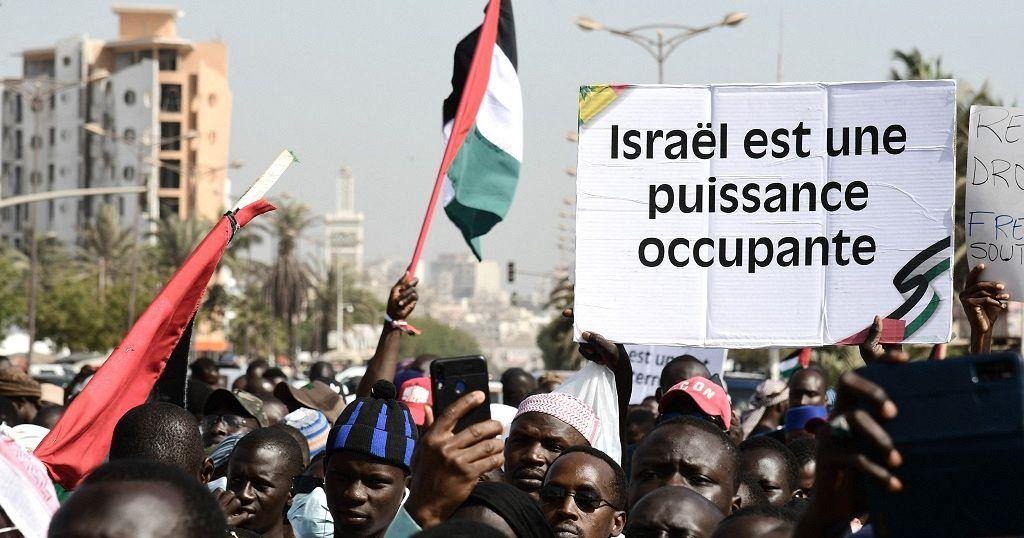
Popular rejection of “Israel’s” presence in Senegal remains persistent and unwavering, most recently reflected in a statement by the Senegalese Union of Imams and Preachers, which rejects any relationship with the Zionist entity.
In a statement issued in December 2025 in response to a visit by several African imams, including a Senegalese cleric, to “Tel Aviv,” the union stressed that the position of religious scholars and the official Senegalese stance regarding Palestine and its legitimate rights are clear.
The statement affirmed, “The Senegalese people, who have repeatedly and clearly expressed, in a peaceful and evident manner, their deep solidarity with the Palestinian cause, cannot accept any relationship with the occupation.”
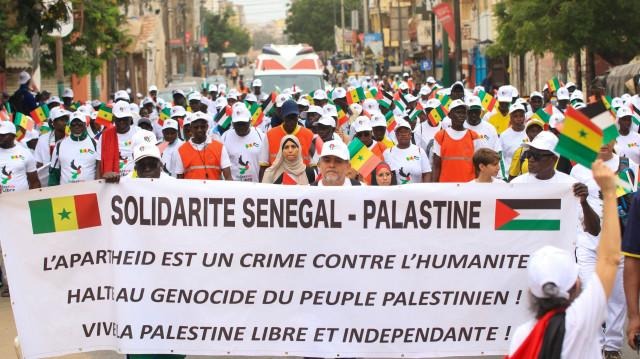
In April 2025, the Senegalese-Palestinian Alliance held a press conference at Amnesty International’s headquarters to draw international attention to the continued brutality perpetrated by “Israel” against the Palestinian people.
The alliance emphasized that these Israeli crimes persist, particularly in Gaza, through the killing of civilians, women, and children, and the destruction of social infrastructure such as homes, schools, and hospitals.
In the same month, the alliance organized a large demonstration in Dakar to show solidarity with the Palestinian people.
https://www.youtube.com/watch?v=3f0PuS3AoLs
At the student level, a video widely circulated on social media in Senegal showed the moment the Israeli ambassador was expelled from Cheikh Anta Diop University in Dakar in May 2025.
The footage showed a crowd of angry students chasing the ambassador, who quickly returned to his car before leaving the premises, unable to attend an academic conference to which he had been invited by the university.
https://www.facebook.com/ajplusfrancais/videos/1733263657260240/?t=3
In June 2025, a group of Senegalese graffiti artists created murals denouncing human rights violations in Palestine, Sudan, and the Democratic Republic of the Congo.
The murals were painted on the walls of the tourist checkpoint on Ngor Island in Dakar, aiming to raise public awareness of human rights abuses in Palestine and the other countries.
Among the campaign’s messages, organizers highlighted the importance of boycott, writing on the walls slogans such as "Coca-Cola, a bomb for Gaza" and other phrases.
The initiative was organized in collaboration with the African Graffiti Artists Group (RBS), the African Artists Against Apartheid collective, and the Symbiosis Institute operating in Ngor.
https://www.facebook.com/histoirenegre/posts/731188789563028?ref=embed_post
Reconsideration
In response to the letter, Senegalese writer and journalist Gueye Fadel described the move by the country’s intellectuals, academics, and artists who signed the document as highly important and necessary.
He told Al-Estiklal that the goal is to push the state to play a larger role in supporting the Palestinian people, particularly in Gaza, and to stand alongside South Africa in implementing a ruling condemning “Israel” for committing genocide against the unarmed Palestinian population.
He added that it also involves demanding a complete severing of diplomatic and commercial relations with the Zionist entity, noting that Senegal has continued to chair the UN committee defending the rights of the Palestinian people since 1975.
Fadel also pointed out that Senegal, through its government and people, has consistently supported the Palestinian cause.
Senegal was the first African country to grant President Yasser Arafat a diplomatic passport and to open a Palestinian Authority office in Dakar, which later became the Embassy of the State of Palestine.
He recalled that, amid more than two years of Israeli bombing in Gaza, Senegalese citizens staged protest marches against “Tel Aviv,” some led by Senegalese Prime Minister Ousmane Sonko, marking the first time in history that the prime minister personally headed demonstrations against the brutality of “Israel’s” military campaign against Palestinians.
Fadel said this stance mirrors that of the president, pointing to a historic speech in which he explicitly condemned Israeli crimes from the UN podium in New York, criticizing the acts carried out with the backing and approval of the United States.
On the possibility of the president responding to this call, Fadel noted that Senegal had previously severed relations with “Israel” for many years in protest against its oppression of the Palestinian people and its ongoing killing, abuse, and displacement of civilians.
Relations were only restored after some Arab countries resumed ties with “Tel Aviv.”
He added that, although the Israeli embassy remains open in Dakar, Senegal has not opened an embassy in “Israel.”
He concluded that if the Israeli military’s genocide and crimes continue, Senegal is likely to reconsider its diplomatic relations with the Zionist entity.
https://s3.eu-west-3.amazonaws.com/alestiklal/gallery/2026/2/12/1041877989.jpeg
Honorary Signatures
The letter addressed to the President of Senegal, which called for the expulsion of the Israeli ambassador and the severing of relations with the Zionist entity, was signed by:
- Pape Badara Seck, Film Director
- Khadim Bamba Dia, Artist, Poet, Writer
- Mati Diop, Film Director
- Martine Ndiaye, Festival Organizer
- Delphine Buysse, Cultural Performer
- Selbe Diouf Sister LB, Rap Singer
- Amy Celestina Ndione, Painter
- Khalifa Ababacar Dieng, Visual Artist
- Amelie Maison, Storyteller and Actress
- Amadou Tidiane War, Musician
- Sheikh Ahmadou Bamba Dieng, Photographer
- Alioune Ba, Visual Artist
- Diakos Diakhate, Photographer
- Abdou Aziz Seck, Visual Artist
- Ghassan Salhab, Film Director
- El’Hadj Samba Khary Ndao, Sculptor
- Moussa Tine, Painter
- Mohamed Abdoulaye Kane, Dancer
- Abou Tall, Writer, Screenwriter
- Moustapha Diop, Musician
- Marynet J., Curator
- Emmanuel Hernandez, Visual Artist
- Maky Madiba Sylla, Film Director and Musician
- Jennifer Houdrouge, Cultural Organizer
- Abdoul Kader Aka Diedhiou, Screenwriter and Director
- Nzinga Mboup, Architect
- Laure Lepigeon, Architect
- Mariama Sylla, Film Director
- Diarra Seck‑Meyer, Cultural Coordinator
- Maguette Traore, Graffiti Artist
- Anna Karima Wane, Artist
- Aissatou Ciss, Photographer
- Saky Tchebe Bertrand, Choreographer
- Adji Ibrahim Traore, Photographer
- Ines Senghor, Writer
- Haidar Shams, Photographer
- Fatou Mandoye Mbengue, Visual Artist
- Stephen Ibaaku Bassene, Multidisciplinary Artist
- Fatou Cisse, Choreographer
- Samba Ndoye Ndiour, Painter
- Abdourahmane Seck, Researcher
- Birahim Diallo, Musician
- Fatim Soumare, Visual Artist
- Ndeye Seck, Journalist
- Marietou Mbaye, Writer
- Laure Malecot, Visual Artist and Author
- Julien Flosse, Director
- Ndeye Nogaye Diop, Director
- Salimata Diop, Curator
- Fatime Mbengue, Painter
- Sara Gadiaga, Artist
- Adiara Fall Ndiaye, Cultural Organizer
- Babacar Buuba Diop, Academic
- Marieme Faye, Author, Actress
- Nasrine Safa, Photographer
- Amadou Bator Dieng, Journalist, UK
- Amadou Ly, Cultural Figure
- Penda Diouf, Writer
- Baba Diop, Journalist and Cultural Figure
- Lajoya Sene Somno-Dibele, Artist, Poet, Singer, Short Story Writer
- Corina Fiora, Singer and Songwriter
- Ekatarina Golovko, Photographer, Researcher
- Aicha Deme, Multidisciplinary Artist
- Haja Fanta, Cultural Organizer
- Pathe Dieye, Writer
- Natalie Vairac, Actress, Artist
- Hajar Thiam, Poet
- Serigne Mansour Fall, Graffiti Artist
- Khady S., Photographer
- Fehe Saar, MC
- Mame Diara Fall, Photographer
- Kerim Boucher, Designer
- Fatou Kine Diouf, Multidisciplinary Artist
- Ndeye Ndiouro Diop, Painter
- Federico Silvio Andrea Bottelli, Musician
- Mustapha Mbacke Diop, Writer, Physician
- Samoura Mendy, Graffiti Artist
- Rass Nganmo, Musician
- Penda Seck, Artistic Director, Film Director
- Jean Baptiste Joire, Photographer
- Ismael Mahamdou Laouali, Photographer
- Awa Cheikh Diouf, Cultural Coordinator
- Abdou Samb, Director, Screenwriter
- Lamine Faye, Musician
- Cleophee Moser, Visual Artist
- Salimata Ciss Momath, Assistant Director/Screenwriter
- Matar Ndiaye, Director
- Yaminah Faye, Fashion Designer
- Tshiela Aicha Fall, Photographer
- Chiara Figone, Editor
- Ousmane Dieme, Graffiti Artist
- Germaine Acogn,y Dancer, Choreographer
- Ibrahima Khalil Kone, Graffiti Artist
- Anna Diagne, Graphic Designer
- Djeylani Gueye, Social and Cultural Activist
- Karine Ba, Painter
- Elena Bougaire, Cultural Organizer
- Josephine Mboup, Comedian, Director
- Nalla Thioye, Painter
- Aida Sene, Fashion Designer
- Eved Od Sita, Musician
- Conny Schneider, Musician, Circus Performer
- Nampemanla Pascal Traore, Visual Artist
- Cecile Ndiaye, Visual Artist
- Lolita Grand, Sculptor and Painter
- El Hadj Ousmane Majha Sarr, Film Director
- Diedhiou Paul, Teacher, Researcher
- Mame Tahirou Sall, Film Director
- Marie Noel Diagne, Film Director
- Alain Formose Gomis, Film Director
- Clement Kassianov Aichelbaum, Artist, Musician
- Fadilo Toure, Musician
- Serigne Mbacke Madina Faye, Photographer
- Mouhamed Lamine Gueye, Visual Artist
- Amy Colle Seck, Dancer
- Moussa Ba Wane, Music Coordinator, Composer
- Fatouma Diallo, Fashion Coordinator
- Aminata Mboup, Sculptor, Industrial Designer
- Tabara Korka Ndiaye, Artist
- Yasmine Eid-Sabbagh, Artist