The Occupation Ignites a Battle for Control of al-Aqsa and Jerusalem During Ramadan: Has the Purge Begun?
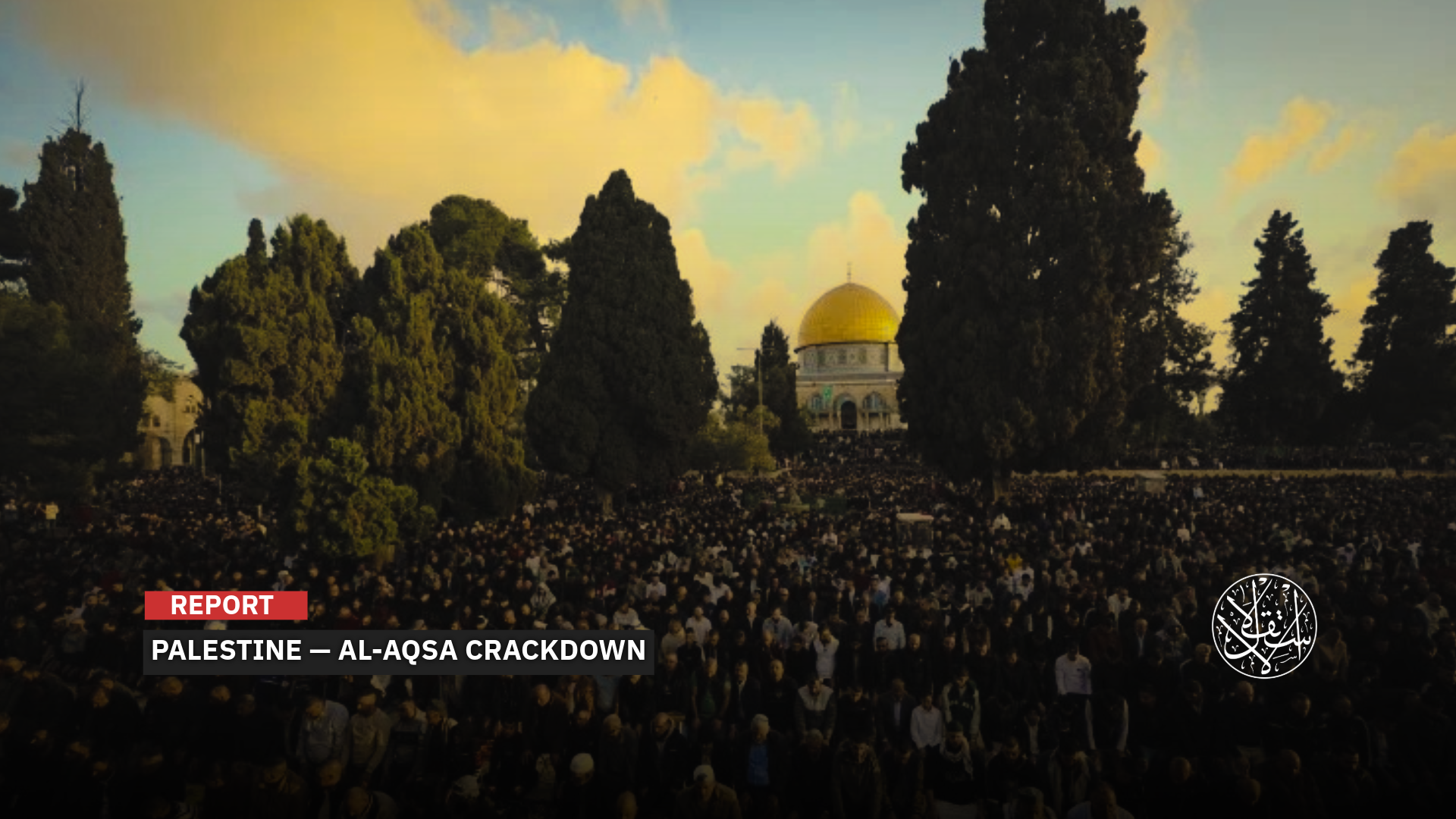
Restrictions are being imposed on worshipers’ access to al-Aqsa Mosque during Ramadan.
As the holy month of Ramadan approaches, the Israeli occupation has escalated its measures in the vicinity of al-Aqsa Mosque, imposing further restrictions and control, tightening pressure on worshipers, and continuing the demolition of homes surrounding the mosque, particularly in the Silwan neighborhood, as part of plans to Judaize the city.
These measures include restrictions on the entry of worshipers to al-Aqsa Mosque and the issuance of expulsion orders against hundreds of Jerusalem residents, in addition to not preventing settlers from entering the al-Haram al-Sharif during Ramadan, as had occurred in some previous years to avoid friction with worshipers, a move viewed as part of a broader plan to alter the status quo.
In the lead-up to Ramadan, Israeli actions targeted broader changes in Jerusalem in general and at al-Haram al-Sharif in particular, seeking to impose a new reality and assert what it describes as Israeli “sovereignty” over the mosque, within the framework of efforts to erase the Arab and Islamic identity of Jerusalem and al-Aqsa.
In the same context, “Tel Aviv” expanded its siege of the holy city through settlement plans extending from Jerusalem to the West Bank, entrenching a new geographic and political reality and deepening Israeli control over the area.
Meanwhile, Palestinian scholars and researchers began warning of what they describe as a “war of purge” inside Palestine, stressing that al-Aqsa Mosque represents a central banner in the battle for awareness and the mobilization of popular action in the postwar phase, and calling for support for the steadfastness of Jerusalem residents and the protection of al-Aqsa’s identity.
These developments raise questions about the nature of the anticipated escalation at al-Aqsa Mosque during the upcoming month of Ramadan, what authorities seek to cement on the ground, and the possible means of confronting it and preserving the identity of the holy city.

War on al-Aqsa
Despite the Israeli occupation’s tightening of restrictions on Muslim prayers at al-Aqsa Mosque and the escalation of settler incursions into its courtyards following the events of “al-Aqsa Flood,” authorities have used the postwar atmosphere and the accompanying political and military escalation to impose further measures during the month of Ramadan, in a bid to entrench control over the mosque and Jerusalem more broadly.
Since January 2026, Israeli authorities have issued more than 250 expulsion orders from al-Aqsa Mosque, targeting men and women who maintain a presence at the mosque and contribute to its protection, in an attempt to impose a unilateral reality that runs counter to the “status quo” policy in place since the occupation of Jerusalem in 1967.
The Jerusalem Governorate confirmed on February 16, 2026, that Israeli authorities are preventing the implementation of logistical plans for receiving worshipers at al-Aqsa Mosque during Ramadan, including the installation of umbrellas for protection from the sun and rain, the preparation of temporary field clinics, in addition to other necessary arrangements to ensure the normal conduct of worship.
According to data documented by the governorate, the occupation’s plan for Ramadan includes imposing strict restrictions on the entry of Palestinians from the occupied West Bank into Jerusalem, particularly on Fridays, with a cap set at no more than 10,000 worshipers.
These measures also include age restrictions, allowing only 10,000 men over the age of 55 and an equal number of women over the age of 50 to enter after obtaining prior approvals, while younger individuals are barred from reaching the mosque.
Palestinians say these restrictions are aimed at reducing popular support for the steadfastness of Jerusalem and al-Aqsa, and preventing the flow of worshipers, particularly from inside historic Palestine, thereby weakening the Palestinian presence at the mosque.
Israeli authorities also impose a complex permit system that allows only limited numbers of Palestinians from the West Bank to enter, leading to a decline in the number of worshipers compared with previous years.
At the same time, Israeli authorities have allowed an increase in settler incursions into al-Aqsa Mosque during Ramadan, after they had been restricted in previous years, with these incursions taking place under heavy protection from Israeli security forces.
These measures were preceded by other steps, including the appointment of a new Jerusalem police commander in January 2026, affiliated with the religious Zionism current, a movement that calls for changing the identity of al-Aqsa Mosque and is considered close to National Security Minister Itamar Ben-Gvir.
Since taking office, new measures have been adopted inside the mosque, including allowing those entering to bring in Talmudic prayer papers and expanding the route of incursions to reach the courtyard of the Dome of the Rock at the heart of al-Aqsa Mosque.
Amid these developments, religious and community bodies have issued urgent warning appeals to the Arab and Islamic worlds, calling for action to protect al-Aqsa Mosque, and saying the occupation has shifted the center of confrontation to Jerusalem and al-Aqsa Mosque, at what they describe as the most dangerous stage of targeting their religious and historical identity.
These bodies argue that what is unfolding is aimed at imposing a parallel Jewish identity inside the mosque, paving the way for altering its Islamic character, amid the rising influence of the religious Zionism current within the Israeli government.
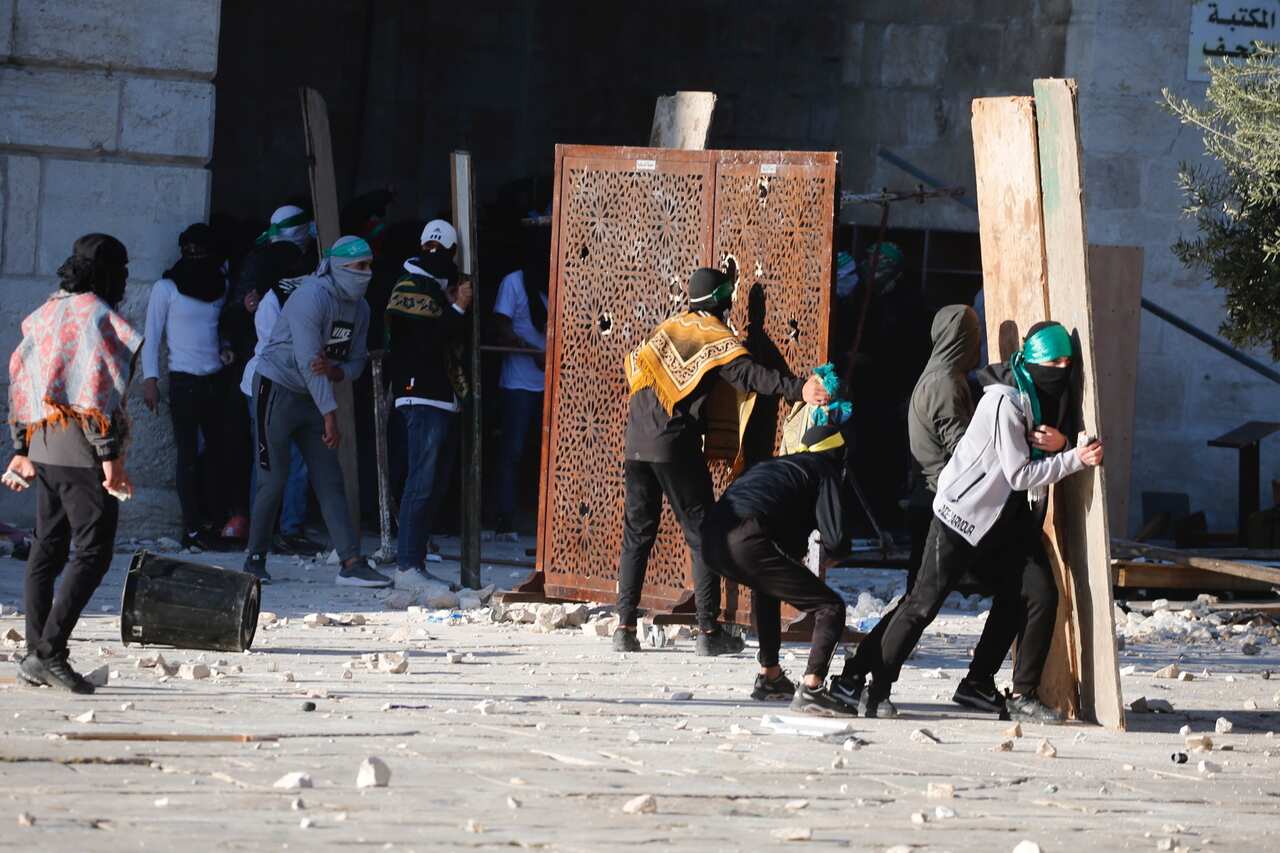
A Jewish Temple
Since September 16, 2023, during the season of Jewish holidays, Israeli occupation authorities have pursued a strict siege policy at al-Aqsa Mosque, closing it to worshipers except for Waqf employees and elderly residents of the Old City, from the evening prayer through the dawn prayer until the afternoon prayer of the following day.
According to Palestinian assessments, this policy aimed to enable settlers to enter the mosque and take over its courtyards for 22 consecutive days, preventing religious retreat and the presence of those who maintain a continuous presence at the mosque during the morning hours.
With the outbreak of events in October 2023, the siege continued; worshipers were barred from entering the mosque, and their numbers fell to the point that they did not fill a single row inside al-Qibli Mosque.
The number of worshipers at Friday prayers did not exceed 5,000 for 10 weeks after the start of the war, before restrictions were partially eased during the month of Ramadan, particularly on the 27th night.
During 2024 and 2025, the same policy continued, with limited easing of restrictions in the final days of Ramadan, a move observers viewed as an attempt to mask the ongoing reality of the siege imposed on al-Aqsa Mosque.
The incursions during the Hebrew New Year between September 23 and September 25, 2025, witnessed notable developments, as settlers, under the protection of Israeli police and army forces, turned the eastern courtyard of al-Aqsa Mosque into what observers described as an “undeclared synagogue,” where horns were blown and religious rituals were performed without intervention.
In the context of imposing temporal and spatial division, occupation authorities extended daily incursion hours to more than six hours, after they had been limited to three hours when first introduced in 2008.
During 2024, the exclusive control of the eastern courtyard by those entering was consolidated, making it appear as an undeclared Jewish temple within the mosque, while Palestinian worshipers were barred from being present along the incursion routes and confined to al-Qibli Mosque or the inner section of the courtyard of the Dome of the Rock.
The measures also included restricting the movement of guards of the Islamic Waqf affiliated with Jordan, preventing them from being present at exposed service points along the incursion routes, and forcing them to remain inside the surrounding buildings and domes.
The blowing of the horn inside the mosque is viewed as an attempt to entrench a parallel biblical ritual identity alongside the site’s Islamic identity.
Temple groups annually seek to break record numbers of those entering during Jewish holidays in order to strengthen their presence inside the mosque; in August 2025, more than 3,000 settlers entered.
Occupation authorities also imposed additional security measures, including installing barbed wire above the mosque’s wall at points some of which had been used for entry during times of crowding, a step reflecting the escalating militarization of the site.
Among the most notable shifts during Ramadan 2024 was the deployment of armed Israeli police patrols inside the mosque during prayer, widely seen as a clear breach of the status quo that has been in place since 1967.
This was accompanied by other measures, including requiring worshipers to present identification cards, inspecting the meals of those fasting, interrupting religious lessons and questioning sheikhs and preachers while they delivered sermons, as well as curtailing the role of the Jordanian Islamic Waqf and limiting it to managing the Islamic presence within boundaries imposed by occupation authorities, after it had overseen the mosque in all its affairs for decades.
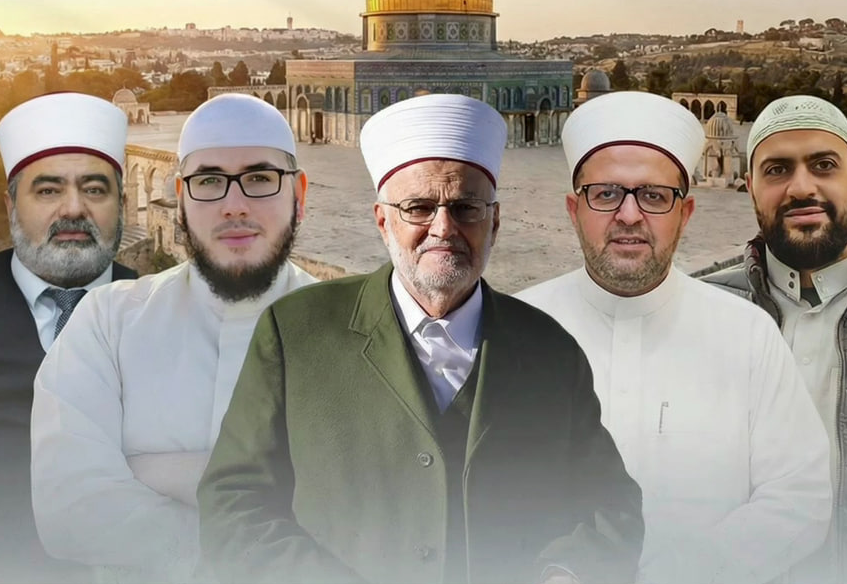
Barring the Scholars
On February 16, 2026, Israeli occupation forces arrested the imam of al-Aqsa Mosque, Sheikh Muhammad Ali al-Abbasi, from the mosque’s courtyards, before handing him an order banning him from the site for one week, renewable, in a step aimed at preventing him from leading Taraweeh prayers during the month of Ramadan.
The policy of arrest and expulsion targeting the imams and sheikhs of al-Aqsa Mosque has become an escalating approach; Jerusalem is welcoming Ramadan this year amid a campaign of collective expulsions targeting preachers and imams who had maintained an influential presence in the mosque’s courtyards in recent years.
Under these measures, a number of prominent religious figures have been banned, including Sheikh Ekrima Sabri, the preacher of al-Aqsa Mosque, who has been under a six-month ban since October 2025.
The list also includes Sheikh Iyad al-Abbasi, a judge and preacher who received a six-month ban, and Sheikh Mohammed Sarandah, a judge and preacher banned since September 2025 for the same duration, in addition to Sheikh Muhammad Ali al-Abbasi, who has been handed a one-week ban, renewable for up to six months.
Among those banned is also Sheikh Saeed al-Qalqili, the imam of Taraweeh prayers, who has been completely barred from entering the city of Jerusalem due to holding a Palestinian identity card.
Observers say this targeting comes within attempts to empty al-Aqsa Mosque of influential figures and to sideline voices calling for prayer and religious retreat during Ramadan, amid mounting tension gripping the city.
Israeli authorities have also barred 25 employees of the Islamic Waqf Department from entering the mosque and arrested four of them, in a step described as aimed at obstructing the management of the mosque’s affairs and the organization of religious activities during the holy month.
In a statement issued on February 10, 2026, the International Jerusalem Foundation said that the occupation has already prevented more than 1,000 people from Jerusalem and from Palestinians inside the 1948 territories from entering al-Aqsa Mosque.
The foundation added that occupation police have increasingly adopted a policy of expulsion, to the point of sending ban orders via text messages or messaging applications, while police officers stationed at the mosque’s gates carry ready-made orders that are filled in with the names of those to be banned.
The foundation warned that the occupation is planning a broad escalation during Ramadan and beyond, including restricting worshipers’ access, tightening limits on religious retreat, strengthening the security grip inside the mosque, continuing the siege of Bab al-Rahma, and attempting to curtail the role of the Islamic Waqf in Jerusalem.
It also pointed to fears of attempts to impose Jewish religious rituals inside the mosque after the end of Ramadan, amid escalating Israeli measures within the al-Haram al-Sharif.
Zionist Purge Machine
Jerusalem affairs researcher Ziyad Abuhalbeh describes what is taking place at al-Aqsa Mosque during the month of Ramadan as a “test of the Zionist purge machine targeting the mosque,” a process he says began in 2017.
In a mobilization paper issued by the International Jerusalem Foundation on February 14, 2026, Ziad Ibhais explained that Ramadan has, since the Ramadan uprising in 2014 and later during what he called the “five-year escalation” between 2019 and 2023, become a central season for escalation inside al-Aqsa Mosque.
With the outbreak of the war in October 2023, the occupation’s view of Ramadan evolved, according to Ibhais, into a “season for testing the purge machine,” within the framework of a path aimed at Judaizing the mosque and gradually transforming it into a Jewish temple, starting with the imposition of measures during Ramadan that can later be expanded throughout the rest of the year.
The researcher identified several indicators of the implementation of this vision, including the appointment of a new occupation police commander in Jerusalem affiliated with the religious Zionism current, in addition to the escalation of the expulsion policy, with the number of those banned from al-Aqsa Mosque exceeding 1,000 before the onset of Ramadan.
Ibhais suggested that escalation in Jerusalem during Ramadan is likely to take five main paths:
First, incursions into the mosque during the Hebrew holiday of Purim between 12 and 14 Ramadan.
Second, strengthening the security dominance of occupation police inside the mosque.
Third, renewing restrictions on the practice of religious retreat.
Fourth, attempting to reclose and separate the Bab al-Rahma prayer hall.
Fifth, entrenching the reality of the siege and imposing a media blackout on what is taking place inside the mosque.
He said these measures pave the way for additional escalation paths after Ramadan, most notably the renewed raising of the “red heifer” issue, whose biblical timing coincides with the first days of Eid al-Fitr, in addition to attempts to impose an “animal sacrifice” during the Hebrew holiday of Passover between April 1 and April 8, 2026.
He also pointed to the possibility of extending daily incursion hours by adding an evening period, increasing the number of those entering, alongside renewed attempts to carve out the Bab al-Rahma prayer hall as part of efforts to impose a permanent division of the mosque.
In this context, the group known as the extremist “Temple Mount School” announced on February 16, 2026, the extension of morning incursion hours at al-Aqsa Mosque to run from 6:30 a.m. until 11:30 a.m., adding an extra hour to the usual incursion period, as part of a policy of imposing temporal division of the mosque.
This came a week after “Temple organizations” sent a letter to Israeli Prime Minister Benjamin Netanyahu, calling for what they described as “guaranteeing Israeli sovereignty and freedom of worship for Jews on the Temple Mount during the month of Ramadan.”
According to the paper, occupation police postponed a final decision regarding settler incursions during the last 10 days of Ramadan until reactions to the measures implemented at the beginning of the month are assessed, in what the researcher described as a test of the extent to which Palestinians and the Arab world will accept these policies.
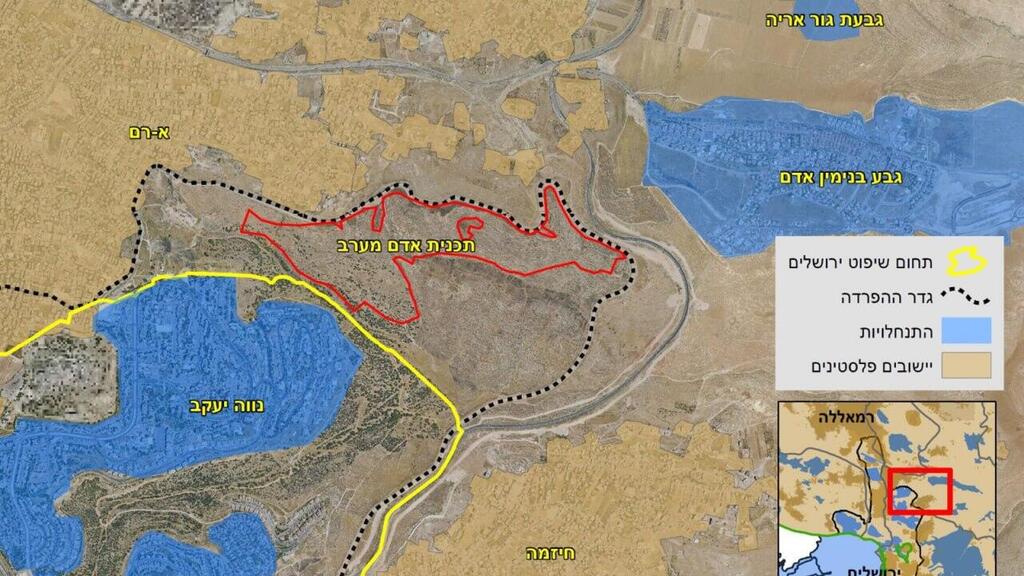
Erasing the Green Line!
Coinciding with the tightening of security and administrative measures related to prayer at al-Aqsa Mosque during the month of Ramadan, the newspaper Yedioth Ahronoth reported on February 16, 2026, that the Israeli government is continuing steps aimed at strengthening what it calls “Israeli sovereignty” in occupied Jerusalem.
According to the newspaper, these steps are intended to blur the boundaries of the Green Line, which separates “Israel” from the West Bank, as part of a plan to expand the borders of Jerusalem beyond that line, in what would be the first move of its kind since 1967, effectively seeking to erase it on the ground.
The settlement plan being advanced by the Israeli government includes building hundreds of housing units for Haredi settlers north of occupied Jerusalem, with the aim of expanding the jurisdiction of the Jerusalem Municipality and annexing lands located within the Ramallah area of the West Bank.
It also includes expanding the settlement of Neve Yaakov toward the settlement of Adam in the Ramallah area, by creating geographic contiguity between them through the construction of new housing units and the paving of a bypass road running along the route of the separation barrier.
Yedioth Ahronoth described the move as an attempt to impose de facto Israeli sovereignty over lands in the West Bank under the cover of urban expansion.
This plan comes within a broader direction aimed at expanding Israeli control over West Bank lands, through re-registering property, canceling previous laws, and allowing settlers to purchase them, under decisions issued by the Political-Security Cabinet and approved by the government.
This coincided with “Israel” mobilizing additional forces in the West Bank and preparing to carry out wide-scale arrest campaigns, alongside imposing further restrictions on Palestinians’ access from the West Bank to al-Aqsa Mosque and continuing to reduce work permits, increasing tensions on the ground.
In a related context, occupation authorities escalated measures in the Silwan neighborhood south of al-Aqsa Mosque, particularly in the areas of al-Bustan and Batn al-Hawa, where in early February 2026 they delivered the largest package of collective demolition orders for homes in the neighborhood since the case began in 2008.
The demolition orders include 14 structures, with the deadline granted to residents expiring in the first week of Ramadan, raising fears of a new escalation that could recall the events of the “Sword of Jerusalem” battle in 2021.
That confrontation erupted during Ramadan in May 2021, following rising tensions at al-Aqsa Mosque and in the Sheikh Jarrah neighborhood, leading to a wide round of fighting between “Israel” and Palestinian factions in the Gaza Strip.
In this context, the newspaper Haaretz warned that increasing Israeli measures in Jerusalem and the West Bank, alongside economic pressure on the Palestinian Authority, could raise the level of tensions on the ground.
The newspaper quoted senior Israeli officers in closed discussions warning of the possibility of widespread protests during the month of Ramadan, especially amid escalating settler attacks.
According to the same source, the Israeli Occupation Forces has deployed new reinforcements to the West Bank, including four additional battalions and forces from the Commando Brigade, alongside 21 battalions already deployed, in conjunction with the arrival of Ramadan.