Saad Hariri’s Address on the Anniversary of His Father’s Assassination: Comeback Bid or Strategic Recalibration?
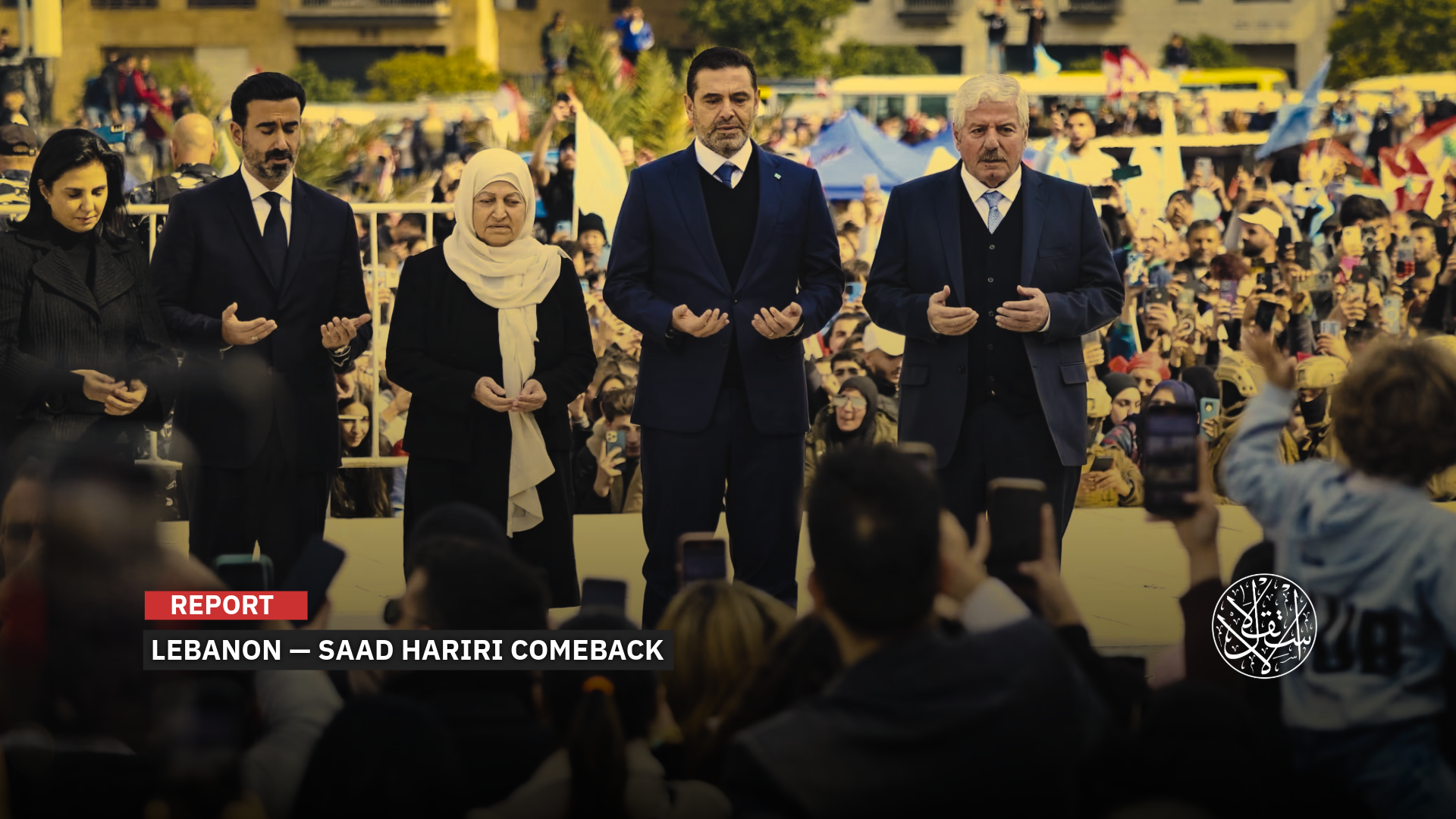
Hariri: When the polls open, they will hear and tally our votes.
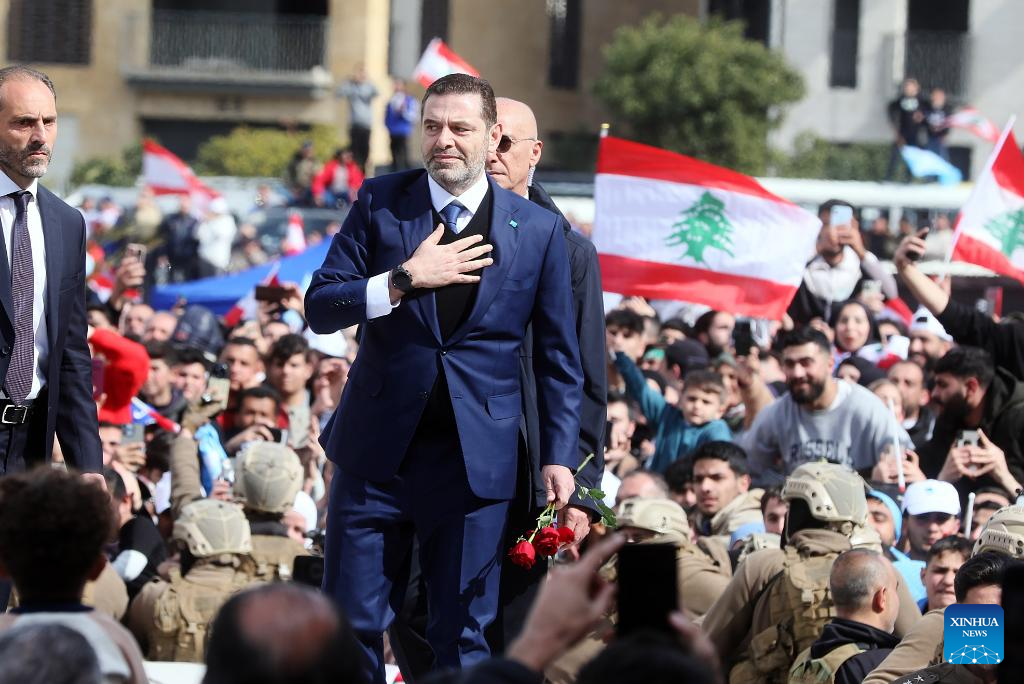
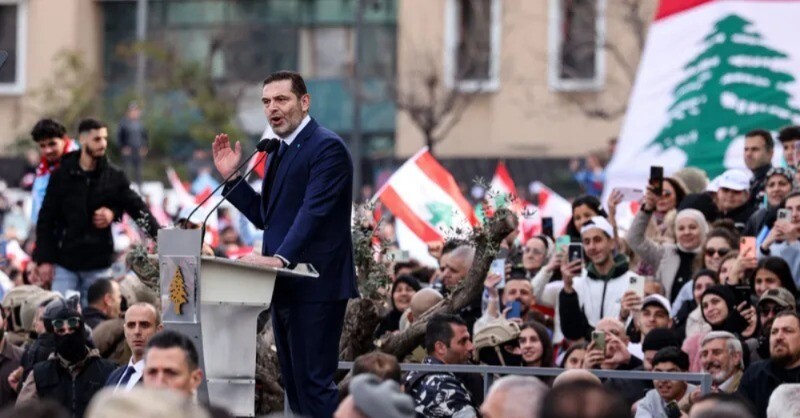
Former Lebanese Prime Minister Saad Hariri delivered a speech on February 14, 2026, marking the 21st anniversary of his father’s assassination, in front of a crowd in Beirut.
His messages during the address were interpreted as potential signals of a return to political life after a four-year absence.
Hariri had announced in January 2022 that he was suspending his political activity, calling on the Future Movement he leads not to participate in the parliamentary elections, justifying his decision by citing what he described as Iranian influence, international confusion, national division, the resurgence of sectarianism, and the deterioration of the state.
A United Lebanon
During his speech on the anniversary of his father’s assassination on February 14, 2026, Saad Hariri said, “After years of wars, it is the right of the Lebanese to have one country, one army, and one weapon,” emphasizing that “Our project is a united Lebanon, and we will not allow it to return to sectarian strife, the price we paid bears witness to that.”
He stressed the Future Movement’s commitment to moderation and the state’s path, asserting that “Hariri’s project was not a dream that ended with his assassination.”
Explaining his decision to step back from political life, he said, “When politics comes at the expense of the state project, it has no place in our school. Some love power, but I love my people.”
“To those who bet on the end of Harirism, we say: Fool me once, shame on you; fool me twice, shame on me,” he continued, adding at the close of his remarks, “We do not break because the Hariri project remains.”
On the parliamentary elections, which are rumored to be postponed for technical reasons, he asked, “Will the elections take place? And what will the Future Movement do?” Clarifying, he said, “I have one answer: tell me when the elections are so I can tell you what the Future Movement will do, but I promise you: when the elections happen, our voices will be heard and counted, elections or no elections.”
Thousands of Future Movement supporters from across Lebanon gathered in Beirut to mark the anniversary, holding banners calling for a return to political activity.
Hariri also stressed that entering any Arab–Arab dispute was unacceptable, urging Lebanese to “stay away from exploiting these disagreements,” noting that “Saudi Arabia’s role in the country reinforced the Taif Agreement and supported stability, and we did not enter as a party in any dispute among Arab states.”
He extended greetings to the people of the south, Hezbollah’s stronghold, emphasizing that full implementation of the Taif Agreement means “no weapons except in the hands of the state, the abolition of political sectarianism, the establishment of a Senate, and the full implementation of the ceasefire agreement.”
He added that the international community “views Lebanon as a kingdom of missed opportunities,” noting that “Lebanon has great resources, but there is mismanagement.”
In response to whether he had met with Hezbollah, Hariri denied any official meeting, explaining that the party “is part of the Lebanese component, and there is dialogue with Shiite parties within the government.”
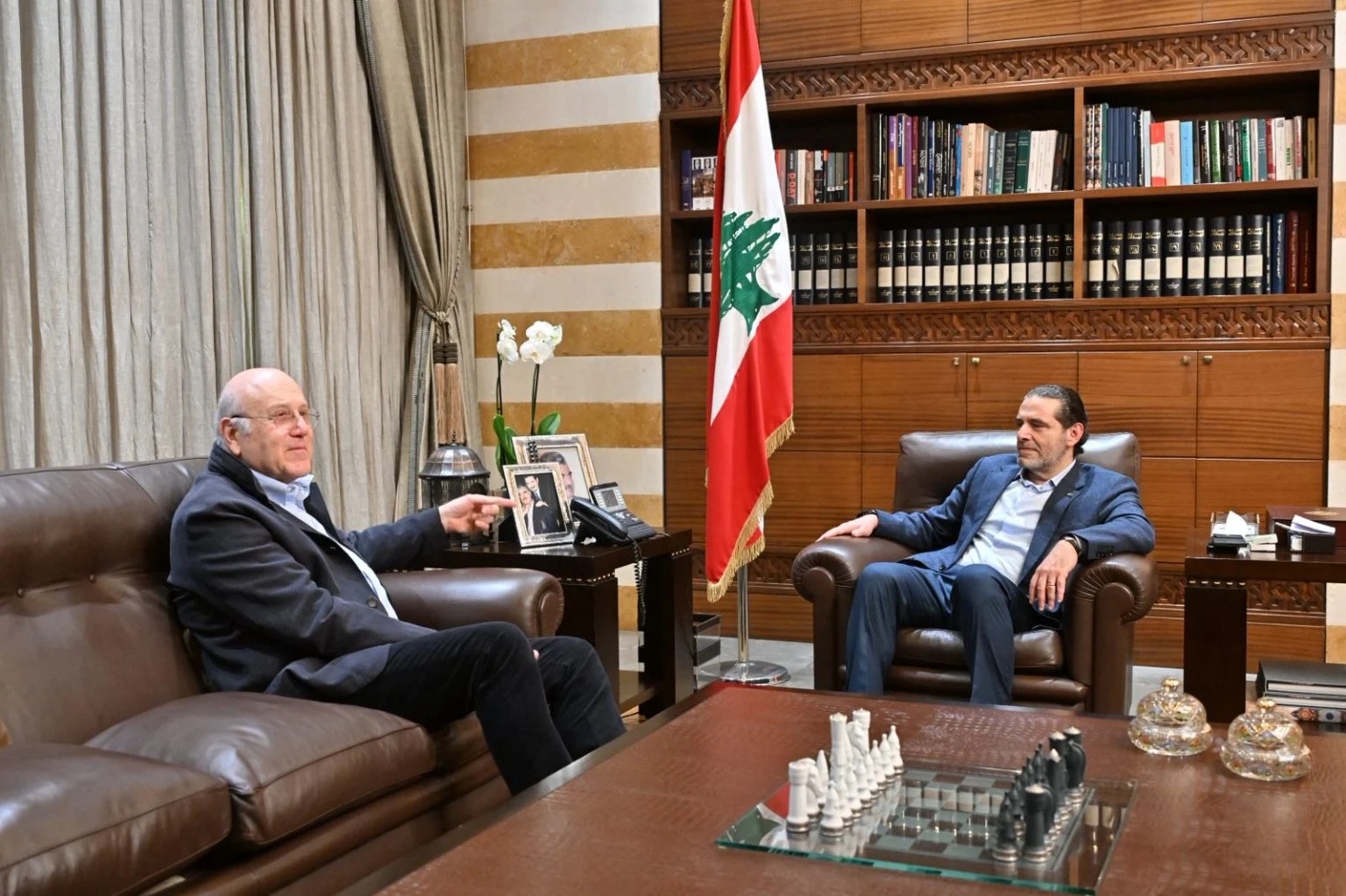
In the same context, Arab and Western political and diplomatic figures, as well as parliamentary and party delegations, visited Hariri at his residence in Beirut, including former Prime Ministers Najib Mikati and Tammam Salam, Druze leader Walid Jumblatt, and Marada Movement leader Suleiman Frangieh.
Multiple Messages
In light of Saad Hariri’s latest speech, the Lebanese press saw multiple implications and messages that went beyond mere mobilization of his supporters, signaling an attempt to reassert his political presence within Lebanon’s complex domestic and regional equation.
The Lebanese newspaper el-Nashra reported on February 17 that “Although the speech was delivered in highly emotional language, it contained messages in multiple directions reflecting a calculated repositioning rather than an immediate return to traditional political activity.”
The report noted that Hariri’s phrase, “You are not few,” aimed to consolidate popular legitimacy and re-energize his political base.
According to the newspaper, the message was clear in its objective to counter the narrative that had prevailed during his political hiatus, which spoke of a decline in the presence of the movement he represents.
This repeated emphasis reflects an effort to reproduce the popular legitimacy of the Future Movement and demonstrate that its base remains active and capable of mobilization.
The paper concluded that “The speech was a repositioning, not a declaration of return,” suggesting that it does not constitute a direct political comeback but rather a deliberate preparation to re-establish his role in Lebanon’s political equation.
It added that the address combined efforts to re-energize the popular base, justify his previous withdrawal, and present a political vision focused on restoring the central state and Arab openness.
The newspaper concluded that “The clearest message was that Harirism has not disappeared, but has reorganized itself, and that the decision to return to power will not be rushed, but contingent on changes in internal and regional balances. Thus, the era of absence may be over, but the time for a full return has not yet come.”
In a related context, the writer Nabil Moussa, in an article published on the Lebanese site Janoubia on February 14, said that if Hariri wanted an immediate return to political activity, he could have simply said, “I have decided to reverse the suspension of the Future Movement’s political activity and participate in parliamentary elections across all of Lebanon at any forthcoming date.”
The writer added that Hariri chose to remain in a “gray area,” waiting for the right moment, because he believes that “all in good time.” He described Hariri’s speech as “multifaceted,” interpreting the same words in multiple ways and leaving his environment in a state of political uncertainty.
Moussa also explained that Hariri is aware he is not yet able to return to the political arena due to his disagreement with Riyadh and his inability to return to Beirut with the backing of Abu Dhabi, as such a move would be interpreted as intervening in disputes between Saudi Arabia and the UAE, which he believes “would risk his position and his political capital.”
Iranian Perspective
Regarding the Iranian press and its perspective on Saad Hariri’s speech and his return to Beirut, Iranian writer Hassan Hani wrote in an article published by the Iranian ILNA news agency on February 16 that the return of the former Lebanese prime minister could lead to a state of multipolarity and increased political tension in Lebanon.
Hani added that “Today, given the current circumstances in Lebanon and the inability of the current government to disarm Hezbollah within a defined timeframe, Hariri’s return seems likely to change the Lebanese equation and lead to a kind of social and political confrontation between Shiites and Sunnis, especially as he enjoys significant economic, financial, and political influence in Sunni-majority areas.”
The writer explained that Hariri will attempt in the upcoming parliamentary elections to secure a majority of seats for the Future Movement, enabling him to form the government he seeks, predicting that Lebanon will witness substantial transformations in the structure of governance, as well as on social and political levels, over the next two years.
In the same context, the Lebanese newspaper Nidaa al-Watan reported on February 14 that Hariri emphasized during meetings with several figures and members of parliament that “Lebanon and the region are undergoing a strategic transformation, and Lebanon has a golden opportunity due to the collapse of Iran’s project and Hezbollah, so we can seize this opportunity because the resistance’s conduct has obstructed all development projects.”
The newspaper added that Hariri told the MPs that he is “eager to return to political life, and the Future Movement and his father’s legacy will be preserved. He will chair a parliamentary bloc, so he will be present in the elections both as a candidate and in support, according to each district and its circumstances.”
The report also noted that Hariri stressed there will be “no alliance with Hezbollah under any circumstances, and the goal of contesting the elections is to form a bloc that supports the state project and saves Lebanon, while the composition of electoral lists will be left to the right time. Especially as the election law imposes rules different from the majority system, but what is certain is that there will be no alliance with Hezbollah or its axis.”
Finally, the newspaper confirmed that Hariri emphasized the relationship with Saudi Arabia, relying on its role and coordination, asserting that Lebanon faces a new opportunity that must be seized.
He also saw the elections as a chance for change, while their timing is not yet final, despite the candidacy of Parliament Speaker Nabih Berri, which calls for waiting until matters become more serious.
Sources
- Saad Hariri on the Anniversary of His Father’s Assassination: “We Do Not Buy or Sell Positions or Posts”: and What He Said About Ahmed al-Sharaa [Arabic]
- The Return of Saad Hariri: Potential Shifts in Lebanon’s Political Landscape [Arabic]
- Hariri Hints at a Political Comeback as Lebanon Prepares for Elections [Arabic]
- Hariri Signals That the Future Movement Will Contest Lebanon’s Upcoming Parliamentary Elections [Arabic]
- A Political Reading of Saad Hariri’s Speech: Laying the Groundwork for a Conditional Return and Strategic Repositioning [Arabic]
- Ambiguity Surrounds Hariri’s Return: No Clear End to His Political Hiatus nor Final Position on the May Elections [Arabic]
- Saad Hariri: A Return Without an Alliance With Hezbollah [Arabic]
- Hariri: What Will the Future Movement Do? [Arabic]