Withdrawal or Repositioning? Is Washington Drawing the Curtain on Its Military Presence in Syria?
“The Syrian army will need to stay on high alert.”
More than a decade after U.S. forces entered Syria under the banner of the “war on terror,” signs are mounting that Washington may be preparing to turn the page on its military presence there—a shift that could redraw the balance of power in the country’s north and east and usher in a very different political and security phase.
Changes on the ground over the past two years have steadily eroded the familiar justifications for staying. The Syrian state has expanded its control across large swaths of territory, while the campaign against the Islamic State of Iraq and Syria (ISIS) has slowed to a low simmer, its footprint and operational reach sharply reduced. What was once framed as an open-ended military mission now looks increasingly out of step with realities on the ground.
At the same time, the prospect of the Syrian Democratic Forces (SDF) being folded into state institutions marks a potentially decisive turning point. Such a move would dissolve one of the most persistent complications in northeastern Syria and raise pointed questions about the future of security arrangements that, for years, were built and sustained under U.S. sponsorship.
Taken together, these developments suggest the United States is in the midst of recalibrating its role in Syria—shifting from a direct military actor to a political player seeking to preserve influence at a lower cost. It is a familiar pattern, unfolding in a region where the landscape is changing fast and regional and global powers are already positioning themselves to fill any possible gap.
Withdrawing the Troops
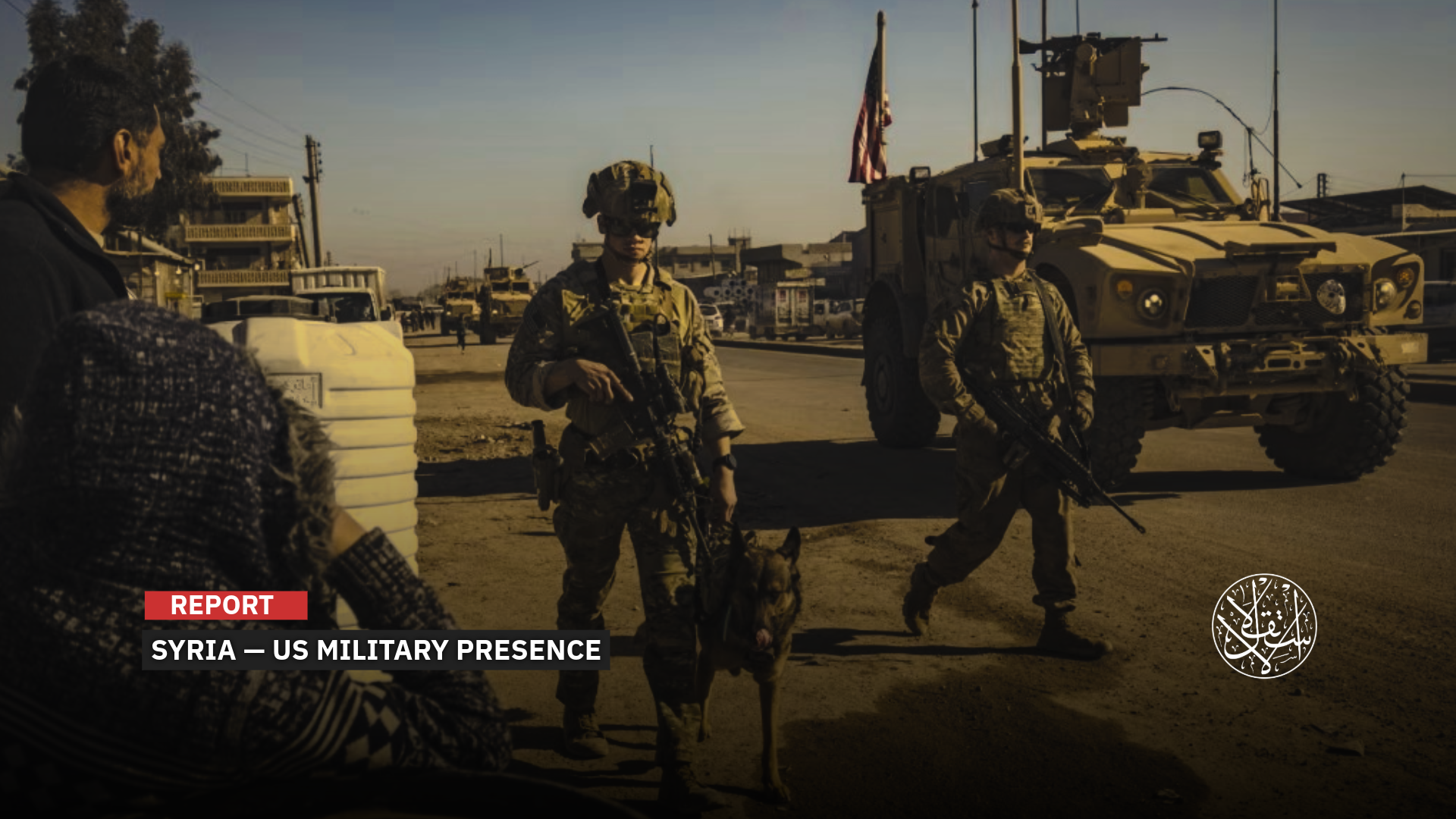
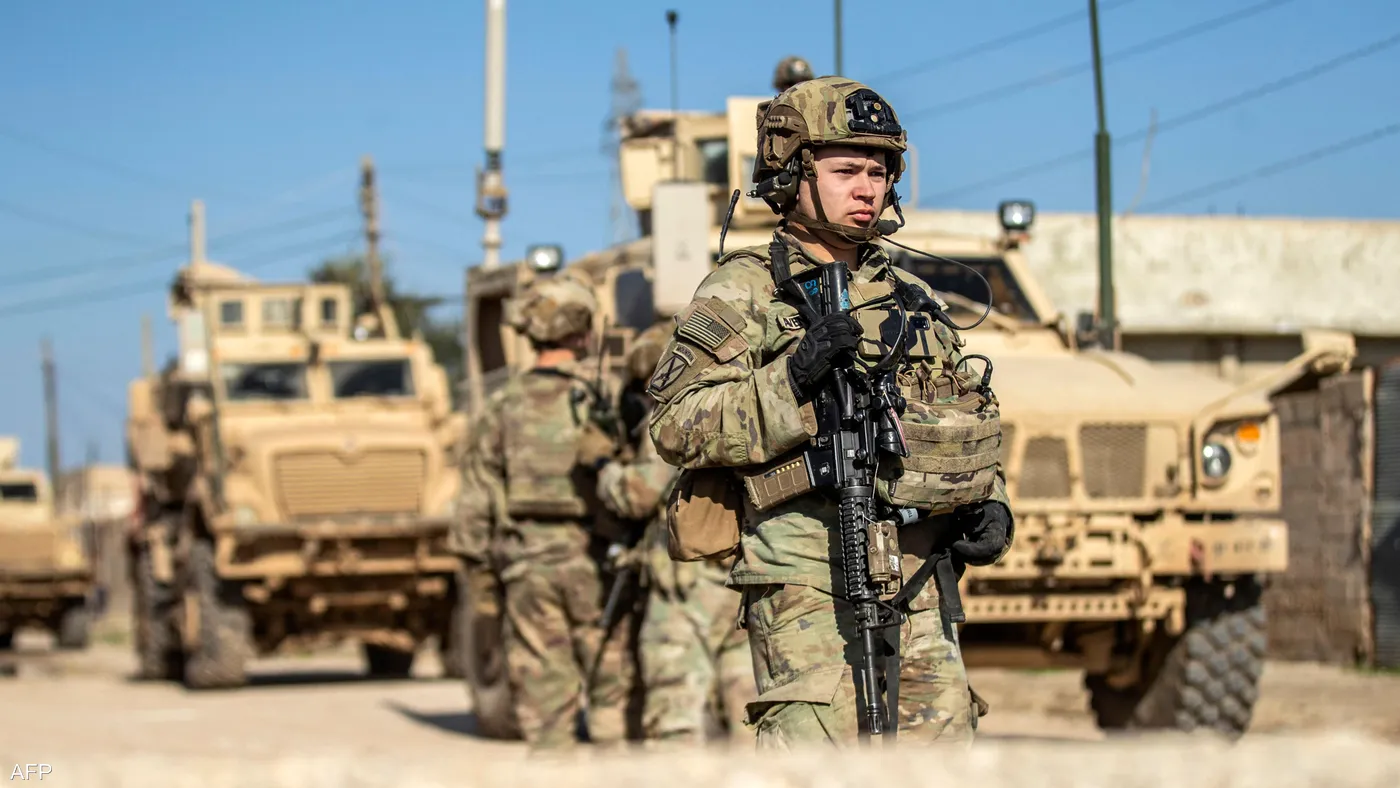
U.S. media reported on February 19, 2026, that Washington is planning to pull all of its forces out of Syria—around 1,000 troops—over the next two months, in what would mark the most consequential shift in its military posture there since the intervention began.
According to The Wall Street Journal (WSJ), the move reflects a decision to wind down the U.S. military presence after the Syrian government reasserted control over most of the country and after the SDF, long Washington’s principal partner in the fight against ISIS, pledged to integrate into state institutions.
Officials speaking to CBS News, on condition of anonymity, said preparations for the withdrawal were already underway. A day earlier, Reuters reported that some U.S. troops had begun leaving Syria as part of a “deliberate and conditions-based transition.”
A senior U.S. official said American forces would remain ready to respond to any potential threat from ISIS in support of local partners but acknowledged that “a large-scale U.S. presence is no longer necessary,” citing the Syrian government’s stated readiness to assume primary responsibility for addressing security threats within its borders.
The announcements followed the withdrawal of U.S. troops from several key bases, including al-Tanf at the Syrian–Jordanian–Iraqi border triangle and the al-Shaddadi base south of al-Hasakah, both of which had been used by the U.S.-led coalition in operations against the group. They also coincided with the completion of a 23-day operation that transferred more than 5,700 ISIS detainees from Syria to Iraq.
At its peak, the U.S. military operated roughly 31 bases and outposts across Syria as of mid-2024. That footprint began shrinking gradually in 2025, and after the battlefield shifts of January 2026, it has been reduced to just three main bases in al-Hasakah province, following the handover of several sites to the Syrian army.
The remaining facilities include the Qasrak base between Tell Tamer and Tell Beydar, south of the M4 highway; the Rmeilan base at Abu Hajar agricultural airport, south of Rmeilan city; and the Himmo base at the entrance to Qamishli—outposts that may soon mark the final chapter of America’s long military engagement in Syria.
A Step Finally Taken
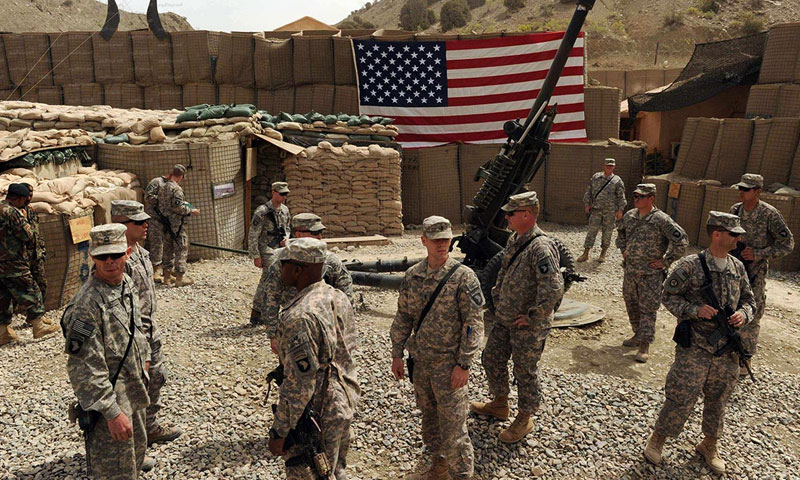
The shift in the U.S. military presence in Syria has revived a long-standing debate first raised by the U.S. President Donald Trump during his first term: whether maintaining American troops in the country still serves U.S. interests.
Policy circles in Washington argue that the decline in ISIS activity, combined with growing reliance on Damascus to manage security and sensitive files, has paved the way for a new phase of repositioning—one that reduces direct military involvement in favor of expanded intelligence and diplomatic roles.
Analysts note that the Syrian government’s recovery of control over sites once considered among the most complex nodes of the battlefield—including prisons and camps holding ISIS members, oil fields, and military bases—signals a gradual restoration of state authority and a transfer of broader security responsibilities to Damascus.
Against this backdrop, the withdrawal decision was less a surprise than a long-delayed step. Trump had already called for a full U.S. pullout from Syria during his first term, though the plan was never fully implemented at the time.
His push met resistance from the U.S. Department of Defense, the Pentagon, ultimately leading to the resignation of then-Defense Secretary James Mattis. Since then, U.S. troop levels in Syria have fluctuated, including the withdrawal of roughly 600 soldiers during 2025.
The Hill quoted administration officials as saying Trump remains committed to supporting a “stable and sovereign Syria, at peace with itself and its neighbors.” They argue that Syrian stability is central to his vision of “a peaceful and prosperous Middle East” and that Syria should not become a base for terrorism or a source of regional threats.
By contrast, Republican lawmakers focused on foreign policy have voiced concern over withdrawal reports, warning that a reduced U.S. presence could give ISIS an opportunity to regroup. They point out that the U.S. deployment since 2014 was aimed at defeating the group and preventing its resurgence, even after its territorial defeat was declared in March 2019.
Public opinion, however, appears to favor disengagement. A poll conducted by Concerned Veterans for America and YouGov in October 2025 found that 61 percent of Americans support bringing all U.S. service members home from Syria—reflecting a growing domestic preference for scaling back overseas military commitments.
The Role of Diplomacy
Syrian military analyst Brigadier General Ziad Hajj Obeid said the United States appears “serious about withdrawing its forces from Syria,” predicting that the pullout could be completed by summer 2026.
“The U.S. administration now believes the Syrian government is meeting its counterterrorism commitments, allowing Washington to shift the role of its forces from direct combat involvement to an emergency-response posture, with greater emphasis on intelligence support and training,” he told Al-Estiklal.
“The U.S. military presence in recent years has been built around a network of bases serving intelligence, electronic, and training functions.”
“The decline in ISIS activity across Syrian territory,” he added, “has reduced the need for such a broad deployment, particularly after thousands of ISIS detainees were transferred to more secure prisons in Iraq, easing the security burden inside Syria.”
“The Syrian army will need to stay on high alert, particularly in the desert, to thwart any attempts by ISIS cells to regroup or strike again.”
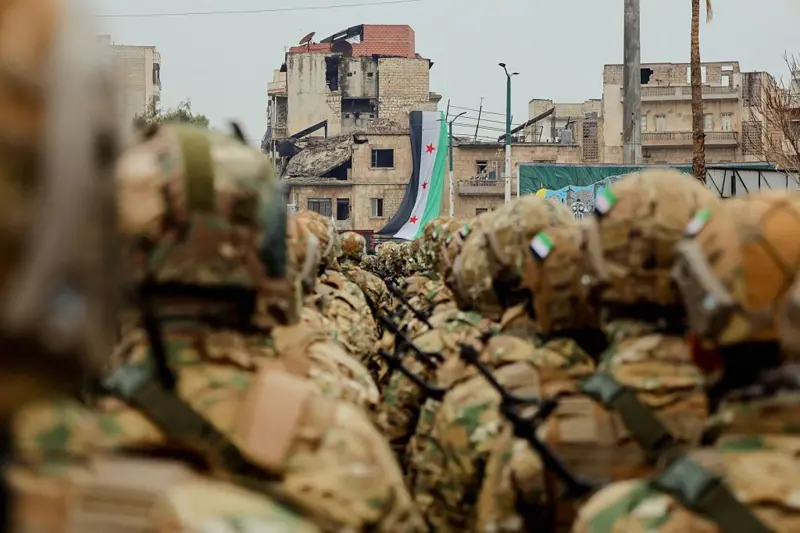
He argued that the anticipated withdrawal reflects a broader shift in U.S. strategy toward repositioning and expanding the role of diplomacy while increasing Damascus’s responsibility for internal security and preserving the option of intervention if necessary, without maintaining a permanent ground presence.
“The U.S. military footprint will likely be concentrated in Iraq and several Gulf states as part of the international coalition, rather than through direct deployment inside Syria,” Obeid said.
Meanwhile, data from the Middle East Institute indicate that ISIS has carried out at least 44 attacks inside Syria since the beginning of 2026, underscoring the persistence of the threat, albeit at a lower intensity.
A December 2025 attack near the city of Palmyra killed two U.S. soldiers and a translator, an operation later claimed by ISIS.
“U.S. forces remain poised to respond to any ISIS threats that arise in the region as we support partner-led efforts to prevent the terrorist network’s resurgence,” CENTCOM Commander Adm. Brad Cooper said in a statement.
“Maintaining pressure on ISIS is essential to protecting the U.S. homeland and strengthening regional security.”
Sources
- U.S. Is Withdrawing All Forces From Syria, Officials Say
- Most support bringing US troops home from Iraq, Syria: Survey
- The U.S. Army Withdraws from Two Bases in Syria: What We Know so Far [Arabic]
- US preparing for pullout of all troops from Syria US preparing for pullout of all troops from Syria
- Syria: First Reaction to Killing of U.S. Soldiers in ISIS Ambush [Arabic]
- US military begins withdrawing from key base in northeastern Syria