Reality or Illusion: Why Netanyahu Is Seeking To Form a New Geopolitical Alliance
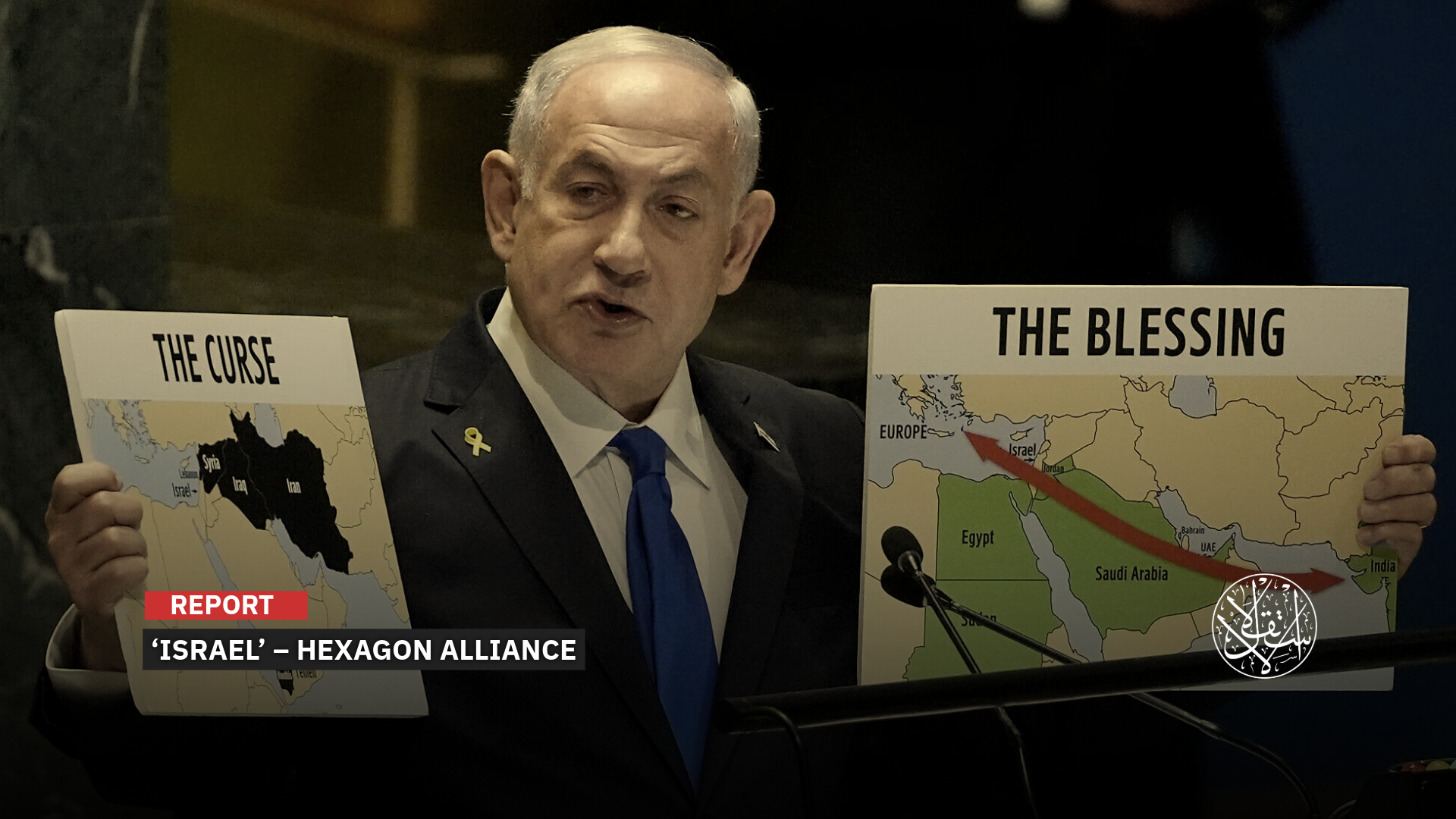
“Analysts described the hexagon alliance as a branding exercise rather than a concrete diplomatic architecture.”
Israeli Prime Minister Benjamin Netanyahu's statements this week that “Israel” is working to establish a hexagon alliance in the Middle East have sparked widespread debate and raised numerous questions about the features of a new phase that may be emerging in the region.
This approach is not entirely new, as he had previously spoken about a month ago regarding an Israeli mobilization to confront what he calls anti-Semitism, which he said emanates from the Iranian axis and the Sunni wing.
However, his latest statements were more detailed regarding his government's efforts to form a broad regional support network in light of the rapid transformations taking place in the region.
Netanyahu's talk of establishing a regional alliance coincided with statements by the US Ambassador to “Israel”, Mike Huckabee, welcoming Israel's dominance in the Middle East, which added further controversy to the Israeli proposal.
Hexagon Alliance
In a move that could lead to shifts in regional relations and the balance of power, Israeli Prime Minister Benjamin Netanyahu announced efforts to form a new regional alliance comprising Arab, African, and Asian states, aimed at confronting what he described as radical axes—Shiite and Sunni—in the region.
According to a statement issued by his office on February 22, 2026, Netanyahu spoke of working to establish what he called a comprehensive system of alliances, akin to a hexagon alliance around or within the Middle East, including India, Greece, Cyprus, and other Arab, African, and Asian countries that he did not name.
He claimed that the goal is to create an alliance of countries that share a unified vision of reality, challenges, and objectives, in opposition to what he considered radical axes, including the Shiite axis, which he said Israel had dealt very strong blows to, in addition to a radical Sunni axis that is taking shape.
He added that cooperation with these countries, should they join the alliance, could yield significant results and ensure Israel's strength and future, emphasizing that the close alliance with the United States does not contradict the pursuit of other alliances but rather strengthens them.
Reactions to Netanyahu's announcement varied. Some viewed it as populist rhetoric and electioneering ahead of the Israeli elections scheduled for next October, nothing more than political posturing.
Others, however, saw this approach as reflecting an attempt to engineer a new regional order led by Tel Aviv, reshaping the balance of power in the region through alliances that transcend geographical boundaries, describing it as a soft occupation of countries with international approval.
Critics argued that using terms like radical to describe Sunni and Shiite axes represents media manipulation aimed at delegitimizing adversaries and redefining the conflict within a comprehensive religious framework, rather than considering it a multi-dimensional political struggle.
Netanyahu's statements come amid rapid regional transformations and the rise of overlapping axes and alliances in the Middle East and the Eastern Mediterranean, and with escalating security and political crises in multiple arenas.
This Israeli approach reflects an effort to strengthen a network of multi-layered alignments, capitalizing on converging security and economic interests, particularly in the areas of energy, maritime security, and technology.
Political Zionism
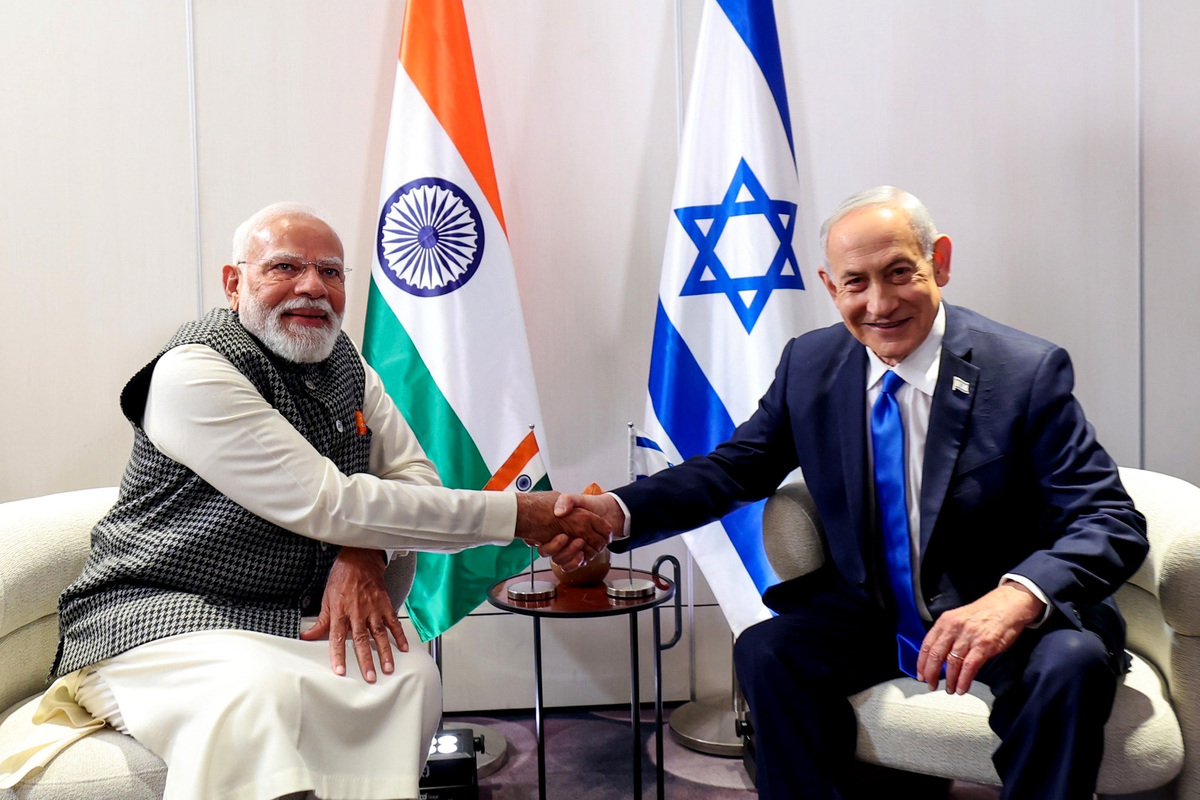
Netanyahu's statements preceded a scheduled visit by Indian Prime Minister Narendra Modi to Israel on February 25.
Modi's visit to Tel Aviv is expected to last two days, during which he will address the Knesset and meet with Netanyahu and Israeli President Isaac Herzog.
Political and military agreements are also expected to be signed between Tel Aviv and New Delhi, in addition to India concluding major deals with Israeli defense industries.
Netanyahu recently praised the growing relations between Israel and India, outlining his vision for a partnership based on economic, diplomatic, and security cooperation.
He expressed his hope that the special relationship built in recent years would be part of new alliances against what he called extremist enemies.
Modi visited “Israel” in 2017, while Netanyahu visited India in 2018, as part of efforts to strengthen bilateral relations.
Writers and analysts criticized what they described as Modi's hostile stance toward the Palestinians.
They also noted that Netanyahu did not address the economic project linking India, the Middle East, and Europe during his remarks about the visit.
They argued that the focus was on the security and political dimensions without mentioning the broader economic framework.
Others condemned what they considered a convergence between Hindu extremism and political Zionism, despite some countries continuing to expand their relations with India.
Some offered explanations for the growing ties between the two sides, including military and technological interests, Tel Aviv's need to break its international isolation, and New Delhi's efforts to strengthen its strategic presence in the Middle East.
Experts warned that the alliance Netanyahu spoke of could signal a transitional phase in the region, one in which regional alliances and relationships are being reshaped, potentially leading to a shift in the balance of power and opening the door to new strategic conflicts amid escalating international and regional competition for influence.
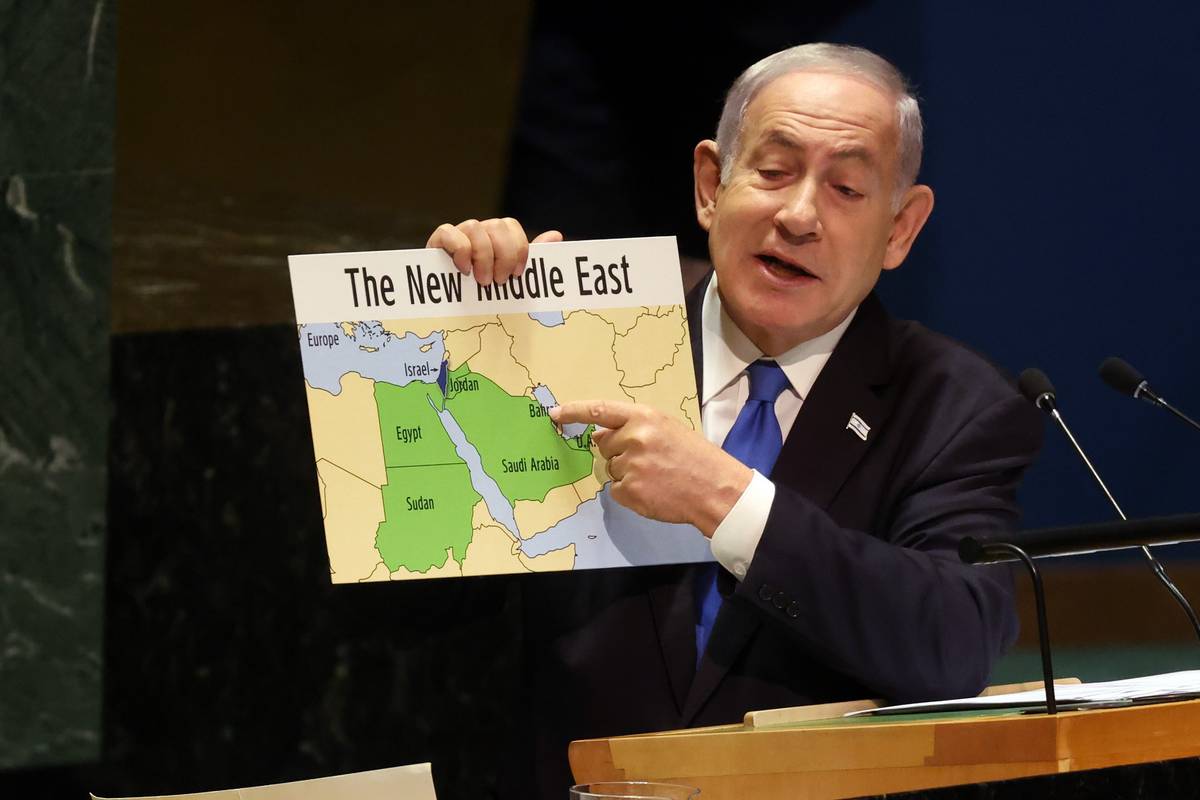
Some analysts saw the Israeli rhetoric as reflecting an ambition to establish a new geopolitical reality under the banner of the New Middle East, based on alliance networks that transcend traditional identities, as opposed to axes defined by religion or ideology.
Israeli Hegemony
Speaking at a conference last week, former Israeli Prime Minister Naftali Bennett described Turkiye as the new Iran, urging Israeli policymakers to prepare for simultaneous confrontation with both Tehran and Ankara.
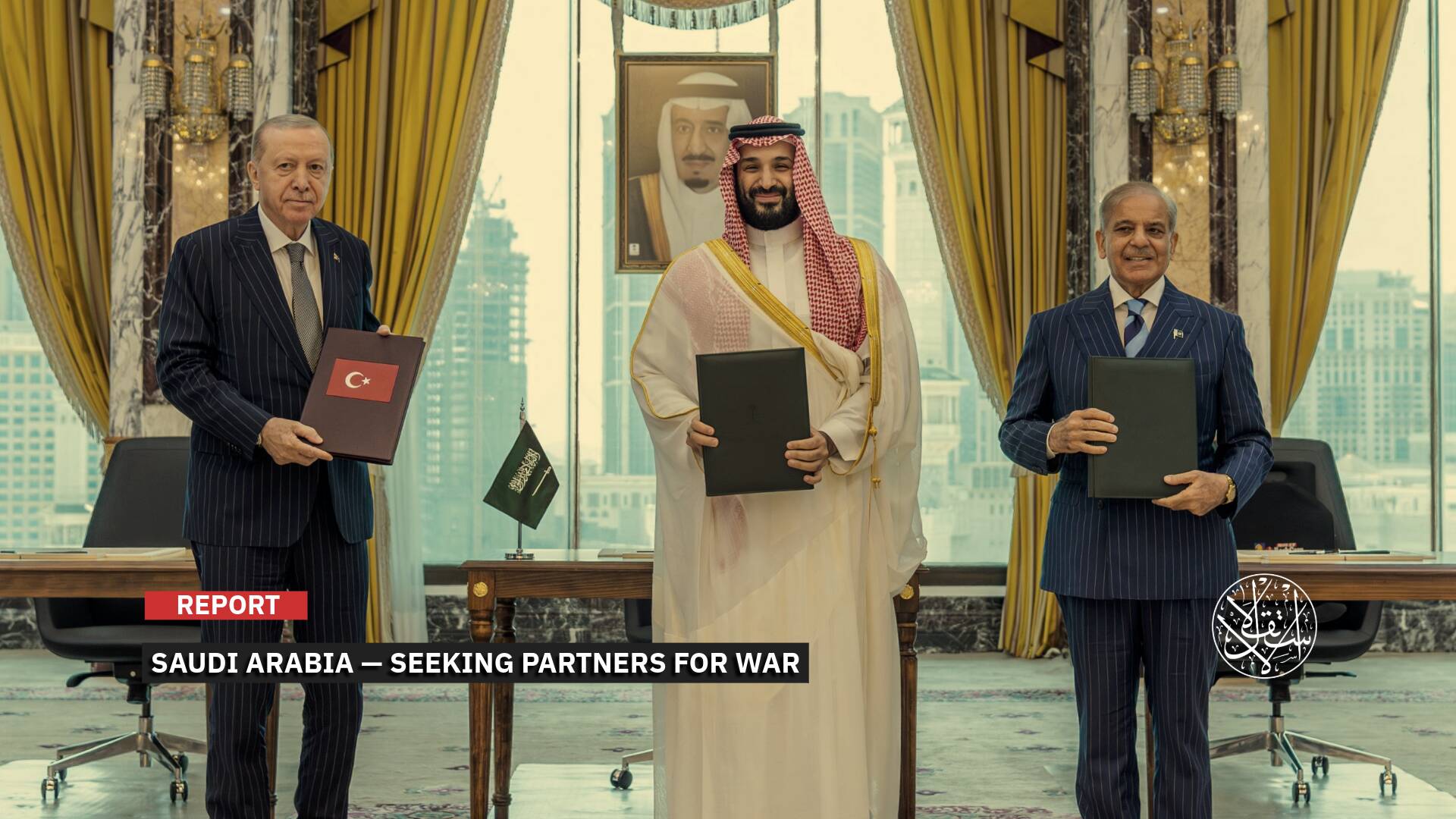
Other Israeli politicians have said similar things in the past few months, with Turkiye a strong critic of Israel’s actions towards the Palestinians and its genocidal war on Gaza, and also getting closer to regional powers such as Saudi Arabia and Egypt.
The tone indicates that while the Iranian government remains in power in Tehran, Israel is already looking for a new regional nemesis, with a network of like-minded states around it.
While Israel has had an antagonistic relationship with Iran since the latter’s 1979 Islamic Revolution, “Israel”-Turkiye relations have been more pragmatic, with Israel’s continued repression of Palestinians historically often a point of negotiated dispute, rather than open threats spurring aggressively hostile rhetoric.
Relations between Ankara and Jerusalem have deteriorated sharply over the war in Gaza, with Erdogan delivering fierce public criticism of Israeli military operations.
This framing suggests that Israel’s strategic anxieties are no longer confined to the traditional Iran-led Shia alliance but now encompass Sunni Islamist currents as well.
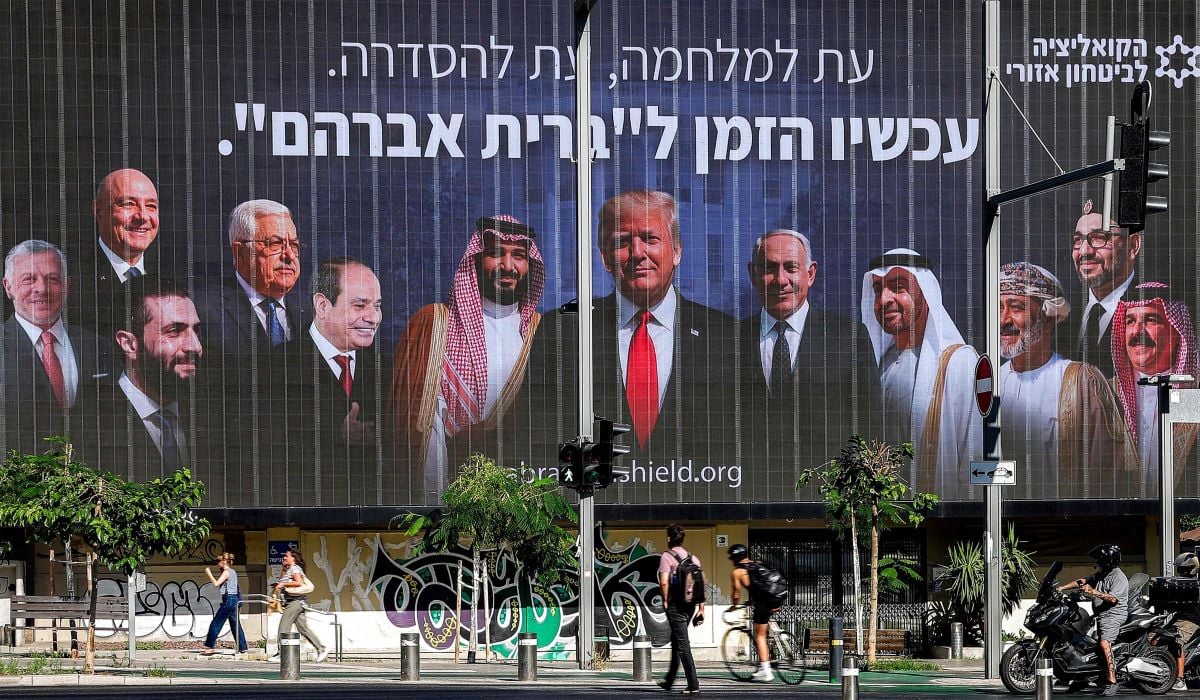
Palestinian researcher Dr. Saeed al-Hajj told Al-Estiklal that Netanyahu's recent statements reflect a comprehensive Israeli strategic vision for reshaping the region, not merely circumstantial rhetoric.
He linked this Israeli approach to American policies in the Middle East, arguing that what is happening is not just a limited confrontation with Iran, but a broader project to re-engineer the region and consolidate Israeli hegemony.
He revealed that this represents a shift in Netanyahu's rhetoric. For the past decade, he had promoted the idea of an Israeli-Sunni alliance against Iran, while today he speaks of confronting two axes simultaneously, reflecting a change in the Israeli approach towards the countries of the region.
“Netanyahu has also drawn attention to what he calls an emerging radical Sunni axis. While he stopped short of naming states directly, Israeli political discourse has increasingly pointed towards Turkey under President Erdogan as a growing strategic challenge,” he said.